Kaito完成快照,四大预估模型告诉你能多钱空投

marsbitPublished on 2025-02-16Last updated on 2025-02-17

引言

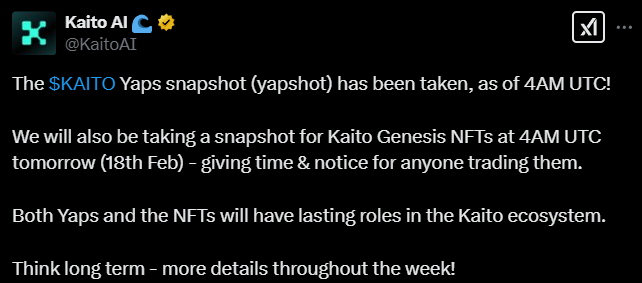
2 月 17 日,AI 加持的 Web3 搜索引擎 Kaito AI 宣布完成 KAITO Yaps 快照,Genesis NFT 快照紧随其后。在这场预谋已久的财富派送中,链上分析师 Caneleo 发现,Kaito 已在 Base 链部署 10 亿枚代币,其中 33.3% 的份额可能用于空投

市场

换句话说,市场上正有 3.33 亿枚 $KAITO 即将分发给 NFT 持有者和 Yap 贡献者。根据 Kaito 的上一轮融资估值 8750 万美元,按照 33.3% 的空投比例计算,理论上的空投总价值接近 2887.5 万美元

其中,Kaito 设计了双层空投体系:

  • Genesis NFT 持有者:1500 枚 NFT 将分配 15% 的空投池(约 432 万美元),单个 NFT 预计获得 2880 美元的 $KAITO
  • Yap 贡献者:剩余 85%(2455.5 万美元) 按积分比例分配,结合当前释放速度估算,每个 Yap 的价值 约 13 美元

当市场意识到这场空投的规模和回报率后,FOMO 情绪迅速升温。各路“撸毛”大军疯狂冲刺积分榜,Kaito 的推文在 X(原推特)上被刷屏,一场 Web3 版的“空投饥饿游戏”正式拉开帷幕。

为何 Kaito 能够在 EigenLayer 之后,迅速成为 Web3 最受瞩目的空投项目?

估值预期点燃 FOMO:Kaito 在 2023 年 6 月 A 轮融资中估值 8750 万美元。对标 Berachain,其融资后估值增长 8 倍,若 Kaito 走相同路线,空投价值或达 10 倍放大。

生态杠杆放大收益:Kaito 采用“Yap to Earn”+“Genesis NFT”双重积分体系,持有 NFT 的用户甚至可能获得 超 13000 美元 的空投奖励。

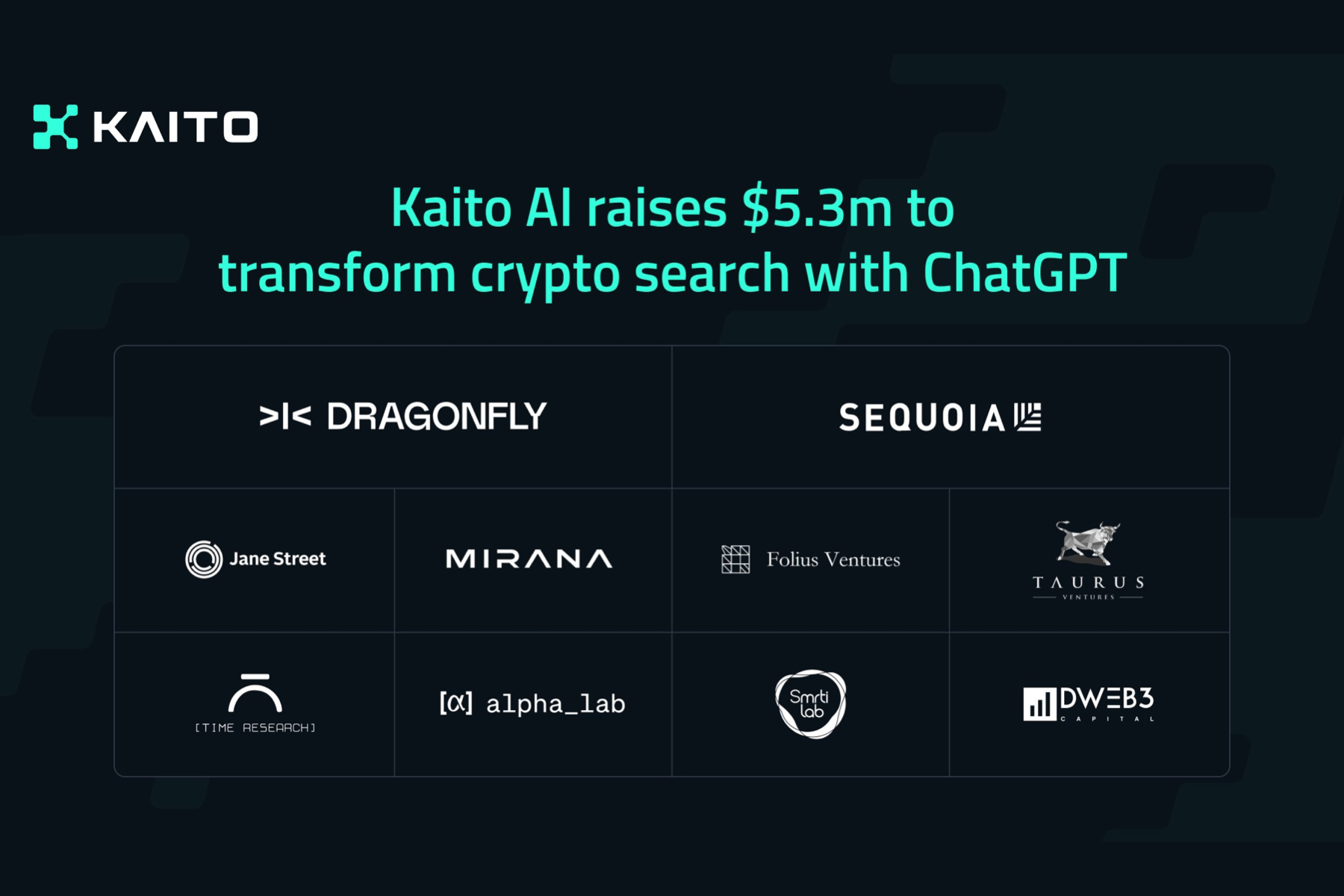
顶级风投加持:红杉资本、Dragonfly 等机构入场,增强项目背书,市场信心大增。

FOMO 气氛弥漫之下,Kaito 不仅是一个 AI 搜索引擎,更像是一座即将喷发的 Web3 造富火山。


Kaito是谁?——Web3信息帝国的“AI造雨人”

如果说 EigenLayer 是今年最炙手可热的“流动性再质押”项目,那 Kaito 就是信息金融(InfoFi)领域的先锋,它的目标是成为 加密世界的谷歌 + 彭博终端

Kaito 由前 Citadel 量化交易员 Yu Hu 创立,专注于解决 Web3 世界的信息碎片化问题。面对 Twitter、Discord、治理论坛等海量零散数据,Kaito 通过 AI 大模型 进行整合,打造出 MetaSearch —— 一款专为加密投资者量身定制的智能搜索引擎。

与传统搜索引擎不同,Kaito 不仅能索引 Web3 各类数据源,还能结合 ChatGPT 技术生成深度分析,让投资者一键获得市场情报,精准捕捉链上 Alpha 机会。因此,Kaito 也被称为“Web3 版的 Alpha 捕手”。
市场

过去两年里,Kaito 在资本市场表现亮眼,吸引了顶级风投的目光:

种子轮(2023年2月):由 Dragonfly 领投,融资 530 万美元,估值 4000 万美元

A 轮(2023年6月):由 Superscrypt 与 Spartan 领投,融资 550 万美元,估值直接飙升至 8750 万美元

增长转折点(2024年6月):Kaito 宣布实现首次盈利,从“烧钱创业”转向 自给自足的 AI 巨头

顶级风投的注资,不仅意味着对 Kaito 商业模式的认可,也进一步强化了其生态价值,为日后的代币经济模型提供强大支撑。

Kaito 不只是一个搜索引擎,它还构建了一整套信息经济体系。通过 “Yap to Earn” 模型,用户可以通过以下方式赚取 Yap 积分:

内容贡献:在 Twitter 发帖,标记 @KaitoAI,分享加密市场分析。

社交裂变:邀请好友参与,利用多账户工具(如 MoreLogin)提升获取积分的效率。

NFT 赋能:持有 Genesis NFT(铸造价 0.1 ETH),可 提升空投权重,甚至有机会获得 高达 13000 美元的代币奖励

这一机制,将 信息注意力 直接转化为链上资产,让 Kaito 不只是一个工具,而是一个可以“挖矿”的平台。


估值博弈:空投盛宴的价值密码

在 Kaito 这场空投狂欢中,Yap 积分与 Genesis NFT 成为了市场关注的焦点,而围绕其价值的讨论更是愈演愈烈。多个分析模型试图预测 Yap 和 NFT 的合理估值,而不同假设下的结论,也让市场预期从理性博弈逐渐演变为 FOMO 狂潮。

1. 资金驱动模型:FDV 公式推导的理论极值

加密市场的估值向来建立在叙事与资金流动的基础上,因此第一种模型直接从 Kaito 未来的全面摊薄估值(FDV) 出发,试图计算出 Yap 的潜在价值。

KOL Ren_gmi 采用了 FDV × 空投比例 / 总流通量 的公式,假设:

  • Kaito 的 FDV 为 10 亿美元;
  • 30% 代币用于空投;
  • Yapper 计划运行 90 天,总共释放 227.5 万个 Yap。

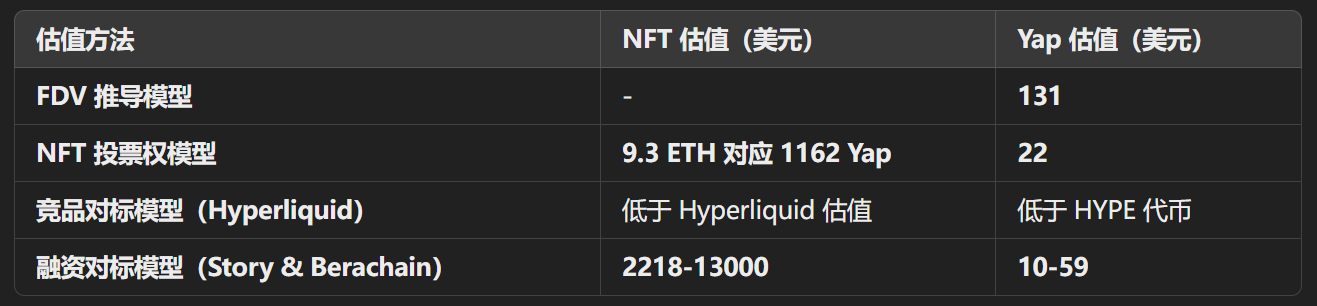
在此基础上,模型计算得出 Yap 价值为 131 美元,远超市场主流预期。

但这一推演有明显缺陷:

  • NFT 额外空投未纳入考量,可能影响 Yapper 的实际收益;
  • Yap 总供应量假设过于理想,实际流通量或受交易所上架、项目方发放节奏等因素影响。

尽管如此,该模型仍然给出了市场乐观预期下的极端值,为 Kaito 空投的吸引力提供了理论支撑。


2. NFT 投票权模型:Web3 社群治理的博弈

相比单纯的 FDV 推导,KOL DeFiTeddy2020 采用了一种更贴合 Kaito 生态的 NFT 投票权模型

在 Kaito 设计中,Genesis NFT 赋予了持有者在生态治理中的更大话语权,而这些 NFT 也具备空投权重。因此,该模型假设:

  • 单枚 Genesis NFT 的市价为 9.3 ETH
  • 对应的投票权重是 1162 个 Yap

由此计算,每个 Yap 的理论价值约 22 美元

该方法从 NFT 的市场定价出发,试图建立 Yap 与 NFT 之间的相对估值关系,但其局限在于:

  • ETH 价格波动风险,NFT 本身的市场价格可能受流动性影响;
  • 投票权权重不一定直接反映代币价值,治理权力的赋值方式仍未完全透明。

尽管该模型得出的数值远低于 FDV 推导法,但它提供了一种从 NFT 生态角度理解 Yap 估值的全新视角。


3. 竞品对标模型:Kaito 与 Hyperliquid 的可比性

Web3 赛道中,估值往往取决于市场对同类项目的对标情况。KOL Steve_4P 采用了 竞品对比 的方式,将 Kaito 与 Hyperliquid 进行类比,试图得出更符合市场逻辑的估值范围。

从 PMF(产品市场契合度)角度来看:

  • Hyperliquid:基于成熟的去中心化交易所(DEX)模型,优化了已验证的交易市场;
  • Kaito:探索 信息金融(InfoFi) 新范式,尚未形成稳固的市场需求闭环。

在可比估值方面:

  • Hyperliquid 可对标 dYdX、Drift 等 DEX,市场认知较为清晰;
  • Kaito 目前无直接竞品,最接近的案例可能是 Friend.tech,但后者的社交金融模型存在较大缺陷。

从代币价值捕获角度分析:

  • Hyperliquid 具备明确的代币销毁机制,有助于长期价值维持;
  • Kaito 的收益分配机制尚未闭环,其代币价值仍然存在较大不确定性。

基于这些因素,该模型认为 Kaito 代币的收益预期不会超过 Hyperliquid,因此 Yap 的估值上限可能远低于部分市场的极端预测。


4. 现实估值模型:按融资数据推导市场预期

相比理论推演,市场更青睐真实的数据支撑。Kaito 的 A 轮融资估值为 8750 万美元,结合已公布的 33.3% 代币空投计划,我们可以推导出较为合理的价值区间:

  • NFT 估值推导:1500 枚 Genesis NFT 总成本 54 万美元,按融资估值放大 8 倍计算,总空投预计约 432 万美元,每个 NFT 约 2880 美元
  • Yap 积分估值推导:剩余 2455.5 万美元 将分配给 Yap 积分持有者,按当前释放速度计算,1 Yap 价值约 13 美元

但融资估值并非市场最终定价,因此该模型进一步采用 Story Protocol 与 Berachain 作为对标对象,得出一组合理的市场范围:

  • Story Protocol:估值放大 16 倍,当前 FDV 约 17.3 亿美元,按其市场表现计算,Kaito 的 NFT 可能空投价值 2218-2880 美元,Yap 价值 10-13 美元
  • Berachain:融资估值放大 8 倍,目前 FDV 约 28 亿美元,若 Kaito 走相同路径,NFT 可能空投价值 5357 美元,Yap 价值 24 美元

在市场极端 FOMO 情绪下,Berachain 最高 FDV 一度达 67.5 亿美元,若 Kaito 复制此模式,其 NFT 可能暴涨至 13000 美元,Yap 价值可能冲至 59 美元


结论:估值的变数与市场的狂热

综上四种模型,我们可以看到 Kaito 空投价值的不同可能性:
市场

最终,Kaito 空投的实际价值,将取决于以下关键因素:

  1. 代币上线后的市场反馈:若流动性充足,估值可能大幅上扬;
  2. 项目方的长期发展策略:若 InfoFi 生态能够闭环,代币捕获价值将更稳固;
  3. 市场情绪的演变:FOMO 氛围的持续时间,将影响短期价值波动。

可以肯定的是,Kaito 正在加密市场上掀起一场新的空投风暴,而这场风暴将如何落幕,还需市场亲自给出答案。

Trending Cryptos

Related Reads

IOSG: Q-Day Countdown, Will Quantum Computing End Cryptocurrency?

IOSG: The Q-Day Countdown – Will Quantum Computing End Cryptocurrency? This analysis explores the looming threat quantum computing poses to blockchain technology. Quantum computers, leveraging Shor's algorithm, could theoretically break the elliptic curve cryptography (ECC) underpinning cryptocurrencies like Bitcoin and Ethereum. The article outlines a hypothetical "Q-Day" scenario where exposed public keys from dormant assets are compromised, leading to fund theft and a deep governance crisis. The core risk is not the complete erasure of blockchains but a systemic reset of public-key cryptography. Bitcoin faces significant challenges due to its "code-is-law" ethos and the immense social consensus required for migration. Its primary vulnerability lies in legacy UTXOs with publicly exposed keys. Ethereum's path involves a more complex, full-stack cryptographic agility upgrade across execution, consensus, and data layers. The industry has a limited "engineering comfort window" of 5-8 years to coordinate a migration to post-quantum cryptography (PQC), such as lattice-based or hash-based signatures. While the existential threat is often overstated, the real bottleneck is the immense coordination required across protocol developers, node operators, wallet providers, exchanges, and custodians. Market repricing of crypto assets may occur well before an actual Q-Day if quantum hardware roadmaps accelerate or regulatory pressure mounts. The article concludes that quantum computing is not a doomsday weapon but a severe stress test for blockchain's foundational security model and governance structures.

marsbit19m ago

IOSG: Q-Day Countdown, Will Quantum Computing End Cryptocurrency?

marsbit19m ago

Why 2026 could redefine Ethereum, Solana, Base and Avalanche

Blockchain infrastructure is undergoing a major coordinated transformation, driven by institutional demand for reliability, compliance, and predictable settlement. Over $30 billion in Real-World Assets (RWA) on-chain has exposed network weaknesses. Major blockchains are responding with foundational upgrades, moving beyond incremental speed improvements. Ethereum's "Glamsterdam" upgrade, planned for H1 2026, will significantly increase gas limits and introduce features like PBS (pre-blocked state) for enhanced settlement and parallel execution. Solana's "Alpenglow," targeting a mainnet launch in H2 2026, focuses on reducing finality time dramatically and freeing network resources to improve reliability. Beyond speed, compliance is critical. Base's "Beryl" upgrade in Q3 2026 will introduce a standardized, regulatory-compliant token framework (B20). Avalanche's "Octane" upgrade aims to boost transaction processing and reduce costs for enterprise applications. Even Bitcoin is evolving with the potential activation of OP_CAT by late 2026/early 2027. The competition is shifting. While technical upgrades are widespread, institutions will ultimately allocate capital based on proven execution, operational resilience, and regulatory compatibility during market stress. Ethereum currently leads in tokenized assets, while networks like Base and Solana are strengthening their institutional offerings. The blockchain that best delivers reliable, compliant, and uninterrupted service is poised to attract the greatest share of future institutional capital.

ambcrypto56m ago

Why 2026 could redefine Ethereum, Solana, Base and Avalanche

ambcrypto56m ago

Tiger Research: Take RWA Tokenization Overseas First

This article discusses the strategic choices facing financial institutions in jurisdictions lacking mature regulatory frameworks for Real-World Asset (RWA) tokenization. With the market growing rapidly, institutions must choose between waiting for local legislation, using regulatory sandboxes, or—the recommended priority—expanding into overseas markets to gain early experience. Successfully launching cross-border RWA tokenization requires meticulous preparation across six key areas: establishing an overseas base (e.g., Hong Kong, Singapore, the U.S.), securing necessary licenses, defining the tokenized asset (with bonds being simpler than non-standard assets), defining the target investor scope, deciding on settlement currencies/payment flows, and designing operational requirements like custody and on-chain governance. The article outlines two primary strategic paths: a direct "onshore" path and a "native on-chain" path. The direct path involves setting up a legal entity and obtaining licenses in a mature jurisdiction like Hong Kong, Singapore, or the U.S., leveraging existing platforms (e.g., DigiFT, Securitize) for efficiency. The alternative native on-chain path involves partnering with compliant, decentralized platforms (e.g., Ondo, Plume Nest) that use structures like offshore SPVs to facilitate tokenization and access DeFi liquidity, offering speed and broader reach but with greater structural complexity. The core argument is that institutions should not wait for perfect domestic regulation. A detailed hypothetical case study illustrates the multi-step, 6-12 month process of launching an overseas tokenized bond. The key takeaway is that the essence of a tokenization business lies not in the technology but in successfully executing the entire sales and operational process. The market is moving forward, and the time to act is now.

marsbit1h ago

Tiger Research: Take RWA Tokenization Overseas First

marsbit1h ago

Trading

Spot

Hot Articles

Discussions

Welcome to the HTX Community. Here, you can stay informed about the latest platform developments and gain access to professional market insights. Users' opinions on the price of AI (AI) are presented below.

活动图片