The Most Hidden AI Winners

marsbit發佈於 2026-07-02更新於 2026-07-02

文章摘要

"The Most Under-the-Radar AI Winners" While core AI giants and their direct suppliers have dominated headlines, a group of seemingly unrelated, decades-old manufacturing companies have emerged as major beneficiaries. A key example is Japan's TOTO, famous for bathroom fixtures. Its stock soared 145% in a year, driven not by its mainstay toilet business but by its nearly 40-year-old semiconductor ceramic component unit. Specifically, TOTO manufactures electrostatic chucks—critical, hard-to-replace parts for advanced chip manufacturing processes like etching and EUV lithography. This segment, though only 9% of revenue, contributed over 54% of operating profit in FY2025 with a 43% margin. High barriers to entry, including deep know-how in high-purity ceramic sintering and long supplier certification cycles (5+ years), secure its position. This pattern repeats across industries. Nitto Boseki, a 128-year-old glass fiber maker, saw its stock rise 325% due to near-monopoly supply of T-glass, an essential low-expansion material for AI chip substrates. Similarly, Ajinomoto, the global MSG leader, commands 80-95% of the market for ABF film, a vital insulating layer in chip packaging. These "hidden" segments, often born from deep materials science expertise, are now bottleneck supplies in the AI hardware chain, enjoying pricing power and high margins. In China's A-share market, the theme combines this AI-driven demand with domestic substitution. Companies like Zhongci Electronic (adva...

Author | Freddy

Data Support | GOGU Big Data

This year, within the global AI supply chain, not only have the core giants completely triumphed, but second, third, and fourth-tier supporting small and medium-sized enterprises have also feasted on the spoils. Even some companies whose businesses seem to have little to do with AI have been wildly hyped and soared in value.

In Japanese and Korean stock markets, a group of old-school manufacturing firms have seen their gains leave many AI concept stocks in the dust.

Toto, famous for bathroom fixtures, hit a five-year stock price high, rising 145% over the past year.
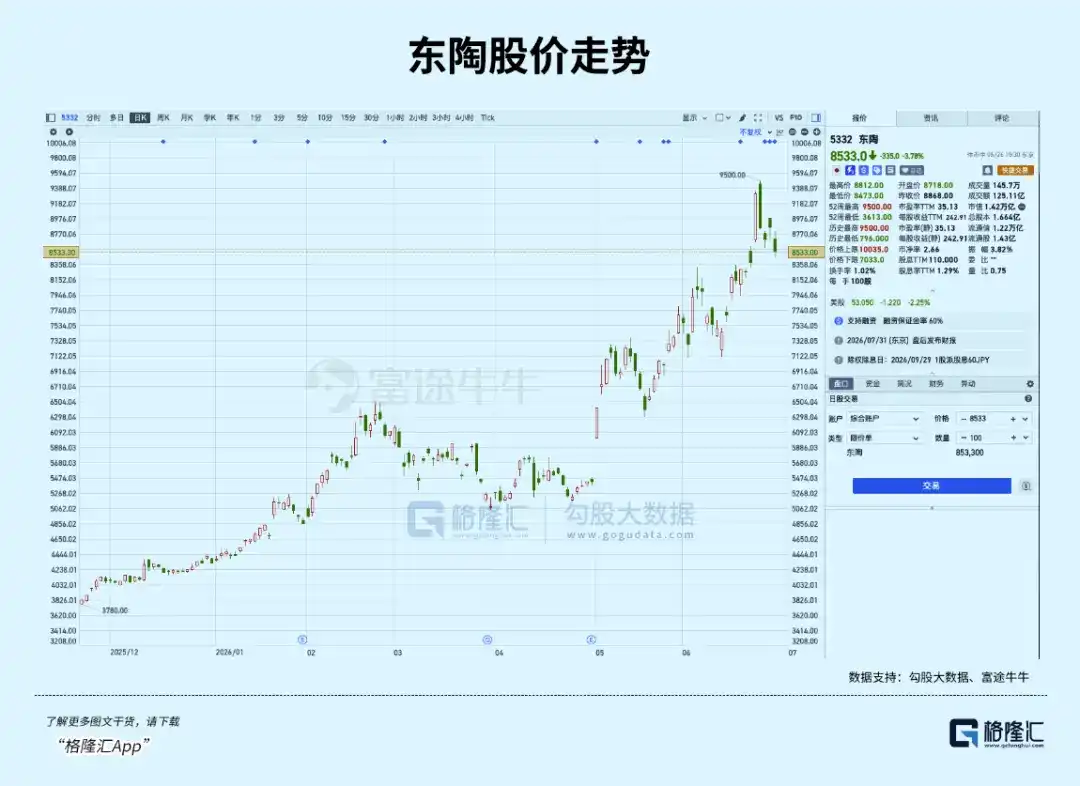
What drove this revaluation wasn't its century-old mainstay toilet business.

It was the semiconductor precision ceramics it has been refining for nearly forty years.

01 Securing a Position in the AI Track

Toto's ceramics venture began in 1984. At that time, the company established a New Materials Development Department, attempting to apply the high-temperature sintering techniques accumulated over decades of making toilets to industrial precision ceramics. In 1990, it started joint development of etch chamber components with the US semiconductor equipment leader Lam Research, stepping into the semiconductor supply chain.

However, for the next thirty years, this business was extremely low-key. High process difficulty, low yield rates, low capacity utilization—semiconductor ceramics consistently dragged down group profits. Even five years ago, the profit margin was only 9%.

The real turning point arrived in 2020. The new factory in Oita Prefecture introduced fully automated production lines and AI quality inspection systems, significantly boosting yields. Then, at the end of 2022, AI demand exploded, NAND manufacturers frenziedly expanded production, and orders for electrostatic chucks flooded in.

The combination of these two variables completely changed the face of the ceramics business.

In fiscal year 2025, semiconductor ceramics sales reached 67.4 billion yen, up 34% year-on-year. Operating profit was 28.9 billion yen, up 42%. The profit margin reached 43%. The century-old bathroom fixture mainstay has a profit margin of just 5%. The ceramics business accounted for only 9% of total revenue but contributed 54% of operating profit.
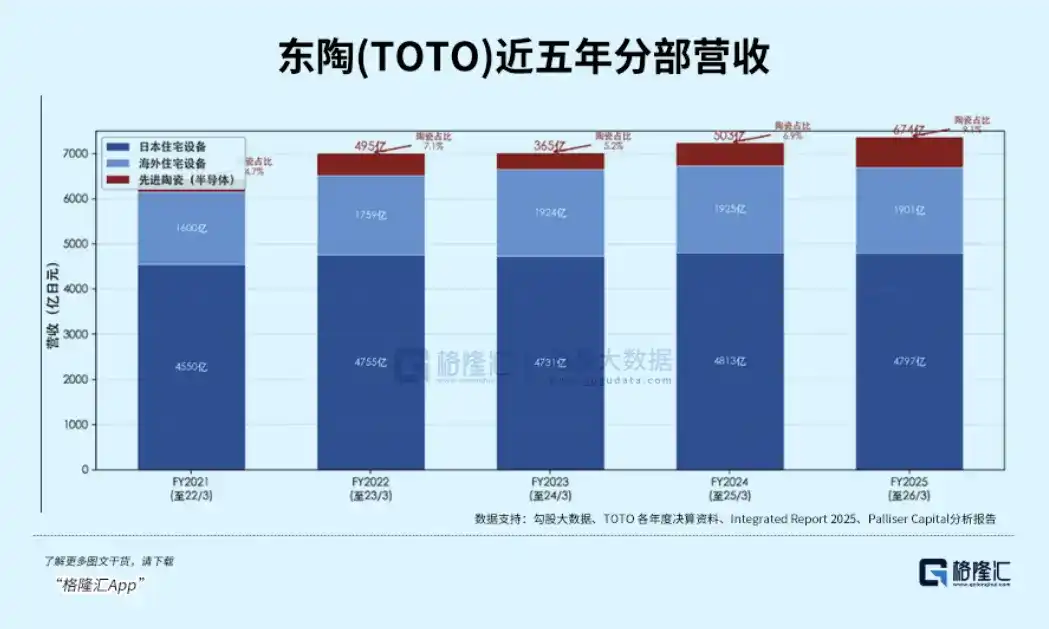
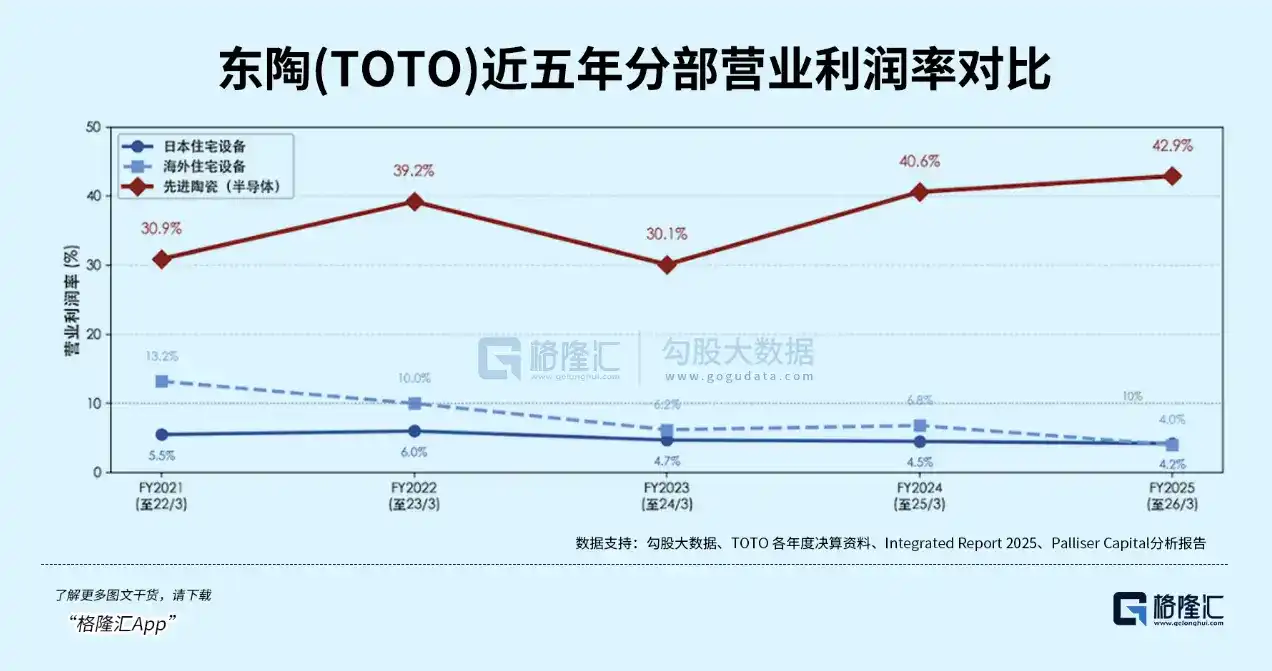
Toto's identity in the capital market used to be stable—a construction materials stock, a bathroom fixture stock. Its P/E ratio hovered between 18 and 20x for a long time. During the peak semiconductor cycle frenzy in 2021, it briefly touched 39.5x, but by the end of 2024, it had fallen back to 18.8x.

The market wasn't ready to price a toilet company as a semiconductor equipment component manufacturer. However, four catalysts in 2026 shattered that perception:

  • January 22: Goldman Sachs upgraded Toto's rating from "Neutral" directly to "Buy," raising the target price from 4,800 yen to 6,100 yen. The stock price rose 11% that day.

  • February 17: Activist investor Palliser Capital issued an open letter, calling Toto "the most undervalued AI beneficiary in the market," estimating an intrinsic value exceeding 8,800 yen.

  • April 30: Annual report disclosure—EPS of 71.16 yen, 79% higher than market expectations. The stock rose 18% that day, marking the largest single-day gain in five years.

  • June 3: Management announced an 80 billion yen investment over the next five years to expand semiconductor ceramic capacity, with the semiconductor share of capex jumping from 11% to over half. The stock rose another 11%.

Following these four catalysts, the company's stock price soared. However, a major divergence from market perception had already emerged.

Is Toto a "bathroom fixture company with a semiconductor sideline" or a "semiconductor equipment component company with a bathroom fixture sideline"? This corresponds to vastly different valuation multiples.

This judgment is difficult because the position Toto occupies in the semiconductor chain is too unique.

The more advanced the chip, the harsher the manufacturing environment. EUV lithography must be performed in a vacuum, with temperature fluctuations per process step not exceeding micrometer levels. Traditional mechanical clamps can't withstand this—only ceramic electrostatic chucks can simultaneously meet four conditions: withstanding temperatures over a thousand degrees Celsius, enduring strong corrosive plasma, having ultra-high insulation, and not outgassing in a vacuum environment.

As 3D NAND stacks from 200 layers towards 500, each additional layer requires another low-temperature etching step, each using an electrostatic chuck. As chips transition from single large dies to small chiplets, thermal density soars, making ceramics the only solution.

Pushing this logic to its conclusion yields a counter-intuitive insight: The more the chip industry pursues "advanced" technology, the deeper its reliance on traditional material processes becomes.

The question then arises: Why can Toto capture this wave of demand?

While competitors can manufacture alumina ceramic parts, maintaining high purity, uniform grain structure, and precise dimensions during mass sintering—the complete set of know-how—is mastered only by Toto. From 1995 to 2026, it holds the most patent applications globally for electrostatic chucks. Counting from its joint development of chamber components with Lam Research in 1990, the two have been tied for over 35 years, with Lam awarding Toto the Supplier Excellence Award for two consecutive years.

In terms of capacity, Toto's Kyushu factory is already at full production, and the new sintering workshop in Fukuoka is expected to start production in 2027. The 80 billion yen investment plan announced in June this year far exceeded market expectations.

But what truly makes competitors despair is not capacity, but time. Certifying a new supplier for electrostatic chucks takes at least five years. Even if competitors invest heavily in building factories now, it would take at least five years from starting certification to shipping qualified products.

The hype around Toto continues, and the path of shifting its valuation anchor from construction materials to semiconductor equipment components is not yet complete.

02 Not Just Toto

Toto is not an isolated case. The same logic is playing out in different industries.

Nittobo (Nittobo), a Japanese textile company that has made glass fiber for 128 years. Its stock price rose 325% last year.

Driving this surge is a material called T-glass, a low thermal expansion glass fiber fabric. As AI chip packaging substrates grow larger in area and stack more layers, the requirements for the substrate material's coefficient of thermal expansion tighten dramatically—ordinary electronic cloth can no longer meet the demands of advanced packaging, making T-glass the only choice.

Approximately 90% of the global T-glass supply is concentrated in Nittobo's hands, with capacity booked until 2027. The supply gap for high-end products exceeds 40%, directly triggering two rounds of price hikes—a 20% across-the-board increase in August 2025, and another 20% to 30% increase in April 2026. The pricing pressure traveled up the supply chain, with Apple bypassing multiple channels to directly secure capacity from Nittobo.

The same identity mismatch is happening to another, more famous Japanese company.

Ajinomoto, the world's largest monosodium glutamate producer, leveraging its amino acid chemistry expertise, developed an insulating film called ABF in the late 1990s for interlayer insulation in chip packaging substrates.
Source: Ajinomoto Official Website

For over two decades, ABF has been the industry's default standard, holding an 80% to 95% global market share. As AI chip advanced packaging substrates stack from 8 layers to 16, each additional layer requires another layer of ABF film. This business accounts for only 6% of Ajinomoto Group's revenue but contributes 30% of its profit, with a profit margin exceeding 50%.

The soaring cases of Nittobo and Ajinomoto point to the same conclusion: In the AI supply chain, high-profit-concentration positions are not always at the technological frontier; they can also be found in seemingly mundane links that are critical bottlenecks and whose capacity cannot be rapidly expanded.
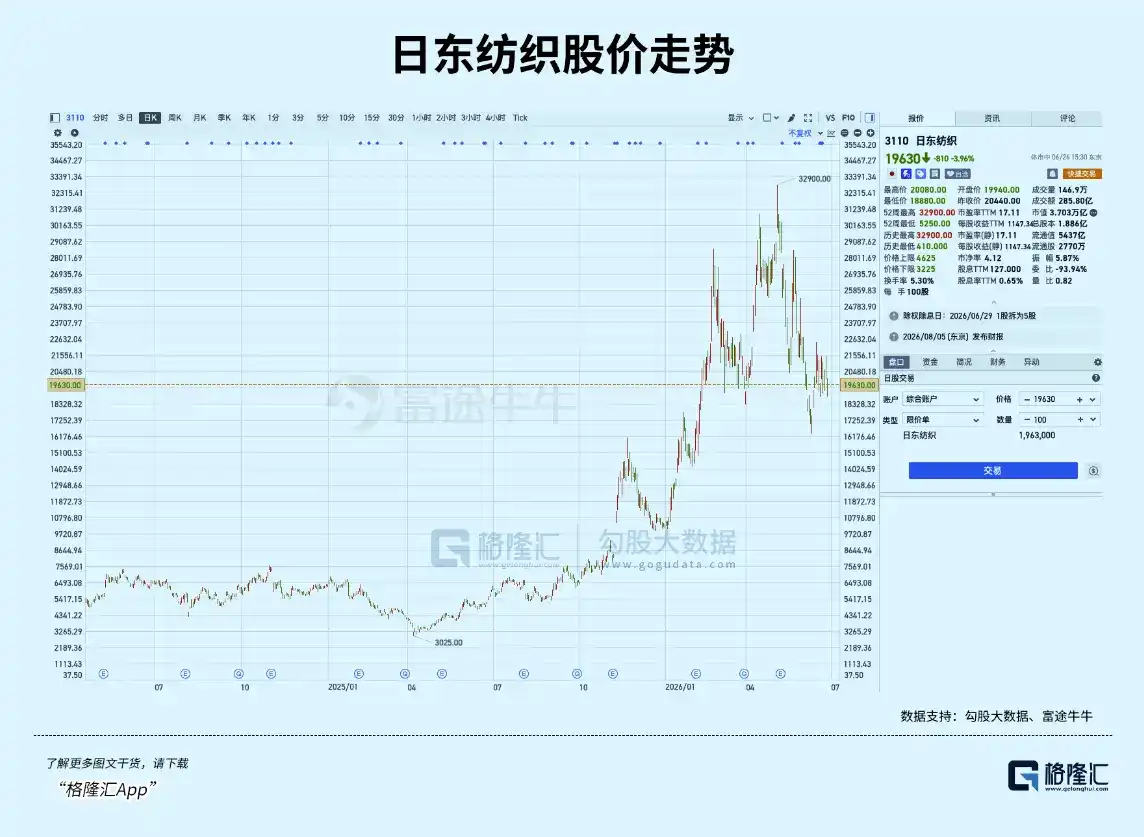
The same logic is playing out in the A-share market, but the narrative differs; the A-share story is about domestic substitution combined with the time window opened by the supply-demand gap.

  • Precision Ceramics Direction

    The domestic substitution rate for China's high-end electrostatic chucks is less than 1%, with 12-inch products almost entirely imported. Sinoma Advanced Electronic Materials Co., Ltd. is currently the fastest progressing domestic enterprise—its electrostatic chucks have passed machine verification by a leading domestic equipment manufacturer and entered the mass supply stage; aluminum nitride thin-film substrates have also started delivery to customers.

    In Q1 2026, the company's revenue increased 79% year-on-year, and net profit attributable to shareholders grew 57%. Its stock price rose from 45 yuan to 176 yuan over 52 weeks, a gain of nearly 300%. Following closely are Comatec and Pioneer Precision, but they still need time before achieving mass shipments.

  • Electronic Cloth Direction

    The price of high-end electronic cloth has risen 250% to 300% cumulatively since early 2024, with even higher increases for some extreme specifications. Honghe Technology is the global leader in ultra-thin cloth (16 microns and below), with a market share of about 26%, and has passed NVIDIA and TSMC certification. In Q1 2026, its quarterly net profit reached 140 million yuan, up 354% year-on-year.

    Fellhua is the only domestic company capable of mass-producing quartz cloth, also obtaining NVIDIA certification—quartz cloth sells for 200 to 400 yuan per meter with a gross margin exceeding 60%. According to Huatai Securities, the market size for special low dielectric constant electronic cloth (Low-Dk and quartz cloth) is expected to surge from 3.9 billion yuan in 2025 to 29.2 billion yuan in 2027, with a CAGR of 173.3%. This material has become one of the fastest-growing segments in the AI hardware field.

The core tension in the A-share mirroring lies in: the supply-demand gap provides a time window; the speed of substitution determines the upside. The real test is—can capacity be released as scheduled, and can yields reach levels comparable to Japanese competitors.

03 Closing

The inertia of industry classification is powerful. A company that has made toilets for over a century won't automatically be reclassified as a tech stock just because its semiconductor business contributes over half its profits. The same logic applies to textile factories, MSG producers, and consumer goods companies—their traditional labels don't automatically fall off.

But changes in profit structure don't wait for market perception to catch up. The difference lies only in whether the market adjusts gradually amidst hesitation, or jumps to the correct valuation in one go when the logic becomes clear enough.

The structural trend of cross-industry migration will not reverse. AI's precision requirements for chips will only increase, and reliance on traditional material processes will only deepen. But the pace must be clear-eyed—logic takes time to materialize, and stock prices often run ahead of the logic. (End)


熱門幣種推薦

相關問答

QWhy is TOTO, traditionally a bathroom fixtures company, experiencing a significant stock price surge, and what is the hidden driver behind this?

ATOTO's stock surge is primarily driven by its semiconductor precision ceramics business, specifically electrostatic chucks (ESCs) used in advanced chip manufacturing. This segment, leveraging its decades of expertise in high-temperature sintering from its sanitary ware business, has become highly profitable due to surging AI-driven demand. While contributing only 9% of total revenue, it accounts for 54% of operating profit, leading to a market re-rating from a low-multiple 'bathroom company' to a high-multiple 'semiconductor components supplier'.

QWhat are the key characteristics that make ceramic electrostatic chucks essential for advanced semiconductor manufacturing?

ACeramic electrostatic chucks are essential because they uniquely meet four critical requirements for advanced chip fabrication: withstanding extreme temperatures (over 1000°C), resisting strong corrosive plasma, providing ultra-high electrical insulation, and not releasing gases in a vacuum environment. As chips become more advanced (e.g., 3D NAND with more layers, chiplet packaging), these properties make ceramics the only viable solution for holding wafers during processes like EUV lithography and etching.

QAccording to the article, what is the common pattern seen in other 'hidden AI winners' like Nittobo and Ajinomoto?

AThe common pattern is that these are traditional manufacturing companies (textile, food) that have leveraged their deep, decades-old materials science expertise to become dominant, near-monopoly suppliers of critical, low-substitutability components in the AI supply chain. Examples include Nittobo's T-glass for advanced packaging substrates and Ajinomoto's ABF insulating film. These 'bottleneck' materials have high profit margins, face severe capacity shortages, and benefit from long supplier certification cycles that protect their market position.

QHow does the investment thesis for similar 'hidden winners' in the A-share market differ from those in Japan?

AIn the A-share market, the narrative adds a layer of 'import substitution' or localization to the core supply-demand gap thesis. Companies like China Electronics Technology (CETC) and Honghe Technology are seen as beneficiaries not just of global AI-driven demand but also of the urgent need to replace foreign suppliers (e.g., Japanese) in the semiconductor supply chain for strategic autonomy. Their growth potential is tied to their ability to ramp up capacity and achieve yield parity with established Japanese competitors within the time window created by the shortage.

QWhat fundamental market inefficiency or cognitive bias does the article suggest creates opportunities in these 'hidden AI winner' stocks?

AThe article points to the strong inertia of industry classification and market perception. Investors and analysts tend to categorize companies based on their historical or largest revenue segment (e.g., TOTO as a bathroom stock, Nittobo as a textile stock), applying lower valuation multiples. This creates a mispricing when a small but hyper-profitable and fast-growing tech/component business emerges within the company. The opportunity arises as the market gradually or suddenly re-rates the stock to reflect its new, dominant profit driver, closing the gap between perception and financial reality.

你可能也喜歡

Bitwsie 首席投资官:STRC 大跌是底部信号,牛市将在秋季开启

比特币近期跌破6万美元,创年内新低,本轮下跌的核心导火索是Strategy公司发行的优先股STRC价格暴跌。STRC本是一款设计为维持100美元面值并提供高股息的产品,但随着比特币及MSTR股价走弱,市场担忧其支付股息能力,导致STRC价格一度跌至75美元。 尽管Strategy公司资产负债表稳健,持有大量比特币和现金,但市场仍恐慌其可能暂停股息。对此,公司公布了新运营框架:将出售部分比特币用于支付股息,允许STRC价格自由浮动,并可能进行回购。此举意味着Strategy从过去单一的比特币大买家,转变为根据市场情况动态买卖的角色。 文章指出,STRC的剧烈波动是市场周期尾部的典型特征,类似于以往牛市后期杠杆工具出清的过程。这种不匹配资金(追求稳定收益却投入高波动资产)的离场,是市场探明底部的必要环节。 对于未来,作者认为比特币下一轮的主要买家将转向全球机构资金(如银行、养老金、主权基金等),并给出了几个市场见底的观察信号:MSTR股价相对资产净值出现折价、加密恐惧贪婪指数降至极端恐慌、比特币合约资金费率持续为负。当前市场正处于去杠杆和出清阶段,作者预计底部已经临近,新一轮牛市可能在今年秋季开启。

Foresight News22 分鐘前

Bitwsie 首席投资官:STRC 大跌是底部信号,牛市将在秋季开启

Foresight News22 分鐘前

ENS 创始人想从 DAO 手里「夺权」

6月29日,ENS社区关于将ENS DAO安全委员会一票否决权续期两年的提案进入链上投票。创始人Nick Johnson动用大量持仓投出反对票,使反对票激增至355万票,远超最初支持票数。 安全委员会成立于2024年7月,旨在通过4/8多签否决恶意提案,以保护DAO超3.5亿美元金库,其权限每两年需续期一次。Nick的反对源于对当前治理状况的担忧。自2025年11月起,他多次指出DAO内部存在政治斗争、有能力者流失、决策权落入经验不足或利益不一致者之手等问题。ENS DAO秘书Limes也曾提议关闭部分工作组,批评提案沦为互相支持的“游戏”。 6月19日,ENS COO Katherine Wu提出改革方案,计划将日常运营、金库管理等移交重组的ENS基金会,并设立董事会以增强执行力,同时承诺DAO保留核心协议治理权。此提案引发争议,批评者认为这削弱了代币持有者对金库的控制,违背了DAO初衷。 Nick投下反对票被视为其对DAO治理模式改革的明确表态。他解释反对是因担心现有委员会权力缺乏制衡,且否决权可能被用于政治目的。随后,Katherine提出了修正案,包括提高否决门槛至5/8、增加权力限制和成员移除机制等。 近年来ENS协议收入持续下滑,从2023年的超1000万美元降至2025年的不足200万美元。在行业下行压力下,巨额金库的管理效率成为焦点。Nick凭借其持股份额有能力推动变革,但其推动的集权化改革也使其面临必须证明新基金会能比DAO做得更好的压力。ENS核心团队如何解决治理与效率的平衡问题,成为下一步关键。

Foresight News52 分鐘前

ENS 创始人想从 DAO 手里「夺权」

Foresight News52 分鐘前

交易

現貨

熱門文章

什麼是 GROK AI

Grok AI: 在 Web3 時代革命性改變對話技術 介紹 在快速演變的人工智能領域,Grok AI 作為一個值得注意的項目脫穎而出,橋接了先進技術與用戶互動的領域。Grok AI 由 xAI 開發,該公司由著名企業家 Elon Musk 領導,旨在重新定義我們與人工智能的互動方式。隨著 Web3 運動的持續蓬勃發展,Grok AI 旨在利用對話 AI 的力量回答複雜的查詢,為用戶提供不僅具資訊性而且具娛樂性的體驗。 Grok AI 是什麼? Grok AI 是一個複雜的對話 AI 聊天機器人,旨在與用戶進行動態互動。與許多傳統 AI 系統不同,Grok AI 接納更廣泛的查詢,包括那些通常被視為不恰當或超出標準回應的問題。該項目的核心目標包括: 可靠推理:Grok AI 強調常識推理,根據上下文理解提供邏輯答案。 可擴展監督:整合工具協助確保用戶互動既受到監控又優化質量。 正式驗證:安全性至關重要;Grok AI 採用正式驗證方法來增強其輸出的可靠性。 長上下文理解:該 AI 模型在保留和回憶大量對話歷史方面表現出色,促進有意義且具上下文意識的討論。 對抗魯棒性:通過專注於改善其對操控或惡意輸入的防禦,Grok AI 旨在維護用戶互動的完整性。 總之,Grok AI 不僅僅是一個信息檢索設備;它是一個沉浸式的對話夥伴,鼓勵動態對話。 Grok AI 的創建者 Grok AI 的腦力來源無疑是 Elon Musk,這個名字與各個領域的創新息息相關,包括汽車、太空旅行和技術。在專注於以有益方式推進 AI 技術的 xAI 旗下,Musk 的願景旨在重塑對 AI 互動的理解。其領導力和基礎理念深受 Musk 推動技術邊界的承諾影響。 Grok AI 的投資者 雖然有關支持 Grok AI 的投資者的具體細節仍然有限,但公開承認 xAI 作為該項目的孵化器,主要由 Elon Musk 本人創立和支持。Musk 之前的企業和持股為 Grok AI 提供了強有力的支持,進一步增強了其可信度和增長潛力。然而,目前有關支持 Grok AI 的其他投資基金或組織的信息尚不易獲得,這標誌著未來潛在探索的領域。 Grok AI 如何運作? Grok AI 的運作機制與其概念框架一樣創新。該項目整合了幾種尖端技術,以促進其獨特的功能: 強大的基礎設施:Grok AI 使用 Kubernetes 進行容器編排,Rust 提供性能和安全性,JAX 用於高性能數值計算。這三者確保了聊天機器人的高效運行、有效擴展和及時服務用戶。 實時知識訪問:Grok AI 的一個顯著特點是其通過 X 平台(以前稱為 Twitter)訪問實時數據的能力。這一能力使 AI 能夠獲取最新信息,從而提供及時的答案和建議,而其他 AI 模型可能會錯過這些信息。 兩種互動模式:Grok AI 為用戶提供“趣味模式”和“常規模式”之間的選擇。趣味模式允許更具玩樂性和幽默感的互動風格,而常規模式則專注於提供精確和準確的回應。這種多樣性確保了根據不同用戶偏好量身定制的體驗。 總之,Grok AI 將性能與互動相結合,創造出既豐富又娛樂的體驗。 Grok AI 的時間線 Grok AI 的旅程標誌著反映其發展和部署階段的關鍵里程碑: 初始開發:Grok AI 的基礎階段持續了約兩個月,在此期間進行了模型的初步訓練和微調。 Grok-2 Beta 發布:在一個重要的進展中,Grok-2 beta 被宣布。這一版本推出了兩個版本的聊天機器人——Grok-2 和 Grok-2 mini,均具備聊天、編碼和推理的能力。 公眾訪問:在其 beta 開發之後,Grok AI 向 X 平台用戶開放。那些通過手機號碼驗證並活躍至少七天的帳戶可以訪問有限版本,使這項技術能夠接觸到更廣泛的受眾。 這一時間線概括了 Grok AI 從創建到公眾參與的系統性增長,強調其對持續改進和用戶互動的承諾。 Grok AI 的主要特點 Grok AI 包含幾個關鍵特點,促成其創新身份: 實時知識整合:訪問當前和相關信息使 Grok AI 與許多靜態模型區別開來,從而提供引人入勝和準確的用戶體驗。 多樣化的互動風格:通過提供不同的互動模式,Grok AI 滿足各種用戶偏好,邀請創造力和個性化的對話。 先進的技術基礎:利用 Kubernetes、Rust 和 JAX 為該項目提供了堅實的框架,以確保可靠性和最佳性能。 倫理話語考量:包含圖像生成功能展示了該項目的創新精神。然而,它也引發了有關版權和尊重可識別人物描繪的倫理考量——這是 AI 社區內持續討論的議題。 結論 作為對話 AI 領域的先驅,Grok AI 概括了數字時代轉變用戶體驗的潛力。由 xAI 開發,並受到 Elon Musk 願景的驅動,Grok AI 將實時知識與先進的互動能力相結合。它努力推動人工智能能夠達成的界限,同時保持對倫理考量和用戶安全的關注。 Grok AI 不僅體現了技術的進步,還體現了 Web3 環境中新對話範式的出現,承諾以靈活的知識和玩樂的互動吸引用戶。隨著該項目的持續演變,它成為技術、創造力和類人互動交匯處所能實現的見證。

814 人學過發佈於 2024.12.26更新於 2024.12.26

什麼是 GROK AI

什麼是 ERC AI

Euruka Tech:$erc ai 及其在 Web3 中的雄心概述 介紹 在快速發展的區塊鏈技術和去中心化應用的環境中,新項目頻繁出現,每個項目都有其獨特的目標和方法論。其中一個項目是 Euruka Tech,該項目在加密貨幣和 Web3 的廣闊領域中運作。Euruka Tech 的主要焦點,特別是其代幣 $erc ai,是提供旨在利用去中心化技術日益增長的能力的創新解決方案。本文旨在提供 Euruka Tech 的全面概述,探索其目標、功能、創建者的身份、潛在投資者以及它在更廣泛的 Web3 背景中的重要性。 Euruka Tech, $erc ai 是什麼? Euruka Tech 被描述為一個利用 Web3 環境提供的工具和功能的項目,專注於在其運作中整合人工智能。雖然有關該項目框架的具體細節仍然有些模糊,但它旨在增強用戶參與度並自動化加密空間中的流程。該項目的目標是創建一個去中心化的生態系統,不僅促進交易,還通過人工智能整合預測功能,因此其代幣被命名為 $erc ai。其目的是提供一個直觀的平台,促進更智能的互動和高效的交易處理,並在不斷增長的 Web3 領域中發揮作用。 Euruka Tech, $erc ai 的創建者是誰? 目前,關於 Euruka Tech 背後的創建者或創始團隊的信息仍然不明確且有些模糊。這一數據的缺失引發了擔憂,因為了解團隊背景通常對於在區塊鏈行業建立信譽至關重要。因此,我們將這些信息歸類為 未知,直到具體細節在公共領域中公開。 Euruka Tech, $erc ai 的投資者是誰? 同樣,關於 Euruka Tech 項目的投資者或支持組織的識別在現有研究中並未明確提供。對於考慮參與 Euruka Tech 的潛在利益相關者或用戶來說,來自知名投資公司的財務合作或支持所帶來的保證是至關重要的。沒有關於投資關係的披露,很難對該項目的財務安全性或持久性得出全面的結論。根據所找到的信息,本節也處於 未知 的狀態。 Euruka Tech, $erc ai 如何運作? 儘管缺乏有關 Euruka Tech 的詳細技術規範,但考慮其創新雄心是至關重要的。該項目旨在利用人工智能的計算能力來自動化和增強加密貨幣環境中的用戶體驗。通過將 AI 與區塊鏈技術相結合,Euruka Tech 旨在提供自動交易、風險評估和個性化用戶界面等功能。 Euruka Tech 的創新本質在於其目標是創造用戶與去中心化網絡所提供的廣泛可能性之間的無縫連接。通過利用機器學習算法和 AI,它旨在減少首次用戶的挑戰,並簡化 Web3 框架內的交易體驗。AI 與區塊鏈之間的這種共生關係突顯了 $erc ai 代幣的重要性,成為傳統用戶界面與去中心化技術的先進能力之間的橋樑。 Euruka Tech, $erc ai 的時間線 不幸的是,由於目前有關 Euruka Tech 的信息有限,我們無法提供該項目旅程中主要發展或里程碑的詳細時間線。這條時間線通常對於描繪項目的演變和理解其增長軌跡至關重要,但目前尚不可用。隨著有關顯著事件、合作夥伴關係或功能添加的信息變得明顯,更新將無疑增強 Euruka Tech 在加密領域的可見性。 關於其他 “Eureka” 項目的澄清 值得注意的是,多個項目和公司與 “Eureka” 共享類似的名稱。研究已經識別出一些倡議,例如 NVIDIA Research 的 AI 代理,專注於使用生成方法教導機器人複雜任務,以及 Eureka Labs 和 Eureka AI,分別改善教育和客戶服務分析中的用戶體驗。然而,這些項目與 Euruka Tech 是不同的,不應與其目標或功能混淆。 結論 Euruka Tech 及其 $erc ai 代幣在 Web3 領域中代表了一個有前途但目前仍不明朗的參與者。儘管有關其創建者和投資者的細節仍未披露,但將人工智能與區塊鏈技術相結合的核心雄心仍然是關注的焦點。該項目在通過先進自動化促進用戶參與方面的獨特方法,可能會使其在 Web3 生態系統中脫穎而出。 隨著加密市場的持續演變,利益相關者應密切關注有關 Euruka Tech 的進展,因為文檔創新、合作夥伴關係或明確路線圖的發展可能在未來帶來重大機會。當前,我們期待更多實質性見解的出現,以揭示 Euruka Tech 的潛力及其在競爭激烈的加密市場中的地位。

705 人學過發佈於 2025.01.02更新於 2025.01.02

什麼是 ERC AI

什麼是 DUOLINGO AI

DUOLINGO AI:將語言學習與Web3及AI創新結合 在科技重塑教育的時代,人工智能(AI)和區塊鏈網絡的整合預示著語言學習的新前沿。進入DUOLINGO AI及其相關的加密貨幣$DUOLINGO AI。這個項目旨在將領先語言學習平台的教育優勢與去中心化的Web3技術的好處相結合。本文深入探討DUOLINGO AI的關鍵方面,探索其目標、技術框架、歷史發展和未來潛力,同時保持原始教育資源與這一獨立加密貨幣倡議之間的清晰區分。 DUOLINGO AI概述 DUOLINGO AI的核心目標是建立一個去中心化的環境,讓學習者可以通過實現語言能力的教育里程碑來獲得加密獎勵。通過應用智能合約,該項目旨在自動化技能驗證過程和代幣分配,遵循強調透明度和用戶擁有權的Web3原則。該模型與傳統的語言習得方法有所不同,重點依賴社區驅動的治理結構,讓代幣持有者能夠建議課程內容和獎勵分配的改進。 DUOLINGO AI的一些顯著目標包括: 遊戲化學習:該項目整合區塊鏈成就和非同質化代幣(NFT)來表示語言能力水平,通過引人入勝的數字獎勵來激發學習動機。 去中心化內容創建:它為教育者和語言愛好者提供了貢獻課程的途徑,促進了一個有利於所有貢獻者的收益共享模型。 AI驅動的個性化:通過採用先進的機器學習模型,DUOLINGO AI個性化課程以適應個別學習進度,類似於已建立平台中的自適應功能。 項目創建者與治理 截至2025年4月,$DUOLINGO AI背後的團隊仍然是化名的,這在去中心化的加密貨幣領域中是一種常見做法。這種匿名性旨在促進集體增長和利益相關者的參與,而不是專注於個別開發者。部署在Solana區塊鏈上的智能合約註明了開發者的錢包地址,這表明對於交易的透明度的承諾,儘管創建者的身份未知。 根據其路線圖,DUOLINGO AI旨在演變為去中心化自治組織(DAO)。這種治理結構允許代幣持有者對關鍵問題進行投票,例如功能實施和財庫分配。這一模型與各種去中心化應用中社區賦權的精神相一致,強調集體決策的重要性。 投資者與戰略夥伴關係 目前,沒有與$DUOLINGO AI相關的公開可識別的機構投資者或風險投資家。相反,該項目的流動性主要來自去中心化交易所(DEX),這與傳統教育科技公司的資金策略形成鮮明對比。這種草根模型表明了一種社區驅動的方法,反映了該項目對去中心化的承諾。 在其白皮書中,DUOLINGO AI提到與未具名的「區塊鏈教育平台」建立合作,以豐富其課程提供。雖然具體的合作夥伴尚未披露,但這些合作努力暗示了一種將區塊鏈創新與教育倡議相結合的策略,擴大了對多樣化學習途徑的訪問和用戶參與。 技術架構 AI整合 DUOLINGO AI整合了兩個主要的AI驅動組件,以增強其教育產品: 自適應學習引擎:這個複雜的引擎從用戶互動中學習,類似於主要教育平台的專有模型。它動態調整課程難度,以應對特定學習者的挑戰,通過針對性的練習加強薄弱環節。 對話代理:通過使用基於GPT-4的聊天機器人,DUOLINGO AI為用戶提供了一個參與模擬對話的平台,促進更互動和實用的語言學習體驗。 區塊鏈基礎設施 建立在Solana區塊鏈上的$DUOLINGO AI利用了一個全面的技術框架,包括: 技能驗證智能合約:此功能自動向成功通過能力測試的用戶頒發代幣,加強了對真實學習成果的激勵結構。 NFT徽章:這些數字代幣標誌著學習者達成的各種里程碑,例如完成課程的一部分或掌握特定技能,允許他們以數字方式交易或展示自己的成就。 DAO治理:持有代幣的社區成員可以通過對關鍵提案進行投票來參與治理,促進一種鼓勵課程提供和平台功能創新的參與文化。 歷史時間線 2022–2023:概念化 DUOLINGO AI的基礎工作始於白皮書的創建,強調了語言學習中的AI進步與區塊鏈技術去中心化潛力之間的協同作用。 2024:Beta發佈 限量的Beta版本推出了流行語言的課程,作為項目社區參與策略的一部分,獎勵早期用戶以代幣激勵。 2025:DAO過渡 在4月,進行了完整的主網發佈,並開始流通代幣,促使社區討論可能擴展到亞洲語言和其他課程開發的問題。 挑戰與未來方向 技術障礙 儘管有雄心勃勃的目標,DUOLINGO AI面臨著重大挑戰。可擴展性仍然是一個持續的擔憂,特別是在平衡與AI處理相關的成本和維持響應靈敏的去中心化網絡方面。此外,在去中心化的提供中確保內容創建和審核的質量,對於維持教育標準來說也帶來了複雜性。 戰略機會 展望未來,DUOLINGO AI有潛力利用與學術機構的微證書合作,提供區塊鏈驗證的語言技能認證。此外,跨鏈擴展可能使該項目能夠接觸到更廣泛的用戶基礎和其他區塊鏈生態系統,增強其互操作性和覆蓋範圍。 結論 DUOLINGO AI代表了人工智能和區塊鏈技術的創新融合,為傳統語言學習系統提供了一種以社區為中心的替代方案。儘管其化名開發和新興經濟模型帶來某些風險,但該項目對遊戲化學習、個性化教育和去中心化治理的承諾為Web3領域的教育技術指明了前進的道路。隨著AI的持續進步和區塊鏈生態系統的演變,像DUOLINGO AI這樣的倡議可能會重新定義用戶與語言教育的互動方式,賦能社區並通過創新的學習機制獎勵參與。

724 人學過發佈於 2025.04.11更新於 2025.04.11

什麼是 DUOLINGO AI

相關討論

歡迎來到 HTX 社群。在這裡,您可以了解最新的平台發展動態並獲得專業的市場意見。 以下是用戶對 AI (AI)幣價的意見。

活动图片