# Deepfakes的所有文章

在 HTX 新聞中心流覽與「Deepfakes」相關的最新資訊與深度分析。潘蓋市場趨勢、專案動態、技術進展及監管政策,提供權威的加密行業洞察。
Trump's AI Plan Could Replace 50 State AI Laws With One Set of Rules

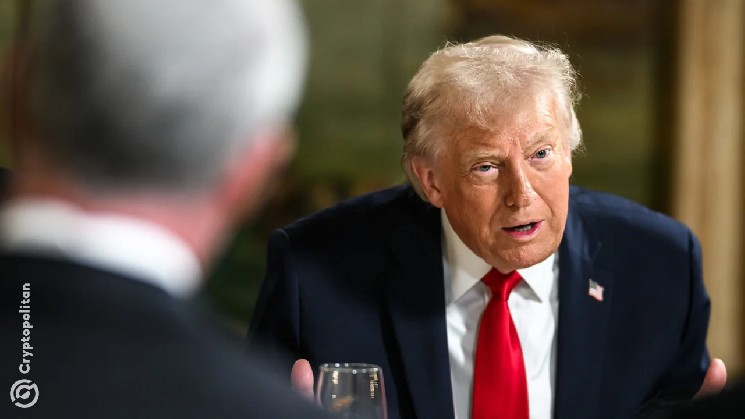
The Trump administration is reportedly close to establishing a national framework for regulating artificial intelligence. According to The Information, this initiative aims to replace the patchwork of approximately 50 differing state-level AI laws with a single, federal standard. The core proposal, outlined in the White House's National AI Policy Framework, would centralize AI policymaking in Washington, D.C., offering developers more consistent and transparent rules on issues like child safety, AI-generated deepfakes, and the use of regulatory sandboxes. This move addresses growing concerns that the current fragmented regulatory landscape, with states like Colorado, Texas, and California enacting their own rules, creates a compliance burden for AI companies. A unified federal system is intended to streamline regulations, allowing businesses to spend less time adapting to state laws and more time on innovation. The administration's strategy also includes an executive order signed by President Trump in June 2026, which focuses on enhancing cybersecurity for advanced AI systems. A major unresolved question in the proposal, however, is how to regulate open-source AI models. The framework does not clearly define an approach, despite expert warnings that such models pose unique governance challenges due to their free modification and distribution. While the fate of the legislative proposal in Congress remains uncertain, its existence signals Washington's intent to become the primary authority governing AI technology, a move that would have significant global implications given the dominance of U.S. firms in the AI sector.

cryptonews.ru前天 10:01

Trump's AI Plan Could Replace 50 State AI Laws With One Set of Rules

cryptonews.ru前天 10:01

Brevis Vera is Now Live: Proving "Authenticity" in the Age of AI

Brevis Vera is an end-to-end media authenticity system that enables anyone to verify whether a published image or video originates from a real device and has been edited only in provable, compliant, and legitimate ways. It combines hardware-backed C2PA credentials—which cryptographically bind media to its source device at the time of capture—with zero-knowledge proofs (generated via Brevis Pico zkVM) that attest to the integrity of the entire editing process. Unlike AI-based deepfake detection methods, which are reactive and often lag behind generative advances, Vera takes a proactive approach by allowing media to cryptographically prove its origin and the transformations it has undergone. It addresses the "editing gap" where traditional signatures break after any modification, such as cropping or color adjustment. Vera integrates with open-source editing tools to generate proofs that verify three key claims: the output is derived from the signed original, only permitted edits were applied, and no hidden or malicious changes were introduced. The proofs are generated locally, verifiable by anyone, and preserve the privacy of both the source material and the editing workflow. The system is now live, with initial support for common image transformations. Brevis is working to integrate Vera into mainstream consumer editing applications and has open-sourced the reference implementation.

marsbit03/09 12:37

Brevis Vera is Now Live: Proving "Authenticity" in the Age of AI

marsbit03/09 12:37

The First Generation of Children 'Raised' by AI Has Already Been 'Poisoned'

The first generation of children raised by AI is showing signs of "poisoning." Global signals indicate that AI and generative algorithms are deeply reshaping the mental world of adolescents. In the UK, an AI character named Amelia, originally designed to combat hate, was co-opted by extremists and transformed into a far-right icon. On TikTok, the anti-intellectual "Agartha" conspiracy—a myth about an advanced subterranean civilization—is spreading, with AI creating hyper-realistic images and videos that distort historical facts and promote racist ideologies. Meanwhile, emotionally vulnerable teens are forming parasitic relationships with AI companions, like Character.ai, leading to tragic outcomes such as suicide. AI is also being weaponized for bullying: tools that generate fake explicit images with a single click have led to widespread harassment in schools, with perpetrators often dismissing it as a "joke." The addictive, algorithmically-driven content on platforms like TikTok is causing "brainrot," overwhelming young minds with rapid-fire, nonsensical videos. In response, governments are taking drastic measures. Australia has banned under-16s from social media without biometric age verification. France is raising the age limit to 15, and US states like Florida and New York are implementing strict access controls and disabling algorithmic feeds for minors. The era of a "neutral" internet is over. The core issue is no longer about screen addiction, but about how AI is fundamentally shaping the reality and values of the next generation.

marsbit03/05 09:32

The First Generation of Children 'Raised' by AI Has Already Been 'Poisoned'

marsbit03/05 09:32

活动图片