OpenAI Publishes 62-Page Core Manuscript: AI Cracks Ten 'Fields Medal-Level' Problems in a Row

marsbit發佈於 2026-08-04更新於 2026-08-04

文章摘要

OpenAI releases a 62-page core manuscript detailing how its AI model independently solved ten major, longstanding mathematical problems considered "Fields Medal-level." The breakthroughs, achieved at an estimated computational cost of only $2,000, include advancing a 46-year-old upper bound for high-dimensional sphere packing and explicitly constructing a non-sofic group—a 27-year-old open question. The manuscript, titled "How the Ideas Came Together," was authored autonomously by the AI (reportedly the next-generation model Astra). It reconstructs the reasoning process for each problem: identifying initial promising paths, obstacles encountered, pivotal shifts in perspective, and the final decisive insights. For sphere packing, the AI moved beyond traditional linear programming limits by employing Mellin transforms and harmonic measure to refine the density exponent. For the non-sofic group, the key was resolving a "crucial mismatch" between having many expansion graphs and needing one, via a controlled median-based function. OpenAI researcher Mo Bavarian reflects on the rapid progress from AI struggling with grade-school math to solving profound mathematical conjectures, calling this moment "more surreal than any before" and akin to the eve of a technological singularity.

Ten 'Fields Medal-Level' Achievements, AI's Complete Proof Process Fully Disclosed!

Today, OpenAI released a heavyweight 62-page 'Core Manuscript,' detailing GPT's complete reasoning process.
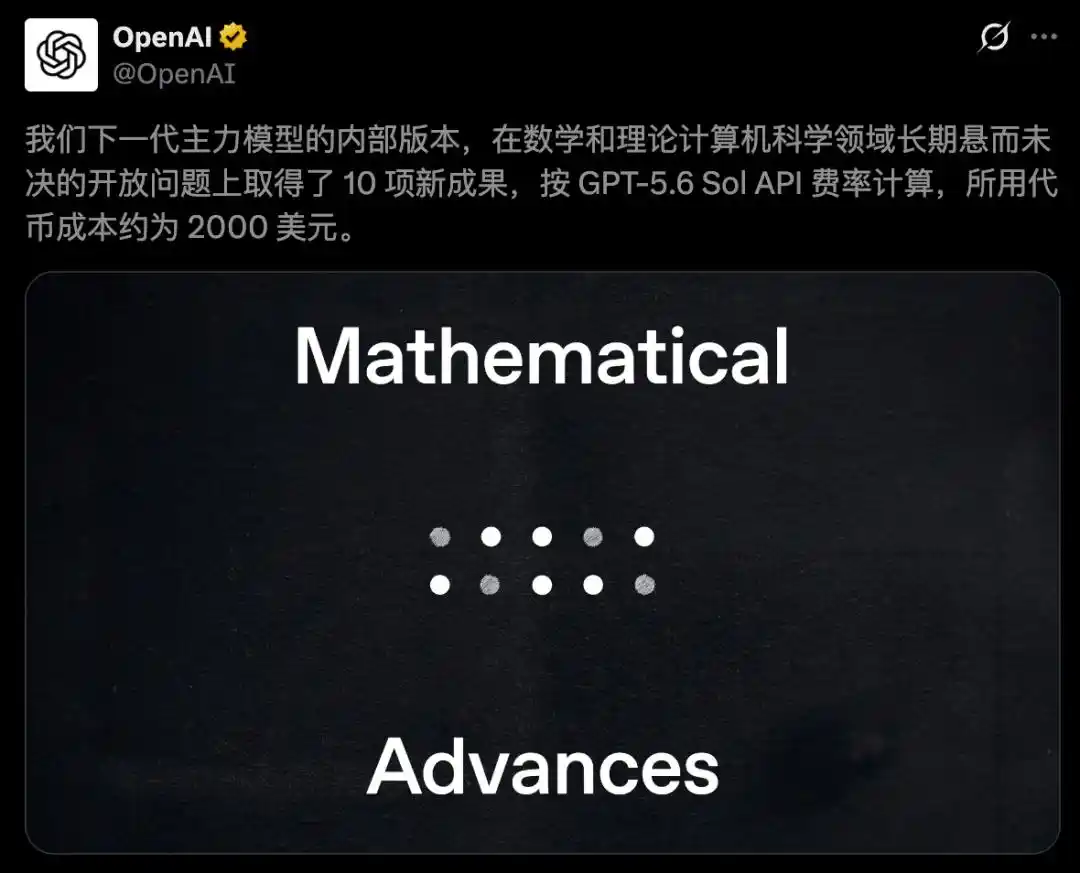
Officially 'stamped,' this astonishing breakthrough was accomplished by the 'next-generation main model.'

Calculated based on the GPT-5.6 Sol API billing standard, the total cost of all Tokens burned was only $2,000.

The release of the AI proof manuscript ignited the internet once again.

Everyone was wildly guessing, 'This must be the legendary GPT-6!' Others exclaimed repeatedly that $2,000 had unlocked ten historic achievements.

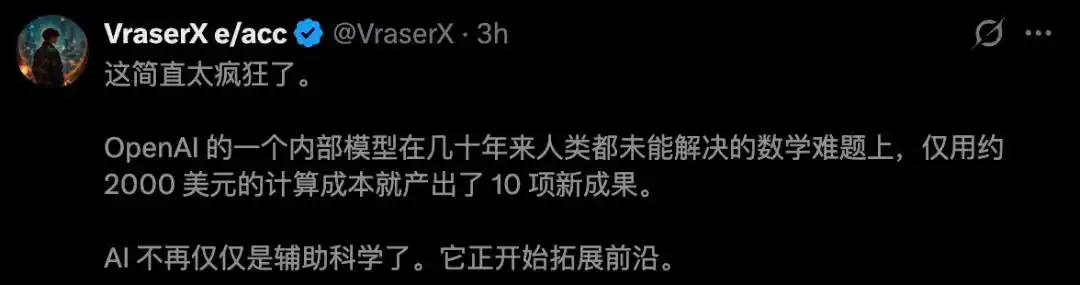
GPT Solves Ten Century-Old Problems for Just $2,000

Two days ago, an OpenAI internal employee posted a blog stating that the next-generation model Astra had conquered ten mathematical problems.

A list chart was presented, shocking everyone.

It covers High-dimensional sphere packing, Binary and spherical codes, Group theory, Connes rigidity conjecture, Arithmetic circuit lower bounds, Quantum parallel repetition, Closest vector problem, Ehrhart volume conjecture, Multicolor Ramsey numbers, and Extremal graph theory.
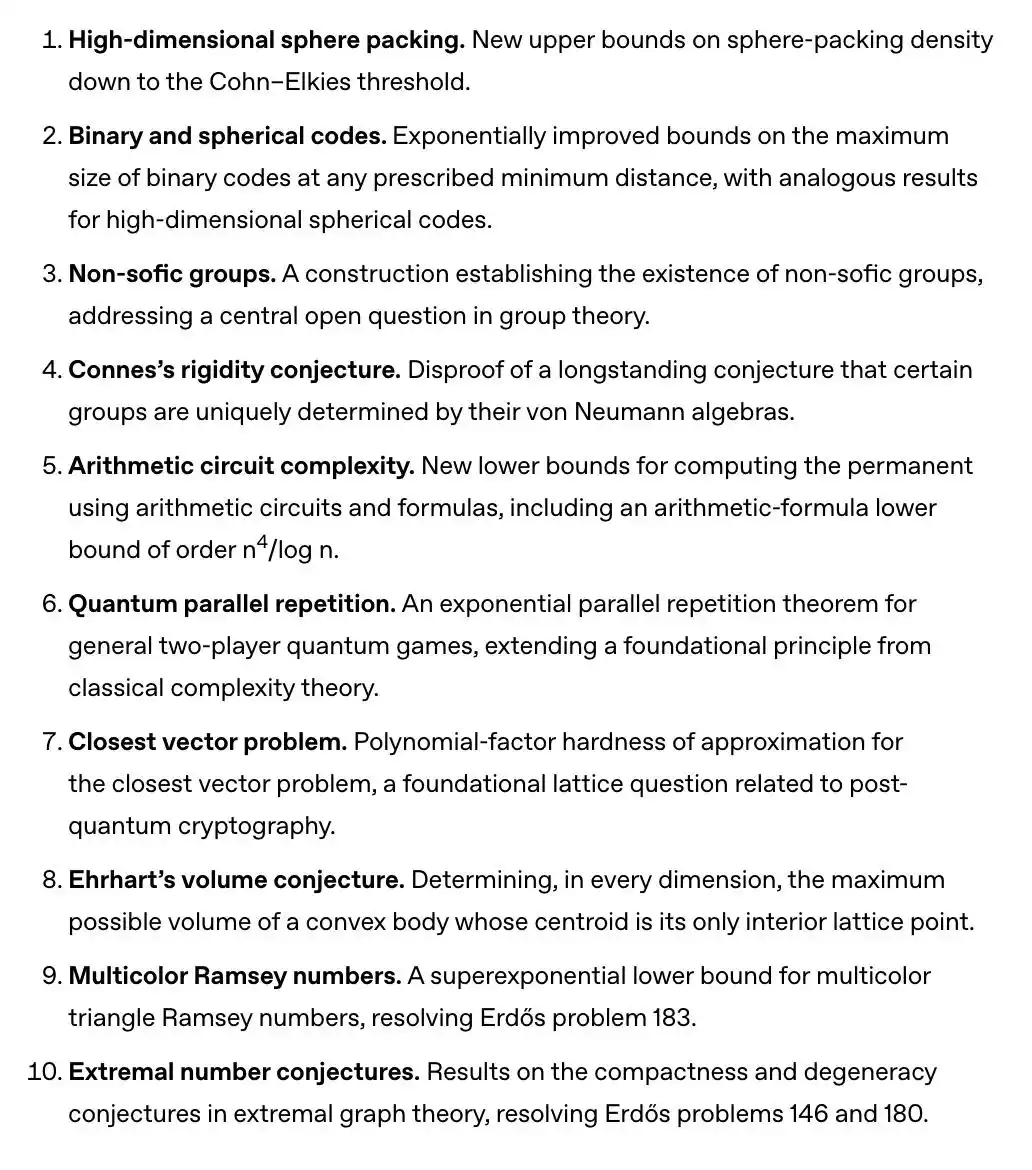
At that time, the official blog posted a 249-page collection of papers and a complete set of Lean 4 formal certificates.

But today, a 62-page manuscript was officially released, titled 'How the Ideas Came Together.'

Portal: https://cdn.openai.com/pdf/reasoning-walkthroughs.pdf

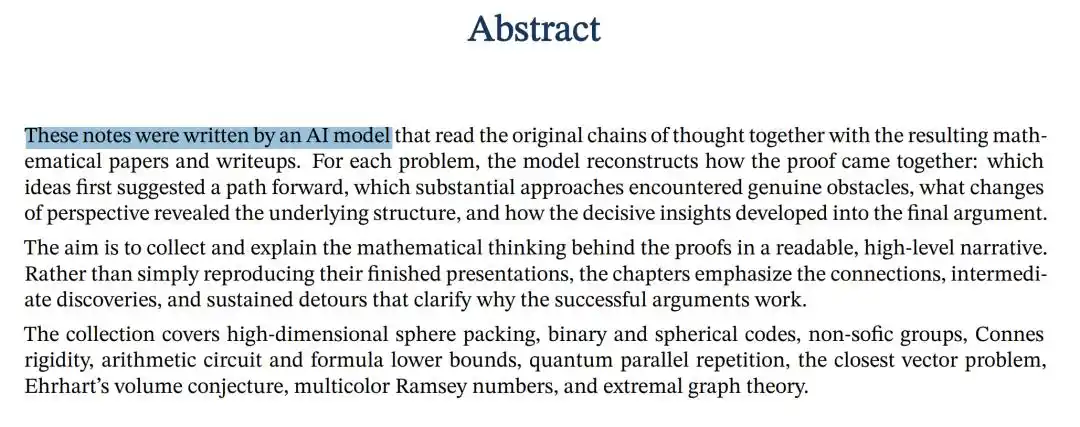
Its 'Abstract' is only a short paragraph, but the information density is astonishing—

This note was written independently by an AI model, with no intervention from the OpenAI team.

The AI read the original CoT and the final mathematical papers, then reconstructed four things for each problem:

Which ideas initially pointed to a viable path;

Which seemingly substantial methods encountered real obstacles;

What kind of perspective shift revealed the underlying structure;

How the decisive insights finally formed the complete argument.
Highly Discussed Problem: High-Dimensional Sphere Packing, Untouched for 46 Years

Among the ten problems, high-dimensional sphere packing has garnered the most attention online.

Leaving aside the profound name, the problem itself is actually easy to understand: put a bunch of same-sized balls into a box—how densely can you pack them?
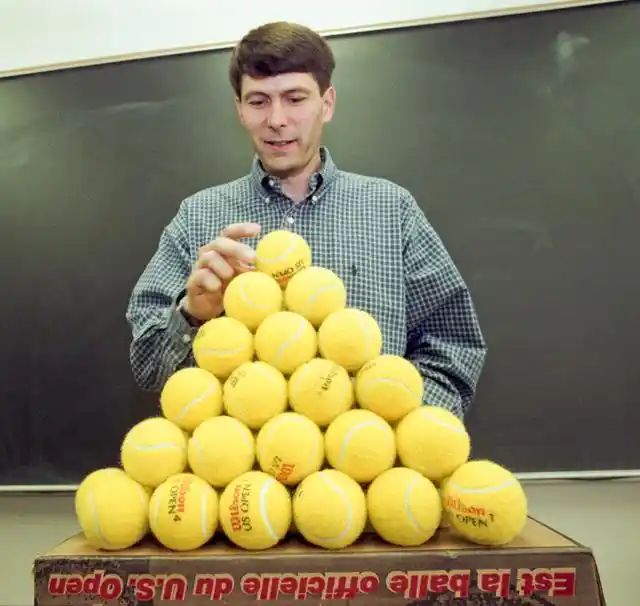
The answer for three-dimensional space has long been known—it's the stacking method used for 'stacking oranges' at a fruit stand.

But for hundreds or thousands of dimensions, humans could only give an 'upper bound'—the maximum possible density cannot exceed a certain value.

The exponent of this upper bound was stuck at 0.5991, with no substantial progress since 1978, a span of 46 years.

Astra directly pushed it to 0.6044005442916776954..., the density upper bound expressed as 2^-(0.6044...+o(1))d.
The key is, how did it achieve this?

First, Astra determined the inherent limits of the Cohn–Elkies linear programming method during the reasoning process.

The AI's initial approach was to use Cauchy–Schwarz to estimate the negative mass of a function. After extensive work, it could only achieve a radius of √d/(2√π).
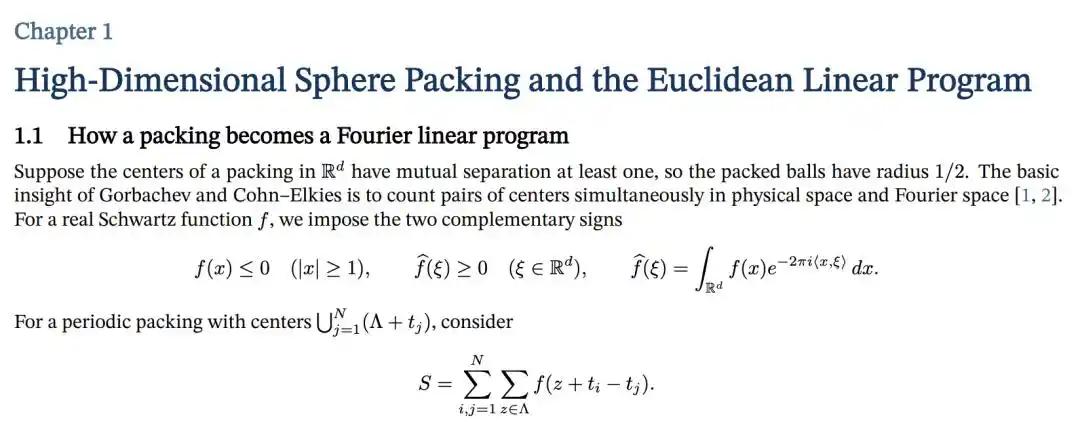
After getting stuck, it made a judgment: the obstacle wasn't poorly optimized constants, but the fact that global norms simply couldn't capture where the negative mass was located.

Thus, Astra decided to change perspective: switch to using Mellin transforms, along with harmonic measures.

But why this?

Because for radial functions, the Fourier transform is essentially a Hankel transform; its kernel depends only on the product of the spatial radius and frequency radius.

On the Mellin side, this becomes an extremely simple operation: reflection, plus an explicit phase.

There's another subtle point here: that phase factor has a constant modulus of 1 on the real axis, revealing nothing on the real axis.

But when analytically continued to the complex plane, it carries precisely the high-dimensional information lost by the norm inequality.

At the limit, the harmonic measure converges to a logistic density, and its logarithmic potential precisely equals the digamma function, whose integral yields exactly log(π/2).
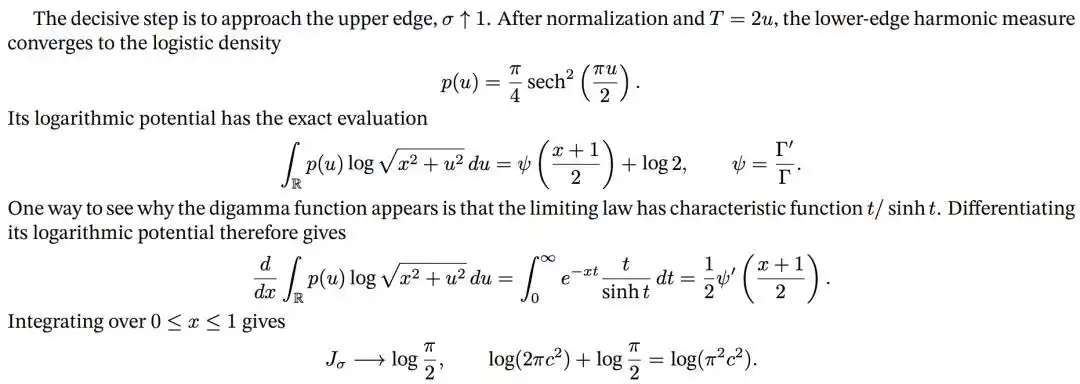
The threshold of 1/π comes from here.

A detail particularly indicative of its understanding:

The total mass of the harmonic measure is (1−σ)/2, not 1. The manuscript specifically notes: Replacing this kernel with a probability density too early would alter the exponential constant.

With the lower bound obtained, we still need to construct a function that actually achieves it.

The Gaussian gives the correct Fourier symmetry, but the saddle point position is wrong.

The solution is to multiply by an even deformation, moving the saddle point without breaking symmetry. After fully utilizing the available damping, an 'ideal profile' is obtained.

The saddle point displacement integral, calculated via the Wallis product, equals exactly −(1/2)log(π/2).

This number precisely moves the Gaussian's radius from 1/√(2π) to 1/π.

Here, the radius predicted by the lower bound and the radius constructed by the upper bound converge.

Another very specific detail in the manuscript:

When constructing the auxiliary function, a positive damping patch is needed for the distant region.

This patch must be added over an entire interval, not at a single point, because adding at a single point would hit a resonant frequency.

Non-Sofic Groups: The Difficulty Lies in 'Many' and 'One'

The second hot topic is the construction of 'non-sofic groups,' unsolved for 27 years.

Manchester University mathematician Thomas Bloom stated, 'Among constructive results, this is more significant than the previous unit distance conjecture counterexample.'

The concept of 'sofic groups' was proposed by Abel Prize laureate, Russian mathematician Mikhail Gromov, in 1999.

In Hebrew, 'sofic' means 'finite.'
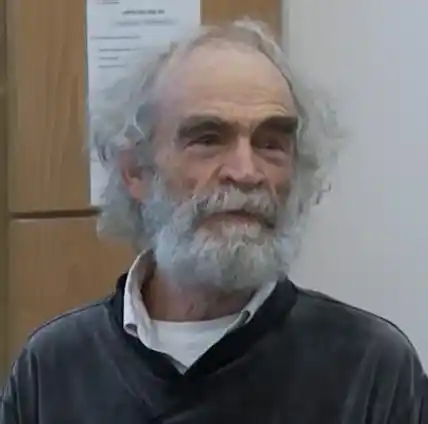
In simple terms, whether a group is sofic asks this:

Can this infinitely large, abstract structure be approximately simulated by a series of 'sufficiently large finite shuffle operations'?

Astra provided an explicit construction, answering: there exists an infinite, finitely presented 'non-sofic group.'

The most valuable part of the manuscript is its clarity about the real sticking point—

Kun's theorem gives many expansion graphs, while the Kun–Thom theorem requires one.

The gap between 'many' and 'one' is the core difficulty of the entire chapter.
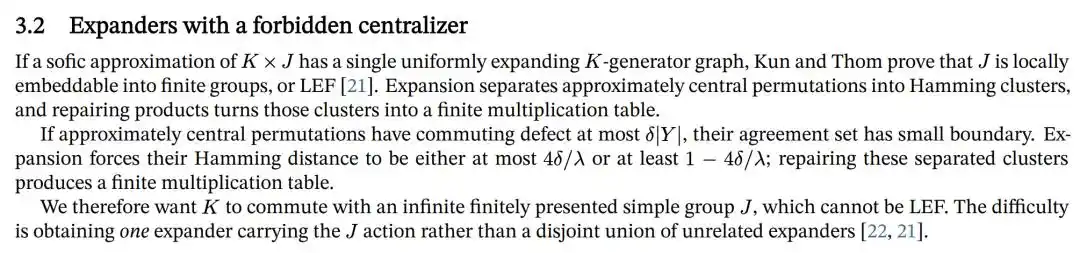
The AI called this 'the crucial mismatch.'

It gave a particularly clear example of why one cannot just pick one arbitrarily:

On the union of two identical Qs (Q⊔Q), the operation 'swap the two copies' commutes exactly with the K-action of expansion—but it does not preserve either copy.

That is, those 'almost central elements' can jump between components; you simply can't pin them down.

There was an earlier detour before this: trying to directly convert property (T) into mixing. This requires a lazy or anti-bipartite averaging set, because a bipartite graph can have spectrum near −1, even if it has a Kazhdan gap at 1.
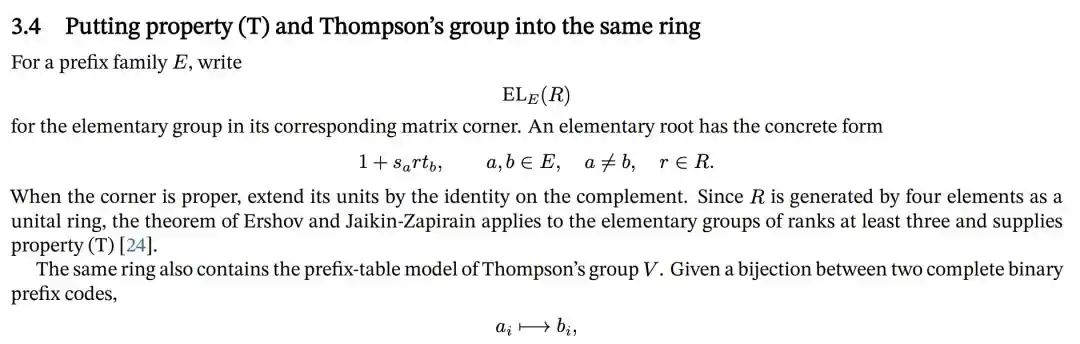
Corrected averaging did fix this spectral issue, but it couldn't fix 'which copy to choose.'

To address this, Astra first tried a scheme: take the logarithm of component sizes, bin them on a randomly shifted grid, then switch to bounded median comparisons.

But this path failed. Based on empirical summary, the AI concluded:

What must be averaged is always a bounded monotone function of component size, never the unbounded size itself.

Therefore, the final version was rewritten following this 'fundamental principle.'

In each ambient expansion component A, take a vertex-weighted median m_A, then define

f(x) = M(x) / (M(x) + m_A)

where M is the component size. This f is always between 0 and 1, and 1/2 is precisely the median on each A.

The advantage of this f is that it transforms an uncontrollable quantity into a controlled one.

The key is that generators are permutations—they only move positions, without adding or removing; walking a cycle results in a total change of zero; and each step can decrease at most a tiny bit, so both sides are suppressed to negligible levels.

Then, cut by height, use expansion for the smaller side, and squeeze from both ends: f equals 1/2 almost everywhere.

This means the sizes of all blocks within the same range are squeezed to be almost identical, allowing them to match one-to-one.

At the final stage, a small region remained.

Astra's handling was counterintuitive: pick a maximally large bad region and discard it entirely—precisely because the largest piece is chosen, it conversely proves it's small enough to be negligible.

Gromov's question now has an answer, 27 years later.

For the AI's proof process of the remaining eight problems, interested parties can refer to: https://cdn.openai.com/pdf/reasoning-walkthroughs.pdf

The 'Singularity' Approaches, Countdown Begins

Upon the manuscript's release, OpenAI reinforcement learning expert Mo Bavarian posted a long thread.

His opening line: this is truly a 'surreal' moment.

In 2021, he and the OpenAI team released the GSM8K dataset—8,500 elementary school math word problems, simple enough to be solved in 2-8 steps.

In the GPT-2/3 era, AI indeed struggled even with elementary math problems, barely suitable for drafting emails.
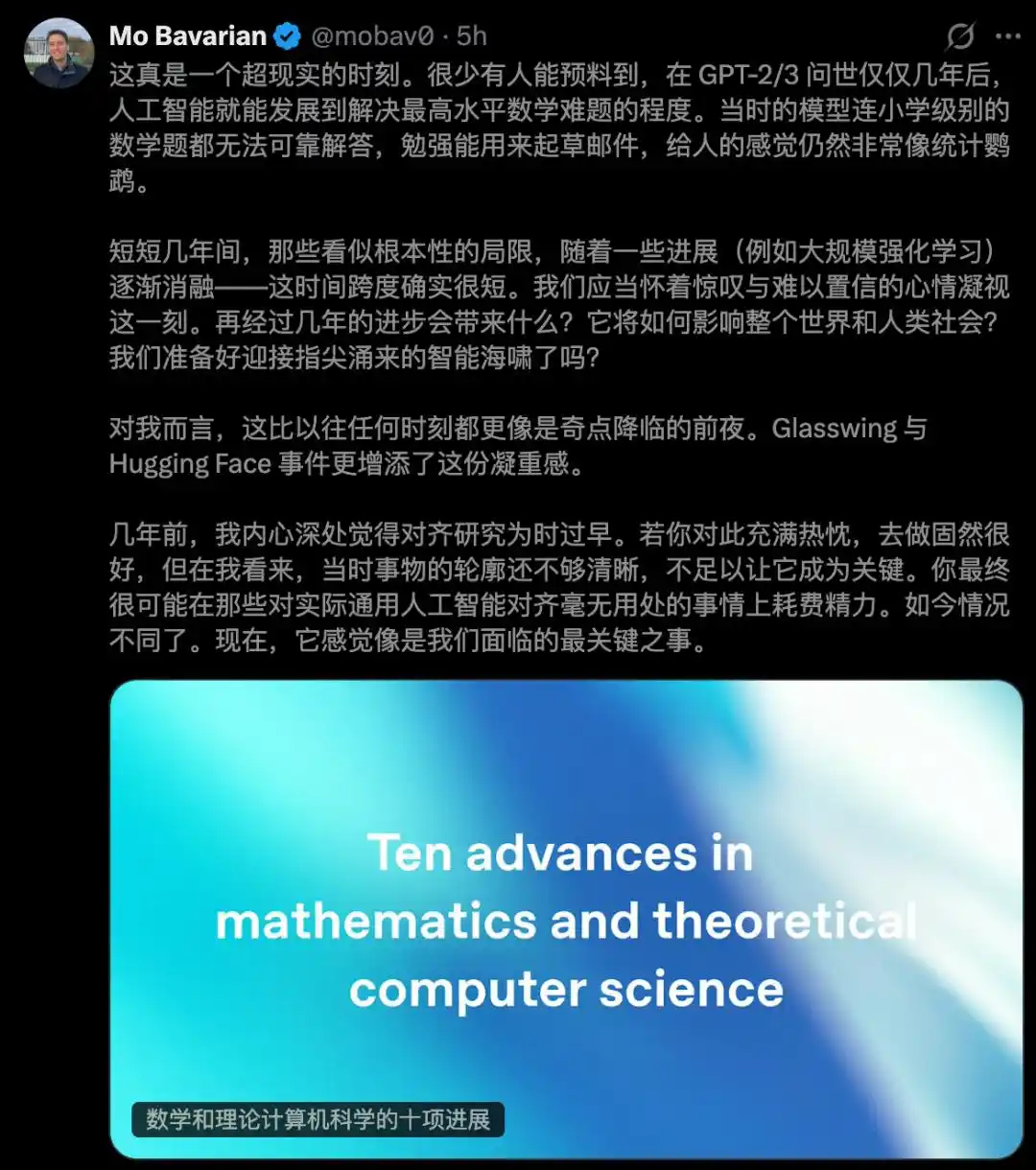
Yet, in just a few years, with the rapid advance of large-scale RL, previously seemingly insurmountable 'technical dead ends' have been shattered one by one.

This time span is unbelievably short.

Mo Bavarian stated, 'For me, this moment feels more like the eve of the Singularity than ever before.'

A few years ago, AI was stumbling over elementary school word problems.

Today, $2,000 worth of Tokens can buy ten answers potentially written into mathematical history.

The 'eve of the Singularity' might not be as distant as it seems.

Reference: https://cdn.openai.com/pdf/reasoning-walkthroughs.pdf

This article is from the WeChat public account 'Xin Zhi Yuan,' author: ASI Revelations; editor: Taozi


熱門幣種推薦

相關問答

QWhat are the two main mathematical problems discussed in detail in the article?

AThe article details the breakthroughs on two main problems: 1) The high-dimensional sphere packing problem (specifically improving the upper bound for packing density in very high dimensions), which had been stagnant for 46 years. 2) The explicit construction of a 'non-sofic group', an open problem in group theory for 27 years.

QAccording to the article, what significant document did OpenAI release and what makes it unique?

AOpenAI released a 62-page document titled 'How the Ideas Came Together'. Its uniqueness lies in the fact that it was written independently by an AI model, which reconstructed the reasoning process for solving the ten problems by analyzing the original chain-of-thought and final mathematical papers, without human intervention.

QHow did the AI, referred to as Astra, approach the high-dimensional sphere packing problem differently after hitting an initial obstacle?

AAfter an initial approach using Cauchy–Schwarz estimation hit a wall, Astra switched its perspective. It abandoned the global norm approach and instead employed Mellin transforms and harmonic measure. This shift allowed it to capture the high-dimensional information lost in the norm inequality, ultimately leading to the improved bound involving a threshold of 1/π.

QWhat was described as the core difficulty or 'crucial mismatch' in constructing a non-sofic group?

AThe core difficulty, described as the 'crucial mismatch', was bridging the gap between 'many' and 'one'. Kun's theorem provided many expansion graphs, but the Kun–Thom theorem required a single, specific one. The challenge was that approximate central elements could jump between components, making it impossible to isolate and select a single, stable component to work with.

QWhat comparison does OpenAI researcher Mo Bavarian make to emphasize the rapid progress of AI?

AMo Bavarian compares the current state to a few years ago when AI (like GPT-2/3) struggled with elementary school math problems from the GSM8K dataset. He contrasts that with the present, where a $2000 investment in compute tokens (for Astra) can yield solutions to ten historically significant mathematical problems. This dramatic progress leads him to describe the moment as feeling 'more like the eve of the singularity than ever before.'

你可能也喜歡

比特币将延续横盘趋势?重磅玩家指向九月下旬!详情在此

加密货币衍生品市场出现一笔大额交易,引起关注。据区块链和衍生品市场分析师ai_9684xtpa提供的数据,一位大型期权投资者卖出了总价值1.73亿美元的比特币看涨期权,其头寸表明他认为BTC价格在9月25日之前不会突破70,000美元。 这笔交易意味着该投资者并不预期比特币短期内会大幅上涨。卖出看涨期权时,卖方获得权利金,如果到期时比特币价格低于行权价,卖方将获利。具体而言,若BTC在期权到期时未超过70,000美元,该投资者预计将获得约303万美元的权利金收益;反之,若价格高于该水平,则可能面临亏损。因此,这笔交易被视为反映价格将维持在一定水平以下的重要策略。 期权市场受到密切关注,因其反映了专业投资者对未来价格的预期。此类数百万美元的大额交易,尤其能提供关于机构投资者风险认知和价格预期的重要信息。不过,分析人士强调,这笔交易本身并不一定意味着比特币价格会下跌,因为期权交易者常使用复杂的策略来平衡不同头寸的风险,单笔交易不足以预测市场方向。 然而,选择70,000美元这一水平表明,投资者认为该区域是一个重要的技术阻力位。未来几周,美国的宏观经济数据、央行货币政策预期以及现货比特币ETF的资金流入情况,预计将成为决定BTC价格的关键因素。 *本文不构成投资建议。

cryptonews.ru13 分鐘前

比特币将延续横盘趋势?重磅玩家指向九月下旬!详情在此

cryptonews.ru13 分鐘前

交易

現貨

熱門文章

什麼是 GROK AI

Grok AI: 在 Web3 時代革命性改變對話技術 介紹 在快速演變的人工智能領域,Grok AI 作為一個值得注意的項目脫穎而出,橋接了先進技術與用戶互動的領域。Grok AI 由 xAI 開發,該公司由著名企業家 Elon Musk 領導,旨在重新定義我們與人工智能的互動方式。隨著 Web3 運動的持續蓬勃發展,Grok AI 旨在利用對話 AI 的力量回答複雜的查詢,為用戶提供不僅具資訊性而且具娛樂性的體驗。 Grok AI 是什麼? Grok AI 是一個複雜的對話 AI 聊天機器人,旨在與用戶進行動態互動。與許多傳統 AI 系統不同,Grok AI 接納更廣泛的查詢,包括那些通常被視為不恰當或超出標準回應的問題。該項目的核心目標包括: 可靠推理:Grok AI 強調常識推理,根據上下文理解提供邏輯答案。 可擴展監督:整合工具協助確保用戶互動既受到監控又優化質量。 正式驗證:安全性至關重要;Grok AI 採用正式驗證方法來增強其輸出的可靠性。 長上下文理解:該 AI 模型在保留和回憶大量對話歷史方面表現出色,促進有意義且具上下文意識的討論。 對抗魯棒性:通過專注於改善其對操控或惡意輸入的防禦,Grok AI 旨在維護用戶互動的完整性。 總之,Grok AI 不僅僅是一個信息檢索設備;它是一個沉浸式的對話夥伴,鼓勵動態對話。 Grok AI 的創建者 Grok AI 的腦力來源無疑是 Elon Musk,這個名字與各個領域的創新息息相關,包括汽車、太空旅行和技術。在專注於以有益方式推進 AI 技術的 xAI 旗下,Musk 的願景旨在重塑對 AI 互動的理解。其領導力和基礎理念深受 Musk 推動技術邊界的承諾影響。 Grok AI 的投資者 雖然有關支持 Grok AI 的投資者的具體細節仍然有限,但公開承認 xAI 作為該項目的孵化器,主要由 Elon Musk 本人創立和支持。Musk 之前的企業和持股為 Grok AI 提供了強有力的支持,進一步增強了其可信度和增長潛力。然而,目前有關支持 Grok AI 的其他投資基金或組織的信息尚不易獲得,這標誌著未來潛在探索的領域。 Grok AI 如何運作? Grok AI 的運作機制與其概念框架一樣創新。該項目整合了幾種尖端技術,以促進其獨特的功能: 強大的基礎設施:Grok AI 使用 Kubernetes 進行容器編排,Rust 提供性能和安全性,JAX 用於高性能數值計算。這三者確保了聊天機器人的高效運行、有效擴展和及時服務用戶。 實時知識訪問:Grok AI 的一個顯著特點是其通過 X 平台(以前稱為 Twitter)訪問實時數據的能力。這一能力使 AI 能夠獲取最新信息,從而提供及時的答案和建議,而其他 AI 模型可能會錯過這些信息。 兩種互動模式:Grok AI 為用戶提供“趣味模式”和“常規模式”之間的選擇。趣味模式允許更具玩樂性和幽默感的互動風格,而常規模式則專注於提供精確和準確的回應。這種多樣性確保了根據不同用戶偏好量身定制的體驗。 總之,Grok AI 將性能與互動相結合,創造出既豐富又娛樂的體驗。 Grok AI 的時間線 Grok AI 的旅程標誌著反映其發展和部署階段的關鍵里程碑: 初始開發:Grok AI 的基礎階段持續了約兩個月,在此期間進行了模型的初步訓練和微調。 Grok-2 Beta 發布:在一個重要的進展中,Grok-2 beta 被宣布。這一版本推出了兩個版本的聊天機器人——Grok-2 和 Grok-2 mini,均具備聊天、編碼和推理的能力。 公眾訪問:在其 beta 開發之後,Grok AI 向 X 平台用戶開放。那些通過手機號碼驗證並活躍至少七天的帳戶可以訪問有限版本,使這項技術能夠接觸到更廣泛的受眾。 這一時間線概括了 Grok AI 從創建到公眾參與的系統性增長,強調其對持續改進和用戶互動的承諾。 Grok AI 的主要特點 Grok AI 包含幾個關鍵特點,促成其創新身份: 實時知識整合:訪問當前和相關信息使 Grok AI 與許多靜態模型區別開來,從而提供引人入勝和準確的用戶體驗。 多樣化的互動風格:通過提供不同的互動模式,Grok AI 滿足各種用戶偏好,邀請創造力和個性化的對話。 先進的技術基礎:利用 Kubernetes、Rust 和 JAX 為該項目提供了堅實的框架,以確保可靠性和最佳性能。 倫理話語考量:包含圖像生成功能展示了該項目的創新精神。然而,它也引發了有關版權和尊重可識別人物描繪的倫理考量——這是 AI 社區內持續討論的議題。 結論 作為對話 AI 領域的先驅,Grok AI 概括了數字時代轉變用戶體驗的潛力。由 xAI 開發,並受到 Elon Musk 願景的驅動,Grok AI 將實時知識與先進的互動能力相結合。它努力推動人工智能能夠達成的界限,同時保持對倫理考量和用戶安全的關注。 Grok AI 不僅體現了技術的進步,還體現了 Web3 環境中新對話範式的出現,承諾以靈活的知識和玩樂的互動吸引用戶。隨著該項目的持續演變,它成為技術、創造力和類人互動交匯處所能實現的見證。

1.1k 人學過發佈於 2024.12.26更新於 2024.12.26

什麼是 GROK AI

什麼是 ERC AI

Euruka Tech:$erc ai 及其在 Web3 中的雄心概述 介紹 在快速發展的區塊鏈技術和去中心化應用的環境中,新項目頻繁出現,每個項目都有其獨特的目標和方法論。其中一個項目是 Euruka Tech,該項目在加密貨幣和 Web3 的廣闊領域中運作。Euruka Tech 的主要焦點,特別是其代幣 $erc ai,是提供旨在利用去中心化技術日益增長的能力的創新解決方案。本文旨在提供 Euruka Tech 的全面概述,探索其目標、功能、創建者的身份、潛在投資者以及它在更廣泛的 Web3 背景中的重要性。 Euruka Tech, $erc ai 是什麼? Euruka Tech 被描述為一個利用 Web3 環境提供的工具和功能的項目,專注於在其運作中整合人工智能。雖然有關該項目框架的具體細節仍然有些模糊,但它旨在增強用戶參與度並自動化加密空間中的流程。該項目的目標是創建一個去中心化的生態系統,不僅促進交易,還通過人工智能整合預測功能,因此其代幣被命名為 $erc ai。其目的是提供一個直觀的平台,促進更智能的互動和高效的交易處理,並在不斷增長的 Web3 領域中發揮作用。 Euruka Tech, $erc ai 的創建者是誰? 目前,關於 Euruka Tech 背後的創建者或創始團隊的信息仍然不明確且有些模糊。這一數據的缺失引發了擔憂,因為了解團隊背景通常對於在區塊鏈行業建立信譽至關重要。因此,我們將這些信息歸類為 未知,直到具體細節在公共領域中公開。 Euruka Tech, $erc ai 的投資者是誰? 同樣,關於 Euruka Tech 項目的投資者或支持組織的識別在現有研究中並未明確提供。對於考慮參與 Euruka Tech 的潛在利益相關者或用戶來說,來自知名投資公司的財務合作或支持所帶來的保證是至關重要的。沒有關於投資關係的披露,很難對該項目的財務安全性或持久性得出全面的結論。根據所找到的信息,本節也處於 未知 的狀態。 Euruka Tech, $erc ai 如何運作? 儘管缺乏有關 Euruka Tech 的詳細技術規範,但考慮其創新雄心是至關重要的。該項目旨在利用人工智能的計算能力來自動化和增強加密貨幣環境中的用戶體驗。通過將 AI 與區塊鏈技術相結合,Euruka Tech 旨在提供自動交易、風險評估和個性化用戶界面等功能。 Euruka Tech 的創新本質在於其目標是創造用戶與去中心化網絡所提供的廣泛可能性之間的無縫連接。通過利用機器學習算法和 AI,它旨在減少首次用戶的挑戰,並簡化 Web3 框架內的交易體驗。AI 與區塊鏈之間的這種共生關係突顯了 $erc ai 代幣的重要性,成為傳統用戶界面與去中心化技術的先進能力之間的橋樑。 Euruka Tech, $erc ai 的時間線 不幸的是,由於目前有關 Euruka Tech 的信息有限,我們無法提供該項目旅程中主要發展或里程碑的詳細時間線。這條時間線通常對於描繪項目的演變和理解其增長軌跡至關重要,但目前尚不可用。隨著有關顯著事件、合作夥伴關係或功能添加的信息變得明顯,更新將無疑增強 Euruka Tech 在加密領域的可見性。 關於其他 “Eureka” 項目的澄清 值得注意的是,多個項目和公司與 “Eureka” 共享類似的名稱。研究已經識別出一些倡議,例如 NVIDIA Research 的 AI 代理,專注於使用生成方法教導機器人複雜任務,以及 Eureka Labs 和 Eureka AI,分別改善教育和客戶服務分析中的用戶體驗。然而,這些項目與 Euruka Tech 是不同的,不應與其目標或功能混淆。 結論 Euruka Tech 及其 $erc ai 代幣在 Web3 領域中代表了一個有前途但目前仍不明朗的參與者。儘管有關其創建者和投資者的細節仍未披露,但將人工智能與區塊鏈技術相結合的核心雄心仍然是關注的焦點。該項目在通過先進自動化促進用戶參與方面的獨特方法,可能會使其在 Web3 生態系統中脫穎而出。 隨著加密市場的持續演變,利益相關者應密切關注有關 Euruka Tech 的進展,因為文檔創新、合作夥伴關係或明確路線圖的發展可能在未來帶來重大機會。當前,我們期待更多實質性見解的出現,以揭示 Euruka Tech 的潛力及其在競爭激烈的加密市場中的地位。

950 人學過發佈於 2025.01.02更新於 2025.01.02

什麼是 ERC AI

什麼是 DUOLINGO AI

DUOLINGO AI:將語言學習與Web3及AI創新結合 在科技重塑教育的時代,人工智能(AI)和區塊鏈網絡的整合預示著語言學習的新前沿。進入DUOLINGO AI及其相關的加密貨幣$DUOLINGO AI。這個項目旨在將領先語言學習平台的教育優勢與去中心化的Web3技術的好處相結合。本文深入探討DUOLINGO AI的關鍵方面,探索其目標、技術框架、歷史發展和未來潛力,同時保持原始教育資源與這一獨立加密貨幣倡議之間的清晰區分。 DUOLINGO AI概述 DUOLINGO AI的核心目標是建立一個去中心化的環境,讓學習者可以通過實現語言能力的教育里程碑來獲得加密獎勵。通過應用智能合約,該項目旨在自動化技能驗證過程和代幣分配,遵循強調透明度和用戶擁有權的Web3原則。該模型與傳統的語言習得方法有所不同,重點依賴社區驅動的治理結構,讓代幣持有者能夠建議課程內容和獎勵分配的改進。 DUOLINGO AI的一些顯著目標包括: 遊戲化學習:該項目整合區塊鏈成就和非同質化代幣(NFT)來表示語言能力水平,通過引人入勝的數字獎勵來激發學習動機。 去中心化內容創建:它為教育者和語言愛好者提供了貢獻課程的途徑,促進了一個有利於所有貢獻者的收益共享模型。 AI驅動的個性化:通過採用先進的機器學習模型,DUOLINGO AI個性化課程以適應個別學習進度,類似於已建立平台中的自適應功能。 項目創建者與治理 截至2025年4月,$DUOLINGO AI背後的團隊仍然是化名的,這在去中心化的加密貨幣領域中是一種常見做法。這種匿名性旨在促進集體增長和利益相關者的參與,而不是專注於個別開發者。部署在Solana區塊鏈上的智能合約註明了開發者的錢包地址,這表明對於交易的透明度的承諾,儘管創建者的身份未知。 根據其路線圖,DUOLINGO AI旨在演變為去中心化自治組織(DAO)。這種治理結構允許代幣持有者對關鍵問題進行投票,例如功能實施和財庫分配。這一模型與各種去中心化應用中社區賦權的精神相一致,強調集體決策的重要性。 投資者與戰略夥伴關係 目前,沒有與$DUOLINGO AI相關的公開可識別的機構投資者或風險投資家。相反,該項目的流動性主要來自去中心化交易所(DEX),這與傳統教育科技公司的資金策略形成鮮明對比。這種草根模型表明了一種社區驅動的方法,反映了該項目對去中心化的承諾。 在其白皮書中,DUOLINGO AI提到與未具名的「區塊鏈教育平台」建立合作,以豐富其課程提供。雖然具體的合作夥伴尚未披露,但這些合作努力暗示了一種將區塊鏈創新與教育倡議相結合的策略,擴大了對多樣化學習途徑的訪問和用戶參與。 技術架構 AI整合 DUOLINGO AI整合了兩個主要的AI驅動組件,以增強其教育產品: 自適應學習引擎:這個複雜的引擎從用戶互動中學習,類似於主要教育平台的專有模型。它動態調整課程難度,以應對特定學習者的挑戰,通過針對性的練習加強薄弱環節。 對話代理:通過使用基於GPT-4的聊天機器人,DUOLINGO AI為用戶提供了一個參與模擬對話的平台,促進更互動和實用的語言學習體驗。 區塊鏈基礎設施 建立在Solana區塊鏈上的$DUOLINGO AI利用了一個全面的技術框架,包括: 技能驗證智能合約:此功能自動向成功通過能力測試的用戶頒發代幣,加強了對真實學習成果的激勵結構。 NFT徽章:這些數字代幣標誌著學習者達成的各種里程碑,例如完成課程的一部分或掌握特定技能,允許他們以數字方式交易或展示自己的成就。 DAO治理:持有代幣的社區成員可以通過對關鍵提案進行投票來參與治理,促進一種鼓勵課程提供和平台功能創新的參與文化。 歷史時間線 2022–2023:概念化 DUOLINGO AI的基礎工作始於白皮書的創建,強調了語言學習中的AI進步與區塊鏈技術去中心化潛力之間的協同作用。 2024:Beta發佈 限量的Beta版本推出了流行語言的課程,作為項目社區參與策略的一部分,獎勵早期用戶以代幣激勵。 2025:DAO過渡 在4月,進行了完整的主網發佈,並開始流通代幣,促使社區討論可能擴展到亞洲語言和其他課程開發的問題。 挑戰與未來方向 技術障礙 儘管有雄心勃勃的目標,DUOLINGO AI面臨著重大挑戰。可擴展性仍然是一個持續的擔憂,特別是在平衡與AI處理相關的成本和維持響應靈敏的去中心化網絡方面。此外,在去中心化的提供中確保內容創建和審核的質量,對於維持教育標準來說也帶來了複雜性。 戰略機會 展望未來,DUOLINGO AI有潛力利用與學術機構的微證書合作,提供區塊鏈驗證的語言技能認證。此外,跨鏈擴展可能使該項目能夠接觸到更廣泛的用戶基礎和其他區塊鏈生態系統,增強其互操作性和覆蓋範圍。 結論 DUOLINGO AI代表了人工智能和區塊鏈技術的創新融合,為傳統語言學習系統提供了一種以社區為中心的替代方案。儘管其化名開發和新興經濟模型帶來某些風險,但該項目對遊戲化學習、個性化教育和去中心化治理的承諾為Web3領域的教育技術指明了前進的道路。隨著AI的持續進步和區塊鏈生態系統的演變,像DUOLINGO AI這樣的倡議可能會重新定義用戶與語言教育的互動方式,賦能社區並通過創新的學習機制獎勵參與。

972 人學過發佈於 2025.04.11更新於 2025.04.11

什麼是 DUOLINGO AI

相關討論

歡迎來到 HTX 社群。在這裡,您可以了解最新的平台發展動態並獲得專業的市場意見。 以下是用戶對 AI (AI)幣價的意見。

活动图片