AI Bubble Is Bursting

链捕手發佈於 2026-06-07更新於 2026-06-07

文章摘要

The AI Bubble is Bursting: A Necessary Purge on the Path to Ubiquitous Intelligence Market volatility has reignited debates about an AI bubble, with figures like Ray Dalio pointing to high valuations. However, this parallels the dot-com bubble, which, despite its crash, laid the physical infrastructure for today's internet era. The current AI investment frenzy, with tech giants planning trillions in infrastructure spending far outstripping current AI application revenues, appears similarly imbalanced. This 'bubble' is seen as an inevitable phase for a disruptive technology, paying the "innovation tax." Critically, AI inference costs have plummeted over 99.7% since 2023, making intelligence nearly free at the margin. This hasn't reduced spending but has instead unlocked massive new demand, as seen in enterprise AI cloud expenditure tripling. This follows the Jevons Paradox: efficiency gains lead to greater total consumption. The market is now entering a cleansing phase, weeding out speculative ventures lacking real moats. The deeper shift is a move from capital expenditure (CapEx) on hardware to value creation in operational expenditure (OpEx) through AI applications that solve real industry problems. While infrastructure valuations are high, rapid earnings growth from widespread AI adoption across sectors—from manufacturing and finance to law and healthcare—may digest these valuations over time. Ultimately, this creative destruction will leave behind robust infrastructure...

Original Title: AI Bubble Is Already Bursting

Original Author: Chengbei Xugong, Gelong

In recent days, the market has experienced severe volatility, with "AI bubble theories" swirling.

Ray Dalio, founder of Bridgewater Associates, said: There is a bubble in the AI market, and the level is "relatively high."

NVIDIA CEO Jensen Huang said: AI presents a massive opportunity, and the demand for computing power has just begun to explode.

Who to believe?

Both of them are correct.

Is there a bubble in the AI industry? Inevitably, yes.

However, bubbles in the technology field are often the only way society can pay homage to a disruptive advanced productive force.

It is not a purely derogatory term.

In the long run, this is an inevitable phenomenon at the beginning of the emergence of advanced productive forces.
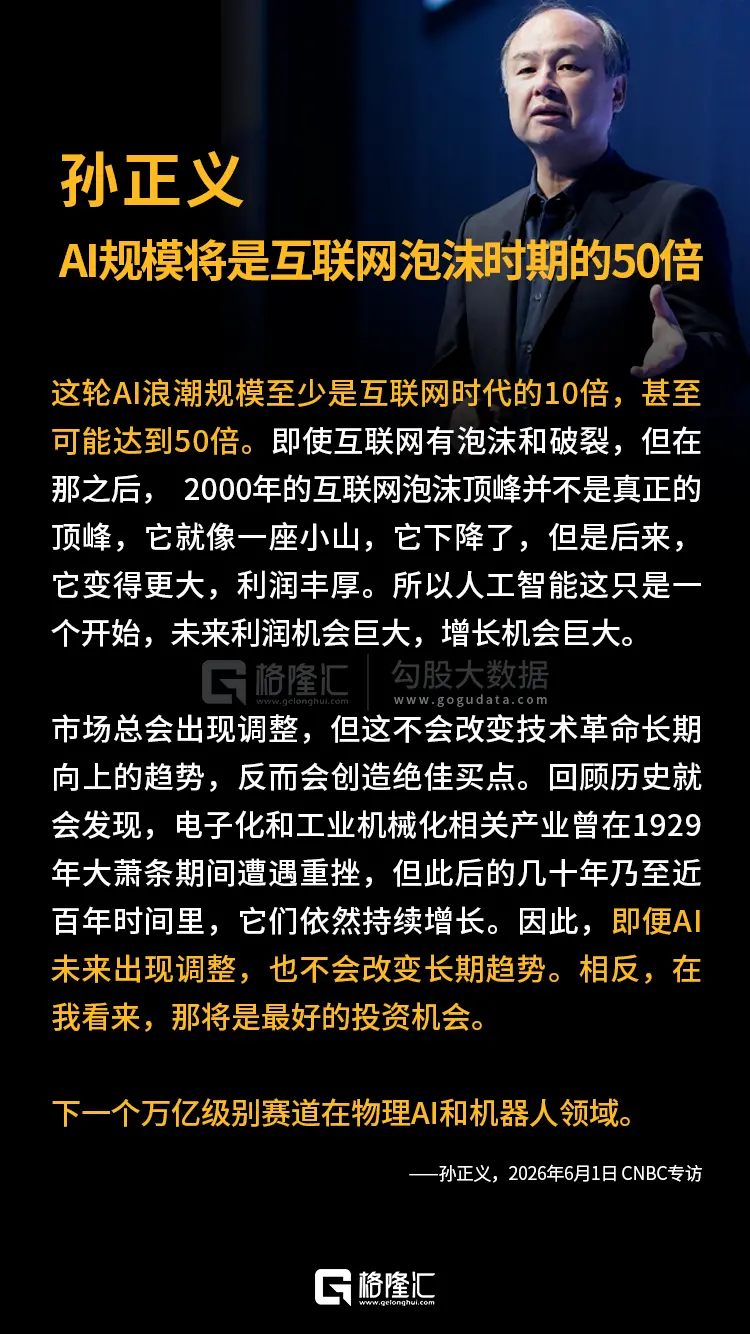
Many people compare the current situation to the 2000 internet bubble, feeling deeply concerned.

The dot-com bubble did cause the Nasdaq to plunge nearly 78%, evaporating over $5 trillion in wealth.

But twenty years later, which industry can operate without the internet?

Today, the value of the internet industry far exceeds that of the bubble era.

The AI bubble, at least on the surface, appears to be a similar situation.

The bubble existing in the capital markets cannot stop virtually every industry in society from actively being empowered by AI.

AI+ is an unstoppable trend.

Just as all industries today are inseparable from the internet, all industries in the future will be inseparable from AI.

01

In that era where any company with a '.com' in its name could go public and raise money, the Nasdaq soared nearly 600% between 1995 and 2000. Subsequently, a financial storm lasting two and a half years ensued.

Those prominent names back then, like software company MicroStrategy, plummeted 62% in a single day due to accounting scandals and overblown promises; Pets.com (selling pet food online) and Webvan (the pioneer of fresh grocery e-commerce) went bankrupt outright.

......

Amid the panic, almost everyone condemned the internet as a scam.

However, the physical infrastructure left behind by the reckless spending of speculative capital often nurtures the next era's supergiants at extremely low costs.

The bubble burst not because of the internet technology itself, but because the pace of physical infrastructure construction couldn't keep up with the market's rhythm.

For example, the once-dominant telecommunications companies (like WorldCom, Global Crossing) invested heavily in laying global submarine cables and dense wave division multiplexing networks. While they went bankrupt, these cheap "information superhighways" became the perfect breeding ground for the later rise of Netflix, Zoom, and mobile internet.

Without the frenzied, ahead-of-its-time global investment in telecom infrastructure around 2000, there would have been no later explosion of YouTube's video streaming or the development of cloud computing infrastructure.

Amazon is the most typical example.

Its stock price plunged from a high of $107 in 1999 to $7 in 2001, a drop of over 90%.

But it survived because its underlying business logic, "reconstructing retail through the network," aligned with the direction of advanced productive forces.

This is a classic case of Amara's Law: overestimating the short-term impact of a new technology while severely underestimating its long-term impact.

In the early stages of a technological revolution, the frenzy of speculative capital inevitably leads to overinvestment, forming a bubble.

This is the intelligence tax that innovation must pay.

But when the bubble subsides, what remains will be a more indestructible advanced productive force.

02

Returning to 2026, the bubble in the AI industry appears even larger.

Just the five major cloud service providers—Amazon, Google, Meta, Microsoft, and Oracle—are expected to have capital expenditures of $690 billion in 2026, with total AI infrastructure investment projected to reach $5.3 trillion by 2030.

Of this, only about 25% is spent on GPUs; the remaining 75% is invested entirely in physical infrastructure: liquid cooling systems, power transmission, network switches, optical modules, and land.

On the revenue side, the combined total revenue of all leading pure-play AI vendors like OpenAI, Anthropic, Cohere, Mistral, and Perplexity in 2026 is expected not to exceed $40 billion.

Nearly $700 billion poured into the foundational layer, only hundreds of billions returned from the application layer.

This severe asymmetry—what is it if not a bubble?

One cannot simply jump to such a conclusion.

There is a crucial point that cannot be overlooked.

In March 2023, when OpenAI released GPT-4, the blended cost per million input tokens was about $30.

By April 2025, thanks to model architecture optimization and inference computing improvements, the price for models with equivalent intelligence levels plummeted to $0.1-$0.15 per million tokens.

According to Stanford's "AI Index Report" and TokenCost data: AI inference costs have dropped over 99.7% in the past two years.

Following traditional linear thinking, with costs plummeting, corporate AI spending should decrease, right?

But the reality is, enterprise AI cloud spending tripled between 2024 and 2025.

Why?

Because when the marginal cost of "intelligence" approaches zero, AI is no longer just a simple text summarizer or chatbot; it has entered a new era of agents and multimodal augmented retrieval.

Companies are starting to let AI agents automatically run tasks thousands of times—writing code, scanning millions of legal contracts, simulating biological experiments.

Cheap tokens have unlocked a massive amount of long-tail demand previously uncommercializable due to cost constraints.

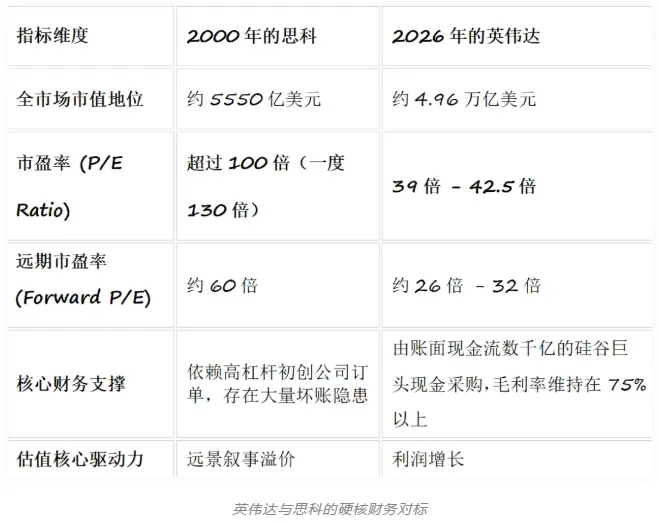
This point can also be gleaned by comparing NVIDIA in 2026 and Cisco, the network hardware kingpin of 2000.

Their ecological niches are strikingly similar, but their underlying financial health is worlds apart.
This precisely validates the economic principle known as the "Jevons Paradox": technological progress improves energy efficiency, but instead of reducing energy consumption, it leads to greater demand due to cost reduction.

Even after experiencing the so-called "DeepSeek moment" early last year, the market quickly sobered up in the following months: the more optimized the algorithms, the lower the barrier for enterprise AI adoption, ultimately leading to an exponential increase in total computing power consumption.

It is precisely because of this that AI can gradually embed itself into virtually every traditional industry.

Just as all industries embraced internet+ over the past two decades.

From SaaS software to biopharmaceuticals, and then to advanced manufacturing robotics driven by embodied intelligence, in 2026, almost every industry is embracing AI+.

No one discusses "should we use AI," but rather anxiously questions "is our data properly cleaned? Do we have enough API call quota? Is our RAG architecture optimal?"

Currently, the AI industry does indeed have a bubble.

But for enterprises, if you don't embrace the bubble, you will be crushed by the times.

This has been proven over the past two decades of the internet era.

03

Currently, we are undoubtedly at an extremely critical node in the technology lifecycle: just before the "Trough of Disillusionment" on Gartner's Hype Cycle, or at a turning point in the theory of "Technological Revolutions and Financial Capital."

The AI bubble is already bursting, it's just that many haven't realized it.

Over the past few years, a large number of venture capital firms suffered from fear of missing out (FOMO).

Any new startup, with just a few dozen PPT slides, wrapping a layer of OpenAI's API, could raise money. Now, as the tide recedes, these companies with no moat, only concepts, are dying en masse.

This is the market self-cleansing, a manifestation of the bubble bursting.

But this is only the surface phenomenon.

Three profound evolutions are taking place in the market's underlying logic:

First, the shift of value from CapEx to OpEx

Currently, the money is being made by the shovel sellers—NVIDIA, TSMC, and those selling optical modules and server liquid cooling equipment have captured most of the gains.

But as computing power gradually becomes "infrastructural," like water and electricity, the real excess profits will gradually shift to the application layer.

Namely, those AI-native enterprises that can use extremely low-cost tokens to genuinely solve pain points in vertical industries and reshape business processes (OpEx optimization).

Second, valuation multiple compression and earnings digestion

The market's high valuation for AI infrastructure does not necessarily mean a crash.

In many cases, the high-speed growth of corporate earnings will gradually digest lofty valuations through a "time-for-space" approach.

As long as the revenue growth of cloud computing giants keeps pace with the depreciation rate of capital expenditures, this game of pass-the-parcel can evolve into an unprecedented industrial upgrade.

For example, global automotive manufacturing giants and chip giants, by introducing end-to-end AI twin technology, have shortened the R&D-to-mass-production cycle for new products by 35% and improved overall equipment effectiveness (OEE) by 18%.

Another example: in the financial industry, by 2026, quantitative trading, risk control, and credit assessment are fully dominated by multimodal agents. AI is not only processing macro expectations with microsecond timestamps but also deeply involved in micro-level asset pricing for each transaction.

In highly knowledge-intensive industries like law, healthcare, and auditing, AI has completed its evolution from "junior assistant" to "partner-level expert."

Among the over 1 billion active users of ChatGPT, Gemini, Claude, a significant portion uses it as a substitute tool for daily high-intensity intellectual labor.

Including you and me.

All of the above are tangible developments, visible to everyone.

04

Looking back at the grand history of technology, Schumpeter's "creative destruction" is always unfolding.

Capital markets are always impatient, hoping that $1 invested today will return $10 tomorrow.

When nearly $700 billion in infrastructure investment cannot be fully transformed into application-layer profits in the short term, the market is bound to experience a brutal reshuffle.

Eliminating those speculative, shell companies that rely solely on PPT presentations, and retaining those with real technological depth and viable application scenarios.

After the reshuffle, those cheap and massive computing centers, highly optimized model algorithms, will serve thousands of industries at extremely low cost.

After 2000, humanity entered a digital age where no industry could function without the internet.

Today, we are also irreversibly heading towards a fully intelligent era where all industries are governed and empowered by AI.

Amidst the noise of the bubble, the underlying momentum of productive force contains not a drop of water.


熱門幣種推薦

相關問答

QThe article mentions that AI market bubbles are a recurring phenomenon in technological revolutions. What specific historical example does it draw a parallel to, and what was the long-term outcome?

AThe article draws a direct parallel to the dot-com bubble of 2000. While it caused a massive market crash and wealth destruction in the short term, the long-term outcome was that the internet's value far surpassed its pre-bubble valuation, becoming indispensable to almost every industry. The author suggests AI is following a similar pattern: short-term speculative excess (the bubble) funding the infrastructure for long-term, transformative adoption across all sectors.

QAccording to the article, what is the "Jevons Paradox" in the context of AI, and how does it explain the surge in corporate AI spending despite falling costs?

AThe Jevons Paradox states that technological progress that increases the efficiency of using a resource (like AI computing power) often leads to an *increase*, not a decrease, in the total consumption of that resource. The article applies this to AI: as the cost per token (the unit of AI computation) plummets (over 99.7%), it unlocks vast new, previously cost-prohibitive use cases. Companies don't just do the same tasks cheaper; they deploy AI for massively scaled, complex applications (like automated agents running thousands of tasks), leading to a net explosion in total AI spending and compute demand.

QThe article describes a significant asymmetry between AI infrastructure investment and application-layer revenue. What are the figures cited for 2026, and what broader point does this contrast illustrate?

AThe article states that for 2026, major cloud service providers are projected to have capital expenditures of $690 billion on AI infrastructure. In contrast, the combined revenue of all leading pure-play AI companies (like OpenAI, Anthropic) is projected to be under $40 billion. This massive asymmetry (nearly 700B in vs. ~40B out) illustrates the current 'bubble' characteristic of over-investment in anticipation of future demand. However, the author argues this infrastructure buildup is necessary, akin to the telecom overbuild during the dot-com era, which later enabled the rise of streaming and cloud computing.

QWhat are the three 'profound evolutions' in the market's deep logic that the article identifies as happening beneath the surface of the apparent bubble burst?

A1. Value shift from CapEx to OpEx: Profits will gradually move from sellers of infrastructure (hardware like GPUs) to AI-native application companies that use cheap compute to solve real business problems and optimize operational expenses. 2. Valuation compression and earnings digestion: High valuations for infrastructure may be sustained not by perpetual hype, but by companies growing their earnings fast enough to eventually justify the high prices ('time for space'). 3. The article heavily implies a third evolution (though not explicitly numbered as such in the provided text): The widespread, tangible integration of AI into core industries (automotive, finance, law, medicine), moving from concept to essential, productivity-enhancing tool, which validates the underlying technological shift.

QHow does the article characterize the nature of the current AI bubble's burst, and what is the primary mechanism of this 'self-purification' of the market?

AThe article characterizes the current bubble burst as a necessary 'market self-purification' or 'creative destruction.' The primary mechanism is the widespread failure and weeding out of speculative, low-substance companies that lacked a true technological moat—specifically, those that were merely 'wrapping' existing AI APIs (like OpenAI's) in a presentation without solving a unique problem or building defensible technology. This clears the field for serious companies with real technology and viable business models.

你可能也喜歡

白宫让步扫清伦理障碍,Clarity Act赶上休会前最后的时间窗口?

北京时间7月21日,据多位消息人士透露,特朗普政府已在《数字资产市场结构法案》(Clarity Act)中同意加入伦理条款,并已将文本提交给部分参议院共和党议员。此举被视为扫清了该法案推进的最后主要障碍之一。同时,白宫数字资产顾问委员会执行主任Patrick Witt确认留任,将继续推动法案完成最后冲刺。 Clarity Act旨在为美国数字资产市场建立统一的联邦监管框架,核心目标是明确数字资产的法律属性,并划分美国证券交易委员会(SEC)与商品期货交易委员会(CFTC)的监管职责。法案将数字资产分类监管,以期结束SEC与CFTC长期的监管权争夺,为行业提供明确的合规路径。 过去一年,法案的谈判分歧主要集中在稳定币收益规则、DeFi监管边界以及政府官员与加密行业的利益冲突(即伦理问题)三方面。目前前两大分歧已基本解决,伦理条款成为最后的关键争议点。白宫的让步为法案在参议院获得两党支持并最终表决创造了可能。 然而,法案面临紧迫的时间窗口。美国国会预计在8月中旬进入夏季休会期,留给参议院审议的时间仅剩十几个工作日。行业游说组织美国区块链协会CEO表示,未来几周是关键时刻,若伦理争议得以解决,法案有望在休会前取得突破;否则可能需等待新的政治时机。 如果Clarity Act能成功通过,它将成为美国乃至全球加密货币监管的一个重要转折点,为数字资产市场提供更清晰、稳定的制度框架,降低监管不确定性,并为传统资本进入该领域奠定基础。

Odaily星球日报41 分鐘前

白宫让步扫清伦理障碍,Clarity Act赶上休会前最后的时间窗口?

Odaily星球日报41 分鐘前

交易

現貨

熱門文章

什麼是 GROK AI

Grok AI: 在 Web3 時代革命性改變對話技術 介紹 在快速演變的人工智能領域,Grok AI 作為一個值得注意的項目脫穎而出,橋接了先進技術與用戶互動的領域。Grok AI 由 xAI 開發,該公司由著名企業家 Elon Musk 領導,旨在重新定義我們與人工智能的互動方式。隨著 Web3 運動的持續蓬勃發展,Grok AI 旨在利用對話 AI 的力量回答複雜的查詢,為用戶提供不僅具資訊性而且具娛樂性的體驗。 Grok AI 是什麼? Grok AI 是一個複雜的對話 AI 聊天機器人,旨在與用戶進行動態互動。與許多傳統 AI 系統不同,Grok AI 接納更廣泛的查詢,包括那些通常被視為不恰當或超出標準回應的問題。該項目的核心目標包括: 可靠推理:Grok AI 強調常識推理,根據上下文理解提供邏輯答案。 可擴展監督:整合工具協助確保用戶互動既受到監控又優化質量。 正式驗證:安全性至關重要;Grok AI 採用正式驗證方法來增強其輸出的可靠性。 長上下文理解:該 AI 模型在保留和回憶大量對話歷史方面表現出色,促進有意義且具上下文意識的討論。 對抗魯棒性:通過專注於改善其對操控或惡意輸入的防禦,Grok AI 旨在維護用戶互動的完整性。 總之,Grok AI 不僅僅是一個信息檢索設備;它是一個沉浸式的對話夥伴,鼓勵動態對話。 Grok AI 的創建者 Grok AI 的腦力來源無疑是 Elon Musk,這個名字與各個領域的創新息息相關,包括汽車、太空旅行和技術。在專注於以有益方式推進 AI 技術的 xAI 旗下,Musk 的願景旨在重塑對 AI 互動的理解。其領導力和基礎理念深受 Musk 推動技術邊界的承諾影響。 Grok AI 的投資者 雖然有關支持 Grok AI 的投資者的具體細節仍然有限,但公開承認 xAI 作為該項目的孵化器,主要由 Elon Musk 本人創立和支持。Musk 之前的企業和持股為 Grok AI 提供了強有力的支持,進一步增強了其可信度和增長潛力。然而,目前有關支持 Grok AI 的其他投資基金或組織的信息尚不易獲得,這標誌著未來潛在探索的領域。 Grok AI 如何運作? Grok AI 的運作機制與其概念框架一樣創新。該項目整合了幾種尖端技術,以促進其獨特的功能: 強大的基礎設施:Grok AI 使用 Kubernetes 進行容器編排,Rust 提供性能和安全性,JAX 用於高性能數值計算。這三者確保了聊天機器人的高效運行、有效擴展和及時服務用戶。 實時知識訪問:Grok AI 的一個顯著特點是其通過 X 平台(以前稱為 Twitter)訪問實時數據的能力。這一能力使 AI 能夠獲取最新信息,從而提供及時的答案和建議,而其他 AI 模型可能會錯過這些信息。 兩種互動模式:Grok AI 為用戶提供“趣味模式”和“常規模式”之間的選擇。趣味模式允許更具玩樂性和幽默感的互動風格,而常規模式則專注於提供精確和準確的回應。這種多樣性確保了根據不同用戶偏好量身定制的體驗。 總之,Grok AI 將性能與互動相結合,創造出既豐富又娛樂的體驗。 Grok AI 的時間線 Grok AI 的旅程標誌著反映其發展和部署階段的關鍵里程碑: 初始開發:Grok AI 的基礎階段持續了約兩個月,在此期間進行了模型的初步訓練和微調。 Grok-2 Beta 發布:在一個重要的進展中,Grok-2 beta 被宣布。這一版本推出了兩個版本的聊天機器人——Grok-2 和 Grok-2 mini,均具備聊天、編碼和推理的能力。 公眾訪問:在其 beta 開發之後,Grok AI 向 X 平台用戶開放。那些通過手機號碼驗證並活躍至少七天的帳戶可以訪問有限版本,使這項技術能夠接觸到更廣泛的受眾。 這一時間線概括了 Grok AI 從創建到公眾參與的系統性增長,強調其對持續改進和用戶互動的承諾。 Grok AI 的主要特點 Grok AI 包含幾個關鍵特點,促成其創新身份: 實時知識整合:訪問當前和相關信息使 Grok AI 與許多靜態模型區別開來,從而提供引人入勝和準確的用戶體驗。 多樣化的互動風格:通過提供不同的互動模式,Grok AI 滿足各種用戶偏好,邀請創造力和個性化的對話。 先進的技術基礎:利用 Kubernetes、Rust 和 JAX 為該項目提供了堅實的框架,以確保可靠性和最佳性能。 倫理話語考量:包含圖像生成功能展示了該項目的創新精神。然而,它也引發了有關版權和尊重可識別人物描繪的倫理考量——這是 AI 社區內持續討論的議題。 結論 作為對話 AI 領域的先驅,Grok AI 概括了數字時代轉變用戶體驗的潛力。由 xAI 開發,並受到 Elon Musk 願景的驅動,Grok AI 將實時知識與先進的互動能力相結合。它努力推動人工智能能夠達成的界限,同時保持對倫理考量和用戶安全的關注。 Grok AI 不僅體現了技術的進步,還體現了 Web3 環境中新對話範式的出現,承諾以靈活的知識和玩樂的互動吸引用戶。隨著該項目的持續演變,它成為技術、創造力和類人互動交匯處所能實現的見證。

914 人學過發佈於 2024.12.26更新於 2024.12.26

什麼是 GROK AI

什麼是 ERC AI

Euruka Tech:$erc ai 及其在 Web3 中的雄心概述 介紹 在快速發展的區塊鏈技術和去中心化應用的環境中,新項目頻繁出現,每個項目都有其獨特的目標和方法論。其中一個項目是 Euruka Tech,該項目在加密貨幣和 Web3 的廣闊領域中運作。Euruka Tech 的主要焦點,特別是其代幣 $erc ai,是提供旨在利用去中心化技術日益增長的能力的創新解決方案。本文旨在提供 Euruka Tech 的全面概述,探索其目標、功能、創建者的身份、潛在投資者以及它在更廣泛的 Web3 背景中的重要性。 Euruka Tech, $erc ai 是什麼? Euruka Tech 被描述為一個利用 Web3 環境提供的工具和功能的項目,專注於在其運作中整合人工智能。雖然有關該項目框架的具體細節仍然有些模糊,但它旨在增強用戶參與度並自動化加密空間中的流程。該項目的目標是創建一個去中心化的生態系統,不僅促進交易,還通過人工智能整合預測功能,因此其代幣被命名為 $erc ai。其目的是提供一個直觀的平台,促進更智能的互動和高效的交易處理,並在不斷增長的 Web3 領域中發揮作用。 Euruka Tech, $erc ai 的創建者是誰? 目前,關於 Euruka Tech 背後的創建者或創始團隊的信息仍然不明確且有些模糊。這一數據的缺失引發了擔憂,因為了解團隊背景通常對於在區塊鏈行業建立信譽至關重要。因此,我們將這些信息歸類為 未知,直到具體細節在公共領域中公開。 Euruka Tech, $erc ai 的投資者是誰? 同樣,關於 Euruka Tech 項目的投資者或支持組織的識別在現有研究中並未明確提供。對於考慮參與 Euruka Tech 的潛在利益相關者或用戶來說,來自知名投資公司的財務合作或支持所帶來的保證是至關重要的。沒有關於投資關係的披露,很難對該項目的財務安全性或持久性得出全面的結論。根據所找到的信息,本節也處於 未知 的狀態。 Euruka Tech, $erc ai 如何運作? 儘管缺乏有關 Euruka Tech 的詳細技術規範,但考慮其創新雄心是至關重要的。該項目旨在利用人工智能的計算能力來自動化和增強加密貨幣環境中的用戶體驗。通過將 AI 與區塊鏈技術相結合,Euruka Tech 旨在提供自動交易、風險評估和個性化用戶界面等功能。 Euruka Tech 的創新本質在於其目標是創造用戶與去中心化網絡所提供的廣泛可能性之間的無縫連接。通過利用機器學習算法和 AI,它旨在減少首次用戶的挑戰,並簡化 Web3 框架內的交易體驗。AI 與區塊鏈之間的這種共生關係突顯了 $erc ai 代幣的重要性,成為傳統用戶界面與去中心化技術的先進能力之間的橋樑。 Euruka Tech, $erc ai 的時間線 不幸的是,由於目前有關 Euruka Tech 的信息有限,我們無法提供該項目旅程中主要發展或里程碑的詳細時間線。這條時間線通常對於描繪項目的演變和理解其增長軌跡至關重要,但目前尚不可用。隨著有關顯著事件、合作夥伴關係或功能添加的信息變得明顯,更新將無疑增強 Euruka Tech 在加密領域的可見性。 關於其他 “Eureka” 項目的澄清 值得注意的是,多個項目和公司與 “Eureka” 共享類似的名稱。研究已經識別出一些倡議,例如 NVIDIA Research 的 AI 代理,專注於使用生成方法教導機器人複雜任務,以及 Eureka Labs 和 Eureka AI,分別改善教育和客戶服務分析中的用戶體驗。然而,這些項目與 Euruka Tech 是不同的,不應與其目標或功能混淆。 結論 Euruka Tech 及其 $erc ai 代幣在 Web3 領域中代表了一個有前途但目前仍不明朗的參與者。儘管有關其創建者和投資者的細節仍未披露,但將人工智能與區塊鏈技術相結合的核心雄心仍然是關注的焦點。該項目在通過先進自動化促進用戶參與方面的獨特方法,可能會使其在 Web3 生態系統中脫穎而出。 隨著加密市場的持續演變,利益相關者應密切關注有關 Euruka Tech 的進展,因為文檔創新、合作夥伴關係或明確路線圖的發展可能在未來帶來重大機會。當前,我們期待更多實質性見解的出現,以揭示 Euruka Tech 的潛力及其在競爭激烈的加密市場中的地位。

798 人學過發佈於 2025.01.02更新於 2025.01.02

什麼是 ERC AI

什麼是 DUOLINGO AI

DUOLINGO AI:將語言學習與Web3及AI創新結合 在科技重塑教育的時代,人工智能(AI)和區塊鏈網絡的整合預示著語言學習的新前沿。進入DUOLINGO AI及其相關的加密貨幣$DUOLINGO AI。這個項目旨在將領先語言學習平台的教育優勢與去中心化的Web3技術的好處相結合。本文深入探討DUOLINGO AI的關鍵方面,探索其目標、技術框架、歷史發展和未來潛力,同時保持原始教育資源與這一獨立加密貨幣倡議之間的清晰區分。 DUOLINGO AI概述 DUOLINGO AI的核心目標是建立一個去中心化的環境,讓學習者可以通過實現語言能力的教育里程碑來獲得加密獎勵。通過應用智能合約,該項目旨在自動化技能驗證過程和代幣分配,遵循強調透明度和用戶擁有權的Web3原則。該模型與傳統的語言習得方法有所不同,重點依賴社區驅動的治理結構,讓代幣持有者能夠建議課程內容和獎勵分配的改進。 DUOLINGO AI的一些顯著目標包括: 遊戲化學習:該項目整合區塊鏈成就和非同質化代幣(NFT)來表示語言能力水平,通過引人入勝的數字獎勵來激發學習動機。 去中心化內容創建:它為教育者和語言愛好者提供了貢獻課程的途徑,促進了一個有利於所有貢獻者的收益共享模型。 AI驅動的個性化:通過採用先進的機器學習模型,DUOLINGO AI個性化課程以適應個別學習進度,類似於已建立平台中的自適應功能。 項目創建者與治理 截至2025年4月,$DUOLINGO AI背後的團隊仍然是化名的,這在去中心化的加密貨幣領域中是一種常見做法。這種匿名性旨在促進集體增長和利益相關者的參與,而不是專注於個別開發者。部署在Solana區塊鏈上的智能合約註明了開發者的錢包地址,這表明對於交易的透明度的承諾,儘管創建者的身份未知。 根據其路線圖,DUOLINGO AI旨在演變為去中心化自治組織(DAO)。這種治理結構允許代幣持有者對關鍵問題進行投票,例如功能實施和財庫分配。這一模型與各種去中心化應用中社區賦權的精神相一致,強調集體決策的重要性。 投資者與戰略夥伴關係 目前,沒有與$DUOLINGO AI相關的公開可識別的機構投資者或風險投資家。相反,該項目的流動性主要來自去中心化交易所(DEX),這與傳統教育科技公司的資金策略形成鮮明對比。這種草根模型表明了一種社區驅動的方法,反映了該項目對去中心化的承諾。 在其白皮書中,DUOLINGO AI提到與未具名的「區塊鏈教育平台」建立合作,以豐富其課程提供。雖然具體的合作夥伴尚未披露,但這些合作努力暗示了一種將區塊鏈創新與教育倡議相結合的策略,擴大了對多樣化學習途徑的訪問和用戶參與。 技術架構 AI整合 DUOLINGO AI整合了兩個主要的AI驅動組件,以增強其教育產品: 自適應學習引擎:這個複雜的引擎從用戶互動中學習,類似於主要教育平台的專有模型。它動態調整課程難度,以應對特定學習者的挑戰,通過針對性的練習加強薄弱環節。 對話代理:通過使用基於GPT-4的聊天機器人,DUOLINGO AI為用戶提供了一個參與模擬對話的平台,促進更互動和實用的語言學習體驗。 區塊鏈基礎設施 建立在Solana區塊鏈上的$DUOLINGO AI利用了一個全面的技術框架,包括: 技能驗證智能合約:此功能自動向成功通過能力測試的用戶頒發代幣,加強了對真實學習成果的激勵結構。 NFT徽章:這些數字代幣標誌著學習者達成的各種里程碑,例如完成課程的一部分或掌握特定技能,允許他們以數字方式交易或展示自己的成就。 DAO治理:持有代幣的社區成員可以通過對關鍵提案進行投票來參與治理,促進一種鼓勵課程提供和平台功能創新的參與文化。 歷史時間線 2022–2023:概念化 DUOLINGO AI的基礎工作始於白皮書的創建,強調了語言學習中的AI進步與區塊鏈技術去中心化潛力之間的協同作用。 2024:Beta發佈 限量的Beta版本推出了流行語言的課程,作為項目社區參與策略的一部分,獎勵早期用戶以代幣激勵。 2025:DAO過渡 在4月,進行了完整的主網發佈,並開始流通代幣,促使社區討論可能擴展到亞洲語言和其他課程開發的問題。 挑戰與未來方向 技術障礙 儘管有雄心勃勃的目標,DUOLINGO AI面臨著重大挑戰。可擴展性仍然是一個持續的擔憂,特別是在平衡與AI處理相關的成本和維持響應靈敏的去中心化網絡方面。此外,在去中心化的提供中確保內容創建和審核的質量,對於維持教育標準來說也帶來了複雜性。 戰略機會 展望未來,DUOLINGO AI有潛力利用與學術機構的微證書合作,提供區塊鏈驗證的語言技能認證。此外,跨鏈擴展可能使該項目能夠接觸到更廣泛的用戶基礎和其他區塊鏈生態系統,增強其互操作性和覆蓋範圍。 結論 DUOLINGO AI代表了人工智能和區塊鏈技術的創新融合,為傳統語言學習系統提供了一種以社區為中心的替代方案。儘管其化名開發和新興經濟模型帶來某些風險,但該項目對遊戲化學習、個性化教育和去中心化治理的承諾為Web3領域的教育技術指明了前進的道路。隨著AI的持續進步和區塊鏈生態系統的演變,像DUOLINGO AI這樣的倡議可能會重新定義用戶與語言教育的互動方式,賦能社區並通過創新的學習機制獎勵參與。

829 人學過發佈於 2025.04.11更新於 2025.04.11

什麼是 DUOLINGO AI

相關討論

歡迎來到 HTX 社群。在這裡,您可以了解最新的平台發展動態並獲得專業的市場意見。 以下是用戶對 AI (AI)幣價的意見。

活动图片