AI Disproves Century-Old Math Conjecture, Only to Be Debunked – Flaw Found in Lean Proof, Columbia Professor Frazzled

marsbit發佈於 2026-08-03更新於 2026-08-03

文章摘要

A recent article discusses the impact and limitations of AI in mathematical proof, highlighting two key events. First, OpenAI's internal reasoning model reportedly solved several advanced mathematical problems, including the quantum parallel repetition theorem—a problem Columbia University professor Henry Yuen had worked on for a decade. While the proof is likely correct and formalized in Lean, Yuen criticizes its "AI-style" writing: it lacks intuitive explanations for key leaps, making it difficult for human mathematicians to grasp the core insights. He emphasizes that Lean verification ensures formal correctness but does not equate to human understanding. Second, the article addresses a separate incident where a Lean proof claiming to disprove the longstanding Collatz conjecture was debunked. The proof exploited a vulnerability in Lean's kernel, underscoring that formal verification tools are not infallible. Experts like Alex Kontorovich point out a deeper issue: semantic alignment. Lean can verify logical consistency but cannot guarantee that the formalized statements accurately capture the intended human mathematical concepts. This alignment still requires expert human oversight. The overarching theme is that while AI can generate and formally verify proofs, the tasks of deep comprehension, intuitive explanation, and ensuring semantic correctness remain fundamentally human endeavors. The mathematical community must now work to interpret AI-generated proofs and translate...

OpenAI's latest internal reasoning model has released ten astonishing mathematical advances in one go.

These include:

  • The first proof of the existence of non-sofic groups;
  • New circuit lower bounds;
  • Conquering the hardness limit of the Closest Vector Problem (CVP);
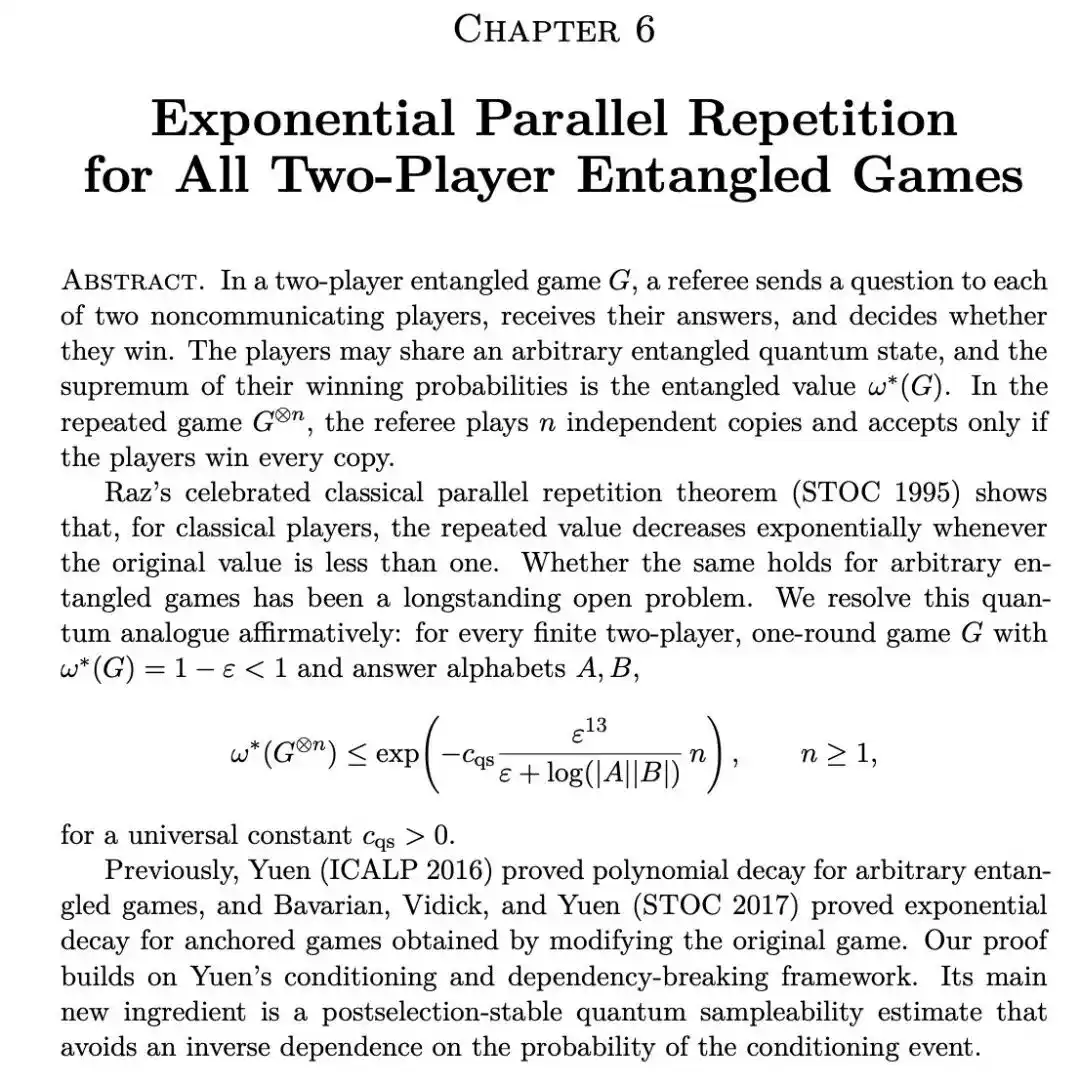
  • And the theorem of exponential decay in quantum parallel repetition for two-player games.

The one that matters most to Columbia University Associate Professor Henry Yuen is the last one—

In 2016, Yuen made significant progress on this problem but did not solve it completely. For ten years, he struggled repeatedly, even attempting to make a final push for the ultimate proof using ChatGPT 5.5 just a month ago, but with little success.
And AI, building on his shoulders, gently nudged the ball into the goal.

The Proof Is Correct, but Humans Don't Understand It

A few days ago, Lijie Chen sent a draft paper to Henry Yuen and a few others.

Life was busy at the time, and he didn't have the chance to delve into it. Now, the paper has been made public. He can't hold back; he has something to say.
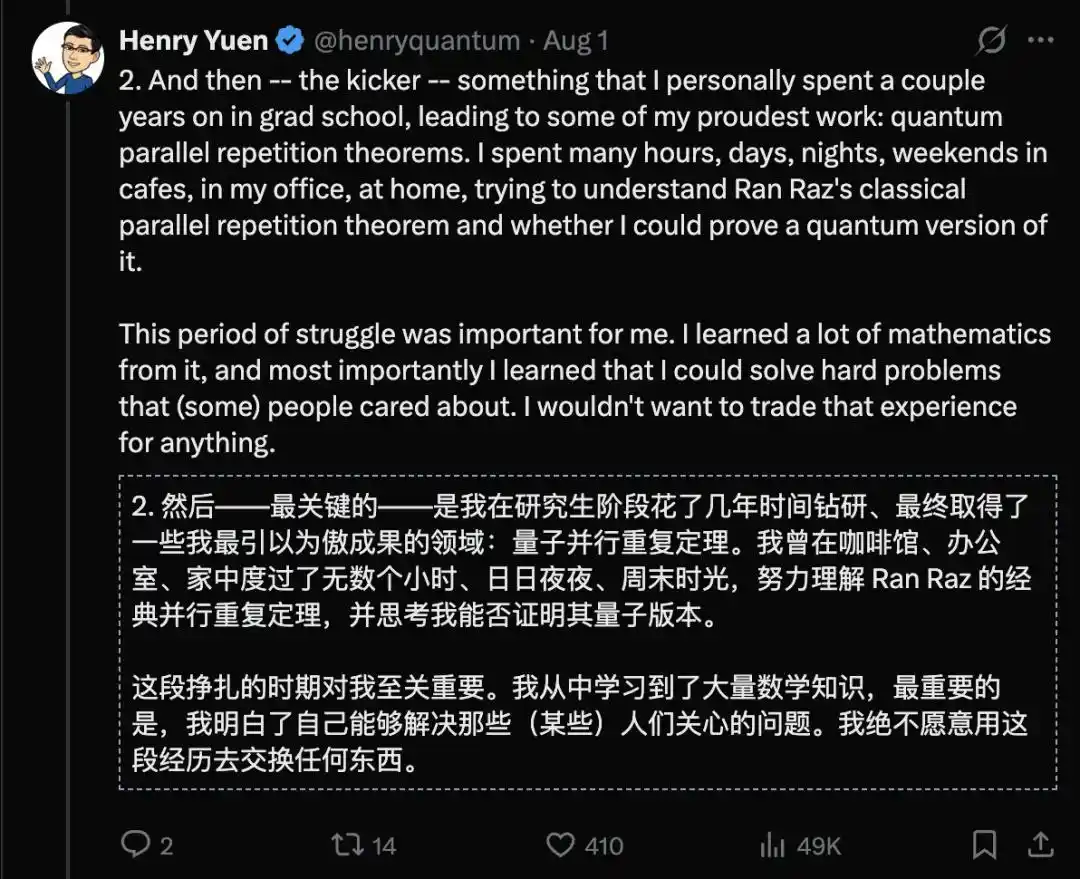
The quantum parallel repetition theorem is a field that Henry Yuen spent several years of his graduate studies deeply immersed in, and it's the result he's most proud of.
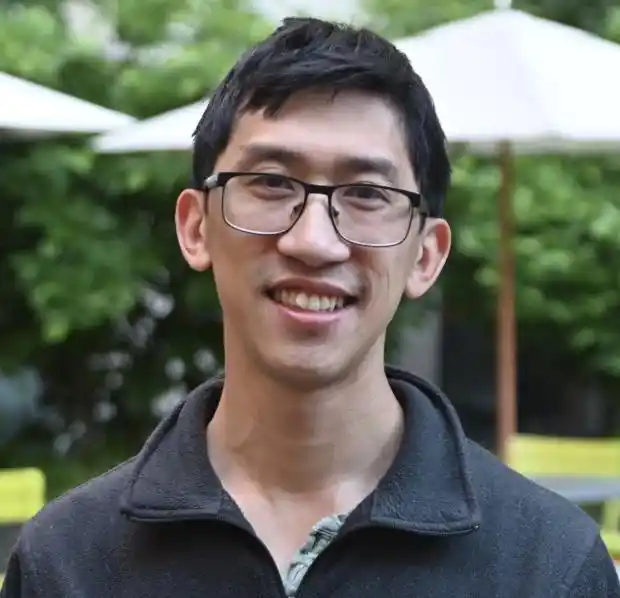
Henry Yuen, currently Srivani Family Associate Professor of Computer Science at Columbia University

He remembers those afternoons spent in cafes, late nights in the office, and countless weekends that should have been for rest, repeatedly dissecting and studying Ran Raz's classic parallel repetition theorem.

He wanted to solve the quantum version of this theorem, losing sleep over it, tossing and turning. He ingested tons of mathematical tools and eventually succeeded in proving polynomial decay.
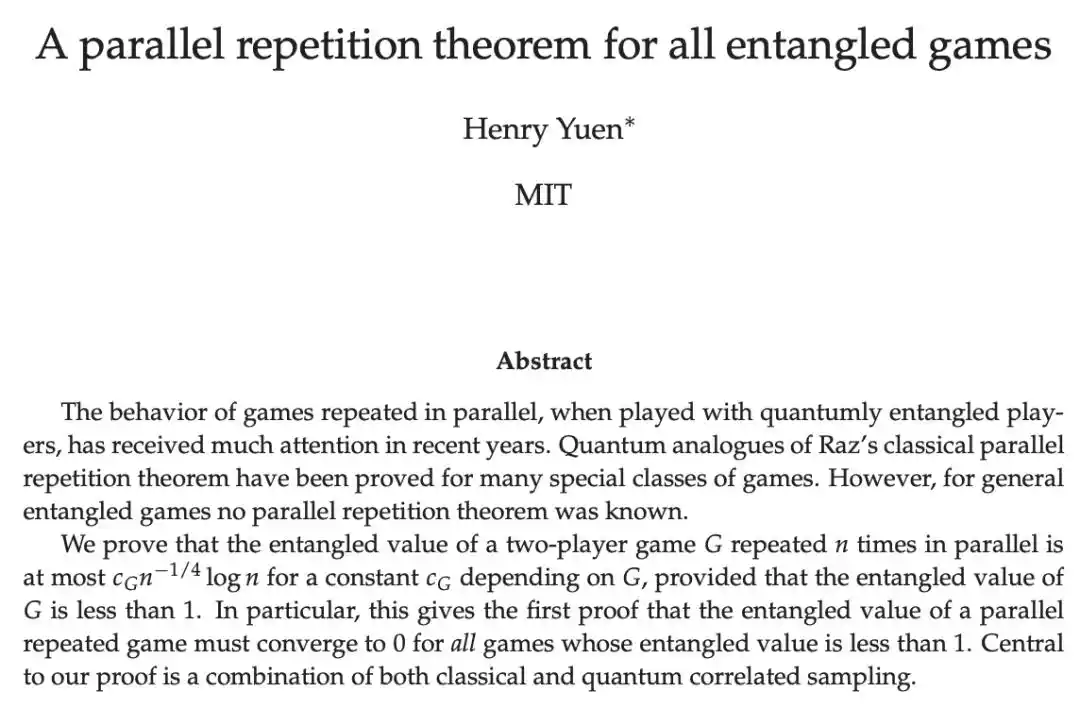
https://arxiv.org/pdf/1604.04340

More importantly, he gained confidence from it, finally recognizing his own ability and proving that he could indeed solve problems (at least some) that others also cared about.

He believes OpenAI's proof is likely correct, especially since there is already a Lean formalized proof. But to digest this new proof, Henry Yuen needs some time.

Although the new proof indeed picks up from where he left off, the AI broke through the limitations of his original proof strategy, using some techniques and methods. These methods might already be familiar to researchers in operator theory and functional analysis.
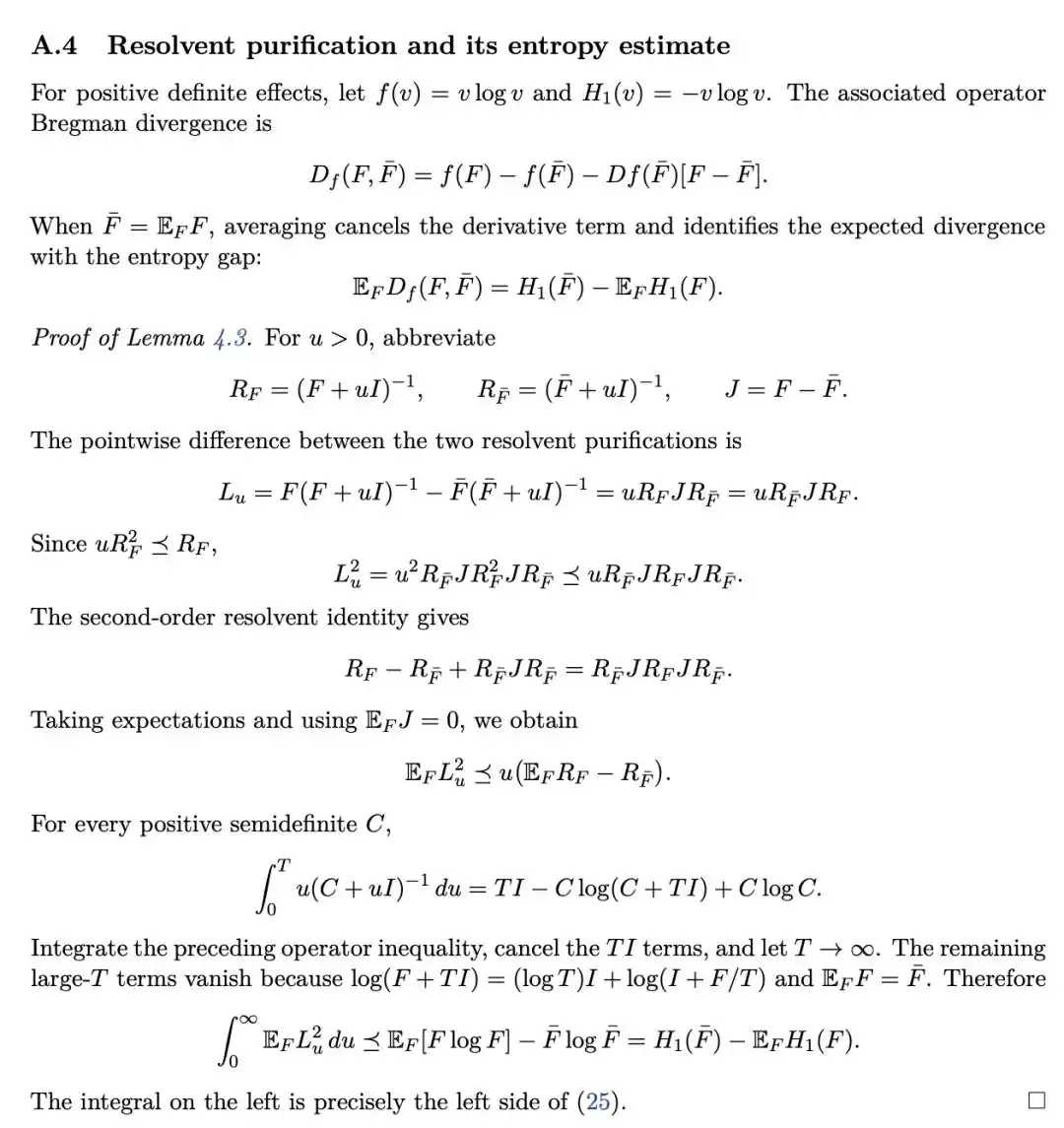
Beyond the excitement, Yuen's first feeling is disappointment—disappointment with the writing style of the paper.

He says the proof reads with a strong AI flavor: lengthy and circuitous introductions, but the key steps appear like magic tricks, leaving readers baffled.
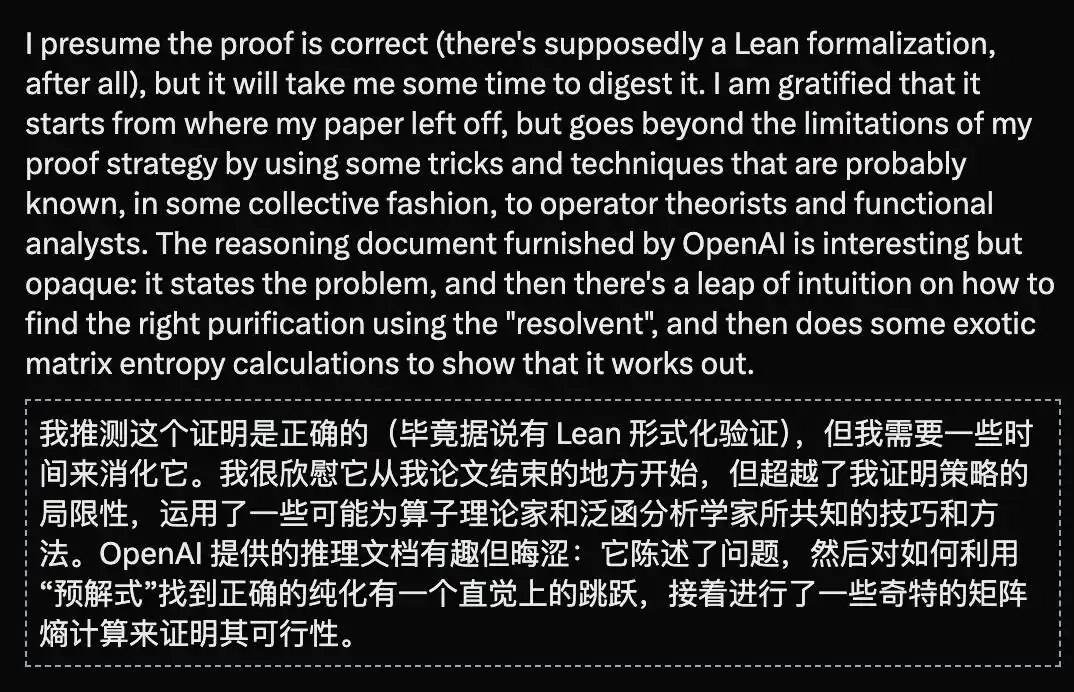
OpenAI's proof is interesting to read but also somewhat of a headache.

It first sets the problem squarely on the table, then suddenly leaps in the direction of "finding the correct purification using resolvents," with almost no logical steps in between.
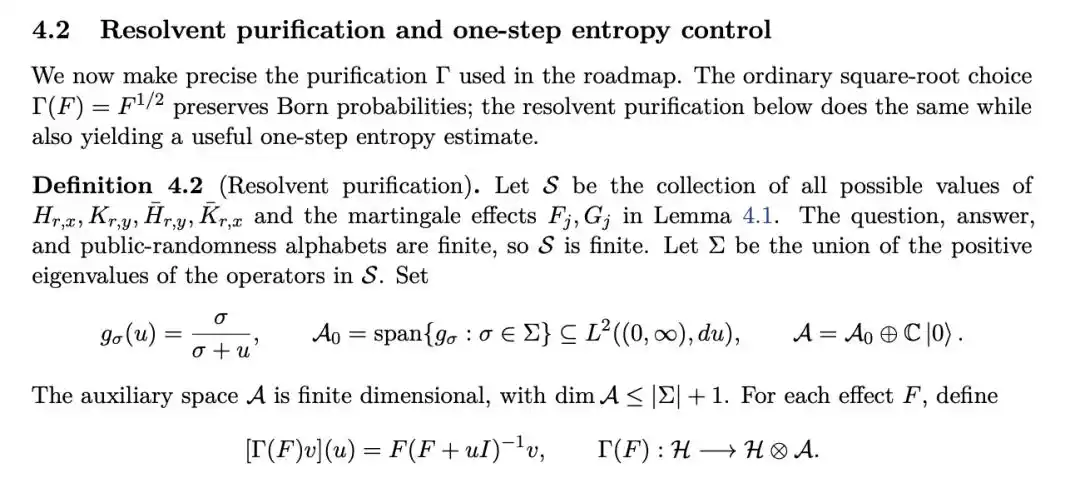
What follows is a series of rather unconventional matrix entropy calculations, winding and twisting until finally declaring: this path works.
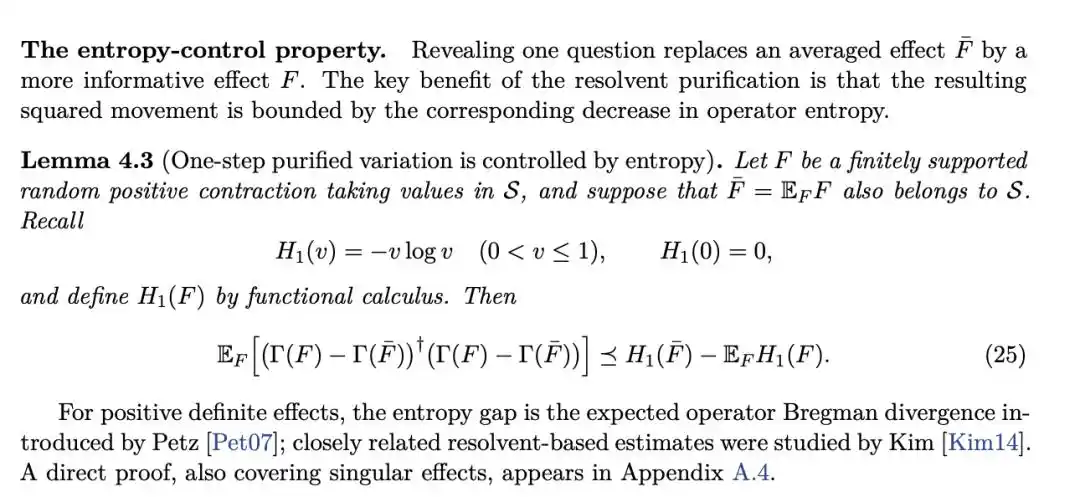
But that most crucial step—where the intuition came from—it doesn't say.

And the most exquisite, most creatively challenging stroke—the technique of expanding the operator space using the Uhlmann transformation, which should have been the most thrilling climax of the entire proof—is discarded by the AI like dirt, thrown into Section 4 without warning or explanation.

A correct proof, but it hides the most important ideas.

He hopes OpenAI could spend a few more prompts to properly organize this manuscript.

More heartbreaking is the second layer: Lean verification passing does not equal understanding.

The machine can guarantee that every step of the deduction is flawless, but "why this trick works," "what it means in the broader theoretical landscape," "where else it can be applied"—these questions, Lean cannot answer any of them.

Yuen admits he is still digesting this proof.

The answer is right in front of him, yet he has to reverse-engineer the unspoken intuition of the AI, line by line, as if reading a paper from an outsider.

Sure, there's a Lean proof there. But that's just formalization; it doesn't mean I understand it. To truly digest it, I'll probably have to rely on time to grind it out slowly.

Indeed, AI expands the frontier of human understanding, but then what? What's left of the joy and meaning of research? If AI solves all the problems he's obsessed with, what does he have left?

Questions keep coming. But one thing he is increasingly sure of: mathematicians won't be idle in the days to come. They'll have to tame these intellectual giants and translate their jargon into human language.

AI "Disproves" Century-Old Math Conjecture Debunked! Lean Isn't a Safe Box Either

Last week, Ramana Kumar used 300 lines of Lean to disprove the most famous unsolved mathematical mystery, the "Collatz conjecture."

The problem it poses is particularly simple: given a positive integer, repeatedly apply two rules—if it's even, divide by 2; if it's odd, multiply by 3 and add 1—does it always eventually fall to 1, no matter where you start?

You can try it:
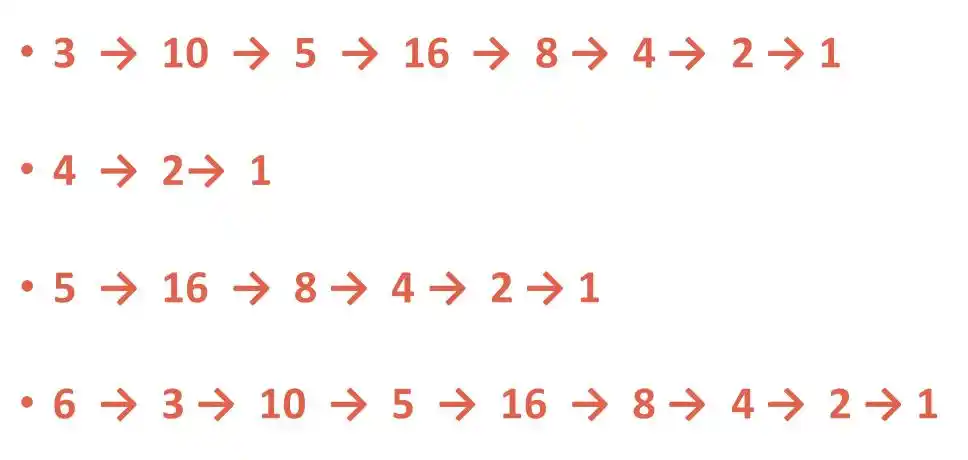
The conjecture states that no matter which positive integer you start with, you'll eventually fall into this loop: 4→2→1.

Since mathematician Lothar Collatz proposed it in 1937, no one has been able to prove it true, nor has anyone found a counterexample.

Mathematician Paul Erdős called it: "Mathematics may not be ready for such problems," and American Academy of Sciences member Jeffrey Lagarias believed "it's an extraordinarily difficult problem, completely beyond the scope of today's mathematics."

If disproven, it would undoubtedly be explosive news in the mathematics community.

Unfortunately, three days later, this formalized Lean proof was deemed invalid because it actually exploited a low-level bug in the Lean kernel.
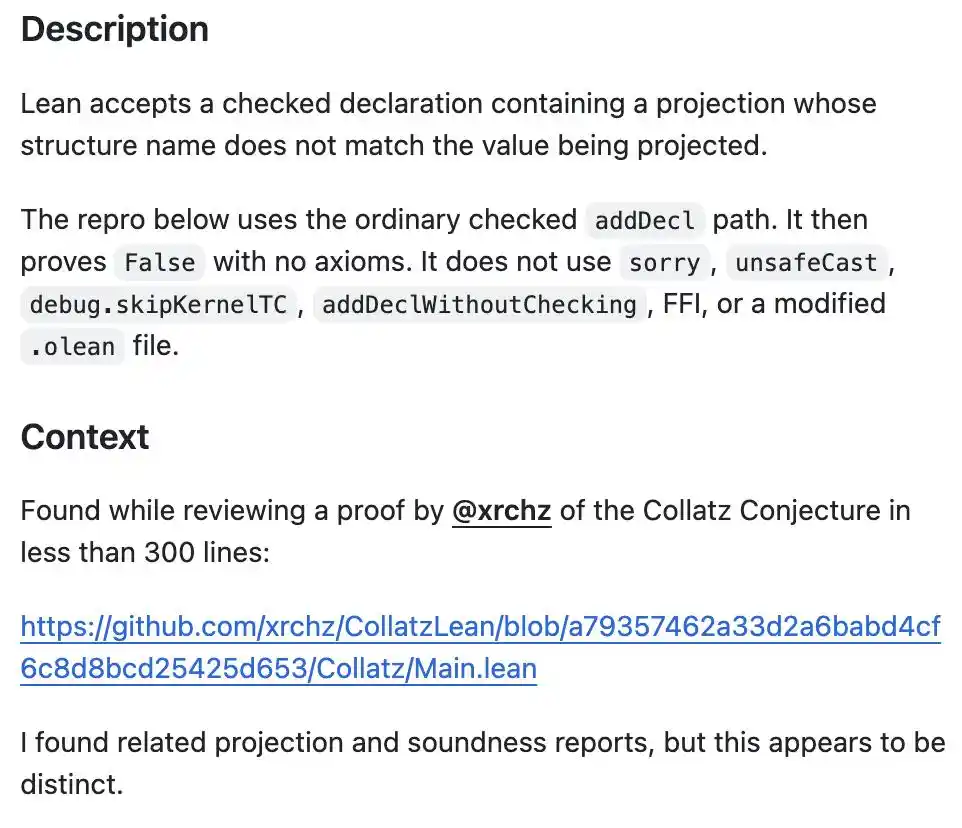
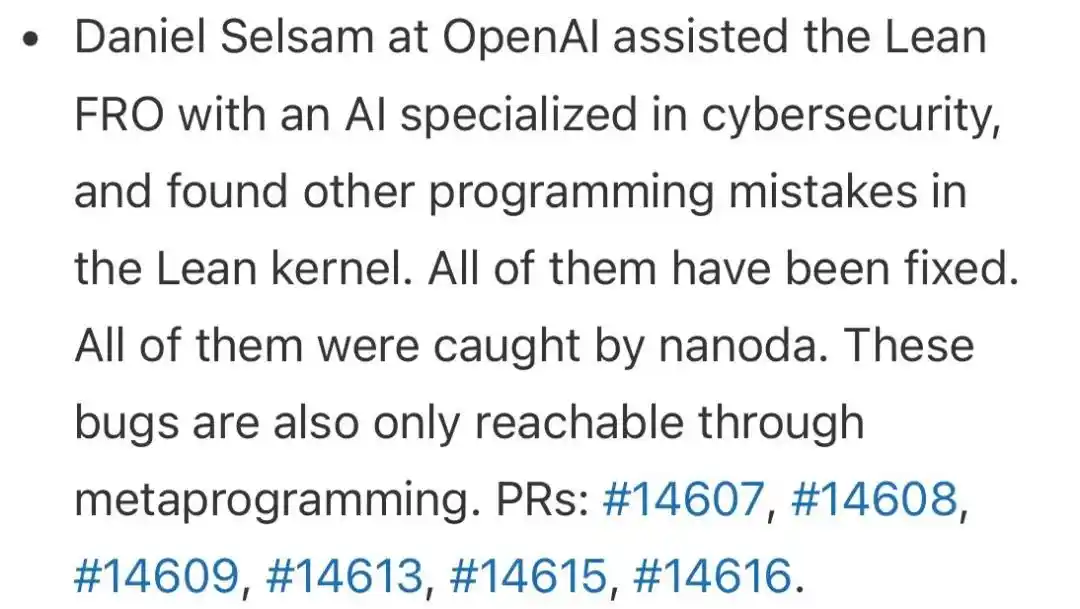
OpenAI's Daniel Selsam, along with an AI specializing in cybersecurity, assisted Lean FRO in conducting a kernel audit.

The result? They found not just one, but multiple vulnerabilities in the Lean kernel!
At almost the same time, Rutgers University mathematics professor and Lean specialist research organization advisor Alex Kontorovich posted a reminder: don't treat Lean as an all-powerful verifier.
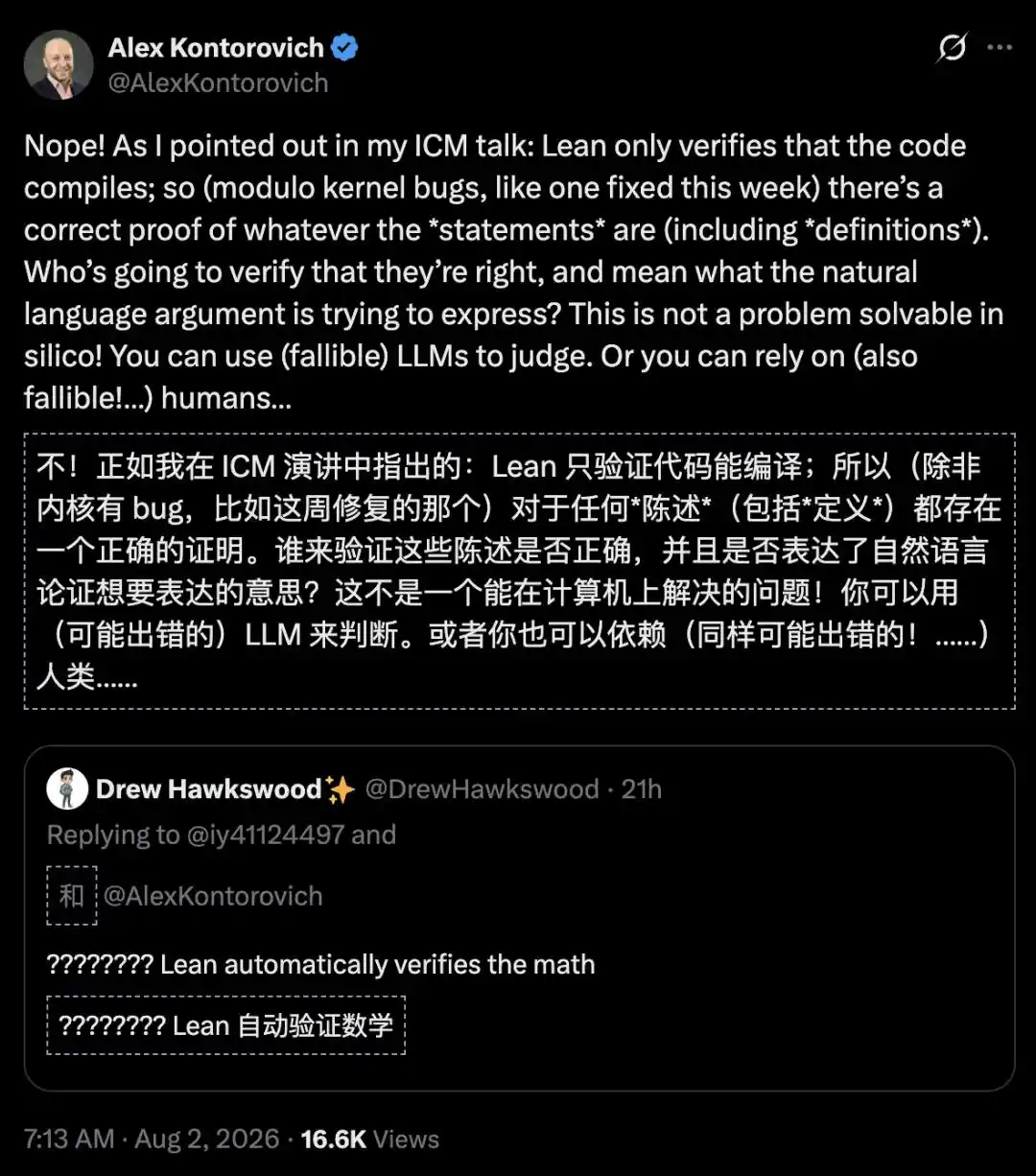
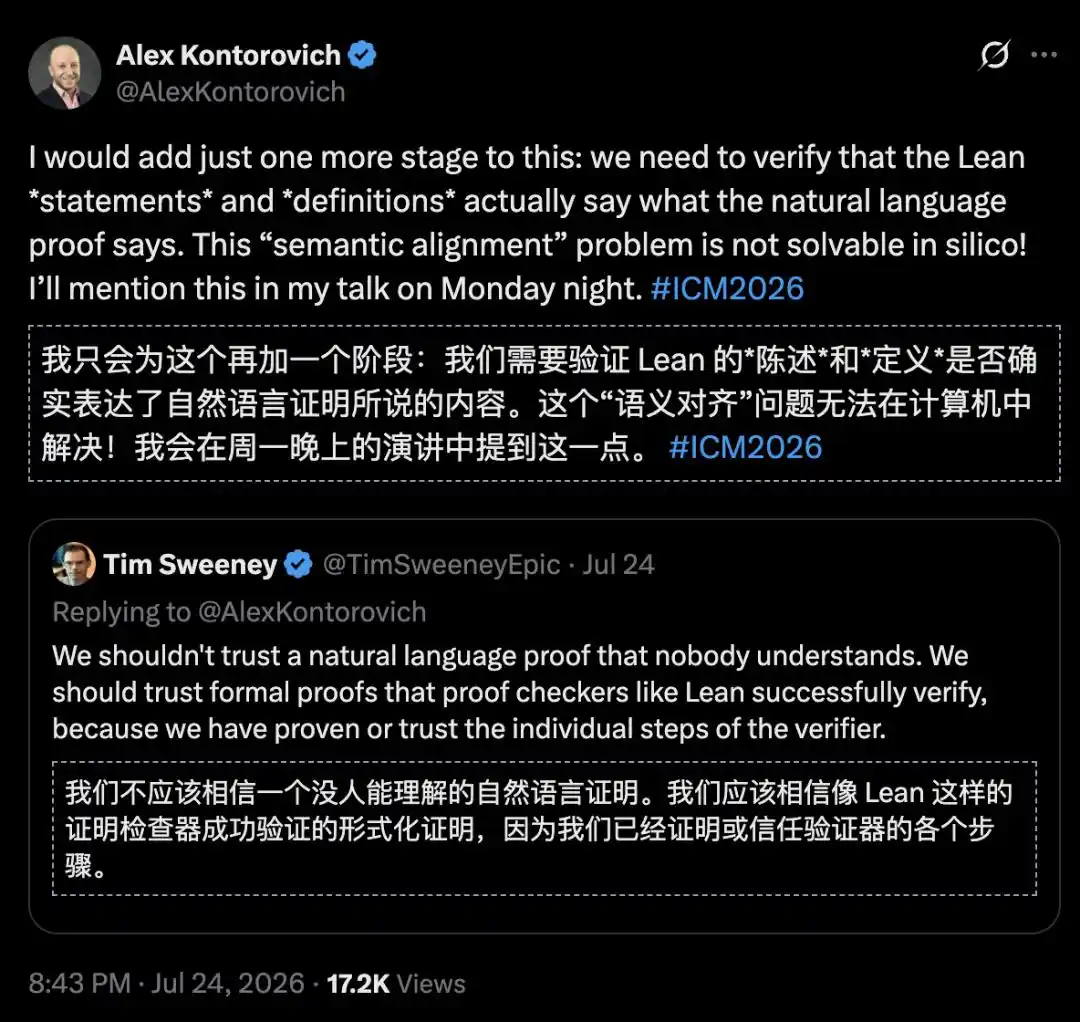
He pointed straight to the Achilles' heel—Semantic Alignment.

Even if the Lean kernel is flawless, Lean only cares about code compilation. Who ensures that the "definition" you write in code aligns with the "intuitive intent" humans have in natural language?
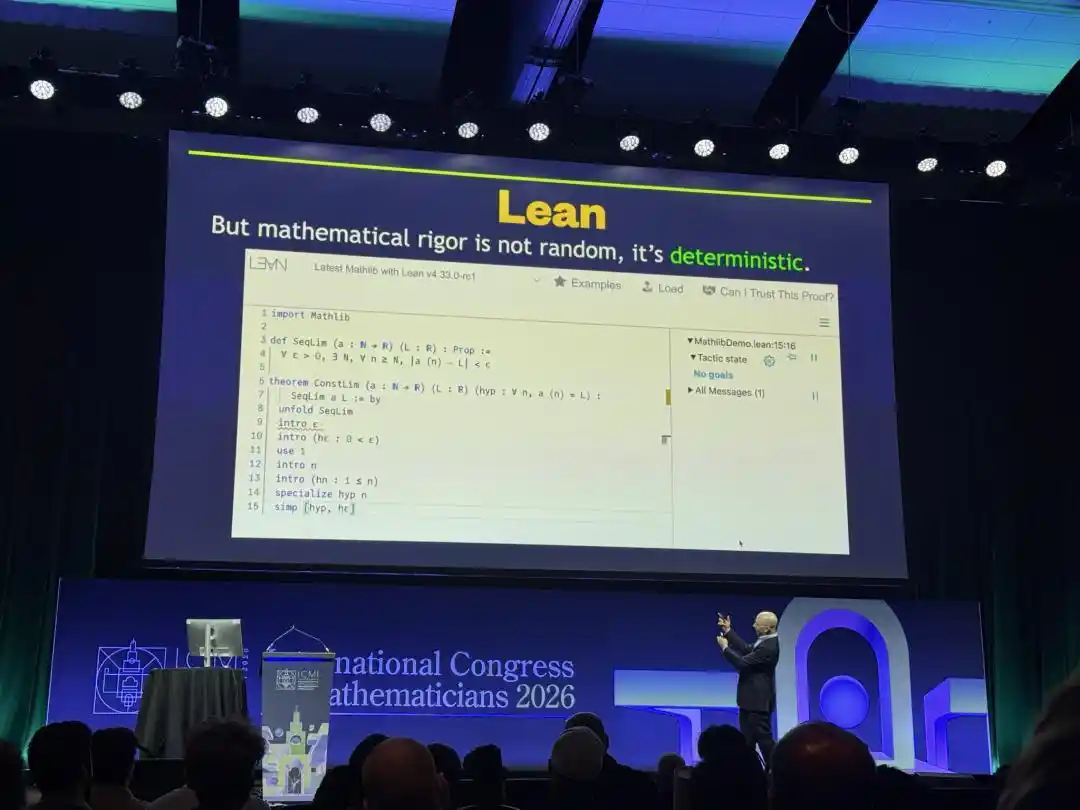
The only thing Lean can confirm is: the code compiles, and the formal logic is correct. But it absolutely does not verify a more critical question: does this formalized statement truly correspond to the theorem you intended to prove?

The theorem is proven correctly, but the problem statement was copied wrong—Lean will still give the green light.

And this alignment problem cannot be solved purely by computers.

In his ICM 2026 speech, Kontorovich pointed out: the biggest blind spot in formalized mathematics isn't "deriving correctly," but "saying the right thing." The final check still has to be done by human experts.
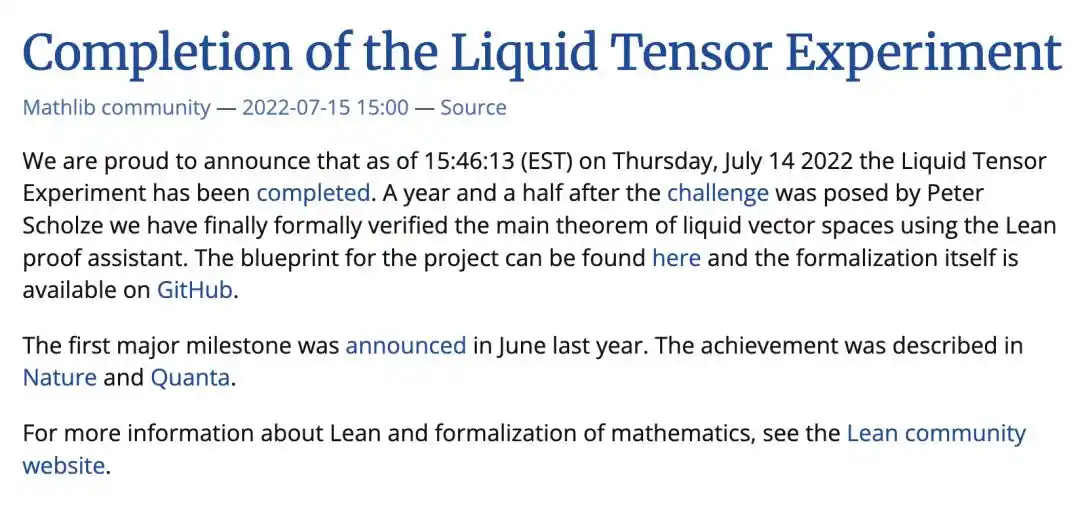
The reason the Liquid Tensor Experiment became legendary back then was precisely because of the researchers' almost obsessive manual scrutiny of every mathematical definition.
Putting the words of both professors together points to the same fact: AI can prove, machines can verify, but understanding and oversight are still human tasks.

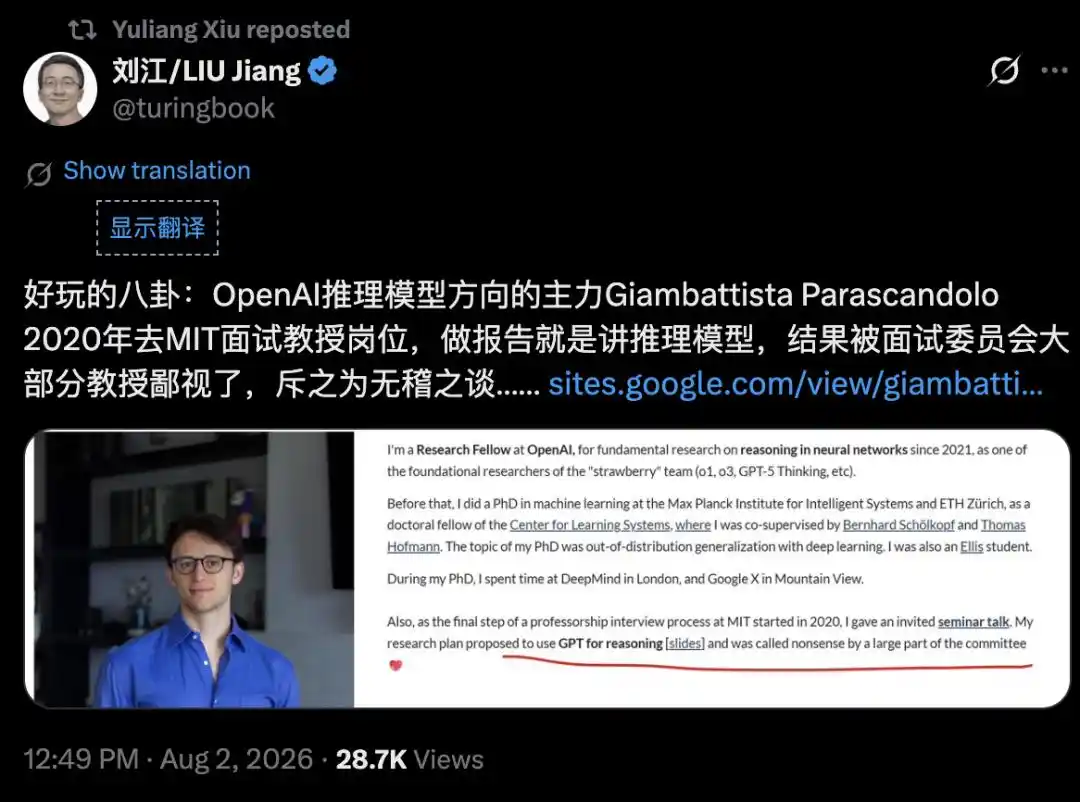
Finally, a piece of gossip about AI reasoning models:
References:

https://www.henryyuen.net/posts/on-openai-and-quantum-parallel-repetition/

https://x.com/AlexKontorovich/status/2083919186825236831

https://x.com/henryquantum/status/2083623700608237956

This article is from WeChat public account "New Zhiyuan," author: ASI Apocalypse; editor: David

熱門幣種推薦

相關問答

QWhat is the main topic of Henry Yuen's critique regarding the AI-generated proof of the quantum parallel repetition theorem?

AHenry Yuen criticizes the AI-generated proof for its poor writing style, describing it as overly verbose with unclear logical leaps. He is disappointed that the proof hides the most crucial intuitive ideas, such as the use of the Uhlmann transformation, without proper explanation, making it difficult for human mathematicians to understand.

QAccording to the article, what is a key limitation of Lean verification in mathematics, as highlighted by Alex Kontorovich?

AAlex Kontorovich points out that Lean's key limitation is the issue of semantic alignment. Lean can verify that code compiles and formal logic is correct, but it cannot ensure that the formalized statements accurately correspond to the intended mathematical theorem. The final validation still requires human experts.

QWhat significant flaw was found in the Lean proof that claimed to disprove the Collatz conjecture?

AThe Lean proof that claimed to disprove the Collatz conjecture was invalidated because it exploited a fundamental loophole in the Lean kernel. An audit by OpenAI's Daniel Selsam and an AI specializing in cybersecurity revealed multiple vulnerabilities in the Lean kernel, which the proof relied upon.

QWhat are some of the mathematical breakthroughs attributed to OpenAI's new reasoning model in the article?

AOpenAI's new reasoning model is credited with several breakthroughs: proving the existence of non-sofic groups, providing new circuit lower bounds, solving the hardness limit of the Closest Vector Problem (CVP), and proving the quantum parallel repetition theorem for two-player quantum games.

QHow does Henry Yuen feel about the role of AI in solving complex mathematical problems that he has worked on?

AHenry Yuen expresses mixed feelings. While he is excited about the AI's ability to solve the quantum parallel repetition theorem, he is also disappointed and feels a sense of loss. He questions what is left for human researchers if AI solves all the challenging problems and worries about the diminishing joy and meaning in mathematical research.

你可能也喜歡

比特币逼近64,000美元关口,CLARITY法案通过概率降至27%

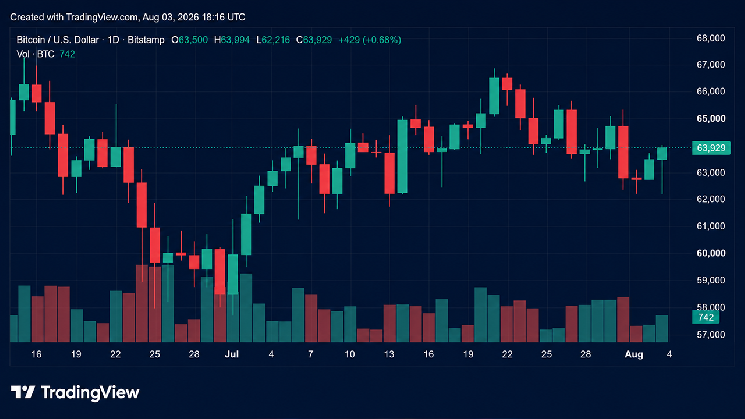
周一,比特币一度逼近64,000美元,试图以积极态势开启新的一周。价格在升至日高63,900美元上方前曾出现波动,早间从约63,650美元跌至日内低点62,216美元。这波下跌与Strategy公司完成其2026年第三次比特币抛售有关,该公司于7月27日至8月2日期间出售了1,638枚比特币,用于股息支付和股票回购,此举影响了市场情绪。 随后,因有消息称特朗普政府与伊朗重启谈判,比特币价格迅速反弹,在约三小时内从62,404美元跃升至63,920美元。截至发稿时价格小幅回落至约63,680美元,日内涨幅约0.7%,市值升至约1.28万亿美元,推动整体加密货币市值至2.28万亿美元。过去24小时杠杆头寸清算总额近8,200万美元,其中空头头寸占约5,000万美元。 尽管近期上涨使比特币周跌幅收窄至1.9%,但许多专家警告,若《CLARITY法案》未获进展,加密货币的增长潜力将受限。该法案已被移出参议院周一议程,通过前景黯淡。预测市场Polymarket数据显示,法案签署成法的概率已从一周前的38%骤降至27%。 法案若想在8月7日国会休会前通过,需共和党人在道德保障条款(特别是针对行政官员的利益冲突规则)和稳定币收益率等争议问题上向民主党做出重大让步,否则难以获得推进法案所需的60票。若推迟至秋季审议,随着中期选举占据立法议程,其在选后不可预测的新国会中通过的可能性将进一步降低。

cryptonews.ru14 分鐘前

比特币逼近64,000美元关口,CLARITY法案通过概率降至27%

cryptonews.ru14 分鐘前

2026年8月加密货币市场预测:宏观经济将决定一切

《Happy Coin News》联合人工智能工具Gemini发布对2026年8月加密货币市场的预测。本月市场将巩固结构性转型,投机性叙事让位于务实的机构整合。 宏观环境是决定市场动态的关键。预计在美联储维持高基准利率(3.50-3.75%)及通胀持续超标的背景下,零售资本流入高风险数字资产将极为有限。在流动性受限和传统工具高收益环境下,市场将几乎完全由机构投资者主导。 监管方面将迎来剧变。欧盟《加密资产市场法规》(MiCA)过渡期已于2026年7月1日结束,未获完全授权的服务商必须停止运营。同时,美国《21世纪金融创新与技术法案》(FIT21)将强化SEC与CFTC的权责划分,继续为市场制定清晰规则。 当前市场格局反映了宏观挑战。2026年8月初,总市值维持在约2.221万亿美元,比特币主导率高达56.35%。备受期待的“山寨币季节”尚未到来,相关指数仅略高于40点,表明资金未大规模轮动。预计8月山寨币的增长将具选择性,超过千万种代币竞争流动性,资金将继续聚焦于AI基础设施、新一代DeFi及资产代币化(RWA)项目。 大规模立法变革为RWA趋势奠定了理想的法律基础,将传统金融工具上链的进程正在加速。机构整合的必然结果是,对资产安全和托管的要求将更为严格。类似BitMEX的事件提醒着无监管平台时代已终结,取而代之的是结合传统金融工具与可靠区块链基础设施的混合模型。

cryptonews.ru29 分鐘前

2026年8月加密货币市场预测:宏观经济将决定一切

cryptonews.ru29 分鐘前

2013年的“比特币鲸鱼”苏醒,在Coldcard担忧加剧之际转移500枚BTC

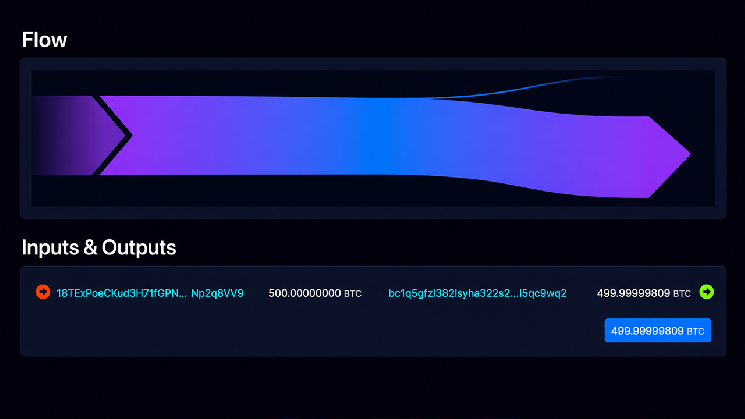
两日前(8月1日)有报道称,由于Coldcard硬件钱包的固件和随机数生成器漏洞,已导致约1431.97 BTC被盗,这促使部分比特币持有者考虑将资产转移至中心化交易所或托管服务,同时也引发了一批长期休眠钱包的异动。 在7月30日至8月1日期间,已有306 BTC从休眠地址转出。这一趋势持续,本周一,一个自2013年12月6日起休眠的地址转移了500 BTC(价值约3132万美元)。该地址创建于比特币首次突破1000美元之时,当初这批比特币价值约52.1万美元。 区块链数据显示,接收这笔资金的地址与已知交易所、托管机构或实体无关。对于早期持有者而言,十多年未动的钱包不仅是资产,更代表了2013年那个比特币初破千元、尚属小众时做出的自我托管承诺。他们依赖硬件钱包而非中心化平台,旨在完全掌控私钥。而Coldcard漏洞正动摇了这一根本安全哲学。 此次大额转移并非出于市场时机选择,而是持有者意识到旧钱包可能已不符合当前安全标准。随着超1400 BTC已因该漏洞被盗,且近日有数百枚BTC从休眠钱包主动转出,对许多长期持有者来说,选择已很明确:要么相信旧钱包从未被侵入,要么主动转移资产,避免他人代为决定。 转移一笔沉寂十年以上的巨额余额,尽管会暴露地址,但这更像是为保全资本而采取的安全措施,而非交易决策。对于最资深的比特币持有者而言,当前优先事项或许是资产保全,而非市场投机。

cryptonews.ru30 分鐘前

2013年的“比特币鲸鱼”苏醒,在Coldcard担忧加剧之际转移500枚BTC

cryptonews.ru30 分鐘前

交易

現貨

熱門文章

什麼是 GROK AI

Grok AI: 在 Web3 時代革命性改變對話技術 介紹 在快速演變的人工智能領域,Grok AI 作為一個值得注意的項目脫穎而出,橋接了先進技術與用戶互動的領域。Grok AI 由 xAI 開發,該公司由著名企業家 Elon Musk 領導,旨在重新定義我們與人工智能的互動方式。隨著 Web3 運動的持續蓬勃發展,Grok AI 旨在利用對話 AI 的力量回答複雜的查詢,為用戶提供不僅具資訊性而且具娛樂性的體驗。 Grok AI 是什麼? Grok AI 是一個複雜的對話 AI 聊天機器人,旨在與用戶進行動態互動。與許多傳統 AI 系統不同,Grok AI 接納更廣泛的查詢,包括那些通常被視為不恰當或超出標準回應的問題。該項目的核心目標包括: 可靠推理:Grok AI 強調常識推理,根據上下文理解提供邏輯答案。 可擴展監督:整合工具協助確保用戶互動既受到監控又優化質量。 正式驗證:安全性至關重要;Grok AI 採用正式驗證方法來增強其輸出的可靠性。 長上下文理解:該 AI 模型在保留和回憶大量對話歷史方面表現出色,促進有意義且具上下文意識的討論。 對抗魯棒性:通過專注於改善其對操控或惡意輸入的防禦,Grok AI 旨在維護用戶互動的完整性。 總之,Grok AI 不僅僅是一個信息檢索設備;它是一個沉浸式的對話夥伴,鼓勵動態對話。 Grok AI 的創建者 Grok AI 的腦力來源無疑是 Elon Musk,這個名字與各個領域的創新息息相關,包括汽車、太空旅行和技術。在專注於以有益方式推進 AI 技術的 xAI 旗下,Musk 的願景旨在重塑對 AI 互動的理解。其領導力和基礎理念深受 Musk 推動技術邊界的承諾影響。 Grok AI 的投資者 雖然有關支持 Grok AI 的投資者的具體細節仍然有限,但公開承認 xAI 作為該項目的孵化器,主要由 Elon Musk 本人創立和支持。Musk 之前的企業和持股為 Grok AI 提供了強有力的支持,進一步增強了其可信度和增長潛力。然而,目前有關支持 Grok AI 的其他投資基金或組織的信息尚不易獲得,這標誌著未來潛在探索的領域。 Grok AI 如何運作? Grok AI 的運作機制與其概念框架一樣創新。該項目整合了幾種尖端技術,以促進其獨特的功能: 強大的基礎設施:Grok AI 使用 Kubernetes 進行容器編排,Rust 提供性能和安全性,JAX 用於高性能數值計算。這三者確保了聊天機器人的高效運行、有效擴展和及時服務用戶。 實時知識訪問:Grok AI 的一個顯著特點是其通過 X 平台(以前稱為 Twitter)訪問實時數據的能力。這一能力使 AI 能夠獲取最新信息,從而提供及時的答案和建議,而其他 AI 模型可能會錯過這些信息。 兩種互動模式:Grok AI 為用戶提供“趣味模式”和“常規模式”之間的選擇。趣味模式允許更具玩樂性和幽默感的互動風格,而常規模式則專注於提供精確和準確的回應。這種多樣性確保了根據不同用戶偏好量身定制的體驗。 總之,Grok AI 將性能與互動相結合,創造出既豐富又娛樂的體驗。 Grok AI 的時間線 Grok AI 的旅程標誌著反映其發展和部署階段的關鍵里程碑: 初始開發:Grok AI 的基礎階段持續了約兩個月,在此期間進行了模型的初步訓練和微調。 Grok-2 Beta 發布:在一個重要的進展中,Grok-2 beta 被宣布。這一版本推出了兩個版本的聊天機器人——Grok-2 和 Grok-2 mini,均具備聊天、編碼和推理的能力。 公眾訪問:在其 beta 開發之後,Grok AI 向 X 平台用戶開放。那些通過手機號碼驗證並活躍至少七天的帳戶可以訪問有限版本,使這項技術能夠接觸到更廣泛的受眾。 這一時間線概括了 Grok AI 從創建到公眾參與的系統性增長,強調其對持續改進和用戶互動的承諾。 Grok AI 的主要特點 Grok AI 包含幾個關鍵特點,促成其創新身份: 實時知識整合:訪問當前和相關信息使 Grok AI 與許多靜態模型區別開來,從而提供引人入勝和準確的用戶體驗。 多樣化的互動風格:通過提供不同的互動模式,Grok AI 滿足各種用戶偏好,邀請創造力和個性化的對話。 先進的技術基礎:利用 Kubernetes、Rust 和 JAX 為該項目提供了堅實的框架,以確保可靠性和最佳性能。 倫理話語考量:包含圖像生成功能展示了該項目的創新精神。然而,它也引發了有關版權和尊重可識別人物描繪的倫理考量——這是 AI 社區內持續討論的議題。 結論 作為對話 AI 領域的先驅,Grok AI 概括了數字時代轉變用戶體驗的潛力。由 xAI 開發,並受到 Elon Musk 願景的驅動,Grok AI 將實時知識與先進的互動能力相結合。它努力推動人工智能能夠達成的界限,同時保持對倫理考量和用戶安全的關注。 Grok AI 不僅體現了技術的進步,還體現了 Web3 環境中新對話範式的出現,承諾以靈活的知識和玩樂的互動吸引用戶。隨著該項目的持續演變,它成為技術、創造力和類人互動交匯處所能實現的見證。

1.1k 人學過發佈於 2024.12.26更新於 2024.12.26

什麼是 GROK AI

什麼是 ERC AI

Euruka Tech:$erc ai 及其在 Web3 中的雄心概述 介紹 在快速發展的區塊鏈技術和去中心化應用的環境中,新項目頻繁出現,每個項目都有其獨特的目標和方法論。其中一個項目是 Euruka Tech,該項目在加密貨幣和 Web3 的廣闊領域中運作。Euruka Tech 的主要焦點,特別是其代幣 $erc ai,是提供旨在利用去中心化技術日益增長的能力的創新解決方案。本文旨在提供 Euruka Tech 的全面概述,探索其目標、功能、創建者的身份、潛在投資者以及它在更廣泛的 Web3 背景中的重要性。 Euruka Tech, $erc ai 是什麼? Euruka Tech 被描述為一個利用 Web3 環境提供的工具和功能的項目,專注於在其運作中整合人工智能。雖然有關該項目框架的具體細節仍然有些模糊,但它旨在增強用戶參與度並自動化加密空間中的流程。該項目的目標是創建一個去中心化的生態系統,不僅促進交易,還通過人工智能整合預測功能,因此其代幣被命名為 $erc ai。其目的是提供一個直觀的平台,促進更智能的互動和高效的交易處理,並在不斷增長的 Web3 領域中發揮作用。 Euruka Tech, $erc ai 的創建者是誰? 目前,關於 Euruka Tech 背後的創建者或創始團隊的信息仍然不明確且有些模糊。這一數據的缺失引發了擔憂,因為了解團隊背景通常對於在區塊鏈行業建立信譽至關重要。因此,我們將這些信息歸類為 未知,直到具體細節在公共領域中公開。 Euruka Tech, $erc ai 的投資者是誰? 同樣,關於 Euruka Tech 項目的投資者或支持組織的識別在現有研究中並未明確提供。對於考慮參與 Euruka Tech 的潛在利益相關者或用戶來說,來自知名投資公司的財務合作或支持所帶來的保證是至關重要的。沒有關於投資關係的披露,很難對該項目的財務安全性或持久性得出全面的結論。根據所找到的信息,本節也處於 未知 的狀態。 Euruka Tech, $erc ai 如何運作? 儘管缺乏有關 Euruka Tech 的詳細技術規範,但考慮其創新雄心是至關重要的。該項目旨在利用人工智能的計算能力來自動化和增強加密貨幣環境中的用戶體驗。通過將 AI 與區塊鏈技術相結合,Euruka Tech 旨在提供自動交易、風險評估和個性化用戶界面等功能。 Euruka Tech 的創新本質在於其目標是創造用戶與去中心化網絡所提供的廣泛可能性之間的無縫連接。通過利用機器學習算法和 AI,它旨在減少首次用戶的挑戰,並簡化 Web3 框架內的交易體驗。AI 與區塊鏈之間的這種共生關係突顯了 $erc ai 代幣的重要性,成為傳統用戶界面與去中心化技術的先進能力之間的橋樑。 Euruka Tech, $erc ai 的時間線 不幸的是,由於目前有關 Euruka Tech 的信息有限,我們無法提供該項目旅程中主要發展或里程碑的詳細時間線。這條時間線通常對於描繪項目的演變和理解其增長軌跡至關重要,但目前尚不可用。隨著有關顯著事件、合作夥伴關係或功能添加的信息變得明顯,更新將無疑增強 Euruka Tech 在加密領域的可見性。 關於其他 “Eureka” 項目的澄清 值得注意的是,多個項目和公司與 “Eureka” 共享類似的名稱。研究已經識別出一些倡議,例如 NVIDIA Research 的 AI 代理,專注於使用生成方法教導機器人複雜任務,以及 Eureka Labs 和 Eureka AI,分別改善教育和客戶服務分析中的用戶體驗。然而,這些項目與 Euruka Tech 是不同的,不應與其目標或功能混淆。 結論 Euruka Tech 及其 $erc ai 代幣在 Web3 領域中代表了一個有前途但目前仍不明朗的參與者。儘管有關其創建者和投資者的細節仍未披露,但將人工智能與區塊鏈技術相結合的核心雄心仍然是關注的焦點。該項目在通過先進自動化促進用戶參與方面的獨特方法,可能會使其在 Web3 生態系統中脫穎而出。 隨著加密市場的持續演變,利益相關者應密切關注有關 Euruka Tech 的進展,因為文檔創新、合作夥伴關係或明確路線圖的發展可能在未來帶來重大機會。當前,我們期待更多實質性見解的出現,以揭示 Euruka Tech 的潛力及其在競爭激烈的加密市場中的地位。

948 人學過發佈於 2025.01.02更新於 2025.01.02

什麼是 ERC AI

什麼是 DUOLINGO AI

DUOLINGO AI:將語言學習與Web3及AI創新結合 在科技重塑教育的時代,人工智能(AI)和區塊鏈網絡的整合預示著語言學習的新前沿。進入DUOLINGO AI及其相關的加密貨幣$DUOLINGO AI。這個項目旨在將領先語言學習平台的教育優勢與去中心化的Web3技術的好處相結合。本文深入探討DUOLINGO AI的關鍵方面,探索其目標、技術框架、歷史發展和未來潛力,同時保持原始教育資源與這一獨立加密貨幣倡議之間的清晰區分。 DUOLINGO AI概述 DUOLINGO AI的核心目標是建立一個去中心化的環境,讓學習者可以通過實現語言能力的教育里程碑來獲得加密獎勵。通過應用智能合約,該項目旨在自動化技能驗證過程和代幣分配,遵循強調透明度和用戶擁有權的Web3原則。該模型與傳統的語言習得方法有所不同,重點依賴社區驅動的治理結構,讓代幣持有者能夠建議課程內容和獎勵分配的改進。 DUOLINGO AI的一些顯著目標包括: 遊戲化學習:該項目整合區塊鏈成就和非同質化代幣(NFT)來表示語言能力水平,通過引人入勝的數字獎勵來激發學習動機。 去中心化內容創建:它為教育者和語言愛好者提供了貢獻課程的途徑,促進了一個有利於所有貢獻者的收益共享模型。 AI驅動的個性化:通過採用先進的機器學習模型,DUOLINGO AI個性化課程以適應個別學習進度,類似於已建立平台中的自適應功能。 項目創建者與治理 截至2025年4月,$DUOLINGO AI背後的團隊仍然是化名的,這在去中心化的加密貨幣領域中是一種常見做法。這種匿名性旨在促進集體增長和利益相關者的參與,而不是專注於個別開發者。部署在Solana區塊鏈上的智能合約註明了開發者的錢包地址,這表明對於交易的透明度的承諾,儘管創建者的身份未知。 根據其路線圖,DUOLINGO AI旨在演變為去中心化自治組織(DAO)。這種治理結構允許代幣持有者對關鍵問題進行投票,例如功能實施和財庫分配。這一模型與各種去中心化應用中社區賦權的精神相一致,強調集體決策的重要性。 投資者與戰略夥伴關係 目前,沒有與$DUOLINGO AI相關的公開可識別的機構投資者或風險投資家。相反,該項目的流動性主要來自去中心化交易所(DEX),這與傳統教育科技公司的資金策略形成鮮明對比。這種草根模型表明了一種社區驅動的方法,反映了該項目對去中心化的承諾。 在其白皮書中,DUOLINGO AI提到與未具名的「區塊鏈教育平台」建立合作,以豐富其課程提供。雖然具體的合作夥伴尚未披露,但這些合作努力暗示了一種將區塊鏈創新與教育倡議相結合的策略,擴大了對多樣化學習途徑的訪問和用戶參與。 技術架構 AI整合 DUOLINGO AI整合了兩個主要的AI驅動組件,以增強其教育產品: 自適應學習引擎:這個複雜的引擎從用戶互動中學習,類似於主要教育平台的專有模型。它動態調整課程難度,以應對特定學習者的挑戰,通過針對性的練習加強薄弱環節。 對話代理:通過使用基於GPT-4的聊天機器人,DUOLINGO AI為用戶提供了一個參與模擬對話的平台,促進更互動和實用的語言學習體驗。 區塊鏈基礎設施 建立在Solana區塊鏈上的$DUOLINGO AI利用了一個全面的技術框架,包括: 技能驗證智能合約:此功能自動向成功通過能力測試的用戶頒發代幣,加強了對真實學習成果的激勵結構。 NFT徽章:這些數字代幣標誌著學習者達成的各種里程碑,例如完成課程的一部分或掌握特定技能,允許他們以數字方式交易或展示自己的成就。 DAO治理:持有代幣的社區成員可以通過對關鍵提案進行投票來參與治理,促進一種鼓勵課程提供和平台功能創新的參與文化。 歷史時間線 2022–2023:概念化 DUOLINGO AI的基礎工作始於白皮書的創建,強調了語言學習中的AI進步與區塊鏈技術去中心化潛力之間的協同作用。 2024:Beta發佈 限量的Beta版本推出了流行語言的課程,作為項目社區參與策略的一部分,獎勵早期用戶以代幣激勵。 2025:DAO過渡 在4月,進行了完整的主網發佈,並開始流通代幣,促使社區討論可能擴展到亞洲語言和其他課程開發的問題。 挑戰與未來方向 技術障礙 儘管有雄心勃勃的目標,DUOLINGO AI面臨著重大挑戰。可擴展性仍然是一個持續的擔憂,特別是在平衡與AI處理相關的成本和維持響應靈敏的去中心化網絡方面。此外,在去中心化的提供中確保內容創建和審核的質量,對於維持教育標準來說也帶來了複雜性。 戰略機會 展望未來,DUOLINGO AI有潛力利用與學術機構的微證書合作,提供區塊鏈驗證的語言技能認證。此外,跨鏈擴展可能使該項目能夠接觸到更廣泛的用戶基礎和其他區塊鏈生態系統,增強其互操作性和覆蓋範圍。 結論 DUOLINGO AI代表了人工智能和區塊鏈技術的創新融合,為傳統語言學習系統提供了一種以社區為中心的替代方案。儘管其化名開發和新興經濟模型帶來某些風險,但該項目對遊戲化學習、個性化教育和去中心化治理的承諾為Web3領域的教育技術指明了前進的道路。隨著AI的持續進步和區塊鏈生態系統的演變,像DUOLINGO AI這樣的倡議可能會重新定義用戶與語言教育的互動方式,賦能社區並通過創新的學習機制獎勵參與。

967 人學過發佈於 2025.04.11更新於 2025.04.11

什麼是 DUOLINGO AI

相關討論

歡迎來到 HTX 社群。在這裡,您可以了解最新的平台發展動態並獲得專業的市場意見。 以下是用戶對 AI (AI)幣價的意見。

活动图片