Jensen Huang Turns Japan into NVIDIA's "Physical AI" Pivot Point: A Life-Saving Favor 30 Years Ago, a Full-Stack Bind 30 Years Later

marsbit發佈於 2026-07-16更新於 2026-07-16

文章摘要

NVIDIA CEO Jensen Huang’s recent visit to Japan signals a strategic push to make the country a core hub for its global “physical AI” ecosystem. During his trip, NVIDIA announced partnerships with Japanese robotics giants Fanuc and Yaskawa Electric, and expanded its collaboration with Toyota across autonomous driving, factory simulation, and smart city applications. Huang emphasized that AI-driven robotics will become intelligent, adaptable, and accessible. The visit also highlighted a historic reunion with former SEGA president Shoichiro Irimajiri, who helped save NVIDIA from bankruptcy in the 1990s with a critical investment. Now, SEGA plans to support NVIDIA’s RTX Spark platform for future game releases. Behind the scenes, Huang hosted a dinner with key Japanese semiconductor and electronics supply chain leaders, including Kioxia, Shin-Etsu Chemical, Tokyo Electron, and Ajinomoto, underscoring Japan’s role in NVIDIA’s hardware roadmap. Beyond robotics and automotive, NVIDIA is deepening ties across Japanese industries. In healthcare, companies like Eisai and Fujifilm are using NVIDIA’s BioNeMo and Blackwell platforms for AI-driven drug discovery and medical imaging. In finance, Mizuho Bank and SMFG are building AI factories powered by NVIDIA systems. In quantum computing, RIKEN’s supercomputers, equipped with Blackwell GPUs, are advancing research. Market speculation also points to a potential partnership with Japan’s state-backed “physical AI” consortium, Noetra. Huang...

Author: Wall Street News

NVIDIA is positioning Japan as a core pivot point in its global Physical AI blueprint.

NVIDIA CEO Jensen Huang made an appearance in Tokyo this week, engaging in a series of intensive partnership signings and business meetings. According to reports, NVIDIA announced on Thursday collaborations with Japanese robotics giants Fanuc and Yaskawa Electric to jointly advance robotics and AI technology development.

Simultaneously, NVIDIA announced the expansion of its partnership with Toyota, covering areas such as autonomous driving, factory simulation, and smart cities. Huang remarked at a Tokyo media event, "With AI, robots will become intelligent, easily adaptable, and accessible."
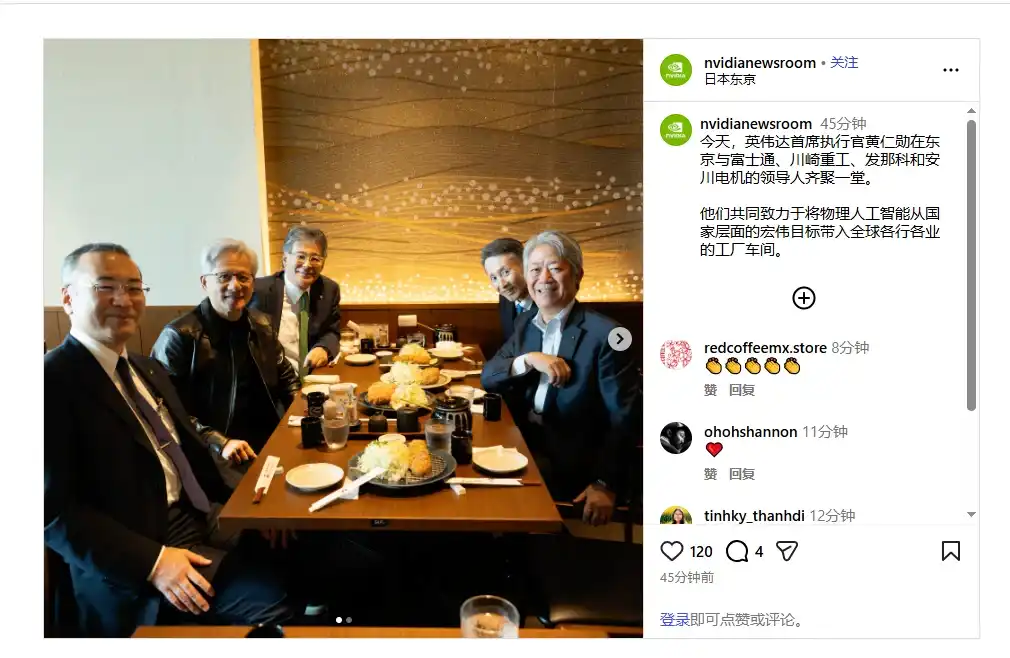
The strategic intent of this Japan trip is clear: NVIDIA is systematically and deeply binding Japan's manufacturing foundation and semiconductor supply chain with its full-stack AI technologies.

In an interview, Huang dismissed concerns about an AI investment bubble, stating "We are far from an AI bubble, the demand is extremely strong", and emphasized that "we need to build infrastructure for at least ten years." He also indicated that NVIDIA would announce partnership plans related to Japan's sovereign AI later this week.

Additionally, notably, this visit was accompanied by a historically poignant reunion—Huang shared the stage in Akihabara with former SEGA president Shoichiro Irimajiri, who had thrown NVIDIA a lifeline when it was on the brink of bankruptcy 30 years ago, adding an emotional layer to this business trip.
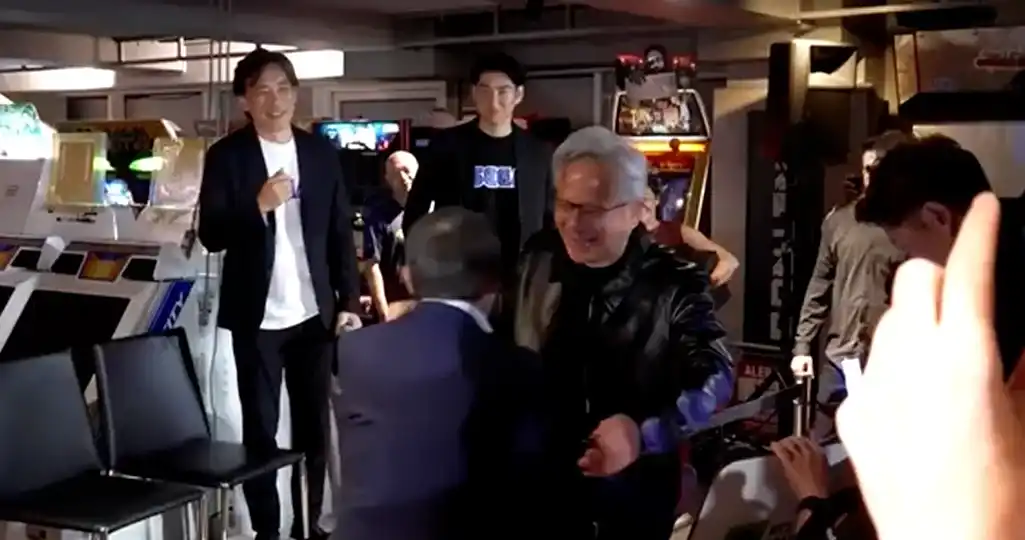
(Video Screenshot: Jensen Huang embracing former SEGA president)

Reunion in Akihabara: The "Life-Saving Favor" 30 Years Ago

Beyond business meetings, the most emotionally charged moment of Huang's trip occurred at the former site of the SEGA Game Center in Tokyo's Akihabara district.

According to SEGA, Huang attended an event hosted by SEGA on July 15 (local time), sharing the stage again after many years with former SEGA president Shoichiro Irimajiri. Huang remarked emotionally at the event: "Without everything that SEGA did, without everything that Shoichiro Irimajiri did, NVIDIA wouldn't be here today."

This connection dates back to around 1996. At the time, NVIDIA, then a newly founded company, was developing a graphics chip for SEGA's next-generation console. A misjudged technological path led to the project's complete failure, pushing NVIDIA to the brink of bankruptcy.

Huang proactively admitted the failure to Irimajiri, then SEGA's vice president. Instead of pursuing accountability, Irimajiri pushed for SEGA to invest approximately $5 million in the cash-strapped startup. Huang once recalled:

"I told Irimajiri that if they invested this money in us, they would likely lose it all; but if they didn't, we would go under... He thought about it for a few days and then told me: We'll invest."

With this capital infusion, NVIDIA, after laying off 60% of its workforce, started anew. It launched the RIVA 128 in 1997, and subsequently established its market position in the GPU field with products like RIVA TNT and GeForce 256.

Somewhat dramatically, after NVIDIA's 1999 IPO at a valuation of around $300 million, SEGA quickly chose to cash out, selling its shares for about $15 million. Today, NVIDIA's market capitalization exceeds $5 trillion.

At this reunion, both parties announced an extension of their cooperation—SEGA's future titles will support NVIDIA's newly released RTX Spark platform, including the upcoming "VIRTUA FIGHTER CROSSROADS." The collaboration between NVIDIA and SEGA began 30 years ago when NVIDIA's NV1 chip provided graphics support for the PC version of the original "Virtua Fighter," one of the world's earliest 3D fighting games.
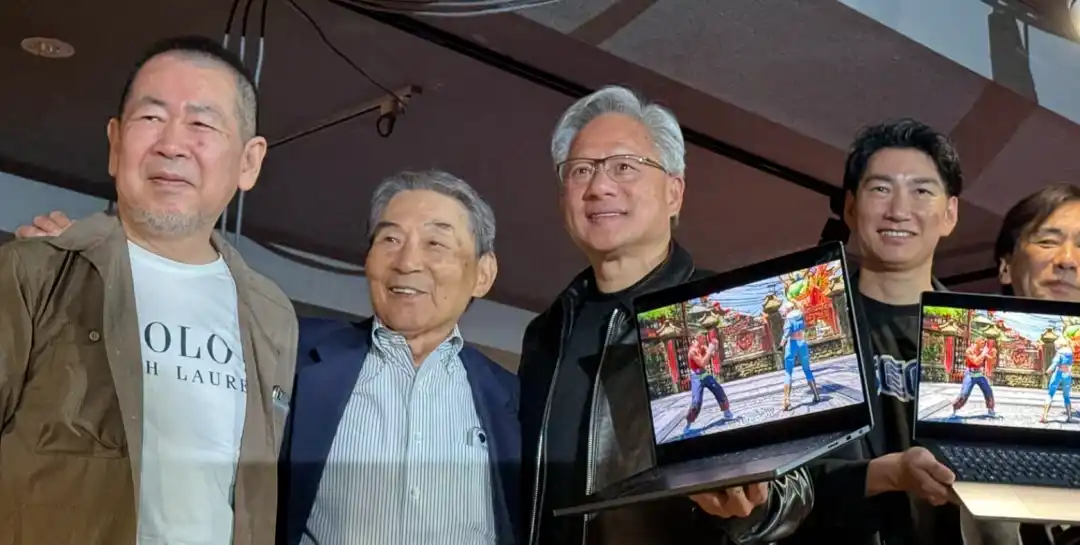
(Image source: NVIDIA website)

Izakaya Dinner: Wooing the Core of Japan's Semiconductor Supply Chain

On the eve of the formal partnership announcements, Huang completed a collective "public relations" effort with a low-key yet significant dinner gathering for key nodes in Japan's AI supply chain.

According to Singapore's The Straits Times, on the evening of July 15 (local time), Huang appeared at an izakaya in Tokyo's Kanda district, dining with a group of executives from core Japanese supply chain companies for about two hours.
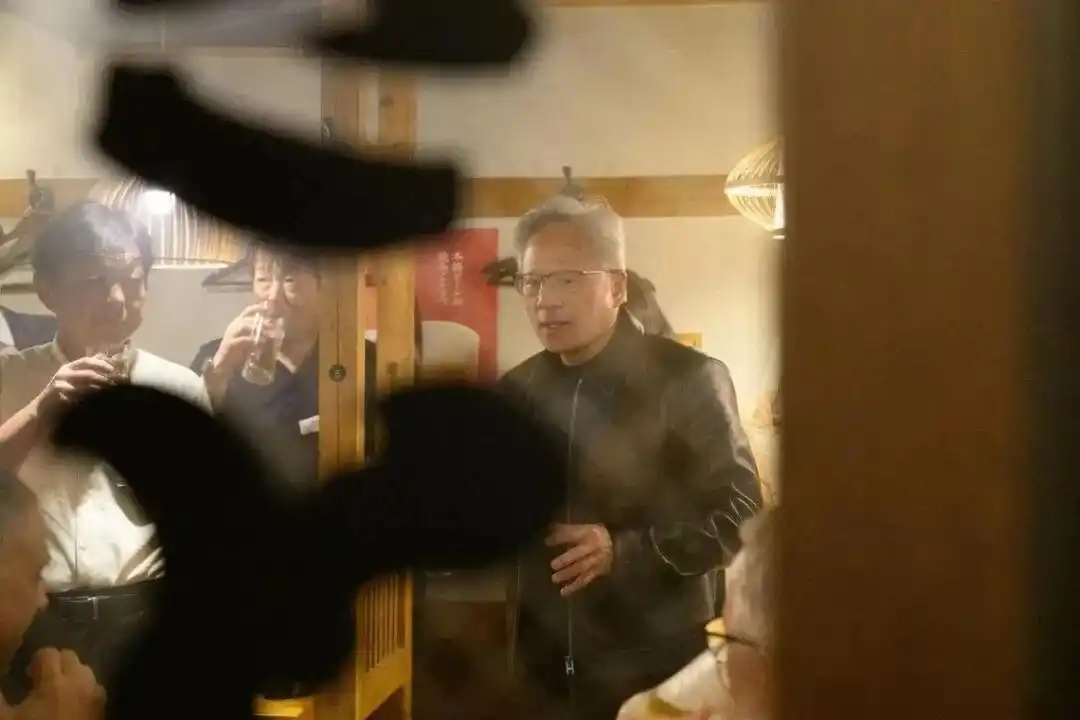
(Image source: The Straits Times, Singapore)

Attendees included:

The CEO of advanced flash memory chipmaker Kioxia; the head of leading global silicon wafer supplier Shin-Etsu Chemical; the chief of chip equipment maker Tokyo Electron; an executive from advanced chip packaging film sole supplier Ajinomoto; and the heads of fiber optic cable maker Sumitomo Electric Industries and advanced capacitor producer Taiyo Yuden. Yuki Kusumi of Panasonic Holdings was also present.

It is reported that Huang's group enjoyed yakitori skewers and motsunabe (offal hot pot), and drank Japanese whisky.

The lineup of this gathering nearly outlines the entire spectrum of Japan's hardware supply chain crucial for NVIDIA's next-generation AI systems. According to attendees, conversations at the table included phrases like "let's work together to promote the prosperity of industries like semiconductors and keep driving up stock prices."

Outside the izakaya, a crowd gathered with smartphones, hoping to catch a glimpse of the AI era icon known on social media as "kawajan-san" (Mr. Leather Jacket). It was reported that a 57-year-old tourist from Taiwan, Chang Hui-Yu, said outside the SEGA event, "I think he is the most influential person on Earth."

Betting on Physical AI: Japan's Manufacturing Industry as a "Natural Ally"

The core strategic narrative of Huang's trip is positioning Japan as a critical battleground for global Physical AI development.

According to Kyodo News, Huang said in an interview in Tokyo, "This is a historic moment for Japan because Japan has traditionally excelled in precision manufacturing and mass production."

He believes AI can help Japan address its severe labor shortage, "Through automation, AI, and robotics, we can enhance the capabilities of the existing workforce and boost the nation's overall productivity."

At the practical collaboration level, the partnerships with Fanuc and Yaskawa directly target the intelligent upgrade of industrial robots. The collaboration with Toyota is more comprehensive:

Toyota is developing next-generation vehicles with L2++ functionality based on NVIDIA's DRIVE AGX platform and DriveOS operating system; it's also using NVIDIA's Megatron-LM to train MISRA-compliant code assistant AI models to accelerate vehicle software engineering; and leveraging NVIDIA's Omniverse and Isaac Sim frameworks to advance factory digital twins and robot simulation.

Toyota subsidiary Woven by Toyota has also developed a multimodal vision-language model for urban traffic intelligence using NVIDIA H100 GPUs.
NVIDIA Vice President Rishi Dhall stated, "Physical AI will bring intelligence to every moving machine, from cars, robots, trucks, to the cities and factories they operate in."

Full-Stack Deployment: From Healthcare and Finance to Quantum Computing

Beyond robotics and automotive, NVIDIA's collaboration map in Japan extends to multiple key industries, demonstrating a systematic full-stack penetration.

In healthcare and life sciences, several Japanese pharmaceutical giants are leveraging NVIDIA's BioNeMo platform to accelerate AI drug discovery, including Eisai, Astellas, Daiichi Sankyo, and Ono Pharmaceuticals. Canon launched Japan's first photon-counting CT system accelerated by NVIDIA. Fujifilm commercialized Japan's first full-body CT system equipped with NVIDIA Blackwell. Kawasaki Heavy Industries plans to use NVIDIA's Holoscan IGX, Isaac GR00T, and Cosmos platforms to develop surgical assistant robots and hospital transport robots. In the financial sector, Mizuho Bank plans to build Japan's largest local AI factory in the financial industry, starting with NVIDIA DGX B200 systems; Japan Research Institute (JRI) under SMBC Group has already deployed an AI factory, using NVIDIA's Nemotron open model to transform financial data into intelligence; Rakuten Bank will leverage NVIDIA's Agent Toolkit to develop trading foundational models. In quantum computing, two supercomputers powered by NVIDIA GB200 at Japan's RIKEN institute have begun operation: RIKYU, equipped with 1,600 NVIDIA Blackwell GPUs, supports open foundational model development; the quantum-HPC system ROQUO integrates 540 Blackwell GPUs, tightly connected with the quantum computer on the RIKEN campus. In collaboration with NVIDIA, institutions including Mitsubishi Chemical, Mizuho Bank, Keio University, and AIST achieved a 13.4x speedup in molecular spectroscopy analysis workflows compared to pure CPU nodes.

Additionally, according to reports, there is market speculation that NVIDIA may announce a collaboration with Japan's "Physical AI Model National Team," Noetra. Noetra is led by SoftBank and brings together 44 Japanese companies including Honda and NEC. The Japanese government has also provided 1 trillion yen in fiscal subsidies for the initiative.


熱門幣種推薦

相關問答

QWhat was the key emotional moment during Jensen Huang's visit to Japan, and what historical connection did it involve?

AThe key emotional moment was his reunion with Sega's former president Shoichiro Irimajiri at a former Sega game center in Tokyo's Akihabara district. This involved the historical connection from around 1996, when Sega invested about $5 million in a nearly bankrupt NVIDIA, saving it from collapse. Huang credited this act for NVIDIA's survival.

QWhat is the strategic goal behind NVIDIA's recent partnerships and activities in Japan, as described in the article?

AThe strategic goal is to systemically bind Japan's manufacturing base and semiconductor supply chain with NVIDIA's full-stack AI technology, positioning Japan as a core strategic pivot in NVIDIA's global 'Physical AI' blueprint. This involves deepening collaborations across robotics, automotive, industrial manufacturing, and the broader supply chain.

QWhich major Japanese industrial robot companies did NVIDIA announce collaborations with during this visit?

ANVIDIA announced collaborations with the Japanese robotics giants Fanuc and Yaskawa Electric to jointly advance robot and AI technology development.

QHow did NVIDIA's relationship with Sega evolve from its early investment to the present day, according to the article?

ASega's initial ~$5 million investment saved NVIDIA from bankruptcy around 1996. After NVIDIA's successful IPO in 1999, Sega cashed out its shares for about $15 million. Now, 30 years later, the partnership is being renewed, with future Sega titles supporting NVIDIA's RTX Spark platform.

QWhat specific areas does NVIDIA's expanded partnership with Toyota cover?

AThe expanded partnership with Toyota covers autonomous driving, factory simulation, and city intelligence. It involves developing next-generation vehicles with L2++ features, using AI models to accelerate vehicle software engineering, and advancing digital twins and robot simulations for factories.

你可能也喜歡

在WAIC,第一次觉得AI不必那么聪明

在WAIC大会的喧嚣中,一个由上海音乐学院团队开发的AI音乐疗愈系统展台显得格外宁静。体验者通过脑电波与情绪状态,能获得一段为其即时生成的舒缓音乐,没有炫技的模型演示,却让人感受到久违的平静。这与展馆内主流展示的AI机器人、大模型、AI眼镜等追求极致效率与强大能力的趋势形成了鲜明对比。 文章指出,当前AI行业的核心议题已从“模型有多强”转向“AI能做什么”,聚焦于Agent、算力、终端和工作流,旨在让AI进入并优化生活与工作的方方面面。然而,作者反思,在效率革命不断加速世界的背景下,技术带来的焦虑或许正源于效率本身——节省的时间被新任务填满,技术不断索取着人的注意力。 尽管AI正变得越来越拟人化,但关于人本身的情感需求——如焦虑、疲惫、孤独——的讨论却相对缺失。文章认为,AI的未来价值不仅在于智能的强弱,更在于如何“理解”人。像AI音乐疗愈、心理咨询、老人护理这类应用,虽然不耀眼,却可能正在构建一种“情感基础设施”,回应着人们对被理解、被陪伴的深层需求。 最终,作者提出,当模型能力逐渐成为可复制的基建,下一阶段的AI竞争关键,或许在于对具体的人、场景与问题的深刻理解与关怀。AI不必总是令人惊叹的聪明,能让人获得内心的平静与更好的感受,同样至关重要。

marsbit1 小時前

在WAIC,第一次觉得AI不必那么聪明

marsbit1 小時前

交易

現貨

熱門文章

什麼是 $S$

理解 SPERO:全面概述 SPERO 簡介 隨著創新領域的不斷演變,web3 技術和加密貨幣項目的出現在塑造數字未來中扮演著關鍵角色。在這個動態領域中,SPERO(標記為 SPERO,$$s$)是一個引起關注的項目。本文旨在收集並呈現有關 SPERO 的詳細信息,以幫助愛好者和投資者理解其基礎、目標和在 web3 和加密領域內的創新。 SPERO,$$s$ 是什麼? SPERO,$$s$ 是加密空間中的一個獨特項目,旨在利用去中心化和區塊鏈技術的原則,創建一個促進參與、實用性和金融包容性的生態系統。該項目旨在以新的方式促進點對點互動,為用戶提供創新的金融解決方案和服務。 SPERO,$$s$ 的核心目標是通過提供增強用戶體驗的工具和平台來賦能個人。這包括使交易方式更加靈活、促進社區驅動的倡議,以及通過去中心化應用程序(dApps)創造金融機會的途徑。SPERO,$$s$ 的基本願景圍繞包容性展開,旨在彌合傳統金融中的差距,同時利用區塊鏈技術的優勢。 誰是 SPERO,$$s$ 的創建者? SPERO,$$s$ 的創建者身份仍然有些模糊,因為公開可用的資源對其創始人提供的詳細背景信息有限。這種缺乏透明度可能源於該項目對去中心化的承諾——這是一種許多 web3 項目所共享的精神,優先考慮集體貢獻而非個人認可。 通過將討論重心放在社區及其共同目標上,SPERO,$$s$ 體現了賦能的本質,而不特別突出某些個體。因此,理解 SPERO 的精神和使命比識別單一創建者更為重要。 誰是 SPERO,$$s$ 的投資者? SPERO,$$s$ 得到了來自風險投資家到天使投資者的多樣化投資者的支持,他們致力於促進加密領域的創新。這些投資者的關注點通常與 SPERO 的使命一致——優先考慮那些承諾社會技術進步、金融包容性和去中心化治理的項目。 這些投資者通常對不僅提供創新產品,還對區塊鏈社區及其生態系統做出積極貢獻的項目感興趣。這些投資者的支持強化了 SPERO,$$s$ 作為快速發展的加密項目領域中的一個重要競爭者。 SPERO,$$s$ 如何運作? SPERO,$$s$ 採用多面向的框架,使其與傳統的加密貨幣項目區別開來。以下是一些突顯其獨特性和創新的關鍵特徵: 去中心化治理:SPERO,$$s$ 整合了去中心化治理模型,賦予用戶積極參與決策過程的權力,關於項目的未來。這種方法促進了社區成員之間的擁有感和責任感。 代幣實用性:SPERO,$$s$ 使用其自己的加密貨幣代幣,旨在在生態系統內部提供多種功能。這些代幣使交易、獎勵和平台上提供的服務得以促進,增強了整體參與度和實用性。 分層架構:SPERO,$$s$ 的技術架構支持模塊化和可擴展性,允許在項目發展過程中無縫整合額外的功能和應用。這種適應性對於在不斷變化的加密環境中保持相關性至關重要。 社區參與:該項目強調社區驅動的倡議,採用激勵合作和反饋的機制。通過培養強大的社區,SPERO,$$s$ 能夠更好地滿足用戶需求並適應市場趨勢。 專注於包容性:通過提供低交易費用和用戶友好的界面,SPERO,$$s$ 旨在吸引多樣化的用戶群體,包括那些以前可能未曾參與加密領域的個體。這種對包容性的承諾與其通過可及性賦能的總體使命相一致。 SPERO,$$s$ 的時間線 理解一個項目的歷史提供了對其發展軌跡和里程碑的關鍵見解。以下是建議的時間線,映射 SPERO,$$s$ 演變中的重要事件: 概念化和構思階段:形成 SPERO,$$s$ 基礎的初步想法被提出,與區塊鏈行業內的去中心化和社區聚焦原則密切相關。 項目白皮書的發布:在概念階段之後,發布了一份全面的白皮書,詳細說明了 SPERO,$$s$ 的願景、目標和技術基礎設施,以吸引社區的興趣和反饋。 社區建設和早期參與:積極進行外展工作,建立早期採用者和潛在投資者的社區,促進圍繞項目目標的討論並獲得支持。 代幣生成事件:SPERO,$$s$ 進行了一次代幣生成事件(TGE),向早期支持者分發其原生代幣,並在生態系統內建立初步流動性。 首次 dApp 上線:與 SPERO,$$s$ 相關的第一個去中心化應用程序(dApp)上線,允許用戶參與平台的核心功能。 持續發展和夥伴關係:對項目產品的持續更新和增強,包括與區塊鏈領域其他參與者的戰略夥伴關係,使 SPERO,$$s$ 成為加密市場中一個具有競爭力和不斷演變的參與者。 結論 SPERO,$$s$ 是 web3 和加密貨幣潛力的見證,能夠徹底改變金融系統並賦能個人。憑藉對去中心化治理、社區參與和創新設計功能的承諾,它為更具包容性的金融環境鋪平了道路。 與任何在快速發展的加密領域中的投資一樣,潛在的投資者和用戶都被鼓勵進行徹底研究,並對 SPERO,$$s$ 的持續發展進行深思熟慮的參與。該項目展示了加密行業的創新精神,邀請人們進一步探索其無數可能性。儘管 SPERO,$$s$ 的旅程仍在展開,但其基礎原則確實可能影響我們在互聯網數字生態系統中如何與技術、金融和彼此互動的未來。

253 人學過發佈於 2024.12.17更新於 2024.12.17

什麼是 $S$

什麼是 AGENT S

Agent S:Web3中自主互動的未來 介紹 在不斷演變的Web3和加密貨幣領域,創新不斷重新定義個人如何與數字平台互動。Agent S是一個開創性的項目,承諾通過其開放的代理框架徹底改變人機互動。Agent S旨在簡化複雜任務,為人工智能(AI)提供變革性的應用,鋪平自主互動的道路。本詳細探索將深入研究該項目的複雜性、其獨特特徵以及對加密貨幣領域的影響。 什麼是Agent S? Agent S是一個突破性的開放代理框架,專門設計用來解決計算機任務自動化中的三個基本挑戰: 獲取特定領域知識:該框架智能地從各種外部知識來源和內部經驗中學習。這種雙重方法使其能夠建立豐富的特定領域知識庫,提升其在任務執行中的表現。 長期任務規劃:Agent S採用經驗增強的分層規劃,這是一種戰略方法,可以有效地分解和執行複雜任務。此特徵顯著提升了其高效和有效地管理多個子任務的能力。 處理動態、不均勻的界面:該項目引入了代理-計算機界面(ACI),這是一種創新的解決方案,增強了代理和用戶之間的互動。利用多模態大型語言模型(MLLMs),Agent S能夠無縫導航和操作各種圖形用戶界面。 通過這些開創性特徵,Agent S提供了一個強大的框架,解決了自動化人機互動中涉及的複雜性,為AI及其他領域的無數應用奠定了基礎。 誰是Agent S的創建者? 儘管Agent S的概念根本上是創新的,但有關其創建者的具體信息仍然難以捉摸。創建者目前尚不清楚,這突顯了該項目的初期階段或戰略選擇將創始成員保密。無論是否匿名,重點仍然在於框架的能力和潛力。 誰是Agent S的投資者? 由於Agent S在加密生態系統中相對較新,關於其投資者和財務支持者的詳細信息並未明確記錄。缺乏對支持該項目的投資基礎或組織的公開見解,引發了對其資金結構和發展路線圖的質疑。了解其支持背景對於評估該項目的可持續性和潛在市場影響至關重要。 Agent S如何運作? Agent S的核心是尖端技術,使其能夠在多種環境中有效運作。其運營模型圍繞幾個關鍵特徵構建: 類人計算機互動:該框架提供先進的AI規劃,力求使與計算機的互動更加直觀。通過模仿人類在任務執行中的行為,承諾提升用戶體驗。 敘事記憶:用於利用高級經驗,Agent S利用敘事記憶來跟蹤任務歷史,從而增強其決策過程。 情節記憶:此特徵為用戶提供逐步指導,使框架能夠在任務展開時提供上下文支持。 支持OpenACI:Agent S能夠在本地運行,使用戶能夠控制其互動和工作流程,與Web3的去中心化理念相一致。 與外部API的輕鬆集成:其多功能性和與各種AI平台的兼容性確保了Agent S能夠無縫融入現有技術生態系統,成為開發者和組織的理想選擇。 這些功能共同促成了Agent S在加密領域的獨特地位,因為它以最小的人類干預自動化複雜的多步任務。隨著項目的發展,其在Web3中的潛在應用可能重新定義數字互動的展開方式。 Agent S的時間線 Agent S的發展和里程碑可以用一個時間線來概括,突顯其重要事件: 2024年9月27日:Agent S的概念在一篇名為《一個像人類一樣使用計算機的開放代理框架》的綜合研究論文中推出,展示了該項目的基礎工作。 2024年10月10日:該研究論文在arXiv上公開,提供了對框架及其基於OSWorld基準的性能評估的深入探索。 2024年10月12日:發布了一個視頻演示,提供了對Agent S能力和特徵的視覺洞察,進一步吸引潛在用戶和投資者。 這些時間線上的標記不僅展示了Agent S的進展,還表明了其對透明度和社區參與的承諾。 有關Agent S的要點 隨著Agent S框架的持續演變,幾個關鍵特徵脫穎而出,強調其創新性和潛力: 創新框架:旨在提供類似人類互動的直觀計算機使用,Agent S為任務自動化帶來了新穎的方法。 自主互動:通過GUI自主與計算機互動的能力標誌著向更智能和高效的計算解決方案邁進了一步。 複雜任務自動化:憑藉其強大的方法論,能夠自動化複雜的多步任務,使過程更快且更少出錯。 持續改進:學習機制使Agent S能夠從過去的經驗中改進,不斷提升其性能和效率。 多功能性:其在OSWorld和WindowsAgentArena等不同操作環境中的適應性確保了它能夠服務於廣泛的應用。 隨著Agent S在Web3和加密領域中的定位,其增強互動能力和自動化過程的潛力標誌著AI技術的一次重大進步。通過其創新框架,Agent S展現了數字互動的未來,為各行各業的用戶承諾提供更無縫和高效的體驗。 結論 Agent S代表了AI與Web3結合的一次大膽飛躍,具有重新定義我們與技術互動方式的能力。儘管仍處於早期階段,但其應用的可能性廣泛且引人入勝。通過其全面的框架解決關鍵挑戰,Agent S旨在將自主互動帶到數字體驗的最前沿。隨著我們深入加密貨幣和去中心化的領域,像Agent S這樣的項目無疑將在塑造技術和人機協作的未來中發揮關鍵作用。

1.0k 人學過發佈於 2025.01.14更新於 2025.01.14

什麼是 AGENT S

如何購買S

歡迎來到HTX.com!在這裡,購買Sonic (S)變得簡單而便捷。跟隨我們的逐步指南,放心開始您的加密貨幣之旅。第一步:創建您的HTX帳戶使用您的 Email、手機號碼在HTX註冊一個免費帳戶。體驗無憂的註冊過程並解鎖所有平台功能。立即註冊第二步:前往買幣頁面,選擇您的支付方式信用卡/金融卡購買:使用您的Visa或Mastercard即時購買Sonic (S)。餘額購買:使用您HTX帳戶餘額中的資金進行無縫交易。第三方購買:探索諸如Google Pay或Apple Pay等流行支付方式以增加便利性。C2C購買:在HTX平台上直接與其他用戶交易。HTX 場外交易 (OTC) 購買:為大量交易者提供個性化服務和競爭性匯率。第三步:存儲您的Sonic (S)購買Sonic (S)後,將其存儲在您的HTX帳戶中。您也可以透過區塊鏈轉帳將其發送到其他地址或者用於交易其他加密貨幣。第四步:交易Sonic (S)在HTX的現貨市場輕鬆交易Sonic (S)。前往您的帳戶,選擇交易對,執行交易,並即時監控。HTX為初學者和經驗豐富的交易者提供了友好的用戶體驗。

2.2k 人學過發佈於 2025.01.15更新於 2026.06.02

如何購買S

相關討論

歡迎來到 HTX 社群。在這裡,您可以了解最新的平台發展動態並獲得專業的市場意見。 以下是用戶對 S (S)幣價的意見。

活动图片