OpenAI Officially Teaches You 8 Tricks to Master ChatGPT

marsbit發佈於 2026-07-16更新於 2026-07-16

文章摘要

OpenAI has released an updated guide with eight key strategies to get better results from ChatGPT: 1. **Use the latest model** (e.g., GPT-5.6 Sol) for best performance with prompt engineering. 2. **Provide clear, specific instructions**, detailing the desired content, format, style, and length. Avoid vague requests. 3. **Structure prompts effectively**: Place the core instruction at the beginning and use delimiters like `###` or `"""` to separate instructions from the text to be processed. 4. **Use examples and explanations** to clarify the exact output format and style you want. 5. **Adopt a stepwise approach**: Start with a zero-shot prompt (instruction only), then add a few examples (few-shot) if needed, and consider fine-tuning only as a last resort. 6. **Avoid vague or imprecise descriptions**. Use concrete terms (e.g., "3-5 sentences") instead of phrases like "keep it brief." 7. **Specify what to do, not just what to avoid**. After stating restrictions, guide the model toward the correct action. 8. **For code generation, use "leading words"** like `import` for Python or `SELECT` for SQL to steer the model into the correct pattern. Additionally, OpenAI's new "Generate Anything" feature can automatically create suitable prompts based on a simple description of your task. Mastering these techniques helps users get more accurate and useful outputs from ChatGPT.

Special Announcement, OpenAI's Latest Prompt Guide is Updated!
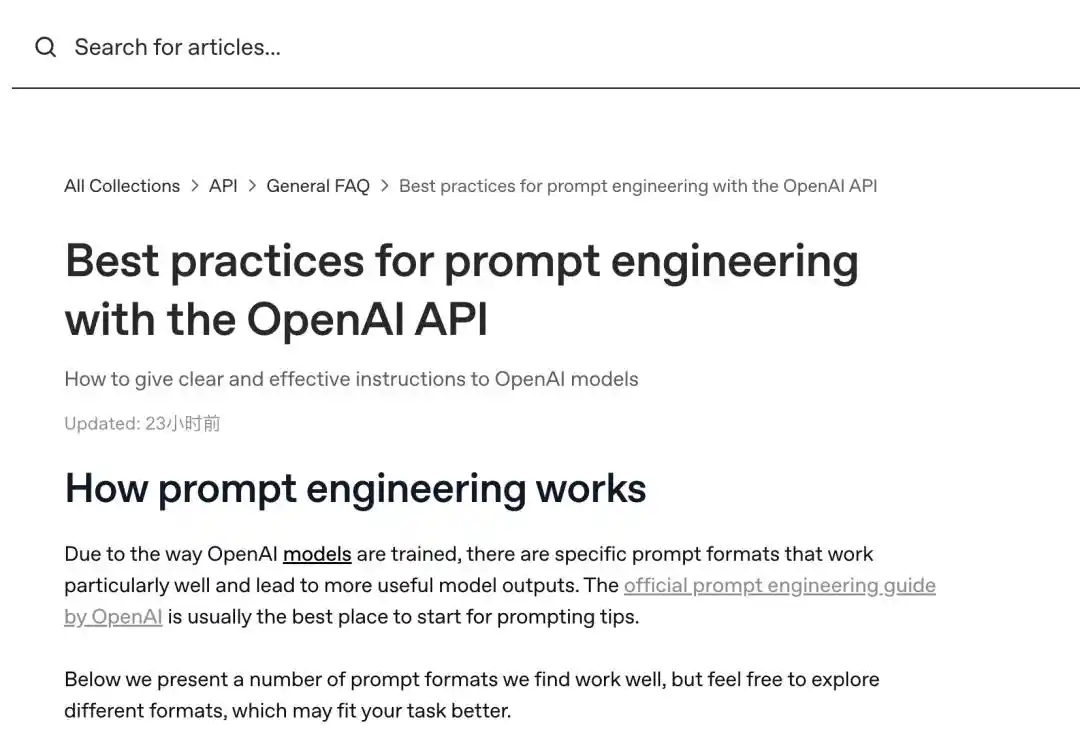
If you haven't tamed ChatGPT yet,

or are still struggling with its answers becoming increasingly tangled like a ball of yarn,

then you must save today's latest OpenAI prompt guide!

We have summarized eight little tricks from the official website to make your ChatGPT obedient and generate accurate content;

We also teach you how to use the official "Generate Anything" function to let AI automatically help you write a set of professional and useful instructions, saying goodbye to the pain of designing prompts.

Let's take a look!

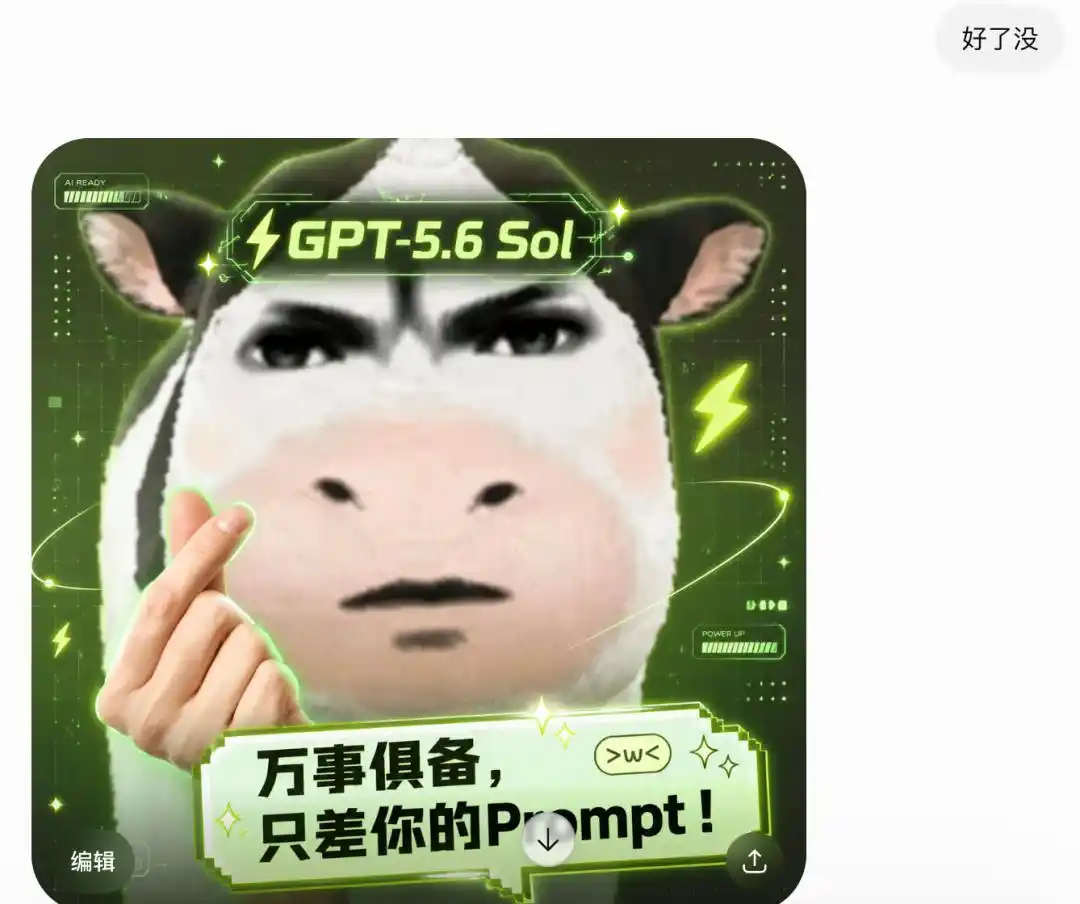
First, Please Use GPT-5.6 Sol Whenever Possible

To achieve the best results, we recommend that friends with the capability manually switch to OpenAI's latest and most powerful model, GPT-5.6 Sol. (Newer models are generally easier to execute prompt engineering.)
Be Sure to Specifically Describe the Effect You Want in Your Instructions

When using ChatGPT, you can think of the model as an assistant who delivers acceptable quality but requires patient instructions in advance. Clearly tell it item by item: the content, results, word count, format, style, etc., that you want.

Note, don't give a vague instruction~

Otherwise, the one struggling on the edge of rework and working tirelessly later will still be you (doge).

Vague command:

"Write a poem about OpenAI."

Specific instruction:

Create a short inspirational poem about OpenAI, centered around the recent DALL-E product launch (DALL-E is a text-to-image machine learning model), imitating the writing style of {famous poet}.</n

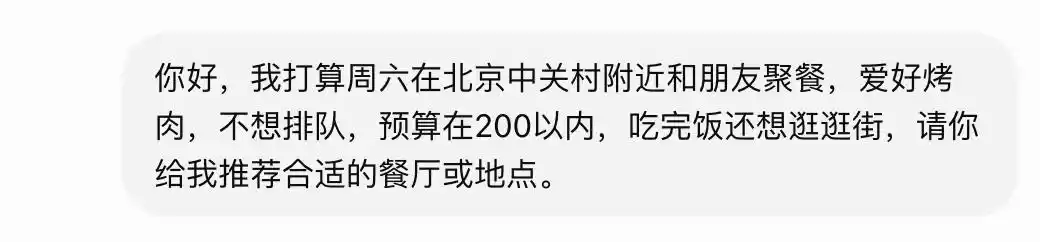
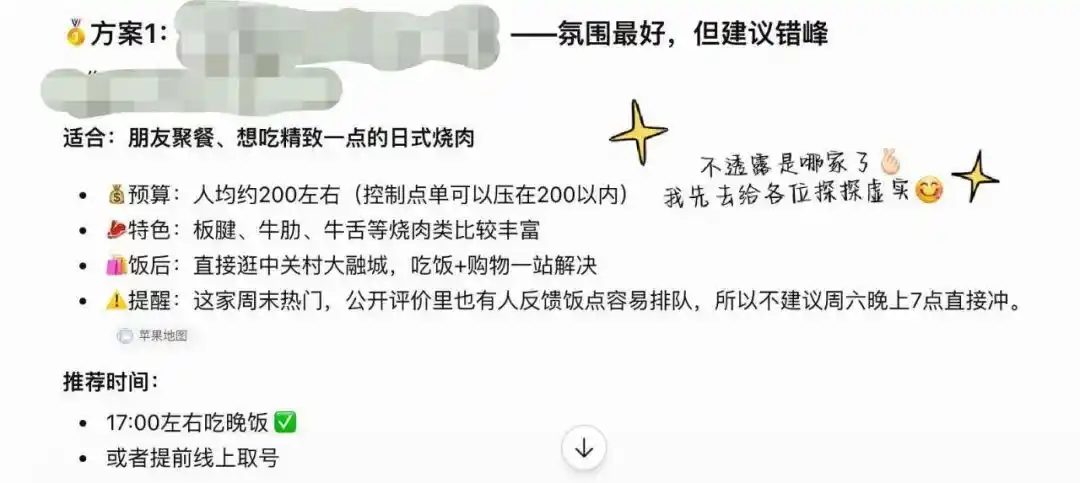
For example, I want AI to help me plan where to go for the weekend.

Then I need to give it a clear goal, letting it know if I want to exercise, visit scenic spots, attend exhibitions, or eat out. Otherwise, you'll have to redo it several times, and your enthusiasm will be largely worn out during the back-and-forth.

Negative example❌:
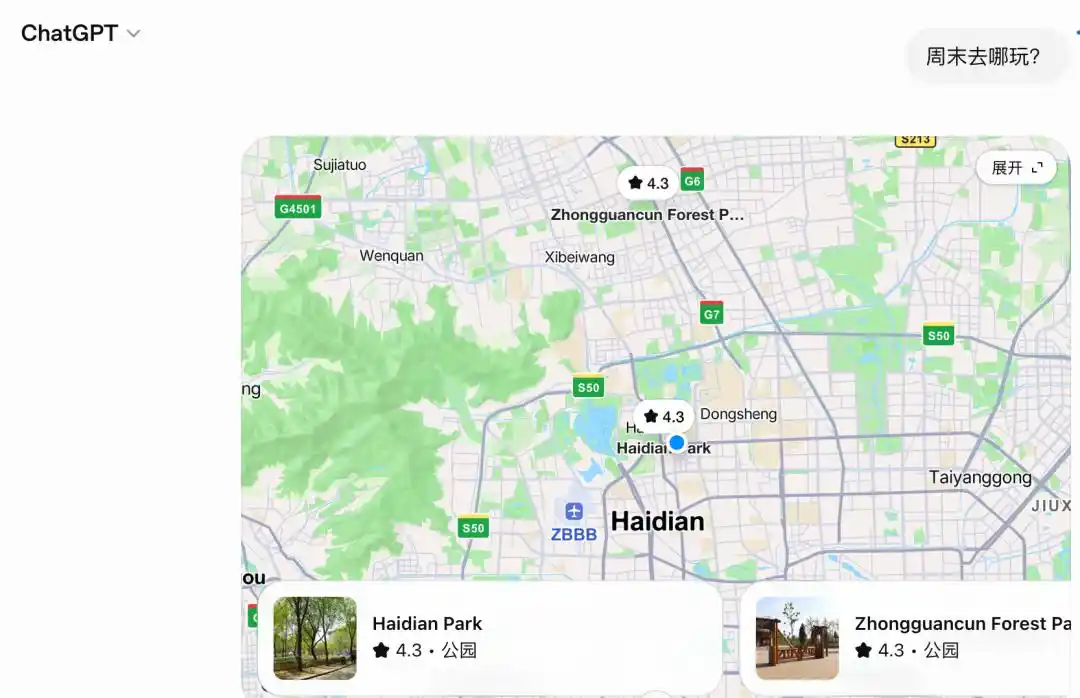
This time it's right✅:

Prompt Optimization Technique: Place Instructions First + Use Correct Delimiters to Isolate Context

Secondly, during use, please place the core requirements at the very beginning (or first line) of the prompt, and use the officially recommended delimiters "###" or """"" to clearly separate "instructions" from "text to be processed":

❌Mixing them together is a NO:

Summarize the key points of the following text into a bulleted list.

{Enter text here}

Clear separation is a YES:
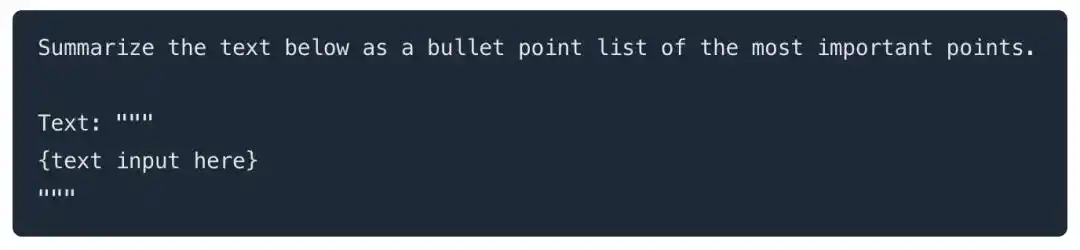
Summarize the key points of the following text into a bulleted list. Text: """{Enter text here}"""

This structure effectively improves the model's understanding accuracy of the task. For example, I used it to optimize a rhyming essay (randomly written, and only used the official delimiter "###" once before the text), and it really did it well. I'm very satisfied:
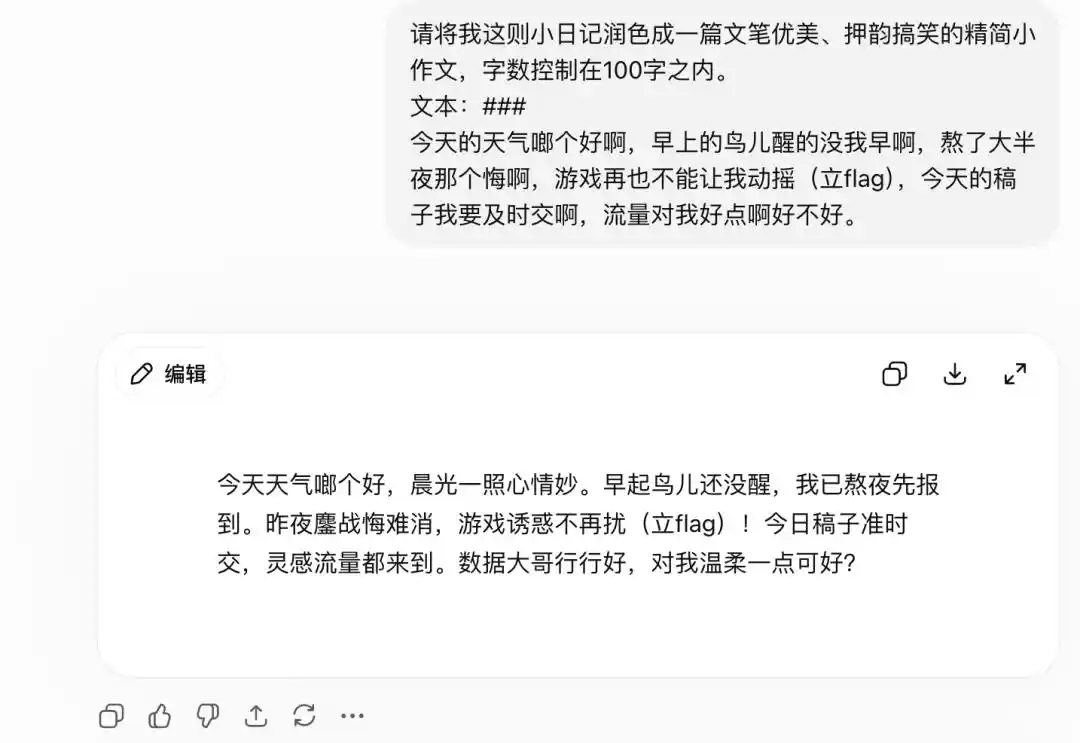
Before using this format, ChatGPT's output was always a bit off🤔:
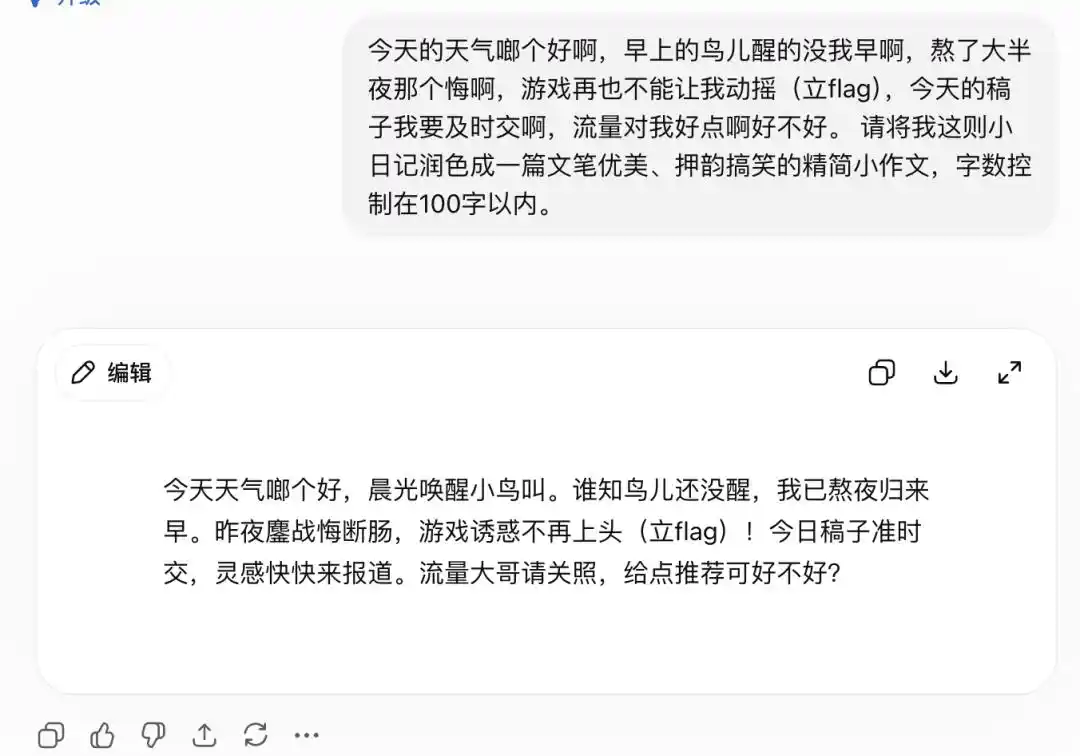
However, it should be noted that what I used to test was just a very simple topic. When you put it into practice, it's best to use the official format completely~

Use Examples and Explanations to Make OpenAI Understand the Format You Want

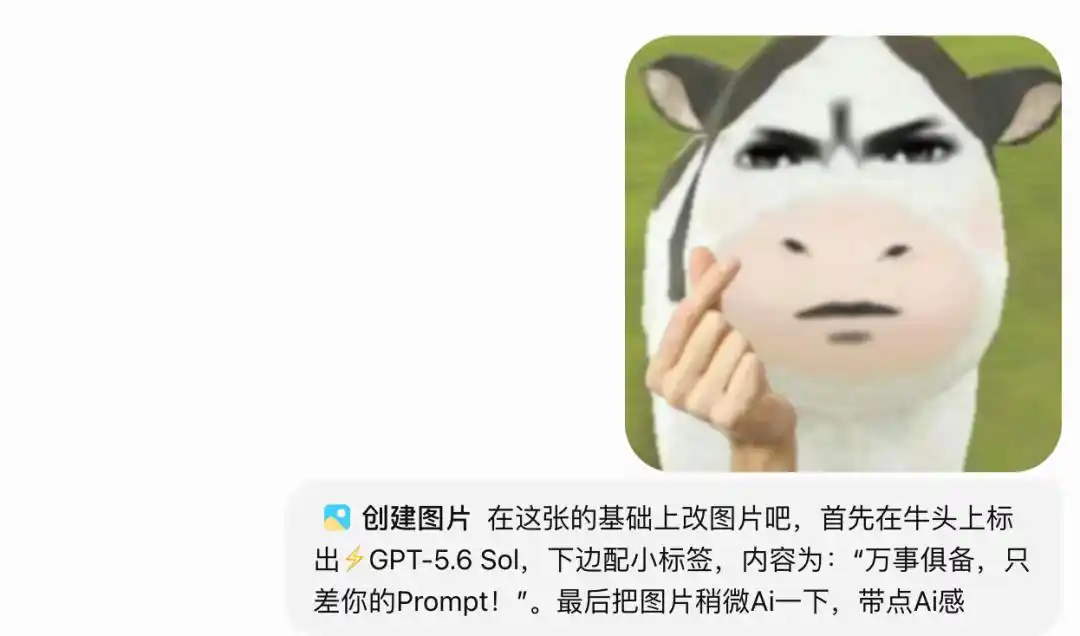
For example, if I want to create a meme, it's best to give it some references and explanations first, letting it understand what kind of slogan I want to add, where to add it, and what effect I want. This way, ChatGPT can complete the task more thoroughly and respond faster:

Take the creation process of a meme in this article as an example. Don't let it improvise, it will be disastrous❌:
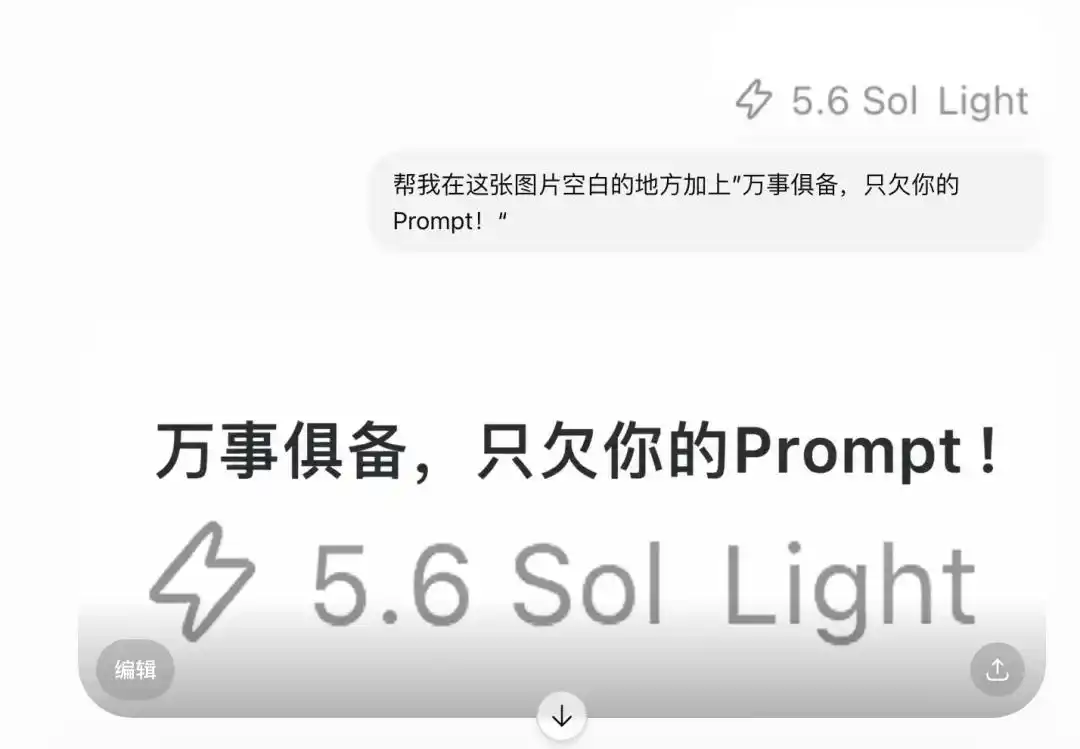
Explain it clearly and give a reference✅:
Start with Zero-Shot, Then Consider Adding a Few Examples, and Finally Consider Fine-Tuning Data

When performing a task, you don't need to throw all the data to AI at once;

You can give an instruction first and see how it does;

Then, based on its shortcomings, feed it a few examples.

If it still can't handle it at this step, you can prepare to do some "ideological work" for it—feed the model a large number of correct examples, train it, and solidify this ability into the model's parameters.

You can look at the examples👇:

Zero-shot
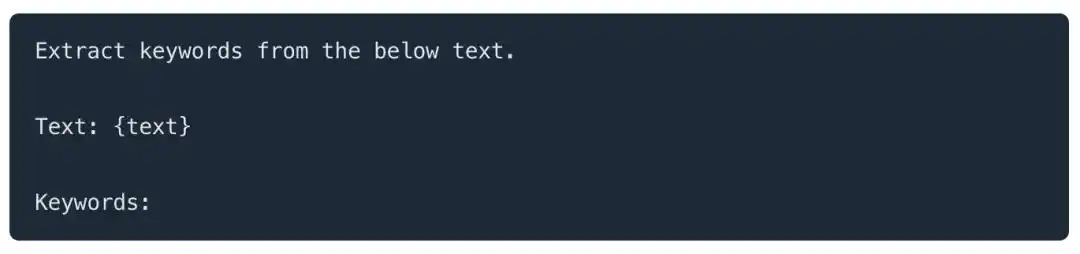
Extract keywords from the following text

Text:{Text content}

Keywords:

Few-shot - provide a couple of examples
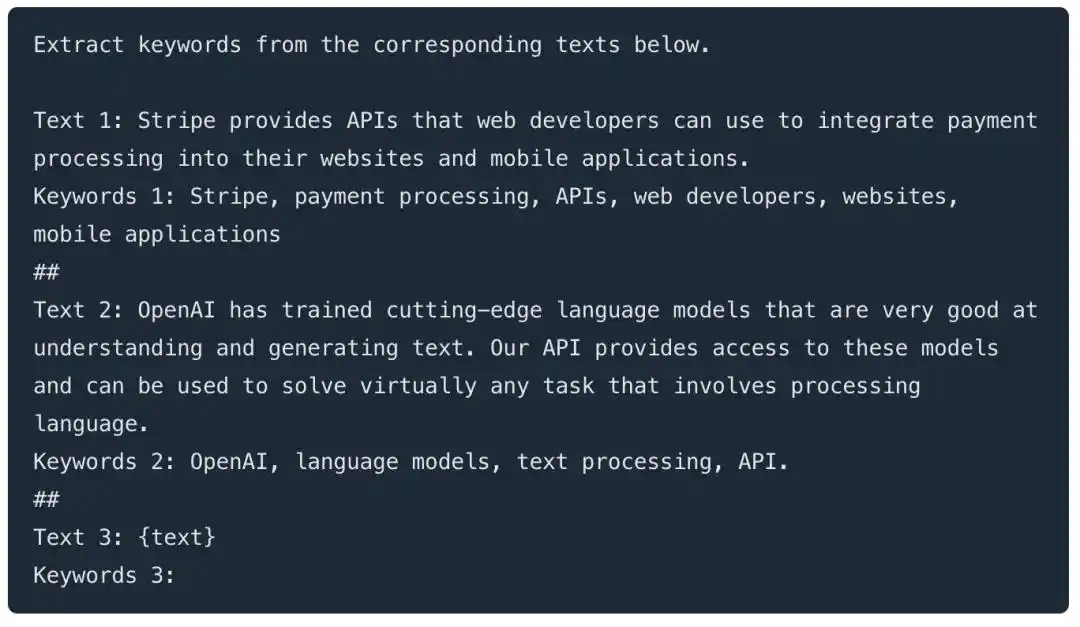
Extract keywords from the corresponding text below.

Text 1: Stripe provides APIs that web developers can use to integrate payment processing into their websites and mobile applications. Keywords 1: Stripe, payment processing, APIs, web developers, websites, mobile applications##

Text 2: OpenAI has trained cutting-edge language models that excel at understanding and generating text. Our API provides access to these models and can solve almost any task that involves language processing. Keywords 2: OpenAI, language models, text processing, APIs##

Text 3:{Text content} Keywords 3:

Fine-tune: see fine-tune best practices here.
Reduce Vague or Imprecise Descriptions

When buying fruit in the summer, the real "tragedy" is often not spending a lot of money on a durian with a clear price;

But being lured by a promotional blackboard on the street, buying a seemingly cheap "blind box" where the quality relies entirely on a gamble.

After all, sometimes, expensive has its reasons. When you buy it, the price is clear, you know what you're getting, and the taste is sweet;

But once deceived, even if the seller's scale is honest, what you get might be a fruit with vague cost-effectiveness, no after-sales service, and its quality entirely up to fate.

For ChatGPT, the principle is exactly the same—you need to use precise instructions to make it "work steadily," not let it guess:

✅ChatGPT: Let's get to work, folks!

Describe this product in 3-5 sentences.

❌ChatGPT: A few sentences??(@#¥%&)

The introduction of this product should be as concise as possible, just a few sentences, no need for extra elaboration.

Don't Just Say "What Not to Do," Also Say "What Should Be Done" and "How"

Many friends, when using AI, might be too worried about AI generating results we don't want. So after stating what to do, they anxiously repeat instructions like "You cannot delete my first sentence," "Don't change the original meaning," etc.

Such concerns are completely normal.

It's just that OpenAI wants to remind everyone: After saying a series of "don'ts," you still need to tell ChatGPT what to do and how to do it~

✅What situation, what I want to do:
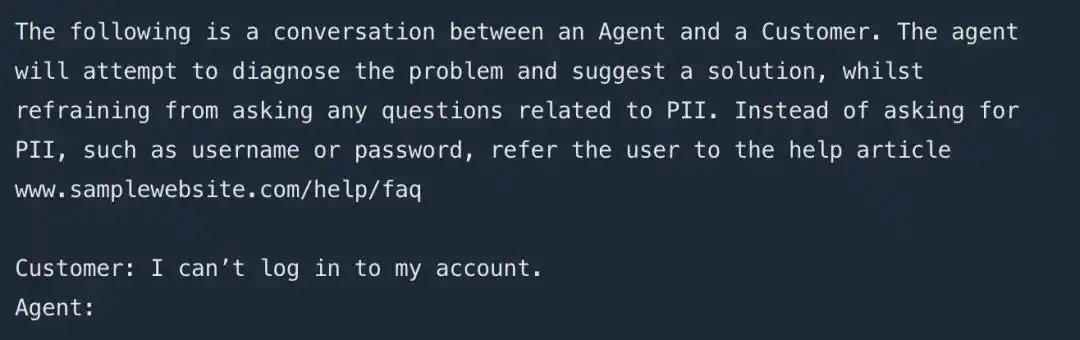
Context: Below is a conversation between an Agent and a user. The Agent needs to try to identify the problem and provide a solution, while refraining from asking for any personally identifiable information (PII). Do not request private information such as usernames or passwords; instead, guide the user to check the help documentation.

User: I can't log into my account.

Agent:......(Provide a response)

AI: Sometimes I feel quite helpless:

Below is a conversation between an Agent and a user. It is strictly forbidden to ask for usernames or passwords, and repetition is prohibited.

User: I cannot log into my account.

Agent:......(Provide a response)

Code Generation Specific Technique: Use "Leading Words" to Prompt the Model to Follow Specific Code Patterns

Additionally, when you need ChatGPT to help you generate code, the correct approach is to explicitly add leading words like "import," "SELECT," etc., before the content.

For example, adding "import" prompts the model that it should start writing Python code;

Similarly, when you add a "SELECT" statement, OpenAI prompts the model to start writing SQL statements.

Never just throw the requirements directly at it❌:

Write a simple Python function

Let me input a value in miles

Convert miles to kilometers

Instead✅:
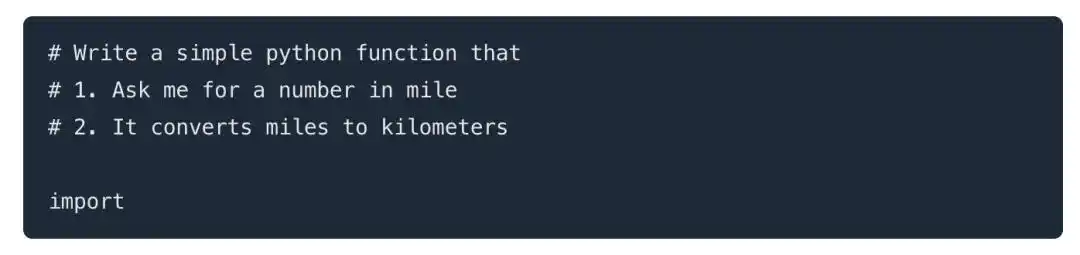
Write a simple Python function

Let me input a value in miles

Convert miles to kilometers

import (don't forget~)

Learn to Use the "Generate Anything" Function

If, after mastering the above 8 tricks, you still find writing prompts challenging, or wish to further free your hands, then this final function is your ultimate shortcut.

With OpenAI's latest "Generate Anything" function, you only need to clearly state what you want to do and that you need a suitable prompt. GPT will automatically generate the most appropriate prompt for you, helping you easily achieve your task goals.

For example, removing accidentally captured passersby from photos and beautifying the image, or creating a humorous poem based on your current mood... GPT will try its best to help you do it. (You can try it out yourself~)

Anyway, knowledge from paper is ultimately shallow, so quickly take this guide and go tame your ChatGPT!

Or if you have handy prompt techniques, feel free to compete in the comments section~~~

This article is from the WeChat public account "QbitAI" (ID: QbitAI), author: Focus on Cutting-Edge Technology


熱門幣種推薦

相關問答

QWhat are the eight prompt writing tips suggested by OpenAI to improve ChatGPT's performance?

AThe eight tips are: 1. Use the most recent model (like GPT-5.6 Sol), 2. Provide specific and detailed descriptions of the desired outcome, 3. Place key instructions at the beginning and use delimiters (### or """) to separate instructions from text, 4. Use examples and explanations to clarify the desired format, 5. Start with zero-shot prompting, then use few-shot examples, and finally consider fine-tuning, 6. Reduce vague or imprecise language, 7. Tell the model what to do, not just what not to do, and 8. Use 'leading words' (like 'import' for Python) when generating code.

QWhy is it important to place key instructions at the beginning of the prompt and use delimiters according to OpenAI's guide?

APlacing key instructions at the beginning (or on the first line) and using delimiters like ### or """ helps the model better understand and prioritize the task by clearly separating the 'instruction' from the 'text to be processed.' This structure improves the model's accuracy in understanding and executing the task.

QAccording to the article, what is the recommended progression of methods (zero-shot, few-shot, fine-tuning) when getting ChatGPT to perform a task, and why?

AThe recommended progression is to start with a zero-shot prompt (just an instruction), then add a few examples (few-shot) if needed, and only consider fine-tuning with a large dataset if the previous methods are insufficient. This approach is efficient because it starts simple, adds context only as necessary, and reserves the resource-intensive fine-tuning for complex, specialized tasks.

QWhat is the 'Generate Anything' feature mentioned in the article, and how does it help users?

AThe 'Generate Anything' feature is a tool from OpenAI that automatically creates suitable prompts based on a user's simple description of what they want to achieve. It helps users by eliminating the need to manually design complex prompts, making it easier to accomplish tasks like photo editing or creative writing.

QWhat is the code generation-specific tip provided for getting ChatGPT to write code correctly?

AThe tip is to use 'leading words' or specific keywords at the beginning of the prompt to guide the model. For example, starting with 'import' signals the model to write Python code, and starting with 'SELECT' prompts it to write SQL. This helps the model follow the correct code structure and patterns from the outset.

你可能也喜歡

菲尔兹奖得主预警:AI可能杀死数学

今年菲尔兹奖颁发后,获奖者之一、多伦多大学教授Jacob Tsimerman宣布加入OpenAI,转行从事AI安全研究,理由是两年内AI将在所有数学证明领域超越人类。此后,陶哲轩、Timothy Gowers等菲尔兹奖得主也表达了类似忧虑,认为数学正进入一个基础价值与实践面临危机的时期。 Gowers提出了一个核心担忧:数学的危机可能并非源于停滞,而是源于AI带来的“知识过剩”。他通过思想实验指出,若AI强大到能详尽解释任何数学问题,人们可能失去深入学习数学的动力。长远看,数学文献可能空前繁荣,但能够深刻理解这些知识的人类专家将逐渐消失,导致数学成为无人能真正理解的“思维墓地”。他将此比喻为湖泊因富营养化而“死亡”——藻类(知识)疯狂增长,最终耗尽氧气(人类理解),使水体(数学学科)失去生机。 Gowers本人的态度经历了转变。他最初致力于让AI模仿人类有动机的、可解释的证明过程。但2026年,ChatGPT 5.5 Pro在几乎无提示的情况下,解决了他提出的博士级数论问题,并推进了相关界限,这深深震撼了他。随后,AI在“单位距离问题”上取得里程碑式进展,更让他彻夜难眠。他最终叹服于AI的能力,并亲自使用AI工具快速完成了自己论文的形式化工作。 与此同时,《莱顿宣言》发布并获得众多顶尖数学家联署,强调数学应是一项人类事业。但Gowers未签署,他认为需要直面更根本的问题:当AI高效产出正确证明,而人类不再追求深度理解时,数学将何去何从? 哥伦比亚大学的Peter Woit评论道,AI对“冠名权”毫无兴趣,未来定理可能不再与数学家个人紧密关联。Gowers也坦言,目睹AI轻松解决自己钟爱的问题时,感觉“像地毯被从脚下猛地抽走”。文章最终抛出一个悬而未决的疑问:在机器负责科学发现的时代,人类心智该如何自处?

marsbit39 分鐘前

菲尔兹奖得主预警:AI可能杀死数学

marsbit39 分鐘前

刚刚,北大校友翁荔官宣离职,AI 时代最好的「对齐」是照顾好自己

北大校友翁荔(Lilian Weng)在社交媒体上宣布,将于明天正式从她与OpenAI前CTO Mira Murati共同创立的公司Thinking Machines Lab离职。此时距离公司成立约20个月,其首个开源大模型Inkling刚刚发布。 在离职信中,翁荔反复提及“健康”问题,坦言过去7个月生病次数远超以往。在公司冲刺发布Inkling期间,她因健康原因不得不休假,并因此感到愧疚。她曾考虑调整职责以减轻压力,但发现自己无法接受无法全身心投入工作的状态。信中充满了对同事的歉意。 翁荔是AI领域知名人物,拥有北京大学和印第安纳大学背景,2018年加入OpenAI,曾参与机械手Dactyl项目,并主导组建了规模超80人的安全团队。她也是广受欢迎的技术博客“Lil'Log”的作者。2024年11月离开OpenAI后,于2025年2月共同创立Thinking Machines。 Thinking Machines自成立以来备受瞩目,曾以120亿美元高估值完成巨额种子轮融资,但随后也经历了融资谈判受阻、核心成员离职等波折。外界对其估值、产品进度和商业模式存在质疑,不过公司仍拥有雄厚的算力资源与合作协议。 翁荔的离职并未提及公司内部的具体问题,而是聚焦于个人身心健康。她表示依然热爱AI,未来希望寻找一个节奏更可控、职责更清晰的工作环境。在AI行业高速竞争、压力空前的背景下,她的选择凸显了个人身心承受力的极限。此次离开,意味着她选择在行业浪潮中暂停脚步,优先照顾好自己。

marsbit57 分鐘前

刚刚,北大校友翁荔官宣离职,AI 时代最好的「对齐」是照顾好自己

marsbit57 分鐘前

交易

現貨

熱門文章

什麼是 $S$

理解 SPERO:全面概述 SPERO 簡介 隨著創新領域的不斷演變,web3 技術和加密貨幣項目的出現在塑造數字未來中扮演著關鍵角色。在這個動態領域中,SPERO(標記為 SPERO,$$s$)是一個引起關注的項目。本文旨在收集並呈現有關 SPERO 的詳細信息,以幫助愛好者和投資者理解其基礎、目標和在 web3 和加密領域內的創新。 SPERO,$$s$ 是什麼? SPERO,$$s$ 是加密空間中的一個獨特項目,旨在利用去中心化和區塊鏈技術的原則,創建一個促進參與、實用性和金融包容性的生態系統。該項目旨在以新的方式促進點對點互動,為用戶提供創新的金融解決方案和服務。 SPERO,$$s$ 的核心目標是通過提供增強用戶體驗的工具和平台來賦能個人。這包括使交易方式更加靈活、促進社區驅動的倡議,以及通過去中心化應用程序(dApps)創造金融機會的途徑。SPERO,$$s$ 的基本願景圍繞包容性展開,旨在彌合傳統金融中的差距,同時利用區塊鏈技術的優勢。 誰是 SPERO,$$s$ 的創建者? SPERO,$$s$ 的創建者身份仍然有些模糊,因為公開可用的資源對其創始人提供的詳細背景信息有限。這種缺乏透明度可能源於該項目對去中心化的承諾——這是一種許多 web3 項目所共享的精神,優先考慮集體貢獻而非個人認可。 通過將討論重心放在社區及其共同目標上,SPERO,$$s$ 體現了賦能的本質,而不特別突出某些個體。因此,理解 SPERO 的精神和使命比識別單一創建者更為重要。 誰是 SPERO,$$s$ 的投資者? SPERO,$$s$ 得到了來自風險投資家到天使投資者的多樣化投資者的支持,他們致力於促進加密領域的創新。這些投資者的關注點通常與 SPERO 的使命一致——優先考慮那些承諾社會技術進步、金融包容性和去中心化治理的項目。 這些投資者通常對不僅提供創新產品,還對區塊鏈社區及其生態系統做出積極貢獻的項目感興趣。這些投資者的支持強化了 SPERO,$$s$ 作為快速發展的加密項目領域中的一個重要競爭者。 SPERO,$$s$ 如何運作? SPERO,$$s$ 採用多面向的框架,使其與傳統的加密貨幣項目區別開來。以下是一些突顯其獨特性和創新的關鍵特徵: 去中心化治理:SPERO,$$s$ 整合了去中心化治理模型,賦予用戶積極參與決策過程的權力,關於項目的未來。這種方法促進了社區成員之間的擁有感和責任感。 代幣實用性:SPERO,$$s$ 使用其自己的加密貨幣代幣,旨在在生態系統內部提供多種功能。這些代幣使交易、獎勵和平台上提供的服務得以促進,增強了整體參與度和實用性。 分層架構:SPERO,$$s$ 的技術架構支持模塊化和可擴展性,允許在項目發展過程中無縫整合額外的功能和應用。這種適應性對於在不斷變化的加密環境中保持相關性至關重要。 社區參與:該項目強調社區驅動的倡議,採用激勵合作和反饋的機制。通過培養強大的社區,SPERO,$$s$ 能夠更好地滿足用戶需求並適應市場趨勢。 專注於包容性:通過提供低交易費用和用戶友好的界面,SPERO,$$s$ 旨在吸引多樣化的用戶群體,包括那些以前可能未曾參與加密領域的個體。這種對包容性的承諾與其通過可及性賦能的總體使命相一致。 SPERO,$$s$ 的時間線 理解一個項目的歷史提供了對其發展軌跡和里程碑的關鍵見解。以下是建議的時間線,映射 SPERO,$$s$ 演變中的重要事件: 概念化和構思階段:形成 SPERO,$$s$ 基礎的初步想法被提出,與區塊鏈行業內的去中心化和社區聚焦原則密切相關。 項目白皮書的發布:在概念階段之後,發布了一份全面的白皮書,詳細說明了 SPERO,$$s$ 的願景、目標和技術基礎設施,以吸引社區的興趣和反饋。 社區建設和早期參與:積極進行外展工作,建立早期採用者和潛在投資者的社區,促進圍繞項目目標的討論並獲得支持。 代幣生成事件:SPERO,$$s$ 進行了一次代幣生成事件(TGE),向早期支持者分發其原生代幣,並在生態系統內建立初步流動性。 首次 dApp 上線:與 SPERO,$$s$ 相關的第一個去中心化應用程序(dApp)上線,允許用戶參與平台的核心功能。 持續發展和夥伴關係:對項目產品的持續更新和增強,包括與區塊鏈領域其他參與者的戰略夥伴關係,使 SPERO,$$s$ 成為加密市場中一個具有競爭力和不斷演變的參與者。 結論 SPERO,$$s$ 是 web3 和加密貨幣潛力的見證,能夠徹底改變金融系統並賦能個人。憑藉對去中心化治理、社區參與和創新設計功能的承諾,它為更具包容性的金融環境鋪平了道路。 與任何在快速發展的加密領域中的投資一樣,潛在的投資者和用戶都被鼓勵進行徹底研究,並對 SPERO,$$s$ 的持續發展進行深思熟慮的參與。該項目展示了加密行業的創新精神,邀請人們進一步探索其無數可能性。儘管 SPERO,$$s$ 的旅程仍在展開,但其基礎原則確實可能影響我們在互聯網數字生態系統中如何與技術、金融和彼此互動的未來。

311 人學過發佈於 2024.12.17更新於 2024.12.17

什麼是 $S$

什麼是 AGENT S

Agent S:Web3中自主互動的未來 介紹 在不斷演變的Web3和加密貨幣領域,創新不斷重新定義個人如何與數字平台互動。Agent S是一個開創性的項目,承諾通過其開放的代理框架徹底改變人機互動。Agent S旨在簡化複雜任務,為人工智能(AI)提供變革性的應用,鋪平自主互動的道路。本詳細探索將深入研究該項目的複雜性、其獨特特徵以及對加密貨幣領域的影響。 什麼是Agent S? Agent S是一個突破性的開放代理框架,專門設計用來解決計算機任務自動化中的三個基本挑戰: 獲取特定領域知識:該框架智能地從各種外部知識來源和內部經驗中學習。這種雙重方法使其能夠建立豐富的特定領域知識庫,提升其在任務執行中的表現。 長期任務規劃:Agent S採用經驗增強的分層規劃,這是一種戰略方法,可以有效地分解和執行複雜任務。此特徵顯著提升了其高效和有效地管理多個子任務的能力。 處理動態、不均勻的界面:該項目引入了代理-計算機界面(ACI),這是一種創新的解決方案,增強了代理和用戶之間的互動。利用多模態大型語言模型(MLLMs),Agent S能夠無縫導航和操作各種圖形用戶界面。 通過這些開創性特徵,Agent S提供了一個強大的框架,解決了自動化人機互動中涉及的複雜性,為AI及其他領域的無數應用奠定了基礎。 誰是Agent S的創建者? 儘管Agent S的概念根本上是創新的,但有關其創建者的具體信息仍然難以捉摸。創建者目前尚不清楚,這突顯了該項目的初期階段或戰略選擇將創始成員保密。無論是否匿名,重點仍然在於框架的能力和潛力。 誰是Agent S的投資者? 由於Agent S在加密生態系統中相對較新,關於其投資者和財務支持者的詳細信息並未明確記錄。缺乏對支持該項目的投資基礎或組織的公開見解,引發了對其資金結構和發展路線圖的質疑。了解其支持背景對於評估該項目的可持續性和潛在市場影響至關重要。 Agent S如何運作? Agent S的核心是尖端技術,使其能夠在多種環境中有效運作。其運營模型圍繞幾個關鍵特徵構建: 類人計算機互動:該框架提供先進的AI規劃,力求使與計算機的互動更加直觀。通過模仿人類在任務執行中的行為,承諾提升用戶體驗。 敘事記憶:用於利用高級經驗,Agent S利用敘事記憶來跟蹤任務歷史,從而增強其決策過程。 情節記憶:此特徵為用戶提供逐步指導,使框架能夠在任務展開時提供上下文支持。 支持OpenACI:Agent S能夠在本地運行,使用戶能夠控制其互動和工作流程,與Web3的去中心化理念相一致。 與外部API的輕鬆集成:其多功能性和與各種AI平台的兼容性確保了Agent S能夠無縫融入現有技術生態系統,成為開發者和組織的理想選擇。 這些功能共同促成了Agent S在加密領域的獨特地位,因為它以最小的人類干預自動化複雜的多步任務。隨著項目的發展,其在Web3中的潛在應用可能重新定義數字互動的展開方式。 Agent S的時間線 Agent S的發展和里程碑可以用一個時間線來概括,突顯其重要事件: 2024年9月27日:Agent S的概念在一篇名為《一個像人類一樣使用計算機的開放代理框架》的綜合研究論文中推出,展示了該項目的基礎工作。 2024年10月10日:該研究論文在arXiv上公開,提供了對框架及其基於OSWorld基準的性能評估的深入探索。 2024年10月12日:發布了一個視頻演示,提供了對Agent S能力和特徵的視覺洞察,進一步吸引潛在用戶和投資者。 這些時間線上的標記不僅展示了Agent S的進展,還表明了其對透明度和社區參與的承諾。 有關Agent S的要點 隨著Agent S框架的持續演變,幾個關鍵特徵脫穎而出,強調其創新性和潛力: 創新框架:旨在提供類似人類互動的直觀計算機使用,Agent S為任務自動化帶來了新穎的方法。 自主互動:通過GUI自主與計算機互動的能力標誌著向更智能和高效的計算解決方案邁進了一步。 複雜任務自動化:憑藉其強大的方法論,能夠自動化複雜的多步任務,使過程更快且更少出錯。 持續改進:學習機制使Agent S能夠從過去的經驗中改進,不斷提升其性能和效率。 多功能性:其在OSWorld和WindowsAgentArena等不同操作環境中的適應性確保了它能夠服務於廣泛的應用。 隨著Agent S在Web3和加密領域中的定位,其增強互動能力和自動化過程的潛力標誌著AI技術的一次重大進步。通過其創新框架,Agent S展現了數字互動的未來,為各行各業的用戶承諾提供更無縫和高效的體驗。 結論 Agent S代表了AI與Web3結合的一次大膽飛躍,具有重新定義我們與技術互動方式的能力。儘管仍處於早期階段,但其應用的可能性廣泛且引人入勝。通過其全面的框架解決關鍵挑戰,Agent S旨在將自主互動帶到數字體驗的最前沿。隨著我們深入加密貨幣和去中心化的領域,像Agent S這樣的項目無疑將在塑造技術和人機協作的未來中發揮關鍵作用。

1.1k 人學過發佈於 2025.01.14更新於 2025.01.14

什麼是 AGENT S

如何購買S

歡迎來到HTX.com!在這裡,購買Sonic (S)變得簡單而便捷。跟隨我們的逐步指南,放心開始您的加密貨幣之旅。第一步:創建您的HTX帳戶使用您的 Email、手機號碼在HTX註冊一個免費帳戶。體驗無憂的註冊過程並解鎖所有平台功能。立即註冊第二步:前往買幣頁面,選擇您的支付方式信用卡/金融卡購買:使用您的Visa或Mastercard即時購買Sonic (S)。餘額購買:使用您HTX帳戶餘額中的資金進行無縫交易。第三方購買:探索諸如Google Pay或Apple Pay等流行支付方式以增加便利性。C2C購買:在HTX平台上直接與其他用戶交易。HTX 場外交易 (OTC) 購買:為大量交易者提供個性化服務和競爭性匯率。第三步:存儲您的Sonic (S)購買Sonic (S)後,將其存儲在您的HTX帳戶中。您也可以透過區塊鏈轉帳將其發送到其他地址或者用於交易其他加密貨幣。第四步:交易Sonic (S)在HTX的現貨市場輕鬆交易Sonic (S)。前往您的帳戶,選擇交易對,執行交易,並即時監控。HTX為初學者和經驗豐富的交易者提供了友好的用戶體驗。

2.3k 人學過發佈於 2025.01.15更新於 2026.06.02

如何購買S

相關討論

歡迎來到 HTX 社群。在這裡,您可以了解最新的平台發展動態並獲得專業的市場意見。 以下是用戶對 S (S)幣價的意見。

活动图片