While the company that defined AI's past is losing the people who will define its future.
On June 18th, Noam Shazeer, core author of the Transformer paper and co-lead of Google Gemini, announced on X his departure from Google to join OpenAI, which had confidentially filed for an IPO with the SEC. He is one of the eight equal contributors to the 2017 paper "Attention is All You Need," which laid the technical foundation for modern large language models. Sam Altman immediately reposted and commented, "Noam has been one of the people I've most wanted to work with since day one of OpenAI. Only took a decade."
Forty-eight hours later, on June 19th, John Jumper, 2024 Nobel Laureate in Chemistry and core leader of AlphaFold, announced his departure from Google DeepMind after nearly nine years, joining Anthropic.
Two almost simultaneous departures of top-tier talent are enough to shock the AI community. Extending the timeline reveals an even clearer trend. On May 19th, former OpenAI founding member Andrej Karpathy announced he was joining Anthropic's pre-training team. Although he never worked at Google, his choice similarly illustrates one thing: top talent is concentrating at OpenAI and Anthropic, with Google becoming the primary source in this talent reshuffle.
Three Departures, Not Isolated Cases, But a Trend
Jumper is no ordinary researcher. In 2024, he, along with Demis Hassabis and David Baker, was awarded the Nobel Prize in Chemistry for leading the AlphaFold project, which used AI to predict protein 3D structures in an extremely short time, solving a problem that had perplexed the biology community for fifty years.

John Jumper (left) pictured with Demis Hassabis, echoing reports of his departure from Google DeepMind for Anthropic. Source: businessinsider.com (copyright review needed)
Shazeer is a key figure in modern AI development. He joined Google in 2000 and co-authored "Attention is All You Need" in 2017. The Transformer architecture proposed in that paper is the technical bedrock of all current large language models. In 2021, after Google refused to launch the AI chatbot product he co-developed with Daniel De Freitas, he left and founded Character.AI in 2022. Three years later, Google brought him back for approximately $2.7 billion, appointing him co-lead of Gemini. However, less than two years after his return, he has chosen to leave again, this time for OpenAI.
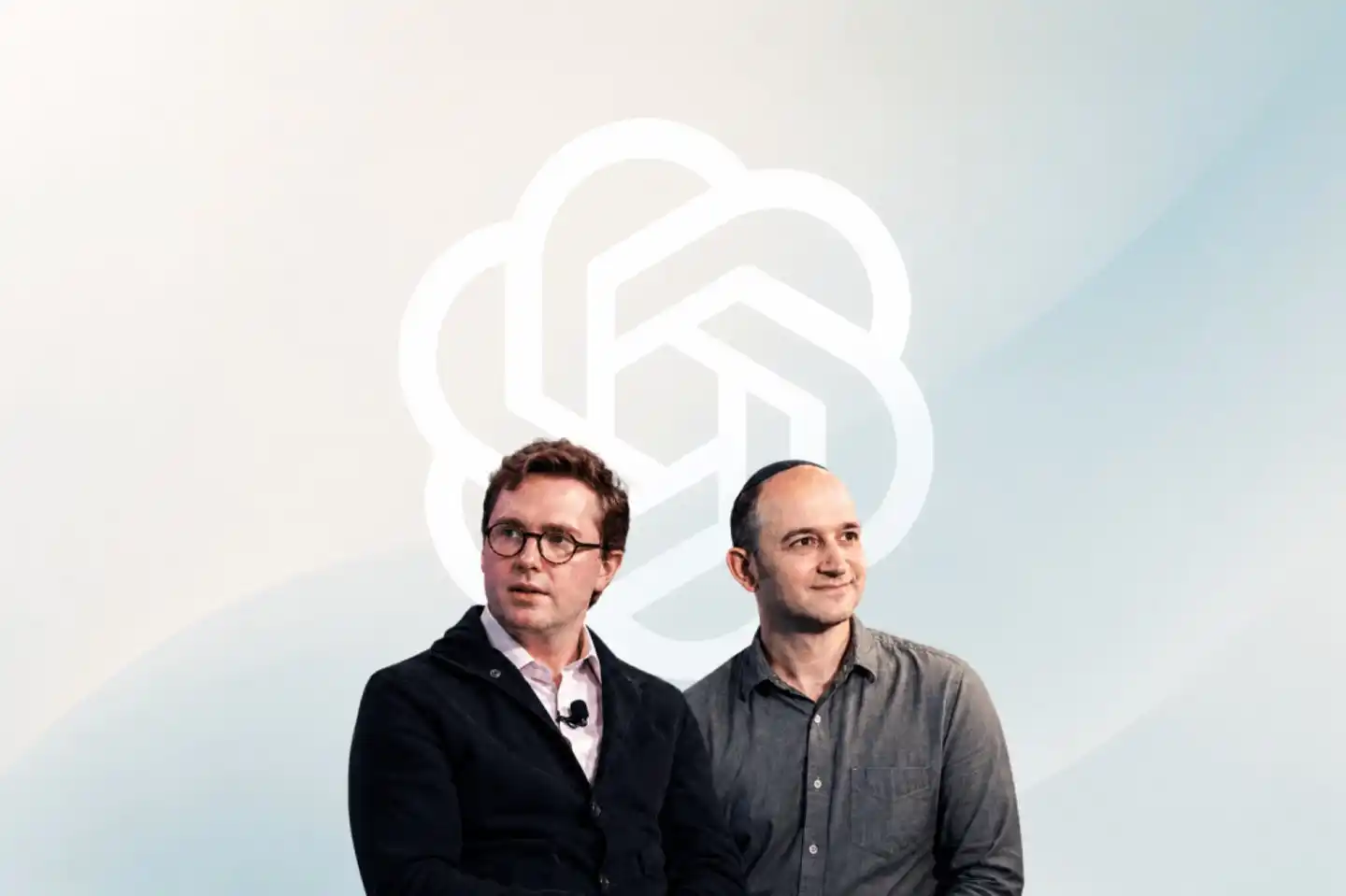
Noam Shazeer pictured with another AI executive, echoing reports of his departure from Google for OpenAI. Source: techcrunch.com (copyright review needed)
Karpathy's choice further confirms the larger trend. In May 2026, this OpenAI founding member, after concluding his educational startup Eureka Labs, announced he was joining Anthropic's pre-training team, responsible for "granting Claude core knowledge and capabilities through large-scale training runs." He never worked at Google, but his destination itself shows where top talent is concentrating.
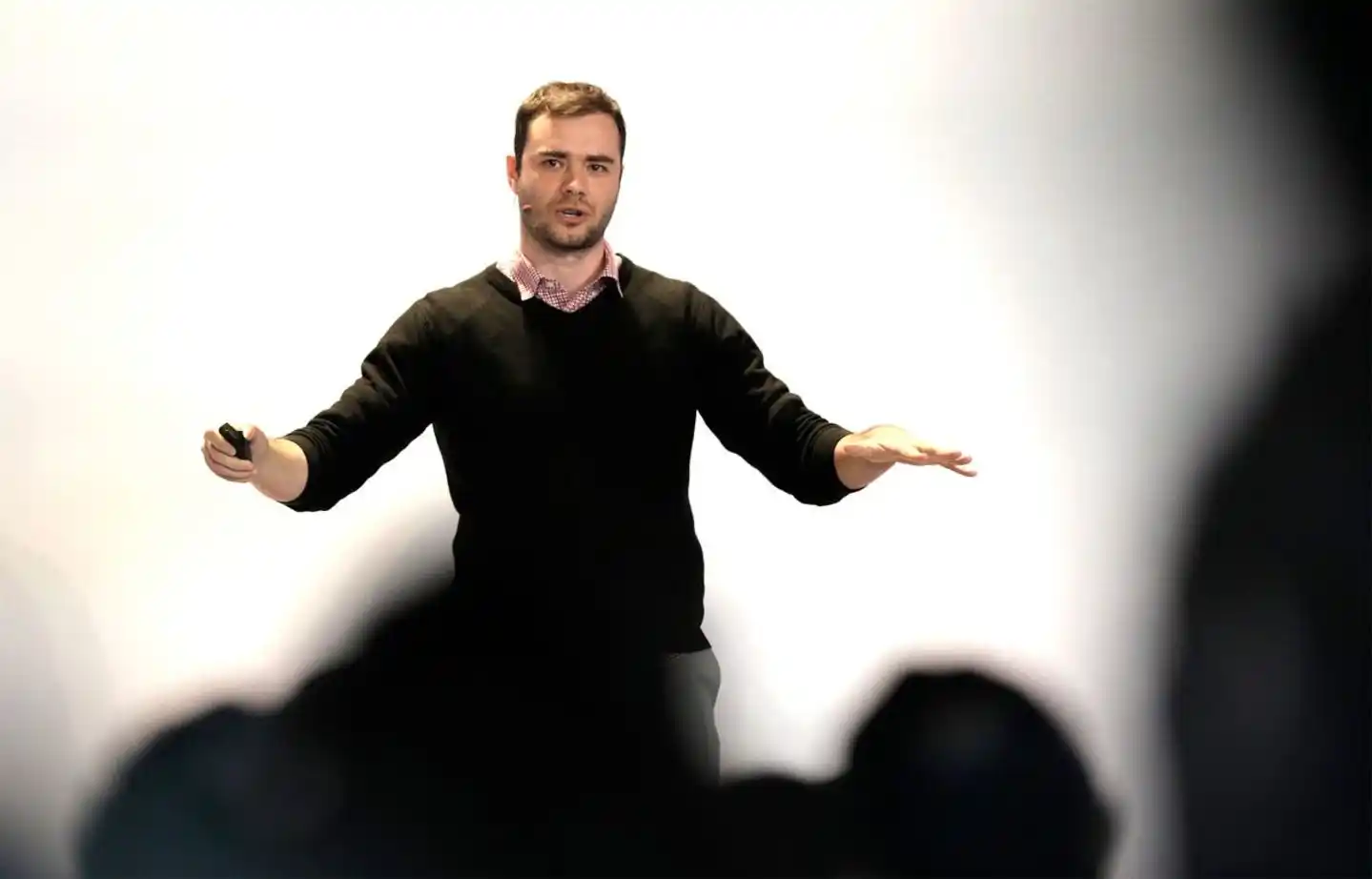
Portrait of Andrej Karpathy, accompanying reports of his joining Anthropic's pre-training team. Source: bloomberg.com (copyright review needed)
Looking back further, this talent flow trend has been evident. Following the merger of Google Brain and DeepMind in April 2023, a significant number of mid-level and senior researchers flowed to OpenAI, Anthropic, and xAI. Tracking the author affiliations on cutting-edge AI papers on arXiv reveals that for more and more top researchers, the institution name on their profile has changed from "Google" to "OpenAI" or "Anthropic."
OpenAI and Anthropic are assembling the most influential talent rosters in the AI field. And Google is becoming the primary exporter in this talent migration.
Mission Misalignment
This is the most fundamental divergence, surpassing salary and compute power in importance.
Nearly 80% of Google parent Alphabet's revenue comes from advertising. This means all investments in the AI field must ultimately answer a product-oriented question: how will this serve the advertising business?
Shazeer quickly discovered after his return in 2024 that Google's core logic hadn't changed. The fundamental constraint he faced at Gemini—catching up to ChatGPT—remained a constrained task within an advertising-first architecture. The goal wasn't to redefine the boundaries of AI capability, but to defend advertising market share.
In contrast, OpenAI's charter clearly states its core mission is AGI (Artificial General Intelligence) for the benefit of all humanity. Anthropic has been built around AI safety since its inception, registered as a Public Benefit Corporation (PBC), legally obligated to balance shareholder interests with social benefits. At these two companies, top researchers don't need to answer questions like "how will this help the ads division increase revenue." They only need to focus on one goal: how to continuously push the boundaries of model capability.
Several researchers who moved from Google to these two organizations have repeatedly mentioned the same word in post-move interviews: "focus." At Google, key performance indicators are search click-through rates, ad conversion rates, and YouTube watch time. At Anthropic, key performance indicators are Claude's performance in pre-training and post-training. For a scientist like Jumper, who dedicated nine academic and professional years to the protein folding problem, this high degree of focus holds an irreplaceable appeal. At Anthropic, AI for Science is not a fringe project but a core research direction.
Mission is the push, while capital is the pull. In terms of compensation incentives, Google is at a structural disadvantage.
OpenAI confidentially filed for an IPO with the SEC in 2026, and Anthropic is also in the IPO preparation queue. Employees at both companies hold significant equity, poised for public market realization. The timing of Jumper's and Shazeer's decisions to join just before this window is no coincidence. In comparison, Google's market capitalization exceeds $2 trillion, with limited room for its stock price to double in the short term, making the explosive potential of its equity incentives at least an order of magnitude lower.
More noteworthy is the capital market's distinctly different pricing logic for these two types of companies. Leaked OpenAI audited financial reports show its 2025 GAAP net loss was approximately $38.5 to $39.0 billion (including about $30 billion in non-cash conversion expenses), with operating losses widening from $8.78 billion in 2024 to about $20.9 billion, yet the capital market reaction remained positive. During the same period, OpenAI's revenue soared from $3.7 billion to $13.07 billion, a 253% increase. In Q1 2026, the company's revenue was $5.7 billion with operating expenses of $3.7 billion. Investors are willing to pay for a "losses for growth" strategy.
At Google, AI investments of similar scale prompt questions from the capital market like, "What impact will this have on margins?" The same large-scale investment in AI is called strategic investment at OpenAI but is viewed as cost-center expansion at Google.
From the perspective of a top researcher, the logic behind this choice isn't complicated. On one side is a company nearing an IPO, where equity could realize nine-figure value within two years, with the entire team focused on optimizing model capability. On the other side is a mature behemoth with a $2 trillion market cap, where a researcher's work must continuously align with the quarterly goals of advertising and search teams.
The DeepMind Merger Creates New Centrifugal Forces
In April 2023, Google Brain and DeepMind merged into Google DeepMind, unified under the leadership of Demis Hassabis. The official narrative at the time was "consolidating strength." But looking back three years later, the merger's actual effects are debatable.
The merger failed to fundamentally resolve the realignment of influence in translating research into products.
DeepMind's foundational research needed to be implemented through product teams, which had their own independent timelines and priorities. Gemini is a典型案例. Shazeer was appointed co-lead, but the product release节奏 and commercialization path remained highly constrained by the search and cloud business units. This contrasts sharply with OpenAI's model where the entire organization revolves around the same core product goal.
The merger also created cultural identity tensions. Google Brain leaned more towards engineering and commercial落地, while DeepMind leaned more towards basic science and long-term exploration. Post-merger, the long-term research-oriented culture is seen as eroded under the pressure to "align with product roadmaps."
A former Google researcher wrote on X, "When we were asked to align our research direction with the product roadmap, I knew it was time to go."
Jumper's departure can be seen as a statement on the post-merger cultural direction. He worked at DeepMind for nearly nine years, experiencing the independent research era, the post-merger integration period, and the current phase of increasing productization pressure. When the research environment increasingly required alignment with search engine KPIs, leaving became a calculated but not difficult decision.
A deeper issue is that less than two years after Shazeer's return, the pace of AI product releases hasn't significantly accelerated. Gemini narrowed the capability gap with ChatGPT but never became the leader in细分领域. He hasn't publicly expressed dissatisfaction—his statement on X was standard professional措辞—but the action itself speaks volumes.
The Talent Map is Undergoing an Irreversible Reshuffle
This talent exodus is no longer just a matter of a few people changing jobs.
Google can bring back top researchers, but it cannot change the most fundamental thing: its core business model is advertising. AI is an enabling tool, not the ultimate mission. Money can bring back a person, but money cannot make Google not be Google. This means the outflow won't stop; it's a structural trend, not a few isolated departures.
On the other side, OpenAI and Anthropic are successfully carving their paths. OpenAI is securing the strongest force in LLM research, while Anthropic is combining AI safety with scientific applications. Both companies have clear boundaries and their own moats. Google is caught in the middle, lacking both OpenAI's product爆发力 and Anthropic's brand differentiation in safety.
What has irreversibly tilted the talent天平 is the IPO window. When top researchers can gain nine-figure or even ten-figure wealth through equity realization within a year or two, no mature giant's compensation system can compete on the same dimension. 2026 may well be remembered not for any particular AI capability breakthrough, but as the year the talent map underwent a structural reshuffle. In this round of competition, talent density determines model capability, model capability determines market share, and market share determines the winner's list.
Google is not without a chance for a comeback. It possesses one of the world's largest computing infrastructures, the most extensive user data reserves, and持续领先 in AI academic paper publications. But all these advantages rest on one premise: you must have足够优秀的人 to use them. And what Google is losing is precisely these people.
This might be the quietest crisis in Google's history—no major product失误, no heavy regulatory fines, no financial爆雷. It's just the smartest people, one after another, choosing to leave. In the AI field, the true moat has never been data, nor compute power, nor even the model architecture itself. It's the people willing to stay and push the technological boundaries day after day. And Google is discovering that retaining these people is far more difficult than training a trillion-parameter model. (This article was first published on Taimei APP, Author | AGI-Signal, Editor | Qin Conghui)