ZachXBT flags USDC freeze – Why 16 exchange wallets were hit

ambcrypto发布于2026-03-26更新于2026-03-26

文章摘要

ZachXBT's investigation revealed that USDC issuer Circle froze at least 16 exchange-linked hot wallets on March 23, 2026, disrupting transactions across bridges and settlements. These compliance actions, which extended beyond intended targets, raised concerns about systemic reliability and targeting accuracy. The number of blacklisted USDC addresses has grown to 596, reflecting deeper regulatory integration. This has shifted USDC's role from neutral infrastructure to a controlled settlement layer. Consequently, USDC outflows declined 0.9% weekly, with liquidity rotating toward USDT, which now holds 58.29% dominance. The incident exposed centralized control risks, fragmenting trust and reshaping stablecoin capital allocation.

Stablecoins anchored market liquidity, with total supply near $315.85 billion and USD Coin [USDC] accounting for about $78.7 billion.

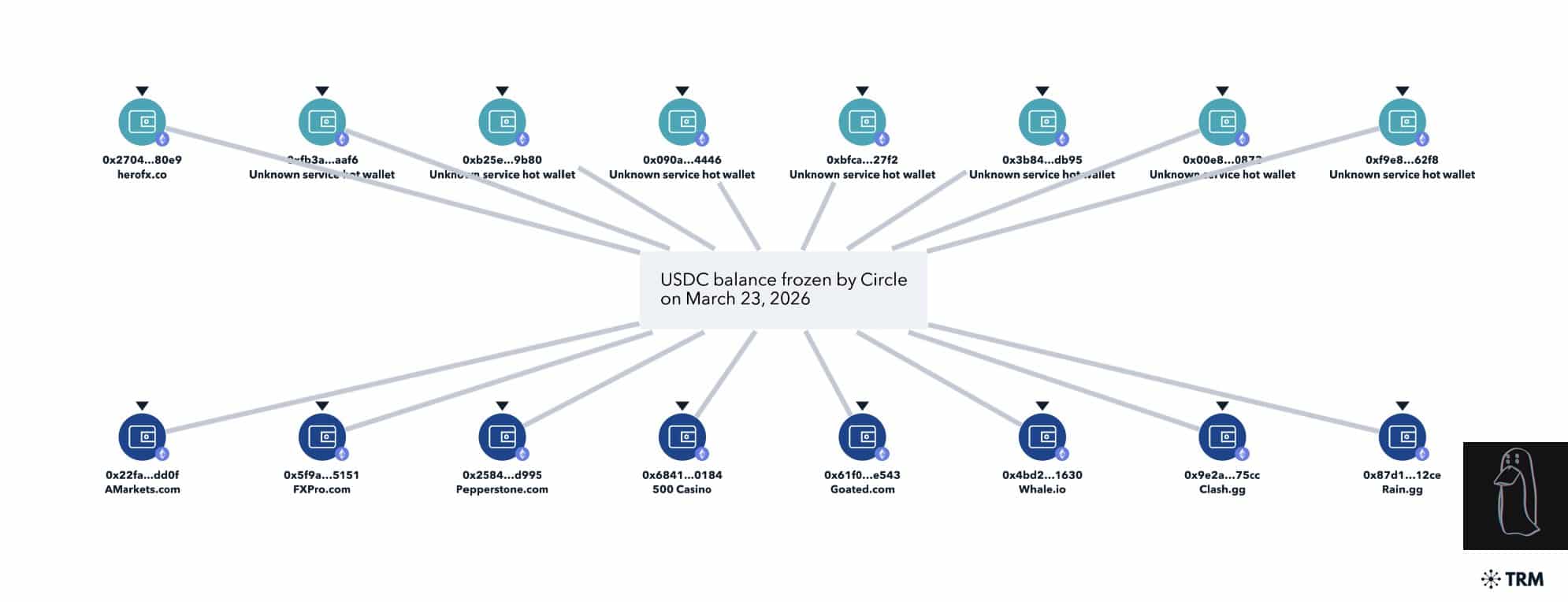
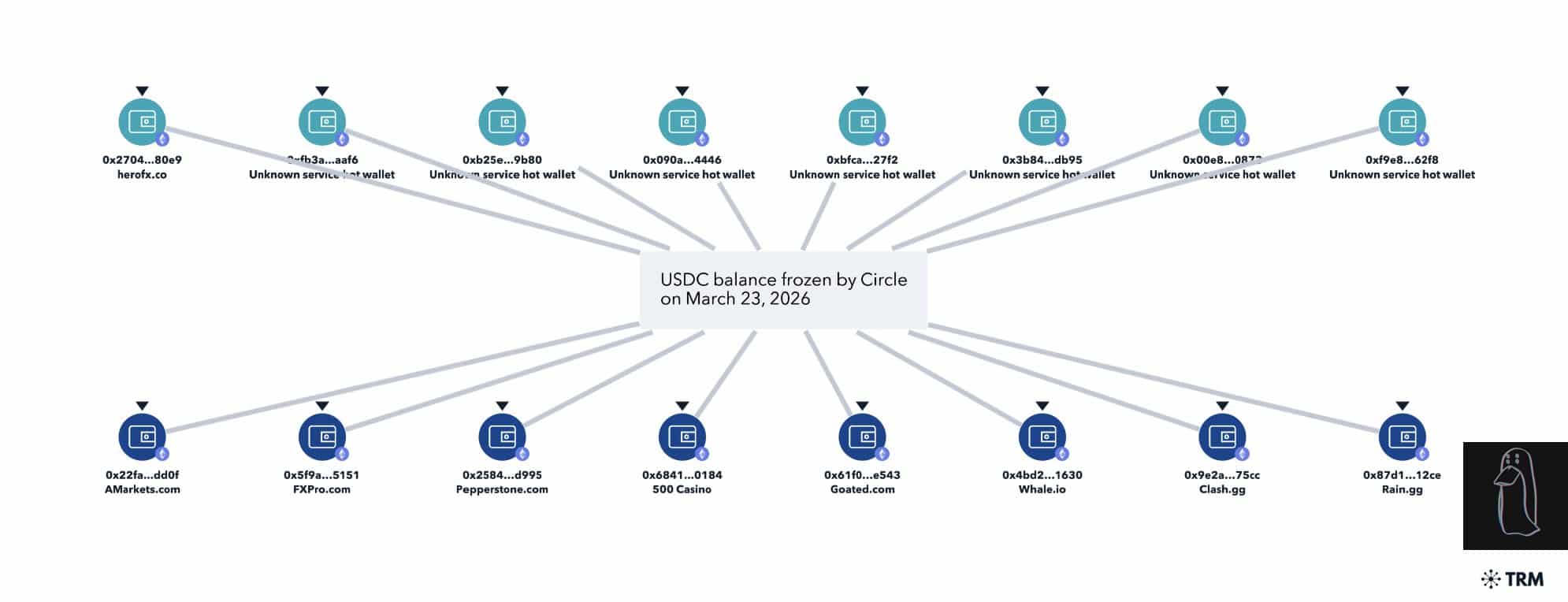
USDC wallet freezes drew scrutiny after on-chain investigator ZachXBT flagged multiple exchange-linked wallets affected on the 23rd of March 2026.

However, recent USDC wallet freezes disrupted that expectation, as compliance actions extended beyond intended targets. Reports suggested at least 16 unrelated hot wallets were frozen, disrupting transactions across bridging and settlement flows.

That shift set up a broader concern. Focus moved from isolated enforcement to systemic reliability risks.

This raised a key question: Why were operational exchange wallets affected?

USDC wallet freezes spill into exchange and bridge flows
Source: ZachXBT/ X

ZachXBT noted that several frozen wallets showed normal operational activity, raising concerns around targeting accuracy.

Reports suggested that exchange-linked hot wallets were flagged alongside intended addresses, extending the impact beyond enforcement targets.

Circle later reversed some freezes, including the Goated wallet, indicating a correction rather than a final decision.

That sequence showed how compliance actions can misfire when applied across interconnected wallet systems.

USDC blacklist count hits 596 as compliance tightens

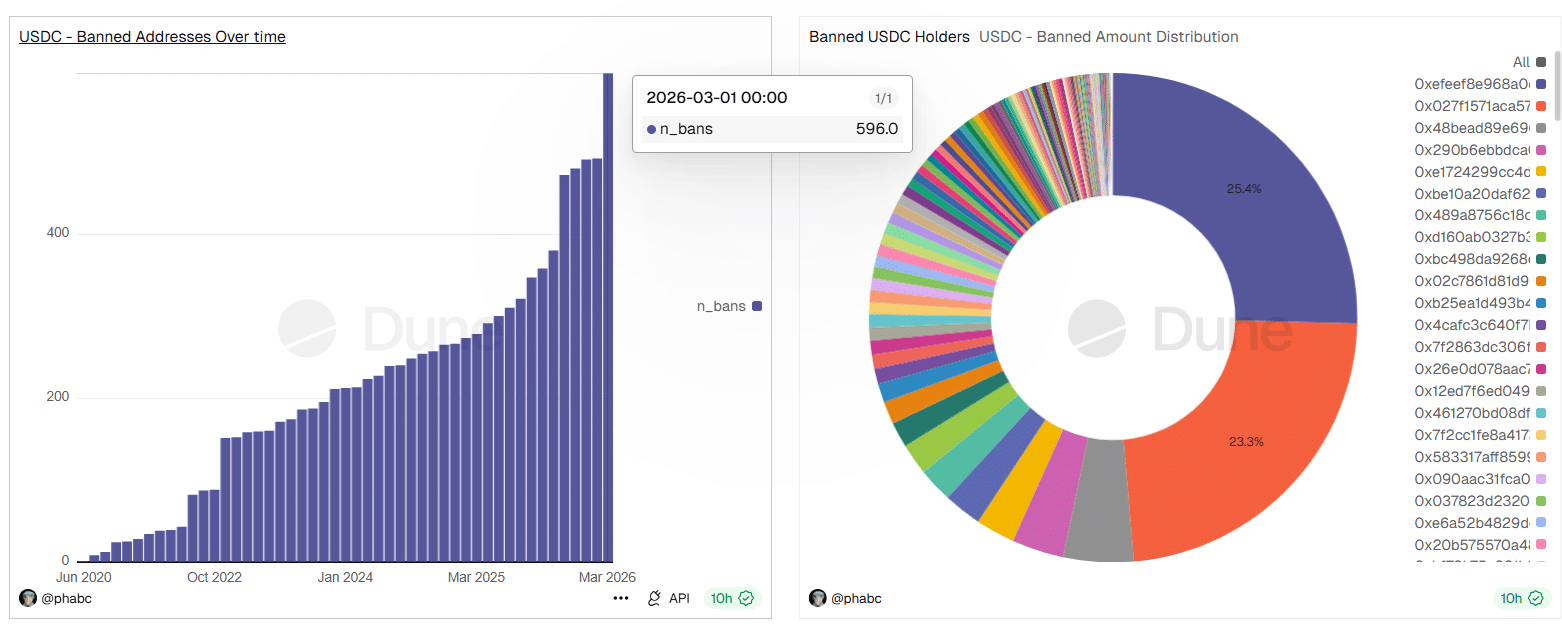
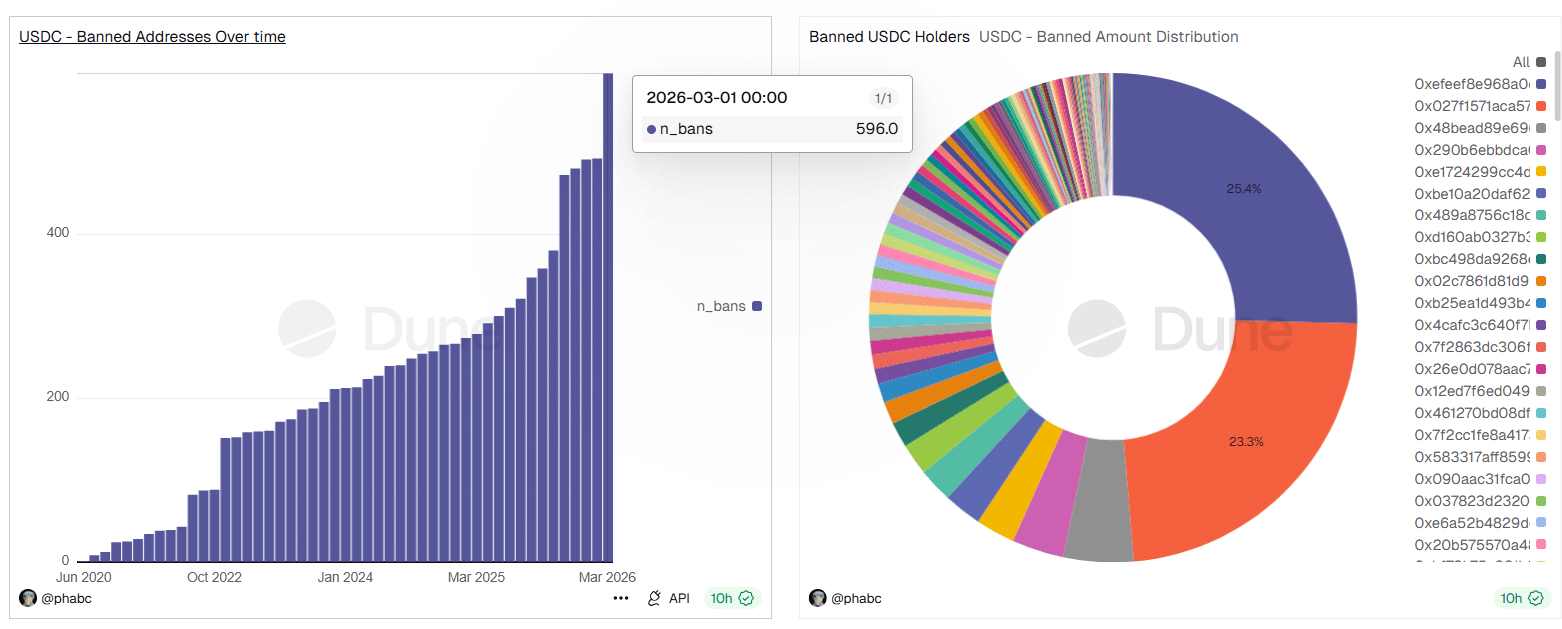
USDC’s control structure became clearer as enforcement activity increased across the network. Blacklisted addresses reached 596, reflecting steady growth rather than isolated actions.
Source: Dune

That move aligned with deeper regulatory integration into stablecoin infrastructure, rising from near zero levels in 2020.

On top of that, distribution data showed concentration among a few large holders. This amplified the impact of each freeze.

When key wallets were affected, liquidity disruptions extended beyond individual users into broader market flows. That explained settlement failures across exchanges and bridges.

This left traders focused on a structural shift. USDC operated less like neutral infrastructure and more like a controlled settlement layer.

USDC outflows drive liquidity shift toward USDT dominance

The market reaction showed a subtle shift beneath stable price action. USDC held near $78.7 billion, yet declined 0.90% weekly, signaling selective capital movement.

At the same time, total stablecoin supply rose 0.04%, showing funds rotated rather than exited.

By contrast, Tether [USDT] expanded its lead to 58.29% dominance at $184.1 billion, absorbing redirected liquidity.

That move reflected a search for perceived stability rather than a rejection of stablecoins entirely.

Confidence remained, yet behavior shifted. Partial reversals exposed operational strain, while unintended freezes raised concerns around exposure.
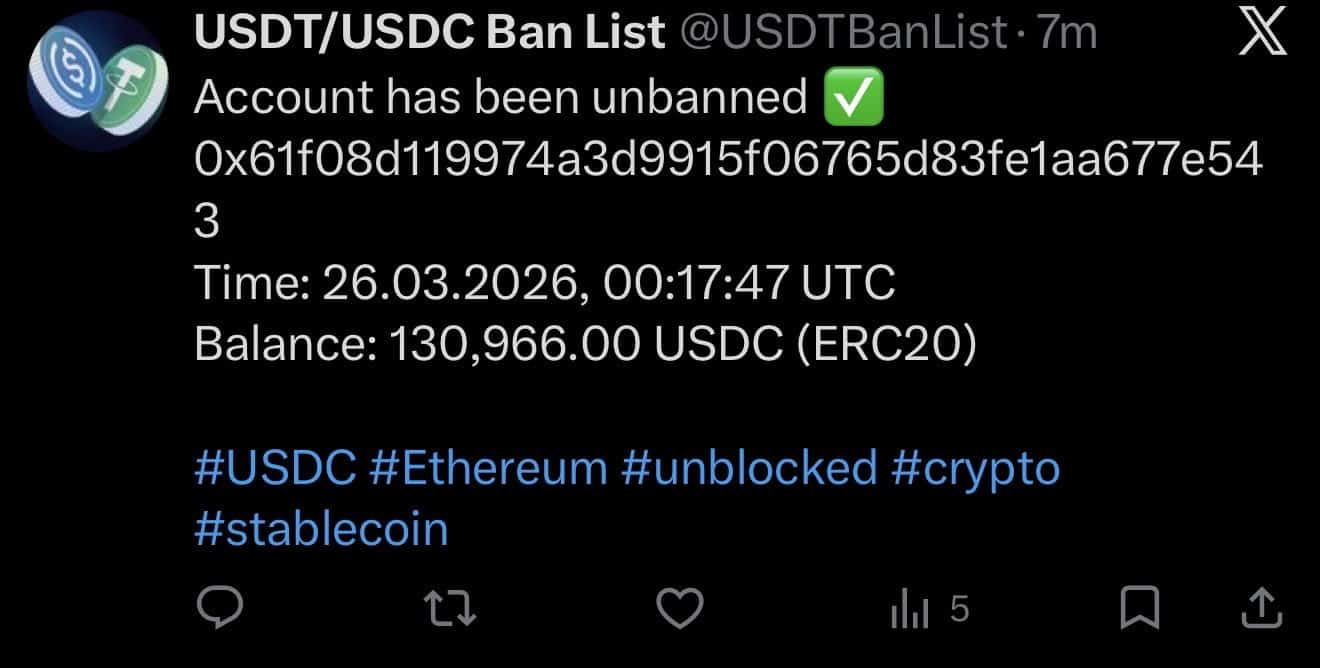
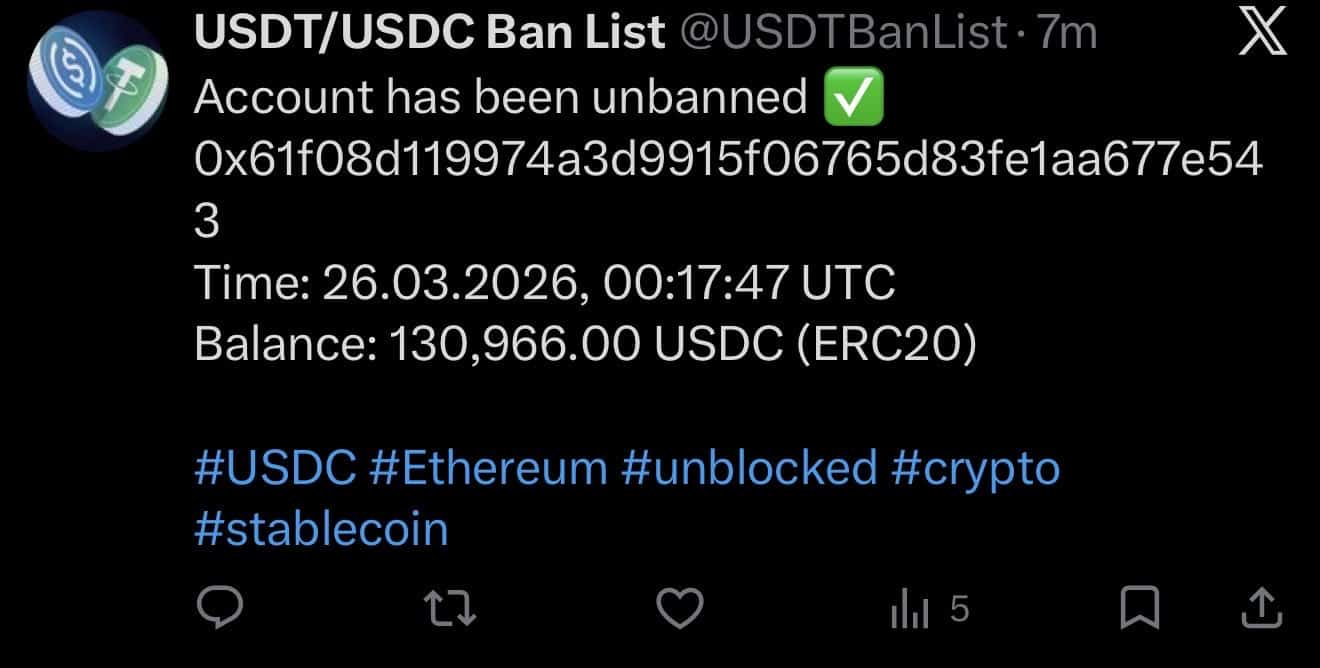
Source: X

This implied trust weakened at the margins, which could fragment liquidity and reshape capital allocation across stablecoin ecosystems.


Final Summary

  • USD Coin [USDC] freezes expose centralized control risks, with rising blacklists and failed settlements weakening neutrality and shaping liquidity flows.
  • Tether [USDT] absorbs rotation with 58% dominance, signaling trust shifts rather than exits, as stablecoin liquidity fragments across ecosystems.


相关问答

QWhat did on-chain investigator ZachXBT report regarding USDC wallet freezes on March 23, 2026?

AZachXBT flagged multiple exchange-linked wallets that were frozen, noting that several showed normal operational activity, which raised concerns about targeting accuracy.

QHow many exchange hot wallets were reportedly frozen in the USDC compliance action, and what was a key consequence?

AAt least 16 unrelated hot wallets were frozen, disrupting transactions across bridging and settlement flows and extending the impact beyond the intended enforcement targets.

QWhat was the total number of blacklisted USDC addresses mentioned in the article, and what does this reflect?

AThe number of blacklisted addresses reached 596, reflecting a steady growth in enforcement activity and deeper regulatory integration into stablecoin infrastructure.

QHow did the market react to the USDC freezes in terms of capital movement between stablecoins?

AWhile the total stablecoin supply increased slightly by 0.04%, USDC saw a 0.90% weekly decline in supply, with liquidity rotating toward Tether (USDT), which expanded its dominance to 58.29%.

QWhat broader concern did the USDC freezes raise about the nature of the stablecoin's operation?

AThe freezes raised concerns that USDC is operating less like neutral infrastructure and more like a controlled settlement layer, weakening trust and potentially fragmenting liquidity across ecosystems.

你可能也喜欢

意大利央行未发现稳定币在汇款中存在系统性优势

意大利银行的一项研究显示,稳定币在跨境汇款中并未展现出持续的成本与速度优势。其潜在优势被法币出入金手续费以及本地支付基础设施的处理流程所抵消。 研究比较了通过200 USDC在意大利与巴西、阿根廷、日本、阿联酋和南非等10条双向通道进行汇款的成本与结算时间,并与标准汇款服务进行对比。 结果显示,稳定币转账的总成本在0.3%到近9%之间波动,具体取决于汇款方向。在具备即时支付系统的通道中,结算可在20分钟内完成;若缺乏此类基础设施,则需一至两个工作日。 主要成本和延迟源于货币兑换以及当地基础设施的质量。区块链网络手续费并非主要因素。 尽管在大多数研究通道中,稳定币成本低于世界银行统计的全球平均汇款成本(6.65%),但与传统汇款服务商Wise相比,仅在七条可比通道中的三条具备成本优势。 研究者认为,若稳定币能直接用于商品服务消费而无需兑换成当地货币,其优势将更为明显。同时指出,禁令性监管无法消除市场对稳定币的需求,而过严的规则只会增加零售用户的使用难度。 此外,报告提及,稳定币总市值在7月已从5月峰值下跌超100亿美元,至约3100亿美元,创下自2022年5月Terra崩溃以来的最大月度跌幅。

cryptonews.ru2小时前

意大利央行未发现稳定币在汇款中存在系统性优势

cryptonews.ru2小时前

比特币热潮正酣:塞勒尔新声明引发关于购买的猜测

纳斯达克上市公司MicroStrategy(代码:MSTR)的执行董事长迈克尔·塞勒于8月2日发布信息“Bitcoin Drive engaged”(比特币驱动已启动),再次引发市场对于该公司将在周一宣布新一轮比特币购买的猜测。其周日的帖子附带了该公司惯用的购买追踪图表,这符合塞勒通常在每周财报发布前暗示其金库变动的做法。 塞勒的附图报告显示,MicroStrategy的比特币储备为843,775枚BTC,市值约532.5亿美元。平均购买成本为每枚75,653美元,未实现亏损为105.8亿美元(-16.58%)。截至8月2日,累计进行了113次购买操作。 此前在7月27日,类似的周日信号曾预告了公司的公告,当时塞勒发文称“我们还需要一种颜色”,随后MicroStrategy披露了其更大的现金储备。这种时间上的巧合强化了市场对周一将发布新金库状况公告的预期。 然而,该公司实时账本显示,在最近两次共计出售3,588枚BTC(包括1,363枚和2,225枚)后,其比特币储备已从847,363枚降至843,775枚。根据提交给美国证券交易委员会(SEC)的文件,这些出售是为了资助优先股支付并补充美元储备。最近的报告还显示,在截至7月26日的一周内,MicroStrategy没有购买任何比特币,同时将其美元储备增加至约37.5亿美元,这使其优先股股息和债务利息的预计覆盖期限延长至约2.1年。 财务风险依然高企,该公司报告2026年第二季度运营亏损83.3亿美元,与上年同期140.3亿美元的运营利润形成急剧逆转。这些业绩包含了公司数字资产方面83.2亿美元的未实现亏损,而2025年第二季度为未实现利润140.5亿美元。 管理层还可能通过额外出售比特币获得高达12.5亿美元,以补充用于支付优先股股息和债务利息的美元储备。因此,预计周一的披露将揭示“Bitcoin Drive”信息是否标志着资产积累的恢复,因为MicroStrategy需要在平衡其843,775枚BTC自有储备与不断增长的现金负债和积极的资本管理之间做出抉择。

cryptonews.ru2小时前

比特币热潮正酣:塞勒尔新声明引发关于购买的猜测

cryptonews.ru2小时前

交易

现货
活动图片