Written by: Deng Xiaoyu, Li Haojun
Introduction
Recently, the overseas version of Trip.com officially launched a stablecoin payment feature. Web3 digital nomads exclaimed: "Finally, we can turn our USDT into real flights and hotels!"
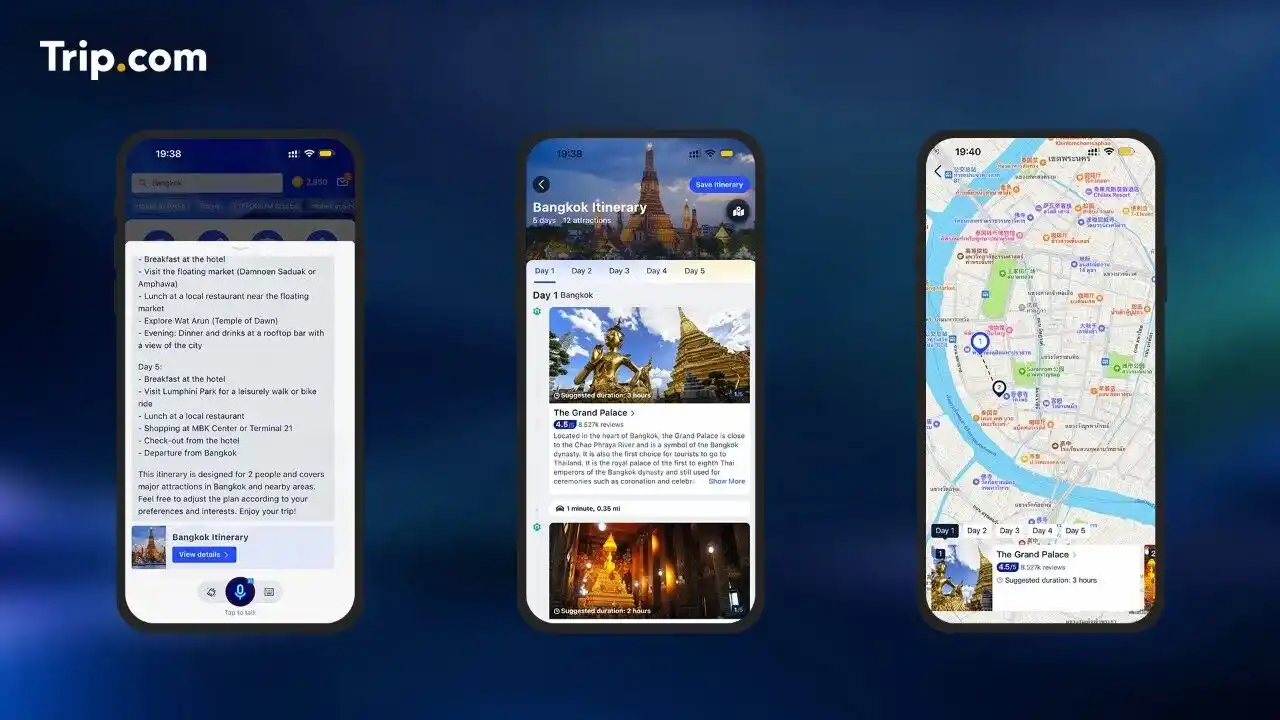
I believe mainland practitioners are far more excited about this kind of "application landing" than using a USDT card. As a Trip.com member, Lawyer Deng Xiaoyu feels deeply pleased with this payment implementation, but finds it necessary to remind digital nomads to also focus on compliance during use, to collectively help boldly innovative companies grow.
Why can Trip.com's overseas version supporting U payments cause such a stir? Beyond the so-called "payment freedom," behind it is an extremely shrewd economic calculation.
First, there's the "natural discount" brought by the exchange rate difference. In the stablecoin OTC market, there is often an "inversion" or premium fluctuation between USDT's exchange rate and the bank's official foreign exchange rate. Acquiring cheap stablecoins through specific OTC channels and using them for equivalent deductions in US dollars often allows users to book high-end flights and hotels at prices 5%-10% below market rates.
Second, it avoids the "fees" and "limits" of cross-border payments. Traditional credit card cross-border consumption not only faces a 1.5%-3% currency conversion fee but is also subject to an annual foreign exchange limit of $50,000. Using stablecoins for payment not only achieves the "physical outflow" of assets but also bypasses the layered compliance reviews of the banking system. For Web3 practitioners or high-net-worth individuals holding large amounts of U, this is not just consumption but also a "liquidity metaphor" for asset realization.
However, these so-called "arbitrage opportunities" and "payment advantages," in the eyes of law enforcement, are also a piece of fat meat and are bound to attract regulatory attention. Therefore, individual users, before clicking "Confirm Payment," must read this criminal risk avoidance guide for different scenarios.
Scenario One: Purely Personal Consumption
If the source of your USDT is legal (e.g., from early mining, investments on正规 exchanges), and it is only for booking a room or buying a ticket for your own travel abroad, this falls under "consumption for personal use."
Although this behavior seems harmless, from the perspective of China's foreign exchange监管, the logical chain is "RMB - virtual currency - foreign currency abroad - flights/hotels." This essentially constitutes a "back-to-back" transaction of domestic and foreign funds, achieving a disguised exchange between RMB and foreign currency.
Although small-amount, occasional personal use is generally not targeted as a criminal offense in judicial practice, at the administrative level, it still constitutes a违规行为 evading foreign exchange controls. Once the accumulated amount is large, the fine from the State Administration of Foreign Exchange could be much more expensive than your room rate.
Another practical risk lies in the "toxicity" of the fund source.
The core pain point of Web3 payments is that it is difficult to ensure your U is absolutely clean. If the counterparty's funds involved in the OTC channel where you bought USDT are related to电信诈骗, gambling, or other illicit activities, the USDT you pay to the platform is "black U." Public security organs will trace the USDT chain. Once the payment行为 is identified, not only will you not get to stay in the hotel, but all your bank cards, WeChat, and Alipay accounts may face "complete freezing."
In a criminal investigation, proving "I really just wanted to book a room" is far more difficult and time-consuming than one might imagine.
Scenario Two: Booking for Others for Profit
If you discover an exchange rate difference or discount using stablecoin payments and take this opportunity to post on social media, helping others book hotels or air tickets and charging RMB, the nature fundamentally changes. Once your behavior has repetition and profit-seeking motives, it is no longer consumption but a "business operation."
According to the "Interpretation of the Supreme People's Court and the Supreme People's Procuratorate on Several Issues Concerning the Application of Law in Handling Criminal Cases of Illegal Engagement in Fund Payment and Settlement Business and Illegal Foreign Exchange Trading," illegally engaging in fund payment settlement business or illegal foreign exchange trading, with an illegal business volume of RMB 5 million or more or illegal gains of RMB 100,000 or more, constitutes the crime of illegal business operations.
You might think you are羊毛薅 the platform, but in the eyes of regulators, you are essentially using virtual currency as a medium to illegally operate an underground bank. This kind of "professional代刷" behavior directly hits the crosshairs of criminal打击.
Furthermore, "price inversion" often implies "original sin." If you can provide USDT booking services far below market rates, judicial organs will presume you subjectively knew the source of the U was不正常. In this case, every booking fee you receive could be deemed as helping illicit funds "cash out" (出金).
At this point, you face not only illegal business operations but may also be suspected of the crime of concealing or隐瞒犯罪所得收益 or helping information network criminal activities (帮信罪). The cost of this criminal risk is absolutely not covered by those booking commissions.
How to Be a "Compliant Traveler" in the Web3 Wave?
Technological advancement brings convenience, but the "long arm" of the law始终关注 the security of cross-border fund flows. To allow Web3 players to enjoy technological dividends without "ending up inside," Mankun Law Firm offers the following advice:
1. For players using it for personal consumption, you must adhere to the principle of "de-financialization."
The payment account name, Trip.com order name, and actual guest name must be highly consistent. Never try to save trouble by paying for a "friend," as this kind of identity mismatch is extremely difficult to explain clearly in a judicial investigation.同时, you must retain complete evidence of "clean funds."
If the stablecoins you pay with were bought by you on a compliant exchange through real-name verification, be sure to screenshot and save the transaction records from that time. If your bank card is frozen or you face criminal inquiries, this is your key protective talisman to排除 criminal subjective knowledge.
Furthermore, the hotel bill after check-out and the boarding pass are indispensable evidence. They can prove your payment behavior had a genuine consumption background, rather than being illegal foreign exchange settlement through fictitious transactions.
2. For those who want to profit from the exchange rate difference, our advice is only one: stop immediately.
Publicly posting "U代订" advertisements on domestic social platforms not only easily triggers the crime of illegal business operations but also easily makes you a "money laundering glove" for illicit funds. Do not accept RMB from any stranger to pay U to the platform for them, because you will never know how much victim's blood and tears are behind that RMB.
Remember, cheap U often comes with heavy criminal costs. Absolutely do not attempt to wash black U into clean fiat currency through "refund cash-out" methods.
Overseas platforms like Trip.com's overseas version have extremely strong anti-money laundering systems. Once this behavior triggers an alarm, your Web3 assets and domestic bank cards will be blocked in both directions, and you might even be blacklisted internationally for money laundering.
Conclusion
The dream of Web3 digital nomads is beautiful: by the pool in Chiang Mai, using the stablecoins in hand to book a ticket to London, starting a说走就走的旅行 anytime, anywhere. Trip.com's overseas version accepting U payments确实 brings us a big step closer to this "payment freedom."
But as lawyers, we have seen too many tragedies where families had all their bank cards frozen due to greed for a small exchange rate discount. The price of this "smoothness" is often late-night interrogations where you cannot prove your innocence.
We do not recommend you completely collide your Web3 assets with your real-life assets, nor do we recommend you take on heavy criminal suspicion for helping a friend "book顺便." Life should return to life, let coins stay in the wallet, and let compliance stay in your consciousness.
After all, all journeys must end with a safe return home for that ticket to truly be effective.
Don't let one "smooth" payment turn into a long criminal博弈.