Understanding Jensen Huang's Physical AI: Why Is Crypto's Opportunity Also Hidden in the 'Nooks and Crannies'?

marsbit发布于2026-01-23更新于2026-01-23

文章摘要

Jensen Huang's recent speech at Davos signals a pivotal shift in AI: the transition from the training-focused "brute force" era of AI 1.0 to the new paradigm of "Physical AI" and inference. This marks the next phase after Generative AI, focusing on real-world application and embodiment. Physical AI aims to solve the "last-mile" problem of AI: moving from digital intelligence to physical action. While LLMs have consumed vast digital data, they lack understanding of the physical world—like how to twist open a bottle cap. Physical AI requires three core capabilities: 1. Spatial Intelligence: AI must perceive and interpret 3D environments in real-time, understanding object properties, depth, and interaction dynamics. 2. Virtual Training Grounds: Systems like NVIDIA’s Omniverse enable simulation-to-real (Sim-to-Real) training, allowing robots to learn through vast virtual iterations without costly physical failures. 3. Electronic Skin and Touch Data: Sensors that capture tactile feedback—temperature, pressure, texture—are critical. This data is a new, untapped asset class. This shift opens significant opportunities for Crypto and Web3 ecosystems. DePIN networks can crowdsource hyperlocal spatial data from "every corner" of the world through token incentives. Distributed computing networks can provide edge-based rendering and inference power for low-latency physical responses. Tokenized data ownership and privacy-preserving sharing mechanisms can enable the scalable, ethical col...

What did Jensen Huang actually say at the Davos Forum?

On the surface, he was promoting robotics, but in reality, he was initiating a bold 'self-revolution.' With one speech, he ended the old era of 'stacking GPUs,' yet unexpectedly handed the Crypto sector a once-in-a-lifetime opportunity?

Yesterday, at the Davos Forum, Huang pointed out that the application layer of AI is exploding, and the demand for computing power will shift entirely from the 'training side' to the 'inference side' and the 'Physical AI side.'

This is very interesting.

As the biggest winner in the 'computing arms race' of the AI 1.0 era, NVIDIA is now actively advocating for a shift toward 'inference' and 'Physical AI,' sending a very clear signal: the era of 'brute force miracles' by stacking GPUs to train large models is over. From now on, AI competition will revolve around the 'application-first' principle for real-world implementation.

In other words, Physical AI is the second half of Generative AI.

Because LLMs have already read all the data accumulated by humans on the internet over decades, but they still don’t know how to twist open a bottle cap like a human. Physical AI aims to solve the problem of 'unity of knowledge and action' beyond AI’s intellectual capabilities.

The reason is simple: Physical AI cannot rely on the 'long reflex arc' of remote cloud servers. If ChatGPT is one second slower in generating text, you might just feel a lag. But if a bipedal robot is one second slower due to network latency, it might fall down the stairs.

However, while Physical AI seems like a continuation of generative AI, it actually faces three entirely new challenges:

1) Spatial Intelligence: Enabling AI to understand the three-dimensional world.
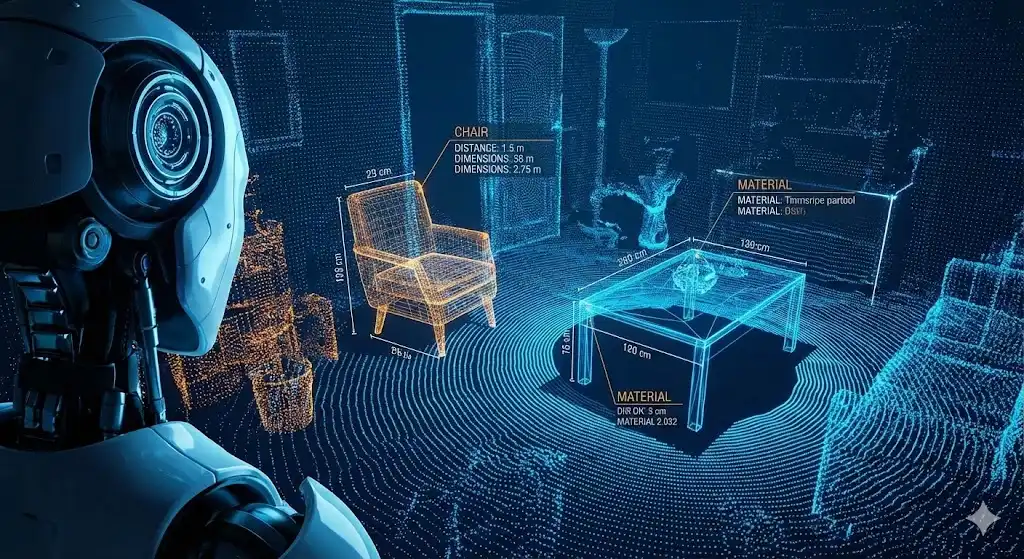
Professor Fei-Fei Li once proposed that spatial intelligence is the next North Star for AI evolution. For robots to move, they must first 'see' the environment. This isn’t just about recognizing 'this is a chair,' but understanding 'the chair’s position in 3D space, its structure, and how much force I should use to move it.'

This requires massive, real-time, 3D environmental data covering every corner, both indoors and outdoors;

2) Virtual Training Grounds: Allowing AI to train through trial and error in simulated worlds.
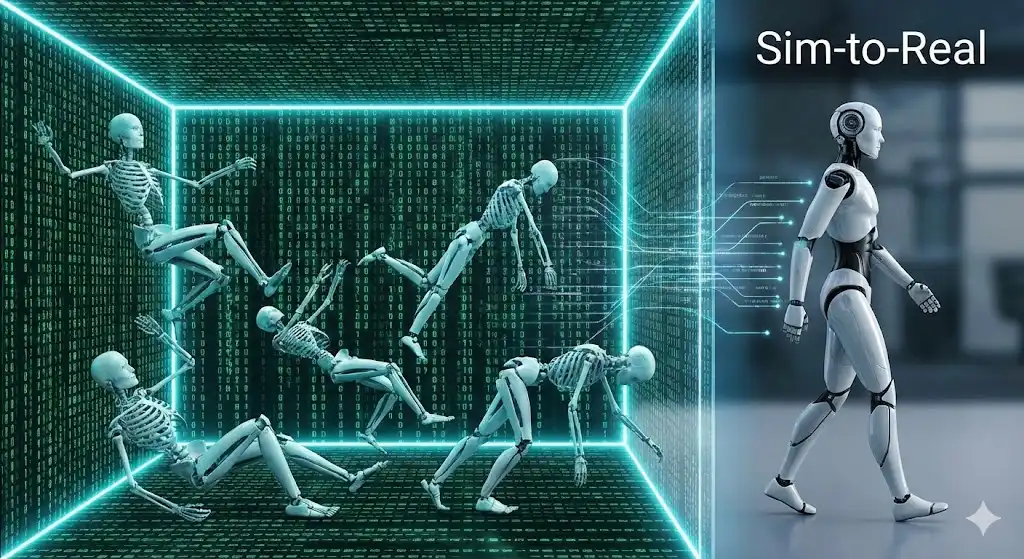
The Omniverse mentioned by Jensen Huang is essentially a 'virtual training ground.' Before entering the real physical world, robots need to train 'falling ten thousand times' in a virtual environment to learn how to walk. This process is called Sim-to-Real, or simulation to reality. If robots were to trial-and-error directly in the real world, the hardware wear-and-tear costs would be astronomically high.

This process demands an exponential increase in the throughput requirements for physics engine simulation and rendering computing power;

3) Electronic Skin: 'Tactile Data'—A Gold Mine Waiting to Be Mined.
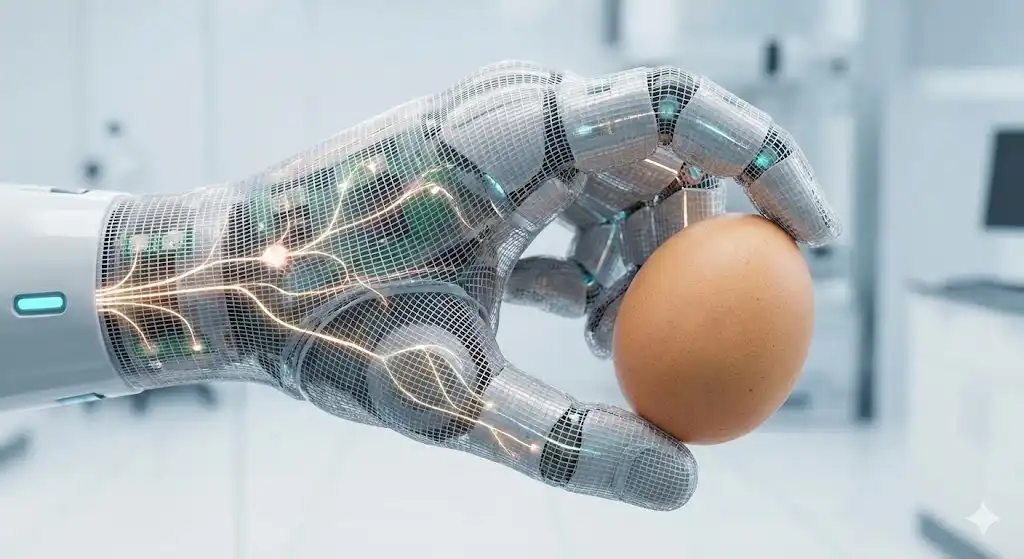
For Physical AI to have a 'sense of touch,' it needs electronic skin to perceive temperature, pressure, and texture. This 'tactile data' is a brand-new type of asset that has never been collected on a large scale before. This may require large-scale sensor deployment. At CES, Ensuring company demonstrated 'mass-produced skin' with a single densely packed hand integrating 1,956 sensors, enabling the robot to perform miracles like peeling an egg.

This 'tactile data' is a brand-new type of asset that has never been collected on a large scale before.

After reading this, you might feel that the emergence of the Physical AI narrative gives a significant opportunity for wearable devices, humanoid robots, and other hardware devices to shine—要知道, these were largely dismissed as 'big toys' just a few years ago.

Actually, I want to say that in the new landscape of Physical AI, the Crypto sector also has an excellent opportunity to fill ecological gaps. Let me give a few examples:

1. AI giants can deploy street-view cars to scan every main street in the world, but they can’t collect data from the nooks and crannies of streets, residential complexes, and basements. By using Token incentives provided by DePIN network devices to mobilize global users to supplement this data with their personal devices, it’s possible to fill these gaps;

2. As mentioned earlier, robots cannot rely on cloud computing power, but to utilize edge computing and distributed rendering capabilities on a large scale in the short term, especially for Sim-to-Real data processing. By leveraging distributed computing networks to pool and schedule idle consumer-grade hardware, it can be put to good use;

3. 'Tactile data,' besides requiring large-scale sensor applications, by its very name, will be extremely private. How to incentivize the public to share this privacy-sensitive data with AI giants? A feasible path is to allow data providers to obtain data ownership and profit-sharing rights.

To sum up:

Physical AI is the second half of the web2 AI赛道 that Huang has called for. For the web3 AI + Crypto sectors, such as DePIN, DeAI, DeData, isn’t it the same? What do you think?


热门币种推荐

相关问答

QWhat is Physical AI according to Jensen Huang's speech at the Davos Forum?

APhysical AI is the next phase of Generative AI, focusing on enabling AI to interact with and operate in the physical world. It addresses the 'integration of knowledge and action' by allowing AI to understand 3D environments, simulate actions in virtual training grounds, and process tactile data through electronic skin, moving beyond pure data training to real-world application.

QWhy does Physical AI require a shift from cloud-based computing to edge or distributed systems?

APhysical AI cannot rely on distant cloud servers due to latency issues. For example, a delay of one second might be acceptable for text generation by ChatGPT, but it could cause a bipedal robot to fall down stairs. Real-time responsiveness is critical, necessitating edge computing or distributed networks to reduce latency and ensure reliable operation in physical tasks.

QHow can Crypto and DePIN networks contribute to Physical AI development?

ACrypto and DePIN (Decentralized Physical Infrastructure Networks) can help by incentivizing global users to collect spatial data from hard-to-reach areas (e.g., alleys, basements) using token rewards. They can also leverage distributed computing resources for simulation training and rendering, and enable privacy-preserving data sharing through tokenized incentives for tactile data contribution and ownership.

QWhat are the three key challenges mentioned for Physical AI?

AThe three key challenges are: 1) Spatial Intelligence - AI must understand 3D environments, including object positions and physical interactions; 2) Virtual Training Grounds - AI requires simulated environments (e.g., Omniverse) for cost-effective trial-and-error training; 3) Electronic Skin - AI needs sensors to collect tactile data (e.g., pressure, temperature) for fine motor skills, which is a new type of data asset.

QWhy is tactile data important for Physical AI, and how can it be collected ethically?

ATactile data (e.g., pressure, texture, temperature) is crucial for Physical AI to achieve 'hand-eye coordination' and perform delicate tasks like handling objects. It can be collected ethically using token-based incentives in Crypto ecosystems, where contributors are rewarded for sharing data while maintaining privacy and data ownership rights, ensuring fair compensation and control over personal information.

你可能也喜欢

帕克·刘易斯解释为何比特币仍是最佳货币

知名比特币分析师帕克·刘易斯在访谈中批评了某些上市公司以“数字信贷”形式销售永续优先股的营销策略,认为这从根本上扭曲了比特币的本质。他指出,比特币在算法层面不具备法币收益性,承诺定期分红主要依赖牛市吸引新投资者来维持,风险极高。 刘易斯引用数据说明此类衍生品的巨大风险:全球信贷市场规模达300万亿美元,而永续优先股市场仅约1万亿美元,这表明机构有意规避这种无还款期限的资产,将风险转嫁给信息不足的散户。 针对“比特币波动性太大”的常见观点,他认为波动性是这一供应量严格受限的新资产被大规模采用过程中的自然数学结果。新人入场需出更高价从早期持有者手中购买,导致价格剧烈波动。他建议投资者直接持有比特币,这比投资MicroStrategy等公司发行的衍生品更安全。 投资者将焦点从直接持有加密货币转向公司衍生品,会忽视法币急速贬值的真正威胁。刘易斯以自创的“肋眼牛排指数”为例,指出其本地超市一款牛排价格从2020年的19.99美元涨至37.99美元,反映年化约12-13%的真实通胀,远超官方平滑后的CPI数据。 在全球通胀环境下,最明智、保守且安全的策略仍是直接持有比特币并完全掌控私钥。追逐加密货币国库股等公司工具的收益只会叠加隐性系统风险,而理解去中心化货币的本质才能有效保护财富免受宏观经济动荡影响。

cryptonews.ru1小时前

帕克·刘易斯解释为何比特币仍是最佳货币

cryptonews.ru1小时前

比特币为何在美联储强硬暂停后守住 64,000 美元关口

比特币在美联储暂停加息后维持在64,000美元附近,结束了7月的交易。市场对美联储维持利率不变的决定反应剧烈,但并未获得政策即将转向的明确信号。在此背景下,资金重新流入比特币现货ETF,加密货币总市值保持在2.29万亿美元左右,主要山寨币走势分化。 投资者目前处于观望状态。一方面,高利率和美联储的强硬立场抑制了风险偏好;另一方面,市场未出现恐慌性抛售、比特币ETF恢复资金净流入以及关键价位的韧性表明,数字资产市场尚未准备好大幅下跌。 **关键信息:** - 美联储维持利率在3.50%-3.75%,投票结果为9:3,三位委员支持加息。 - 比特币现货ETF净流入3210万美元,结束了连续流出;以太坊ETF则净流出约1865万美元。 - 比特币在63,000-66,000美元区间内盘整,63,000-63,500美元构成支撑,66,000美元是近期阻力。 - 以太坊价格在1,900美元附近承压,但其网络基本面(如质押意愿)保持稳定。 - 资金在主要加密货币间轮动,比特币重获机构青睐,Solana相关产品也有资金流入。 - 美国CLARITY Act法案审议被推迟至秋季,降低了其在2026年内通过的可能性。 技术层面,比特币能否在63,000美元上方保持稳固、以太坊能否守住1,860美元以及机构资金流入能否持续,被视为市场能否在2026年下半年构筑复苏基础的关键信号。

cryptonews.ru1小时前

比特币为何在美联储强硬暂停后守住 64,000 美元关口

cryptonews.ru1小时前

交易

现货

热门文章

从H2A到A2A:AI Agent经济体与Crypto新机遇

6月17日,哈佛大学独立研究员、美国AI科学院(NAAI)通讯院士、比特币基金会终身会员韩锋做客火币HTX《大咖讲堂》第三期,以《从H2A到A2A》为主题,分享了其对Agent经济、Crypto基础设施及数字社会未来发展的思考。

537人学过发布于 2026.07.01更新于 2026.07.01

从H2A到A2A:AI Agent经济体与Crypto新机遇

美股TradFi:传统金融在AI IPO浪潮下的稳健锚点

2026年,美股IPO市场重回高热度。本文梳理即将上线或受关注的热门赛道龙头,分析具备投资潜力的交易标的及其逻辑,并探讨宏观趋势与相关风险。

2.5k人学过发布于 2026.07.08更新于 2026.07.08

美股TradFi:传统金融在AI IPO浪潮下的稳健锚点

相关讨论

欢迎来到HTX社区。在这里,您可以了解最新的平台发展动态并获得专业的市场意见。以下是用户对AI(AI)币价的意见。

活动图片