# Financial Inclusion的所有文章

在 HTX 新闻中心浏览与「Financial Inclusion」相关的最新资讯与深度分析。潘盖市场趋势、项目动态、技术进展及监管政策,提供权威的加密行业洞察。

When Traditional Finance Couldn't Reach People in Crisis, Bitcoin Did

When traditional finance fails to reach people in crisis, Bitcoin can step in. This article, based on a report by Forbes, details the struggles of humanitarian crowdfunding due to banking regulations, sanctions, and compliance rules. The piece highlights the case of Sami Jamal Al-Shannat in Gaza, who raised funds via GoFundMe but couldn't receive the money directly due to platform restrictions, forcing reliance on an intermediary which later failed. This exposes a systemic flaw: platforms like GoFundMe, bound by traditional finance rules, often cannot send funds directly to crisis zones, creating dependency and risk. The article contrasts this with Bitcoin's potential. It cites how the Open Dialogue Foundation used Bitcoin to bypass delays and send aid to Ukraine immediately after Russia's invasion. Developers argue the current model relies on too many intermediaries, especially for cross-border or restricted jurisdictions. The core issue is identified as *trust*. Donors don't know recipients, relying on platforms and middlemen for verification. New platforms like Geyser and Agora are attempting to redesign this trust architecture. Geyser uses a network of "Field Partners" to vet local projects. Agora removes the platform from the payment flow; donations go directly to a recipient's crypto wallet, with trust placed in third-party verifiers (like known organizations) who vouch for projects, not control the funds. This shift empowers recipients with direct control over funds—a significant change for those in traumatic situations. However, challenges remain: wallet security, the need for project verification, and ensuring accountability for fund use are not solved by direct payments alone. The problem extends beyond crowdfunding. Financial sanctions and complex regulations increasingly hinder legitimate cross-border funding for activists, journalists, and NGOs, sometimes amounting to "transnational financial repression." Bitcoin-based tools are becoming a necessary lifeline. In conclusion, while Bitcoin and open payment networks don't eliminate the need for judgment and accountability, they enable a systemic shift. They allow direct beneficiary control and decentralized trust networks, bypassing the legacy financial restrictions that prevent traditional platforms from reaching those most in need.

Foresight News07/16 11:20
When Traditional Finance Couldn't Reach People in Crisis, Bitcoin Did

Foresight News07/16 11:20

MoneyGram: Why Did We Launch Our Own Stablecoin?

MoneyGram, a global leader in cross-border remittances for over 80 years, has launched its own stablecoin, MGUSD. The initiative aims to evolve from single-transaction services to becoming a more integral part of users' financial lives. By allowing customers to hold a stable US dollar balance within the MoneyGram app, MGUSD enables not only remittances but also everyday spending, currency exchange, cash access, and future financial services. Targeting the billions globally who face challenges like currency volatility or lack of bank accounts, MGUSD leverages Stellar blockchain technology with a self-custody wallet architecture. This gives users control over their assets while providing a secure, compliant experience through a trusted brand. The approach focuses on solving existing customer pain points within MoneyGram's established network, rather than competing for broad crypto market liquidity. A key advantage is MoneyGram's hybrid model, combining digital services with the world's largest physical network for crypto-to-cash conversions. The stablecoin also modernizes the company's internal infrastructure, streamlining treasury management and partner settlements, with annual forex volume via stablecoins already reaching $2 billion. The project was delivered in about a year, driven by a reorganization into agile, cross-functional teams that operate with startup-like speed while leveraging decades of institutional expertise. Partners include Stablecoin (issuance), Crossmint (wallet APIs), Fireblocks (enterprise treasury), m0 (smart contracts), and the Stellar network. MoneyGram emphasizes that enhancing direct consumer offerings strengthens its partner ecosystem. The future direction is clear: to provide users worldwide with stable value storage, better financial tools, and greater control over their funds through a trusted, existing network.

Foresight News06/12 08:03

MoneyGram: Why Did We Launch Our Own Stablecoin?

Foresight News06/12 08:03

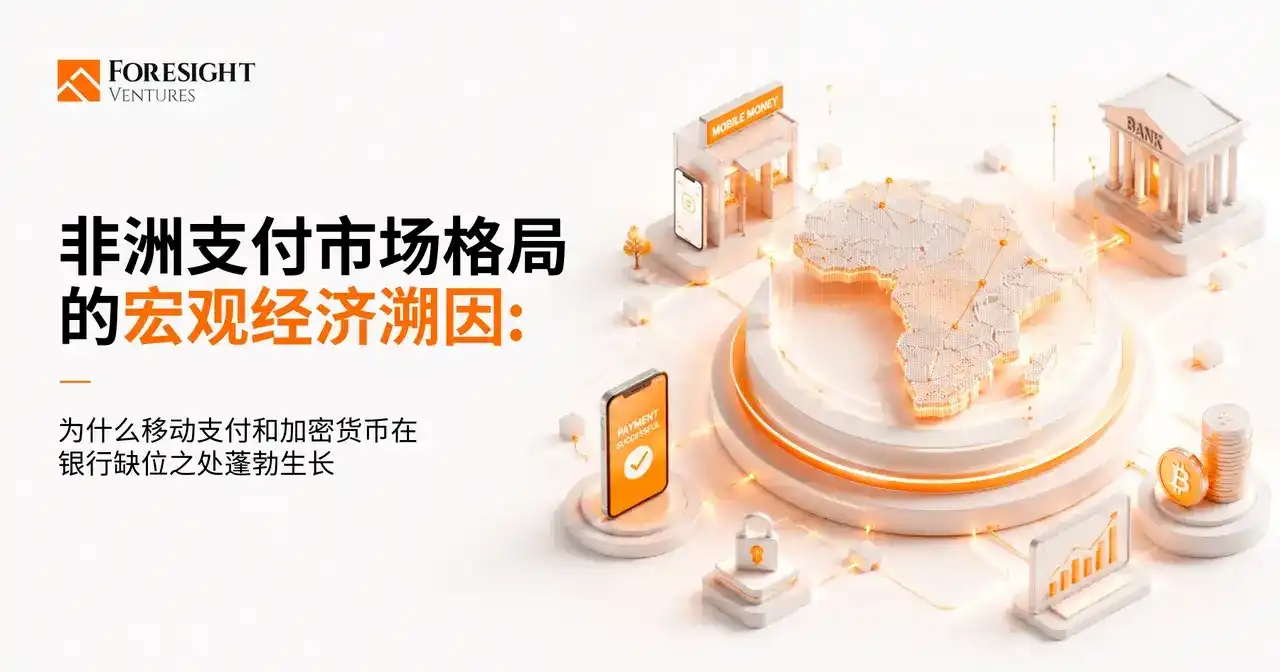
Macroeconomic Origins of the African Payments Market Structure

Africa’s payment landscape exhibits the world’s highest mobile money penetration and fastest cryptocurrency adoption. This is not a market anomaly but a macroeconomic inevitability driven by deep structural factors: a vast, young population, heavy reliance on commodity exports and remittances generating massive cross‑border payment needs, and a chronically underdeveloped formal banking system plagued by de‑risking, high inflation, and currency instability. This vacuum has allowed mobile money (e.g., M‑Pesa) to become the primary payment channel domestically, while cryptocurrencies—particularly stablecoins—serve as a store of value against local‑currency depreciation and a lower‑cost cross‑border medium. The key divide is the Sahara: North Africa integrates with the MENA oil‑centric financial system, while Sub‑Saharan Africa, facing acute dollar shortages and fragmented currencies, is the epicenter of this fintech surge. Structural reliance on dollars, driven by trade deficits and weak local currency credibility, creates persistent dollar scarcity, which crypto and mobile payments effectively address. Efforts like the Pan‑African Payment and Settlement System (PAPSS) aim at de‑dollarization, but these alternatives will remain essential as long as underlying economic constraints—commodity dependence, limited industrialization, and financial exclusion—persist.

marsbit06/05 06:31

Macroeconomic Origins of the African Payments Market Structure

marsbit06/05 06:31

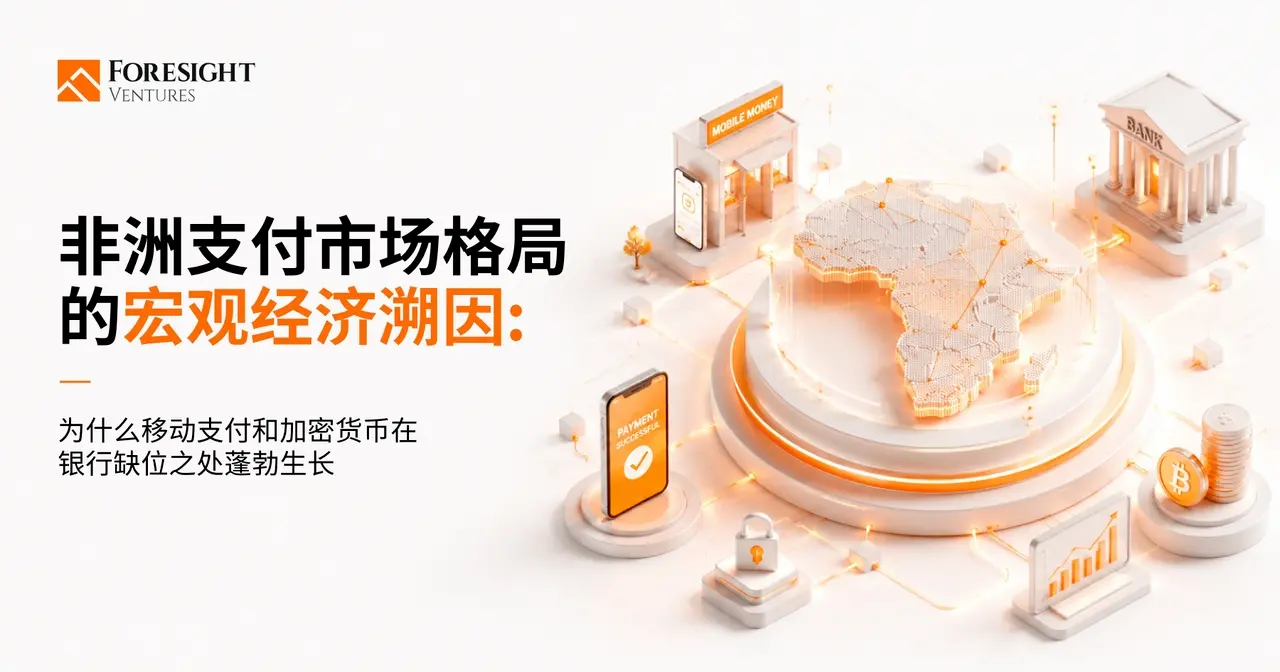
The Macroeconomic Underpinnings of Africa's Payment Market Landscape

The African payments market, characterized by the world's highest mobile money penetration and fastest-growing cryptocurrency adoption, is not a coincidence but a macroeconomic necessity driven by deep structural factors. Two key drivers create this landscape: (1) Africa's heavy reliance on commodity exports, trade, and remittances, generating massive cross-border settlement and remittance demand; and (2) chronically underdeveloped financial infrastructure, exacerbated by international bank de-risking, foreign exchange mismanagement, and persistent inflation. This vacuum has allowed mobile money and crypto to thrive. Mobile money platforms replace banks for domestic payments, while cryptocurrencies serve as a store of value against local currency depreciation and a low-cost medium for cross-border exchange. A crucial division lies along the Sahara Desert. North Africa is integrated into the oil-anchored MENA framework, while Sub-Saharan Africa (SSA), plagued by dollar shortages and fragmented currencies, has become a natural, massive market for mobile money and crypto. Nigeria, Kenya, and South Africa are global leaders in adoption. The SSA economy is deeply dollarized due to currency instability, yet suffers from a severe "dollar shortage" caused by trade deficits and limited export capacity. This creates parallel forex markets and high remittance costs. Cryptocurrencies, particularly stablecoins, fill this gap by providing access to dollar liquidity, cheaper cross-border transfers, and an inflation-resistant store of value, primarily driven by retail users for small-value transactions. While regional initiatives like PAPSS aim to reduce dollar dependence, the fundamental constraints of commodity reliance, trade imbalances, and shallow financial markets persist. Therefore, mobile money and cryptocurrencies are not niche trends but essential financial infrastructure filling a structural void, and they are likely to remain central to Africa's economic landscape for the foreseeable future.

链捕手06/05 06:12

The Macroeconomic Underpinnings of Africa's Payment Market Landscape

链捕手06/05 06:12

Not Just USDT: Tether Wallet Is Attempting to Take Over the Payment System for Ordinary People

Tether, the issuer of the world's largest stablecoin USDT, has launched Tether Wallet, branded as "The People's Wallet," marking a strategic shift from being primarily an asset issuer to directly engaging with end-users. This move aims to capture retail traffic and create a closed-loop ecosystem by offering a simplified payment interface. The wallet eliminates key barriers to crypto adoption: complex hexadecimal addresses are replaced with human-readable usernames (e.g., username@tether), transaction fees (gas) are abstracted and paid directly in the transferred asset, and self-custody is combined with an encrypted cloud backup system for easier recovery. Supported assets include USDT on Ethereum, Polygon, and other networks, as well as Bitcoin and Tether’s gold-backed XAUT. Notably, it does not yet support Tron, where nearly half of all USDT is issued. By drastically reducing friction in cross-border payments—enabling instant, low-cost transfers via email-like addresses—Tether is positioning USDT to dominate small-value international settlements, particularly in emerging markets. This challenges traditional remittance services and competing stablecoins like USDC by leveraging its first-mover advantage and network effects. The piece also highlights underlying tensions: while promoting financial inclusion for the unbanked, Tether’s centralized infrastructure creates potential regulatory vulnerabilities. The wallet’s design also anticipates future use by AI agents for machine-to-machine payments. Ultimately, Tether Wallet represents both an expansion of Tether’s influence and a critical test of balancing efficiency, decentralization, and regulatory compliance in the evolving digital financial landscape.

marsbit04/15 09:31

Not Just USDT: Tether Wallet Is Attempting to Take Over the Payment System for Ordinary People

marsbit04/15 09:31

The War Between Stablecoins and Banking May Not Actually Exist

The article argues that the perceived war between stablecoins and traditional banking is largely illusory, drawing a parallel to the "Javon's Paradox" where technological efficiency (like ATMs) expands, rather than shrinks, an industry. From the supply side, blockchain and stablecoins are dismantling fragmented global payment infrastructures, replacing them with a single, open ledger. This drastically reduces the cost and complexity of offering financial services, enabling companies like Sling Money to operate globally with a small team. Examples like M-Pesa in Kenya and UPI in India show that lowering transaction costs to near zero leads to a massive expansion in financial inclusion, serving previously unbanked populations. On the cost side, the piece highlights the immense compliance burden on banks, which spend hundreds of billions annually on tasks like auditing and reconciling opaque transactions across correspondent banks. Shared ledger technology directly solves this by providing a single source of truth, eliminating reconciliation layers. Projects like J.P. Morgan's Onyx and the Canton Network demonstrate how banks are using this technology to achieve near-instant settlement and free up trapped capital. The convergence of these forces—lower barriers to entry and reduced internal operational costs—points to a future where more financial services are available to more people at a lower cost, much like cloud computing democratized access to computing power. The conclusion is that stablecoins will not destroy the banking system but will instead become a foundational infrastructure upon which more products are built, ultimately expanding the entire market.

Odaily星球日报02/23 12:47

The War Between Stablecoins and Banking May Not Actually Exist

Odaily星球日报02/23 12:47

What Are the Most Profitable CEOs in Crypto Doing Right Now?

Amid a wave of new stablecoin launches, Tether CEO Paolo Ardoino is leading a strategic shift toward regulatory compliance and mainstream legitimacy. The company recently introduced USAT, its first fully U.S.-regulated stablecoin, directly competing with Circle’s USDC. This marks a departure from Tether’s controversial past, during which it faced allegations of opacity and facilitating illicit activities. Ardoino emphasizes Tether’s collaboration with U.S. agencies like the FBI and Secret Service, highlighting its ability to freeze illicit transactions—$3.5 billion has been frozen to date. He defends Tether’s record, noting its resilience during crises like the TerraLuna collapse and its rapid processing of massive redemptions. With over $300 billion in excess reserves and a user base of 536 million—growing by 30 million per quarter—Tether’s influence is substantial. Ardoino positions the company not just as a stablecoin issuer but as a broader force for financial inclusion, especially in economies with hyperinflation. Beyond stablecoins, Tether is expanding into gold-backed tokens, holding roughly 140 tons of gold, and investing heavily in AI, robotics, and infrastructure. Its decentralized AI platform, Qvac, aims to serve underserved populations. Ardoino envisions Tether as a stability-focused entity, akin to a sovereign wealth fund, built to endure political and economic shifts.

marsbit02/02 12:23

What Are the Most Profitable CEOs in Crypto Doing Right Now?

marsbit02/02 12:23

活动图片