# Depegging的所有文章

在 HTX 新闻中心浏览与「Depegging」相关的最新资讯与深度分析。潘盖市场趋势、项目动态、技术进展及监管政策,提供权威的加密行业洞察。

No Bull Market for BTC Without STRC Re-pegging

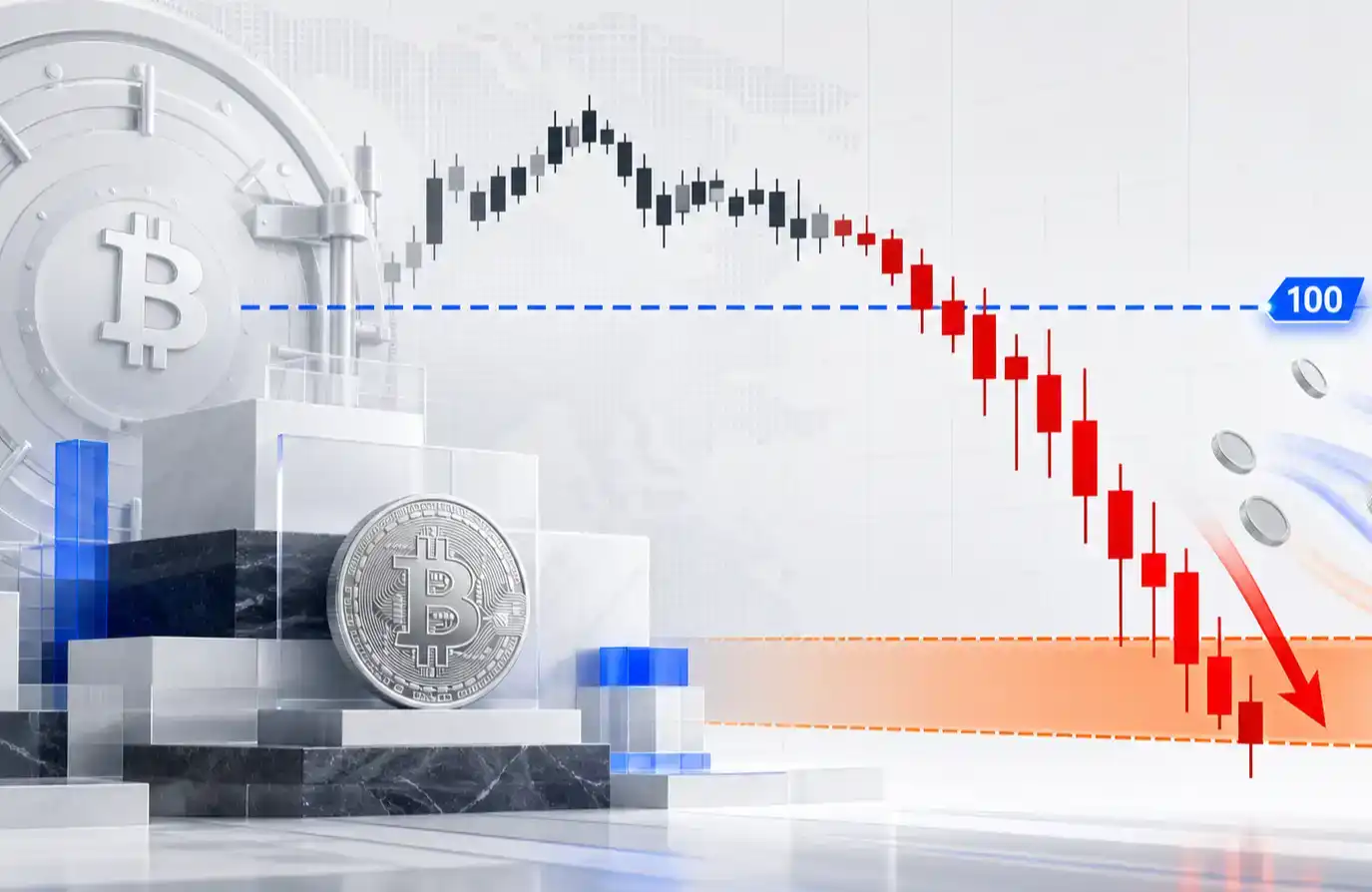
Summary: The sustained de-pegging of MicroStrategy's (MSTR) Strategy Preferred Shares (STRC) poses a severe threat to Bitcoin (BTC) and could prevent a bull market. STRC, designed to trade near a $100 target, has plunged to around $75, effectively shutting down MicroStrategy's cheapest and most efficient funding channel. This channel was critical for its "raise funds, buy BTC" business model. More critically, MicroStrategy now faces a massive cash outflow from these preferred shares. With approximately $10.49 billion of STRC outstanding at an 11.5% dividend yield, the annual cash obligation exceeds $1.2 billion. Combined with other preferred shares, the total annual payout nears $1.7 billion, depleting its current ~$1.4 billion cash reserve within a year. To address this, MicroStrategy is increasingly relying on common stock (MSTR) offerings via its ATM program. However, recent sales show most raised capital is now used to bolster cash reserves rather than buy more Bitcoin. This dilutes the key metric of BTC per share for common stockholders, eroding the foundation of its premium valuation. If STRC cannot re-peg, this costly dilution may continue. Worse, if cash pressure intensifies, selling Bitcoin becomes a real risk. As the largest corporate BTC holder (~847,363 BTC), any significant sales could crash the market. Thus, MicroStrategy is transforming from BTC's most reliable institutional buyer into a major potential seller, casting a significant shadow over Bitcoin's price prospects.

Odaily星球日报06/26 06:21

No Bull Market for BTC Without STRC Re-pegging

Odaily星球日报06/26 06:21

STRC Falls Below $80, Can Conservative Investors Still Buy the Dip?

The article analyzes whether the STRC (a perpetual preferred stock issued by MicroStrategy) presents a buying opportunity after its price fell below its $100 par value to around $80, offering a seemingly high yield of 13-15%. The core argument is that STRC's discount reflects market skepticism about the sustainability of MicroStrategy's capital structure model, not just temporary panic. This model relies on issuing securities (like STRC) to raise funds to buy more Bitcoin, a "flywheel" that works in a bull market. The recent small sale of BTC to fund dividends, while minor, broke the psychological "never sell" anchor and signaled potential strain. Key risks identified are not a traditional Ponzi collapse but a potential breakdown in the financing narrative: 1) If Bitcoin enters a deep bear market, crushing MicroStrategy's stock premium (mNAV), its ability to raise cheap capital weakens. 2) If STRC remains deeply discounted, it signifies permanently higher funding costs. 3) The high cash dividend yield represents a significant ongoing expense. 4) If selling BTC to pay dividends becomes routine, the bullish narrative reverses. The conclusion is that STRC is not a risk-free high-yield asset. It is a high-coupon bet on whether MicroStrategy's BTC treasury financing model can withstand a bear market. Buying it is a wager that the market will continue to believe in and fund this structure at acceptable costs. The current price asks if this cycle's "casualty" might be a BTC treasury company's融资 model itself.

marsbit06/26 02:56

STRC Falls Below $80, Can Conservative Investors Still Buy the Dip?

marsbit06/26 02:56

STRC Loses Peg by 11%, Can Strategy's Perpetual Motion Machine Keep Running?

The article discusses the significant and concerning depegging of MicroStrategy's (MSTR) preferred stock, STRC. Designed to trade near its $100 target par value, STRC has recently fallen sharply, reaching a low of $83.26 and closing at $88.59, representing an over 11% discount. STRC is a core component of MicroStrategy's financial strategy. As a perpetual preferred stock, it allows the company to raise capital through an "at-the-market" (ATM) issuance program without diluting common shareholders (MSTR). This capital is primarily used to purchase Bitcoin, creating a "capital flywheel": issuing STRC → raising cash → buying BTC → increasing net assets → supporting STRC's value. The flywheel's operation depends on STRC maintaining its $100 price. To enforce this, MicroStrategy employs a dynamic dividend mechanism, recently raising the rate to 11.5% and increasing payout frequency. However, this has failed to halt the depegging, indicating market concerns extend beyond yield. Analysts cite two main reasons. First, technical factors like forced liquidations from leveraged arbitrage trades may have exacerbated the sell-off. Second, and more fundamentally, is waning confidence in MicroStrategy's financial resilience. A JPMorgan report highlighted the company's limited cash relative to its ~$1.7 billion annual dividend obligation, raising liquidity concerns. While MicroStrategy counters that its massive Bitcoin holdings provide decades of coverage, this argument relies on the potential need to sell BTC—a departure from its long-standing "never sell" narrative. The company's recent sale of a small amount of Bitcoin for "testing," despite being framed as minor, has intensified these fears. The persistent depegging threatens to cripple MicroStrategy's primary funding channel. If STRC remains discounted, the company's ability to fund further Bitcoin purchases weakens. Should cash reserves dwindle while financing is constrained, the market may increasingly price in the risk of MicroStrategy becoming a forced seller of Bitcoin to meet obligations. This shift from a major marginal buyer to a potential seller could pose significant downside risk to the broader Bitcoin market.

链捕手06/19 10:19

STRC Loses Peg by 11%, Can Strategy's Perpetual Motion Machine Keep Running?

链捕手06/19 10:19

A Depegging and a Tweet: When the U.S. President Begins to "Legislate Escort" for His Family Business

A brief depegging incident involving the USD1 stablecoin, issued by Trump-affiliated World Liberty Financial (WLFI), and a subsequent push for crypto legislation by former President Trump have raised questions about the intersection of his political power and family business interests. On February 23, 2026, USD1 briefly depegged to $0.994 amid what WLFI called a "coordinated attack" involving social media hacks and market manipulation. Shortly after, WLFI transferred over $17 million worth of its native tokens to centralized exchanges, sparking market speculation about potential selling. Concurrently, on March 4, Trump publicly urged Congress to pass the GENIUS Act, a key stablecoin regulatory bill, while accusing banking lobbyists of undermining U.S. crypto competitiveness. The situation is complicated by the fact that the Trump family stands to benefit directly from the bill's passage. WLFI, which launched USD1 in March 2025, has seen rapid growth, partly fueled by political connections, including a major investment from an Abu Dhabi sovereign fund. However, the project faces scrutiny. A U.S. House investigation is probing a secretive $500 million sale of a 49% WLFI stake to an entity linked to an UAE royal, a deal signed just days before Trump's second inauguration. Critics, including Senator Elizabeth Warren, have raised concerns about potential national security risks and conflicts of interest. The episode highlights a grey area in modern governance: a sitting president simultaneously advocating for policies that could directly enrich his family's business, while that business faces both market pressures and congressional investigations. The existing legal and regulatory framework appears insufficient to address this novel overlap of political power and private commercial interest.

marsbit03/08 07:11

A Depegging and a Tweet: When the U.S. President Begins to "Legislate Escort" for His Family Business

marsbit03/08 07:11

WLFI's Deletion Sparks Crash Speculation: Trust Crisis in a Bear Market

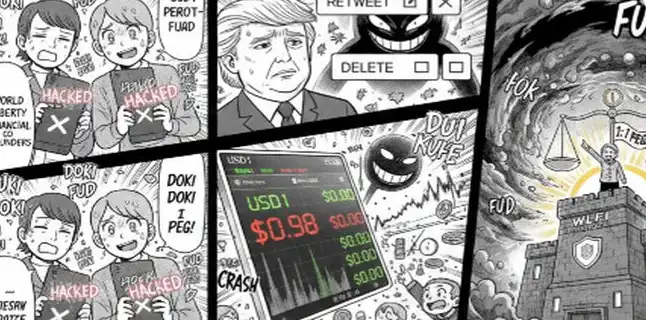
Amid a bearish market sentiment, the deletion of a tweet by Eric Trump, co-founder of World Liberty Financial (WLFI), triggered widespread speculation and panic. On February 23, Eric Trump retweeted and then deleted a post about Binance listing more USD1 trading pairs. This action led to a temporary depegging of USD1 to 0.9802 against USDT and a nearly 10% drop in WLFI’s price, though both later recovered. The incident fueled FUD (fear, uncertainty, and doubt) on social media, with rumors suggesting Eric had purged all crypto-related tweets or that internal issues plagued the Trump family. WLFI quickly responded, claiming it was a coordinated attack where hackers breached multiple co-founders’ accounts, spread panic, and attempted to profit by shorting WLFI. They later clarified that only X accounts were compromised, not WLFI or USD1 contracts. However, skepticism arose. Observers noted that only one retweet was removed—not a mass deletion—and no significant shorting activity was detected. Some linked the event to an upcoming major investigation announcement by on-chain detective ZachXBT, though market data did not strongly tie it to WLFI. Critics also questioned WLFI’s narrative, suggesting the “hack” claim might be a cover-up or misdirection. The event highlights the crypto community’s heightened sensitivity and distrust during bear markets, where minor actions can spark exaggerated reactions and conspiracy theories.

比推02/24 15:15

WLFI's Deletion Sparks Crash Speculation: Trust Crisis in a Bear Market

比推02/24 15:15

The Full Story of USDe's Depegging on October 11: A $19 Billion Lesson in Crypto Financial Engineering

On October 11, 2025, USDe, a major yield-bearing stablecoin (YBS), depegged on Binance, triggering a cascade of liquidations and resulting in a record-breaking $19 billion liquidation event in crypto history. While mainstream media termed it a "crypto crash," the incident was fundamentally a massive exposure of tail risks in complex financial engineering. USDe, created by Ethena, is a synthetic dollar protocol that maintains delta-neutral positions by hedging spot assets with perpetual futures contracts, capturing returns from funding rates, staking yields, and basis trades. At its peak, USDe reached a $14 billion market cap, offering APYs as high as 27%, and was touted as an "Internet Bond." However, a significant portion of its growth was driven by leveraged lending on external platforms. Binance’s launch of a 12% APY incentive program encouraged users to employ recursive lending with up to 5x leverage, using Binance’s own USDe/USDT pair as the sole price oracle. This created $8.4 billion in highly leveraged exposure outside Ethena’s core delta-neutral system. The collapse began when Trump announced a 100% tariff on Chinese goods, causing a sharp market downturn. As crypto assets fell, perpetual funding rates turned negative. Large USDe holders sold on Binance, driving its price down. Once it fell below $0.82, it triggered mass liquidations of leveraged positions. In just 23 minutes, USDe plummeted to $0.65 on Binance due to cascading liquidations and liquidity failure. In contrast, on-chain DEXs like Uniswap saw only a brief 2% depeg, and DeFi lending protocols like Aave experienced minimal liquidations due to robust oracle mechanisms. Ethena’s core protocol remained solvent and operational throughout, indicating the failure was specific to Binance’s market structure. The event underscores critical lessons: the dangers of excessive leverage, reliance on single-point price oracles, and the misperception of complex yield products as risk-free savings. It highlights that stability in crypto depends on robust mechanisms, deep liquidity, and sustained confidence—not just financial engineering.

marsbit12/29 09:07

The Full Story of USDe's Depegging on October 11: A $19 Billion Lesson in Crypto Financial Engineering

marsbit12/29 09:07

活动图片