# Bonds的所有文章

在 HTX 新闻中心浏览与「Bonds」相关的最新资讯与深度分析。潘盖市场趋势、项目动态、技术进展及监管政策,提供权威的加密行业洞察。

Metaplanet Prepares a Platform for Launching Bonds Backed by Bitcoin as Collateral

Metaplanet, built on a Japanese investment company, is preparing a platform for launching bonds collateralized by Bitcoin. According to sources cited by Benchmark, the new brokerage structure, Metaplanet Securities, will not be used solely as a funding channel for its own Bitcoin purchases. Instead, it aims to become a full-fledged market for tokenized Bitcoin-backed debt instruments, termed "Bitbonds." The platform is designed to allow companies accumulating Bitcoin to issue debt to finance further purchases of the cryptocurrency. Initial bond yields are expected to be 4-6% annually. Metaplanet later plans to migrate these bonds onto a blockchain, use stablecoins for settlements, and develop a secondary market. Final issuance parameters, including the investor pool, loan-to-value ratio, and launch date, remain undisclosed. However, the company has begun surveying investor preferences regarding product design, trading hours, coupon schedules, investor protection, distribution channels, and stablecoin settlements. This initiative follows Metaplanet's acquisition of Siiibo Securities for approximately $13 million, which provided access to a regulated Japanese securities platform. Previous examples of Bitcoin-linked bonds include those issued by Goldman Sachs in October last year and Sberbank in Russia, whose returns were tied to Bitcoin's price performance.

cryptonews.ru20小时前

Metaplanet Prepares a Platform for Launching Bonds Backed by Bitcoin as Collateral

cryptonews.ru20小时前

Unseen Since 2007, the US Treasury Market Is Sounding Alarms

US Treasury Market Sounds Alarm, Longest Streak Since 2007. The US Treasury market is facing its most severe stress test in nearly two decades. Yields have surged to multi-year highs, driven by a triple threat of escalating Middle East tensions, oil prices breaching $100 per barrel, and rekindled inflation fears. The 30-year yield, a key benchmark, has sustained a record-breaking streak above 5%, its longest since 2007, forcing a rapid reassessment of the Federal Reserve's policy path. The core of the turmoil is the persistent elevation of long-term yields. The 30-year Treasury yield has now remained above 5% for its longest consecutive period in 17 years, recently climbing to 5.19%. Analysts note this persistence, unlike previous selloffs, lacks a single catalyst and sees limited immediate buying interest. They attribute the stickiness to investors demanding higher compensation for enduring inflation risks, massive fiscal deficits, and expectations of increased long-duration bond supply. The immediate trigger was Brent crude oil surpassing $100, reigniting inflation concerns and sharply increasing market bets on future Fed rate hikes. Beyond oil, structural pressures are mounting. A soaring national debt, now nearing $40 trillion, faces diminished demand from traditional foreign buyers. Concurrently, massive AI-related bond issuance from tech giants like Microsoft and Amazon offers investors alternatives to long-dated Treasuries, further straining demand. The ripple effects are spreading. Rising yields have pushed the average 30-year fixed mortgage rate to a near one-year high of 6.58%, pressuring the housing market. Equities are also feeling the strain, with major indices declining as higher borrowing costs threaten corporate profits and compress valuations for growth stocks, particularly in the tech-heavy Nasdaq. Market participants warn that if long-end yields continue climbing uncontrollably, it could trigger broader financial instability, with some noting the potential return of "bond vigilantes" concerned over fiscal sustainability.

marsbit07/24 07:59
Unseen Since 2007, the US Treasury Market Is Sounding Alarms

marsbit07/24 07:59

U.S. Tech Momentum Stocks Record Largest Single-Day Gain Ever, but Has the Rout Ended?

U.S. tech momentum stocks staged a dramatic rebound on Tuesday, July 21st. Key momentum indices like the Morgan Stanley TMT Momentum Factor and Goldman Sachs' High Beta Momentum Long Index posted historic or near-historic single-day gains, fueled largely by semiconductor stocks. This sharp rally followed a severe three-day sell-off that saw momentum stocks plunge 33%, marking one of the steepest pullbacks since the dot-com bubble. Analysts attribute the bounce primarily to a short squeeze, as forced covering from over-leveraged traders, particularly in Asia, created a buying spiral. However, the rally's health is questioned due to weak market breadth—overall trading volume was low, and decliners outnumbered advancers in the S&P 500 despite the index's gain—suggesting a narrow, concentrated surge rather than broad recovery. Opinions on the sustainability diverge. BTIG strategists warn the rebound has hit key resistance levels, citing extreme volatility and historic stock dispersion as signs of an ongoing broader correction, and recommend selling into strength. Conversely, Goldman Sachs and UBS view the aggressive momentum unwinding as nearing its end, noting reduced positioning and a lack of new fundamental catalysts. They suggest the sell-off presents a selective opportunity to add exposure, albeit cautiously and gradually using defined-risk strategies. The immediate trajectory hinges on the ongoing earnings season, with market focus on Alphabet's capital expenditure guidance for AI investment clarity. Meanwhile, bond markets present a risk, with rising Treasury yields—potentially heading toward 5.5%—and widening credit spreads for mega-cap tech companies posing a threat to equity valuations. The combination of technical factors, earnings results, and macro conditions leaves the durability of the rebound in doubt.

链捕手07/22 01:05

U.S. Tech Momentum Stocks Record Largest Single-Day Gain Ever, but Has the Rout Ended?

链捕手07/22 01:05

Breaking the Offer Price! SpaceX's Stock Price Falls Below the $135 IPO Price for the First Time, Company Bonds Decline Continuously, Yield Reaches 7.5%, Comparable to Junk Bonds

SpaceX's stock price fell below its $135 IPO price for the first time, trading as low as $132.15 before closing slightly above the offering price. The stock has experienced high volatility typical of new listings, surrendering nearly all its initial 50% surge. Compounding equity pressures, the company's newly issued $25 billion bond due 2056 has also declined in price, pushing its yield to a junk-bond-like 7.5%. Analysts note investor skepticism is growing regarding the costs and distant timeline of SpaceX's xAI and large infrastructure ambitions. A significant 20% of the IPO's $75 billion raise went to retail investors, making the price decline a notable blow to market confidence. Further downside risk looms as lock-up periods for early investors expire soon, potentially triggering significant selling pressure alongside the company's first quarterly earnings report. Initial upward momentum was partly fueled by an estimated $5.4 billion in mandatory buying from index funds after SpaceX's rapid inclusion in major indices like the Nasdaq 100. Despite the current weakness, Wall Street sentiment remains broadly positive. With bank analyst quiet periods ending, over 80% of coverage initiates with a "Buy" rating, and the average price target implies roughly 78% upside from current levels.

链捕手07/16 00:44

Breaking the Offer Price! SpaceX's Stock Price Falls Below the $135 IPO Price for the First Time, Company Bonds Decline Continuously, Yield Reaches 7.5%, Comparable to Junk Bonds

链捕手07/16 00:44

New Chair, Old Inflation, Better-Than-Expected Jobs: How Are Global Assets Repriced After Wash's Debut?

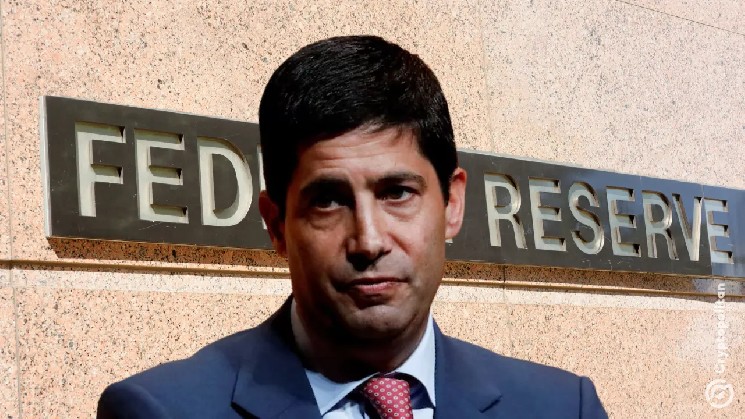
New Fed Chairman Kevin Wash's first FOMC meeting delivered a "hold" decision, keeping rates at 3.50%-3.75%. The key signal was a major shift in communication: the policy statement was shortened, and forward guidance was removed. Wash emphasized the Fed will no longer pre-commit to future actions, instead refocusing markets on economic data itself. The updated "dot plot" revealed a hawkish tilt, with the median forecast for the policy rate rising to 3.8% by year-end, suggesting a potential 25-basis-point hike in 2026. PCE inflation forecasts were also significantly raised. This reflects the Fed's current dilemma: a resilient job market (May nonfarm payrolls beat expectations) coupled with persistent inflation (PCE remains well above 2%) makes rate cuts unlikely and hikes a possibility. Wash inherits a deeply divided committee and a challenging macro environment reminiscent of 1994—strong growth with latent stagflation risks. His primary test is balancing inflation control against economic stability. Markets are repricing assets accordingly. The dollar strengthened on higher rate expectations. Treasury ETFs face pressure from potential hikes but may attract haven flows if growth fears emerge. Gold's role is more as a hedge amid conflicting forces. AI infrastructure stocks face valuation compression from higher rates, but the sector's fundamental demand logic remains intact if cloud CapEx holds. Defense stocks offer some resilience due to long-term government contracts. Looking ahead, key data points will drive market moves: the June nonfarm payrolls (July 2) and CPI (mid-July) will be critical for setting the tone of the July FOMC meeting (July 28-29), where Wash may face his first real policy decision. Political pressure from the White House for rate cuts will also be a persistent theme testing Fed independence.

marsbit06/24 06:48

New Chair, Old Inflation, Better-Than-Expected Jobs: How Are Global Assets Repriced After Wash's Debut?

marsbit06/24 06:48

Why Did NVIDIA's Bond Issue Go Unnoticed While SpaceX's Caused a Plunge?

The article analyzes the contrasting market reactions to recent bond issuances by SpaceX and NVIDIA. While NVIDIA's $25 billion bond offering was met with strong demand and seen as securing long-term capital for its already profitable AI business, SpaceX's move to raise at least $20 billion in bonds (primarily to refinance bridge loans) triggered a sell-off in its stock (SPCX). The key difference lies in the stage of cash flow validation for their respective core narratives. For NVIDIA, the AI boom is generating substantial, visible revenue and profits, making debt a tool to amplify a proven growth curve. For SpaceX, despite a strong cash position post-IPO and a revenue-generating business in Starlink, its valuation is heavily tied to future, capital-intensive projects like Starship, global satellite networks, and potential AI infrastructure. The bond issuance acted as a trigger, shifting market focus from SpaceX's long-term vision to the pressing question of whether Starlink's profits can fund these ambitious, unproven ventures before they generate their own returns. Thus, the market penalizes not the act of borrowing itself, but the perceived gap between high capital expenditure and the speed of cash flow realization. SpaceX's valuation recovery hinges on demonstrating that Starlink's profitability can outpace the burn rate of its futuristic projects or that those projects (like Starship achieving reliable, low-cost reusability) can soon transition from costly visions to commercial realities.

marsbit06/23 09:32

Why Did NVIDIA's Bond Issue Go Unnoticed While SpaceX's Caused a Plunge?

marsbit06/23 09:32

As the US and Japan Hike Interest Rates, Which Asset Class is Most at Risk?

This week, global markets face two major events: the Bank of Japan's likely interest rate hike and the US Federal Reserve's FOMC meeting. For risk assets, it is a pivotal and volatile week. In the US, expectations for rate cuts have faded dramatically. May's higher-than-expected CPI and resilient jobs data have shifted the Fed's focus from potential cuts to the possibility of future hikes. New Fed Chair Wash is unlikely to raise rates at this meeting, but any hawkish shift in communication, the dot plot, or the policy statement could lead markets to price in tighter policy, pushing up short-term Treasury yields and strengthening the dollar. High-valuation growth stocks, AI-related assets, and small-cap stocks reliant on cheap funding are most vulnerable to rising rates. In Japan, a 25 basis point hike is almost fully priced in (98.3% probability), which would bring the policy rate to 1%, its highest since 1995. The concern is not the hike itself, but its potential to unwind the massive "carry trade," where investors borrowed low-yielding yen to invest globally. Historically, Japan's rate hikes have coincided with global market stress (2000, 2007, 2024). While this well-telegraphed hike may be digested smoothly, two key factors increase uncertainty: 1) Governor Ueda's absence due to illness, putting communication in the hands of less-familiar deputies, and 2) the Fed meeting occurring just days later, creating potential for a compounded market reaction if both central banks sound hawkish. Asset implications: * **Bonds:** US short-term yields sensitive to Fed signals. Japan's rate hike could pressure its massive US Treasury holdings. * **Currencies:** Dollar likely supported by Fed; Yen's reaction hinges on BoJ's forward guidance. * **Equities:** US growth stocks, small-caps most at risk. Japanese stocks face pressure from a stronger yen. * **Crypto:** Assets like Bitcoin face headwinds from higher rates and tighter liquidity; high-beta altcoins are even more vulnerable. The convergence of these two central bank meetings amplifies market volatility risks, with potential spillovers across asset classes globally.

marsbit06/16 02:58

As the US and Japan Hike Interest Rates, Which Asset Class is Most at Risk?

marsbit06/16 02:58

活动图片