Multicoin Co-founder: PropAMM is Changing the Perception That 'Decentralization is Slower'

比推发布于2026-03-13更新于2026-03-13

文章摘要

Multicoin Capital co-founder Kyle Samani argues that PropAMM (Proactive Automated Market Maker) is one of the most significant innovations in market microstructure in decades, challenging the long-held belief that decentralized systems are inherently slower than centralized ones. In traditional centralized exchanges (CEXs), market makers co-locate servers and engage in constant bidirectional communication with the exchange, leading to latency due to data transmission delays. In contrast, PropAMM on Solana runs market-making algorithms directly on the blockchain, eliminating the need for inter-server communication. Price updates occur within the same physical silicon, drastically reducing latency. PropAMM already offers narrower spreads for SOL-USDC spot trading on Solana than major CEXs. Samani predicts it will dominate on-chain trading for spots, perpetuals, and prediction markets this year. Current challenges include ensuring best execution for takers due to private algorithms and non-deterministic routing across multiple PropAMMs, but solutions from aggregators like Jupiter, dFlow, and Phoenix are expected. Upcoming Solana upgrades—such as higher compute limits, reduced slot times, and improved network latency—will further enhance PropAMM performance, solidifying its advantage over traditional systems.

Author: Kyle Samani, Multicoin Co-founder

Compiled by: Azuma, Odaily Planet Daily

Original Title: Multicoin Co-founder: Is Decentralization Always Slower Than Centralization? PropAMM is Breaking This Bias


Editor's Note: The man who knows how to hype Solana best, Multicoin Capital's former co-founder Kyle Samani, who recently made a high-profile exit from the industry, is back!

Last night, Kyle Samani published a long Thread on his personal X account. In the post, Kyle Samani once again demonstrated his highly persuasive "hype" (not meant derogatorily) rhetoric, using "efficiency"—a shortcoming in the decentralized narrative—as a breakthrough point. He detailed how Solana ecosystem's currently promoted PropAMM will catch up to or even surpass traditional centralized models in efficiency, arguing that PropAMM is one of the most important innovations in market microstructure in recent years, or even decades.

Below is the original content:

PropAMM is one of the most important innovations in market microstructure in recent years, and perhaps even one of the most significant in decades.

To help everyone understand this conclusion, let's first look at how market makers (MMs) quote prices on traditional centralized exchanges (CEXs).

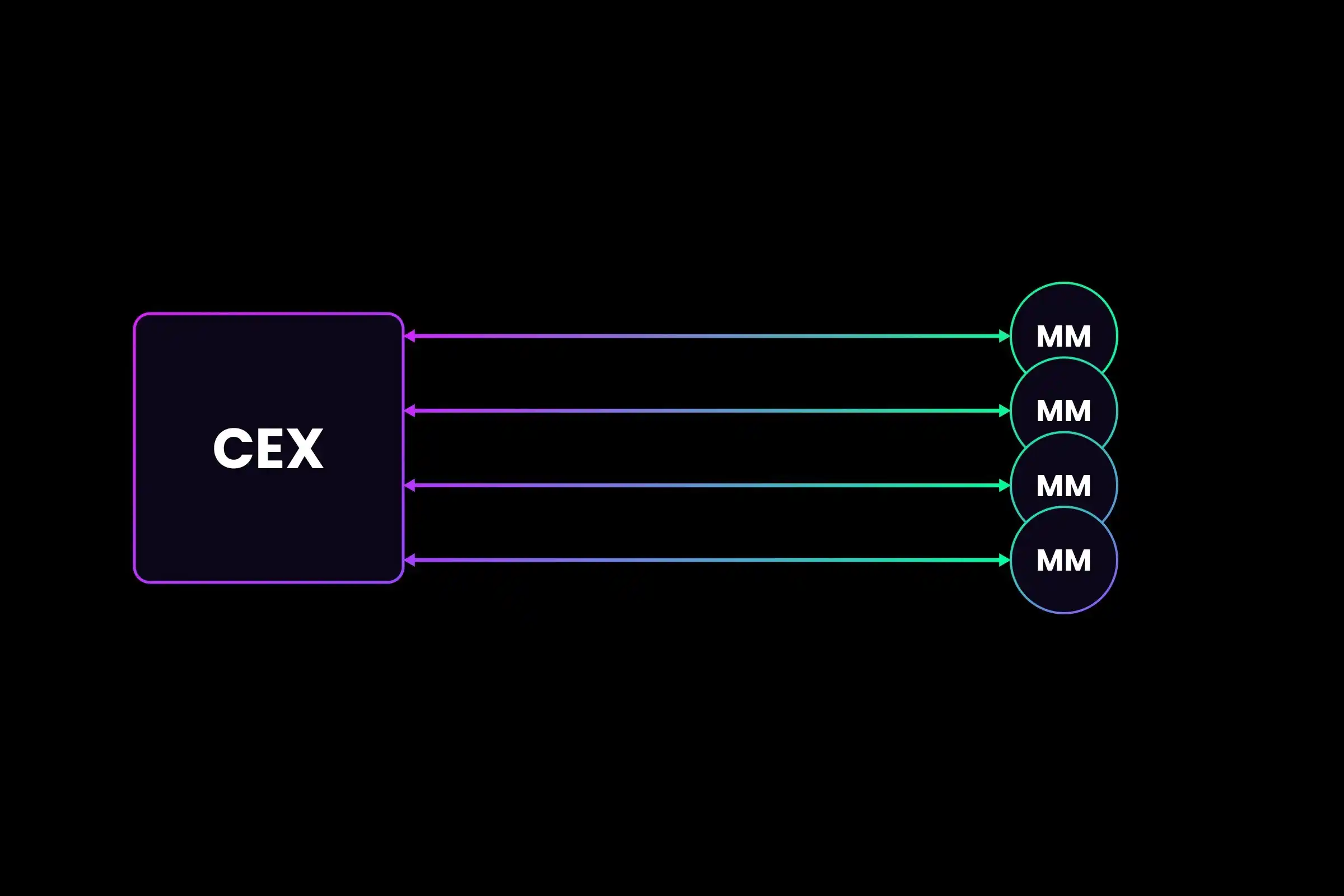
Market makers typically engage in physical co-location with the exchange. Each market maker runs an algorithm on a server and connects to another server running the exchange's system via network cables of uniform length (e.g., 50 meters).

Market makers and exchanges constantly send large data streams back and forth. Whenever a market maker sends an order to the exchange—whether it's a limit order, cancellation, or market order—the exchange needs to broadcast this information to all other market makers; then, other market makers resend their own orders based on the new information; this cycle repeats indefinitely.

Here is a simple diagram.
Now let's look at how PropAMM works on the Solana mainnet.

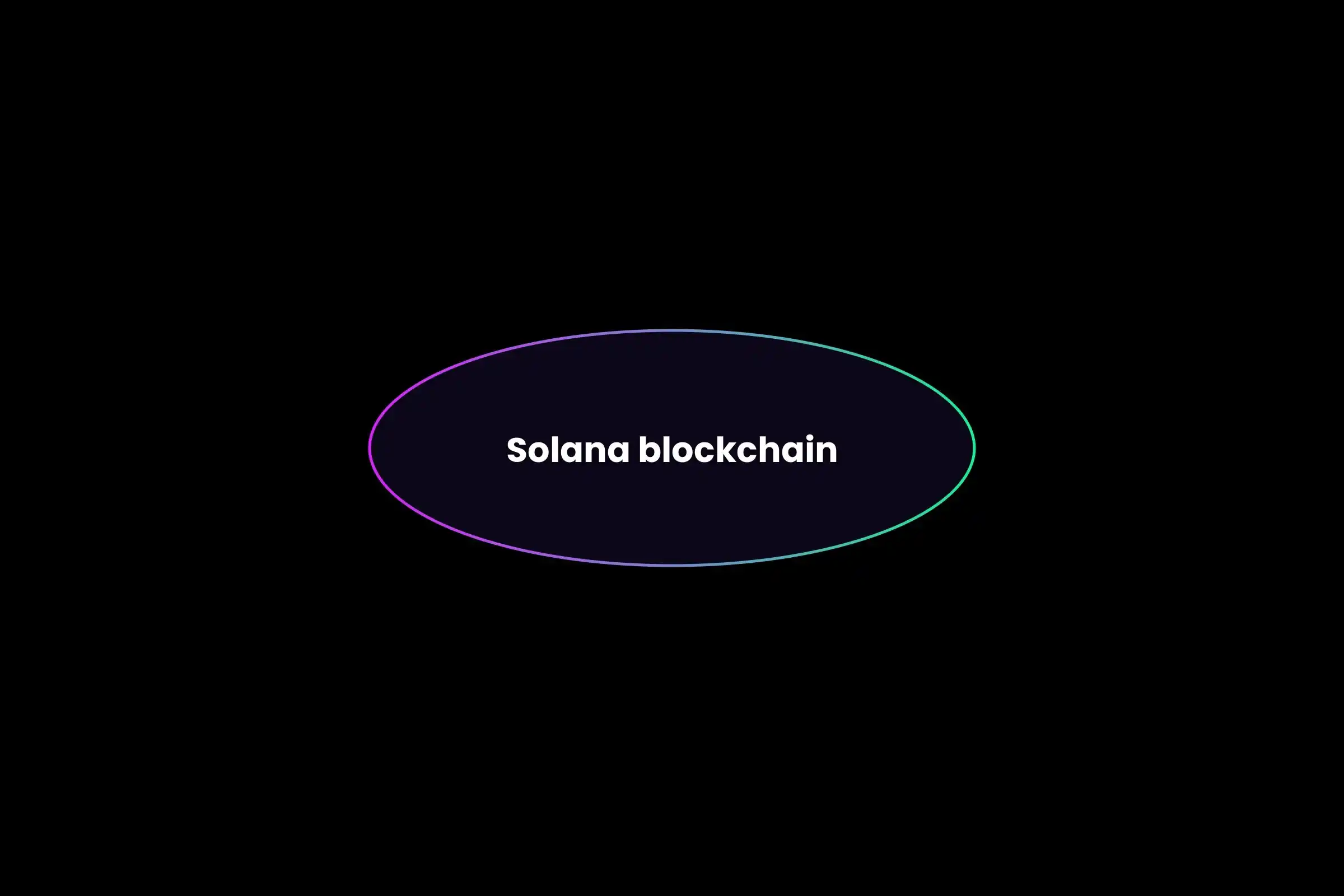
The beauty of PropAMM on Solana is that the blockchain itself directly "hosts" the market maker algorithm. This means the system no longer needs to send billions of messages back and forth between market makers and the exchange; the market-making algorithm will operate directly on the same physical machine as the exchange.

The new diagram is as follows. (That's right, only the Solana blockchain is needed!)
There has long been a common view in the cryptocurrency industry that decentralized systems must be slower (have higher latency) than centralized systems because they require communication between global nodes.

But if you reframe the issue, on-chain hosted algorithms may actually have lower latency than traditional centralized exchanges in finance.

Why is that? The reason is that the latency required for PropAMM to update prices only involves electrons moving within the same physical silicon chip. For example, if the last market order causes a change in the SOL-USD price, this information is immediately visible to all PropAMMs and used for pricing the next market order. Everything happens within the same silicon chip; there is no longer a need for two-way communication between servers.

It is worth noting that PropAMM does require frequent oracle updates, but this is not a problem and does not change the overall fact I mentioned above.

The most critical point remains that when the exchange—in this case, the Solana blockchain—directly hosts the PropAMM algorithm, the market maker's pricing changes in real-time within the same physical silicon chip.

PropAMM has already become the dominant mechanism for SOL-USDC spot quotes on Solana, with narrower spreads than all major CEXs. I expect this market structure to become the dominant model for on-chain trading this year, including spot, perpetual contracts (perps), and even prediction markets.

The biggest challenge for PropAMM is that there is currently no way to ensure that the taker always gets the best execution, because:

· The algorithms of all PropAMMs are not public (which is reasonable, as traditional market-making algorithms are also private);

· When routing trades between multiple PropAMMs, the result is non-deterministic.

However, this problem can be solved. I expect all relevant aggregator teams to launch solutions this year, such as Jupiter and dFlow for spot, and Phoenix for contracts.

Current PropAMM is still not fully optimized and is subject to various limitations of the Solana blockchain itself. This year, Solana will roll out a series of major upgrades that will significantly enhance PropAMM's performance, including:

1. Higher CU (Compute Unit) limits per transaction and larger transaction sizes;

2. Higher CU limits per block;

3. Alpenglow: Reducing slot time from 400ms to 100–150ms;

4. DoubleZero: Reducing global network latency;

5. Application-controlled execution;

6. Multiple concurrent leaders.

If PropAMM on the Solana mainnet can already offer narrower quotes than all CEXs without these upgrades, imagine how powerful their performance will become as these upgrades are gradually implemented.


Twitter:https://twitter.com/BitpushNewsCN

BitPush TG Discussion Group:https://t.me/BitPushCommunity

BitPush TG Subscription: https://t.me/bitpush

Original link:https://www.bitpush.news/articles/7619419

相关问答

QWhat is PropAMM and why is it considered a major innovation in market microstructure?

APropAMM is a mechanism on the Solana blockchain where the market maker algorithms are directly hosted on the blockchain itself. It is considered a major innovation, potentially one of the most significant in decades, because it eliminates the need for billions of messages to be sent between market makers and a centralized exchange. By running on the same physical machine as the 'exchange' (the blockchain), it can achieve lower latency and tighter spreads than traditional centralized systems.

QHow does PropAMM on Solana achieve lower latency compared to traditional centralized exchanges (CEXs)?

APropAMM achieves lower latency because the market maker algorithms are hosted directly on the Solana blockchain. This means that price updates and order changes happen within the same physical silicon, as electrons move internally on a chip. There is no need for bidirectional communication between separate servers for market makers and the exchange, which is a requirement in the traditional co-location model of CEXs.

QWhat is the current dominant application of PropAMM on Solana and what are its future expected use cases?

ACurrently, PropAMM is the dominant mechanism for SOL-USDC spot quotes on Solana, offering narrower spreads than major CEXs. It is expected to become the dominant model for on-chain trading this year, expanding into spots, perpetual contracts (perps), and even prediction markets.

QWhat is the main challenge currently facing PropAMM, and what are the proposed solutions?

AThe main challenge is ensuring that a taker (the party taking liquidity) gets the best possible trade execution. This is difficult because the PropAMM algorithms are not public (which is standard for proprietary trading algorithms) and because routing trades across multiple PropAMMs is non-deterministic. Solutions are expected from aggregation teams like Jupiter and dFlow for spot trading, and Phoenix for contracts.

QWhat upcoming Solana upgrades are expected to significantly improve PropAMM performance?

ASeveral major Solana upgrades are expected to boost PropAMM performance: 1. Higher CU (Compute Unit) limits per transaction and larger transaction sizes. 2. A higher CU limit per block. 3. Alpenglow, which will reduce slot time from 400ms to 100-150ms. 4. DoubleZero, which will reduce global network latency. 5. Application-controlled execution. 6. Multiple concurrent leaders.

你可能也喜欢

意大利央行未发现稳定币在汇款中存在系统性优势

意大利银行的一项研究显示,稳定币在跨境汇款中并未展现出持续的成本与速度优势。其潜在优势被法币出入金手续费以及本地支付基础设施的处理流程所抵消。 研究比较了通过200 USDC在意大利与巴西、阿根廷、日本、阿联酋和南非等10条双向通道进行汇款的成本与结算时间,并与标准汇款服务进行对比。 结果显示,稳定币转账的总成本在0.3%到近9%之间波动,具体取决于汇款方向。在具备即时支付系统的通道中,结算可在20分钟内完成;若缺乏此类基础设施,则需一至两个工作日。 主要成本和延迟源于货币兑换以及当地基础设施的质量。区块链网络手续费并非主要因素。 尽管在大多数研究通道中,稳定币成本低于世界银行统计的全球平均汇款成本(6.65%),但与传统汇款服务商Wise相比,仅在七条可比通道中的三条具备成本优势。 研究者认为,若稳定币能直接用于商品服务消费而无需兑换成当地货币,其优势将更为明显。同时指出,禁令性监管无法消除市场对稳定币的需求,而过严的规则只会增加零售用户的使用难度。 此外,报告提及,稳定币总市值在7月已从5月峰值下跌超100亿美元,至约3100亿美元,创下自2022年5月Terra崩溃以来的最大月度跌幅。

cryptonews.ru46分钟前

意大利央行未发现稳定币在汇款中存在系统性优势

cryptonews.ru46分钟前

比特币热潮正酣:塞勒尔新声明引发关于购买的猜测

纳斯达克上市公司MicroStrategy(代码:MSTR)的执行董事长迈克尔·塞勒于8月2日发布信息“Bitcoin Drive engaged”(比特币驱动已启动),再次引发市场对于该公司将在周一宣布新一轮比特币购买的猜测。其周日的帖子附带了该公司惯用的购买追踪图表,这符合塞勒通常在每周财报发布前暗示其金库变动的做法。 塞勒的附图报告显示,MicroStrategy的比特币储备为843,775枚BTC,市值约532.5亿美元。平均购买成本为每枚75,653美元,未实现亏损为105.8亿美元(-16.58%)。截至8月2日,累计进行了113次购买操作。 此前在7月27日,类似的周日信号曾预告了公司的公告,当时塞勒发文称“我们还需要一种颜色”,随后MicroStrategy披露了其更大的现金储备。这种时间上的巧合强化了市场对周一将发布新金库状况公告的预期。 然而,该公司实时账本显示,在最近两次共计出售3,588枚BTC(包括1,363枚和2,225枚)后,其比特币储备已从847,363枚降至843,775枚。根据提交给美国证券交易委员会(SEC)的文件,这些出售是为了资助优先股支付并补充美元储备。最近的报告还显示,在截至7月26日的一周内,MicroStrategy没有购买任何比特币,同时将其美元储备增加至约37.5亿美元,这使其优先股股息和债务利息的预计覆盖期限延长至约2.1年。 财务风险依然高企,该公司报告2026年第二季度运营亏损83.3亿美元,与上年同期140.3亿美元的运营利润形成急剧逆转。这些业绩包含了公司数字资产方面83.2亿美元的未实现亏损,而2025年第二季度为未实现利润140.5亿美元。 管理层还可能通过额外出售比特币获得高达12.5亿美元,以补充用于支付优先股股息和债务利息的美元储备。因此,预计周一的披露将揭示“Bitcoin Drive”信息是否标志着资产积累的恢复,因为MicroStrategy需要在平衡其843,775枚BTC自有储备与不断增长的现金负债和积极的资本管理之间做出抉择。

cryptonews.ru48分钟前

比特币热潮正酣:塞勒尔新声明引发关于购买的猜测

cryptonews.ru48分钟前

交易

现货
活动图片





