Is Washington About To Kill Crypto Prediction Markets For Good? — Why Congress Suddenly Cares

bitcoinist发布于2026-03-26更新于2026-03-26

文章摘要

On March 25, two separate acts were introduced to ban U.S. congressional staff, members of Congress, and federal officials from trading on prediction markets. Representative Seth Moulton of Massachusetts issued an immediate office-wide ban, calling these markets “playgrounds for corrupt insiders” that create perverse incentives. Separately, Representatives Adrian Smith and Nikki Budzinski introduced the bipartisan PREDICT Act, which would prohibit elected officials, senior appointees, and their families from trading on political and policy outcome markets. Violators would face a 10% fine on the value of the trade and forfeiture of profits. The moves reflect growing concern in Washington over insider trading risks in prediction markets, especially following instances of traders making large profits on geopolitical events. These actions may lead to stricter regulations and increased scrutiny on crypto-based prediction platforms.

Two different acts banning congressional staff, members of congress and federal officials from trading on prediction markets were introduced on Wednesday, March 25, one of them being effective immediately.

Massachusetts Bans Crypto Prediction Market

Washington’s battle against prediction markets rages on. Following a bipartisan Senate bill introduced on Monday that targets sports‐style bets on platforms like Polymarket and Kalshi, democratic representative Seth Moulton of Massachusetts (MA-06) formally banned all of his staff from “participating in prediction markets”, such as the aforementioned, “to trade or hold positions on political, legislative, regulatory, geopolitical outcomes, or any information that is learned in an official capacity”. The press release frames it as the first such explicit office-wide ban in Congress.

Moulton’s rationale is clear: staff are meant to serve constituents, not profit from policy choices and global events. As he views it, prediction markets have become ethically questionable “playgrounds for corrupt insiders”:

Prediction markets have become a playground for corrupt insiders who are able to place bets on things like election outcomes, wars, and even the deaths of public figures. This is creating a perverse incentive structure that poses a genuine threat to American society today.

Congressional staff and the Members they work for exist to serve the constituents of the districts they represent, not to profit off of the very policy decisions and world events that we are here to respond to.

Nebraska Bans Crypto Prediction Market Too

On Nebraska’s side, Congressman Adrian Smith (R-NE-03) and Congresswoman Nikki Budzinski (D-IL-13) introduced the Preventing Real-time Exploitation and Deceptive Insider Congressional Trading Act (PREDICT Act), another bipartisan effort that aims to ban members of Congress, their spouses and children, the president and vice president, and senior appointees from trading on political and policy outcome markets.

Their core argument and statement are very similar to Moulton’s. Recent episodes of little‐known traders making massive profits on contracts tied to war with Iran or the length of government shutdowns have sharpened fears about insider information leaking into these markets. Smith said:

Serving the American people is a privilege, not a pathway to profit. Our commonsense, bipartisan bill will give Americans confidence that the decisions of their elected officials are guided by merit, not personal profit.

Budzinski added:

The American people are tired of politicians using their influence for personal gain, and the rise of prediction markets has made those concerns even more relevant. In recent months, we’ve seen instances of little-known traders making massive profits on events ranging from war with Iran to how long a government shutdown will last, raising necessary questions about the use of inside information.

Breaking the PREDICT Act would trigger a civil fine equal to 10% of the value of the banned trade, plus a requirement to hand over all profits from it to the U.S. Treasury, the announcement states.

A Growing Concern For Washington?

These new episodes come on top of earlier efforts like Rep. Ritchie Torres’s Financial Prediction Markets Public Integrity Act, following the capture of Venezuela’s former dictator Nicolás Maduro, which also targeted insider trading on platforms such as Polymarket.

For on‐chain and offshore prediction markets, a hard ban on US officials could actually de‐risk the space by reducing headline “insider” scandals, but it also raises the odds of stricter KYC and monitoring requirements in the US.

As it becomes increasingly clear that Washington has its attention set on ethically questionable crypto ventures, it is not too far-fetched to think that similar logic could be extended to other high‐beta crypto venues where policy and profit visibly collide (e.g., tokens tightly linked to election or war outcomes). Traders would do well pricing in regulatory overhang alongside usual market risk.
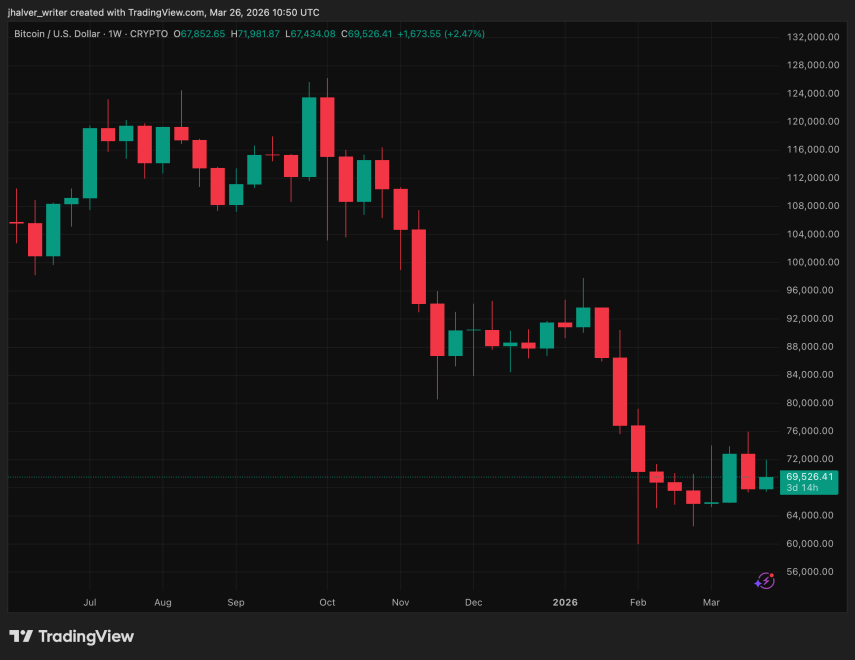
BTC’s price drops slightly after reaching $71k yesterday, trading for around $69k today. Source: BTCUSD on Tradingview

Cover image from Perplexity, BTCUSD chart from Tradingview

相关问答

QWhat is the main reason cited by Representative Seth Moulton for banning his staff from participating in prediction markets?

AMoulton believes staff should serve constituents, not profit from policy choices and global events, and views prediction markets as ethically questionable 'playgrounds for corrupt insiders'.

QWhat is the name of the bipartisan act introduced by Congressman Adrian Smith and Congresswoman Nikki Budzinski to ban trading on political prediction markets?

AThe Preventing Real-time Exploitation and Deceptive Insider Congressional Trading Act (PREDICT Act).

QWhat are the penalties for violating the PREDICT Act according to the announcement?

AA civil fine equal to 10% of the value of the banned trade, plus a requirement to hand over all profits from it to the U.S. Treasury.

QWhich earlier legislative effort targeted insider trading on platforms like Polymarket, as mentioned in the article?

ARep. Ritchie Torres's Financial Prediction Markets Public Integrity Act.

QHow might a hard ban on US officials using prediction markets affect the crypto prediction market space?

AIt could de-risk the space by reducing headline 'insider' scandals but also increase the likelihood of stricter KYC and monitoring requirements in the US.

你可能也喜欢

Dan Koe:反直觉真相,你根本不需要记住读过的一切

本文核心观点:你无需记住所有阅读内容,真正重要的知识会在需要时自然浮现。传统“记忆即学习”的观念是错误的,学习应是一个以目标为导向的反馈调节系统。 **核心问题**:多数人记不住阅读内容,是因为将“记住”当作终点,而非将知识应用于实际目标。 **有效学习路径(控制论四步闭环)**: 1. **设定清晰目标**:明确你想实现的具体状态(如“完成半马”),而非模糊愿望。 2. **诚实评估现状**:了解自己当前的真实水平。 3. **比较差距**:明确目标与现状的偏差。 4. **采取行动**:执行具体行动缩小差距。缺少明确目标,学习就会失去方向与动力。 **关键方法:从输出开始学习** 不要先系统学习,而是直接启动一个具体项目(如制作视频、弹奏一首歌)。在实践过程中遇到障碍时,再针对性学习所需知识。这种“按需抓取”的方式能让知识与真实场景深度绑定,不易遗忘。 **升级“第二大脑”,避免成为数字坟墓** 不要陷入“收藏即学会”的幻觉。知识管理的价值在于辅助产出,而非过度整理笔记。应将其建设为“第二潜意识”——一个能在你创作时主动关联并推送相关材料的动态系统,而非静态仓库。可使用工具(如Obsidian+Claude或Eden)实现自动分类与语义检索,降低管理负担。 **严格筛选输入内容** 只保存那些你愿意被其塑造、能与你的世界观融合的想法。专注于长期稳定的优质内容,并通过写作、分享等方式将外部知识内化为自身认知。让正在进行的项目作为知识的天然过滤器。 **合理利用AI** 让AI充当研究助手、编辑或灵感提供者,用于处理事实性内容、降低创作摩擦。但核心观点、价值判断与行文组织必须亲自完成,以形成不可替代的个人世界观。 **总结** 记住知识是深度应用的副产品。学习应始于具体目标与真实项目,让知识在解决问题的过程中自然沉淀。工具旨在优化流程,而非替代思考。当你为自身目标持续应用知识时,重要的内容早已融入你的能力体系。

marsbit52分钟前

Dan Koe:反直觉真相,你根本不需要记住读过的一切

marsbit52分钟前

这一届中国企业家,彻底变了

2026年夏天,中国商业史迎来标志性变化:长鑫科技登陆科创板,市值突破3万亿元;宇树科技创始人登上《时代》周刊封面;寒武纪成为科创板首家万亿市值公司;DeepSeek创始人跻身全球AI首富行列。这些事件共同揭示了中国企业家群体深刻的代际变迁。 财富版图正从互联网转向人工智能等硬科技领域。张一鸣、梁文锋、陈天石、王兴兴等70后、80后创业者成为新主角,其财富增长反映了市场对未来技术竞争力的预期。TMT行业占创富榜财富近27%,AI芯片、大模型、机器人等成为核心创富方向。 新一代企业家的创业起点从“商业模式”转向“技术突破”。陈天石从中科院走出,专注AI芯片研发,经历多年亏损终实现盈利;梁文锋以不足150人团队打造出具有全球影响力的DeepSeek大模型;朱一明立下“不盈利不领薪”军令状,带领长鑫科技在DRAM领域打破国际垄断,成为全球第四大厂商。 这种变化源于中国经济命题的转变:从“做大市场”到“做深产业”。上一代企业家奠定了城市化和互联网的基础设施,新一代则要在这些地基上实现技术原创和产业突破。他们正推动中国从技术追赶走向自主创新,在全球高端产业竞争中占据重要位置。 这不仅是财富的转移,更是国家竞争能力结构的代际交接,标志着中国进入以技术创新为核心驱动力的新发展阶段。

marsbit52分钟前

这一届中国企业家,彻底变了

marsbit52分钟前

曾经大热的Web3,进入裁员潮

2026年上半年,美国科技行业裁员近14万人,超过半数裁员事件将AI、自动化或机器学习列为理由。Web3行业作为科技与金融交叉领域,裁员潮尤为剧烈,头部交易平台及中小平台纷纷进行人员裁撤与业务收缩。 裁员过程往往突然而冷酷。有员工在毫无预警的情况下被关闭系统权限,仅通过邮箱收到裁员通知;有的交易平台每个季度裁员约10%,全年累计达40%;Coinbase印度办公室据称约90%员工被裁。许多公司选择在财年节点集中裁员,以美化财务报表。裁员补偿常不尽如人意,公司可能通过监控员工行为、设置苛刻KPI或强制考试等方式,将裁员包装成绩效淘汰,以避免支付补偿。 留任员工也承受巨大压力,工作氛围变得消极、惶恐,考核加剧,会议频繁,但产品方向模糊。管理层权术斗争激烈,底层员工成为牺牲品。公司文化往往苛刻,缺乏工作与生活平衡。 行业面临深层危机:交易平台依赖的手续费与上币收入模式难以为继,项目上币成本高昂但质量下降,散户流失,交易量萎缩。同时,链上衍生品平台兴起,进一步挤压中心化交易平台利润。去年10月的全行业大规模爆仓事件严重打击了市场信心,流动性枯竭,VC投资大幅收缩,项目方生存艰难。 被裁员工多转向AI行业,但传统金融甚至部分AI公司对Web3背景存在歧视,视其为“蟑螂旅馆”。行业内部竞争依然恶劣,有平台甚至将高薪挖角竞对员工作为KPI,数月后再裁掉,进行消耗战。 此次寒冬并非单纯周期或AI冲击所致,更源于行业自身模式弊端:高昂的上币费消耗生态、不透明的管理消耗员工信任、在寒冬中忙于内耗而非创新。Web3行业的衰败,更多是自身积累的问题爆发。

marsbit1小时前

曾经大热的Web3,进入裁员潮

marsbit1小时前

交易

现货
活动图片