Dialogue with HashKey's Xiao Feng: Digital Identity Must Be Granted to AI Agents to Enhance Trustworthiness

marsbit发布于2026-03-13更新于2026-03-13

文章摘要

In an interview, HashKey CEO Dr. Xiao Feng discussed the integration of AI and blockchain, emphasizing the need for AI Agents to have verifiable digital identities. He argued that as AI Agents like OpenClaw become more autonomous and economically active, they require independent digital identities and native wallet accounts, rather than traditional banking systems. Blockchain technology, particularly through non-fungible tokens (NFTs) and soulbound tokens, can provide these identities, ensuring security and accountability. Dr. Xiao also mentioned HashKey’s participation in the Agent Payment Protocol (AP2) alliance, which explores stablecoin payments and on-chain settlements for AI Agents. He predicted that individuals may eventually manage up to 50 AI Agents, significantly enhancing daily efficiency. Additionally, he highlighted Hong Kong’s potential to become a global digital asset hub, leveraging its unique position and resources within China’s broader technological and economic landscape.

Author: Hong Kong Wen Wei Po Reporter Chen Jianxing
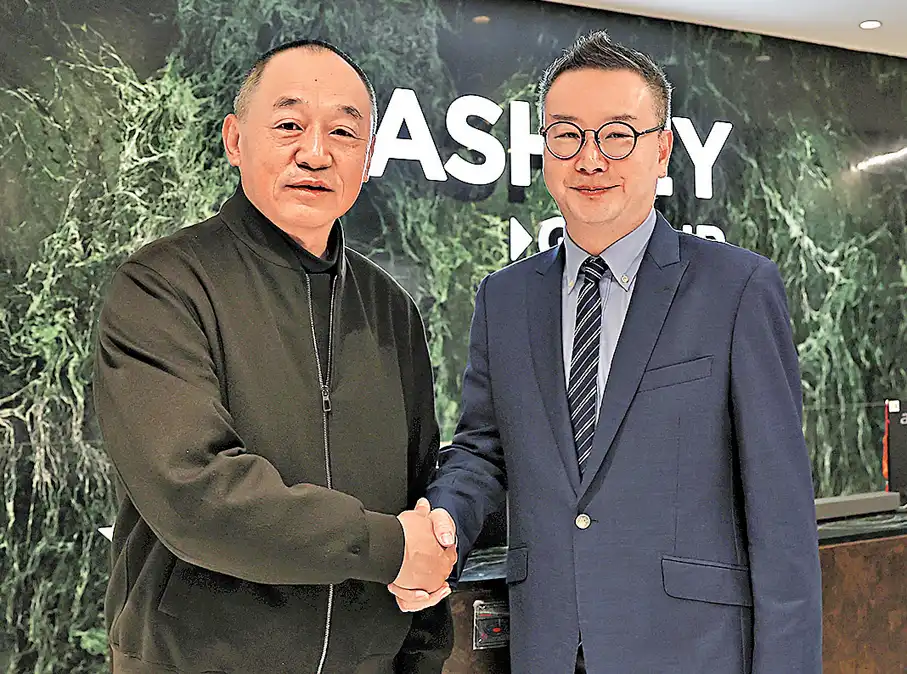
●Xiao Feng (left) recently accepted an exclusive interview with host Chen Weiming of "Jing 'Wei' Lun". Photo by Hong Kong Wen Wei Po reporter Wan Shuangling

AI and blockchain share an "integral and dual-faceted" relationship. With the viral popularity of AI Agent OpenClaw, AI can autonomously work for humans and replace certain tasks, but it also highlights the security issues of AI Agents. Granting them a digital identity through blockchain is one effective method to manage AI Agents. HashKey Chairman and CEO Xiao Feng stated in a recent interview with "Jing 'Wei' Lun" that he is not an AI technology expert, but from the perspective of blockchain and digital financial infrastructure, AI and encryption technologies are gradually moving towards deep integration. With the rapid rise of cutting-edge AI agents like OpenClaw, future AI Agents may no longer be just tools but economic entities requiring independent "identities" and "native wallet accounts." Blockchain technology is precisely the key tool to bind digital identities to AI agents.

Discussing the identity system of AI agents, Xiao Feng believes that all AI Agents will have independent "identities" in the future. However, this "identity" will not follow the real-world ID system but will be achieved through blockchain-based addresses and Soulbound Tokens, which is a technically suitable solution. He pointed out that it is impractical for AI agents to adopt the human ID system of the real world and mentioned that the concept of "Soulbound Token" was proposed by the founder of Ethereum seven years ago, which is an extension of the concept of "Non-Fungible Token (NFT)" when it first emerged. Since each NFT is unique, through NFT and blockchain technology, a digital identity can be bound to each AI agent.

"If AI Agents begin to operate independently from humans and create economic value, they will certainly need an account. Currently, the only suitable form appears to be a digital wallet, not an account opened by a bank for the Agent," Xiao Feng said. He explained that during the AI large model phase, tokens purchased by users through traditional bank accounts can be consumed to call services of large models developed in China. However, when it comes to free payment scenarios between Agents, the traditional bank account system cannot support it due to limitations such as restrictions on the number of accounts for multiple agents, unclear responsibility attribution, high payment costs, and low operational efficiency. It is reported that HashKey Group has joined the Agent Payment Protocol (AP2) technology alliance initiated by Google, collaborating with institutions like PayPal, Circle, and UnionPay International to explore the AI Agent payment system and research applications such as stablecoin payments, on-chain identity, and on-chain settlement for AI Agents.

In the Future, Each Person May Have 50 AI Agents

Xiao Feng pointed out that in recent exchanges with AI experts and scholars, a consensus has generally formed that AI and encryption technologies (blockchain/cryptocurrency) are integral and dual-faceted, and the two will eventually deeply integrate, mutually empowering and complementing each other. He further cited the views of AI experts, noting that in the future, each person may have up to 50 AI Agents. These agents will seamlessly permeate all aspects of our lives, from daily trivial matters to complex decisions, significantly enhancing personal efficiency and quality of life.

Hong Kong Has the Conditions to Become the "Wall Street" of Digital Finance

Facing global competition amid the AI boom, Xiao Feng believes that Hong Kong possesses the unique advantage of "relying on the motherland." By leveraging this advantage effectively, Hong Kong can occupy a central position in the global digital economy landscape. He pointed out that in the three major fields of the internet, blockchain, and artificial intelligence, China and the United States basically dominate. As part of China, Hong Kong can fully leverage the vast talent resources, asset resources, and technological resources of the mainland, which is a unique advantage difficult to replicate elsewhere in the world. With its positioning as a "super connector" and the institutional advantages of common law under "one country, two systems," Hong Kong is fully capable of achieving the SAR government's goal of building a "global digital asset center." It may even promote the evolution of the global financial landscape from the previous "New York-London-Hong Kong" pattern to a "New York-Hong Kong-London" pattern, further elevating Hong Kong's status in the global financial system.


相关问答

QWhat is the core relationship between AI and blockchain technology according to Dr. Xiao Feng?

ADr. Xiao Feng views AI and blockchain as having an 'integral and two-sided' relationship. He believes they are gradually moving towards deep integration, where they empower and complement each other.

QHow does Dr. Xiao Feng propose to establish a digital identity for AI Agents?

AHe proposes using blockchain technology to bind a digital identity to each AI Agent. This would be achieved not through real-world ID systems, but through a blockchain-based address and a Soulbound Token (SBT), an extension of the Non-Fungible Token (NFT) concept, which is unique and non-transferable.

QWhy is a traditional bank account system unsuitable for AI Agent transactions, and what is the proposed alternative?

AThe traditional bank account system is unsuitable due to limitations on the number of accounts that can be opened for multiple agents, unclear liability, high payment costs, and low operational efficiency. The proposed alternative is a digital wallet, which is the only currently adaptable form for an AI Agent to have an independent account for economic activities.

QWhat role is HashKey Group playing in the development of the AI Agent payment system?

AHashKey Group has joined the Agent Payment Protocol (AP2) technical alliance initiated by Google. They are collaborating with institutions like PayPal, Circle, and UnionPay International to explore the AI Agent payment system, researching applications such as stablecoin payments, on-chain identity, and on-chain settlement for AI Agents.

QWhat advantage does Hong Kong have in the global AI and digital finance competition, according to the article?

AHong Kong's advantage is its unique position of 'backing from the motherland.' It can leverage the vast talent, asset, and resources from mainland China. Combined with its role as a 'super connector' and the institutional advantages of common law under 'one country, two systems,' Hong Kong is poised to become a global digital asset center and potentially reshape the global financial landscape.

你可能也喜欢

如何用 Claude 的 Dynamic Workflows 做深度研究

做技术调研容易陷入信息过载和结论模糊的陷阱。AI虽执行力强,但易困于当前信息且跨界联想弱。Claude近期推出的Dynamic Workflows(动态工作流)功能,旨在通过AI自动设计并执行任务流程来提升深度研究能力。 其核心是六种工作流模式:1) 路由模式:由主Agent判断任务类型并分发给最专业的子Agent处理,精准高效但处理模糊任务能力弱;2) 拆分合并模式:将任务拆分为多个独立子任务并行执行后合并结果,速度快但Token成本高,合并有挑战;3) 对抗验证模式:让多个Agent从反驳角度挑战同一结论,基于多数票通过,能有效减少确认偏误,但需基于事实而非观点;4) 生成与过滤模式:先生成大量候选方案,再用预设标准筛选出最优,能提升多样性,但过滤标准至关重要;5) 锦标赛模式:多个Agent竞争同一任务,通过两两对比逐轮淘汰选出最优,评判更稳定;6) 循环模式:通过自适应迭代不断尝试直至满足条件,擅长处理边界未知的任务,但有失控风险。 相较于作者自建的深度研究技能,官方的动态工作流增加了关键环节:问题拆解、信息可信度评估、交叉删除(投票淘汰而非简单合并)以及目标导向的输出。这有效解决了AI长任务中的目标漂移、过早停止、上下文污染和输出偏向等问题。 总之,Dynamic Workflows将研究流程本身结构化,通过多Agent的智能调度,显著提升了研究的效率和结论的可靠性,将以往可能需要十几次对话的调研压缩到3-4次,尽管Token消耗大幅增加。但它仍有局限:在验证机制上可能过于依赖官方文档而非事实数据;对于完全跨界、数据不足的深度思考支持有限;在解决方案的验证与成本权衡上仍有不足;在针对不同受众进行信息极致浓缩方面也需进一步优化。

marsbit45分钟前

如何用 Claude 的 Dynamic Workflows 做深度研究

marsbit45分钟前

当LP用豆包教我投资:一位私募GP的转行自述

文章标题:当LP用豆包教我投资:一位私募GP的转行自述 摘要: 本文通过一位前小型私募美元基金普通合伙人(GP)“二狗”的转行经历,探讨了AI工具普及对私募基金行业,特别是采用主观策略的小型基金与有限合伙人(LP)之间关系的冲击。 二狗指出,小型美元私募基金本就面临募资困境,原因包括其采用的“原始”开曼架构对亚洲LP吸引力不足,以及量化策略基金(尤其是AI赋能后)更受市场青睐。AI的普及进一步加剧了这一挑战。过去,GP的核心价值在于为LP提供专业的研究和决策支持。如今,AI工具实现了“信息平权”,LP能轻易获取分析并质疑GP的判断,导致双方摩擦增加,甚至引发撤资。 文章以二狗清退一位使用AI结论频繁质疑其操作的LP为例,说明了这种新型矛盾。LP群体“成分复杂”,包括高净值个人、企业主等,他们在AI辅助下,有时会过度自信,特别是在牛市散户收益可能超越基金时,更容易动摇对GP的信任。 然而,二狗认为问题关键不在于AI能力,而在于多数LP并未正确使用它。他们可能依赖“豆包”等陪伴式AI,这些工具为提供情绪价值可能产生“机器幻觉”,其逻辑自洽的分析未必符合事实。投资者往往是在寻求认同而非真相。 最终,AI未必会完全取代GP,因为资产管理本质是基于信任的服务业。但行业需适应变化:GP应善用AI提升自身,同时,在AI追求效率最大化的未来,“人类私募”或许也需要加强提供情绪价值的能力。

Odaily星球日报1小时前

当LP用豆包教我投资:一位私募GP的转行自述

Odaily星球日报1小时前

交易

现货
合约

热门文章

如何购买S

欢迎来到HTX.com!我们已经让购买Sonic(S)变得简单而便捷。跟随我们的逐步指南,放心开始您的加密货币之旅。第一步:创建您的HTX账户使用您的电子邮件、手机号码注册一个免费账户在HTX上。体验无忧的注册过程并解锁所有平台功能。立即注册第二步:前往买币页面,选择您的支付方式信用卡/借记卡购买:使用您的Visa或Mastercard即时购买Sonic(S)。余额购买:使用您HTX账户余额中的资金进行无缝交易。第三方购买:探索诸如Google Pay或Apple Pay等流行支付方法以增加便利性。C2C购买:在HTX平台上直接与其他用户交易。HTX场外交易台(OTC)购买:为大量交易者提供个性化服务和竞争性汇率。第三步:存储您的Sonic(S)购买完您的Sonic(S)后,将其存储在您的HTX账户钱包中。您也可以通过区块链转账将其发送到其他地方或者用于交易其他加密货币。第四步:交易Sonic(S)在HTX的现货市场轻松交易Sonic(S)。访问您的账户,选择您的交易对,执行您的交易,并实时监控。HTX为初学者和经验丰富的交易者提供了友好的用户体验。

2.5k人学过发布于 2025.01.15更新于 2026.06.02

如何购买S

相关讨论

欢迎来到HTX社区。在这里,您可以了解最新的平台发展动态并获得专业的市场意见。以下是用户对S(S)币价的意见。

活动图片