According to a new report from Delphi Digital, crypto platforms are quietly morphing into distribution layers for everything from trading and payments to onchain apps and yield.
The “superapp” vision that reshaped consumer finance in Asia is now colliding with Western UX preferences and clearer regulation, and exchanges are betting that whoever controls the primary interface will control the next wave of users.
The aggregation era arrives
The report concludes that crypto is entering an “aggregation era,” where the real power no longer sits with base protocols but with whoever owns the user relationship. In other words, the place where people first log in, move money, and discover products.
In that world, exchanges and large platforms are racing to become the default gateway; the app that distributes liquidity, order flow, stablecoins, staking, non-fungible tokens, gaming, and so on.
Related: Binance hints at stock perps in push to join global tokenized equities race
Binance’s one‐app strategy
Delphi highlights Binance as the clearest example of the monolithic superapp play, arguing it mirrors the WeChat‐style “one interface, infinite utility” model.
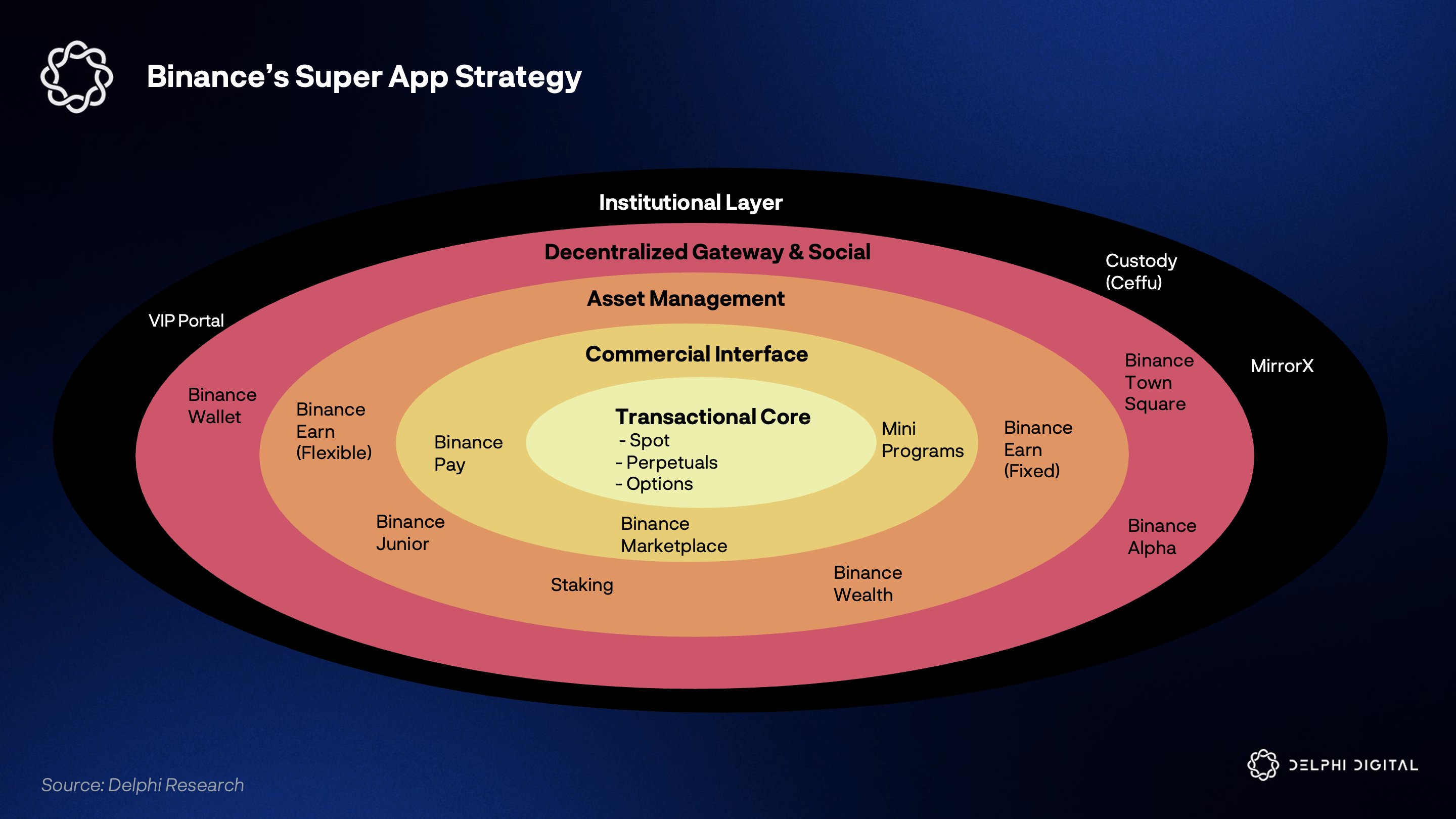
What began as a pure trading venue has steadily swallowed adjacent behaviors: spot and derivatives trading, Earn products, lending and staking, payments via Binance Pay, a Web3 wallet, and institutional services, all nested inside one dense interface.
Related: Binance’s new ‘Junior’ app draws mixed reactions over kids entering crypto
Kraken’s constellation approach
By contrast, Delphi describes Kraken as pursuing a federated “constellation” model built on a shared spine of liquidity, custody, and identity.
Instead of forcing every user into one crowded app, Kraken is rolling out specialist front ends: Inky, an entertainment‐first memecoin app; Krak, remittances and payments with stablecoins and yield, and Kraken Pro for classic, deep‐chart trading.
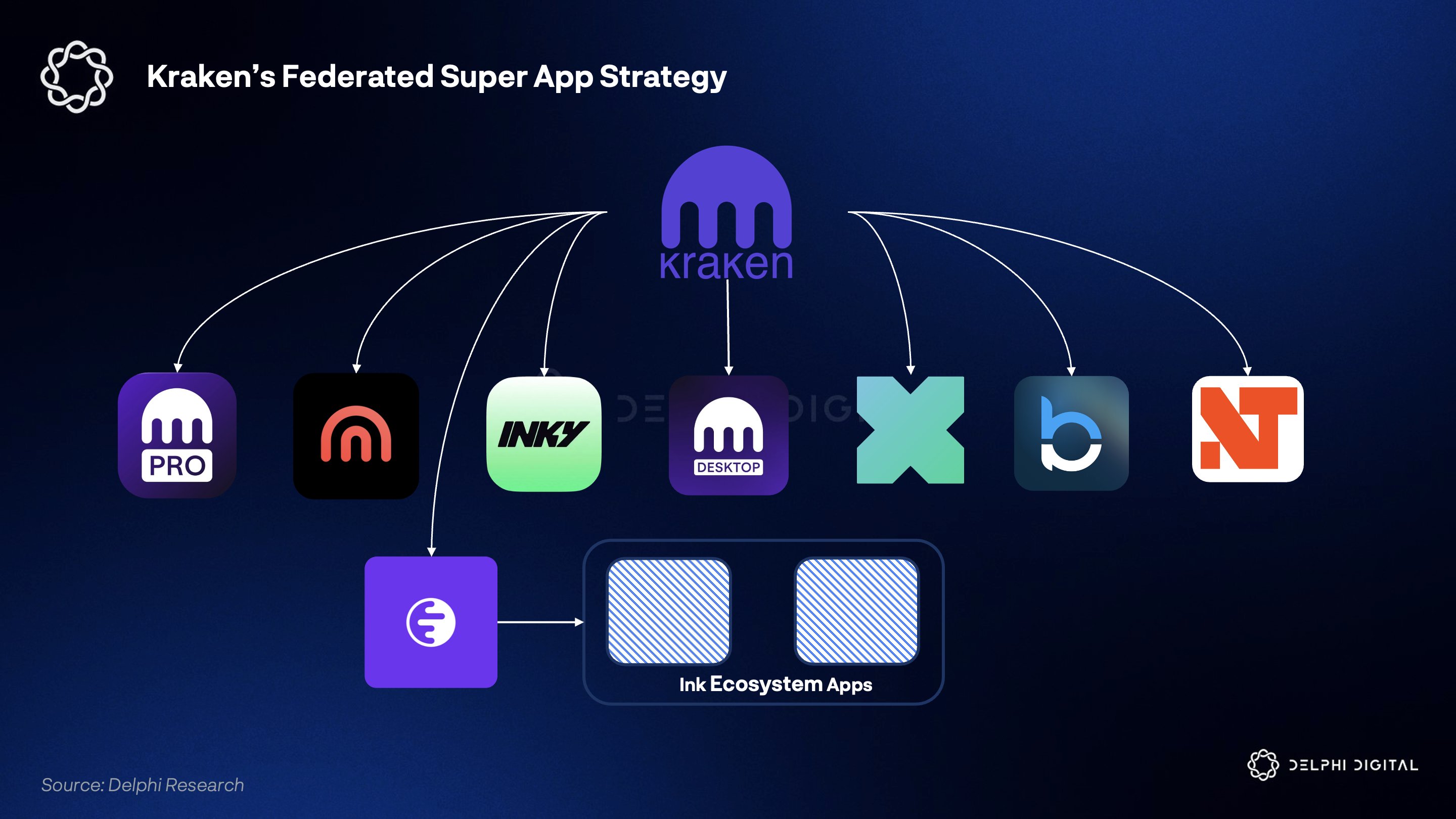
The idea, according to Delphi, is to unbundle the UI but rebundle everything behind the scenes, so Kraken remains the underlying distribution rail even as user experiences fragment.
Related: Kraken adds Backed Finance to 2025 acquisition streak, brings xStocks in-house
How Coinbase, OKX, and others fit in
Delphi found that other majors are edging toward the same distribution‐layer role, even if they avoid the “superapp” label.
Coinbase has pushed deeper into smart wallets, onchain discovery, staking, and payments, positioning itself as a regulated, consumer‐friendly hub for both trading and Web3 access.
OKX, Bybit, and others are pairing centralized trading with in‐app Web3 wallets, NFT markets, and DeFi access, effectively bundling onchain rails around their existing user bases.
Related: Standard Chartered, Coinbase deepen alliance to build institutional crypto infrastructure
What’s at stake?
Delphi argues that beneath the product launches is a bigger fight over who controls discovery for third‐party apps and protocols, and how regulators classify these platforms.
A single, all-in-one superapp consolidates risk and oversight in one place, offering unmatched convenience. A federated, multi‐app model spreads out user interfaces while keeping control of the plumbing.
Whichever design wins could go a long way to deciding who becomes crypto’s default distribution layer in the next cycle, and on whose terms the next hundred million users join.