Bitcoin volatility hits the roof after 12K BTC whale inflows in ONE day!

ambcrypto发布于2026-02-13更新于2026-02-13

文章摘要

After months of sideways movement, Bitcoin's price volatility has surged significantly, with sharp swings observed between February 5-6. The cryptocurrency dropped 14.3% before rebounding 12.2%, triggering heavy liquidations on both long and short positions. This increased volatility is reflected in rising 30-day and 180-day volatility metrics, indicating a shift from the previous calm market phase. Large Bitcoin holders (whales) have been moving substantial amounts of BTC to exchanges, with average monthly inflows jumping from 1,000 BTC to nearly 3,000 BTC. A notable spike occurred on February 6 alone, with approximately 12,000 BTC transferred to exchanges—a sign often associated with preparation for selling. Since February 1, there have been seven days with whale inflows exceeding 5,000 BTC, frequency that is unusually high and typically seen during market tops or panic sell-offs. At the time of writing, Bitcoin was trading at $67,800, well below its 20-day moving average near $77,000. The RSI remained below 40, indicating continued downward momentum, while the DMI suggested bearish control. The weak bounce from the $60,000 support zone, combined with elevated whale selling pressure, points to fragile market conditions. Bulls face significant challenges in stabilizing the trend.

After months of sideways action, Bitcoin [BTC] price swings are getting bigger and faster. Meanwhile, large holders are sending more BTC to exchanges, which usually means they may be getting ready to sell.

Here’s what you need to know.

The calm phase is over

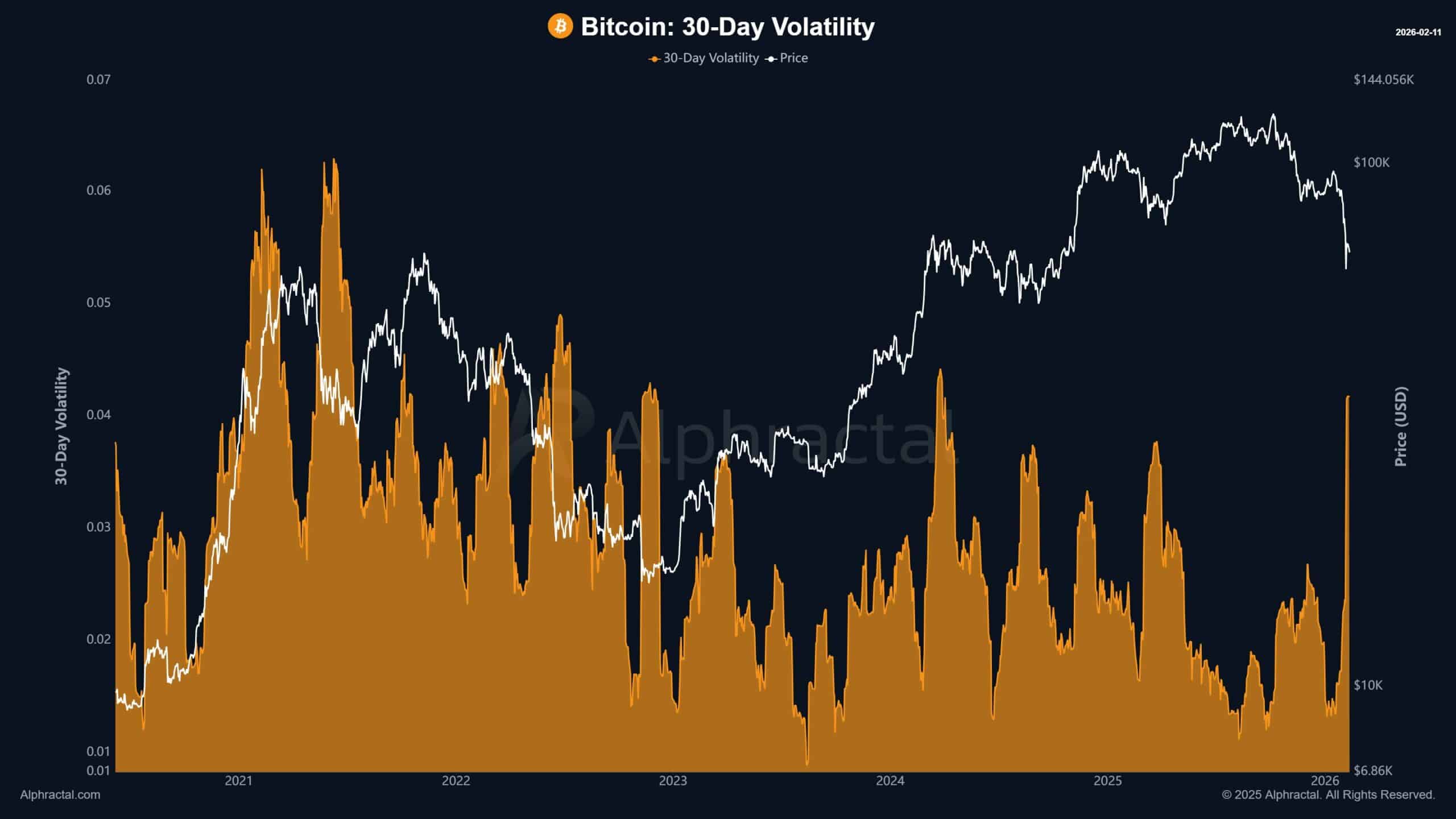
Source: Alphractal

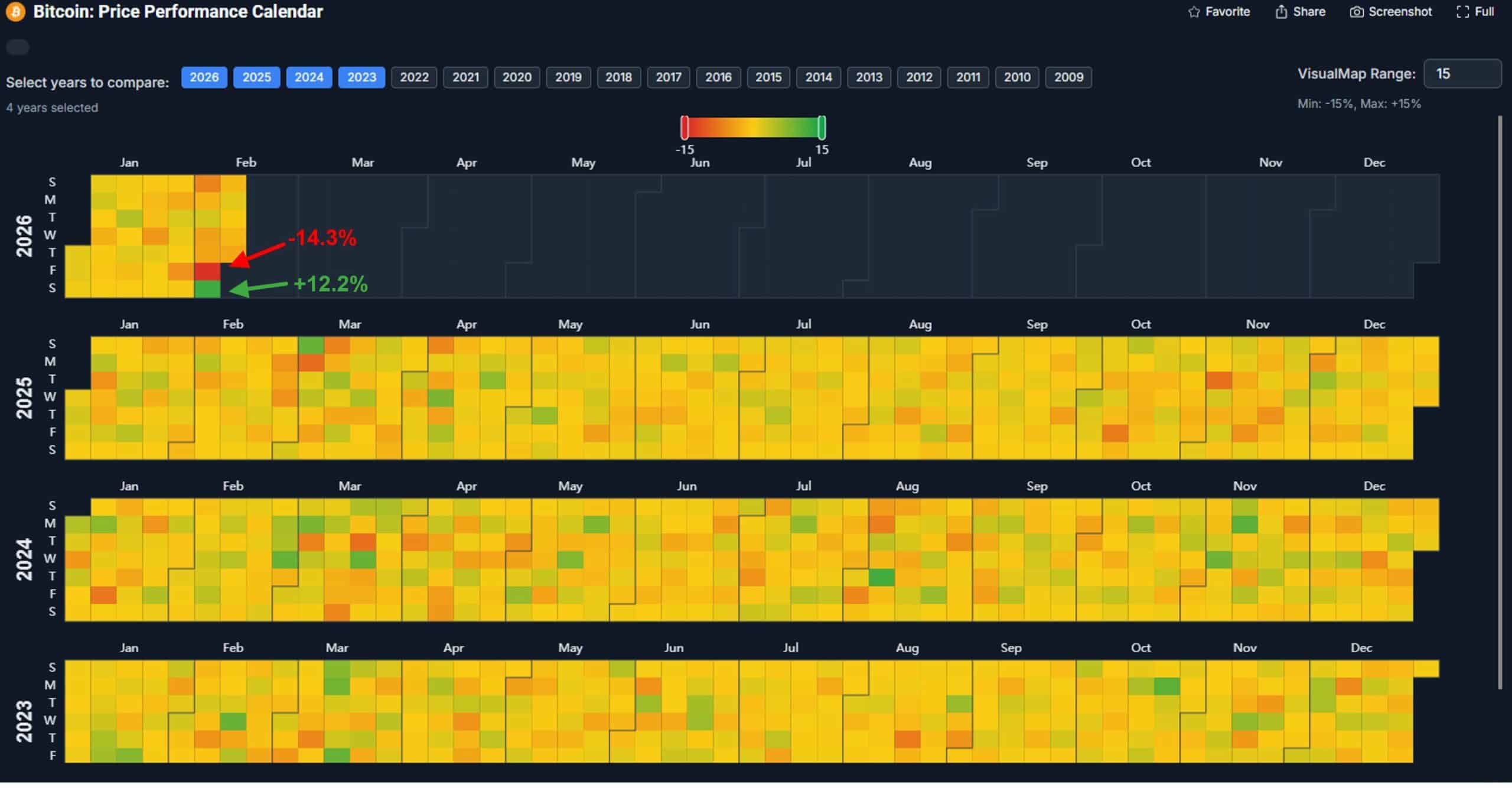
According to Alphractal, the biggest swings happened between 5-6 February.

The world’s largest cryptocurrency dropped by 14.3%, then quickly bounced back by 12.2%. Moves like this usually mean heavy liquidations on both long and short positions.

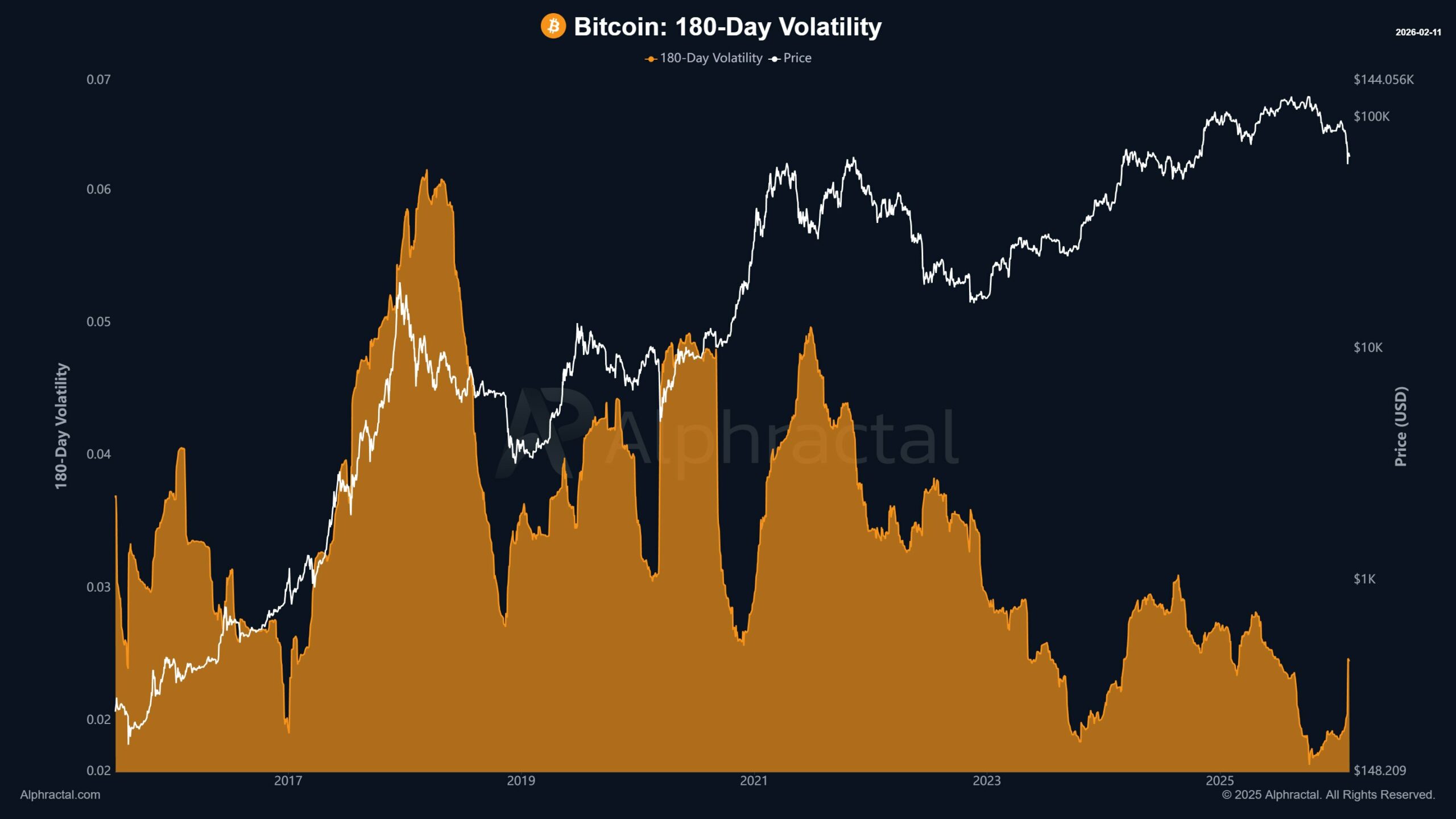
Source: Alphractal

Following this shakeout, both 30-day and 180-day volatility charts moved higher – which isn’t anything out of the ordinary. When volatility stays low for weeks or months, the price often reacts in a sudden and aggressive way.

Source: Alphractal

This could also be a warning for leveraged traders. Positions can be wiped out quickly on both sides during heavy swings like this. Risk increases quickly.

Whales feel the heat

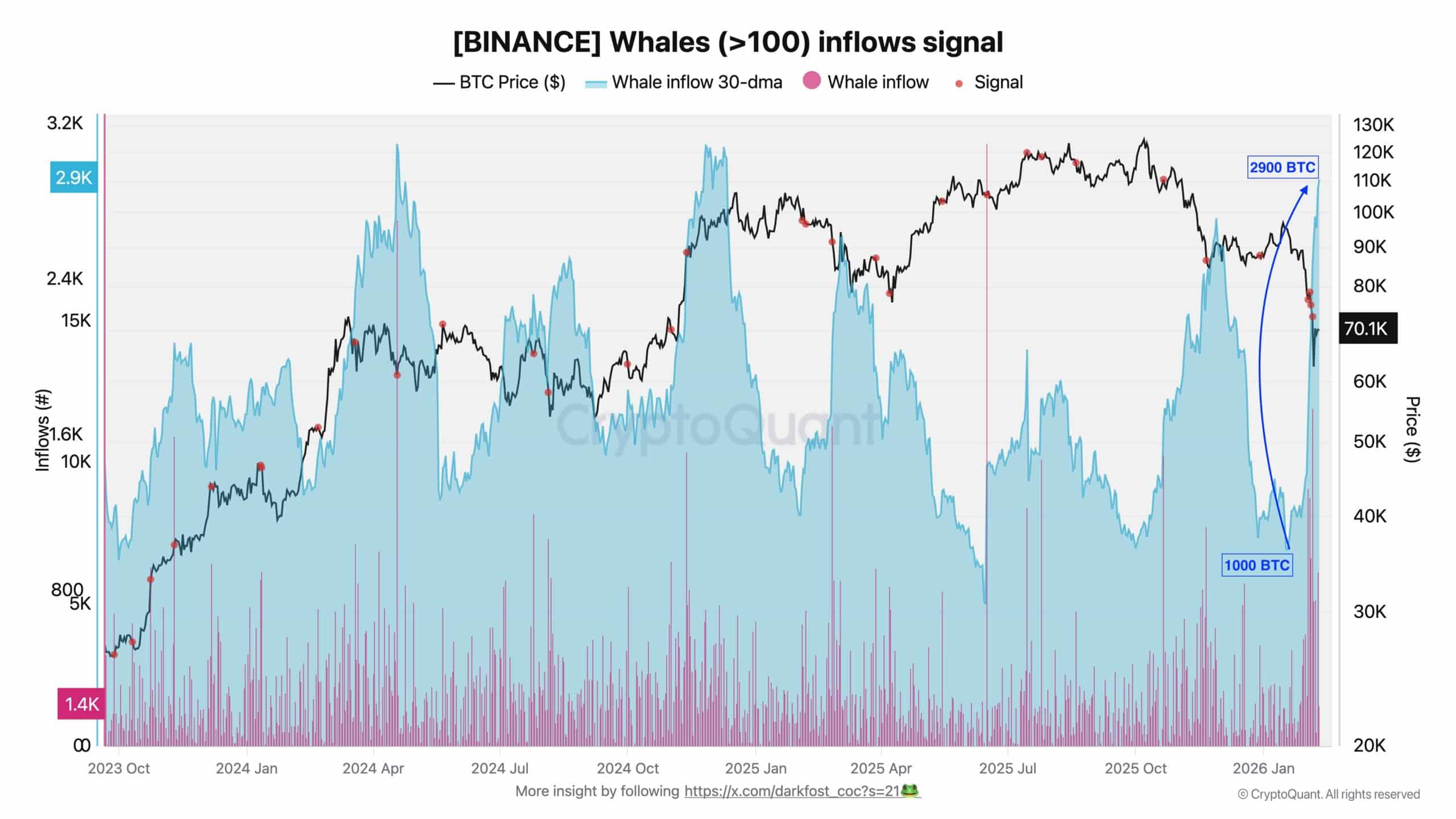
Data tracking Binance inflows from large holders (100+ BTC) highlighted a rise in coins moving to exchanges as Bitcoin fell from $95k to near $60k.

Average monthly inflows climbed from around 1,000 BTC to nearly 3,000 BTC. There was a massive spike of about 12,000 BTC on 06 February alone.

Source: Cryptoquant

Since 01 February, seven trading days have recorded more than 5,000 BTC in daily whale inflows. That’s unusually frequent.

Spikes like these usually appear during both market tops and panic sell-offs. Right now, more people are selling – Something that is worrying as there might be less money flowing in the market.

Is pressure still building?

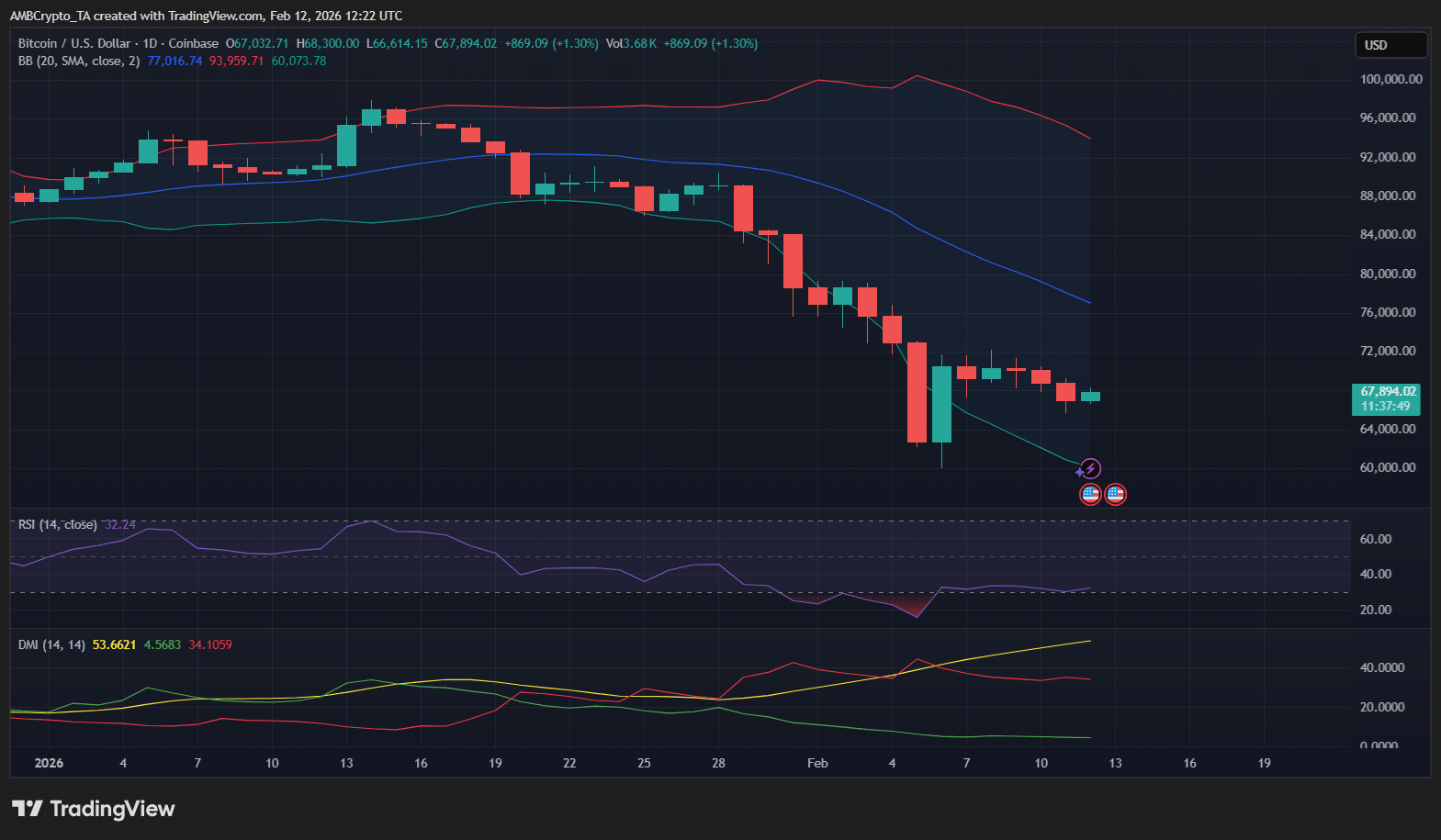
At the time of writing, Bitcoin was trading well below its 20-day MA near $77,000, with the crypto valued at $67,800. Here, it’s worth noting that the drop towards the $60,000-zone was followed by only a weak bounce.

Source: TradingView

The RSI was below 40, so the pace was still tilted to the downside. Meanwhile, the DMI highlighted bearish control, with the negative trend line firmly above the positive one.

So, here’s the verdict – Volatility has returned, whales are active, and the trend might be fragile.

Simply said, market bulls still have some work to do.


Final Thoughts

  • Bitcoin volatility has been rising fast, with whale inflows indicating sell-side pressure.
  • In bearish conditions, the $60k-zone will be a key level to watch.
Next: Binance shifts $1B SAFU fund into Bitcoin – Is BTC’s bottom forming?
Share
  • Share
  • Tweet

热门币种推荐

相关问答

QWhat caused Bitcoin's volatility to increase significantly in early February?

ABitcoin's volatility increased due to heavy liquidations on both long and short positions, with the cryptocurrency dropping 14.3% and then bouncing back 12.2% between 5-6 February.

QHow much BTC did large holders send to Binance on February 6th alone?

ALarge holders sent approximately 12,000 BTC to Binance on February 6th alone.

QWhat does the spike in whale inflows to exchanges typically indicate?

ASpikes in whale inflows to exchanges typically indicate either market tops or panic sell-offs, and currently suggest increased selling pressure.

QWhat key technical level should be watched in bearish conditions according to the article?

AThe $60,000-zone should be watched as a key level in bearish conditions.

QWhat do the RSI and DMI indicators suggest about Bitcoin's trend at the time of writing?

AThe RSI was below 40 indicating downward momentum, and the DMI showed bearish control with the negative trend line firmly above the positive one.

你可能也喜欢

如何让自己变得让人工智能永远也无法取代

面对人工智能的冲击,许多人担心工作被取代。然而,真正的威胁在于个人对他人和系统的依赖,以及由此产生的“薪资奴役”——即为生存而从事无意义、枯燥的工作。摆脱这种困境的关键,不是抵制技术,而是成为拥有高自主性的“不可受雇”个体。 文章提出了成功抵御AI替代的五个核心要素:自主性(主动行动的能力)、品味(判断事物价值的经验)、说服力(让他人关注你工作的能力)、毅力(坚持并从错误中学习)和迭代(根据反馈持续改进)。这些能力无法仅通过理论学习获得,必须通过实践来培养。 要启动转变,首先要彻底改变环境,重塑身份认同。其次,应选择一个能获得真实、快速反馈的实践领域,例如创业。在众多技能中,内容创作(媒体)比编写代码更具优势,因为其价值是主观的,需要独特的审美和判断力,这正是AI目前难以完全复制的。 具体行动上,可以从三个步骤开始: 1. **挖掘原始素材**:反思自己长期痴迷的知识领域、轻松解决的难题或童年被压抑的兴趣,找到独特的个人经验。 2. **确立反向思考主轴**:找出你坚信但主流观点错误的地方,或行业内普遍忽视的“皇帝新衣”,形成独特的批判性视角。 3. **立即发布**:将前两步的思考融合,撰写并发布第一个核心内容(如帖子、视频),勇敢接受真实世界的反馈,并在此基础上持续学习和迭代。 最终,抵御AI的关键在于构建一份与自身身份深度契合的毕生事业,通过持续的内容创作和真实互动,建立无法被自动化取代的独特价值和影响力。行动,从今天发布第一个想法开始。

marsbit2小时前

如何让自己变得让人工智能永远也无法取代

marsbit2小时前

通过掷骰子离线保管比特币密钥:并非人人愿意为之

文章探讨了通过投掷骰子生成比特币钱包种子短语的安全方法及其现实挑战。核心观点如下: **1. 骰子提供物理熵源** 骰子结果由众多微小变量决定,理论上虽可预测,但实践中无法被攻击者复制或计算,从而提供高质量的随机性。每个六面骰子投掷约产生2.585比特熵,50次投掷即可满足典型12词助记词(128比特熵)的安全需求。 **2. Coldcard漏洞事件凸显手工熵源的价值** 近期Coldcard硬件钱包因固件漏洞导致其内部随机数生成器存在缺陷,致使约1128枚比特币被盗。但那些**完全**通过足量骰子投掷生成种子短语的用户未受此漏洞影响,因为他们的主密钥未使用有缺陷的生成器。 **3. 重要警示:手工种子并非万能保护** 安全研究员指出,即使用户使用骰子生成了安全的种子,若他们使用了Coldcard的其他功能(如生成纸钱包、克隆密钥、共享签名密钥、密码等),这些**衍生密钥**仍可能调用有漏洞的随机数生成器,从而存在风险。安全种子不保证设备生成的所有秘密都安全。 **4. 手工生成熵源的现实局限性** 尽管数学上可靠,但该方法对大多数用户并不友好: * **过程繁琐易错**:需投掷50-99次,精确记录,任何输入错误都会导致钱包完全不同。 * **引入新风险**:用户可能在记录、转换过程中泄露信息,或使用有偏的骰子/投掷方式。 * **用户体验差**:难以想象大规模推广需要用户手动投掷近百次骰子。安全措施需适应现实生活场景和普通用户的知识水平。 **5. 给用户的建议** 受影响的Coldcard用户应: * 更新固件至最新版。 * 检查是否使用过有漏洞的功能生成了次级密钥或密码,如有则需立即更换。 * 考虑采用多签方案,使用不同厂商的设备分散风险。 **结论**:手工投掷骰子生成熵源是技术娴熟用户的一个有效安全选项,但其过程复杂、容易出错,不适合作为主流用户的默认方法。长远目标是依赖安全、透明且无需专业知识的硬件/软件随机数生成方案。

cryptonews.ru5小时前

通过掷骰子离线保管比特币密钥:并非人人愿意为之

cryptonews.ru5小时前

交易

现货

热门文章

加密市场宏观研报:《GENIUS Act》法案取得重大进展,BTC突破历史新高,后市全新展望

2025年5月22日,比特币价格正式突破11万美元大关,创下历史新高。在政策面、宏观经济、资金面与投资者结构共同作用下,一场结构性牛市浪潮正在展开。而此轮上涨背后的核心驱动,是美国《GENIUS稳定币法案》的实质性进展以及多项利好的叠加。本文将从政策端突破、宏观环境转向、链上与ETF资金结构、交易行为演化,以及重点受益赛道五大维度,全面解析此轮BTC再创新高的深层逻辑,并前瞻下半年市场的潜在趋势。

1.8k人学过发布于 2025.05.22更新于 2025.05.22

加密市场宏观研报:《GENIUS Act》法案取得重大进展,BTC突破历史新高,后市全新展望

相关讨论

欢迎来到HTX社区。在这里,您可以了解最新的平台发展动态并获得专业的市场意见。以下是用户对BTC(BTC)币价的意见。

活动图片