Bitcoin slipped to around $78K after a big selling event hit the crypto market. The drop was caused by heavy leverage and thin liquidity, causing forced liquidations and a fast fall in prices.
A drop of liquidity, not the news
- Share
- Tweet
-
ambcrypto发布于2026-02-01更新于2026-02-01
Bitcoin dropped to around $78,000 due to a significant market sell-off driven by heavy leverage and thin liquidity, resulting in approximately $1.3 billion in forced liquidations. The decline was not primarily caused by external factors like geopolitics but rather by a lack of market liquidity, which amplified the downturn. As leveraged positions were automatically closed, prices fell rapidly due to insufficient buyer support, and bearish sentiment further accelerated the sell-off. The crypto market decline coincided with a broader global sell-off, where over $12 trillion was wiped from markets within 48 hours. Precious metals like gold and silver saw sharp declines after rapid rallies, and equities also fell. Margin calls and increased exchange margin requirements exacerbated the selling pressure. Technical analysis indicates Bitcoin traded below its major moving averages for the first time since 2022, suggesting continued volatility. Experts recommend cautious capital management, such as dollar-cost averaging, rather than deploying all funds at once during such periods.
Bitcoin slipped to around $78K after a big selling event hit the crypto market. The drop was caused by heavy leverage and thin liquidity, causing forced liquidations and a fast fall in prices.
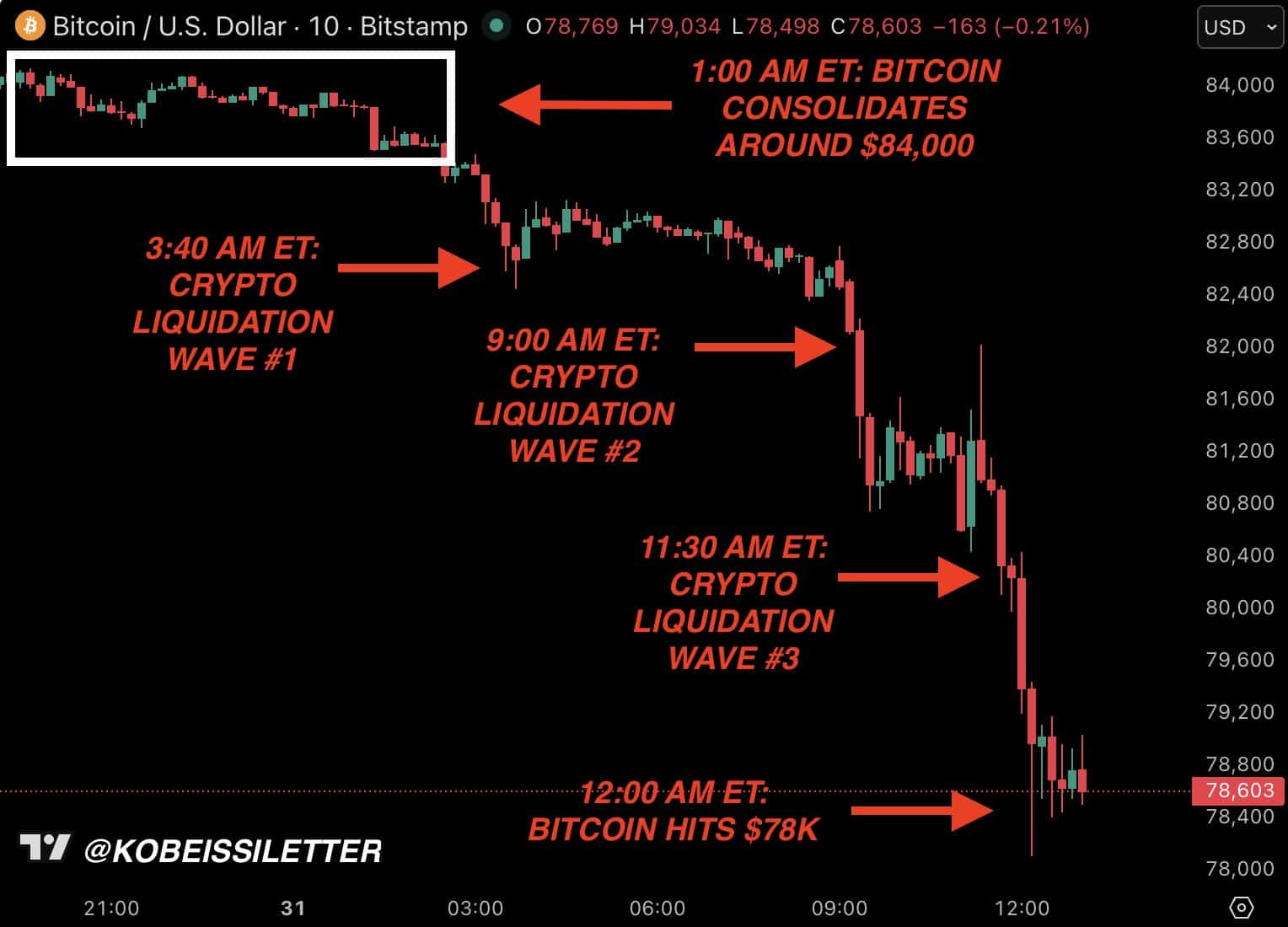
A lot of factors are being thrown around for today’s crypto selloff, from geopolitics to central banks. But the flow data shared by The Kobeissi Letter on X draws it down to one simple reason.
The market just ran out of liquidity.
Source: X
Bitcoin’s freefall state happened alongside three distinct liquidation events over about 12 hours, wiping out roughly $1.3 billion in positions. Each wave pushed prices lower as leveraged trades were automatically closed.
When liquidity is thin, heavy leverage leaves very little room for error. Prices can fall quickly because there aren’t enough buyers stepping in. Once liquidations start, they cause more selling, which pushes prices down even faster.
Crowd behavior amplified this.
As sentiment went bearish, traders rushed to the exit at the same time. A response like that stretches far beyond what the fundamentals alone would tell you.
According to Bull Theory, more than $12 trillion was wiped out from global markets in just 48 hours, as metals and equities sold off at the same time.
Precious metals took the hardest hit: gold fell over 16%, silver nearly 39%, and platinum and palladium dropped sharply as well. Equities followed, with losses across major U.S. indices.
Metals had rallied too far, too fast.
Silver, for example, had posted nine straight green monthly candles. That’s something we’ve never seen before.
Prices attracted late buyers using leverage.
When prices turned, margin calls kicked in, and it caused selling. Exchanges then raised margin requirements, which poured fuel on the fire. Traders were forced to post more collateral in falling markets, leading to even more liquidations.
A sudden shift in Federal Reserve leadership expectations (which removed a key bullish narrative) added to the unwind.
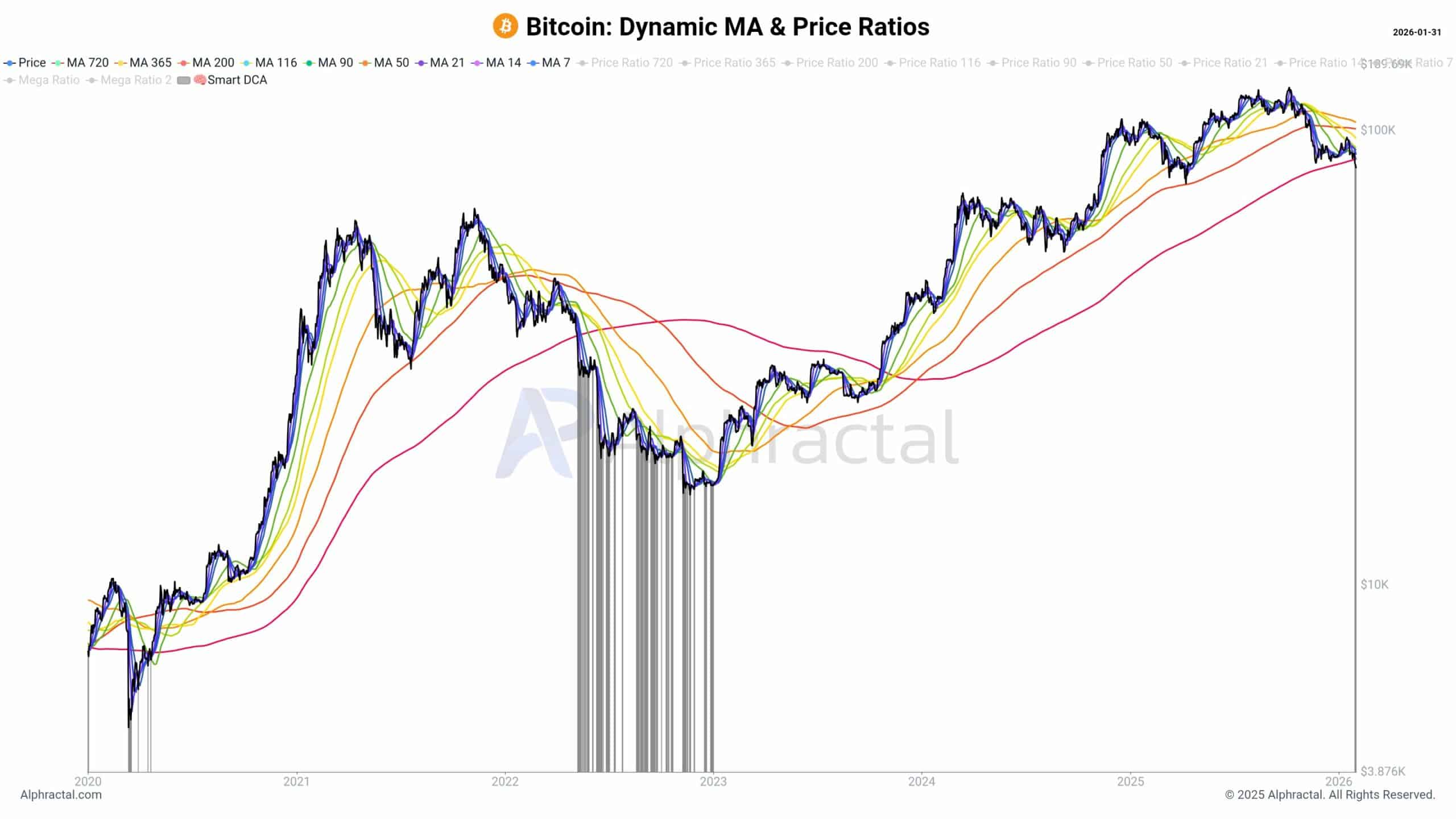
Source: Alphractal
According to Alphractal CEO Joao Wedson, Bitcoin [BTC] traded below its major moving averages for the first time since 2022. Price is going beneath long-term trend lines that often mean broader phases.
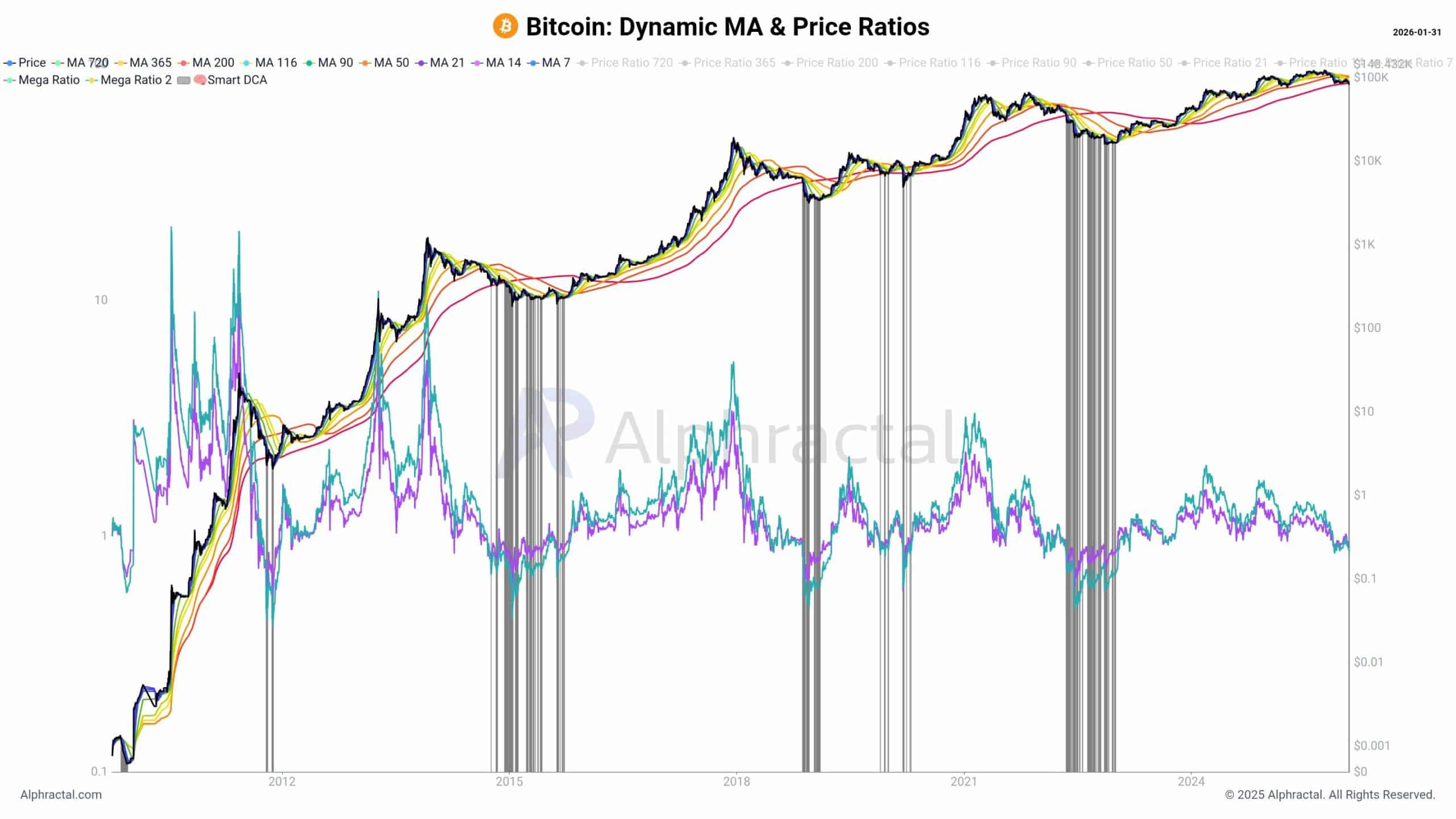
Source: Alphractal
This has so far been an early buying zone, with these phases lasting months! For more conservative investors, this is where gradual dollar-cost averaging has worked best.
Wedson noted that the key is capital management. Deploying everything at once rarely pays off in periods like this.
Instead, past cycles have said to hold back some cash and add exposure slowly. This is especially when fear is abound and most people expect things to get worse.
QWhat was the primary cause of Bitcoin's sharp drop to $78,000 according to the article?
AThe drop was primarily caused by heavy leverage and thin liquidity, which led to forced liquidations and a rapid decline in prices.
QHow much in leveraged positions was wiped out during Bitcoin's three liquidation events?
ARoughly $1.3 billion in leveraged positions was wiped out during the three liquidation events over about 12 hours.
QBeyond the crypto market, what other assets experienced significant losses according to Bull Theory?
APrecious metals and equities experienced significant losses, with over $12 trillion wiped out from global markets in 48 hours. Gold fell over 16%, silver nearly 39%, and platinum and palladium dropped sharply.
QWhat key technical indicator did Bitcoin break below for the first time since 2022?
ABitcoin traded below its major moving averages for the first time since 2022, breaking beneath long-term trend lines that often indicate broader market phases.
QWhat investment strategy does the article suggest for conservative investors during this volatile period?
AThe article suggests gradual dollar-cost averaging as the best strategy for conservative investors, holding back some cash and adding exposure slowly during periods of high fear and volatility.
2025年5月22日,比特币价格正式突破11万美元大关,创下历史新高。在政策面、宏观经济、资金面与投资者结构共同作用下,一场结构性牛市浪潮正在展开。而此轮上涨背后的核心驱动,是美国《GENIUS稳定币法案》的实质性进展以及多项利好的叠加。本文将从政策端突破、宏观环境转向、链上与ETF资金结构、交易行为演化,以及重点受益赛道五大维度,全面解析此轮BTC再创新高的深层逻辑,并前瞻下半年市场的潜在趋势。
1.3k人学过发布于 2025.05.22更新于 2025.05.22

Fractal Bitcoin 是一种基于比特币核心代码的扩容方案,通过递归方式实现无限层级的扩展。
9.1k人学过发布于 2025.06.30更新于 2025.06.30

为了让您了解Fractal Bitcoin是什么,成长学院推出多种学习赚币活动。
4.7k人学过发布于 2025.06.30更新于 2025.07.01

欢迎来到HTX社区。在这里,您可以了解最新的平台发展动态并获得专业的市场意见。以下是用户对BTC(BTC)币价的意见。