Bitcoin: As supply shock meets demand gap, who drives the market now?

ambcrypto发布于2026-03-23更新于2026-03-23

文章摘要

Bitcoin miner-to-exchange flows surged above 8,000 BTC in late January due to operational disruptions and liquidity constraints, but have since declined to around 4,300 BTC, reducing sell-side pressure. Despite this, the Coinbase Premium remains negative at -0.02, indicating weak U.S. institutional demand. Price stability near $68,600 is largely driven by offshore liquidity and derivatives markets. Meanwhile, Bitcoin’s hashrate dropped significantly from 1,200 EH/s to 800 EH/s, reflecting reduced mining activity and a shift of resources toward AI compute for higher returns. Miners sold over 15,000 BTC to fund this transition, adding short-term supply pressure. The market now depends heavily on external demand, making it vulnerable to shifts in global liquidity.

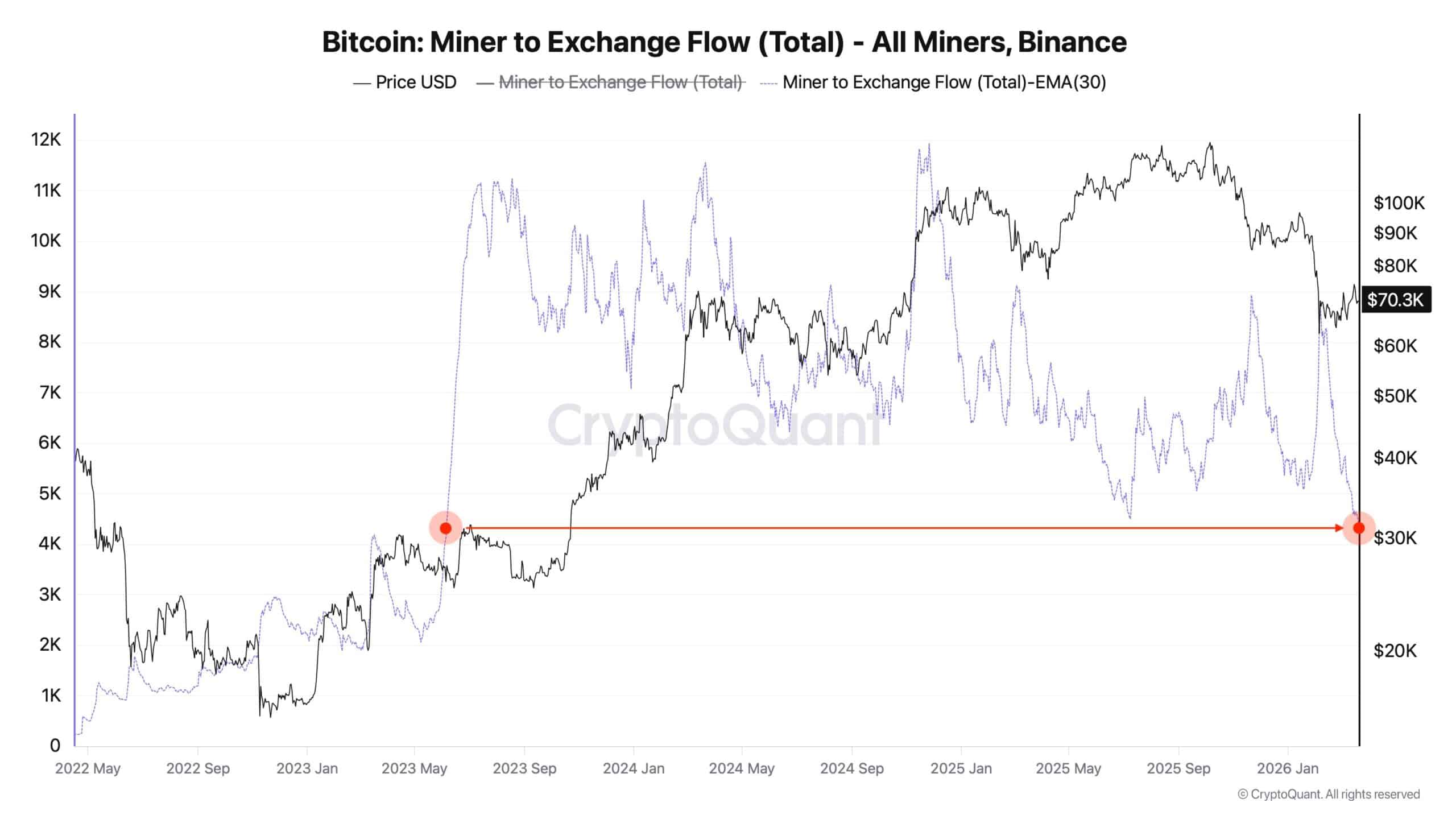
Bitcoin’s [BTC] miner-to-Binance flows surged above 8,000 BTC in late January, as U.S. ice storms disrupted operations and tightened miner liquidity. As mining slowed, fixed costs persisted, which forced miners to liquidate reserves and sustain operations, while price momentum weakened.

As conditions improved, flows began to reverse, signaling a transition from forced selling toward controlled distribution. The 30-day average now stands near 4,300 BTC, returning to levels last seen in June 2023, which reflects a sharp reduction in sell-side pressure.
Source: Darkfost/X

Bitcoin traded near $68,600 at the time of writing. This implied that price held firm despite earlier distribution, reinforcing the impact of declining inflows.

This shift matters because miners act as consistent suppliers, so reduced transfers directly constrain available market liquidity.

With total Exchange Inflows near 2,500 BTC and Miner Reserves around 1.8 million BTC, current restraint suggests strategic holding, which supports stability unless external pressure forces renewed selling.

U.S. demand gap as offshore liquidity drives Bitcoin

Bitcoin miner flows recently declined, which reduced structural sell pressure and tightened available supply across the market. As that pressure eased, a stronger recovery would typically require fresh demand to absorb limited supply.

Instead, the Coinbase Premium Index remains near −0.02, holding below zero and signaling weak U.S. spot participation.
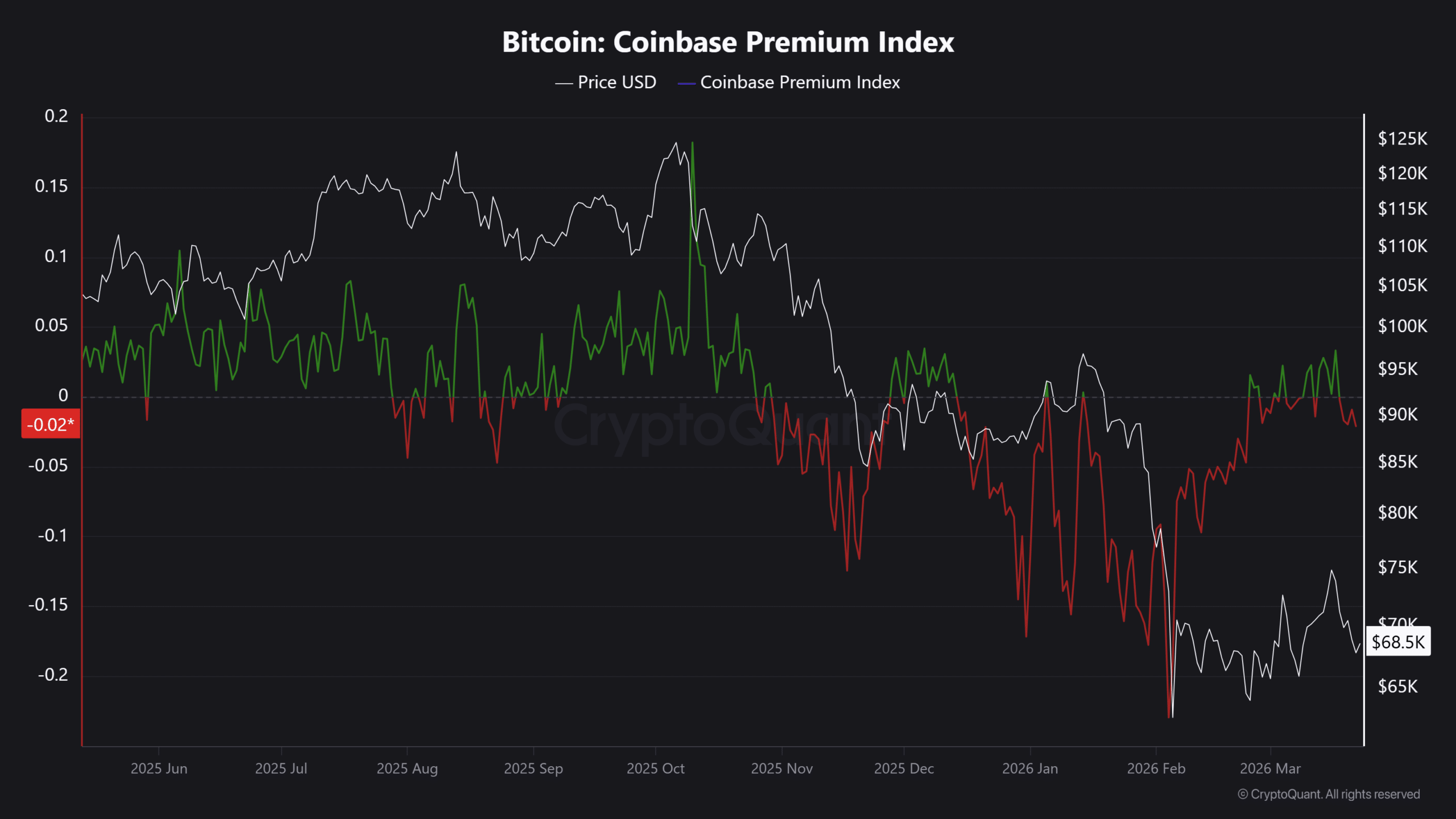
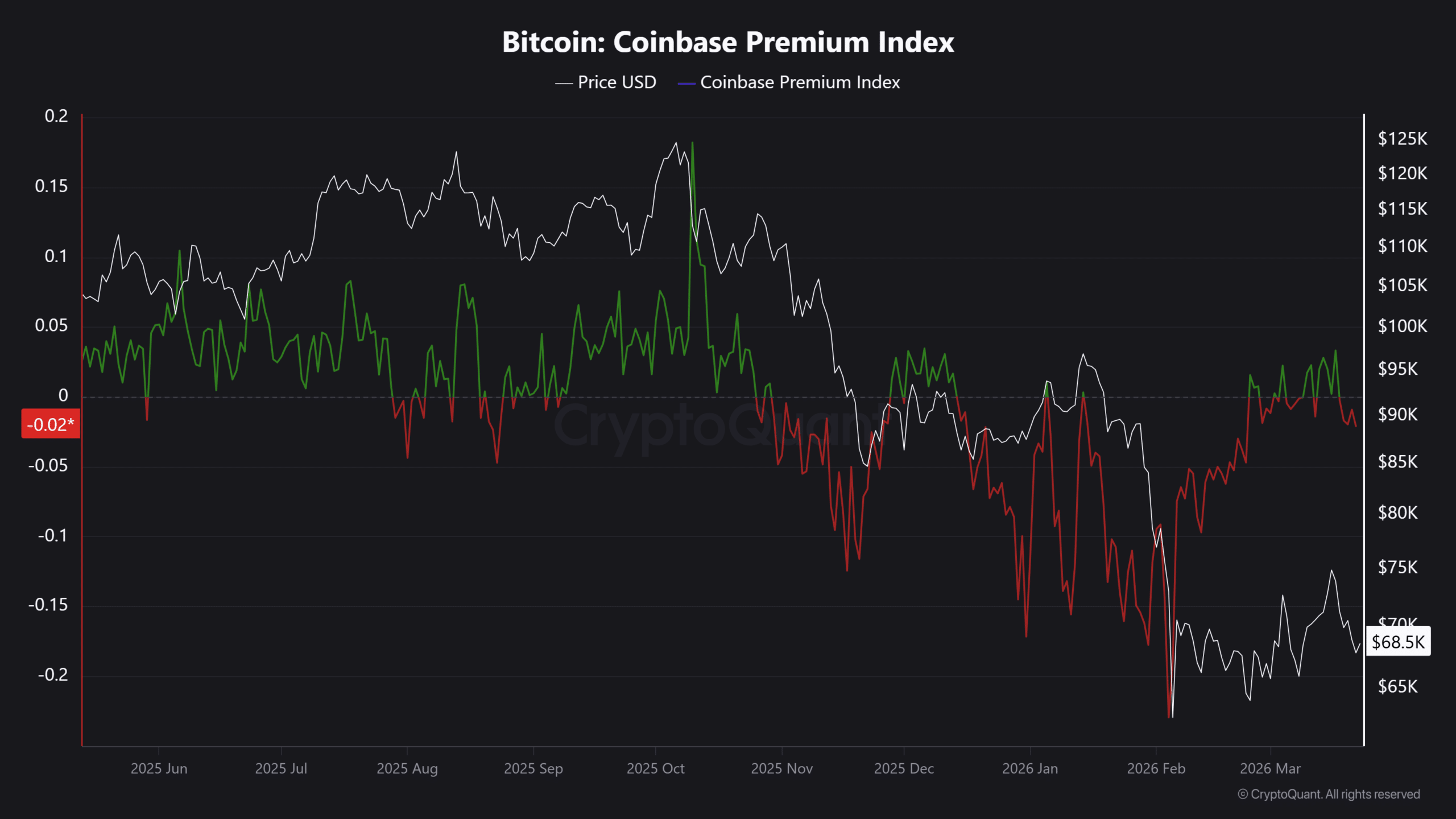
The premium turned deeply negative in February, dropping below −0.20, as selling pressure intensified on Coinbase. As this unfolded, the price fell toward $65,000, reflecting weak demand.

Stabilizing conditions helped Bitcoin rebound toward $68,500, yet the premium failed to recover, signaling that U.S. demand remained absent.

This divergence suggests that offshore markets are driving price discovery, likely through global liquidity and derivatives positioning.

Without U.S. institutional absorption, reduced supply alone cannot sustain momentum, which leaves the current structure dependent on external flows and vulnerable to shifts in offshore demand.

Hashrate decline signals miner shift toward AI compute

As offshore liquidity continues to drive price discovery, attention shifts toward the supply side, where mining dynamics add another layer of pressure.

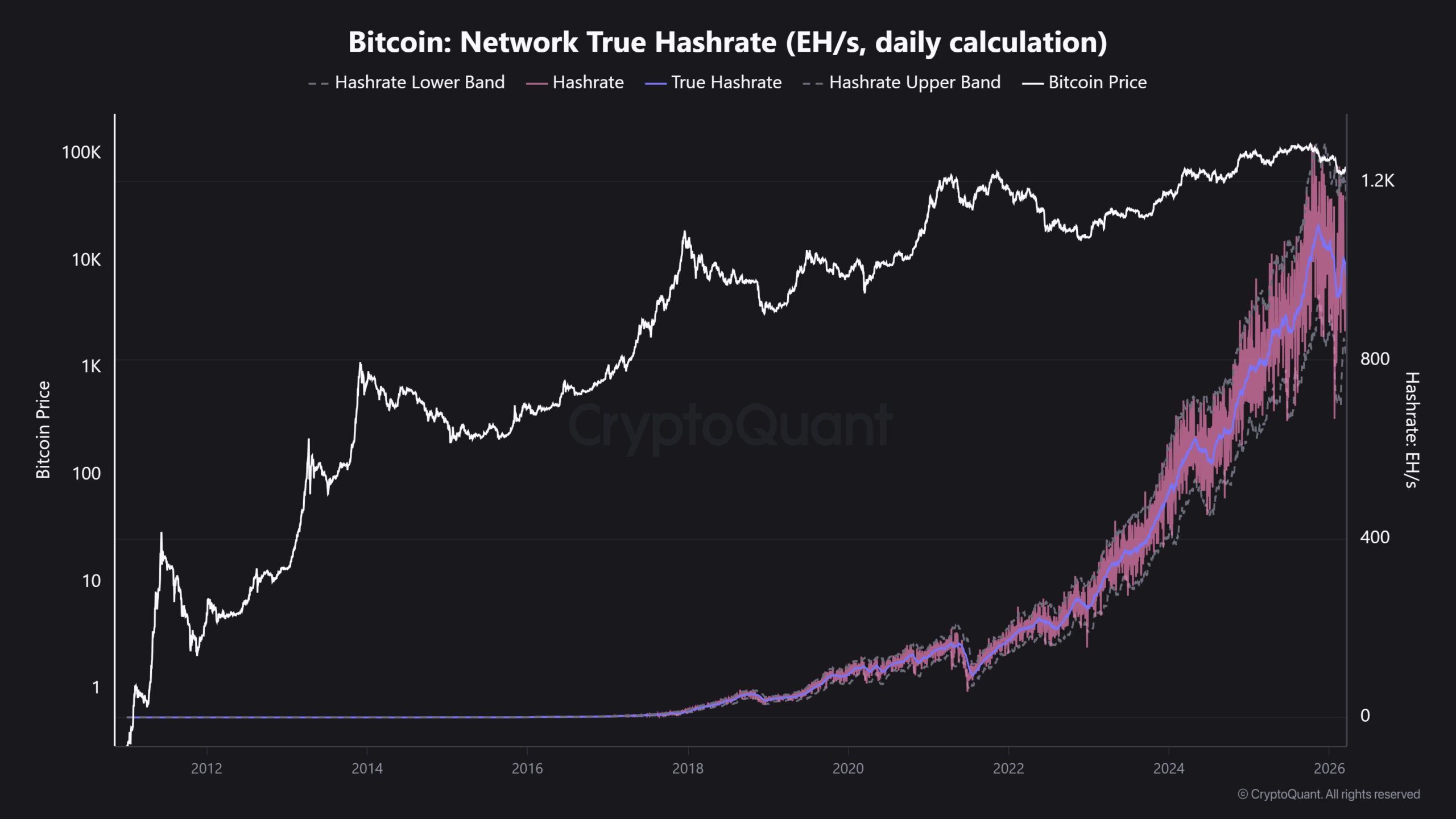
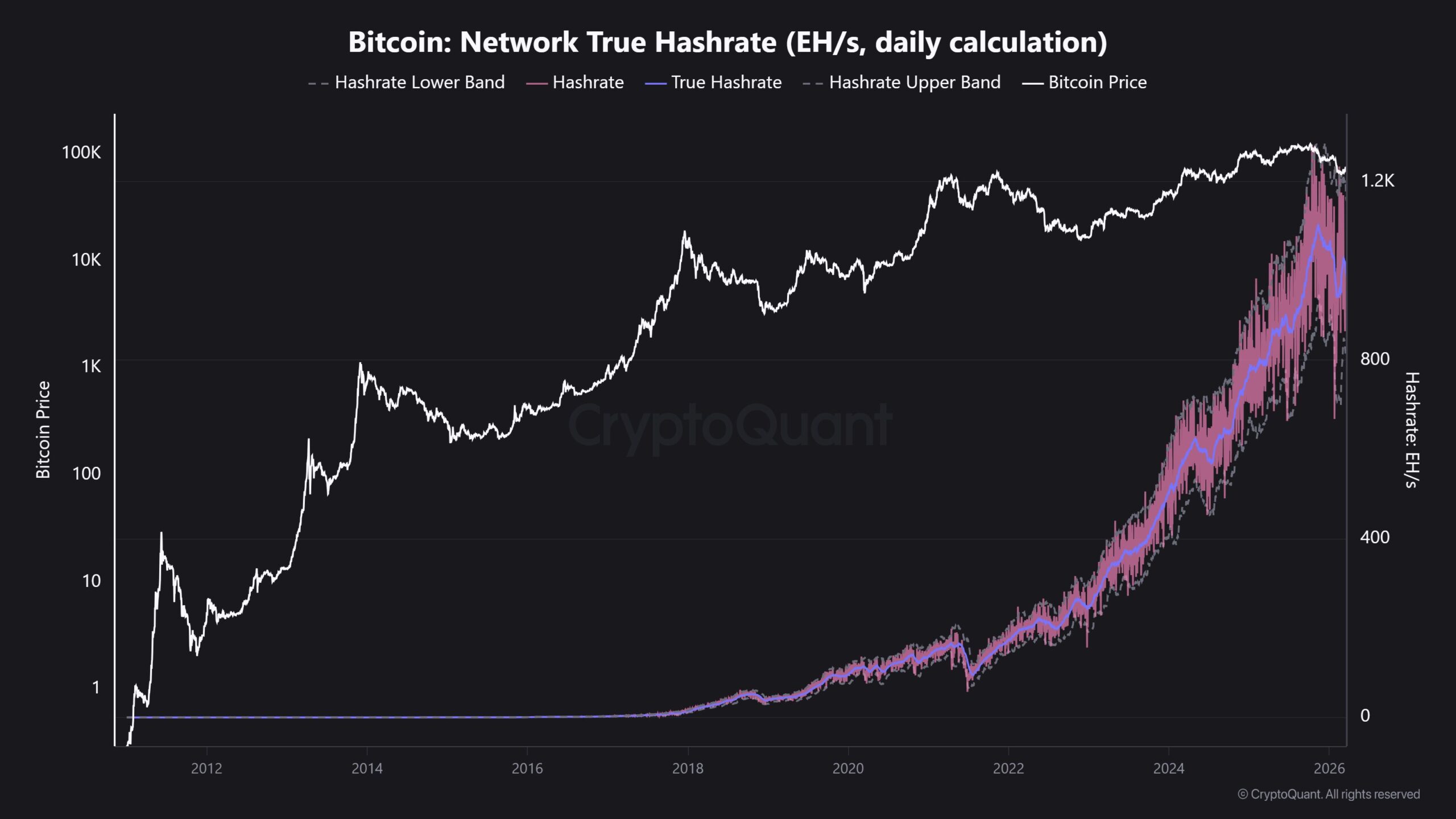
Bitcoin’s Network Hashrate previously climbed above 1,200 EH/s, reflecting strong participation and infrastructure expansion. As profitability tightened after the halving, this trend reversed, with Hashrate falling toward 800 EH/s, signaling reduced mining activity.
Source: CryptoQuant

As this decline unfolds, mining difficulty is expected to drop by about 8%, which aligns with miners scaling back or shutting down less efficient operations.

This adjustment reflects a deeper shift, as some operators redirected capital and infrastructure toward AI compute for higher returns.

As miners sold over 15,000 BTC to fund this transition, short-term supply pressure increased, while network strength weakened. This evolution suggests mining is no longer purely price-driven but increasingly shaped by external competition for capital and compute resources.



Final Summary

  • Falling miner inflows near 4,316 BTC tighten supply, yet a negative Coinbase Premium near −0.02 shows weak U.S. demand, leaving price reliant on offshore liquidity.
  • Bitcoin hashrate drops from 1,200 EH/s to 800 EH/s, and 15,000 BTC miner sales reflect an AI-driven capital shift, risking renewed sell pressure.

热门币种推荐

相关问答

QWhat caused the surge in Bitcoin miner-to-Binance flows in late January?

AThe surge was caused by U.S. ice storms that disrupted mining operations and tightened miner liquidity, forcing miners to liquidate reserves to sustain operations.

QWhat does the negative Coinbase Premium Index indicate about the Bitcoin market?

AThe negative Coinbase Premium Index near -0.02 signals weak U.S. spot demand and suggests that offshore markets are driving price discovery.

QHow has Bitcoin's network hashrate changed recently, and what does it signify?

ABitcoin's network hashrate dropped from over 1,200 EH/s to around 800 EH/s, indicating reduced mining activity due to tightened profitability and a shift of capital toward AI compute.

QWhy is the current Bitcoin market structure vulnerable despite reduced sell pressure from miners?

AThe market is vulnerable because reduced supply alone cannot sustain momentum without strong U.S. institutional demand, making it dependent on external offshore flows.

QWhat strategic shift are some Bitcoin miners making, and how does it impact the market?

ASome miners are redirecting capital and infrastructure toward AI compute for higher returns, which has led to sales of over 15,000 BTC, increasing short-term supply pressure.

你可能也喜欢

CPU杀回牌桌,一场1700亿美元的“上位”大戏开启

英伟达在2026年台北电脑展上首次发布独立CPU产品线Vera CPU,标志着其业务重心从GPU向更广阔的计算领域扩展。CEO黄仁勋指出,在AI智能体时代,CPU已成为数据中心性能的关键瓶颈。与此同时,AMD将服务器CPU市场规模预测大幅上调至1200亿美元以上,行业预测其潜在市场规模将在2030年达到约1700亿美元。 市场格局正在发生变化。2026年一季度,AMD在服务器CPU收入份额上逼近英特尔,显示出高核数产品的强大溢价能力。分析指出,AI发展正从训练转向推理和智能体阶段,后者需要频繁进行复杂控制流、工具调用和数据处理,这些任务严重依赖CPU而非GPU。在智能体任务中,GPU利用率可能低于50%,而CPU工作量占比可达七成以上。这导致CPU与GPU的配比从过去的1:8显著收敛至1:4甚至1:1。 需求变化直接推动了十多年来首次大规模涨价,英特尔和AMD服务器CPU价格普遍上涨10%-15%,且出现产能紧张。市场分化为配合GPU的高核数CPU和用于智能体任务编排的中核数批量CPU两类需求。 英伟达基于ARM架构的Vera CPU入局,进一步凸显了CPU的战略地位。这对中国CPU产业链既是机遇也是挑战。国产CPU厂商如海光信息、华为鲲鹏等,既受益于全球AI需求增长,也面临信创政策带来的国产替代窗口期。行业共识是,AI大规模落地的关键已从单芯片性能转向CPU与GPU的协同能力。

marsbit1小时前

CPU杀回牌桌,一场1700亿美元的“上位”大戏开启

marsbit1小时前

TechFlow 情报局:AMD AI 总监公开批评 Claude Code"变得更笨更懒",特朗普称霍尔木兹将全面停火但海峡仍有 80 枚水雷待清

**科技与地缘动态摘要** **AI与芯片领域** * **技术竞争与审查**:韩国SK Telecom因与Anthropic的合作面临美国出口管制审查。与此同时,中国Z.AI发布了不依赖英伟达芯片、性能对标Claude Opus的GLM-5.2大模型,引发关于技术围堵效果的讨论。 * **安全与伦理问题**:Google Gemini被曝在诈骗场景中提供误导建议,引发AI安全担忧。GitHub上发现上万个分发木马的仓库,开源供应链安全敲响警钟。 * **行业动态**:亚马逊正洽谈对外出售其自研AI芯片,意图进军市场。苹果据悉将为特殊版iPhone独享台积电最新制程工艺。0G Labs宣布其链上AI推理总量突破重要里程碑。 * **争议与监管**:AMD AI总监公开批评Claude Code性能下降。多名亚马逊工程师因批评公司AI数据中心扩张的环境影响遭内部调查。微软、亚马逊云服务或面临欧盟严厉反垄断审查。 **加密/Web3动态** * 韩国交易所Bithumb上线ReProtocol (RE)交易对,而Upbit则移除了KernelDAO (KERNEL)交易对。 **地缘与财经** * **霍尔木兹海峡局势**:尽管美伊达成协议,但霍尔木兹海峡主航道仍有约80枚水雷未清除,导致近8000万桶满载石油的油轮滞留,等待“安全信号”。伊朗取消了赴瑞士外交行程,和谈前景不明。特朗普称协议是伊朗“无条件投降”,并宣称总统拥有无限权力。 * **美股表现**:美股半导体板块大涨,英特尔因与苹果合作传闻暴涨10.6%,而SpaceX股价下跌3.5%。 **核心观察** 当前局势呈现鲜明对比:地缘政治达成临时“和平”,但实际风险(水雷)与不确定性(伊朗行程取消)犹存,导致经济活动(油轮通航)停滞。与此同时,科技领域的竞争与重构却在加速进行,从芯片自主研发、AI模型突破到供应链安全,科技公司正以另一种方式重塑全球格局。

marsbit1小时前

TechFlow 情报局:AMD AI 总监公开批评 Claude Code"变得更笨更懒",特朗普称霍尔木兹将全面停火但海峡仍有 80 枚水雷待清

marsbit1小时前

交易

现货
合约

热门文章

加密市场宏观研报:《GENIUS Act》法案取得重大进展,BTC突破历史新高,后市全新展望

2025年5月22日,比特币价格正式突破11万美元大关,创下历史新高。在政策面、宏观经济、资金面与投资者结构共同作用下,一场结构性牛市浪潮正在展开。而此轮上涨背后的核心驱动,是美国《GENIUS稳定币法案》的实质性进展以及多项利好的叠加。本文将从政策端突破、宏观环境转向、链上与ETF资金结构、交易行为演化,以及重点受益赛道五大维度,全面解析此轮BTC再创新高的深层逻辑,并前瞻下半年市场的潜在趋势。

1.7k人学过发布于 2025.05.22更新于 2025.05.22

加密市场宏观研报:《GENIUS Act》法案取得重大进展,BTC突破历史新高,后市全新展望

相关讨论

欢迎来到HTX社区。在这里,您可以了解最新的平台发展动态并获得专业的市场意见。以下是用户对BTC(BTC)币价的意见。

活动图片