Amid the OpenClaw Craze, CEXs Vie for AI Agent Trading Entry Points

marsbit发布于2026-03-16更新于2026-03-16

文章摘要

Amid the OpenClaw trend, CEXs are competing to become the primary trading interface for AI Agents, rather than passively serving as liquidity providers. The core question is whether exchanges will retreat to the backend or proactively position themselves as the default financial infrastructure for Agents. While many portray the shift from trading apps to dialog-based interfaces as revolutionary, current practical applications are more limited—focusing primarily on research, filtering, alerts, and conditional judgments. Execution remains challenging due to unresolved issues around permissions, confirmation mechanisms, error handling, and liability. Therefore, the initial competition will likely center on perfecting pre-trade functionalities rather than full automation. Exchanges are now racing to modularize their trading capabilities, design secure permission systems, and secure default integration within platforms like Claude, OpenClaw, and ChatGPT. Although it is too early to predict whether this will reshape the industry structure, it is clear that trust and user habits cannot be built overnight. The key takeaway is that the industry is confronting a concrete emerging question: as AI Agents gradually take over parts of the trading workflow, who will become the default crypto financial operating system?

So exchanges aren't suddenly in love with AI this round; they are judging one thing: if in the future, the primary trading interface for a segment of users is no longer the candlestick chart but a dialog box, would they be content to retreat to the background, merely acting as a liquidity provider to be compared and switched, or would they proactively step forward to become the financial infrastructure that the Agent calls upon first.

It's Not Exchanges Doing AI, But the Market is Again Framing Interface Upgrades as a Revolution

But now is also the easiest moment to casually overstate the case, as if once exchanges launch Skills or MCP, the next-generation trading entry point has already shifted from the App to a dialog box. Reaching this conclusion now is still too premature.

What truly runs smoothly today are primarily the pre-trade actions like research, screening, alerts, and conditional judgments. When it actually comes to the execution layer, the problems remain unchanged: how to grant permissions, how to handle secondary confirmations, how to rollback failures, how to express risk warnings, and who ultimately bears the responsibility. Anyone who has seriously built a trading system knows there are no shortcuts here. Therefore, what this round of competition will likely look at first is not fully automated trading. More realistically, whoever can first streamline the pre-order layer will be more easily called by default by the Agent. Research, screening, information, alerts, and pre-order preparation—these things might sound less flashy, but they are the most likely to become real usage first.

Precisely because of this, what's worth watching in this wave is not that exchanges are chasing another AI trend, but that they are starting to compete for the same new position: Who can first organize their trading capabilities into callable modules? Who can first design permissions and security to be sufficiently trustworthy? And who can first secure the default entry point within new interfaces like Claude, OpenClaw, and ChatGPT?

As for whether this competition will ultimately reshape the industry landscape, it's still too early to tell. Interfaces can be launched first, but trust won't grow overnight; pages can be made compatible first, but user habits won't migrate immediately; products can promise a closed loop first, but real usage must go through rounds of trial and error.

But at least up to now, one thing is already clear: when exchanges start seriously revamping their interfaces, permissions, and capability modules, the industry shouldn't see just another AI hype cycle, but rather a more concrete question coming to the surface: After AI Agents gradually take over part of the pre-trade workflow, who will become the default-called crypto financial operating system?

Related Agent Tutorials

Binance AI Agent Skills Official Tutorial

OKX Agent Trade Kit: Building a BTC Dollar-Cost Averaging System (OpenClaw Integrated Edition)

Bitget GetClaw Official Minimalist Video Tutorial

Gate GateClaw Official Setup Tutorial

热门币种推荐

相关问答

QWhat is the main concern of exchanges in the current AI trend, according to the article?

AExchanges are not simply jumping on the AI bandwagon; they are strategically positioning themselves. They are deciding whether to remain passive liquidity providers or to proactively become the primary financial infrastructure that AI Agents default to for executing trades, especially as user interfaces shift from traditional charts to dialog boxes.

QWhat are the key challenges mentioned for fully automated AI execution of trades?

AThe major challenges for full automation include managing user permissions, implementing secondary confirmations, handling transaction failures and rollbacks, effectively communicating risk warnings, and determining legal liability. The article stresses that there are no shortcuts in building a robust trading system.

QWhat does the article suggest is the more realistic and immediate focus for exchanges in the AI Agent competition?

AThe immediate and more realistic competition is not about full auto-trading. Instead, it's about which exchange can first perfect the pre-trade process—such as research, filtering, alerts, and preparation—making their platform the default module that Agents call upon for these tasks.

QWhat new role are exchanges competing to establish in the ecosystem of AI Agents like Claude and OpenClaw?

AExchanges are competing to become the default 'crypto financial operating system' for AI Agents. This involves packaging their trading capabilities into callable modules and designing permission and security systems trustworthy enough to be integrated into new interfaces like Claude and OpenClaw.

QWhy does the article caution against declaring that dialog boxes have already replaced traditional apps as the primary trading interface?

AThe article argues it is too early to make that conclusion because while interfaces can be updated quickly, user trust and habits evolve much more slowly. Real-world adoption and reliability will require extensive testing and iteration, meaning the full transition is not an overnight event.

你可能也喜欢

全球股市的风暴点:韩国股市的去杠杆已基本完成

近期韩国股市出现剧烈波动,KOSPI指数自6月高点最大回撤达32%,成为全球AI行情调整的“风暴中心”。文章指出,市场下跌的深层原因并非基本面恶化,而是由高度集中的杠杆资金结构所驱动。 具体来看,核心风险来源于两方面: 1. **杠杆ETF大规模去化**:前期规模一度接近500亿美元的杠杆ETF,其“每日再平衡”机制在下跌中引发了“股价下跌→强制平仓”的负向循环。目前其规模已从高点收缩约240亿美元,去化进度已达约75%,剩余压力显著收敛。监管层也已出台新规,从8月起严格限制此类产品,从源头降低风险。 2. **对冲基金快速降杠杆**:通过互换交易放大敞口的对冲基金,其多空持仓比率已从峰值显著回落,净多头水平显示杠杆已下降超过50%,最剧烈的被动去杠杆阶段基本完成。 相比之下,韩国居民融资余额占股市市值比重很小(约0.5%),且不具备强制平仓机制,难以成为系统性风险的核心来源。 综合而言,最容易引发“连锁抛售”的高杠杆结构已大部分出清,市场正从“流动性驱动的下跌”过渡到“基本面驱动的定价”。只要AI产业趋势未发生根本逆转,本轮调整更接近一次拥挤交易的集中出清,而非行情的终结。 文章最后强调,AI代表的硅基革命趋势不可逆,波动是参与趋势的成本而非风险。每一次调整都是在进行筹码结构的优化,并为认清趋势的投资者提供新的参与机会。

链捕手1小时前

全球股市的风暴点:韩国股市的去杠杆已基本完成

链捕手1小时前

自2024年以来推出的加密货币代币中,92.9%跌破发行价:CryptoRank

加密货币数据平台CryptoRank的最新研究显示,自2024年以来发行的加密货币代币中,有高达92.9%目前正低于其代币生成事件(TGE)时的初始价格。 该分析聚焦于市值超过1亿美元的项目,在2024年至2026年间发行的113个项目中,仅有8个仍保持在发行价之上,其余105个均已跌破。这意味着只有约7.1%的项目为投资者带来了正回报,而整体样本的中位数回报率低至-95.7%。 表现最突出的项目是Hyperliquid (HYPE),自TGE以来上涨了1,519%。其次是Ondo Finance (ONDO)、EverValue Coin (EVA)和Midnight Network (NIGHT),涨幅分别为101.4%、20.32%和16.50%。 数据表明,与过去市场周期中新股常持续上涨不同,当前投资者变得更加挑剔。资本正越来越集中于少数已证明其产品采用度、生态增长或强劲市场需求的项目。许多新代币难以维持初始估值。 这一趋势反映了市场关注点的转变:投资者愈发看重代币经济学、流通供应量、解锁时间表和长期实用性,而非仅关注上市初期的价格动能。 研究结果可能影响未来项目的发行策略。项目因过高的完全稀释估值(FDV)、上市初期流通量不足以及大量未来代币解锁计划而备受审视,这些因素都可能在新供应进入市场时对价格构成下行压力。因此,开发者和投资者未来或将更重视可持续的代币分发模式和长期的生态增长,而非激进的初始估值。

ambcrypto1小时前

自2024年以来推出的加密货币代币中,92.9%跌破发行价:CryptoRank

ambcrypto1小时前

交易

现货

热门文章

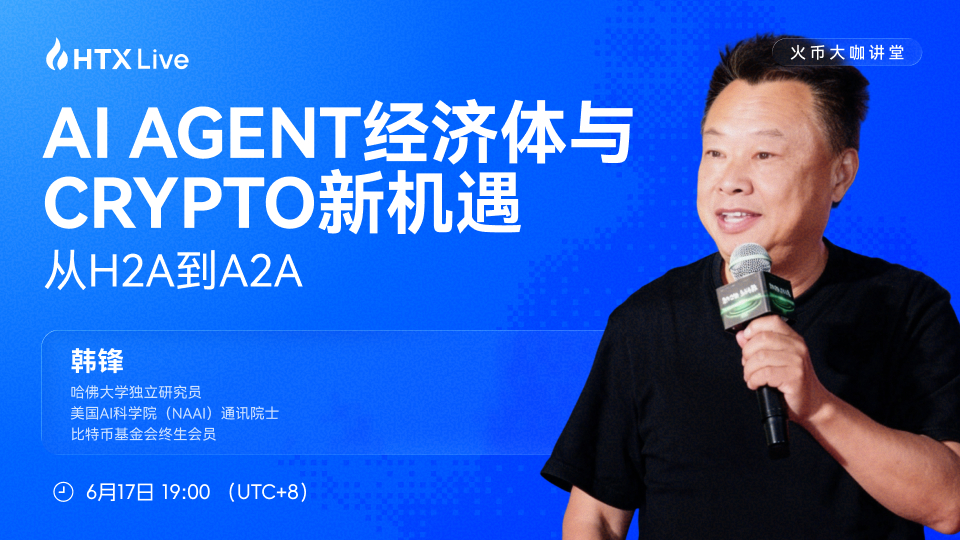
从H2A到A2A:AI Agent经济体与Crypto新机遇

6月17日,哈佛大学独立研究员、美国AI科学院(NAAI)通讯院士、比特币基金会终身会员韩锋做客火币HTX《大咖讲堂》第三期,以《从H2A到A2A》为主题,分享了其对Agent经济、Crypto基础设施及数字社会未来发展的思考。

344人学过发布于 2026.07.01更新于 2026.07.01

从H2A到A2A:AI Agent经济体与Crypto新机遇

美股TradFi:传统金融在AI IPO浪潮下的稳健锚点

2026年,美股IPO市场重回高热度。本文梳理即将上线或受关注的热门赛道龙头,分析具备投资潜力的交易标的及其逻辑,并探讨宏观趋势与相关风险。

2.2k人学过发布于 2026.07.08更新于 2026.07.08

美股TradFi:传统金融在AI IPO浪潮下的稳健锚点

相关讨论

欢迎来到HTX社区。在这里,您可以了解最新的平台发展动态并获得专业的市场意见。以下是用户对AI(AI)币价的意见。

活动图片