An era-defining acquisition is finally settled!
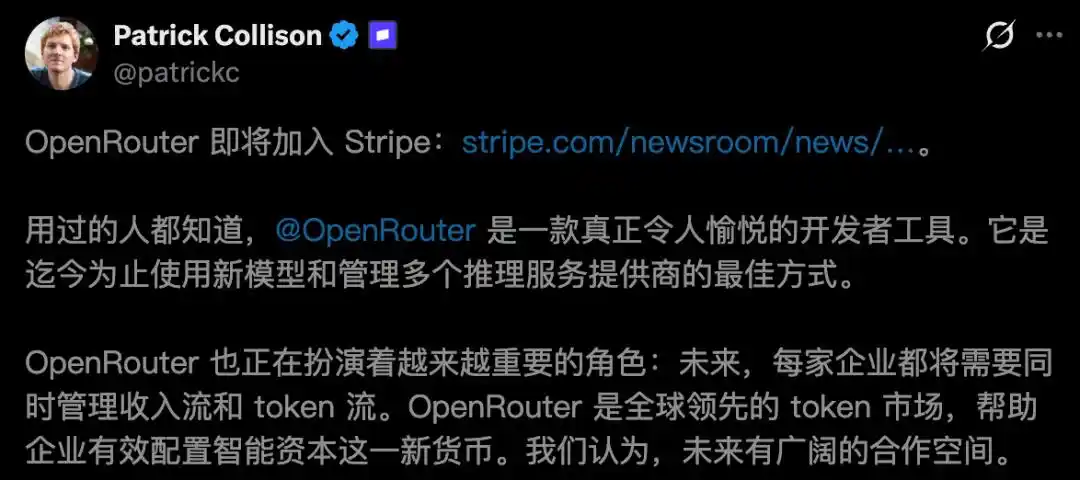
Today, Stripe's CEO officially announced: an agreement has been signed to acquire OpenRouter.
This "alliance" is rumored to be valued at over $8 billion.
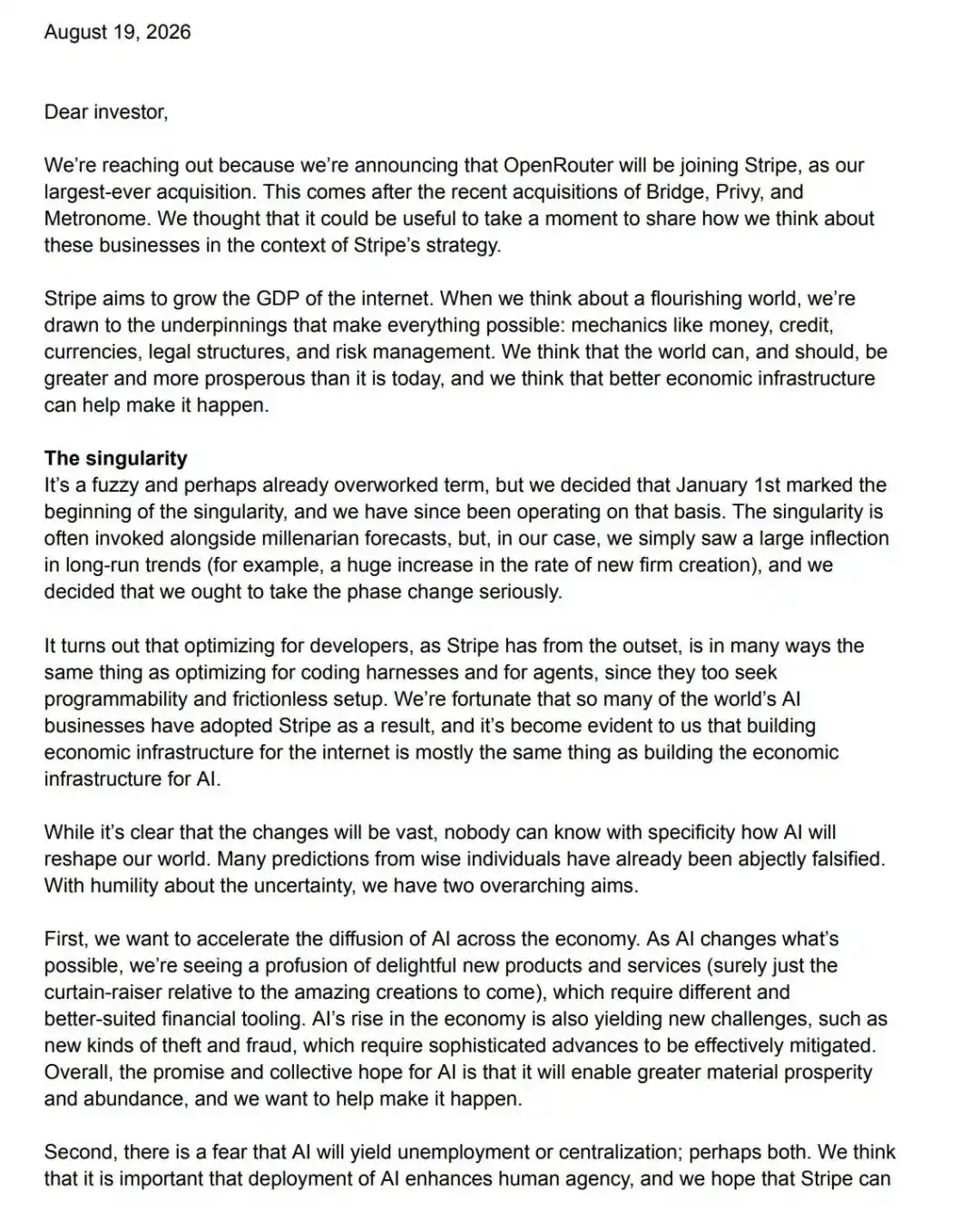
On the same day, an internal letter from Stripe to its investors revealed a critical detail—
The singularity arrived on January 1st of this year.

A payments giant has acquired the world's largest AI model distribution gateway.
From now on, the "AI lifeline" for over 10 million developers worldwide changed hands overnight.

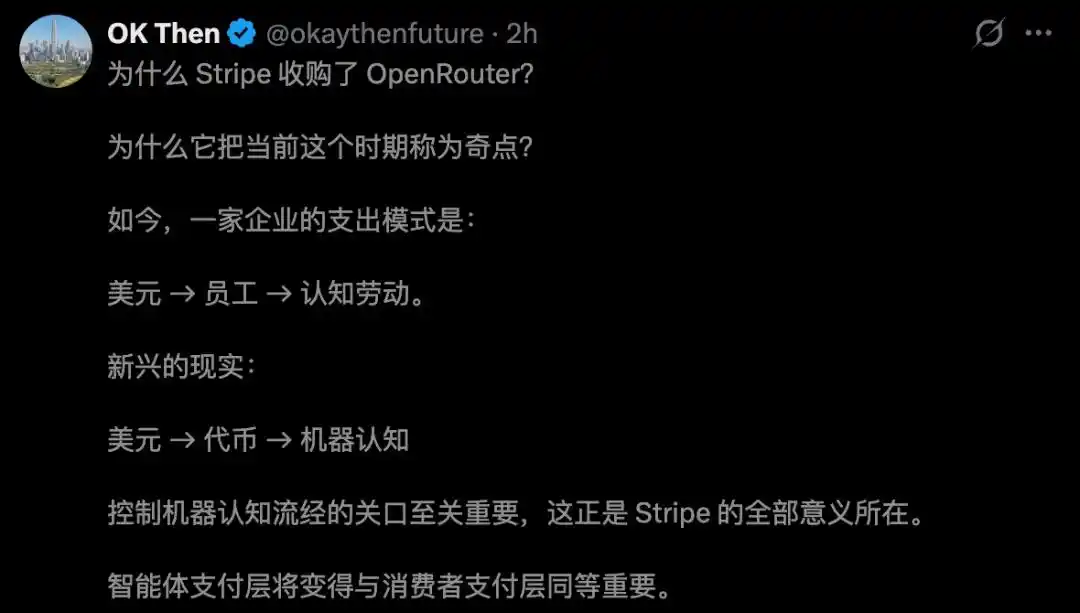
Planning to Splash Over $8 Billion, Buying the World's Largest "Token Gateway"
In the official blog, CEO Patrick articulated the truth about the future business landscape—
In the future, every enterprise will need to manage two things simultaneously: revenue flow + token flow.
The internet solved the problem of "how money flows." Stripe rose by turning complex financial networks into a few lines of minimalist APIs.
Now, the AI era is giving rise to an increasingly massive "token flow."
Developers face daily choices between different models and different inference providers—
Which is cheaper, which is faster, which is more stable at this moment, which is most suitable for this task.
This is where OpenRouter emerged, already revered in the industry as the "Stripe for LLMs."
It completely ended the nightmare for coders, freeing them from the grueling task of studying OpenAI, Anthropic, and Google's documentation one by one.
With one line of API integration, it directly connects over 400 models and 80+ inference providers.
Every task request enables millisecond-level dynamic routing: precisely matching the optimal solution, automatically switching away from failed providers, ensuring always-on availability.
OpenRouter doesn't produce intelligence, but it decides where intelligence flows.
It's not hard to see that Stripe's heavy investment has essentially bought a counter that exchanges "money for intelligence."
400 Large Models, 10 Trillion Tokens Per Day
As the world's largest token marketplace, OpenRouter's growth curve is astonishing.
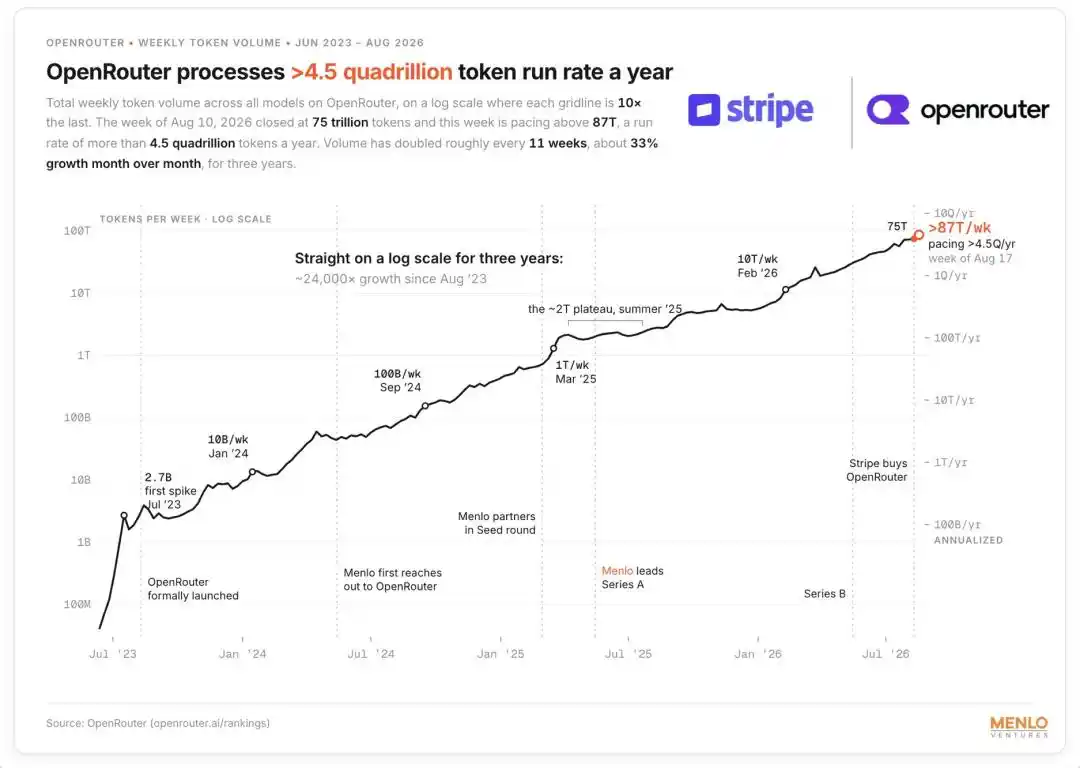
Today, it processes over 10 trillion tokens daily, used by more than 10 million developers worldwide.

Since its founding, its inference volume has increased at least tenfold annually. Statistics show it exceeds 4.5 quadrillion tokens per year.
An Experiment Three Years Ago, Deciding to Start a Company
However, rewinding the clock three years, all this was just a negligible sprout.
Founder Alex Atallah was born into a multicultural family in Colorado, with his father a Colombian immigrant and his mother American.
He earned a Bachelor's in Computer Science from Stanford. His first job after graduation was as a programmer at Palantir.

What truly prompted his decisive move were two major open-source releases in the spring of 2023.
In February of that year, Meta open-sourced LLaMA.
Atallah recalled that the initial LLaMA couldn't hold a conversation at all, yet it defeated GPT-3 on multiple benchmarks, despite being only one-tenth the size of GPT-3.
Just a month later, Stanford University released Alpaca: researchers fine-tuned LLaMA using synthetic data generated by ChatGPT.
The result was that LLaMA, which originally only performed text continuation, began answering questions like ChatGPT.
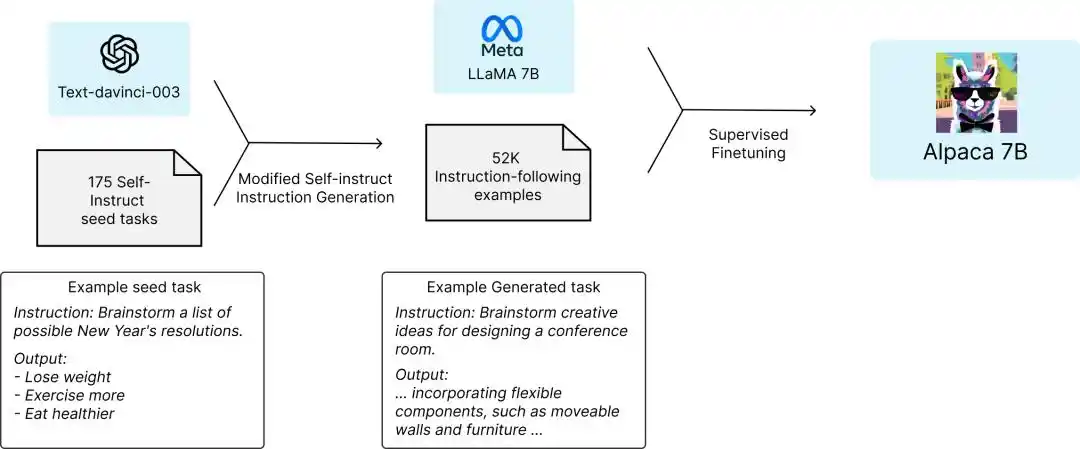
The total cost to achieve all this was less than $600.
Atallah admitted that the Alpaca project was the catalyst for his decisive step.
His reasoning was crystal clear: If $600 could create a competitive model, the future would inevitably be an era of myriad models. And behind that, there would definitely be a need for a super marketplace.
While the entire industry was frantically betting on "who will win": OpenAI, Google, or other giants, Atallah was betting on something else—
No one can win everything, and the large model market would ultimately become fragmented.
Three years later, the $8+ billion Stripe paid essentially validates this divine prediction.
The Singularity is Here, No Rush to IPO
This deal also has an interesting background.
Stripe's letter to investors contained a rather bold statement—January 1st of this year marks the "beginning of the singularity."
The founder's "singularity" refers to a moment when a long-term trend undergoes a fundamental inflection point.
It was also in this letter that they told investors: At such a critical juncture, remaining privately held is actually a more advantageous corporate structure.
In other words, the long-awaited Stripe IPO will likely have to wait a while longer.
This isn't because Stripe lacks the credentials to go public.
Simultaneously, they disclosed that revenue grew 41% year-over-year in the first half of this year, and free cash flow grew 43%.
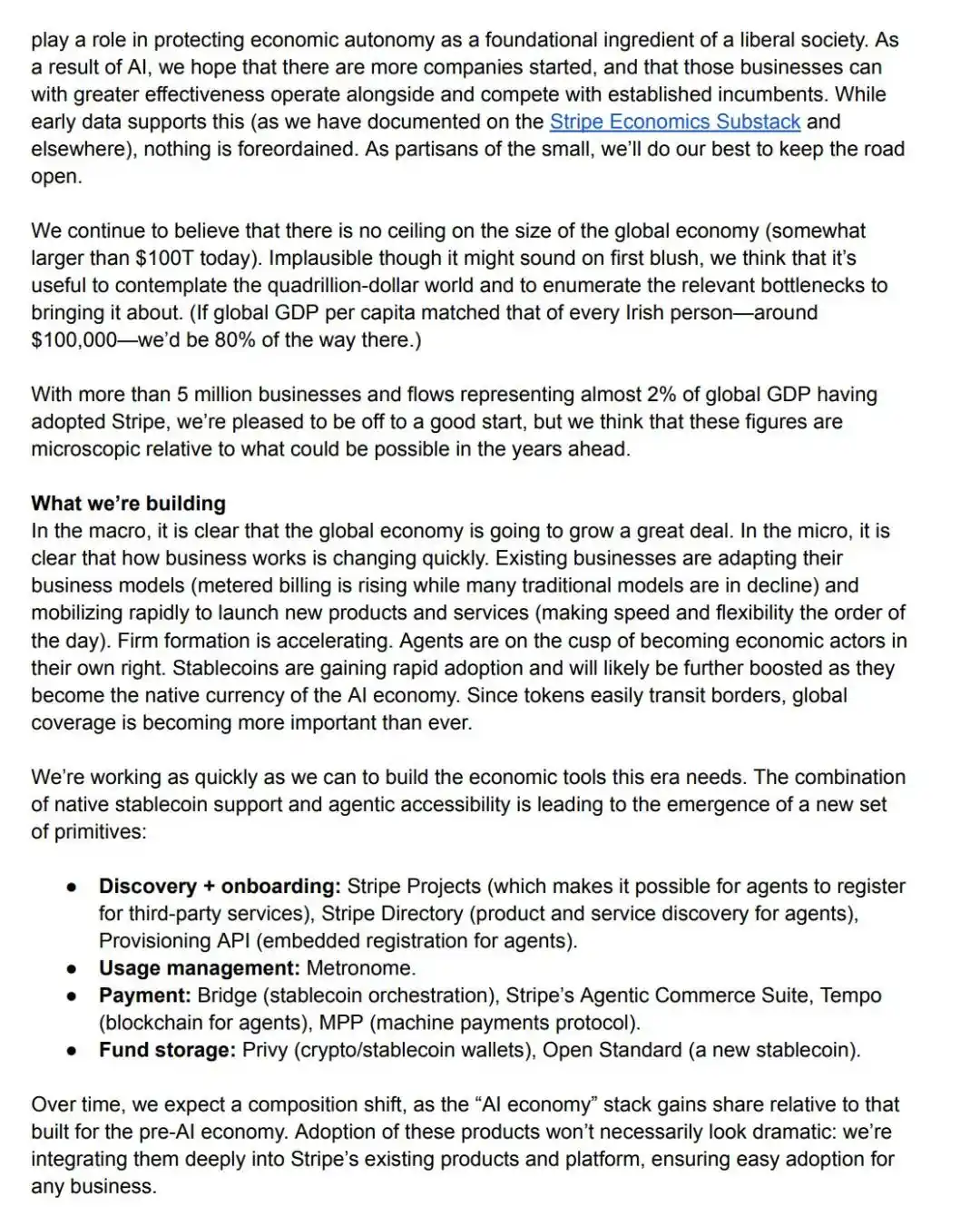
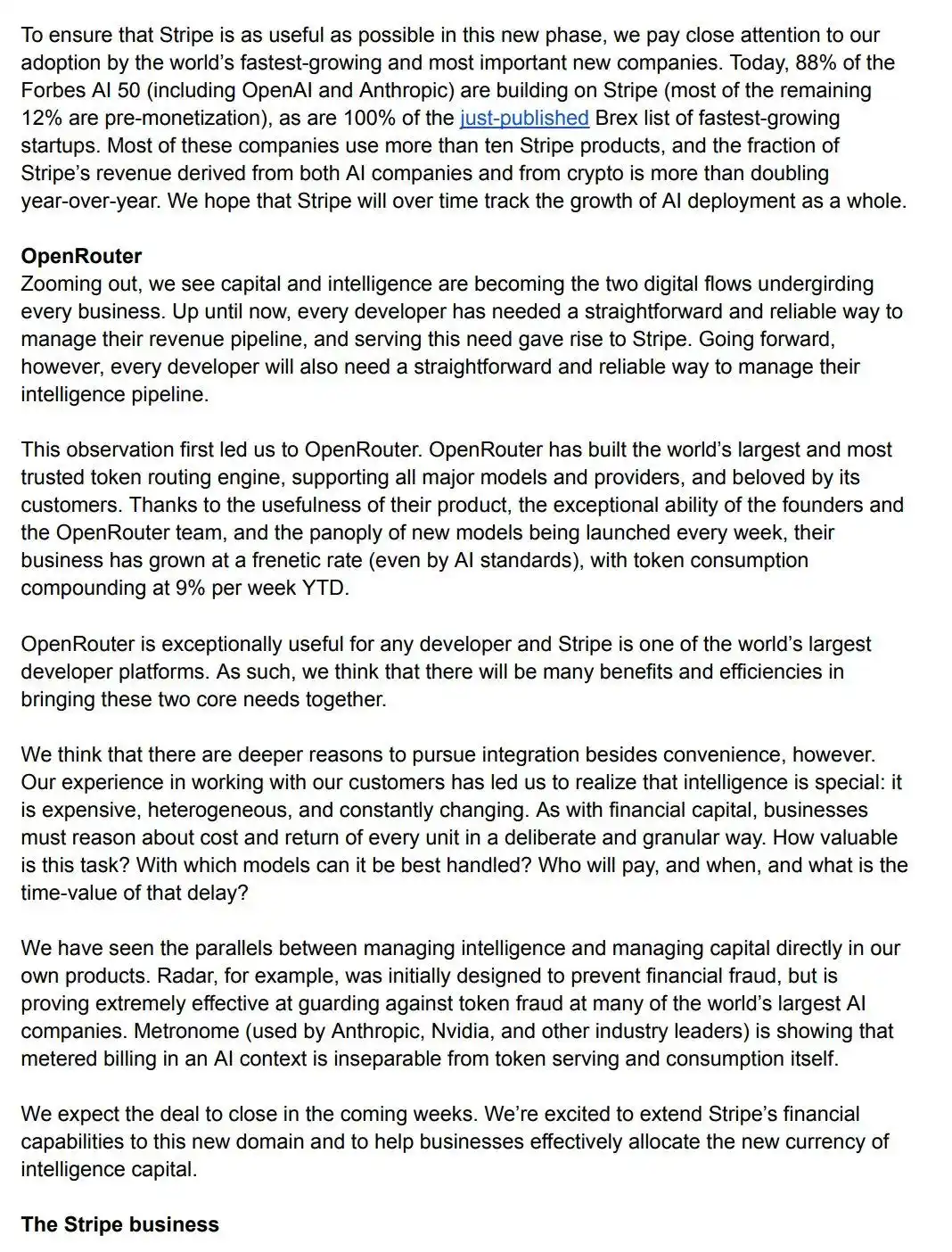
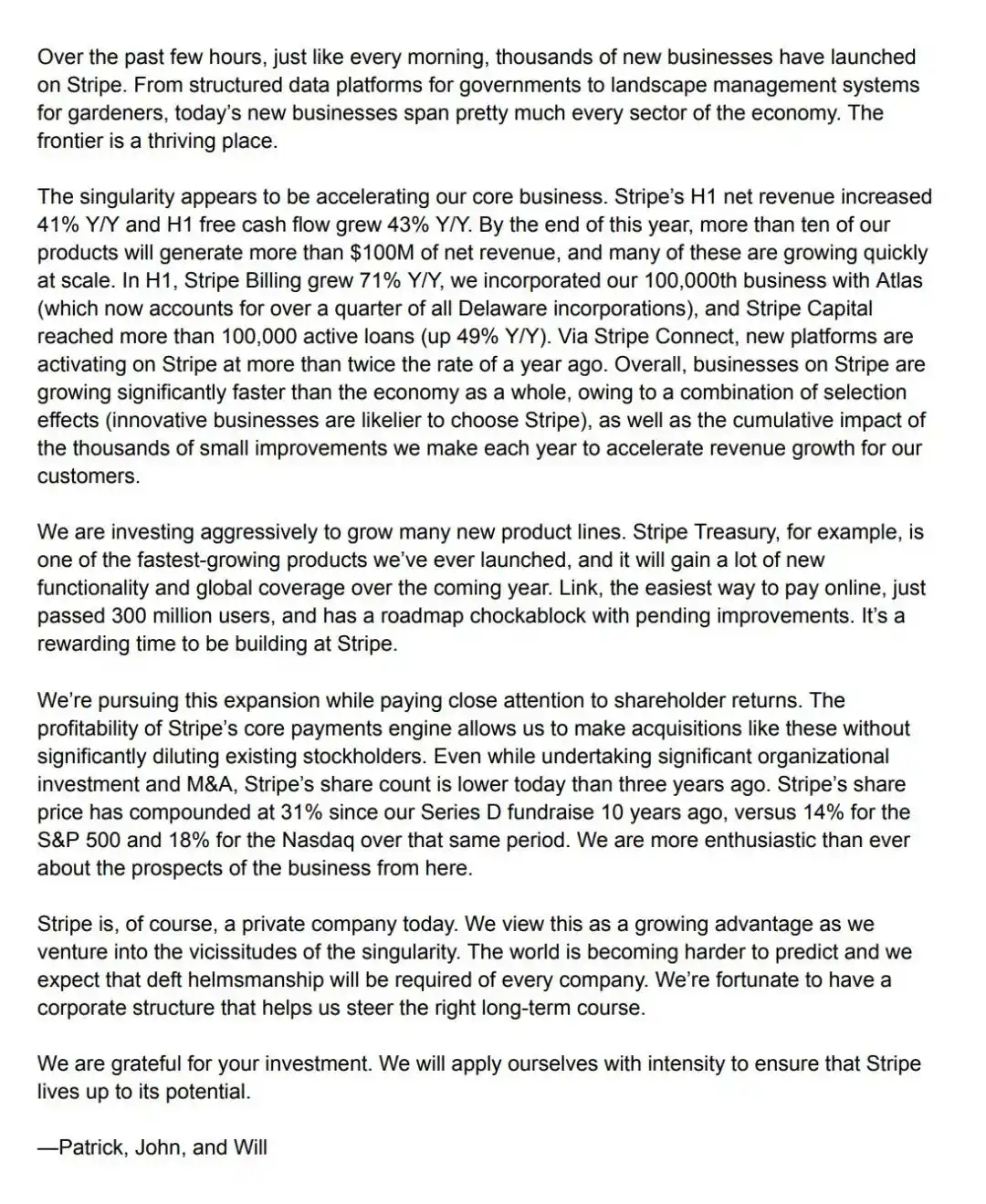
Stripe's consideration is that if AI is rewriting the entire infrastructure of the internet economy, going public now would actually limit the speed at which they can place bets.
What they're betting on is much bigger than one IPO.
Tokens, Becoming Another Kind of "Currency"
a16z partner Martin Casado used a very radical statement when discussing this deal:
Tokens are the new dollars.
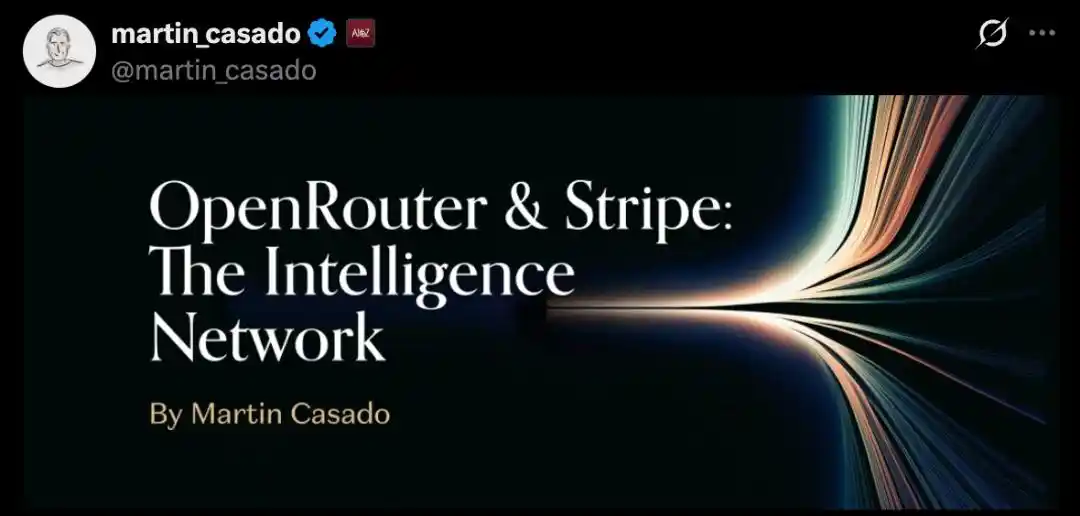
What this phrase truly aims to express is: AI is making "intelligence" a factor of production that can, for the first time, be standardized, measured, invoked, exchanged, and settled.
In the past, if a company wanted more "intelligence," it could only hire more people.
Now, it can buy tokens.
Need to write code? Call a coding model. Need reasoning? Call a reasoning model. Need search? Call a search model.
Electricity enters data centers, transformed into tokens; tokens then enter enterprises, transformed into code, customer service, design, research, sales, and even decision-making.
Thus, a new economic network begins to emerge.
Model companies produce intelligence, application companies purchase intelligence, and intermediaries are needed to handle pricing, routing, risk control, scheduling, and settlement.
This payment infrastructure allows "intelligence" to flow freely between companies.
Therefore, Martin calls the merger of OpenRouter and Stripe an "Intelligence Network"—
A network for global AI companies to exchange intelligence.
No single model can dominate forever, but there will always be a need for a "dispatcher" standing above all models.
The scepter of the new world will belong to those who determine the flow of "intelligence."
References:
https://stripe.com/zh-sg/newsroom/news/stripe-agrees-to-acquire-openrouter
This article is from the WeChat public account "New Zhiyuan" (新智元), author: Peach (桃子)