FalconX and Interstice Connect Canton with Ethereum, Solana, and Robinhood Chain

cryptonews.ru发布于2026-08-18更新于2026-08-18

文章摘要

Interstice Digital and FalconX have launched a cross-chain swap engine connecting the Canton Network with Ethereum, Solana, and Robinhood Chain. The non-custodial engine allows users to exchange assets across these four networks without transferring assets to Interstice for safekeeping or having transactions executed on their behalf. FalconX, a leading digital asset broker for institutional investors, provides the liquidity for the engine, bridging institutional markets on Canton with assets and trading activity on public blockchains. Canton is a public blockchain designed for institutional financial markets, featuring privacy and permissioning mechanisms for regulated transactions of tokenized assets. Its ecosystem includes major financial institutions like JPMorgan and Goldman Sachs. The integration aligns with growing institutional adoption of Canton for asset tokenization and blockchain-based settlement. Recent examples include Tradeweb facilitating a real-time on-chain U.S. Treasury trade using Canton and Societe Generale deploying euro and dollar stablecoins on the network for tokenized collateral and settlements.

Interstice Digital, in collaboration with FalconX, has launched a cross-chain swap engine connecting the Canton Network with Ethereum, Solana, and Robinhood Chain.

According to Tuesday's announcement, the non-custodial engine allows for the exchange of assets across the four networks without transferring assets into Interstice's custody or conducting transactions on behalf of users.

FalconX, a leading digital asset broker for institutional investors, provides liquidity for the engine. It connects the institutional markets of Canton with assets and trading activity in public blockchains, enabling users to move tokenized assets between Canton and networks like Ethereum and Solana.

Canton is a public blockchain for the institutional financial market. The network utilizes privacy and permissioning mechanisms for regulated transactions and tokenized assets. Its ecosystem includes major financial institutions such as JPMorgan, Goldman Sachs, and BNP Paribas.

Interstice is a fully owned subsidiary of Everyrealm, backed by investors including a16z Crypto, Coinbase Ventures, Galaxy, and Brevan Howard. The company has not disclosed which assets are supported at launch, nor has it revealed the transaction volume processed through the swap engine.

Related: FalconX Cuts 10% of Staff Amid Prolonged Crypto Market Slump: Report

Canton Expands Activity in Institutional Tokenization

The integration coincides with a growing number of traditional financial institutions using Canton for asset tokenization and blockchain-based settlement.

In July, electronic trading platform Tradeweb conducted an on-chain U.S. Treasury transaction where Franklin Templeton transferred a tokenized treasury security to Virtu Financial in exchange for tokenized cash.

Tradeweb facilitated trade execution and price discovery, while Canton synchronized the settlement between the two assets in real-time. Tradeweb stated this was the first real-time buy-sell transaction of tokenized U.S. Treasuries settled in USDCx—a USDC-backed stablecoin issued on Canton. Other participants included Societe Generale, Digital Asset, and Blockdaemon.

Societe Generale has also issued its euro and dollar-denominated stablecoins on Canton for tokenized collateral, repo financing, and institutional settlements. Visa tested settlements using a private stablecoin on the network.

Other initiatives include a pilot for using Japanese government bonds as collateral involving Mizuho and Nomura, as well as the listing of the S&P Dow Jones Indices iBoxx US Treasuries index on Canton.
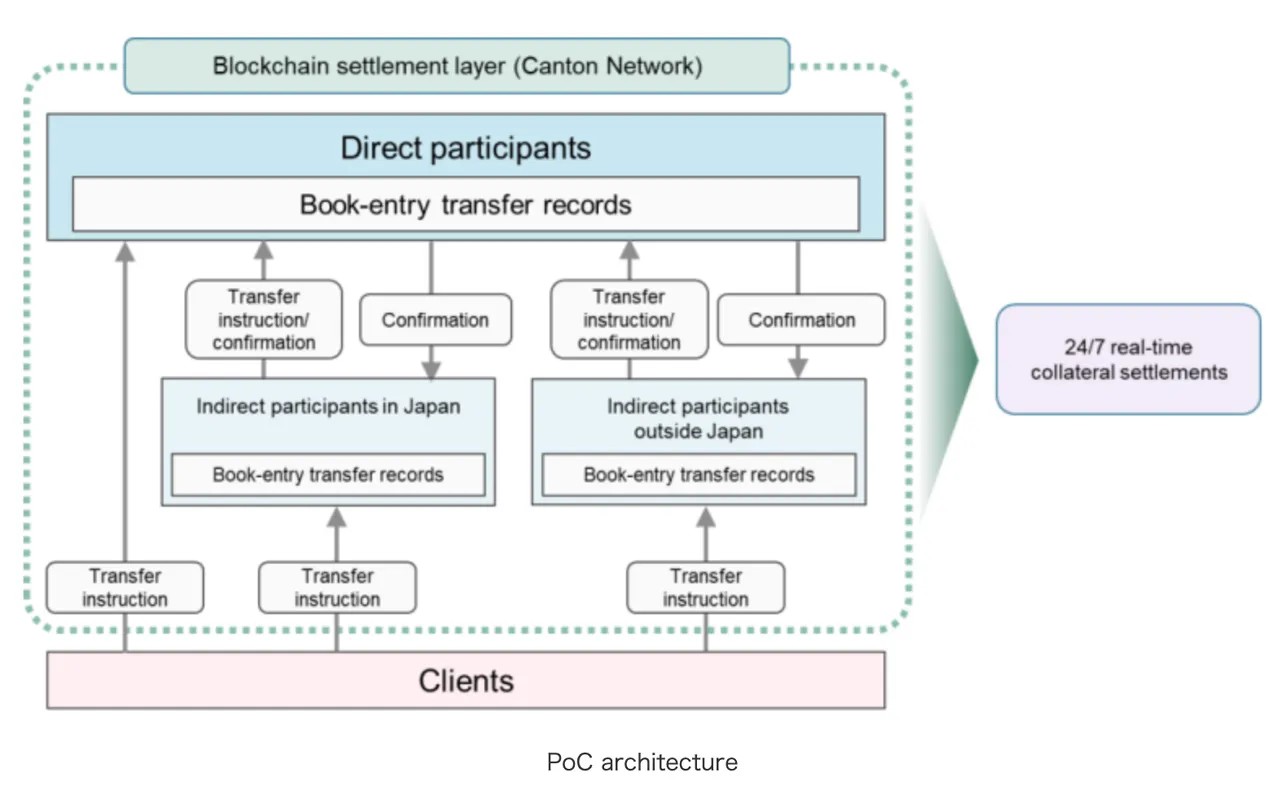
A PoC pilot for managing digital collateral using Japanese government bonds. Source: JPX

Magazine: Solana Fee Revamp Accelerates Token Burning and Raises Costs for Active Users

end-content
热门币种推荐

相关问答

QWhat new cross-chain engine did Interstice and FalconX launch, and which networks does it connect?

AInterstice Digital, in partnership with FalconX, launched a cross-chain swap engine that connects Canton Network with Ethereum, Solana, and Robinhood Chain.

QWhat specific feature of the new swap engine eliminates the need for asset custody by Interstice?

AThe new engine is non-custodial, meaning it allows asset swaps between networks without Interstice taking custody of assets or executing transactions on behalf of users.

QWhat role does FalconX play in the new cross-chain swap engine?

AFalconX acts as the liquidity provider for the swap engine and connects institutional markets on Canton with assets and trading activity on public blockchains.

QWhat are some key characteristics of the Canton Network, and which major financial institutions are part of its ecosystem?

ACanton is a public blockchain designed for institutional financial markets, featuring privacy and permissioning mechanisms for regulated transactions and tokenized assets. Major institutions in its ecosystem include JPMorgan, Goldman Sachs, and BNP Paribas.

QWhat was a notable real-world transaction facilitated on Canton Network mentioned in the article?

AIn July, Tradeweb facilitated an on-chain trade of U.S. Treasuries where Franklin Templeton transferred a tokenized Treasury security to Virtu Financial in exchange for tokenized cash, with Canton synchronizing the real-time settlement of both assets in USDCx.

你可能也喜欢

人工智能的五个悖论

人工智能时代充满了悖论,文章探讨了其中五个核心矛盾。 首先是**预测悖论**:AI领域的专家、企业家对未来技术的预言常常失准,无论是过于乐观还是保守,从早期先驱到当代“AI教父”的诸多预测都未能实现,尤其是关于通用人工智能(AGI)到来时间的判断分歧巨大,凸显了技术发展的难以预测性。 其次是**就业量化悖论**:尽管众多国际组织和智库试图量化AI对就业的影响,但各类报告的测算结果差异悬殊,从0.4%到67%不等。这源于技术本身快速演变且与多重社会经济因素交织,使得精确隔离并量化AI的独立影响近乎不可能。 第三是**生产率悖论**:尽管AI浪潮汹涌,技术创新层出不穷,但主要经济体的劳动生产率增速并未同步显著提升,甚至陷入停滞,重现了历史上“索洛悖论”所描述的技术进步与生产率增长脱节的现象。解释认为重大技术产生广泛经济影响需要时间滞后。 第四是**数据价值悖论**:数据被视为AI的“新石油”,具有巨大使用价值,但其交易价值和货币化能力却很低。数据价值难以在财务报表中体现,即使在中国推动数据资源“入表”的实践中,其占上市公司总资产的比例也微乎其微。 最后是**工业革命悖论**:近半个世纪以来,几乎每一种新兴技术(如大数据、物联网、区块链等)都曾被宣称为将引发“第四次工业革命”。当前AI也被普遍赋予这一角色,但历史表明,真正的工业革命通常是事后归纳而非当下断言,且其认定需要时间沉淀。

marsbit2分钟前

人工智能的五个悖论

marsbit2分钟前

专家警告称人工智能代理或将引发大规模加密资产黑客攻击

在怀俄明州区块链研讨会上,专家警告称,AI代理可能大幅降低攻击成本并扩大对加密货币持有者的攻击规模。自动化将使攻击者能同时针对大量潜在受害者的钱包、密码和网络漏洞进行扫描。 行业人士指出,当前对自主代理的看法过于乐观,低估了其被恶意利用的风险。数据显示,仅2026年上半年就发生了207起黑客攻击,创历史新高,造成约9.72亿美元损失。攻击数量较2025年同期翻倍,其中基础设施和操作漏洞(如私钥和助记词被盗)虽仅占事件数量的15%,却导致了76%的损失。 AI代理的核心优势在于能自主执行任务序列,包括搜索信息、调用外部服务和处理代码,这也使其能用于自动化寻找目标和漏洞。尽管防御方已开始利用此类系统进行安全审计,但仍需人工复核结果。 讨论还聚焦于赋予AI代理过大的财务权限所带来的风险,例如直接连接用户支付工具可能创造新的攻击载体。随着MetaMask等钱包推出允许AI自主管理资产的“代理钱包”,提示词注入等风险也随之凸显。此外,即使用户认为使用了隐私网络,元数据泄露仍可能暴露其身份和行为关联。 专家指出,AI技术发展速度超过了社会对其影响的消化能力,且法律责任界定模糊——当AI自主实施非法或错误交易时,责任归属成为难题。语言模型的“幻觉”问题也削弱了用户信任,阻碍其广泛应用。最终,关键挑战在于将技术能力转化为用户愿意部分托付业务或日常生活的可靠系统。

cryptonews.ru3分钟前

专家警告称人工智能代理或将引发大规模加密资产黑客攻击

cryptonews.ru3分钟前

AI 支付的陷阱:链上转账不等于买到真实服务

如今,由AI生成的虚假收据已占所有标记费用欺诈案例的71%,而一年前这一数据为零。随着AI代理能自主发现服务并完成链上支付,一个核心难题浮现:如何核验智能体实际购买了什么?OpenAI近期发布指南,提出一套收据核验与三方对账方案。 传统企业报销依赖采购订单、收据和银行流水三份独立凭证的交叉核对,能有效遏制串通造假。智能体支付的校验流程类似:应用层先根据预设规则(如商户白名单、预算)审批支付请求;支付完成后,再比对智能体上报内容、应用生成的收据和区块链结算记录。然而,该方案存在短板:除链上记录外,另两份凭证均来自系统开发者自身,且链上记录仅包含转账双方和金额,无法验证实际交付内容。这意味着,智能体可能支付后只收到低质或虚假服务(如AI生成的无效报告),系统仍会核验通过,因为授权绑定的是支付行为而非交付物。 这会导致市场失衡:作为买方的智能体不会评估服务质量、比价或更换供应商,可能持续向同一商户下单,使市场向“最低成本供给方”倾斜,优质服务商难以生存。支付系统通常容忍一定欺诈率(如信用卡行业约7个基点),但智能体支付若用于大规模采购,其无法甄别服务价值的风险将难以接受。 欺诈手段正快速演化。研究显示,现有15套主流支付基础设施均存在漏洞,攻击者可篡改服务查询结果,诱导智能体访问恶意端点。目前创业公司多从智能体身份认证(KYA)、行为风险分析或重构底层交易协议入手防范欺诈,但多数方案仍聚焦于智能体本身的行为核查。然而,智能体并无造假动机,真正有动机的是商户——他们面对的是不会挑剔、不会投诉的软件买家。 因此,当前链上支付验证仅能确认资金转移,无法保障智能体获得物有所值的真实服务,这是AI支付亟待解决的核心陷阱。

marsbit9分钟前

AI 支付的陷阱:链上转账不等于买到真实服务

marsbit9分钟前

交易

现货

热门文章

加密市场宏观研报:美国“加密货币周”来袭,ETH开启机构军备赛高潮

本周,加密市场迎来两股重磅催化——华盛顿“加密货币周”的立法攻势与以太坊机构布局的密集爆发,共同构成加密行业2025年下半年的“政策拐点”与“资金拐点”。这一轮加密周期的深层逻辑,正从比特币转向以太坊、稳定币及链上金融基础设施。我们认为:美国的政策明朗化+以太坊的机构化扩展,标志着加密行业正进入结构性转正阶段,市场配置的重心亦应逐步从“价格博弈”过渡至“规则+基础设施的制度红利捕捉”。

2.2k人学过发布于 2025.07.17更新于 2025.07.17

加密市场宏观研报:美国“加密货币周”来袭,ETH开启机构军备赛高潮

相关讨论

欢迎来到HTX社区。在这里,您可以了解最新的平台发展动态并获得专业的市场意见。以下是用户对ETH(ETH)币价的意见。

活动图片