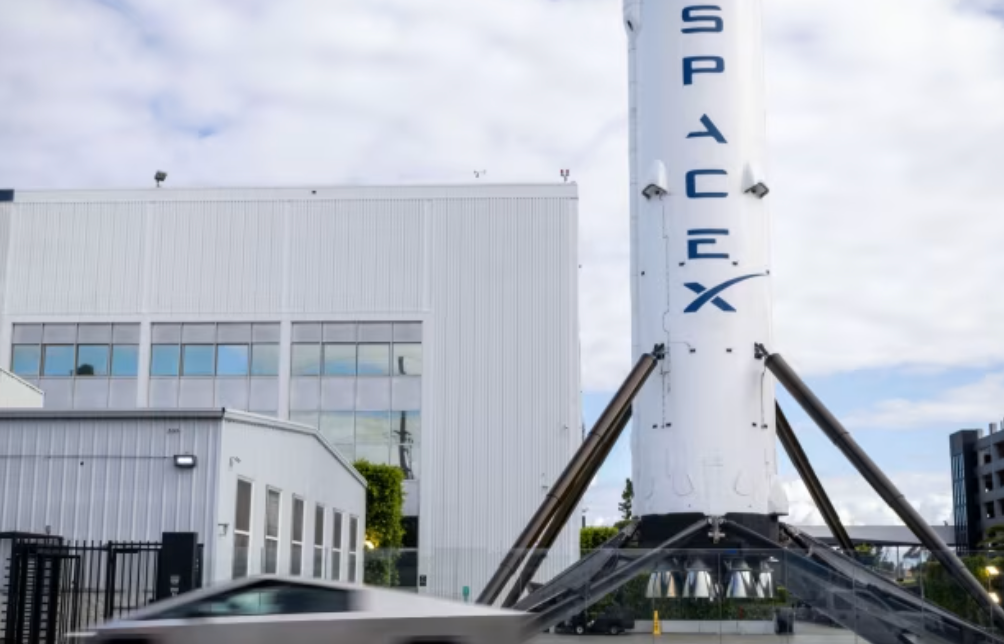
It's surreal.
In Ohio, USA, lies a piece of land abandoned for over half a century, once a uranium enrichment plant for atomic bombs during the Cold War. The machinery stopped long ago, the buildings rusted, and the land was unwanted.
Then, this morning, Silicon Valley exploded with major news—
NVIDIA, OpenAI, and SoftBank, three industry titans, are joining forces to transform this nuclear wasteland into the world's largest AI superfactory!
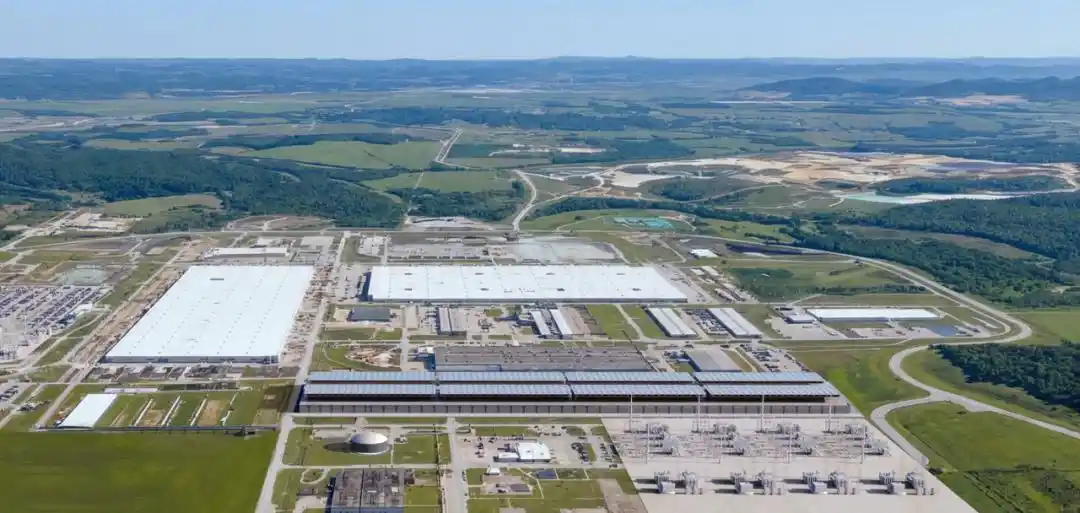
The site is roughly the size of 4.5 Central Parks in New York, large enough to hold nearly 590 supercarriers.
Seventy years ago, this land roared day and night refining uranium capable of destroying the world; today, the same land will simultaneously power 1.5 million GPUs.
Huang's View: The Next Bottleneck in the AI Era
The ultimate power plan for this superfactory is 8 gigawatts!
The required electricity would need the output of several large nuclear power plants, enough to power millions of households, approaching one-seventh of the global data center electricity consumption last year. Currently, the world's largest AI computing center is xA's Colossus 2, with a computing power of less than 1 gigawatt.
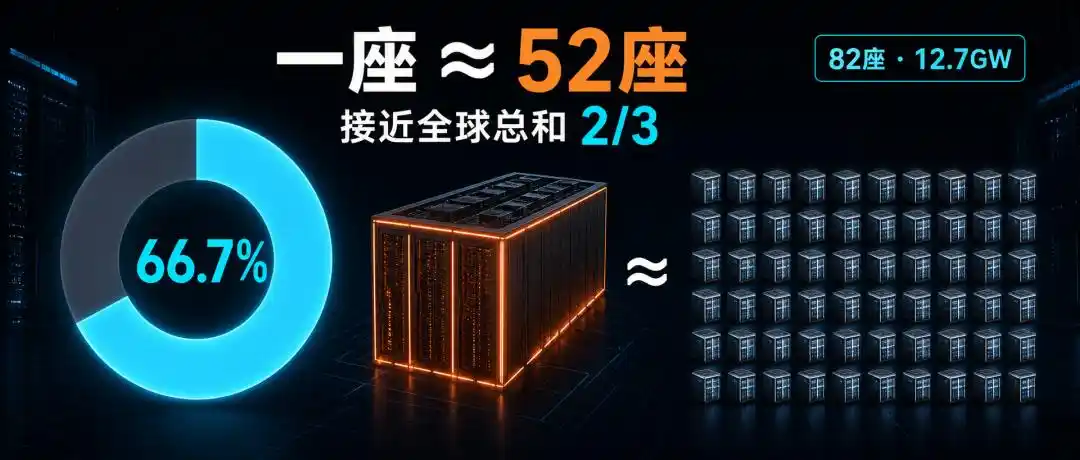
According to Epoch AI's tracking, the 82 largest AI-dedicated data centers globally have a total power infrastructure capacity of about 12.7 gigawatts.
This means that at full capacity, it will possess nearly two-thirds of the combined computing power of the current 82 top-tier AI data centers worldwide.
If measured against the average size of these 82 centers, the picture is even more staggering: you'd need to line up about 52 top-tier AI supercomputing centers to match this single one.
But 8 gigawatts is "just the beginning for AI."
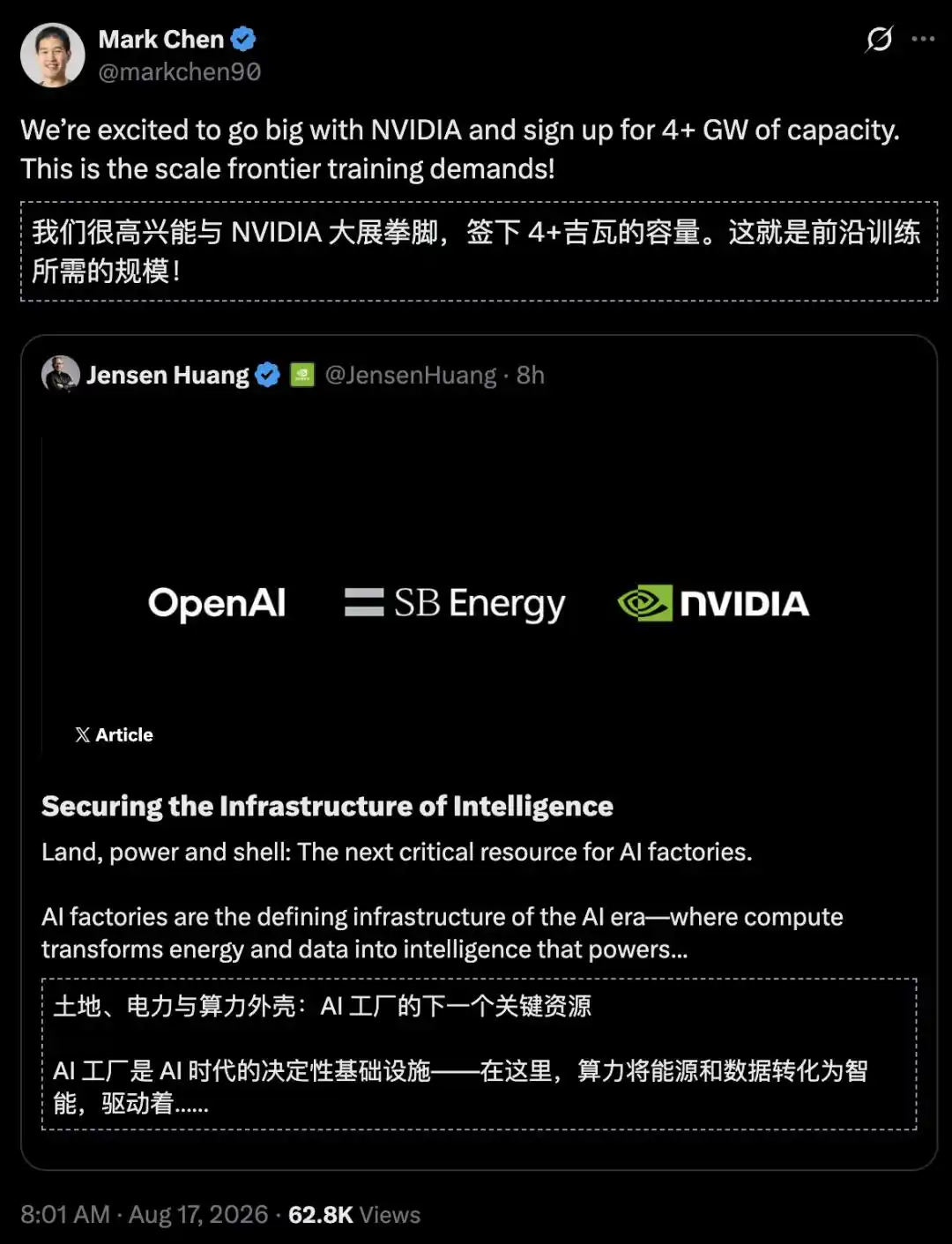
OpenAI's Chief Research Officer put it this way
To this end, Huang announced that NVIDIA will directly invest $1.5 billion into a SoftBank subsidiary and provide a 20-year credit guarantee.
OpenAI signed an unprecedentedly long 20-year lease, securing all the computing power here. Additionally, they will provide up to $84 million in Codex credits for 844,000 students in Ohio.
Masayoshi Son committed heavy investment, promising to bring in 1 gigawatt of new power generation capacity and spending $4.2 billion to upgrade the local aging power grid.
Why have Silicon Valley moguls suddenly transformed into "real estate developers" and "grid construction workers"?
Because Huang Renxun just published a post admitting a harsh truth: the next life-or-death bottleneck for AI isn't chips at all—it's whether there is land, electricity, and facilities.
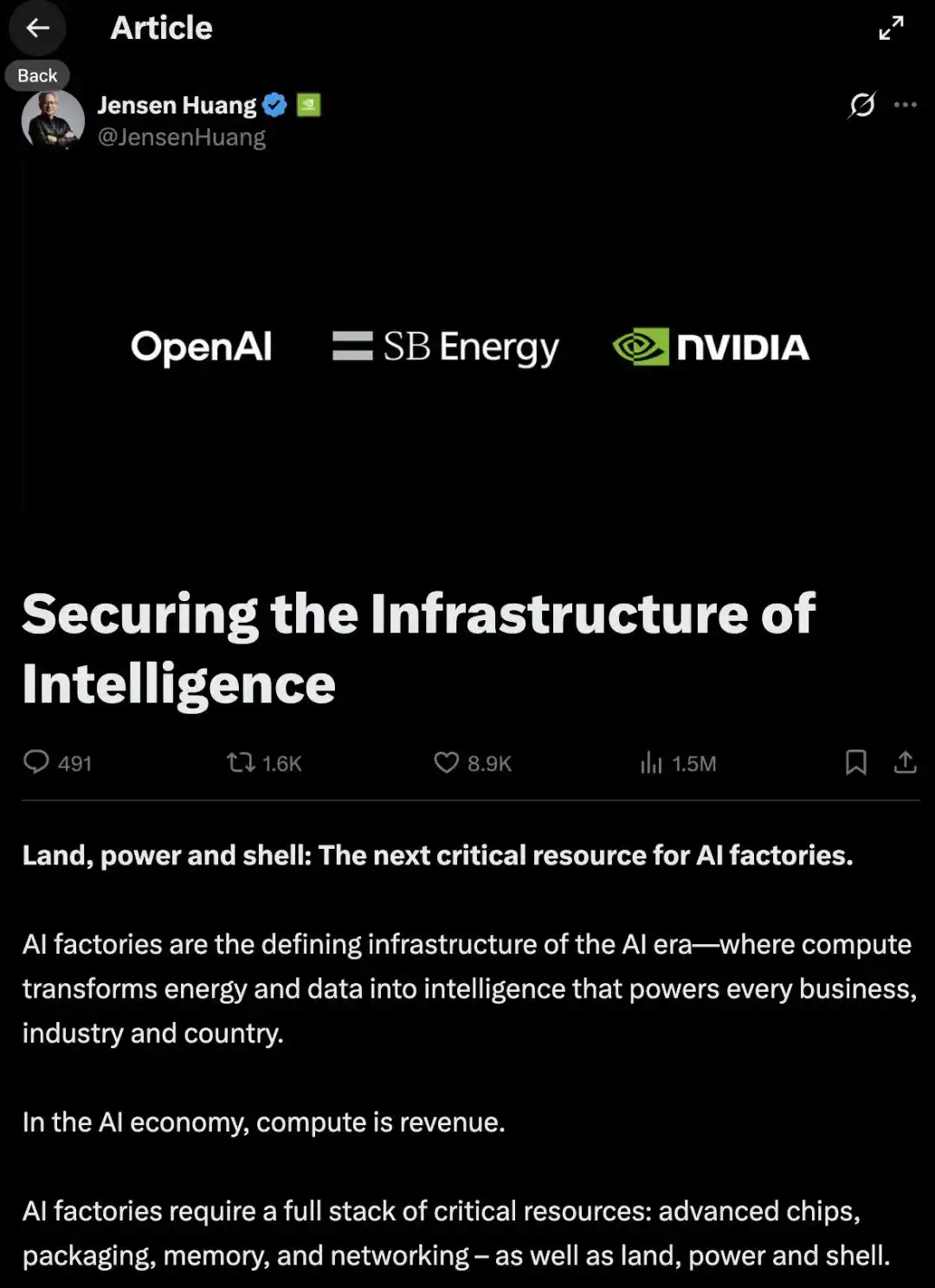
From Competing for Chips to Scrambling for Land and Power
Over the past few years, everyone was fixated on TSMC's capacity, on memory supply, thinking that as long as NVIDIA made GPUs fast enough, AI would race straight to AGI.
But Huang's words reveal the reality.
He said in his blog that a truly functional AI factory doesn't just need advanced chips; it requires three fundamental things—land, electricity, and buildings.
And this is precisely the Achilles' heel for AI newcomers like OpenAI.
Although OpenAI has the technology and ambition, when power grid companies and real estate developers look at them, they think: why should a company just a few years old be sold electricity and land for the next 20 years?
This is the most awkward situation in the AI world right now: the real bottleneck is on the construction site.
They have models with hundreds of billions of parameters, and billions in funding, but they can't support the decades-long infrastructure bills.
Who steps in to settle this?
Only the "big brother" with a $2 trillion market cap—NVIDIA.
Huang's "Master Plan": Investing $1.5B as Guarantor, What's the Goal?
The division of labor among the three parties in this deal is particularly interesting.
SoftBank (the doer): Buys land, constructs buildings, lays power lines, builds server rooms—pure manual labor.
OpenAI (the payer): Signs a 20-year lease, pays rent monthly, and fully utilizes the computing power.
NVIDIA (the guarantor): Invests $1.5 billion for equity and provides a 20-year credit guarantee for the infrastructure project.
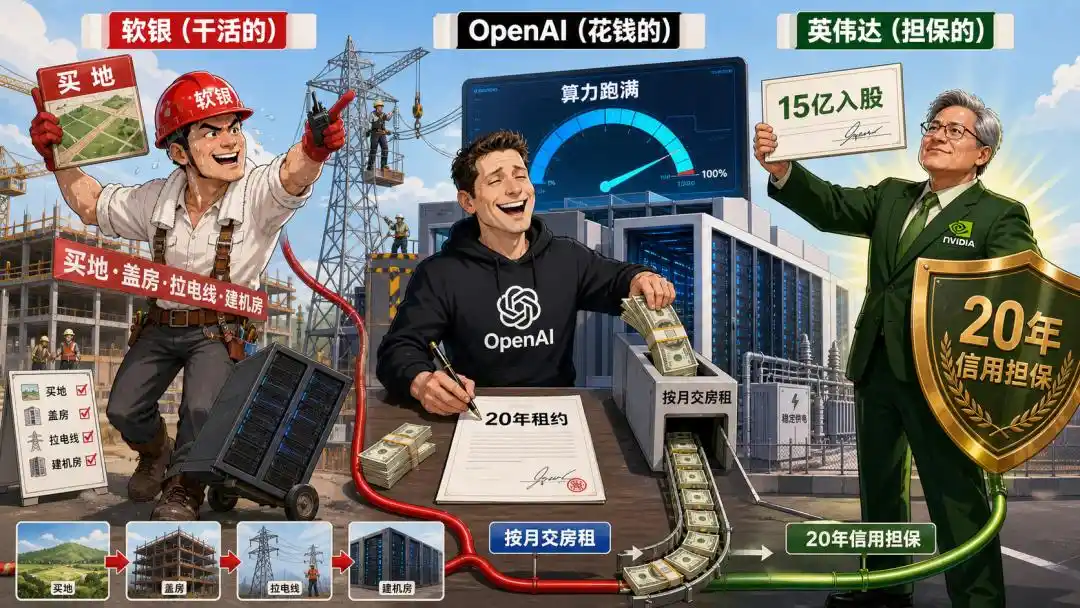
Many people's first reaction: Has Huang gone mad? Why should a GPU seller guarantee its client? Isn't this the "self-guaranteeing" Wall Street despises most?
But Huang responded with remarkable audacity in his blog: "OpenAI pays the rent itself; I'm not subsidizing a single cent."
So what's his angle?
Actually, this is a "lock-in strategy" he's deployed countless times—back when chips were scarce, he locked down TSMC's capacity and ASML's lithography machines with long-term orders and prepayments.
Now he's applying the same playbook to land and electricity.
He's betting that in the coming years, "large plots of land with electricity access" will be scarcer than "silicon wafers capable of making chips."
So he's making a preemptive move, using his $2 trillion market cap's credit to secure the world's best AI locations and power resources, with one stipulation—this facility can only use NVIDIA's chips.

As netizens aptly put it: The real moat is never just the chips, but locking down the land and electricity needed to run them twenty years in advance, leaving others in the dust.
So, is this a bad deal?
Running the Numbers: Why This is a Sure Bet
Why is this deal guaranteed to be profitable?
Do a simple calculation, and it becomes clear.
Based on the announcement data:
The first phase targets 4.25 gigawatts.
Each generation of the system can house about 1.5 million top-tier GPUs.
Hardware sales revenue per generation is roughly between $150 billion and $200 billion.
OpenAI's existing and planned orders already account for 12 gigawatts of NVIDIA's computing capacity, with potential expansion to 16 gigawatts.
The conclusion is, by 2030, OpenAI alone could present a $600 billion revenue opportunity for NVIDIA!
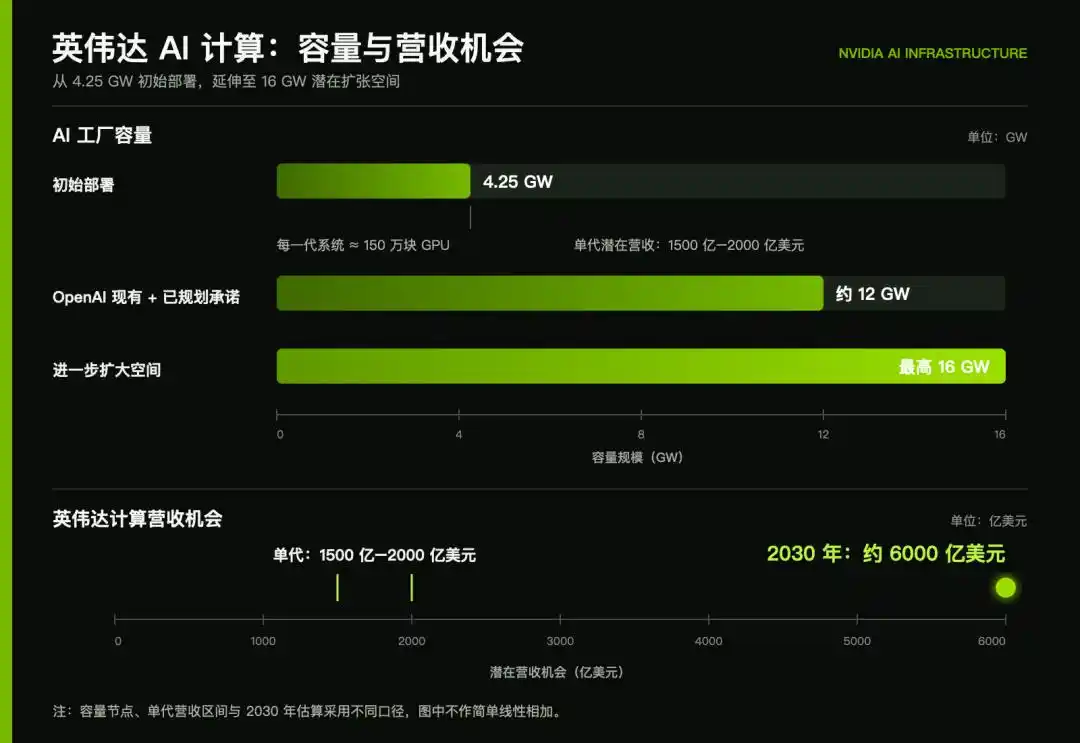
The key lies here: the buildings and power grid have a 20-year lifespan, but chips are replaced every two to three years.
Land is permanent, power lines are durable, server rooms can be upgraded repeatedly, but the NVIDIA GPUs installed inside—each generation represents tens to hundreds of billions in pure incremental revenue.
What if OpenAI can't pay the rent someday?
Huang already has an exit strategy. NVIDIA's CUDA platform is the industry standard, usable worldwide.
If OpenAI backs out, these server rooms, power lines, and even the installed GPUs can be sublet instantly to other cloud providers, large corporations, or startups. There's no worry about finding takers.
This is the true moat: You pay rent, I profit; you leave, I profit even more.
A Game with No Way Back
The entire logic is now crystal clear:
Better infrastructure → Larger models → Smarter AI → More revenue → Build even larger infrastructure
This accelerating flywheel is also a one-way street.
When the AI race expands from nanometer-scale chip fabrication to square-kilometer-scale land grabs, from wafer fabs to abandoned nuclear plants.
The path to AGI ultimately hinges on electricity and land.
And Huang Renxun has already used $1.5 billion to stake his claim on the game table for the next 20 years.
The most terrifying part isn't that he won this round, but that he has redefined the rules of the game—
To be a true AI titan, you must learn to build, wire, and secure land.
This article is from the WeChat public account "新智元", author: ASI启示录