Ethereum's Oldest 'Whales' Awaken as Millions of Tokens Emerge from 'Deep Storage'

cryptonews.ru发布于2026-08-12更新于2026-08-12

文章摘要

The oldest "whales" of Ethereum are awakening as millions of tokens move from "deep storage." Similar to dormant Bitcoin wallets suddenly reactivating, early Ethereum coins, particularly "Genesis era" ETH from the network's July 2014 initial coin offering (ICO), are being transferred. In August 2026, two such wallets were detected. One moved 2,680 ETH (worth $5 million at the time) after the initial $830 investment grew enormously from the ICO price of $0.31 per ETH. Another moved 2,000 ETH ($3.8 million) to Coinbase on August 8; that stash was worth just $620 in 2015. This follows similar activity in July 2026, where two other Genesis-era wallets each moved 2,000 ETH to exchanges like Coinjar. These coordinated movements by holders who survived a decade of volatility raise questions about shared market signals or timing. Whether driven by estate planning, storage changes, or profit-taking, these actions are returning supposedly frozen supply to circulation, with 2026 increasingly appearing as the year some of Ethereum's earliest supporters are finally deciding to sell.

Just as dormant Bitcoin "whales" suddenly stir after decades of sleep, old Ethereum coins are also emerging from deep storage, with Genesis-era coins often triggering such awakenings. The term "$ETH Genesis era" typically refers to Ether ($ETH) dating back to Ethereum's earliest days, specifically coins allocated during the network's crowdsale launch on July 22, 2014.

Two Wallets with Genesis Era $ETH Detected So Far in August

During Ethereum's Initial Coin Offering (ICO) in the summer of 2014, early buyers purchased $ETH at a ridiculously low price of $0.31 per coin. When this $ETH "whale," detected by Whale Alert on Tuesday, finally moved 2,680 coins, Ether was trading at $1,883.66 per unit, turning the initial stake of $830 into a full $5 million.

But this $ETH holder was not the only Genesis-era "whale" to attract attention in August 2026. Whale Alert also recorded a pre-mine coin holder springing into action on August 8, 2026, transferring 2,000 $ETH worth a substantial $3.8 million. The on-chain data analysis service noted on its Telegram channel that back in 2015, this same stash of $ETH was worth only $620. Arkham Intelligence data shows that this particular $ETH stash ultimately landed on Coinbase.

Ethereum Pre-mining

When Ethereum's creators first launched the network, they mined about 72 million $ETH even before the blockchain was operational. In doing so, they did not keep the entire supply for themselves: approximately 60 million $ETH were sold to buyers in a large public crowdsale, essentially an Initial Coin Offering (ICO) that helped fund Ethereum's launch. During this 42-day crowdsale, early Ethereum buyers ended up raising a total of 31,591 $BTC.

As a result, insiders retained roughly 12 million $ETH, which were split evenly: 6 million went to Ethereum's founders and early project contributors, and another 6 million went to the Ethereum Foundation.

July: Awakening of Two Genesis Era $ETH Wallets

Blockchain parser Whale Alert also recorded two more Genesis-era $ETH wallets "coming to life" in July, with 2,000 $ETH transferred from each. One stash was moved on July 20, and the second on July 26. One of these transfers went to the Australian cryptocurrency exchange Coinjar, while the other was split up and distributed among multiple $ETH wallets.

These repeated "awakenings" among early $ETH and $BTC holders are becoming increasingly difficult to ignore. Wallets that have survived a decade of brutal price swings, exchange collapses, and forgotten keys are now activating in clusters, not individually, raising the question: Are some early holders watching the same market signals and deciding the time has finally come?

Whether these movements are triggered by estate planning, storage changes, or old-fashioned profit-taking after weathering Ethereum's darkest years, they continue to return supposedly frozen supply to circulation and funnel it onto two exchanges, according to Arkham explorer data. Every inactive wallet represents a potential selling timer, and 2026 looks increasingly like the year when some of Ethereum's earliest backers finally decided to press the button.

热门币种推荐

相关问答

QWhat is meant by 'Genesis-era ETH' in the article?

AIn the article, 'Genesis-era ETH' refers to Ether coins ($ETH) that date back to the earliest days of the Ethereum network, specifically coins allocated during its initial coin offering (ICO) crowdfund launch on July 22, 2014.

QHow much profit did the 'whale' who moved 2,680 ETH make from their initial investment?

AThe 'whale' who moved 2,680 ETH made a profit of approximately $5 million. Their initial investment during the 2014 ICO was about $830 ($0.31 per ETH), and the coins were worth around $1,883.66 each when moved.

QAccording to the article, what was the total amount of ETH pre-mined before the Ethereum blockchain went live, and how was it distributed?

AThe creators of Ethereum pre-mined approximately 72 million $ETH before the blockchain went live. This was distributed as follows: about 60 million ETH were sold to buyers in the public crowdfund/ICO, 6 million ETH went to the Ethereum founders and early contributors, and the remaining 6 million ETH were allocated to the Ethereum Foundation.

QWhat does the article suggest is a potential reason why multiple long-dormant 'whale' wallets are becoming active in 2026?

AThe article suggests that these early holders might be monitoring the same market signals and collectively deciding that 'the time has finally come.' Other potential reasons mentioned include estate planning, changing storage solutions, or taking profits after enduring the cryptocurrency's most challenging years.

QBased on the article, what are the two cryptocurrency exchanges where the reactivated 'Genesis-era' ETH has been sent?

ABased on the article, the reactivated 'Genesis-era' ETH has been sent to the Coinbase and Coinjar cryptocurrency exchanges, as identified by the blockchain parser Whale Alert and data from Arkham Intelligence.

你可能也喜欢

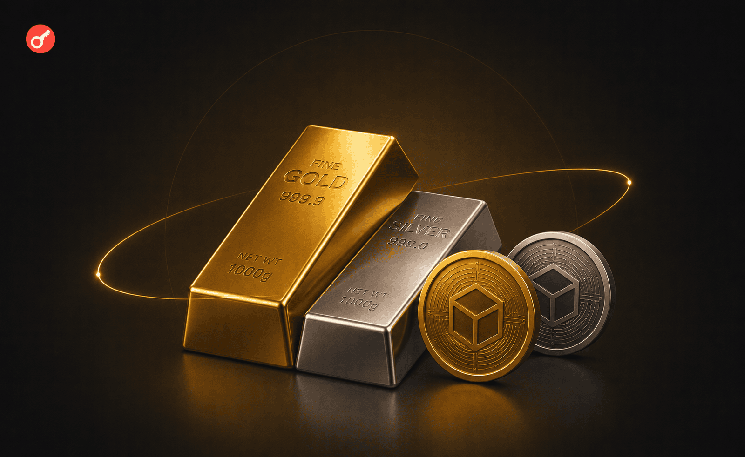
企业开始将金属通证化——甚至包括尚未开采的金属

矿业和科技公司正积极推出与黄金、铜、铀、镍和钴等金属挂钩的代币,旨在吸引加密投资者进入大宗商品市场。这类代币化项目意在简化零售投资者对实物金属的获取,为加密资本提供通过现实世界资产(RWA)进行多元化的机会,并同时为采矿项目创造新的融资机制。 市场兴趣源于区块链技术在传统金融中的更广泛采用。在股票和债券之后,公司正尝试将实物资产上链。然而,该市场仍处早期阶段,规模远小于传统工具,例如两大黄金代币的总市值约46亿美元,而黄金ETF总规模达5300亿美元。 支持者认为区块链能简化大宗商品资产的投资流程。例如,已有平台推出与铀、镍、钴挂钩的代币,可在特定条件下兑换实物。甚至有公司计划为尚未开采的金属(如铜、锑)发行代币,其模式类似于期货合约。 尽管RWA领域总市值已超430亿美元,且应用正从简单发行转向抵押、交易等实际用途,但金属代币化仍面临挑战。这包括投资者需理解金属来源、质量和特性,以及市场碎片化问题——不同代币在不同平台交易,部分仅通过发行人自有应用访问。专家指出,互操作性是亟待发展的领域,但长远看,区块链因其信息记录优势可能成为最终归宿。

cryptonews.ru18分钟前

企业开始将金属通证化——甚至包括尚未开采的金属

cryptonews.ru18分钟前

交易

现货

热门文章

如何购买S

欢迎来到HTX.com!我们已经让购买Sonic(S)变得简单而便捷。跟随我们的逐步指南,放心开始您的加密货币之旅。第一步:创建您的HTX账户使用您的电子邮件、手机号码注册一个免费账户在HTX上。体验无忧的注册过程并解锁所有平台功能。立即注册第二步:前往买币页面,选择您的支付方式信用卡/借记卡购买:使用您的Visa或Mastercard即时购买Sonic(S)。余额购买:使用您HTX账户余额中的资金进行无缝交易。第三方购买:探索诸如Google Pay或Apple Pay等流行支付方法以增加便利性。C2C购买:在HTX平台上直接与其他用户交易。HTX场外交易台(OTC)购买:为大量交易者提供个性化服务和竞争性汇率。第三步:存储您的Sonic(S)购买完您的Sonic(S)后,将其存储在您的HTX账户钱包中。您也可以通过区块链转账将其发送到其他地方或者用于交易其他加密货币。第四步:交易Sonic(S)在HTX的现货市场轻松交易Sonic(S)。访问您的账户,选择您的交易对,执行您的交易,并实时监控。HTX为初学者和经验丰富的交易者提供了友好的用户体验。

3.5k人学过发布于 2025.01.15更新于 2026.08.06

如何购买S

相关讨论

欢迎来到HTX社区。在这里,您可以了解最新的平台发展动态并获得专业的市场意见。以下是用户对S(S)币价的意见。

活动图片