New Ethereum Proposal Envisions Zero Issuance If ETH Staking Volume Reaches $112 Billion

cryptonews.ru发布于2026-08-05更新于2026-08-05

文章摘要

Researchers and developers have proposed a change to Ethereum's staking economics that would gradually burn validator rewards as the total amount of staked ETH increases. The burning mechanism would reach 100% when roughly 60.25 million ETH (about 50% of the total supply) is staked, effectively bringing net new issuance to zero. This aims to enhance ETH's long-term scarcity and valuation while preventing further dilution for existing holders. Currently, about 41 million ETH is staked. The proposal, signed by six researchers including Ethereum Foundation's Justin Drake, argues that perpetual staking rewards create an incentive for unlimited staking growth, which could eventually centralize stake with large providers and exchanges, making the network less secure. It was published shortly before the deadline for consideration in Ethereum's next upgrade, "Hegotá," scheduled for late 2026. The plan has sparked division. Critics like Mike Silagadze, founder of ether.fi, argue the short review process and the proposal's substance could harm DeFi, push out solo stakers, and potentially unlock over $10 billion in ETH back into circulation. Supporters believe it is necessary for sustainability. Given the significant economic implications, lack of broad consensus, and proximity to the upgrade deadline, the proposal is more likely to be deferred to a later network fork than included in Hegotá.

Ethereum researchers and developers have proposed gradually burning validator rewards as staking grows.

The burning will reach 100% when approximately 60.25 million $ETH (about half of the total supply) is staked, which will zero out net issuance and potentially enhance $ETH's long-term scarcity and valuation, limiting further dilution for existing holders.

Staking is a method for securing Ethereum. Holders lock up $ETH and run software that validates transactions, and the network pays them for it by creating new $ETH. These participants are validators, and the newly created $ETH is the reward. Burning means permanently destroying the coins, not paying them out.

Every 6.4 minutes, at the end of what Ethereum calls an epoch, a portion of each validator's reward is deducted and destroyed, not redirected elsewhere, with this share increasing linearly to 100% as staking approaches the saturation point.

Validators will still get paid for the same work, and they will keep all transaction fees and tips earned from block creation. Only the newly created $ETH is burned. The deduction from validator rewards will occur gradually, phased in over 18 months, with about 6 months before that for the upgrade to propagate, meaning roughly two years for adaptation.
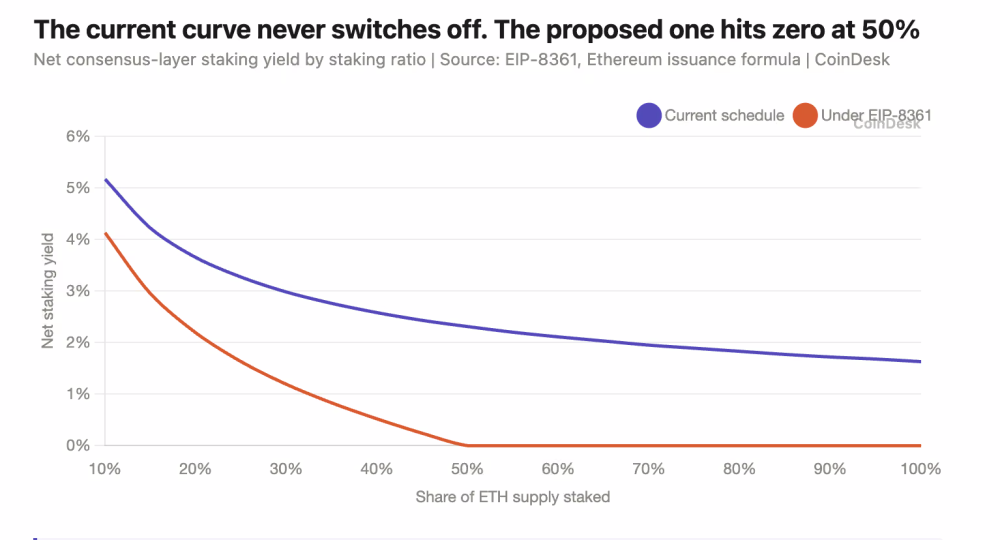
Figure 1. The current curve never ends. The proposed curve reaches zero at the 50% mark. Source: Shaurya Malwa.

The proposal was signed by 6 researchers, including Justin Drake of the Ethereum Foundation. It was published just days before the deadline for considering minor changes to Hegotá, the next Ethereum Network upgrade.

According to the authors, the problem is that staking never stops being profitable. Even if every $ETH were staked, the yield would still be around 1.5%, so there is always a reason to add more.

Jérôme de Tychey, one of the proposal's authors, predicts that over 70 million $ETH will be staked by January 2028 if nothing changes. The proposal states that beyond a certain level, additional staking will begin to make Ethereum less secure, as $ETH ultimately ends up with exchanges and staking service providers rather than its owners, while small individual stakers get pushed out.

Today, about 41 million $ETH, or about 34% of the total supply, is staked. According to tracking data, another 2.5 million are in the queue for activation, waiting 6 weeks or more, and no one is in line to exit.
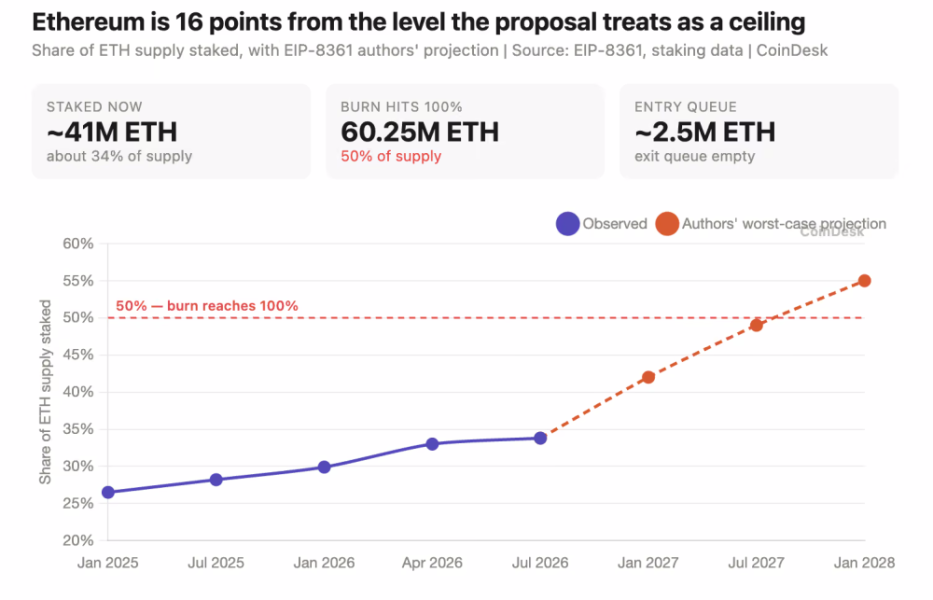
Figure 2. Ethereum is 16 percentage points away from the level considered a ceiling in the proposal. Source: Shaurya Malwa.

Ethereum limits the rate at which validators can join and leave, so both directions form a straight line. The limit exists to prevent a large block from entering or exiting quickly enough to destabilize the network. The entry queue consists of $ETH waiting to start staking, the exit queue consists of $ETH waiting to stop. Currently, about 57,600 $ETH can be activated per day.

The proposal has divided Ethereum developers and market participants.

Aave Labs CEO Stani Kulechov stated in his blog that driving staking rewards toward zero would largely render $ETH borrowing strategies unviable. As data shows, most $ETH borrowed on Aave is used to purchase more $ETH for staking, which is only beneficial while staking yield exceeds the borrowing cost.

Mike Silagadze, founder of the liquid staking protocol ether.fi, objects both to the process itself and its substance.

"The EIP draft was published with a 48-hour notice for comments," he wrote on X, calling it "a major change to network economics with far-reaching consequences for all of DeFi." He added that this change "obviously will push out solo stakers who are not subsidized by EF or others," and leave staking to "large centralized entities with zero cost of capital," and that "7 out of the top 10 DeFi protocols" would face capital outflows.

Silagadze was more forthright about the proposal's impact on prices. "People who lock $ETH in staking are not selling it," he wrote, arguing the proposal "will stop new $ETH from being staked" and could return over $10 billion worth of $ETH to circulation.

The more important question is whether this proposal will make it into the Hegotá upgrade, scheduled for Q3-Q4 2026, which will focus on structural optimization, censorship resistance, and state size reduction.

The fundamental change to Ethereum's monetary policy—gradually reducing and eventually zeroing out consensus-layer staking rewards after 50% of the supply is staked—comes just days before the Hegotá inclusion deadline of August 6. It is accompanied by only a rough implementation draft of about 300 lines and a lack of consensus among validators and stakers whose income will be reduced.

This combination of factors makes it much more likely to be skipped for Hegotá and moved to a later fork than implemented. The authors themselves note that each month of delay allows the staking ratio to grow by about 1.5 percentage points.

end-content

热门币种推荐

相关问答

QWhat is the main purpose of the new Ethereum proposal mentioned in the article?

AThe main purpose is to gradually burn validator rewards as the amount of staked ETH increases, with the burning reaching 100% (effectively zeroing out net issuance) when approximately 60.25 million ETH (about 50% of the total supply) is staked. This aims to enhance long-term scarcity, potentially strengthen ETH's valuation, and limit dilution for existing holders.

QAt what specific staking threshold does the proposal aim for net issuance to reach zero?

AThe proposal aims for net issuance to reach zero when approximately 60.25 million ETH is staked, which represents about 50% of Ethereum's total supply.

QAccording to the article, what is a major concern raised by opponents like Mike Silagadze regarding the proposal's impact?

AMike Silagadze argues that the proposal would squeeze out solo stakers who aren't subsidized and leave staking dominated by 'large centralized entities with zero cost of capital.' He also claims it could halt new ETH from being staked and potentially return over $10 billion worth of ETH to circulation, impacting prices.

QHow does the article describe the potential impact of this proposal on borrowing strategies involving ETH, as stated by Aave Labs CEO?

AAave Labs CEO Stani Kulechov stated that driving staking rewards towards zero would make ETH borrowing strategies largely non-viable. This is because a significant portion of ETH borrowed on Aave is used to buy more ETH for staking, which is only profitable when staking yield exceeds the borrowing cost.

QWhat is the timeline mentioned for implementing this proposal, and what is a key factor making its inclusion in the upcoming Hegotá upgrade uncertain?

AThe proposal was published just days before the August 6th deadline for inclusion in the Hegotá upgrade, scheduled for Q3/Q4 2026. Key factors making its inclusion uncertain are: it was introduced with very short notice (48 hours for comments), it only has a rough ~300-line implementation draft, and there is a lack of consensus among validators and stakers whose incomes would be reduced. The authors note that the staking ratio grows about 1.5 percentage points per month, increasing urgency with any delay.

你可能也喜欢

以太坊社区吵翻了!EIP-8363 动了谁的蛋糕?

以太坊社区正激烈争议一项名为EIP-8363(原EIP-8361)的提案。该提案由多位研究人员联合提交,核心是引入“渐进式发行销毁”机制,旨在为不断增长的以太坊质押率设置一条“收益下坡路”。具体而言,当全网有效质押余额接近当前ETH总供应量的一半(约6025万枚)时,验证者获得的共识层发行奖励将被逐步扣除并销毁,最终净收益趋近于零,以此降低质押激励。 提案支持者认为,当前协议始终为更多质押提供正向激励,可能导致ETH过度集中于大型托管商和交易所,同时未质押的ETH持有者持续被新增发行稀释,削弱了原生ETH作为中立资产的竞争力。 然而,社区反对声音更为集中。批评者指出,该提案若实施,将显著冲击独立质押者,因其固定成本不变而收益大降,弥补停机损失的时间可能增至近4倍。同时,质押衍生品(LST)与原生ETH的收益差将收窄,可能削弱其吸引力,并冲击依赖LST收益的DeFi循环杠杆策略及整个利率体系。Aave创始人等担忧这会损害ETH作为“互联网债券”的可预测现金流,降低机构配置意愿。另有观点认为,极低收益环境下,资本雄厚的大型机构可能更能承受,反而加剧验证者集权风险。 该提案目前仍处于早期草案阶段,计划在即将到来的Hegotá升级讨论中被审议。其影响深远,触及以太坊的安全假设、经济模型及资产定位,引发了关于谁将受益、谁将承压的广泛讨论。最终,供应变化还取决于网络使用与市场等多重因素。

marsbit46分钟前

以太坊社区吵翻了!EIP-8363 动了谁的蛋糕?

marsbit46分钟前

华尔街早报:道指再新高但科技股退潮,闪迪、西部数据指引不及预期夜盘暴跌,黄金大涨4%带飞矿业,谷歌AI高层调整带跌股价

昨夜今晨,美股市场表现分化。道琼斯指数逆势上涨0.49%,连续第三日创收盘新高;而纳斯达克和标普500指数受科技股拖累下跌。黄金成为最大亮点,现货金价大涨超4.2%,突破4300美元/盎司,创五个月最大单日涨幅,黄金矿业股普遍大涨7%左右。 科技板块内部分化显著。英伟达涨3.43%,创近两月新高。但谷歌因AI部门领导层重大调整(包括首席科学家Jeff Dean离职)跌超4%。AMD跌逾7%,SpaceX在发布季报后暴跌近14%,尽管其营收翻倍、亏损收窄,但激增的资本支出引发市场担忧。 存储领域,闪迪和西部数据虽财报强劲,但因下一财季指引不及市场对AI存储的高预期,股价在夜盘时段重挫。 其他个股方面,礼来因上调全年业绩指引涨近5%,Shopify因营收大增且指引超预期暴涨近17%。光伏企业SolarEdge因季度指引疲软暴跌超30%。 宏观层面,美联储两位官员仍强调若通胀不降可能继续加息,但利率市场对9月加息的预期概率已有所下降。地缘政治方面,伊朗与阿曼就霍尔木兹海峡新航运安排的磋商取得进展。 后续需关注SpaceX巨额内部持股解禁的潜在影响,以及今日将公布的美国初请失业金数据。

marsbit1小时前

华尔街早报:道指再新高但科技股退潮,闪迪、西部数据指引不及预期夜盘暴跌,黄金大涨4%带飞矿业,谷歌AI高层调整带跌股价

marsbit1小时前

交易

现货

热门文章

加密市场宏观研报:美国“加密货币周”来袭,ETH开启机构军备赛高潮

本周,加密市场迎来两股重磅催化——华盛顿“加密货币周”的立法攻势与以太坊机构布局的密集爆发,共同构成加密行业2025年下半年的“政策拐点”与“资金拐点”。这一轮加密周期的深层逻辑,正从比特币转向以太坊、稳定币及链上金融基础设施。我们认为:美国的政策明朗化+以太坊的机构化扩展,标志着加密行业正进入结构性转正阶段,市场配置的重心亦应逐步从“价格博弈”过渡至“规则+基础设施的制度红利捕捉”。

2.0k人学过发布于 2025.07.17更新于 2025.07.17

加密市场宏观研报:美国“加密货币周”来袭,ETH开启机构军备赛高潮

相关讨论

欢迎来到HTX社区。在这里,您可以了解最新的平台发展动态并获得专业的市场意见。以下是用户对ETH(ETH)币价的意见。

活动图片