Author: Matt Crosby
Compiled by: Plain Blockchain
Bitcoin's total network hash rate has been declining for several consecutive months, and the mining difficulty has just recorded one of the steepest drops on record. Typically, the story isn't complicated: Miners start shutting down their machines because it's no longer economically viable. The exception this time is that the stocks of listed mining companies are experiencing one of their strongest performances in recent years, while BTC itself has been hit hard. In every previous cycle of miner capitulation, miner pressure and price pressure often occurred simultaneously; now the two are diverging, and the market seems not to have fully priced in what this divergence means for the long-term hash rate.
If you're in a hurry, here are the key points:
-
The total network hash rate is emitting one of the longest-lasting miner capitulation signals in Bitcoin's history.
-
Mining difficulty has fallen 19.9% from its peak, the third deepest pullback since the adoption of specialized mining hardware.
-
Despite miners selling thousands of bitcoins, mining company stocks have significantly outperformed BTC over the past year.
-
Block reward income denominated in BTC has just hit a record low for a single day.
-
The average daily transaction fee income over the past 28 days can't even cover the subsidy for one block.
Miner Capitulation Is Indeed Happening
In Bitcoin's history, there are only a handful of hash rate drawdowns that lasted longer than this one. Mining Difficulty is also declining in sync, which precisely shows the protocol mechanism functioning as designed: every 2,016 blocks, roughly every two weeks, the network resets its target difficulty to ensure that block production averages close to ten minutes. With fewer machines participating in the hash computation, the target difficulty naturally decreases. Today, mining difficulty has retreated 19.9% from its peak; since ASICs replaced GPUs as the mainstream mining hardware, only two pullbacks have been deeper.
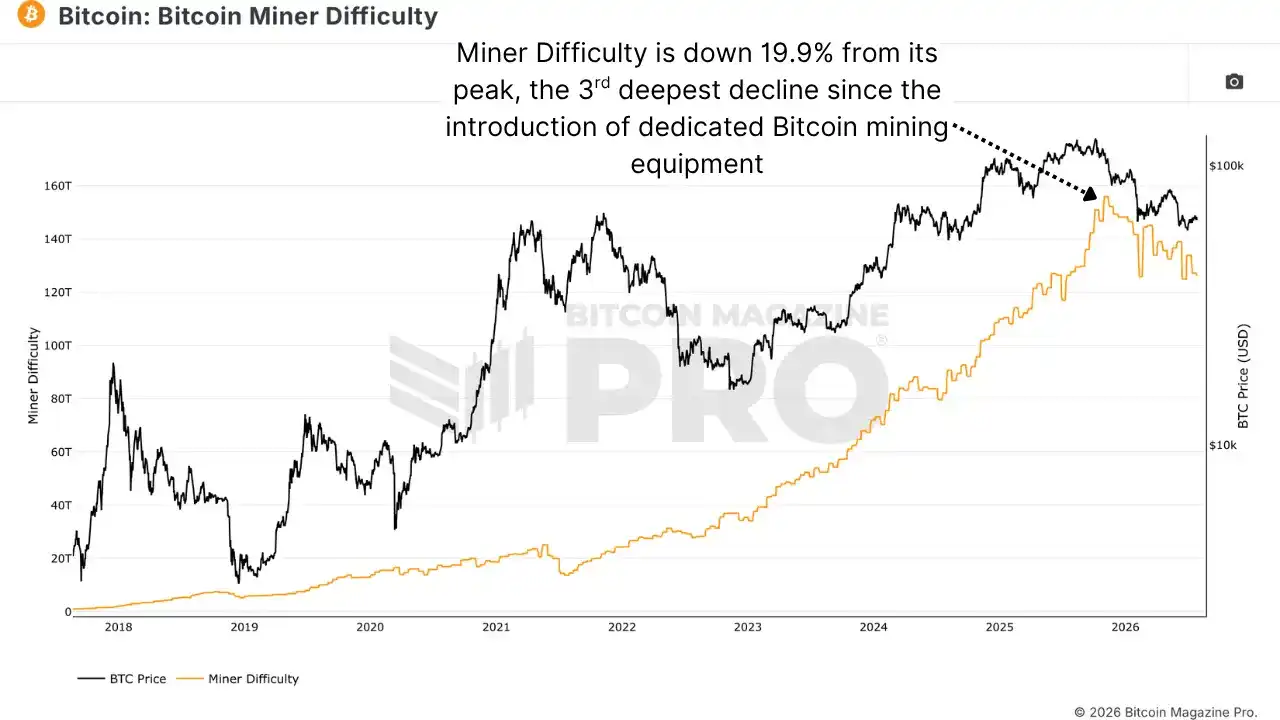
Figure 1: Mining difficulty has retreated 19.9% from its historical peak.
The only two comparable cycles in duration are also similar in length. The deeper one occurred after China's comprehensive crackdown on Bitcoin mining, which was almost the easiest type of event to understand: policy directly forced miners offline, causing a sudden collapse in hash rate, and any observer could deduce the next step—these machines would seek cheaper electricity and reconnect to the network elsewhere.
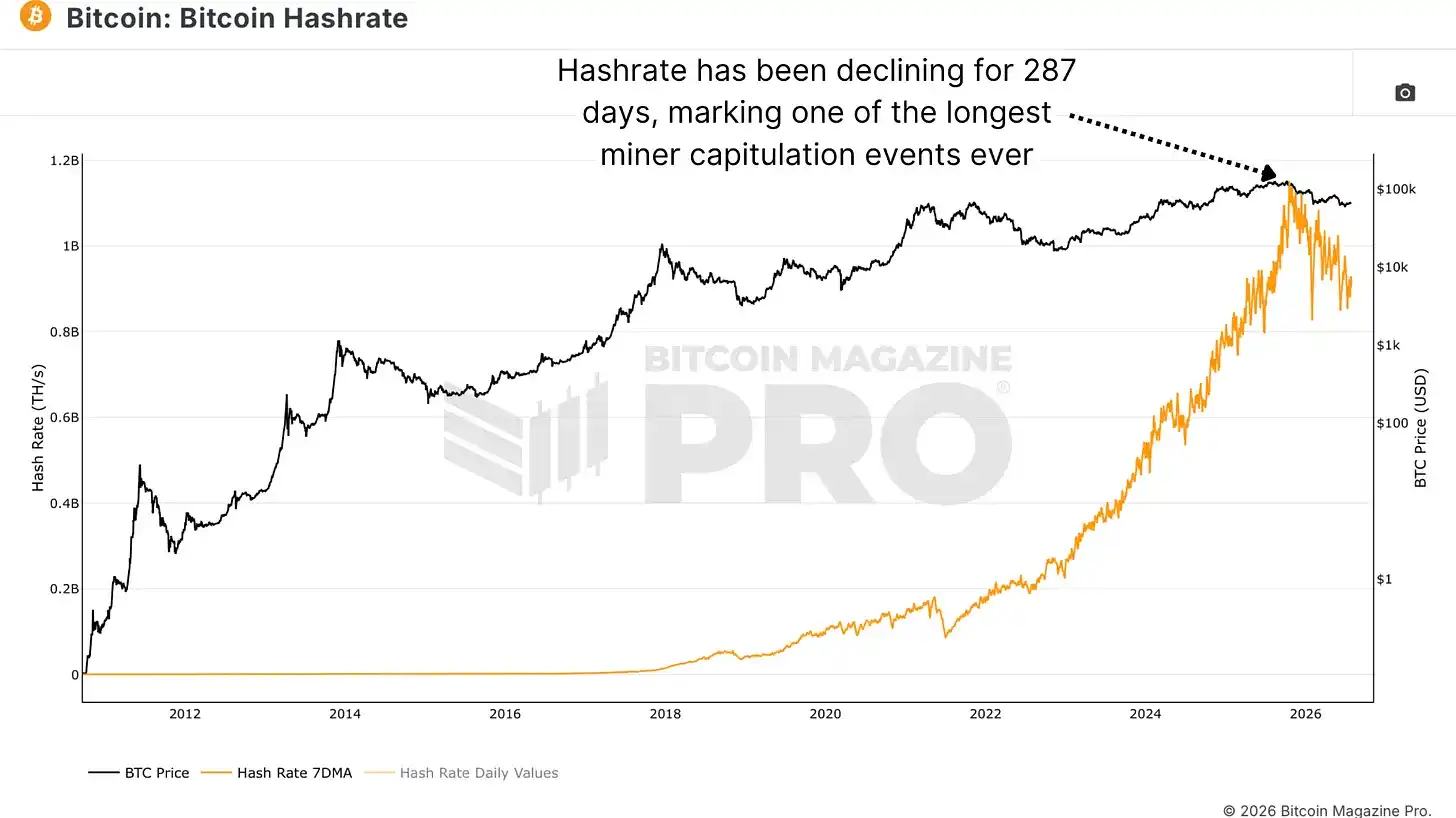
Figure 2: Bitcoin's total network hash rate has been declining for 287 consecutive days.
Why Mining Stocks Are Rising Instead
Over the past year, BTC has declined approximately 46%. Yet, the largest Listed Miners have risen sharply during the same period, with the best performer gaining over 430%. This is not how this group of assets typically behaves. Historically, mining company equity has often been seen as "leveraged Bitcoin," meaning it tends to fall harder during downturns and rise more sharply during upswings. Therefore, such a massive divergence as this is very rare.
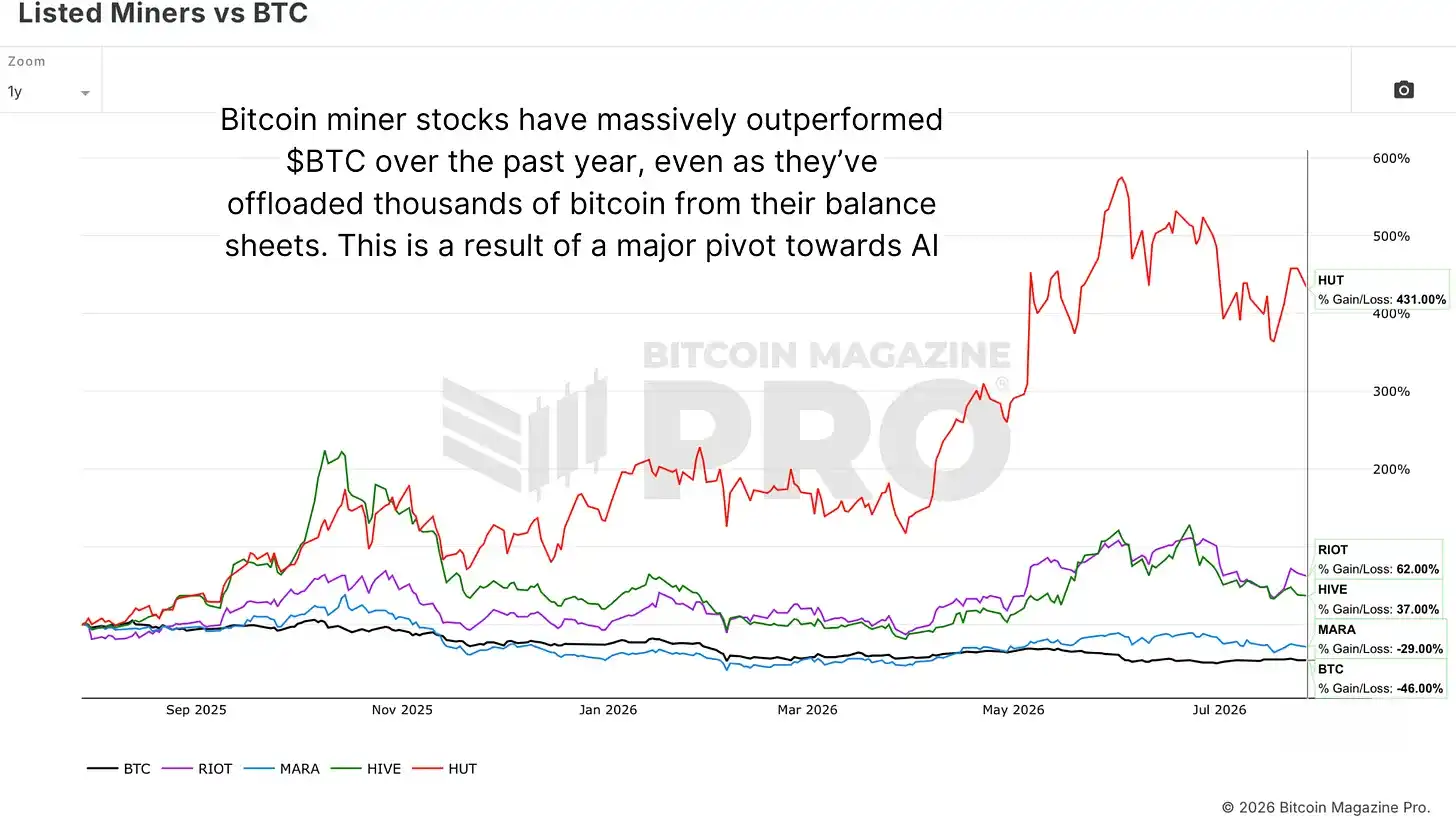
Figure 3: Performance of listed miners relative to BTC over the past year.
What's really driving all this is the AI narrative. For years, Bitcoin and the largest AI ETFs have moved in tandem, with their correlation even reaching 0.8 to 0.9 during some periods. But now that relationship has reversed: AI continues to rise, while Bitcoin weakens.
The Block Subsidy Is Thinning
Miners recently recorded a new historical low for daily Block Reward income denominated in BTC. Part of the reason is the hash rate decline—before the difficulty adjustment catches up, block production becomes slower than ten minutes; but the main reason is simply the protocol operating by its predefined rules. The block subsidy halves every four years and will continue to do so until no new coins can be issued.
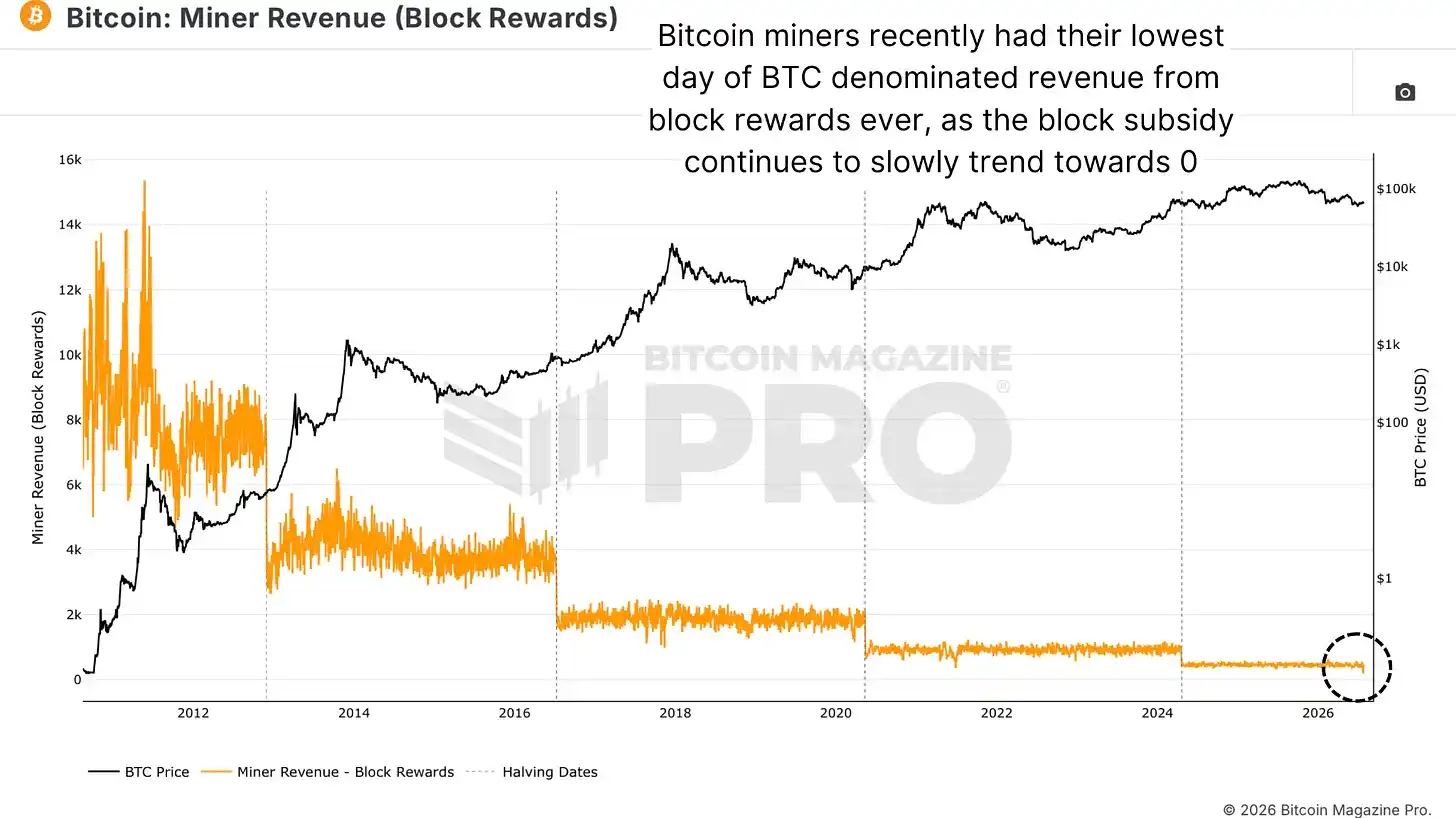
Figure 4: Miners' block reward income denominated in BTC has dropped to a new historical low.
Since the first halving, the same rebuttal has been raised every cycle: The price will compensate. That is, even though fewer coins are produced per block, as long as each coin becomes more valuable, dollar-denominated revenue can still be sustained. So far, this logic has held true. The Puell Multiple, which gauges mining revenue health, is currently around 0.75, meaning current miner revenue is about three-quarters of its average over the past year. In translation, this roughly equates to current daily revenue of about $30 million, compared to a longer-term average closer to $40 million.
Who Will Fill the Gap
The other answer has always been transaction fees, and that was the case from the beginning. One day, the block subsidy will reach zero; at that point, the network security budget must be borne independently by transaction fees, otherwise, as the subsidy disappears, so will the security budget.
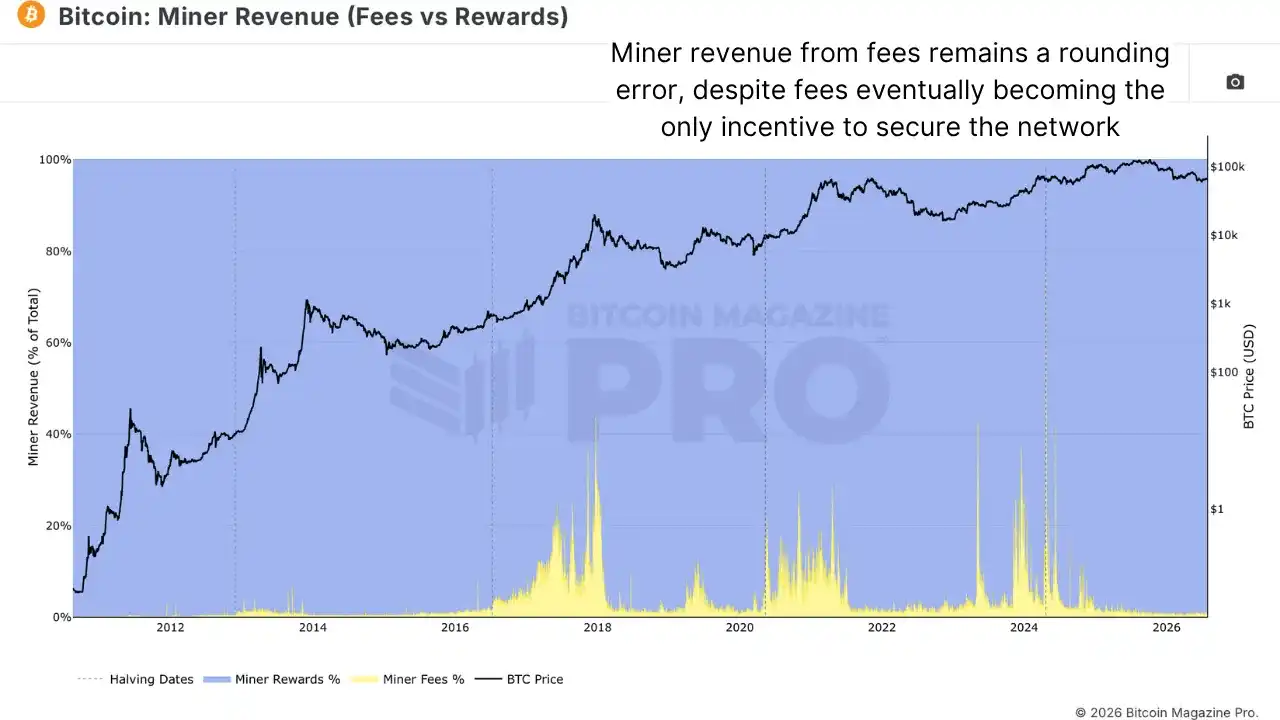
Figure 5: The proportion of miner fee income relative to total miner income.
But reality is still very far from that point. Miners currently earn about $30 million per day, with transaction fees contributing only about $200,000. In other words, the average transaction fee income over the past 28 days can't even cover the subsidy for one block, and the Bitcoin network produces approximately 144 blocks per day. No matter what the future transaction fee market ultimately evolves into, at least for now, the security budget it covers is only sufficient for about ten minutes of network operation.
What This Means
Bitcoin today is certainly far from facing a security risk, and this article is not directly judging the price. However, the shape of this capitulation is clearly different from previous cycles. Miners have simply found a more profitable use for their hardware than mining, and this shift is happening alongside a falling coin price, a thinning block subsidy, and stagnant transaction fee income.
In a bear market, no one wants to hear another pessimistic narrative, and I know this article largely reads that way. On the other hand, the problems that truly need solving are often only seriously confronted during bear markets. In the long run, miner incentive mechanisms will either be consciously designed and patched, or they will continue to rely on higher coin prices to temporarily mask the issues.