A study by the Bank of Italy has shown that stablecoins do not provide a sustained advantage in terms of price and speed for money transfers. All benefits are lost on fees for depositing and withdrawing into fiat currency and in the processes of local payment infrastructure operations.
The authors compared transfers of 200 USDC across 10 bilateral corridors between Italy and Brazil, Argentina, Japan, the UAE, and South Africa. Metrics—total cost and settlement times—were compared with standard money transfer services.

The final cost of stablecoin transfers ranged from 0.3% to nearly 9%, depending on the direction. In corridors where instant payment systems operated, settlements took less than 20 minutes. Where such infrastructure was absent, timelines stretched to one to two business days.
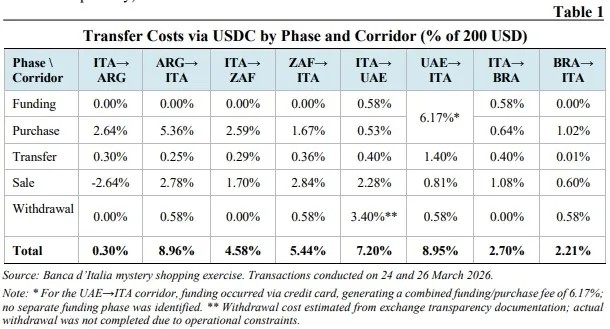
The researchers linked key costs and delays to currency exchange and conversion, as well as the quality of local infrastructure. Blockchain fees, they estimated, were not the main factor.
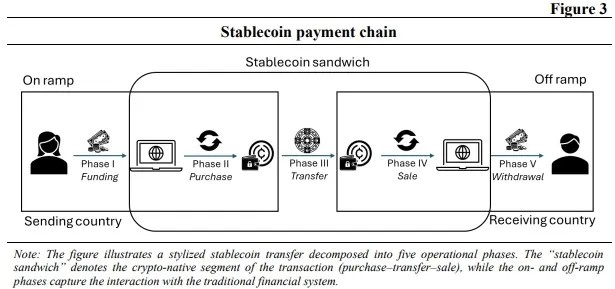
The global average cost of remittances, according to World Bank data, is 6.65%. In most of the corridors studied, stablecoins were cheaper than this level, but compared to Wise, the advantage was only in three out of seven comparable directions.
The authors believe the effect would be more noticeable if stablecoins could be spent directly on goods and services without back-conversion to local currency.
They also noted that prohibitive regulatory regimes do not eliminate the demand for "stable coins," and overly strict rules complicate the use of such tools by retail clients.
Recall that in July, the total market capitalization of stablecoins fell by more than $10 billion from the May peak—to ~$310 billion. The outflow was the largest monthly drop since the Terra collapse in May 2022.