Will Noah Doe’s Satoshi BTC claim ‘disrupt entire industries’? Defendants say…

ambcrypto发布于2026-07-07更新于2026-07-07

文章摘要

Noah Doe, along with two other pseudonymous plaintiffs, is suing in New York to claim legal ownership of 39,069 allegedly abandoned and dormant Bitcoin wallets, containing approximately 3.8 million BTC. Their argument hinges on posting abandonment notices via the Bitcoin blockchain and deeming wallets inactive after a 90-day non-response period as abandoned property. Defendants, including the listed wallet addresses, are seeking to dismiss the case. They argue that inactivity alone does not prove abandonment, as long-term holding is common, and that Noah Doe cannot be a legitimate "finder" without possessing the private keys. They warn a ruling for the plaintiffs would disrupt digital asset industries and undermine property rights. The argument was complicated when one of the named "dormant" wallets, linked to Satoshi and holding 35.55 BTC since 2011, recently moved 15 BTC, demonstrating active control.

After fourteen years, Satoshi-era Bitcoin is once again at the center of a lawsuit. On the 6th of July, a second amicus brief has been filed to oppose “Noah Doe’s” attempt to assert ownership of Satoshi’s coins as “abandoned property.”

The first filing happened back in May 2026, when “Salomon Brothers” was claiming the legal ownership of Satoshi’s coins.

That said, the three pseudonymous plaintiffs—Noah Doe, ABC Company, and XYZ Company—are making attempts to acquire legal ownership of 39,069 dormant Bitcoin wallets that they did not create and could not access.
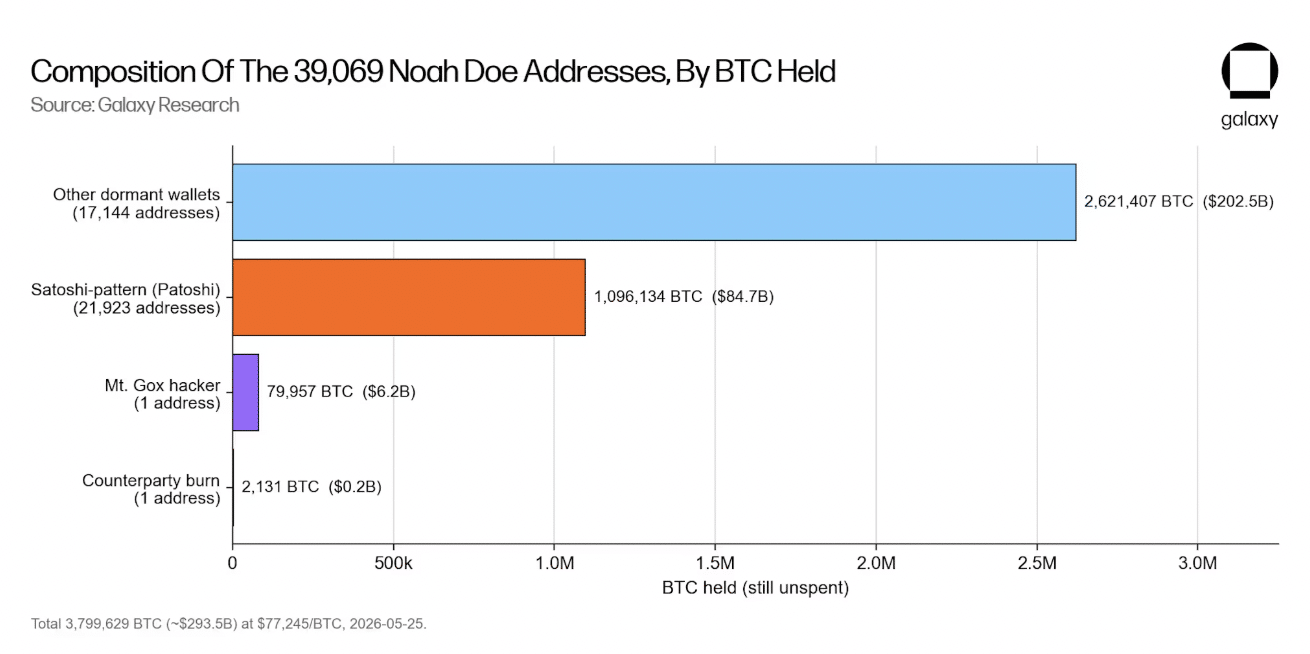
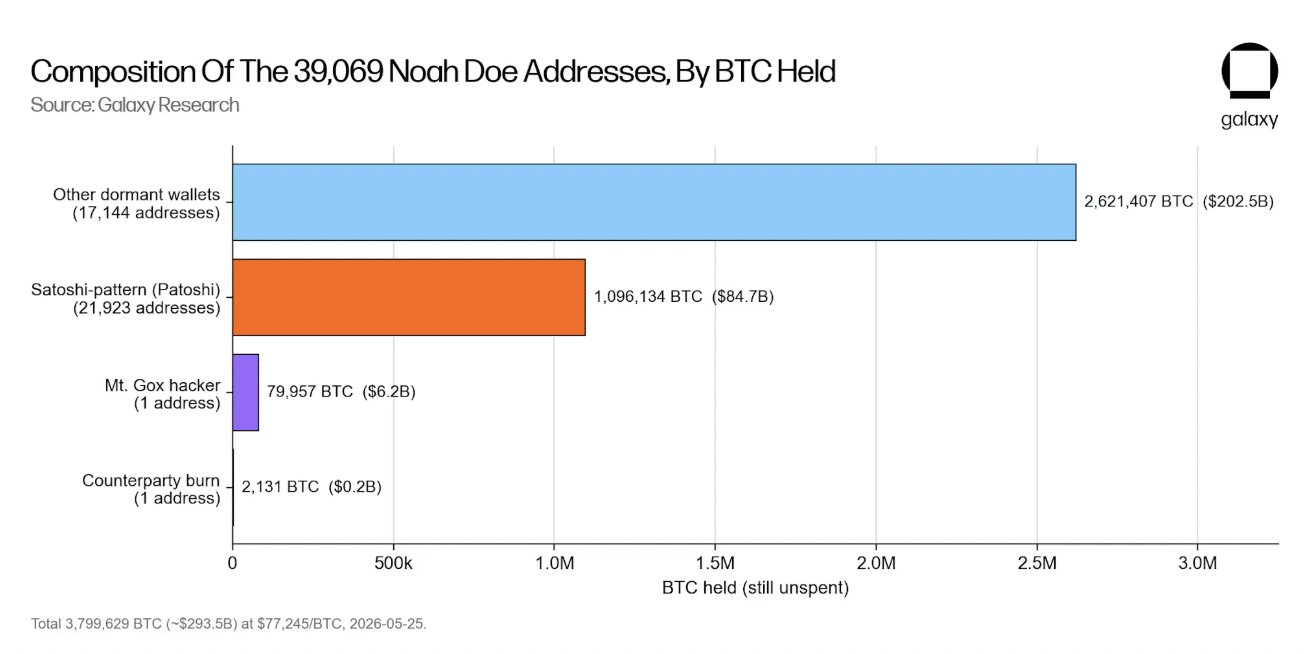
Source: Galaxy Research

Why does Noah Doe claim these wallets were abandoned?

For context, the plaintiffs claim that they posted notices on the blockchain using Bitcoin’s OP_RETURN function. It was to direct wallet owners to an abandonment notice and provide them with 90 days to reply.

After the notice period, approximately 2,900 wallets were deleted, including 424 that were activated, leaving 39,069 that they say were abandoned.

But there are significant obstacles in the lawsuit.

In addition to acknowledging that the plaintiffs lack the private keys required to access the Bitcoin [BTC], it provides no evidence that the owners saw the notices and only uses wallet inactivity as proof of abandonment.

The case presented by defendants

Hence, the defendants contend the case should be dismissed. They caution that since many investors purposefully leave Bitcoin unaltered for years, this would compromise digital property rights.

The filing noted,

Granting the relief Plaintiffs seek would not quiet title, it would disrupt entire industries and the expectations of every owner of digital assets.

Lastly, it states that Noah Doe is ineligible to be a legitimate “finder” since he only discovered public wallet addresses and never acquired the private keys or authority over the Bitcoin.

Meanwhile, recent blockchain activity complicated that argument further.

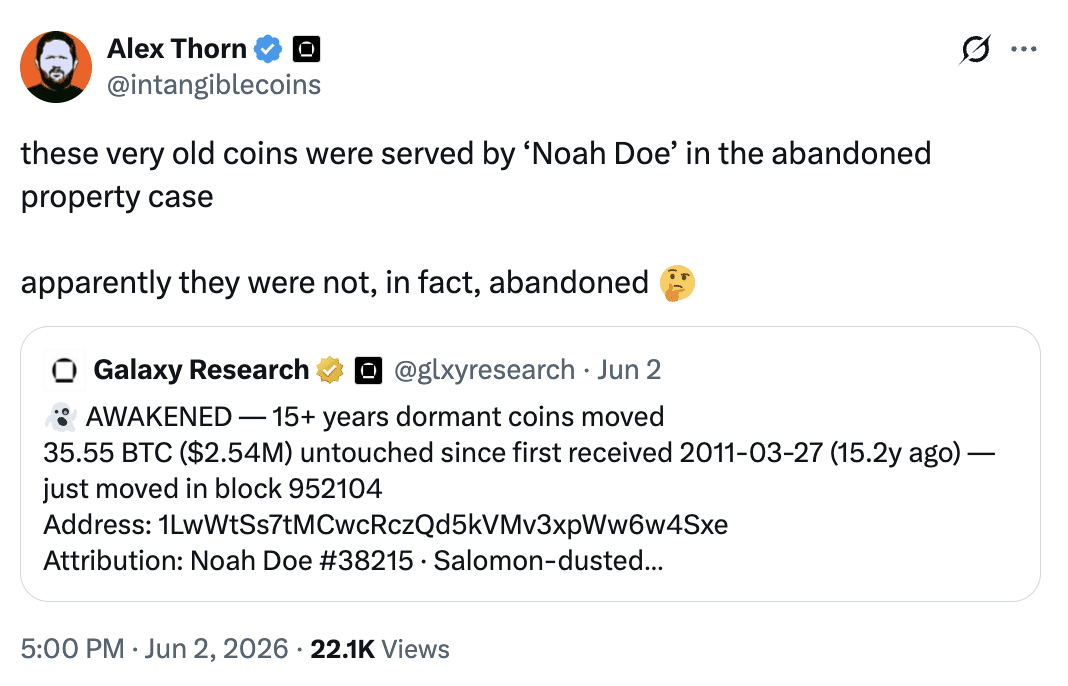
In Bitcoin block 952,104, the Satoshi Bitcoin wallet with the address 1LwWtSs7tMCwcRczQd5kVMv3xpWw6w4Sxe, which had held 35.55 BTC since the 27th of March, 2011, moved 15 BTC to a new address and returned the remaining 20.55 BTC as change.

The wallet’s movement is noteworthy because it is one of 39,069 Bitcoin addresses that have been named as defendants in a lawsuit filed in New York by Noah Doe.
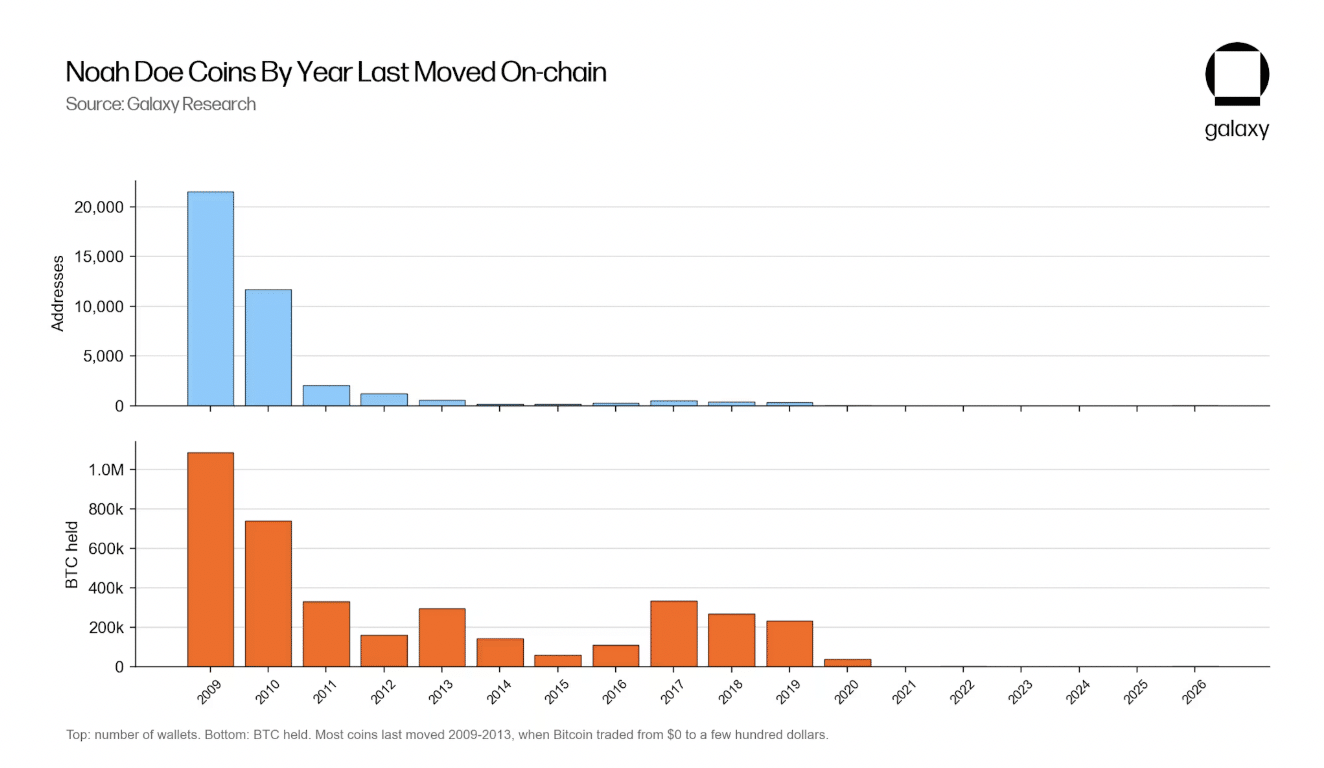
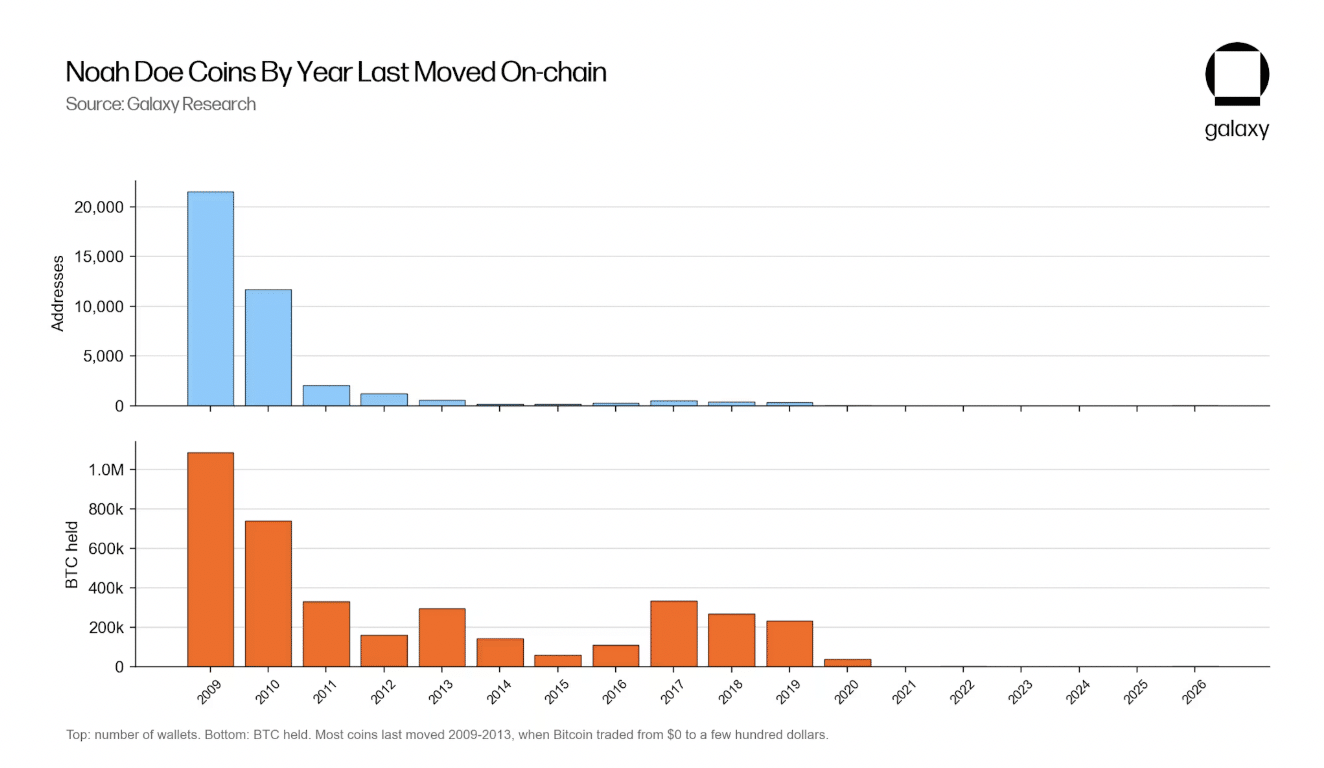
Source: Galaxy Research

Doe claims that the dormant wallets were abandoned and is suing for ownership of approximately 3.8 million BTC under New York law.

The 1LwWt wallet was on the final list of defendants after failing to reply to a notice sent on the 31st of July, 2025.

Remarking on the same, Alex Thorn, Head of Research at Galaxy Research, noted,
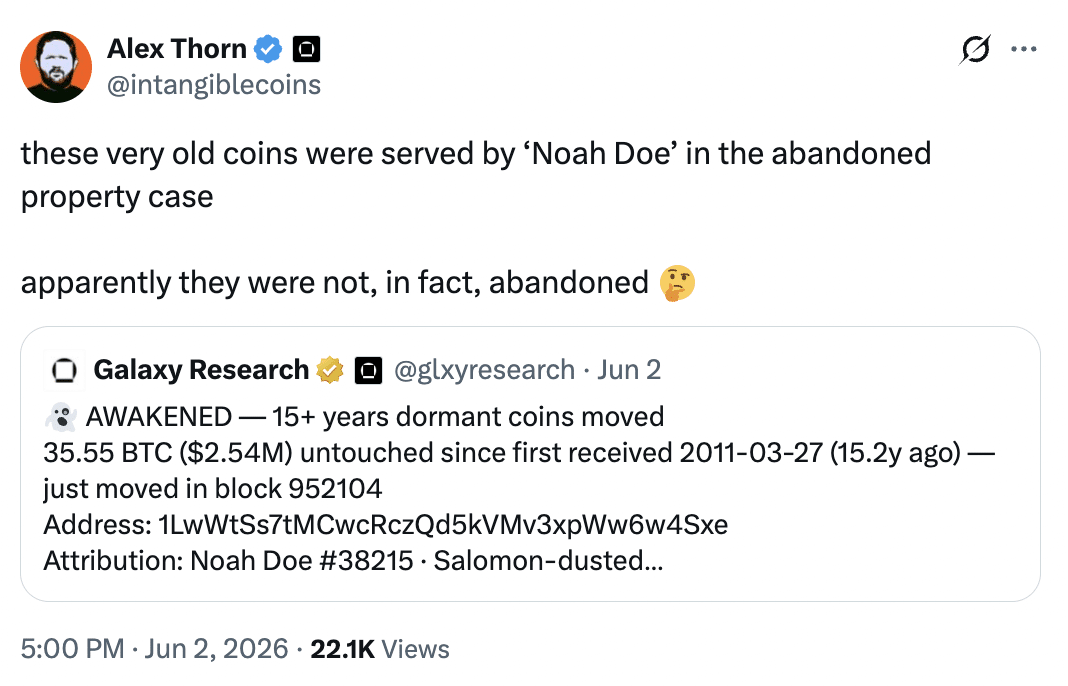
Source: Alex Thorn/X

Needless to say, long-time Bitcoin owners frequently hold their coins in self-custody for years at a time without transacting.

Therefore, wallet inactivity by itself does not establish abandonment. That’s because ownership ultimately rests on control of the private keys rather than transaction history.


Final Summary

  • The three plaintiffs, mainly Noah Doe, are making attempts to acquire legal ownership of 39,069 dormant Bitcoin wallets.
  • The defendants argue that Noah Doe is ineligible to be a legitimate “finder” since he never acquired the private keys.


热门币种推荐

相关问答

QWhat is the main claim made by Noah Doe in the lawsuit regarding the 39,069 Bitcoin wallets?

ANoah Doe claims that the 39,069 dormant Bitcoin wallets are abandoned property under New York law and is suing to acquire legal ownership of them, which holds approximately 3.8 million BTC.

QAccording to the article, why do the defendants argue that the case should be dismissed?

AThe defendants argue the case should be dismissed because the plaintiffs lack private keys, provide no evidence that wallet owners saw the abandonment notices, and incorrectly use wallet inactivity alone as proof of abandonment. Granting the plaintiffs' claim would disrupt digital property rights and industries, as many investors intentionally hold Bitcoin without transacting for long periods.

QHow did the plaintiffs attempt to notify the wallet owners before declaring the wallets abandoned?

AThe plaintiffs posted notices on the blockchain using Bitcoin's OP_RETURN function. These notices directed wallet owners to an abandonment notice and provided a 90-day period for them to reply.

QWhat recent blockchain activity complicates Noah Doe's argument that the wallets are abandoned?

ARecent blockchain activity showed that a wallet from the list of defendants (address 1LwWtSs7tMCwcRczQd5kVMv3xpWw6w4Sxe), which had been inactive since 2011, moved 15 BTC to a new address and returned 20.55 BTC as change. This transaction demonstrates active control and contradicts the claim of abandonment.

QWhat is the key legal point, according to the defendants, that determines ownership of Bitcoin and undermines the plaintiffs' case?

AThe defendants state that ownership of Bitcoin ultimately rests on control of the private keys, not on transaction history or wallet inactivity. Therefore, since Noah Doe never acquired the private keys or authority over the Bitcoin, he is ineligible to be a legitimate 'finder' of abandoned property.

你可能也喜欢

稳定币结算额创下1.79万亿美元历史新高——市场底部是否已现?

稳定币叙事正从流动性引擎转向实用框架。随着采用成熟,稳定币日益融入跨境支付、机构转账、DeFi应用和全天候全球结算网络,重点从链上流动性供给转向现实世界的金融效用。 6月数据显示了这一转变:调整后的稳定币交易量达到创纪录的1.79万亿美元,环比增长63%,同比增长125%。这表明稳定币正更多地被用作结算层,而不仅是加密市场内部的流动性工具。这一转变提升了Layer 1网络的战略重要性,例如Toncoin(TON)的稳定币供应在过去一周增长8%至超8.1亿美元,凸显了各网络争夺稳定币采用率的竞争。 然而,市场层面出现分化:6月稳定币交易量飙升的同时,市场整体下跌超18%,创下自2月以来最大月度资本流出。稳定币市场总市值下降超2%,出现近80亿美元的资金外流,尤其是USDT和USDC的合计市值在过去两个月缩水近110亿美元,表明使用量增加与流动性收缩并存。 从宏观角度看,美元指数(DXY)走强,6月上涨超2.25%,美元资产需求保持高位可能继续支撑稳定币的实用性。但若使用量与流动性的背离持续,可能成为下半年加密市场的关键看跌因素。 **核心要点**: * 稳定币活动增加,但USDT和USDC市值下降预示流动性减弱。 * 美元走强支撑需求,但流动性降低可能给加密市场带来风险。

ambcrypto1小时前

稳定币结算额创下1.79万亿美元历史新高——市场底部是否已现?

ambcrypto1小时前

百姓网创始人:大语言模型吞噬一切,这话我信一半

百姓网创始人王建硕对“大语言模型吞噬一切”的观点持保留态度。他认为这种说法过于笼统,类似于过去“互联网吞噬一切”的预言,但事实上任何技术都无法真正覆盖所有领域。他强调大模型更像是一个重要的“基座”,如同电力或互联网基础设施,为上层应用提供基础的智能能力。 然而,仅有基座是不够的。他以电力为例:电本身不能洗衣服,需要与洗衣机结合才能发挥作用。同样,大模型的智能必须嵌入到面向具体场景的应用(如代码生成、设计、写作等工具)中,通过与操作系统、其他能力(如代码执行、数据访问)结合,才能解决实际问题。当前出现的一层“接口”或“连接器”(如Harness),正是为了将通用智能适配到特定任务。 他承认大模型会深刻影响并可能取代大量现有软件,尤其是那些由固化规则、表单和工作流构成的系统(如CRM、HIS等),因为这正是大模型所擅长的。但这不意味着吞噬一切。客户信息、实际执行能力、信任关系和物理世界要素等不会被替代。更重要的是,在吞噬掉部分旧有软件层之后,反而会催生出全新的、界面更流式、规则更灵活的新型软件,开启更大的创新空间。 王建硕指出,人们常因视野局限而高估技术的短期影响,低估其长期潜力。他主张应聚焦于大模型作为基座稳定后,上层各种具体应用所带来的巨大机会,而非纠结于是否“吞噬一切”。在技术变革中找到其中真正的机会,才是关键。

链捕手3小时前

百姓网创始人:大语言模型吞噬一切,这话我信一半

链捕手3小时前

交易

现货

热门文章

如何购买S

欢迎来到HTX.com!我们已经让购买Sonic(S)变得简单而便捷。跟随我们的逐步指南,放心开始您的加密货币之旅。第一步:创建您的HTX账户使用您的电子邮件、手机号码注册一个免费账户在HTX上。体验无忧的注册过程并解锁所有平台功能。立即注册第二步:前往买币页面,选择您的支付方式信用卡/借记卡购买:使用您的Visa或Mastercard即时购买Sonic(S)。余额购买:使用您HTX账户余额中的资金进行无缝交易。第三方购买:探索诸如Google Pay或Apple Pay等流行支付方法以增加便利性。C2C购买:在HTX平台上直接与其他用户交易。HTX场外交易台(OTC)购买:为大量交易者提供个性化服务和竞争性汇率。第三步:存储您的Sonic(S)购买完您的Sonic(S)后,将其存储在您的HTX账户钱包中。您也可以通过区块链转账将其发送到其他地方或者用于交易其他加密货币。第四步:交易Sonic(S)在HTX的现货市场轻松交易Sonic(S)。访问您的账户,选择您的交易对,执行您的交易,并实时监控。HTX为初学者和经验丰富的交易者提供了友好的用户体验。

2.8k人学过发布于 2025.01.15更新于 2026.06.02

如何购买S

相关讨论

欢迎来到HTX社区。在这里,您可以了解最新的平台发展动态并获得专业的市场意见。以下是用户对S(S)币价的意见。

活动图片