Is a CeFi-to-DeFi rotation signaling crypto’s Q3 bottom? The data says…

ambcrypto发布于2026-07-03更新于2026-07-03

文章摘要

FUD hit the crypto market in Q2, with over $600 million lost to exploits and a $20 billion TVL decline, the sharpest quarterly drop since 2021. This triggered widespread capital outflows from DeFi, exemplified by Aave's significant TVL decrease. However, early Q3 data suggests a potential reversal. Stablecoin inflows are rising across networks like Solana and Cardano, signaling returning risk appetite. Concurrently, CeFi lending saw its first quarterly decline since 2024. A key indicator is Aave's recent surge in new wallet addresses, its strongest since 2021. While more data is needed, these trends—rising on-chain liquidity, recovering TVL, and contracting CeFi activity—point to a possible CeFi-to-DeFi capital rotation, which could signal the market is bottoming ahead of a Q3 recovery.

FUD hit the crypto market in Q2 following a massive shakeout in TVL.

Notably, this wasn’t just the result of weaker price action. Instead, back-to-back protocol exploits resulted in more than $600 million in cumulative losses, triggering widespread capital outflows as users rushed to unstake assets and reduce their exposure to DeFi protocols.

To put the scale of the drawdown into perspective, more than $20 billion exited DeFi protocols during the quarter, pushing total value locked (TVL) down to roughly $70 billion from its pre-October 2025 high of around $150 billion. That represents the sharpest quarter-over-quarter decline in TVL since 2021, highlighting just how quickly market participants shifted into a risk-off stance.
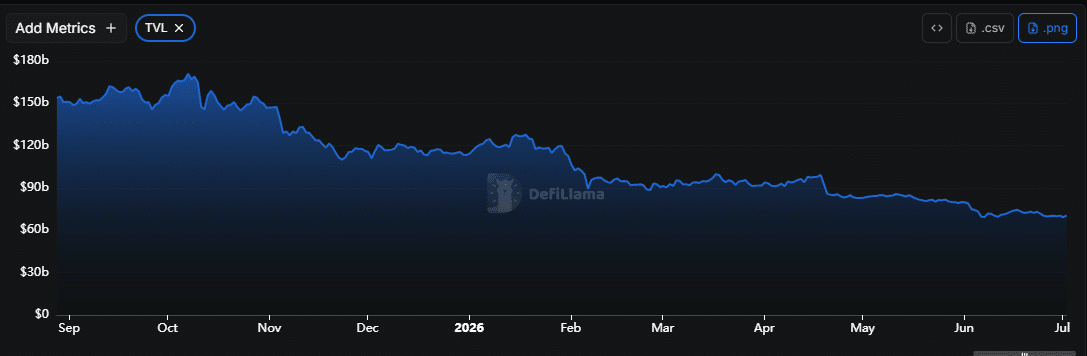
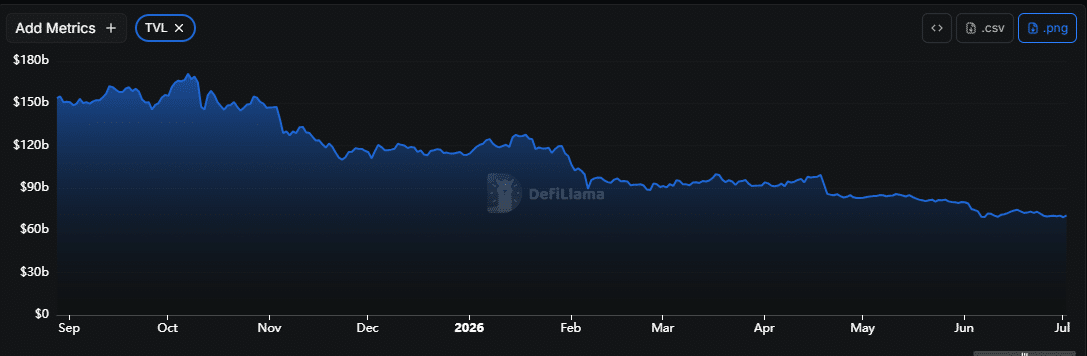
Source: DeFiLlama

Aave [AAVE], the largest lending protocol, was a prime example of this trend.

As AMBCrypto reported, following the KelpDAO exploit, Aave’s TVL dropped roughly 18% to $17.8 billion within 24 hours, as users rapidly withdrew liquidity from the protocol. The selloff wasn’t limited to Aave, though. Fear quickly spread across DeFi, driving liquidity out of other protocols and pushing Ethereum’s TVL down by more than $10 billion.

Now, however, the trend may be starting to reverse. Aave on Ethereum recently recorded 1,806 new wallet addresses in a single day, its strongest network growth since October 2021. While one day of data isn’t enough to confirm a recovery, it does suggest that interest in DeFi is picking up again.

Naturally, the question is: Is this the first sign that the market is bottoming ahead of a potential Q3 rally?

DeFi rebounds as stablecoin inflows signal returning risk appetite

Stablecoins are often one of the clearest indicators of where capital is flowing.

Notably, that trend is already emerging in Q3. Stablecoin liquidity has been building across several major L1 networks. Solana ended Q2 2026 with a record $16.6 billion in stablecoin supply. Stellar also saw momentum pick up, with its 30-day stablecoin transfer volume rising 32.6%. Cardano is showing a similar pattern. According to DefiLlama, the network’s native stablecoin supply has grown 20%+ over the past week.

Taken together, these metrics paint a clear picture. Stablecoins are moving back on-chain, TVL is beginning to recover, and activity across major DeFi protocols is picking up. That view gains further support from CryptoQuant’s latest report, which showed CeFi lending contracted 6% quarter-over-quarter to $23.3 billion, its first decline since Q3 2024.
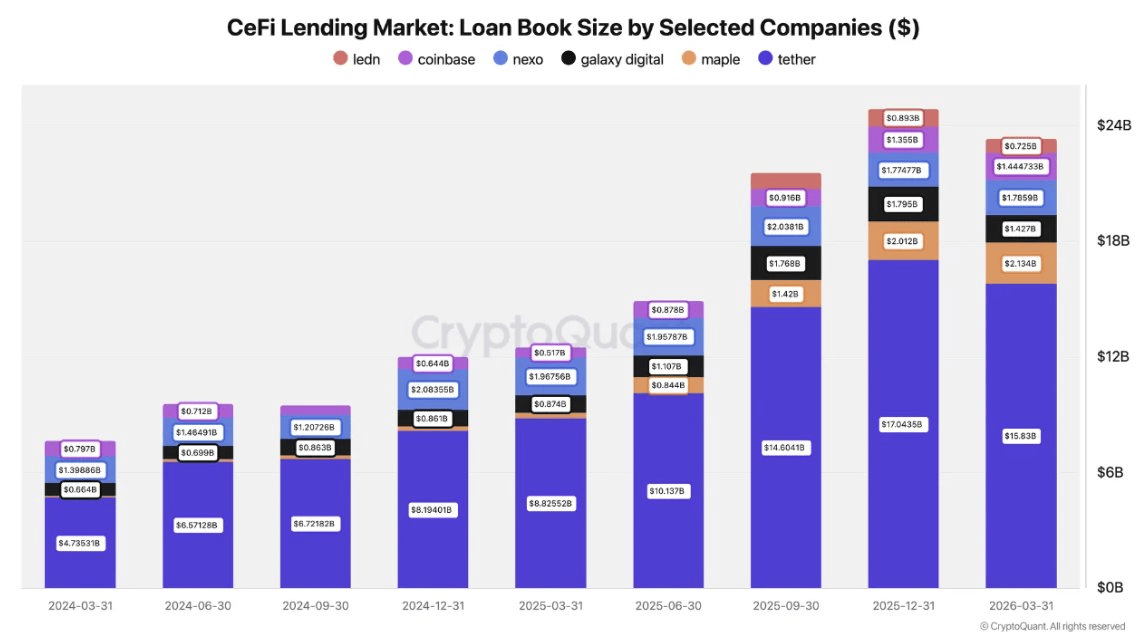
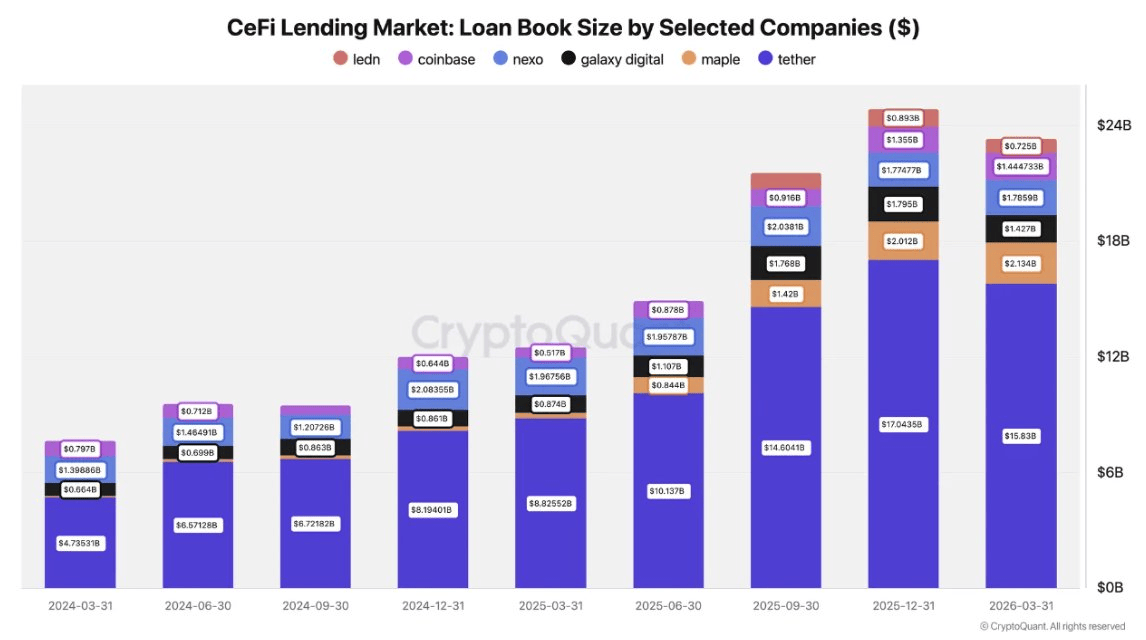
Source: CryptoQuant

The takeaway is fairly straightforward.

As activity slowed on centralized lending platforms, liquidity appears to be finding its way back into DeFi, suggesting investors are becoming more comfortable deploying capital on-chain again.

If sustained, this CeFi-to-DeFi rotation could mark one of the first measurable signs that Q2’s risk-off sentiment is fading, potentially laying the groundwork for a broader crypto recovery in Q3.


Final Summary

  • DeFi is showing signs of recovery as stablecoin inflows increase and Aave’s network activity rebounds.
  • Falling CeFi lending and rising on-chain liquidity suggested that capital may be rotating back into DeFi ahead of Q3.


热门币种推荐

相关问答

QWhat was the main reason for the sharp decline in DeFi's Total Value Locked (TVL) in Q2?

AThe sharp decline in DeFi's TVL in Q2 was primarily due to back-to-back protocol exploits, which resulted in over $600 million in cumulative losses. This triggered widespread capital outflows as users rushed to unstake assets and reduce their exposure to DeFi protocols, leading to over $20 billion exiting the ecosystem.

QWhat recent on-chain data suggests a potential recovery in DeFi interest?

AAave on Ethereum recently recorded 1,806 new wallet addresses in a single day, marking its strongest network growth since October 2021. This, along with increasing stablecoin inflows across several L1 networks, suggests that interest in DeFi is picking up again.

QHow are stablecoins serving as an indicator of changing market sentiment?

AStablecoins are a key indicator of capital flow. In Q3, stablecoin liquidity has been building on major L1 networks like Solana, Stellar, and Cardano, with supplies and transfer volumes rising. This movement of stablecoins back on-chain signals a returning risk appetite among investors.

QWhat does the contraction in CeFi lending, as reported by CryptoQuant, imply?

ACryptoQuant's report showed that CeFi lending contracted by 6% quarter-over-quarter to $23.3 billion, marking its first decline since Q3 2024. This contraction, coupled with rising on-chain DeFi activity, implies that liquidity may be rotating from centralized finance (CeFi) back into decentralized finance (DeFi).

QWhat broader market shift might the current CeFi-to-DeFi rotation signal?

AThe current rotation of capital from CeFi to DeFi could be one of the first measurable signs that the risk-off sentiment dominant in Q2 is fading. If sustained, this shift may lay the groundwork for a broader cryptocurrency market recovery in Q3, potentially signaling a market bottom.

你可能也喜欢

机器人看视频学操作,伯克利首次打通互联网视频到灵巧手真机部署链路

加州大学伯克利分校的研究团队提出了一种名为“Do as I Do”的端到端流程,首次成功实现了从互联网单目RGB视频到灵巧手真机部署的完整链路。该方法旨在解决机器人“看”视频却“不会做”的核心难题,即如何将带有噪声的日常人类操作视频,转化为多指灵巧手能够执行的动作轨迹。 系统流程分为两个阶段。第一阶段,通过引导式扩散模型,稳定地从视频中重建出4D手-物交互过程,解决了传统方法在运动模糊、遮挡下跟踪不稳定的问题。第二阶段,针对重建出的带噪声参考轨迹,改进了原有的动作重定向优化框架,通过多项设计显著提升了成功率,从25%提升至71%。 研究团队利用该方法,从网络视频中生成了涵盖放置、书写、搅拌、锤击等20类复杂日常操作的500条已验证轨迹,并选取其中10项成功部署到双UR3e机械臂与双Sharpa Wave灵巧手平台上进行50Hz的真实执行。Sharpa Wave灵巧手因其接近人手的尺度和自由度,更适合此类迁移。 研究同时指出,直接从网络海量视频中筛选可用数据至关重要,未经处理的视频中仅有约5%的片段适合用于机器人学习,并总结了一套关键的数据筛选要点。这项工作标志着将人类视频大规模转化为机器人可执行数据的关键一步,为机器人学习开辟了新的数据来源。

marsbit43分钟前

机器人看视频学操作,伯克利首次打通互联网视频到灵巧手真机部署链路

marsbit43分钟前

Robinhood Chain生态速览:哪些项目值得提前布局?

Robinhood Chain作为Robinhood进军Layer2的核心,旨在构建覆盖股票代币、RWA、永续合约和现货交易的完整生态。主网上线后同步开启了为期90天的Gas费减免活动。截至2026年7月6日,其生态总锁仓价值约为7673万美元。本文梳理了生态内值得关注的部分项目: **Arcus**:由dYdX Labs与Robinhood Crypto联合构建的DEX,专注现货和永续合约,促进股票代币的点对点交易,其未来代币将优先分配给dYdX社区成员。 **Lighter**:一个ZK驱动的去中心化永续和现货交易所,已部署在Robinhood Chain上,并为Robinhood社区提供了价值1100万美元的代币激励计划。 **Morpho**:支持Robinhood Earn功能,用户可通过自托管钱包借出稳定币USDG获取收益,资金会存入Morpho金库进行分配。 **Rialto**:一个链上现货交易所,支持加密资产、股票、ETF等多种资产,初期将上线90多种Robinhood股票代币,其核心采用propAMM(使用自有库存和定价逻辑的链上做市商)模式。 **Arrakis**:面向代币发行方的非托管链上做市商协议,帮助管理DEX上的集中流动性。 **Meridian**:专注于RWA的永续合约和预测市场平台,结算资产为USDe,其前身为Ethereal。 **Native**:一个链上价格发现和执行系统,已部署至Robinhood Chain,该项目表示目前没有代币发行计划。 (请注意:本文内容不构成任何投资建议,参与者应自行研究并评估风险。)

marsbit57分钟前

Robinhood Chain生态速览:哪些项目值得提前布局?

marsbit57分钟前

交易

现货

热门文章

如何购买S

欢迎来到HTX.com!我们已经让购买Sonic(S)变得简单而便捷。跟随我们的逐步指南,放心开始您的加密货币之旅。第一步:创建您的HTX账户使用您的电子邮件、手机号码注册一个免费账户在HTX上。体验无忧的注册过程并解锁所有平台功能。立即注册第二步:前往买币页面,选择您的支付方式信用卡/借记卡购买:使用您的Visa或Mastercard即时购买Sonic(S)。余额购买:使用您HTX账户余额中的资金进行无缝交易。第三方购买:探索诸如Google Pay或Apple Pay等流行支付方法以增加便利性。C2C购买:在HTX平台上直接与其他用户交易。HTX场外交易台(OTC)购买:为大量交易者提供个性化服务和竞争性汇率。第三步:存储您的Sonic(S)购买完您的Sonic(S)后,将其存储在您的HTX账户钱包中。您也可以通过区块链转账将其发送到其他地方或者用于交易其他加密货币。第四步:交易Sonic(S)在HTX的现货市场轻松交易Sonic(S)。访问您的账户,选择您的交易对,执行您的交易,并实时监控。HTX为初学者和经验丰富的交易者提供了友好的用户体验。

2.8k人学过发布于 2025.01.15更新于 2026.06.02

如何购买S

相关讨论

欢迎来到HTX社区。在这里,您可以了解最新的平台发展动态并获得专业的市场意见。以下是用户对S(S)币价的意见。

活动图片