Investing $5 Billion: Cerebras Uses a 'Redemption Bond' to Enter Sam Altman's Hall of Gods

marsbit发布于2026-05-14更新于2026-05-14

文章摘要

Cerebras Systems, the chipmaker known for its massive wafer-scale WSE-3 processor, is making a dramatic IPO push with a $48 billion valuation. This move follows a crucial deal with OpenAI, where Cerebras will provide 750 megawatts of computing power over three years. In exchange, OpenAI receives warrants for a 10% stake in Cerebras, valued at around $5 billion. This agreement, termed a "computing ransom note," secures Cerebras a place within Sam Altman's influential network while sacrificing a significant portion of its potential profits from the deal. The partnership has supercharged Cerebras's market prospects, granting it a premium valuation and positioning it as a core OpenAI partner. The article frames this as part of "Altman Economics," where OpenAI leverages its model sovereignty to extract concessions from hardware suppliers, reshaping the AI hardware landscape into a hierarchy of sovereigns and vassals.

On Wall Street's monitors, the flames of the digital oracle burn ever brighter.

This week, the chip industry's 'maverick', Cerebras Systems, charged towards an IPO with a valuation of $48 billion

This is the largest listing of 2026, a commercial ritual imbued with both sanctity and brutality.
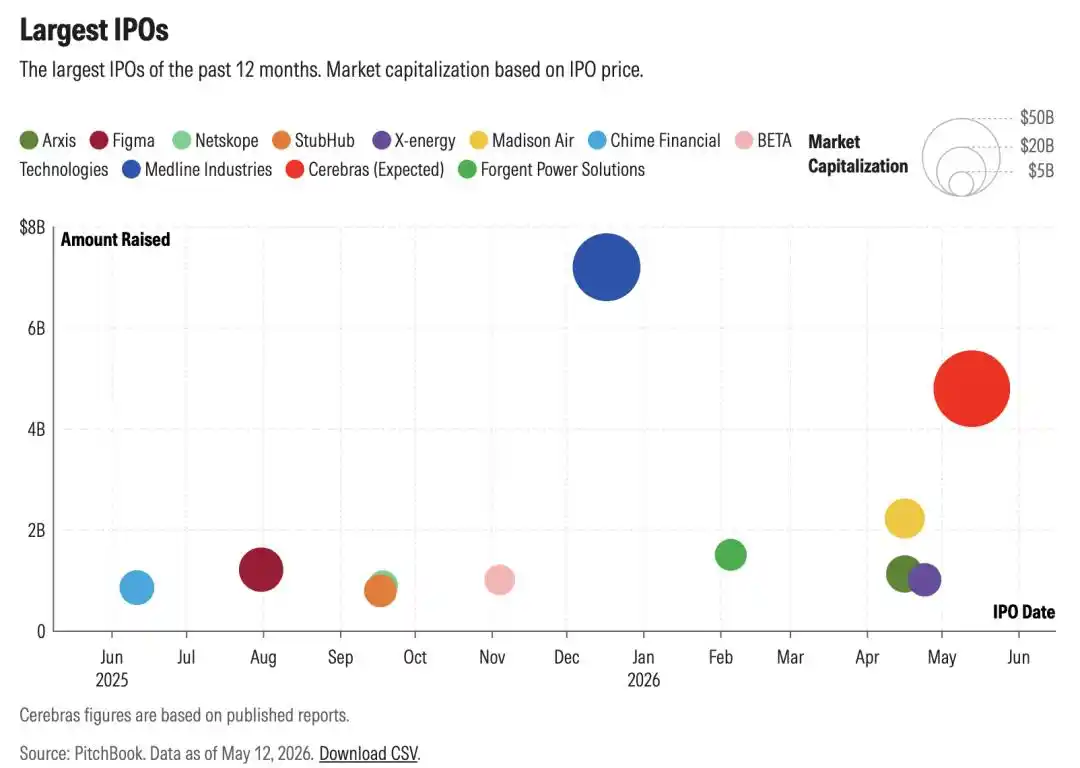
To squeeze into Sam Altman's 'Hall of Gods', Cerebras personally cut away 10% of its own 'flesh and blood'—stock warrants worth approximately $5 billion.

This is no longer a simple IPO. It is a tribute from underlying hardware to model sovereignty, paid in the twilight of an era.

And standing behind all this prosperity is the man known as the 'new lord of Silicon Valley'.

The Return of Brutalist Aesthetics

It Forged a 'Silicon-based Leviathan'

If Nvidia proudly calls its B200 chip an exquisite postage stamp, then Cerebras's flagship product, WSE-3, is a massive dinner plate.
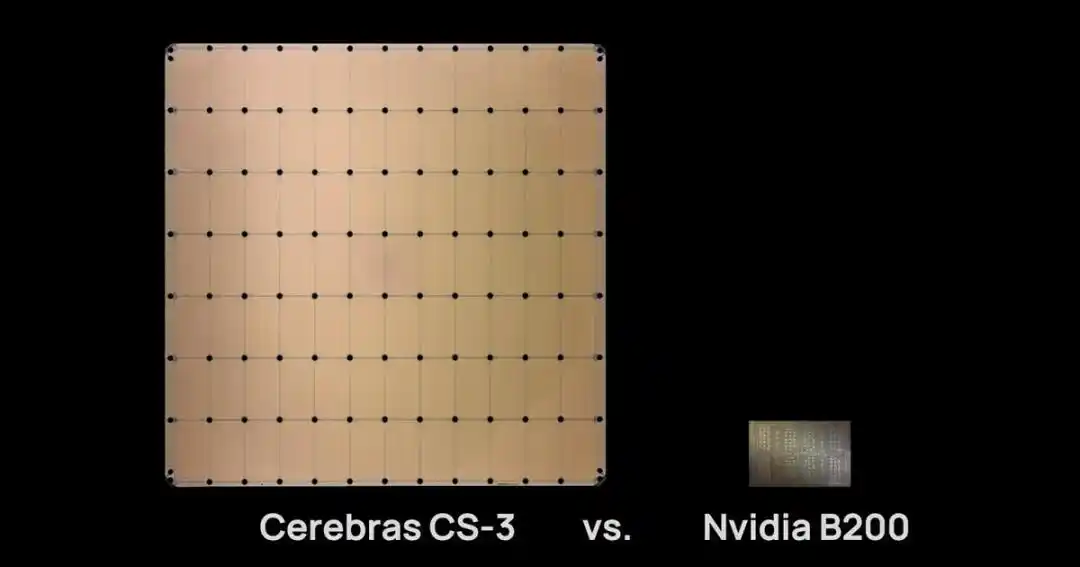
For the past three decades, the semiconductor industry's creed has been 'miniaturization'—dancing on a pinhead, stacking transistors at the nanoscale.

But Cerebras took a counterintuitive path: Since memory bandwidth is the Achilles' heel of AI inference, why not just make the entire wafer into a single chip.

This 'silicon-based leviathan' is nearly half a square foot in size, featuring over 4 trillion transistors (19 times that of Nvidia's B200), 900,000 AI-optimized cores, and 125 petaflops of AI compute—making its total computing power 28 times that of the B200.

Its design is fundamentally about 'trading space for time': etching cores directly onto a single 12-inch wafer, flattening the 'memory wall' where data shuttles between the chip and external storage.

This brutalist aesthetic shows terrifying dominance in the 'Age of Inference':

When running top-tier models from OpenAI, Cognition, Meta, etc., it can achieve a throughput speed of up to 3000 tokens per second, outpacing traditional GPUs by 70 times.
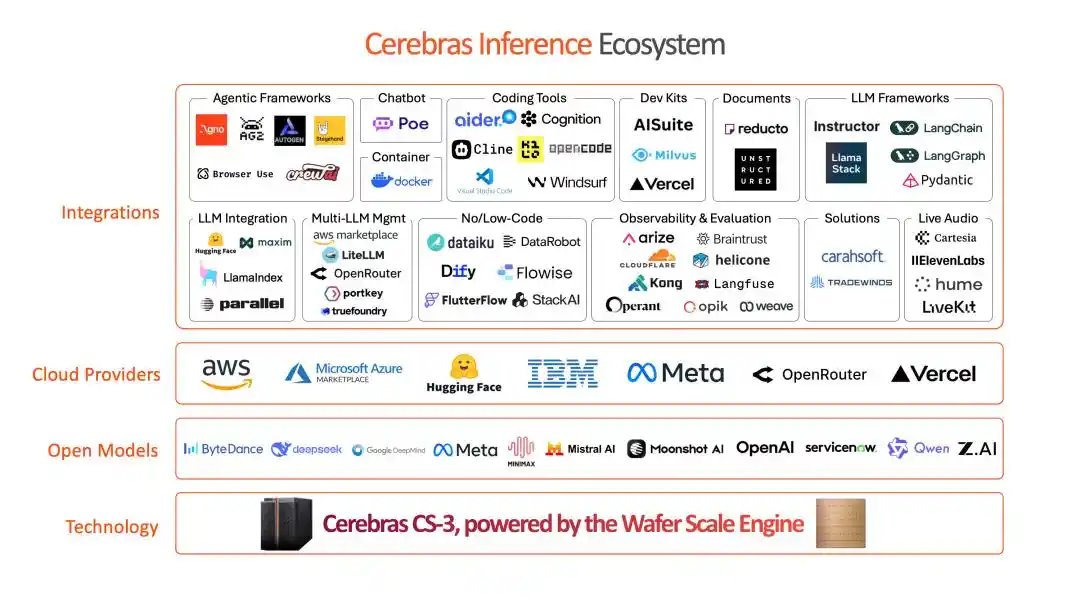
However, in 2026, the hardest technology, if it can't be converted into the fastest Tokens, is just expensive sand.

Eighteen months ago, Cerebras was a forlorn geek.

In 2025, its revenue was only $510 million, almost entirely from a single customer, the UAE's G42. It operated at a loss of $145.9 million, forcing the postponement of its IPO plans.
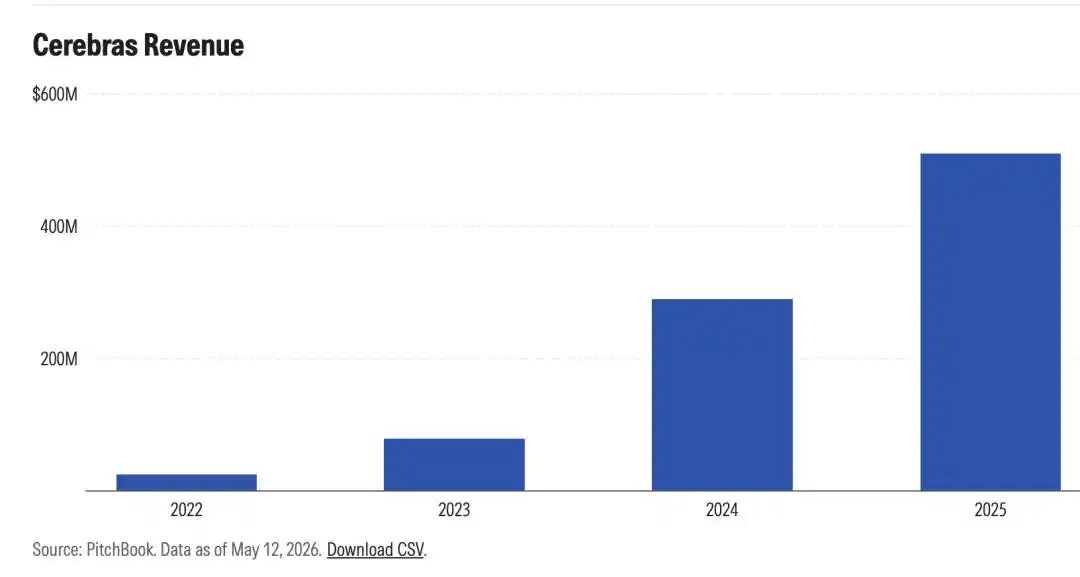
Despite possessing performance surpassing Nvidia's, its fate hung on the checkbook of a single client, like an orphan at constant risk of drowning.

Until it knocked on the door leading to Sam Altman's inner circle.

The $5 Billion 'Redemption Bond'

The Golden Ticket to the Future

In the world of AI, Moore's Law is giving way to the 'Law of the Circle'.

In exchange for survival and explosive growth, Cerebras signed an agreement that left outsiders dumbfounded: providing OpenAI with 750 megawatts of computing capacity over the next three years.

Calculated at current market prices (750 MW is roughly worth $9 billion annually), this deal could bring about $27 billion in revenue and $10 billion in gross profit.

For a company still in the red last year, this was a lifeline.

More tellingly, these 750 megawatts constitute just one-fortieth of the total computing power OpenAI believes it will need by 2030. This leftover order is enough to catapult Cerebras from a 'marginal player' to a market focal point.

But there is no free lunch, only expensive endorsements.

In exchange, Cerebras must gradually grant stock warrants to OpenAI. Upon exercise, OpenAI would hold 10% of Cerebras's shares—worth about $5 billion at the offering price midpoint of $155.

This means Cerebras generously offered up half the potential future profits from this mega-deal as a 'tribute' directly to OpenAI.

This is not an equal exchange. This is the AI era's 'computing power redemption bond'.

OpenAI is the 'lord' holding the power to allocate traffic and demand, while Cerebras is a heavily armored knight providing advanced tools of production—to enter the lord's domain, the knight must pay homage and share half his spoils.
Once branded as OpenAI's core blood ally, Cerebras's price-to-sales (P/S) ratio instantly skyrocketed to 15 times, a level even Nvidia must respectfully acknowledge.

'Altmanomics'

He Is Cashing Out the Hardware Giants

Cerebras is not the only computing power enterprise bowing to Sam Altman.

Last October, AMD's stock doubled after reaching a similar agreement with OpenAI; earlier, Nvidia was rumored to have deepened its ties with OpenAI through a $30 billion financing round.

A clear map of power is emerging: OpenAI is evolving from a software company into a global 'tax authority' over the AI hardware landscape.

Sam Altman's true ambition is not merely to acquire data centers for training and running its models, but to quietly expand the group of companies and investors who have a 'vested interest in OpenAI's success.'

He is weaving a vast web of an 'interest community'.
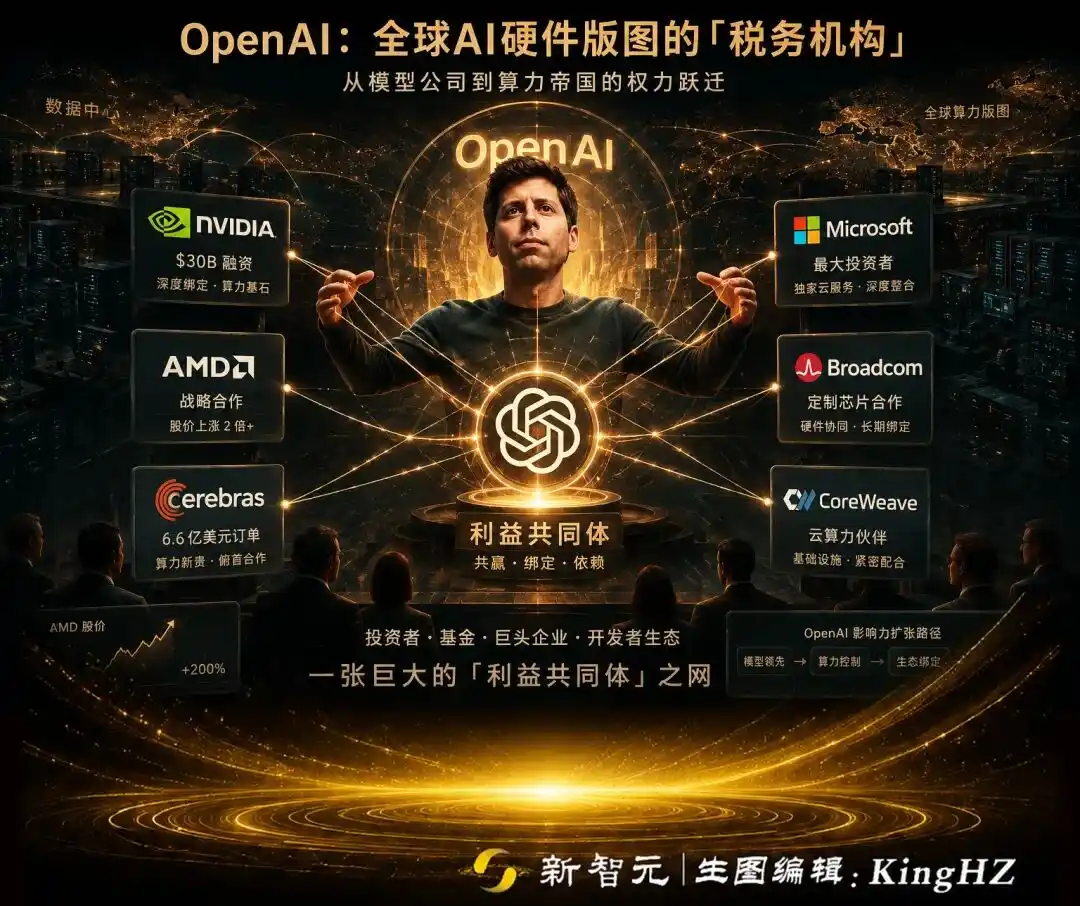
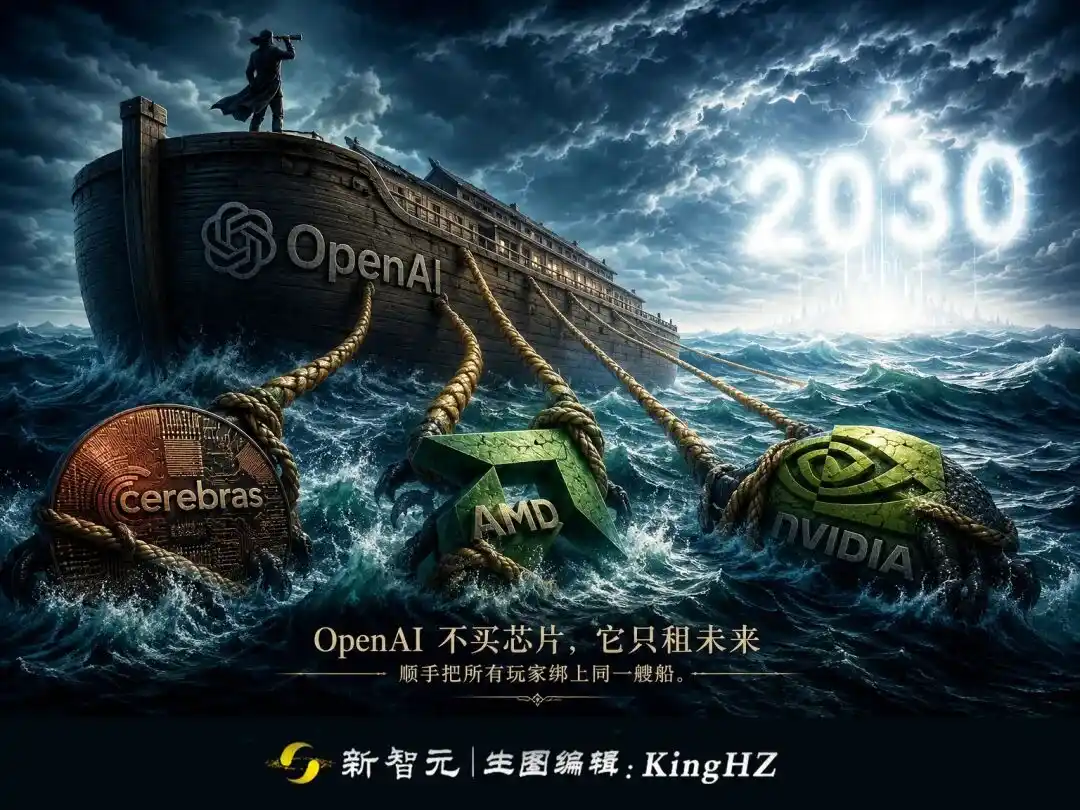
OpenAI doesn't buy chips; it only rents the future—and in the process, binds all players to the same ship.

For hardware vendors: Even with profits halved, obtaining the 'OpenAI certification' and a 15x P/S valuation is a worthwhile deal.

For Sam Altman: He not only secures the computational foundation for the next decade but also becomes a shareholder in all potential competitors.
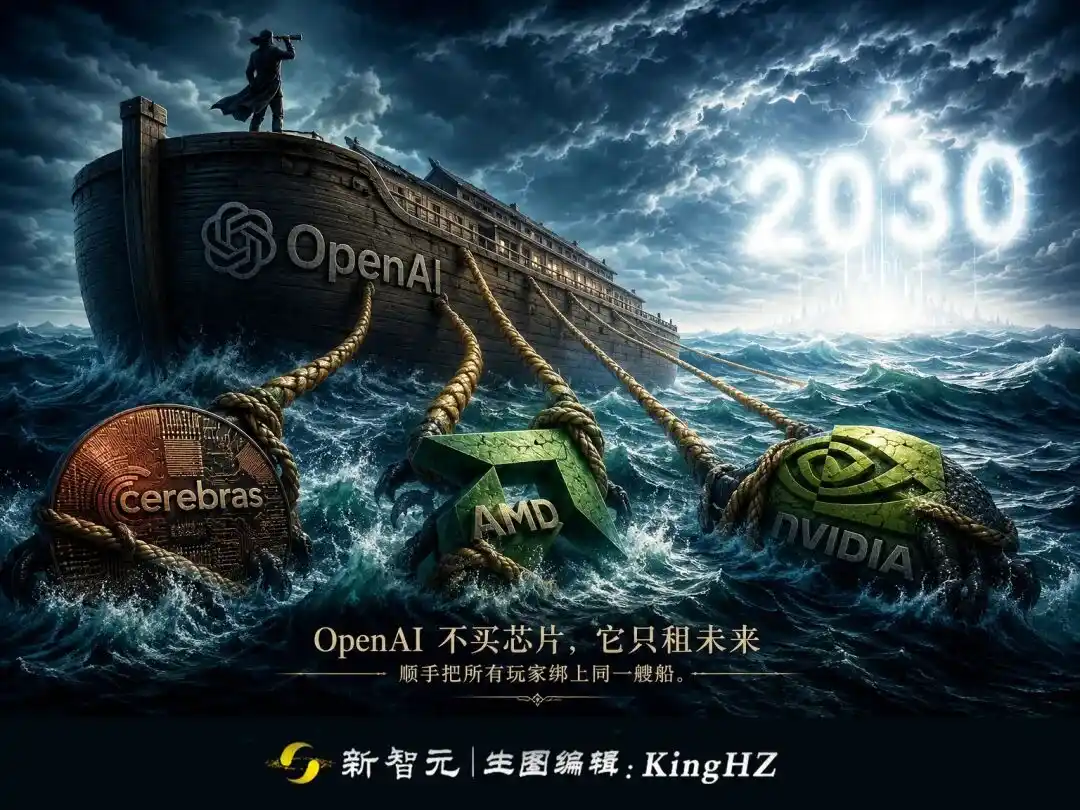
This is the essence of 'Altmanomics': In the second half of the AI race, whoever defines the demand for models holds the 'power to tax' the underlying supply chain.

Can $48 Billion Buy a Seat at the Power Table?

This Thursday, Cerebras's IPO received 20 times oversubscription. The pricing range was raised to $150-$160 per share, implying a valuation of $48 billion, coinciding with semiconductor stocks rising 53% cumulatively from their March lows.
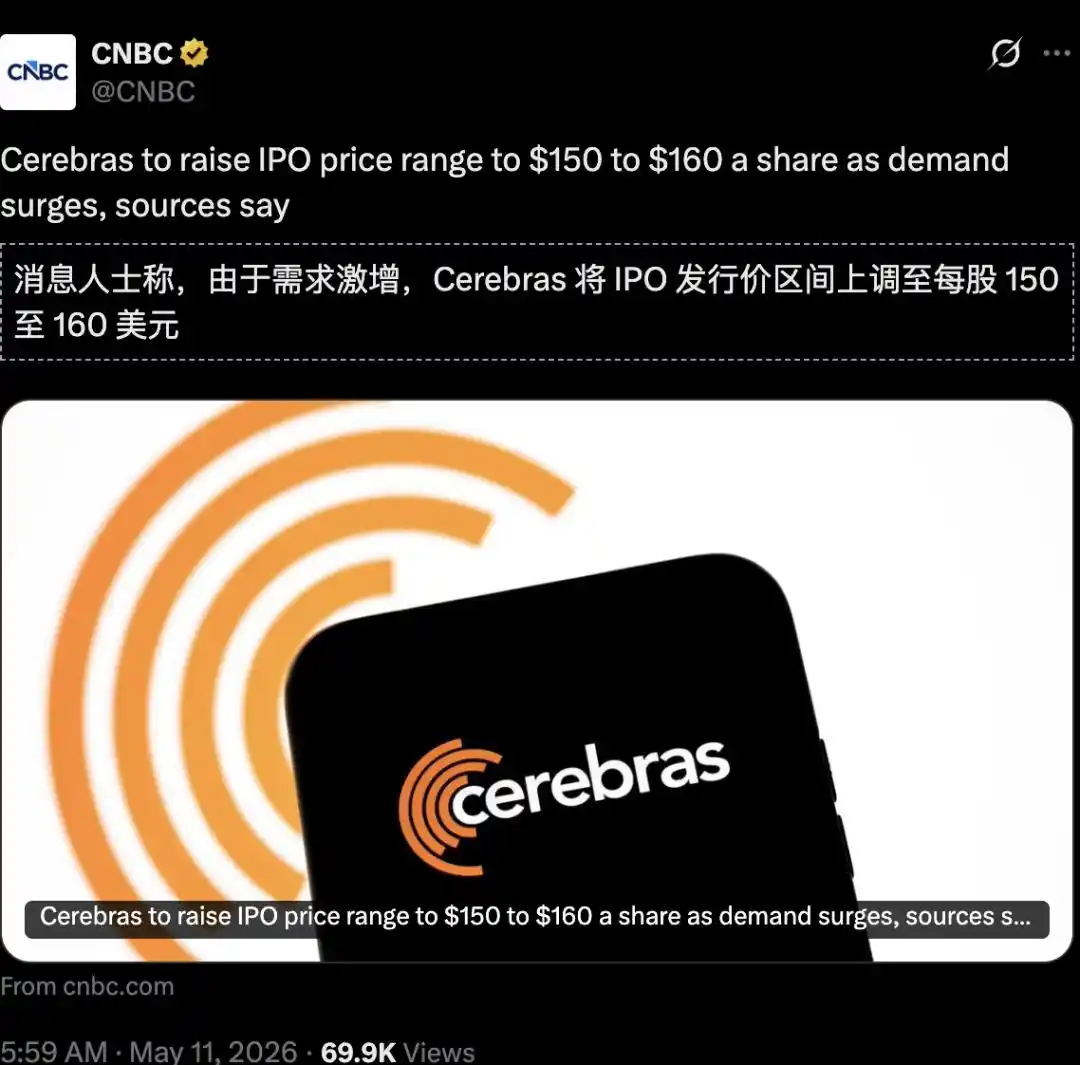
The capital market's frenzy is almost blind. They no longer care whether Cerebras lost $140 million last year or if its P/S ratio has already surpassed Nvidia's.

They are buying a kind of 'certainty'.

In the uncertain landscape of 2026, what identity tag is more certain than being a 'Core Partner of OpenAI'?

This is precisely the most intriguing aspect of this IPO. Cerebras's high valuation is essentially a market premium for the 'Altman endorsement'.

Conclusion: Sovereignty or Vassalage?

This 2026 listing marks the semiconductor industry's entry into a brutal era of stratification.

Future chip companies have only two paths:

Either, like Nvidia, rely on first-mover advantage to build their own ecological empire and become the rule-maker; or, like Cerebras, offer up half their soul in a high-stakes gamble for a ticket into the core circle.

If you cannot become a god, then become the most expensive offering.

This is not just a technological battle; it's a battle for sovereignty.

In every megawatt of electricity flows the 'tribute' from chipmakers to Silicon Valley's new overlord.

References:

https://x.com/FT/status/2054141078710768006

https://www.ft.com/content/3f77f8ad-16b8-4f97-ae55-0bd2e31122fa?syn-25a6b1a6=1

https://www.theinformation.com/newsletters/ai-agenda/startup-helping-openai-optimize-ai-cerebras-chips

https://www.morningstar.com/stocks/why-ai-chip-designer-cerebras-is-2026s-hottest-ipo-yet

This article is from the WeChat public account "Xin Zhi Yuan," author: Xin Zhi Yuan, editor: KingHZ

热门币种推荐

相关问答

QWhat is the core technology and design philosophy behind Cerebras Systems' WSE-3 chip, and how does it differ from traditional chip designs?

ACerebras Systems' WSE-3 chip employs a radical design philosophy that contrasts with the traditional industry focus on miniaturization. Instead of shrinking components, it uses an entire 12-inch silicon wafer to create a single, massive chip. This 'brute-force' approach, described as 'trading space for time,' is aimed at eliminating the 'memory wall' bottleneck by providing immense on-chip memory bandwidth. It contains over 4 trillion transistors (19x more than NVIDIA's B200), 900,000 AI-optimized cores, and delivers 125 petaflops of AI computing power. Its key difference is its monolithic wafer-scale design versus the traditional multi-chiplet or discrete GPU designs, prioritizing high-speed data access for AI inference.

QWhat was the crucial strategic deal Cerebras made with OpenAI to enable its 2026 IPO, and what were the key terms?

AThe crucial deal was a multi-year agreement where Cerebras committed to supply 750 megawatts of computing capacity to OpenAI. In exchange for this massive, revenue-guaranteeing contract—valued at approximately $27 billion in revenue and $10 billion in gross profit over three years—Cerebras granted OpenAI warrants. Upon exercise, these warrants would give OpenAI a 10% equity stake in Cerebras, valued at around $5 billion based on the IPO's mid-range share price. This deal, framed as a 'ransom note' or 'tribute,' provided Cerebras with the financial credibility and market validation needed for a successful high-valuation IPO.

QHow does the article characterize the evolving power dynamic in the AI industry, particularly regarding OpenAI's role?

AThe article characterizes the power dynamic as a shift where OpenAI is evolving from a software company into a dominant 'tax authority' or 'feudal lord' over the global AI hardware landscape. By securing large, long-term compute capacity deals from hardware makers like Cerebras, AMD, and NVIDIA—often in exchange for equity or favorable terms—OpenAI is locking in its future compute foundation. More importantly, it is weaving a vast 'community of interest,' binding these suppliers to its success. This grants OpenAI 'taxation rights' over the hardware supply chain, as it defines model demand and controls access to the most lucrative market segments.

QWhat does the term 'Altmanomics' (Altman Economics) refer to in the context of this article?

AIn this article, 'Altmanomics' refers to the strategic and economic model pioneered by OpenAI's Sam Altman. Its essence is that in the later stages of the AI race, the entity that defines the demand for AI models gains the power to 'tax' the underlying hardware supply chain. Instead of merely purchasing chips, OpenAI 'rents the future' by making long-term capacity deals that often include equity stakes. This strategy allows OpenAI to secure its computational base at favorable rates while simultaneously making shareholders and partners out of potential hardware competitors, thereby consolidating its ecosystem power and ensuring alignment of interests.

QAccording to the article's conclusion, what two paths are available for semiconductor companies in the new AI era, as exemplified by NVIDIA and Cerebras?

AThe article concludes that semiconductor companies now face two distinct paths: 1) Become a rule-maker like NVIDIA, which uses first-mover advantage and ecosystem strength to establish its own empire and dictate distribution rules. 2) Become a vassal or 'high-value offering' like Cerebras, which trades a significant portion of its potential sovereignty and profits (through equity and deals) to a dominant AI platform (OpenAI) in exchange for a guaranteed, high-value ticket into the core industry circle. The choice is between maintaining sovereign control or becoming a strategically important, yet subordinate, partner to the new 'lords' of silicon.

你可能也喜欢

TradingView分析师警告:比特币必须守住6万美元,否则面临重大破位风险

比特币目前正处在一个被交易员视为心理和技术关键价位的位置。分析师weslad在6月20日的分析中指出,BTCUSDT已触及一个新的需求区,这可能决定其下一波主要走势。该区域被视为买盘已经介入,但也绝不能失守的防线。 图表分析显示,只要比特币能守住当前需求区,反弹至81,000美元供应区域的概率仍然很高。这将意味着价格回归近期跌势的起点,若买盘能维持压力,可能引发流动性争夺。 跌破6万美元将严重损害看涨前景。该水位被视作多头的底线,若收盘价明确跌破,将破坏看涨结构,并可能导致更深度的下跌。该价位的重要性不仅在于其是整数心理关口,还在于许多交易者都在关注同一支撑位,一旦失守可能触发止损盘、强制平仓和市场情绪转变。反之,若能守住该区域,则能为多头提供有力论据,表明近期抛售已达衰竭点。 上行目标81,000美元固然诱人,但比特币仍需为此创造条件。多头需要捍卫60,000美元,收复附近阻力位,并证明需求足够强劲,能将防御性反弹转变为趋势反转。在此之前,市场格局最好被理解为一个二元化的支撑测试:守住区域,则复苏希望犹存;明确失守,则市场可能开始为更深度的调整定价。

bitcoinist18分钟前

TradingView分析师警告:比特币必须守住6万美元,否则面临重大破位风险

bitcoinist18分钟前

不可能三角根本就是伪问题

加密行业构建了强大的密码学系统,但默认状态下却无法保护用户资金的隐私,所有交易和持仓都公开可查,这成为大规模资金入场的主要障碍。文章认为,区块链本质上是一台无人拥有的慢速、昂贵计算机,其核心价值在于提供无需许可的准入和去中心化信任。资金(尤其是稳定币)是天然适合上链的资产,因为账本记录即资产本身。 然而,行业长期关注的“不可能三角”(去中心化、可扩展性、安全性)并非真正瓶颈。实际阻碍在于两大设计缺陷:合法性与隐私。合法性方面,无许可特性导致监管灰色地带,但随着美国《GENIUS法案》等监管框架落地,合规环境正在改善。 更关键的缺陷是“透明度税”。链上所有交易公开,导致用户面临MEV(矿工可提取价值)被抢跑、夹击等风险,这实质上是一种持续的成本。对于家族办公室、大型机构等严肃资本而言,公开资产负债表是无法接受的。隐私并非与合规对立,现代密码学(如零知识证明)允许在不泄露具体数据的情况下证明合规性(如偿付能力、KYC),实现“可证明的合规隐私”。 作者指出,为链上交易添加隐私保护是一次纯粹升级,它将把加密系统从“公开的谷歌表格”转变为能保守秘密的共享机器,从而吸引数万亿规模的机构资金,真正释放区块链的潜力。

链捕手11小时前

不可能三角根本就是伪问题

链捕手11小时前

光芯片,集体扩产

近日,全球光芯片产业链密集出现扩产、投资与供应链绑定动作,以满足AI数据中心对光互连能力激增的需求。 美国方面,Coherent获政府资助扩建德州6英寸磷化铟(InP)产线,产能将提升至4倍,NVIDIA已对其战略投资并锁定未来产能。Lumentum在北卡罗来纳州新建激光器工厂,Nokia则在宾夕法尼亚扩建光子芯片先进测试与封装产能。日本材料商JX Advanced Metals计划大幅投资,将InP衬底产能提升7-10倍。欧洲方面,IQE与Tower Semiconductor达成InP外延片供应协议,推动硅光平台与III-V材料集成;ST计划在法国大幅提升300mm硅光产能;Sivers Semiconductors与格芯合作开发集成激光器的硅光方案。 国内光芯片产业链同样迅猛发展。东山精密旗下索尔思光电宣布投资12亿美元在常州扩建光芯片及光模块产能。三安光电已具备6英寸InP光芯片量产能力,云南锗业亦启动磷化铟单晶片扩产项目。产业链正从模块组装向材料、芯片、封测等全环节延伸。 行业分析指出,无论未来采用可插拔、CPO(共封装光学)还是其他架构,AI算力增长对带宽的需求将持续推高光芯片用量。目前CPO面临技术挑战,可能放缓落地,但光源路线呈现多元化(如硅光+连续波激光器、VCSEL、MicroLED等),将在不同应用场景分层并存。这场全球扩产竞赛实质是各国对AI数据中心光互连时代的关键布局,光子产业链已进入白热化竞争阶段。

marsbit14小时前

光芯片,集体扩产

marsbit14小时前

交易

现货
合约

热门文章

如何购买GODS

欢迎来到HTX.com!我们已经让购买Gods Unchained(GODS)变得简单而便捷。跟随我们的逐步指南,放心开始您的加密货币之旅。第一步:创建您的HTX账户使用您的电子邮件、手机号码注册一个免费账户在HTX上。体验无忧的注册过程并解锁所有平台功能。立即注册第二步:前往买币页面,选择您的支付方式信用卡/借记卡购买:使用您的Visa或Mastercard即时购买Gods Unchained(GODS)。余额购买:使用您HTX账户余额中的资金进行无缝交易。第三方购买:探索诸如Google Pay或Apple Pay等流行支付方法以增加便利性。C2C购买:在HTX平台上直接与其他用户交易。HTX场外交易台(OTC)购买:为大量交易者提供个性化服务和竞争性汇率。第三步:存储您的Gods Unchained(GODS)购买完您的Gods Unchained(GODS)后,将其存储在您的HTX账户钱包中。您也可以通过区块链转账将其发送到其他地方或者用于交易其他加密货币。第四步:交易Gods Unchained(GODS)在HTX的现货市场轻松交易Gods Unchained(GODS)。访问您的账户,选择您的交易对,执行您的交易,并实时监控。HTX为初学者和经验丰富的交易者提供了友好的用户体验。

478人学过发布于 2024.12.13更新于 2026.06.02

如何购买GODS

相关讨论

欢迎来到HTX社区。在这里,您可以了解最新的平台发展动态并获得专业的市场意见。以下是用户对GODS(GODS)币价的意见。

活动图片