Raoul Pal Calls XRP, Cardano And Dogecoin The ‘Moron Trade’: Here’s Why

bitcoinist发布于2025-08-11更新于2025-08-11

文章摘要

In his latest interview, Raoul Pal sharpened a long-running argument about how retail capital enters crypto markets, placing nominal price—what...

Trusted Editorial content, reviewed by leading industry experts and seasoned editors. Ad Disclosure

In his latest interview, Raoul Pal sharpened a long-running argument about how retail capital enters crypto markets, placing nominal price—what a single unit costs—at the center of early-cycle behavior. “Sorry, but people are going to buy XRP and Doge and Cardano, whether you like it or not. Because they’re cheap, in the absolute term of, you know, how much you pay for a token. So people will do that,” he said.

He mapped the field into three risk buckets: large, adopted layer-1s he called “idiot-proof,” a harder “middle” composed of disparate DeFi names, and a mechanically simple momentum bet he labeled “the Moron Trade”—not as an insult to holders, he stressed, but as a description of what newcomers tend to do when faced with sticker shock at the top of the table.

Why XRP, ADA And DOGE Are The ‘Moron Trade’

Pal walked through the on-ramp psychology in plain numbers. Newcomers, in his telling, open a screen and see “Bitcoin… $116,000… I can barely afford lunch,” and “Ethereum… well, that’s pretty expensive.” By contrast, they recognize brand-heavy mid-caps with low unit prices and accessible narratives: “Oh, XRP… it’s $3… Doge… Elon likes Doge… it’s $0.22… and Cardano… it’s $0.78.”

The effect, he argued, is predictable: flows gravitate to coins that feel affordable in absolute terms, regardless of fully diluted value or liquidity profile. “I’m not saying that these are moronic and people are moronic for owning them,” he said, reiterating that he was describing a pattern he has “seen play out” whenever retail returns.

The framework leaves space, in Pal’s view, for two parallel trades. On one side are what he called “big layer ones that get adopted,” where he explicitly cited Solana and Sui—“a few others, great”—as the sort of “idiot-proof” exposure that “go[es] up a lot and [is] less risky” when network activity and developer traction compound.

On the other side sit the “middle part,” which he described as “the harder play,” typified by “I’ve got this DeFi token that could be amazing” but will demand better timing, patience, or specialist knowledge. Between those poles sits what he called “the Moron Trade… just buy the cheapest thing in the top 10,” a style he illustrated live—“I’m going to show you the Moron Trade now”—to make the point that unit bias remains a powerful magnet when retail re-engages.

Pal tied the interview themes back to the cycle narrative he and his research businesses have promoted for a year. In an August 10 post on X, he reminded followers that Global Macro Investor and Real Vision Pro “called the start of the Banana Zone in August 2024,” adding that those who followed the “Don’t Fuck This Up” thesis and “hold the top tokens” would be “between 50% and 650% wealthier” since that call.

He listed Sui at +650%, XRP at +630%, Dogecoin at +210%, Bitcoin at +140%, Ether at +105%, and Solana at +51%, before underscoring that Sui was his “best pick” and “remains so.” He attributed the broader framework to what he calls “The Everything Code“.

Taken together, the interview and the follow-up post sketch Pal’s current market map with unusual clarity. First, he expects retail behavior to continue clustering around low unit-price, high-recognition assets such as XRP, Dogecoin, and Cardano as headline prices for Bitcoin and Ether rise.

Second, he continues to favor adopted layer-1s where on-chain activity and developer momentum serve as tailwinds—Solana and Sui being the explicit examples he offered. Third, he remains skeptical of the mid-shelf, thesis-driven DeFi trade for non-specialists, calling it “harder” relative to broad-beta alternatives.

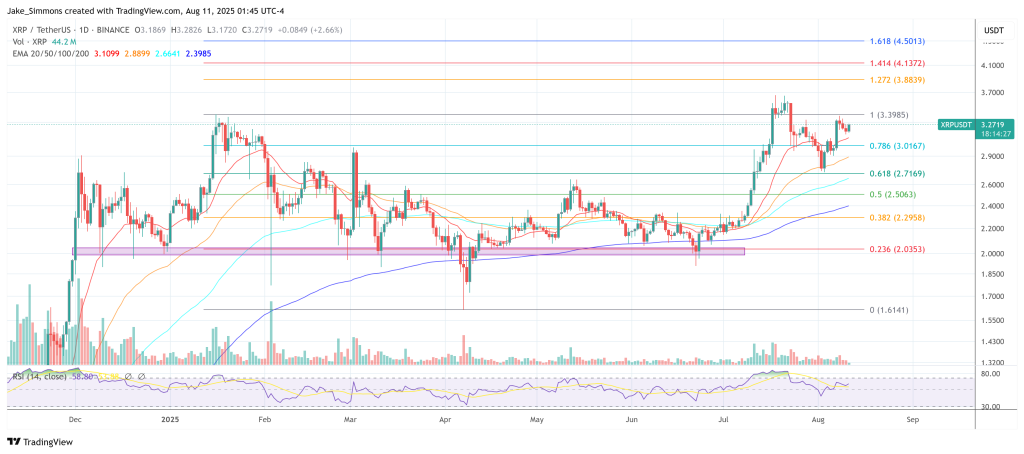
At press time, XRP traded at $3.27.
XRP price
XRP price, 1-day chart | Source: XRPUSDT on TradingView.com
Featured image from YouTube, chart from TradingView.com
Editorial Process for bitcoinist is centered on delivering thoroughly researched, accurate, and unbiased content. We uphold strict sourcing standards, and each page undergoes diligent review by our team of top technology experts and seasoned editors. This process ensures the integrity, relevance, and value of our content for our readers.

Jake Simmons has been a Bitcoin enthusiast since 2016. Ever since he heard about Bitcoin, he has been studying the topic every day and trying to share his knowledge with others. His goal is to contribute to Bitcoin's financial revolution, which will replace the fiat money system. Besides BTC and crypto, Jake studied Business Informatics at a university. After graduation in 2017, he has been working in the blockchain and crypto sector. You can follow Jake on Twitter at @realJakeSimmons.

热门币种推荐

你可能也喜欢

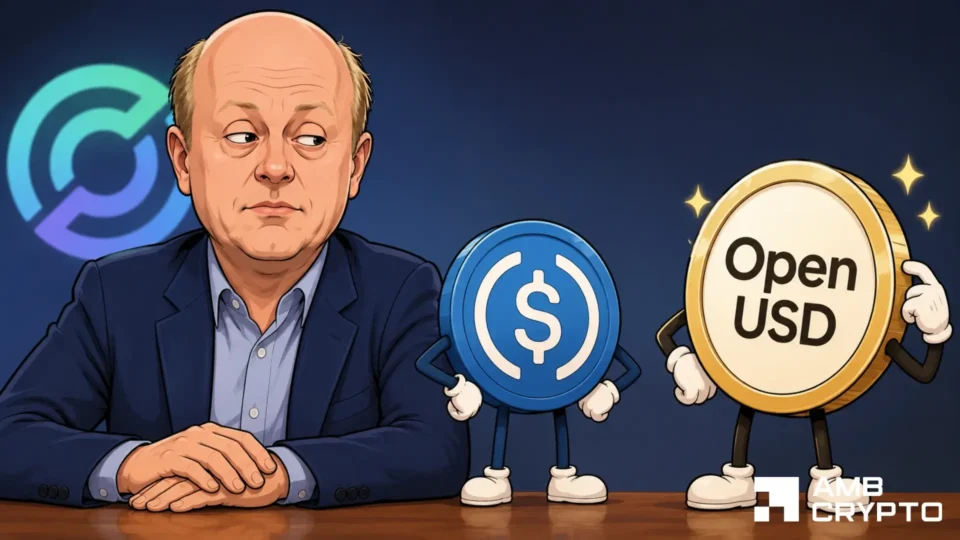
Circle首席执行官Allaire表示,USDC的网络效应将难以被Open USD复制

Circle首席执行官Jeremy Allaire对Open USD稳定币联盟的推出做出回应,为USDC的竞争优势辩护。他认为稳定币的成功取决于长期网络效应,而非费用结构或共享治理模式。 Allaire在社交平台发长文表示,Circle近十年来在流动性、监管审批和开发者基础设施方面的投入,已构建起新进入者难以复制的优势。他比喻稳定币网络更像互联网平台,其价值随更多开发者、企业和金融机构的接入而增长。他列举了USDC通过数千次集成、跨链协议等工具以及全球银行关系与监管合规所巩固的网络效应。 根据Artemis数据,2026年第一季度USDC处理了近30万亿美元链上交易,占美元稳定币总交易量的约80%,USDT占20%,其他所有美元稳定币合计不足0.5%。 Allaire对Open USD提出的免铸造赎回费、共享储备经济和联盟治理等核心主张提出质疑。他认为赎回政策受更广泛市场现实影响,且Circle已将大部分收入分享给分销伙伴,同时保留足够资金持续投资基础设施。他对大型联盟治理模式的创新效率表示怀疑,并透露Circle早期曾尝试类似模式,后发现小型战略合作更为有效。 对于Coinbase参与Open USD的传闻,Allaire强调双方在USDC上的合作“一如既往稳固”,并预计许多Open USD创始成员将继续同时使用USDC。最后,他欢迎Open USD加入稳定币生态,并重申Circle将通过其基础设施产品支持多发行方。

ambcrypto1小时前

Circle首席执行官Allaire表示,USDC的网络效应将难以被Open USD复制

ambcrypto1小时前

交易

现货

热门文章

什么是 XRP 2.0

XRP 2.0:加密货币领域的新前沿 XRP 2.0 简介 在不断演变的加密货币领域,各种新项目不断涌现,争夺关注和采用。其中一个颇具前景的倡议是 XRP 2.0,这是一个旨在利用先进区块链技术和强大加密方法的新型加密货币项目。尽管其名称与 Ripple 的 XRP 存在一定的相似性,但必须指出的是,XRP 2.0 独立运营,专注于提升交易安全性、隐私和可扩展性。随着数字金融领域越来越多地采用去中心化解决方案,XRP 2.0 旨在为 web3 和加密项目的整体扩展做出重要贡献。 XRP 2.0 是什么? 从根本上说,XRP 2.0 是一个旨在创建安全、去中心化数字货币生态系统的加密货币项目。其基础技术将复杂的区块链原理与前沿的加密技术相结合。XRP 2.0 的总体目标是建立一个可靠、高效的平台,以实现快速的交易执行,同时优先考虑用户的隐私保护。 该项目被宣传为克服现有加密货币面临的许多局限的解决方案,提出了一个可以处理更高交易量且速度和隐私得到改善的系统。这种多功能性使 XRP 2.0 在充满各种数字货币的市场中成为一个重要竞争者。 XRP 2.0 的创造者是谁? XRP 2.0 的创建者被标记为“Wilbur”。然而,关于 Wilbur 或其相关实体的详细信息仍然难以捉摸。许多加密货币创造者的匿名性在行业中并不少见,通常旨在保持一定程度的隐私和安全。 XRP 2.0 的投资者是谁? 目前,有关支持 XRP 2.0 的投资基础或组织的具体信息尚未公开。在加密货币领域,知名投资者的支持可以显著影响项目的可信度和成功,但关于 XRP 2.0 财务支持者的透明度尚未建立。 XRP 2.0 如何运作? XRP 2.0 的一个亮点是采用了区块链技术与先进加密算法的结合,以确保安全和去中心化的交易。其创新结构包括旨在促进用户参与和拓宽功能的独特特性,超越了传统加密货币交易。 在这些特性中,XRP 2.0 集成了 AI 驱动的能力,如文本转图像和文本转语音功能。这些添加旨在增强用户的交互体验,促进在各个行业中更广泛的应用。通过将技术进步与以用户为中心的设计相结合,XRP 2.0 旨在吸引寻求将加密货币解决方案融入其运营框架的多样化个体和企业的注意。 XRP 2.0 时间线 要理解 XRP 2.0,就需要审视定义其迄今为止旅程的里程碑: 2023年7月23日:XRP 2.0 作为一个新型加密货币项目被推出,旨在革新区块链领域的安全和去中心化交易能力。 2023年9月8日:另一个项目 XRP20 启动,这标志着在以太坊区块链上出现一个与 XRP 2.0 无关的 ERC-20 代币。 2023年11月13日:XRP 分类账经历重大更新,发布了 rippled 服务器软件版本 2.0.0。值得注意的是,此发展与 XRP 2.0 加密货币项目无关。 XRP 2.0 的关键点 要提炼出 XRP 2.0 的本质,有几个关键因素浮现: 独特特性:诸如 AI 驱动的文本转图像和文本转语音的功能进一步丰富了 XRP 2.0 的潜在应用。 区块链技术:该框架利用先进的区块链机制和加密协议,确保交易的安全和去中心化环境。 可扩展性和隐私:XRP 2.0 优先考虑交易过程中的增强隐私保护以及满足日益增长的用户基础所需的可扩展性。 与 Ripple 无关:重要的是,尽管名称相似,XRP 2.0 与 Ripple 的 XRP 并无任何忠诚或合作关系,区分了其在加密货币生态系统中的运营框架和目标。 结论 XRP 2.0 代表了在加密货币领域的一项雄心勃勃的探索,旨在在数字交易中提供安全、隐私和效率的结合。通过集成复杂技术和用户友好的功能,该项目希望拓宽加密货币在当今数字经济中所能实现的可能性。 尽管其创造者的匿名性和缺乏公开投资者的信息可能引起一些人的疑问,但 XRP 2.0 对先进功能和去中心化的关注增强了它在日益拥挤的加密市场中的吸引力。随着加密货币领域的持续演变,XRP 2.0 可能会成为安全和可扩展区块链解决方案扩展的关键参与者。

212人学过发布于 2024.04.01更新于 2024.12.03

什么是 XRP 2.0

相关讨论

欢迎来到HTX社区。在这里,您可以了解最新的平台发展动态并获得专业的市场意见。以下是用户对XRP(XRP)币价的意见。

活动图片