A speculative thread led by Bitcoin Magazine CEO David Bailey on July 23 ignited a fresh dispute between Bitcoin advocates and Ethereum supporters over how the proof‑of‑stake (PoS) security model might interact with traditional capital markets. The exchange unfolded against a backdrop of publicly listed Ethereum treasury companies steadily accumulating and staking Ether—an emerging trend.
Wall Street 51% Attack on Ethereum?
Bailey’s scenario hinges on that concentration: if a cluster of corporate balance sheets holds a material share of staked ETH, equity‑market tactics could, in his view, substitute for direct token purchases in assembling validator control. Bailey opened: “If enough eth validators were owned by public ethereum treasury companies (~20% of total eth supply), you could 51% attack the public equities (ie take majority control, many ways to achieve that via capital markets) – and you’d have governance control over ethereum. In other words securities law would become eth’s consensus mechanism.”
Extending the idea, he claimed the strategy “opens quite an interesting investment strategy,” adding: “since Ethereum is not a security then ethereum holders have no legal rights… You could reorg the chain, slash other users, screw up all assets and L2s issued on top eth… legally pillage.”
The core of Bailey’s hypothesis rests on two linked assumptions: first, that publicly listed Ethereum treasury companies accumulate a sufficiently large percentage of staked Ether; second, that hostile actors could obtain board or managerial control of those corporations—via hostile takeovers, activist campaigns, or other capital markets tactics—without directly purchasing ETH on‑chain.
Responding to a counterargument that an attacker would have to buy vast quantities of Ether and thereby enrich existing holders, Bailey wrote: “You don’t need to buy any eth, you just buy stock in companies that already own it.”
Critics quickly challenged both the technical premises and the real‑world feasibility. Pseudonymous commentator Birdnals framed the scenario as requiring simultaneous, secret collusion among several boards overseeing “5+ publicly traded companies” and “the 100’s of others of employees/agents it would take to perform that collusion… many of which are ETH maxis.”
They warned such conduct could invite “fraud, anti-trust violations, RICO” and other liabilities, making the proposition legally and operationally brittle. Bailey replied that “hostile takeovers is a whole world unto itself in capital markets” and questioned how “social slashing” would be applied “without screwing the other 49% of shareholders who are innocent.”
Technical members of the Ethereum community rejected the framing that validator ownership equals governance authority. Former federal agent Tigran Gambaryan responded: “Block production and mev maybe, but not governance. That’s not how eth works. ETH governance is off-chain.” Ethereum user nicholasb.eth likewise stated: “While there are many PoS blockchains that use on-chain governance, Ethereum does not. It’s important to distinguish this. It’s not just whoever owns the most ETH (or a coordinated group of holders) can control the network,” calling Bailey’s earlier claim “factually incorrect.”
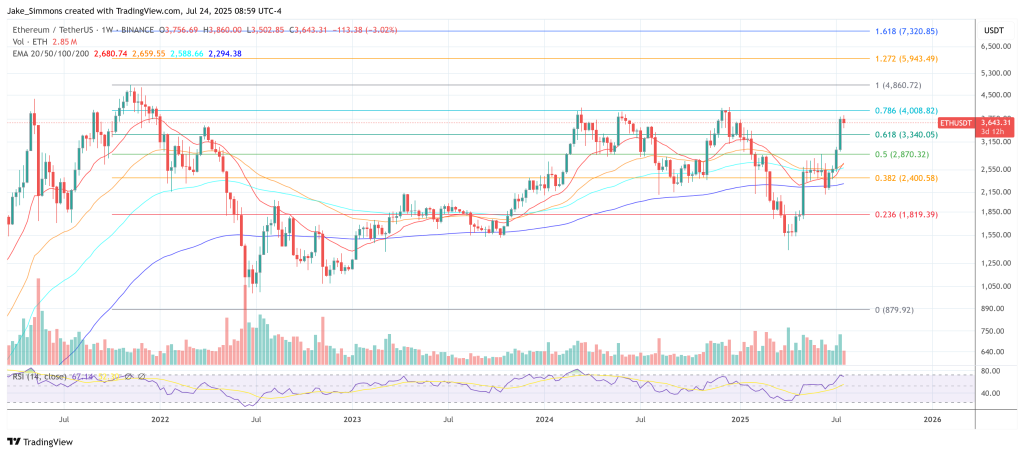
At press time, ETH traded at $

Related Posts