The US Securities and Exchange Commission is edging toward a structural makeover of spot‑Bitcoin and Ethereum exchange‑traded funds, after five Cboe BZX‑listed products simultaneously asked to swap their cash‑only creation and redemption model for the in‑kind mechanics long used by commodity and equity ETFs.
Filings submitted late on 22 July cover the ARK 21Shares Bitcoin ETF and the 21Shares Core Ethereum ETF (together in SR‑CboeBZX‑2025‑010 Amendment No. 3), WisdomTree’s Bitcoin Fund (SR‑CboeBZX‑2025‑033 Amendment No. 1) and both the Fidelity Wise Origin Bitcoin Fund and Fidelity Ethereum Fund (SR‑CboeBZX‑2025‑023 Amendment No. 1). Each amendment rewrites language inserted in early‑2024 approval orders that had locked the trusts into cash creations and redemptions, substituting the phrase “cash or in‑kind transactions” and adding detailed settlement workflows for direct transfers of Bitcoin or Ether between the trust’s custodian and an authorised participant.
Bloomberg ETF analyst James Seyffart, who first spotted the coordinated move, told his followers on X that the quintet of filings is “more positive signs regarding Bitcoin & Ethereum ETFs obtaining the ability to do in‑kind creation and redemption… This indicates to me that there is positive movement and likely fine‑tuning happening with the SEC.”
Anticipating confusion, he added: “No, this is not going to be for retail or normies to trade in shares of their ETFs for the underlying asset or vice versa. This would only be for the Authorized Participants (think big wall street firms and market makers) […] This will make current and future crypto ETFs more efficient. But the vast majority of people won’t even see a difference because the products on the market now already trade extremely efficiently. This will treat crypto ETPs the same as other ETPs are treated.”
Commenting on a time horizon when retail investors could use the in-kind redemption process, Seyffart added: “Would be cool to see consumers being able to withdraw and deposit actual ETH into the ETF with a certain threshold. I personally think withdrawals like this will eventually happen. But it may be in the distant future. One step at a time. This already exists for some gold ETFs.”
Why In-Kind Matters For Bitcoin And Ether ETFs
Under the cash model imposed when spot Bitcoin ETPs were finally approved on 10 January 2024, an AP delivers dollars to the fund, which then buys the cryptocurrency in the spot market; redemptions reverse the process. That design solved SEC concerns under Chair Gensler about custody and settlement risk but introduced two frictions: the trust itself must trade in the underlying market, and the resulting order flow can push net asset value away from share price when spot liquidity is thin.
In‑kind processing hands those trades back to authorised participants. When creating shares the AP ships Bitcoin or Ether directly to the fund’s cold‑wallet; when redeeming it receives coins instead of cash. The structure is standard in the broader ETF ecosystem and is associated with tighter spreads, smaller primary‑market imbalances and material tax advantages because portfolio securities — or in this case, crypto‑assets — are released “in kind” rather than being sold and realising capital gains inside the fund. The SEC itself notes that ETFs “can be more tax efficient… because ETF shares generally are redeemable ‘in‑kind’.
Commodity trusts already employing in‑kind redemptions provide the regulatory template the crypto issuers are invoking. SPDR Gold Shares, for example, lets an authorised participant exchange a 100,000‑share basket for physical bullion, a feature that ultimately allows an individual investor to “take physical possession of the gold backing his or her shares,” albeit through a broker‑facilitated arrangement. By mirroring that language, the Bitcoin and Ether trusts argue they are simply seeking parity with existing commodity ETPs.
Operational pressure has also mounted as primary‑market volumes grow. Since launch the eleven spot Bitcoin ETFs approved in 2024 have drawn nearly $55 billion in cumulative net inflows; market‑making desks face the hurdle of sourcing billions of dollars at 4 p.m. every settlement day — then unwinding the crypto exposure after the trust purchases coins. This ties up the balance sheet and widens spreads during volatile sessions. Allowing in‑kind hand‑offs lets desks source or hedge Bitcoin and Ether continuously and deliver the assets straight into the trust’s wallet at T + 0.
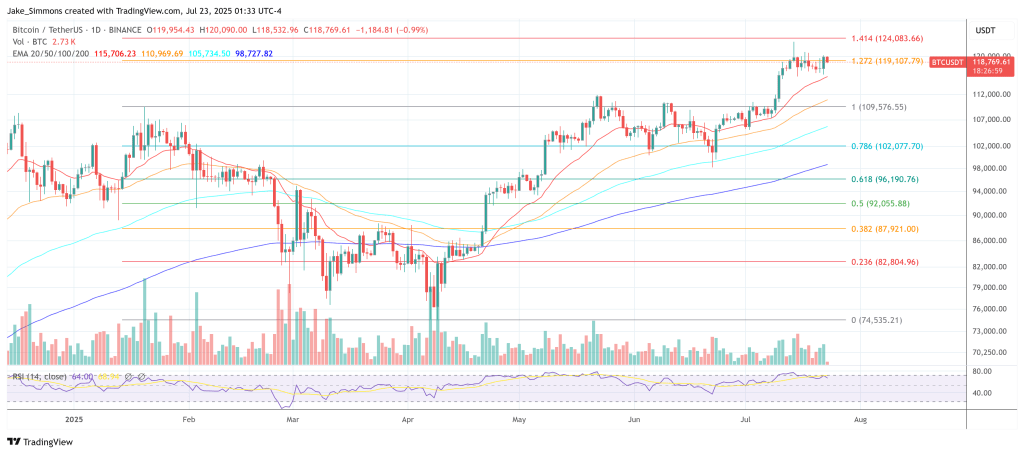
At press time, BTC traded at $118,769.

Related Posts