The US Department of the Treasury and other federal agencies are expected to disclose their holdings of Bitcoin (BTC) and other cryptocurrencies on April 5. The upcoming reveal stems from President Donald Trump’s executive order on March 6, which called for the formation of both a Strategic Bitcoin Reserve (SBR) and a broader Digital Asset Stockpile.
According to a presidential document published on March 11, all federal agencies must submit their digital asset holdings to the Treasury Secretary within 30 days of the order. The Treasury Secretary has also been instructed to establish two offices designed to manage government-held digital assets.
The SBR in particular, will hold Bitcoin acquired through criminal or civil forfeiture with a mandate not to sell the BTC—akin to a “digital Fort Knox” for long-term value storage.
The upcoming audit results could offer greater clarity on Bitcoin’s recent price movements, according to David Bailey, CEO of BTC Inc and a close advisor to President Trump. On X, Bailey commented: “April 5th (this Saturday) the USA must complete a full audit of the nation’s Bitcoin holdings. Depending on what we learn, might answer many of the open questions about the recent price action.”
When asked about the public release of the audit findings, Bailey responded, “I imagine we’ll learn quickly.” He also speculated on whether the US might hold more or fewer BTC than expected, remarking, “I suspect less but it’s just a guess.” In response to a question on how the amount of US government-held BTC could influence market sentiment, Bailey maintained an optimistic stance: “Everything is bullish for Bitcoin.”
Questions Over US Bitcoin Holdings
Speculation around the actual figure the government holds has been fueled in part by Senator Cynthia Lummis (R-WY), who spoke at the Digital Asset Summit on March 19. She indicated that the prior administration may have sold a significant portion of the United States’ confiscated BTC. These holdings, thought to exceed 207,000 BTC based on forfeitures tied to illicit activities, could form the foundation for the newly created Strategic Bitcoin Reserve.
“We’re trying to find out how much Bitcoin and whether they are fully surrendered to US custody,” Lummis said. “We think that could be the basis for the first year’s installment of a strategic Bitcoin reserve. We think the United States has held about 200,000 Bitcoin in asset forfeiture. What we don’t know is how much of that the Biden administration was selling right before the Trump administration took office.”
Although official numbers remain unverified, Bo Hines, Executive Director of the US Presidential Council of Advisers for Digital Assets, offered further insight into the government’s prior dealings. In an interview two weeks ago, Hines suggested the US once possessed around 400,000 BTC, having sold approximately half for a fraction of its present market value.
He lamented the missed opportunity: “If we would have held on to that, it would have been worth $17 billion today. I mean, it just goes to show you how important this asset is and what we can do with it to benefit the American people.”
Hines also confirmed that budget-neutral expansion of US Bitcoin reserves is a priority. “We feel like it’s in the best interest of Americans to hold on to this asset long term and accumulate as much as we can get. … We’ve talked about building the digital Fort Knox for the United States,” he said, adding that an internal working group is currently exploring methods to achieve this goal without burdening taxpayers.
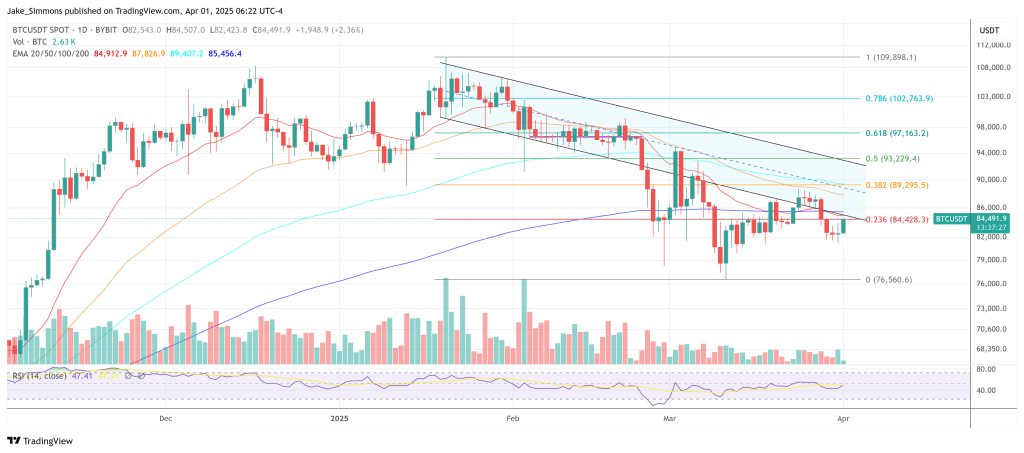
At press time, BTC traded at $84,491.

Related Posts