Federal Reserve officials appear increasingly divided over the appropriate path forward for monetary policy, with participants acknowledging significant uncertainty at their May meeting and emphasizing a need to keep their options open as they debate whether to continue raising interest rates or holding them steady in the coming months.
Minutes from the central bank’s May 2-3 meeting show that while officials remain focused on reining in “unacceptably high” inflation, they are balancing the need to rein in price growth with the growing likelihood that fallout from recent banking failures will have a dampening impact on economic growth.
“Participants generally expressed uncertainty about how much more policy tightening may be appropriate,” the minutes say.
Several officials felt the impact of stricter financial conditions and the lag with which monetary policy operates could mean their tightening campaign was nearly finished if the economy continued to evolve in line with the current outlook, the minutes say. Some others, however, felt the progress in bringing inflation back in line with the Fed’s 2% target would continue to be “unacceptably slow” and further rate hikes would be necessary.
Officials were able to agree in general on the need to keep a close eye on incoming economic data and to keep their options open ahead of the next policy meeting, scheduled for June 13-14.
The fresh insight, released Wednesday afternoon, underscores how seriously Fed officials considered changing course and holding interest rates steady when they met earlier this month. Officials voted unanimously in May to raise interest rates by a quarter-point to a range of 5-5.25%. The minutes suggest there was significant discussion over what the Fed should do after that and whether it would be time to pause the tightening campaign and hold rates steady.
“In short, the hawks were still in charge in early May,” wrote Ian Shepherdson, chief economist with Pantheon Macroeconomics, after the minutes were released. “But the next round of CPI, PPI, and labor market data likely will strengthen the case for a June pause.”
After the minutes were released on Wednesday, traders put the probability that the Fed holds rates steady at the June meeting at 72%, according to the CME FedWatch Tool.
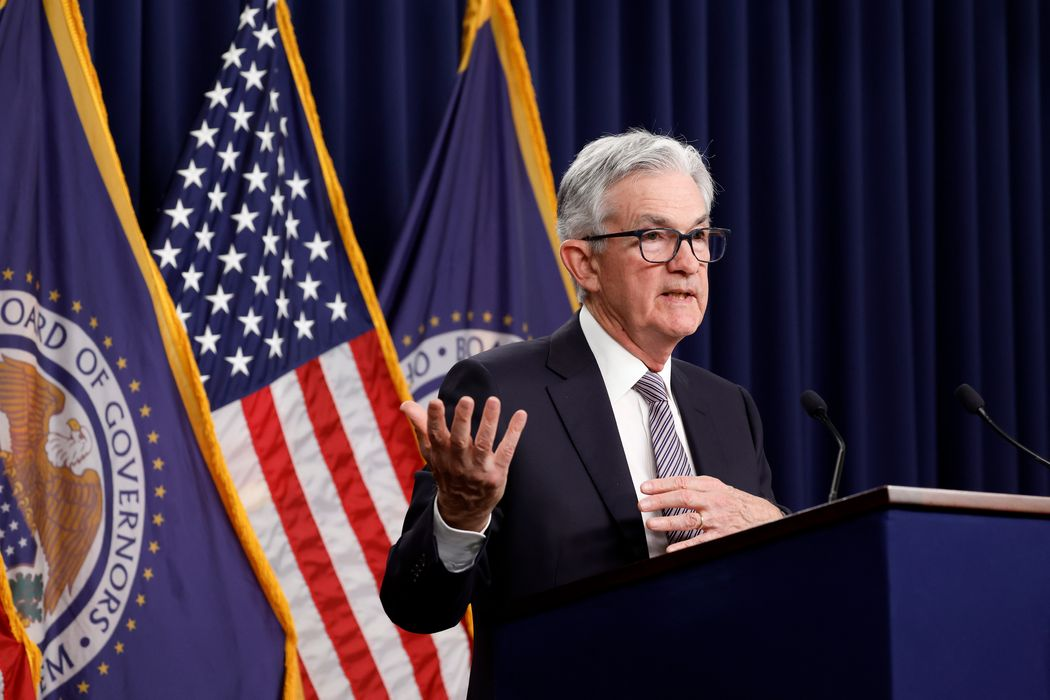
Fed Chairman Jerome Powell laid the groundwork at his postmeeting press conference in May for the central bank to hold rates steady at its next meeting, and officials deleted a line from their policy statement that said “ongoing increases” in the policy rate would be appropriate.
But Powell was careful not to suggest that officials had made a decision about what was coming next, and the minutes show other participants were focused on making sure the shift in their stance wasn’t misinterpreted. Some officials emphasized during the meeting the need to make clear that the changes to the statement didn’t mean the central bank had ruled out further rate hikes this year, or that it was leaning toward cutting rates, the minutes show.
Fed officials have said for months that they don’t anticipate lowering the federal-funds rate this year but will instead be holding it steady once they determine that they have reached a sufficiently restrictive level. That view stands at odds with the consensus forecast among investors, who continue to price in a significant likelihood of at least one quarter-point rate cut by the end of this year.
The Fed’s May rate hike came despite a view from committee staff economists that tightening in the pipeline so far, alongside the expected further tightening in bank credit conditions, would lead to a mild recession beginning later this year, the minutes show. Staff first released their recession forecast during the March meeting, which was held in the immediate aftermath of the failures of Silicon Valley and Signature Banks. The May meetings show committee staff see the downturn being followed by a “moderately paced” recovery.
Fed officials appeared to take a somewhat less dour view of the economic outlook, however, noting that while tightening credit conditions were likely to weigh on economic activity, “the extent of these effects remained uncertain.”
Ultimately, though, their decision on how to move forward in the coming meetings will depend largely on what forthcoming economic data show. April’s personal-consumption expenditures price index—the Fed’s preferred inflation gauge—will be released Friday, while May jobs numbers arrive next week and May consumer-price-index data will come the week after.