# Bài viết Liên quan Jobs

Trung tâm Tin tức HTX cung cấp những bài viết mới nhất và phân tích chuyên sâu về "Jobs", bao gồm xu hướng thị trường, cập nhật dự án, phát triển công nghệ và chính sách quản lý trong ngành tiền kỹ thuật số.

Bitcoin Bear Market Triggers Crypto Layoffs, Yet Fuels Industry's Most Aggressive M&A Wave Ever

A prolonged Bitcoin downturn is forcing crypto companies to lay off employees and automate operations, but has simultaneously triggered the industry's most aggressive wave of mergers and acquisitions (M&A). In the first half of 2026, crypto M&A deal value reached $93.7 billion, 26 times higher than the same period last year. This activity is primarily driven by traditional financial institutions—banks, payment processors, and asset managers—who are acquiring compliant crypto infrastructure like custody solutions, payment rails, and regulatory licenses instead of building them internally. Examples include Mastercard's acquisition of stablecoin firm BVNK and Franklin Templeton's launch of a dedicated crypto division via acquisition. This consolidation contrasts sharply with a shrinking crypto labor market, where active job openings have plummeted. Companies like Coinbase are restructuring to become "AI-native," leading to a sharp increase in roles requiring AI skills, while engineering and compliance positions now dominate hiring. Financially pressured crypto firms, such as Messari which was acquired at a fraction of its prior valuation, are becoming prime targets. Capital remains available but is highly selective, flowing overwhelmingly into businesses that bridge digital assets with traditional finance, such as tokenization platforms and regulated trading venues. The trend indicates a market where capital is rewarding compliant, utility-focused infrastructure while weaker models consolidate or downsize.

marsbit06/26 03:49

Bitcoin Bear Market Triggers Crypto Layoffs, Yet Fuels Industry's Most Aggressive M&A Wave Ever

marsbit06/26 03:49

70% of the Public Opposes AI, Americans Hope the U.S. Loses the AI War

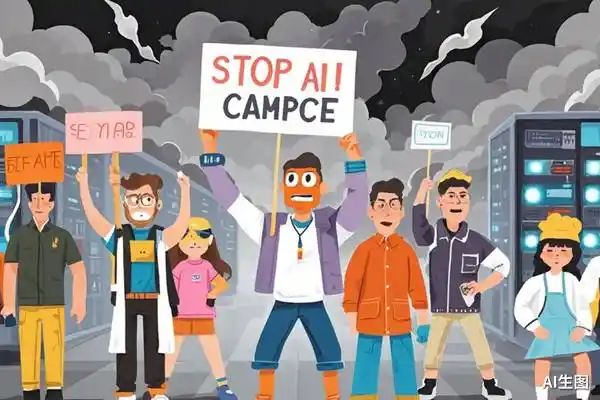
70% of Americans believe AI development is moving too fast, with growing public resistance evolving from online criticism to real-world protests and violence. This widespread anti-AI sentiment stems from fears of job losses, rising utility costs, environmental damage, threats to democracy, and financial instability. Key incidents illustrate the backlash: Google's former CEO Eric Schmidt was loudly booed at a graduation for promoting AI; AI company ads are vandalized; protests and even violent attacks target AI firms and data centers. Polls show deep public pessimism and strong local opposition to data center construction, often surpassing resistance to nuclear power plants. The core grievances are economic and practical: AI is seen as automating jobs, concentrating wealth, and increasing household electricity and water bills due to massive data center resource demands. Environmentalists also oppose AI's high energy use and carbon emissions. This opposition has turned AI into a major political issue in the US. While the Trump administration prioritizes AI innovation for global competition, bipartisan pushback is growing. Democrats and factions within the MAGA movement are forming temporary alliances to support stricter regulations and local bans on new data centers, pressuring the administration to choose between its tech industry backers and its voter base. The situation highlights a profound national divide over AI's future.

marsbit06/06 05:14

70% of the Public Opposes AI, Americans Hope the U.S. Loses the AI War

marsbit06/06 05:14

Interview with 7 Ordinary Professionals: After AI Arrived, How Are You Doing?

This article interviews seven professionals from diverse fields like Web3, bulk chemical trading, digital agriculture, and traditional wholesale to examine the impact of AI on their work. Key themes emerge from the discussions. AI has become integral to their workflows, primarily for increasing efficiency in tasks such as coding, content creation, research, and data analysis. Individuals across roles, from developers to managers, report that AI tools like ChatGPT and Claude have significantly reduced workloads and accelerated learning, creating opportunities for "super individuals" or one-person teams. However, this efficiency comes with a double-edged sword. It intensifies competition, pushing professionals to constantly learn new tools and adapt, leading to widespread anxiety about job security and a heightened pressure to keep pace. Interviewees anticipate significant job reductions in roles like administrative support, finance, HR, customer service, and some creative fields. A recurring view is that AI acts as a "great equalizer," amplifying the capabilities of those who use it effectively while leaving others behind, potentially deepening polarization. Despite AI's capabilities, interviewees identify enduring human strengths. AI struggles with tasks requiring deep contextual understanding, complex judgment in areas like risk assessment and system stability (especially in finance/Web3), nuanced human communication, and handling exceptions in logistics and manufacturing. These areas remain firmly in the human domain. Consequently, many professionals are refocusing their career strategies. They plan to evolve from task executors into "complex system owners," "super coordinators" managing AI agents, or specialists in high-level areas like business context, risk control, product design, and personal branding. In summary, the article portrays AI not as an optional tool but as a transformative force reshaping job demands. While it automates routine work, it also creates new forms of pressure and competition. The future, as seen by these professionals, belongs to those who can strategically integrate AI to augment uniquely human skills like judgment, responsibility, and strategic oversight.

marsbit06/01 08:17

Interview with 7 Ordinary Professionals: After AI Arrived, How Are You Doing?

marsbit06/01 08:17

Jensen Huang's CMU Speech: In the AI Era, Don't Just Watch, Build

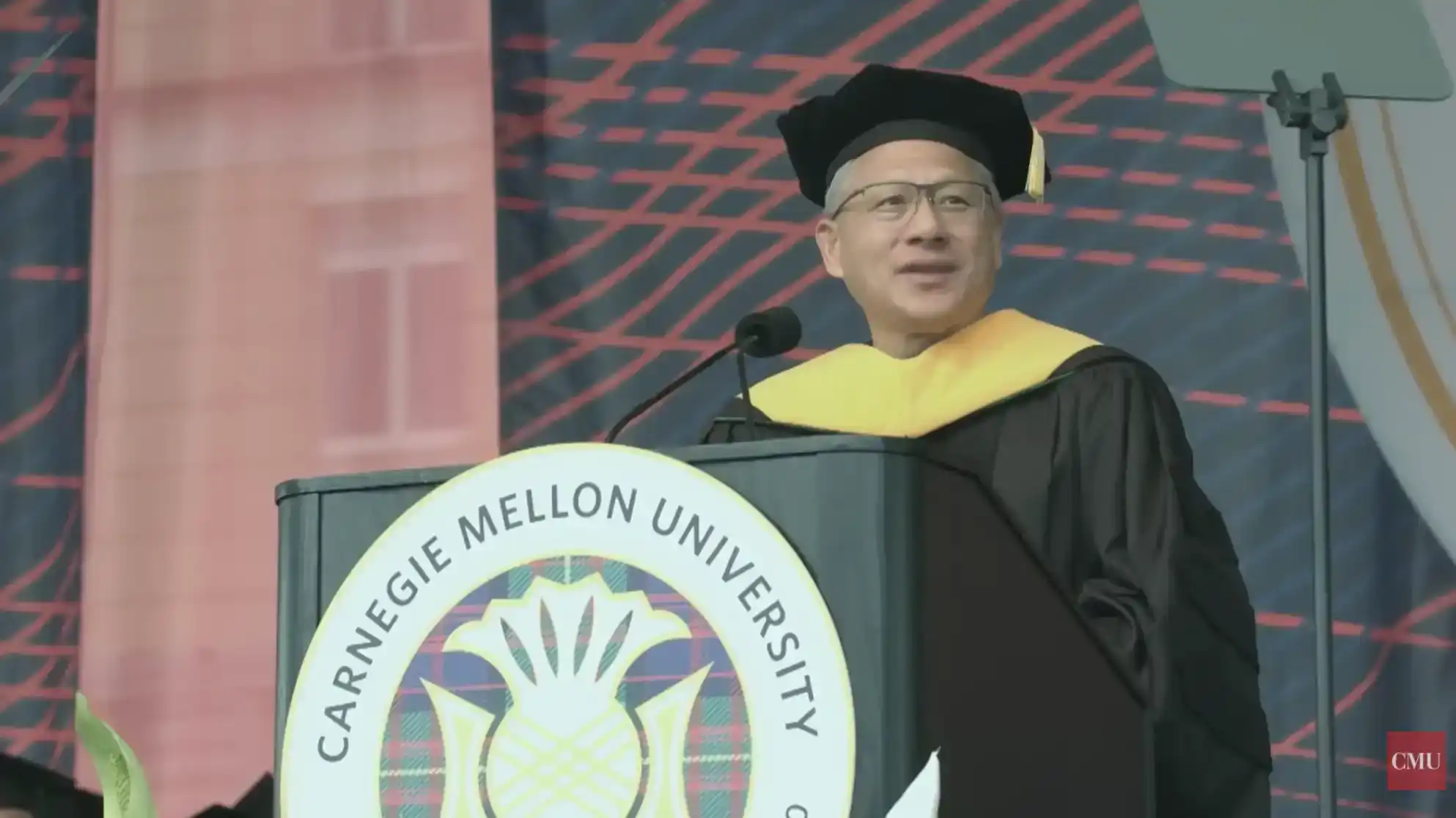
Jensen Huang, CEO of NVIDIA and a first-generation immigrant, delivered the commencement address to Carnegie Mellon University's class of 2026. He shared his personal journey from a humble background to founding NVIDIA, emphasizing resilience, learning from failure, and the responsibility that comes with leadership. Huang framed the present moment as the dawn of the AI revolution, a shift he believes is more profound than previous computing waves. He described AI as fundamentally resetting computing—moving from human-written software to machines that understand, reason, and use tools. This will create a new industry for generating intelligence and transform every sector. While acknowledging AI's potential to automate tasks and displace some jobs, Huang distinguished between the *tasks* of a job and its core *purpose*. He argued AI will augment human capability, not replace humans. The real risk, he stated, is not AI itself, but people being left behind by those who effectively use AI. He presented AI as a generational opportunity for massive infrastructure investment—in chip factories, data centers, energy grids, and advanced manufacturing—that could re-industrialize nations like the U.S. and bridge the digital divide by making computing and intelligent tools accessible to all. Huang called for a balanced approach: advancing AI safely and responsibly, establishing prudent policies, ensuring broad access, and encouraging universal participation. He urged the graduates not to fear the future but to engage with optimism and ambition, reminding them of CMU's motto, "My heart is in the work." His core message was clear: this is their moment to actively build and shape the AI-powered future, not merely observe it.

marsbit05/11 12:14

Jensen Huang's CMU Speech: In the AI Era, Don't Just Watch, Build

marsbit05/11 12:14

Conversation with Bitwise Advisor: From K-Shaped Economy to AI Taking Jobs, How Can Bitcoin Save the Younger Generation?

Jeff Park, a macro strategist and advisor at Bitwise, argues that the traditional financial system is broken, particularly for young generations. He describes a "K-shaped economy" where asset inflation enriches the wealthy while leaving others behind, with unaffordable housing as a key symptom. Park explains that real estate is often a depreciating asset due to maintenance costs and taxes, yet it remains unattainable for many young people due to distorted demand from global capital flows. He proposes Bitcoin as a superior store of value—scarce, portable, and free from maintenance costs or excessive taxation. By diverting capital away from real estate, Bitcoin could help lower housing prices and increase accessibility. Park also discusses the decline of traditional "smart investing" (e.g., value stocks) and the rise of "ideological investing" in non-correlated assets like crypto, luxury goods, and collectibles. On AI, Park warns it could trigger extreme social inequality by eliminating jobs while boosting corporate profits. He believes this will push younger generations toward Bitcoin, not only as a hedge but also as a symbol of decentralization and data sovereignty—offering an alternative to centralized AI systems that use personal data without fair compensation. He advises a diversified portfolio with Bitcoin as a core holding to hedge against currency devaluation and systemic risk.

marsbit04/18 05:41

Conversation with Bitwise Advisor: From K-Shaped Economy to AI Taking Jobs, How Can Bitcoin Save the Younger Generation?

marsbit04/18 05:41

Dialogue with MIT Economist: Don't Panic About 'AI Doomsday Theory', Verification Capability is a Scarce Resource

In a discussion with MIT economist Christian Catalini, the core argument is that the true scarcity in the AI economy is not intelligence but verification—the human capacity to check, judge, and confirm the correctness of AI outputs. Catalini explains that while automation costs are falling exponentially, verification remains constrained by human biological limits, at least for now. Entry-level jobs are most vulnerable, as AI can easily replicate tasks that rely on measurable, existing knowledge. However, even top experts are inadvertently training their own replacements by generating data that AI learns from—a phenomenon termed the "coder’s curse." Three roles will remain critical in the AI-driven economy: - **Directors**: Those who set intentions and steer AI agents toward goals, dealing with "unknown unknowns." - **Meaning Makers**: Individuals who create cultural, social, or narrative value based on human consensus and status games. - **Liability Underwriters**: Top-tier experts (e.g., lawyers, doctors) who assume responsibility for edge cases and final validation. Catalini advises against panic and encourages experimentation with AI tools to automate current roles and discover new opportunities. He emphasizes that uniquely human traits—like judgment in unmeasurable contexts—will retain value, and crypto-based verification infrastructure may play a key role in ensuring authenticity. The transition will be disruptive, but leveraging AI can amplify human potential exponentially.

marsbit03/28 08:06

Dialogue with MIT Economist: Don't Panic About 'AI Doomsday Theory', Verification Capability is a Scarce Resource

marsbit03/28 08:06

活动图片