Trends in U.S. Stocks (August 18): U.S.-Iran Deal Prospects Dim, Major Indices See Two Consecutive Down Days, Chip Stocks Defy Market Decline

marsbitXuất bản vào 2026-08-18Cập nhật gần nhất vào 2026-08-18

Tóm tắt

**Market Overview:** On August 18th, U.S. stock indices declined for a second consecutive day. The S&P 500 fell 0.52%, the Dow dropped 0.51% to a two-week low, and the Nasdaq slipped 0.32%. The decline was driven by heightened geopolitical risk as U.S.-Iran negotiations reached a key deadline without an extension, dimming the prospect of a long-term agreement. **Key Drivers:** * **Geopolitics & Oil:** The failure to extend the U.S.-Iran memorandum led to a surge in oil prices, with Brent crude closing above $90/barrel for the first time in three weeks. * **Treasury Yields:** The 30-year U.S. Treasury yield hit a high not seen since 2007, driven by heavy corporate issuance (notably for AI investments) and ongoing fiscal deficits. * **Sector Performance:** While the "Magnificent Seven" tech giants all closed lower, semiconductor stocks bucked the trend. The Philadelphia Semiconductor Index rose 1.6%, led by memory chipmakers (e.g., SanDisk, Micron) and optical communication companies, as investors focused on the strong demand outlook for AI-related hardware. * **Currency & Safe Havens:** The U.S. Dollar Index fell for a third day, while the offshore Chinese Yuan hit a three-year high. Gold prices rose to a two-month peak, supported by safe-haven demand outweighing pressure from rising yields. Bitcoin also gained. **Outlook:** Market focus remains on potential escalation in the Middle East and its impact on oil, alongside continued scrutiny of AI-related earnings and d...

Written by: Trend Research

With the U.S.-Iran negotiation window expiring and long-term agreement prospects dimming, the three major U.S. stock indices closed lower for the second consecutive day, with the Dow hitting its lowest close in two weeks. The S&P 500 fell 0.52% to 7,745.06, the Dow Jones declined 0.51% to 53,459.78, and the Nasdaq dropped 0.32% to 26,644.911. The VIX rose 6.48% to 17.42. The "Magnificent Seven" all closed in the red, with Meta down 3.5% leading the losses. However, memory chip stocks and optical communication stocks bucked the trend and moved higher, with the Philadelphia Semiconductor Index rebounding 1.6% and re-entering a bull market. Middle East risks pushed U.S. Treasury yields higher, with the 30-year yield reaching its highest level since 2007. Prospects of a U.S.-Iran deal boosted oil prices, with Brent crude closing above the $90 mark for the first time in three weeks. Gold reached its highest closing level in over two months. The U.S. Dollar Index fell for the third straight day, while offshore USD/CNY broke through 6.74 intraday, reaching a new high in over three years. Market dynamics were clear: Geopolitical risks lifted oil prices and safe-haven assets, but the demand logic for AI chips continues to strengthen, prompting continued fund allocation to memory and optical communication sectors.

U.S.-Iran Negotiation Window Expires, Long-Term Deal Prospects Dim, Oil Prices Surpass $90

The core macro variable on Monday was geopolitics. The memorandum of understanding window for U.S.-Iran negotiations expired without an extension agreement. Trump stated he was in no hurry to end the war in Iran, did not seek to extend the U.S.-Iran MOU, said Iran "would not make the kind of deal I think is necessary," and warned of "bombing the hell" out of Oman if it obstructed negotiations. Iran was similarly firm, ruling out an extension of the MOU and stating it had set a final deadline for U.S. compliance.

With no signs of narrowing differences, oil prices surged. WTI crude for September delivery rose 2.55% to $84.50/barrel, reaching its highest level this month. Brent crude for October delivery rose 2.65% to $90.87/barrel, closing above the $90 mark for the first time in three weeks.

The "dark shipping" of Middle Eastern oil producers using transponder shutdowns to secretly transport crude through the Strait of Hormuz continues, reportedly exceeding 4 million barrels per day. However, this covert supply chain has not completely offset the geopolitical risk premium. Short-term upward momentum for oil prices remains driven by political factors rather than supply-demand fundamentals.

30-Year U.S. Treasury Yield Hits Highest Since 2007, Bond Selloff Continues

U.S. Treasury yields continued to climb. The 30-year yield briefly exceeded 5.31%, its highest since 2007. The 10-year yield rose about 3 basis points to approximately 4.72%, while the 2-year yield increased about 1 basis point to roughly 4.18%.

The core factor driving long-end yields higher is supply pressure. Companies are issuing bonds on a large scale to fund the AI boom; August's U.S. investment-grade corporate bond issuance has already reached $145.2 billion, surpassing the monthly record of $136 billion set in August 2020. Concurrently, the U.S. government's nearly $2 trillion annual fiscal deficit continues to boost Treasury supply.

Major overseas holders are also selling. U.S. Treasury Department data shows China and Japan led overseas sales of U.S. Treasuries in June, with both countries and the U.K. reducing holdings. China's holdings, after rebounding in May, fell by $25.9 billion month-over-month to $633.4 billion, their lowest level since 2008.

Bank of America's Hartnett noted in a recent report that with U.S. government debt approaching $40 trillion and the AI financing frenzy pushing corporate bond supply up 61% year-over-year, this is structurally crowding out Treasury buyers, with debt interest payments already at $1.4 trillion. Hartnett views going long on gold as the best hedge against dollar devaluation, bond market collapse, and political risk.

Chip Index Re-enters Bull Market, Memory and Optical Communication Stocks Lead Gains Against Trend

Rising Treasury yields pressured the Magnificent Seven, but the semiconductor sector, with its independent AI chip demand narrative, bucked the trend. The Philadelphia Semiconductor Index rebounded 1.6%. The preceding bear market lasted only 21 days, the shortest since March 2020.

Memory chip stocks performed strongest. SanDisk closed up nearly 9%, and Western Digital gained over 5%. Micron has risen 17.5% over the past five sessions. The market sees strong recent financial data disclosures from Anthropic and OpenAI as key catalysts, improving visibility into AI chip demand.

Optical communication stocks also advanced. Coherent closed up nearly 8%, and Lumentum gained 4.6%. Demand for high-speed optical interconnects from AI data centers continues to be validated, with funds continuing to concentrate on more certain AI hardware sub-sectors amid macro uncertainty.

SpaceX rebounded over 4%. Previously pressured by capital expenditure concerns, Monday's rebound shows market confidence in the long-term logic of AI infrastructure investment remains.

Magnificent Seven All Close Lower, Divergence Between Chips and Seven Widens

The "Magnificent Seven" all closed lower on Monday, acting as a major drag on the broader market. Meta fell 3.5%, leading the declines, with losses for the other six relatively moderate.

The collective weakness of the Seven occurred against a backdrop of persistently rising Treasury yields. Higher long-term interest rates pressure the discount rates used to value high-multiple growth stocks, prompting funds to temporarily withdraw from large-cap tech amid macro uncertainty.

However, this withdrawal is not a systematic exit. The strength in the chip index indicates funds are simply rotating within the tech sector, switching from the Seven to higher-certainty AI hardware sub-sectors.

Dollar Falls for Third Day, Yuan Hits Three-Year High, Gold Rises to Two-Month High on Safe-Haven Demand

The U.S. Dollar Index fell for the third consecutive day, hitting an intraday low not seen in over two months. Offshore USD/CNY broke through 6.74 intraday, reaching a high not seen in over three years. Gold closed at a new high of over two months, rising over 1% intraday; COMEX gold for August delivery closed up 0.85% at $4,417.8/ounce. While rising Treasury yields typically pressure gold, safe-haven demand driven by escalating geopolitical risks outweighed interest rate factors.

Bitcoin broke through $64,000 intraday, rising 3% from the day's low. Digital assets found support against a weaker dollar backdrop. COMEX silver for August delivery closed up 1.74% at $66.121/ounce.

What to Watch Today

Market focus on Tuesday will be in two directions.

First, subsequent developments in the U.S.-Iran situation. Following the MOU expiration, any new contacts or escalation in confrontation will directly impact oil prices and risk asset performance. Trump's "no hurry" stance suggests geopolitical risk premium will be difficult to eliminate in the short term.

Second, Baidu's earnings report and conference call. Key points will be the pulling effect of AI large models on cloud business and the recovery pace of advertising. With the Golden Dragon Index underperforming, Baidu's results will test whether global funds' stance on Chinese stocks is seeing marginal changes.


Tiền kỹ thuật số thịnh hành

Câu hỏi Liên quan

QWhat were the main factors contributing to the rise in oil prices as mentioned in the article?

AThe main factor was the heightened geopolitical risk from the U.S.-Iran tensions. The article states that the negotiating window for the U.S.-Iran memorandum of understanding expired with no extension. Hardline statements from both sides, including warnings from Trump, dimmed prospects for a long-term agreement. This political uncertainty, rather than fundamental supply and demand, drove the risk premium in oil prices.

QWhy did U.S. Treasury yields, particularly the 30-year yield, rise significantly according to the article?

AAccording to the article, the 30-year U.S. Treasury yield rose to its highest level since 2007, driven primarily by supply pressures. Two key factors were cited: massive corporate debt issuance (a record for August) to fund AI investments, and continuous high issuance of government bonds to finance the U.S. deficit. Additionally, major foreign holders like China were reportedly selling U.S. Treasuries, reducing demand and pushing yields higher.

QHow did the Philadelphia Semiconductor Index perform relative to the broader market, and which specific chip sectors were highlighted?

AThe Philadelphia Semiconductor Index rebounded 1.6%, returning to a bull market after a very short bear market period. This performance was strong and went against the trend of the broader market, where major indices were down. The article specifically highlighted that memory chip stocks (like SanDisk, Western Digital, Micron) and optical communication stocks (like Coherent, Lumentum) were the leaders of this gain, driven by confidence in AI-related demand.

QWhat was the contrasting performance between the 'Magnificent Seven' tech stocks and the semiconductor sector?

AThe performance was contrasting or diverging. The 'Magnificent Seven' tech giants, including Meta, all closed lower, acting as a drag on the main indices. This was attributed to pressure from rising long-term bond yields, which negatively impact high-valuation growth stocks. Meanwhile, the semiconductor sector, particularly AI hardware segments, outperformed and closed higher. The article suggests this indicates money rotated within the tech sector from mega-cap tech into AI hardware perceived as having higher demand certainty.

QWhat were the price movements for key currencies and gold, and what were the driving forces behind them?

AThe U.S. Dollar Index fell for a third consecutive day, hitting a two-month low. Offshore Chinese Yuan (CNH) strengthened, breaking past 6.74 per dollar to a three-year high. Gold prices rose over 1% to close at a two-month high. The article attributes gold's strength to strong safe-haven demand due to heightened geopolitical risk, which outweighed the typical negative pressure from rising U.S. Treasury yields. The movements in currency and gold were partly linked to dollar weakness and risk-off sentiment.

Nội dung Liên quan

Grayscale chỉ ra 3 lý do tại sao nên mua Bitcoin ngay bây giờ

Theo Zach Pandl, Trưởng bộ phận Nghiên cứu tại Grayscale, Bitcoin hiện có thể là cơ hội mua vào hấp dẫn cho các nhà đầu tư dài hạn. Trong đánh giá ngày 21/8, ông đưa ra quan điểm dựa trên ba yếu tố chính, đồng thời nhấn mạnh rằng không ai có thể dự đoán chính xác tương lai của Bitcoin. Grayscale thường không khuyến nghị việc “bắt đáy” mà thay vào đó, nên xem xét Bitcoin như một phần của danh mục đầu tư đa dạng hóa. Pandl chỉ ra ba lý do ủng hộ việc giá hiện tại có thể là điểm vào tốt: 1) Xu hướng áp dụng Bitcoin về cấu trúc vẫn vững chắc, được thúc đẩy bởi thâm hụt chính phủ, ứng dụng blockchain trong dịch vụ tài chính và sự thay đổi thế hệ nhà đầu tư. 2) Thị trường giá xuống (bear market) hiện tại đã kéo dài khoảng 10 tháng, gần với mức trung bình 11-12 tháng của các chu kỳ trước. 3) Triển vọng rủi ro vĩ mô có vẻ thuận lợi, dù việc Cục Dự trữ Liên bang (Fed) có thể tăng lãi suất trong tương lai vẫn là một mối đe dọa. Pandl kết luận rằng khi xem xét tổng hợp cả ba yếu tố — xu hướng áp dụng, vị trí trong chu kỳ thị trường và rủi ro vĩ mô — thời điểm hiện tại tạo ra một cơ hội vào lệnh thuận lợi cho các nhà đầu tư dài hạn. Tuy nhiên, đánh giá này tập trung vào điều kiện thị trường chứ không khẳng định giá hiện tại đã chạm đáy cuối cùng.

cryptonews.ru19 phút trước

Grayscale chỉ ra 3 lý do tại sao nên mua Bitcoin ngay bây giờ

cryptonews.ru19 phút trước

Galaxy tuyên bố rằng để xác nhận kết thúc thị trường gấu, Bitcoin cần phục hồi mức giá 82,470 USD

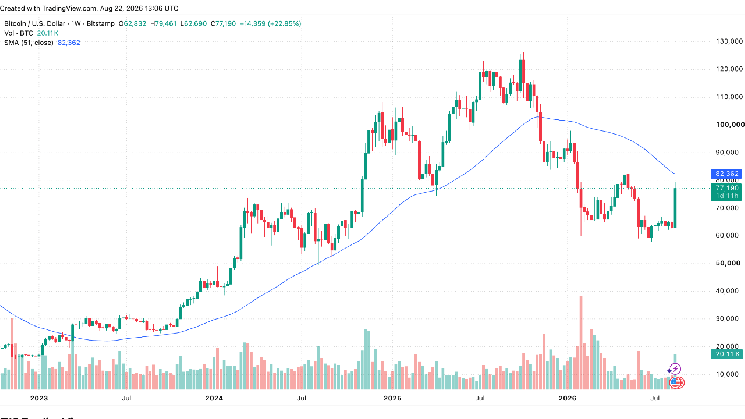
Galaxy Research tuyên bố Bitcoin cần phục hồi mức 82.470 USD để xác nhận thị trường gấu đã kết thúc. Phân tích của họ về các thị trường gấu hoàn tất từ năm 2011 cho thấy, việc Bitcoin duy trì trên đường trung bình động 50 tuần (hiện ở ~82.470 USD) là tín hiệu quan trọng. Trong lịch sử, 11 trong số 13 lần phục hồi mức này đều thành công, không tạo đáy thấp hơn. Ngược lại, đường trung bình động 50 ngày cho nhiều tín hiệu giả hơn. Ví dụ, trong đợt suy thoái 2013-2015, Bitcoin vượt lên mức này 13 lần trước khi chạm đáy cuối cùng. Sự đánh đổi của tín hiệu 50 tuần mạnh mẽ hơn là thời gian chờ đợi. Thường phải mất 130-284 ngày sau đáy để có lần phục hồi đầu tiên thành công, khi đó giá đã tăng 63-80%. Tuy nhiên, chỉ báo này không phải là tuyệt đối, như trong chu kỳ đỉnh đôi 2021-2022 đã có hai lần phục hồi thất bại. Tóm lại, dù đà hồi phục gần đây từ mức thấp tháng Sáu là tích cực, Bitcoin (giao dị quanh 77.190 USD) vẫn cần đóng cửa hàng tuần vững trên 82.000 USD để củng cố bằng chứng lịch sử rằng thị trường gấu thực sự chấm dứt.

cryptonews.ru27 phút trước

Galaxy tuyên bố rằng để xác nhận kết thúc thị trường gấu, Bitcoin cần phục hồi mức giá 82,470 USD

cryptonews.ru27 phút trước

Mức thuế 0,2% đối với tiền mã hóa tại bang Illinois dẫn đến một cuộc chiến pháp lý toàn diện

Hiệp hội Blockchain và Hội đồng Đổi mới Tiền mã hóa (Crypto Council for Innovation) đã đệ đơn kiện vào ngày 21/8 tại Tòa án Quận Sangamon chống lại Giám đốc Sở Doanh thu Illinois David Harris, Tổng chưởng lý Kwame Raoul và Công tố viên Quận Sangamon John Milhizer. Nguyên đơn yêu cầu tuyên bố Đạo luật Thuế Tài sản Kỹ thuật số là bất hợp pháp và ra lệnh cấm tạm thời và vĩnh viễn ngăn luật này có hiệu lực. Vụ kiện xoay quanh loại thuế 0,2% đánh vào giá trị tài sản kỹ thuật số trong các giao dịch nhất định thông qua nhà môi giới, có thể được áp dụng ngay cả khi khách hàng không mua, bán hay chuyển quyền sở hữu. Nguyên đơn cho rằng đây là loại thuế chưa có tiền lệ, vì Illinois không đánh thuế tương tự lên các giao dịch cổ phiếu, chuyển tiền giữa các tài khoản cá nhân hay dịch vụ lưu ký tài sản truyền thống. Họ lập luận rằng bang đang đánh thuế vào cơ chế lưu trữ hoặc chuyển giá trị hơn là chính giao dịch kinh tế. Đơn kiện cũng chỉ ra nhiều điểm mơ hồ trong luật, như cách xác định một "sự kiện chịu thuế" trong một chuỗi giao dịch phức tạp, cách tính toán giá trị chịu thuế, và những khó khăn trong việc xác định cư dân Illinois. Các quy tắc mơ hồ này có thể dẫn đến hóa đơn thuế chênh lệch "hàng trăm lần" và buộc các công ty phải đối mặt với rủi ro hình sự nếu không tuân thủ. Ngoài ra, các tổ chức này còn tranh cãi về quy trình lập pháp, cho rằng dự luật thuế đã được thông qua vội vàng mà không có sự xem xét đầy đủ, vi phạm các yêu cầu hiến pháp của bang. Họ cũng viện dẫn rằng luật thuế vi phạm Đạo luật Tự do Thuế Internet liên bang, điều khoản Thương mại và các đảm bảo về thủ tục pháp lý. Mục tiêu trước mắt của nguyên đơn là yêu cầu tòa án ngăn chặn việc thu thuế trước ngày 1/1, biến bốn tháng tới thành một phép thử xem liệu một bang có thể đánh thuế đặc biệt lên hoạt động tài chính chỉ vì nó sử dụng tài sản kỹ thuật số hay không.

cryptonews.ru29 phút trước

Mức thuế 0,2% đối với tiền mã hóa tại bang Illinois dẫn đến một cuộc chiến pháp lý toàn diện

cryptonews.ru29 phút trước

Giao dịch

Giao ngay

Bài viết Nổi bật

Làm thế nào để Mua CHIP

Chào mừng bạn đến với HTX.com! Chúng tôi đã làm cho mua USD.AI (CHIP) trở nên đơn giản và thuận tiện. Làm theo hướng dẫn từng bước của chúng tôi để bắt đầu hành trình tiền kỹ thuật số của bạn.Bước 1: Tạo Tài khoản HTX của BạnSử dụng email hoặc số điện thoại của bạn để đăng ký tài khoản miễn phí trên HTX. Trải nghiệm hành trình đăng ký không rắc rối và mở khóa tất cả tính năng. Nhận Tài khoản của tôiBước 2: Truy cập Mua Crypto và Chọn Phương thức Thanh toán của BạnThẻ Tín dụng/Ghi nợ: Sử dụng Visa hoặc Mastercard của bạn để mua USD.AI (CHIP) ngay lập tức.Số dư: Sử dụng tiền từ số dư tài khoản HTX của bạn để giao dịch liền mạch.Bên thứ ba: Chúng tôi đã thêm những phương thức thanh toán phổ biến như Google Pay và Apple Pay để nâng cao sự tiện lợi.P2P: Giao dịch trực tiếp với người dùng khác trên HTX.Thị trường mua bán phi tập trung (OTC): Chúng tôi cung cấp những dịch vụ được thiết kế riêng và tỷ giá hối đoái cạnh tranh cho nhà giao dịch.Bước 3: Lưu trữ USD.AI (CHIP) của BạnSau khi mua USD.AI (CHIP), lưu trữ trong tài khoản HTX của bạn. Ngoài ra, bạn có thể gửi đi nơi khác qua chuyển khoản blockchain hoặc sử dụng để giao dịch những tiền kỹ thuật số khác.Bước 4: Giao dịch USD.AI (CHIP)Giao dịch USD.AI (CHIP) dễ dàng trên thị trường giao ngay của HTX. Chỉ cần truy cập vào tài khoản của bạn, chọn cặp giao dịch, thực hiện giao dịch và theo dõi trong thời gian thực. Chúng tôi cung cấp trải nghiệm thân thiện với người dùng cho cả người mới bắt đầu và người giao dịch dày dạn kinh nghiệm.

Tổng lượt xem 1.1kXuất bản vào 2026.04.21Cập nhật vào 2026.06.02

Làm thế nào để Mua CHIP

Thảo luận

Chào mừng đến với Cộng đồng HTX. Tại đây, bạn có thể được thông báo về những phát triển nền tảng mới nhất và có quyền truy cập vào thông tin chuyên sâu về thị trường. Ý kiến ​​của người dùng về giá của CHIP (CHIP) được trình bày dưới đây.

活动图片