ENS Founder Seeks to 'Seize Power' from DAO

Foresight NewsXuất bản vào 2026-07-02Cập nhật gần nhất vào 2026-07-02

Tóm tắt

On June 29th, the ENS community entered the on-chain voting phase for a proposal to renew the ENS DAO Security Council's veto power for two more years. Shortly after voting began, ENS founder Nick Johnson used his substantial ENS holdings to cast over 3.55 million votes against the proposal, swinging the outcome despite initial strong support. The Security Council was established in July 2024 with a 4/8 multisig veto power to protect the DAO's treasury (valued over $350 million) from malicious proposals during a period of low voter participation. Its powers were limited to vetoing only harmful proposals, not normal ones. Nick Johnson's opposition stems from broader concerns about ENS DAO's governance. In late 2025, he and others expressed frustration that the DAO had become mired in political gamesmanship, with capable contributors leaving and leadership falling to less experienced or misaligned parties. This context set the stage for a major restructuring proposal by ENS COO Katherine Wu on June 19th, titled "Next Era of ENS DAO: Empowering the ENS Foundation." The controversial proposal aims to transfer daily operations, treasury management, and long-term strategy to a restructured ENS Foundation with a professional board, while the DAO would retain core protocol governance powers. Critics, including original ENS constitution author Brantly Millegan, argue this effectively transfers treasury control from token holders to ENS Labs (the core development team), undermining ...


Written by: Eric, Foresight News


On June 29, a proposal by the ENS community to extend the veto power of the ENS DAO Security Committee for two years entered the on-chain voting stage. Shortly after voting began, the over 800,000 votes in favor far exceeded the less than 300,000 votes against. However, ENS founder Nick Johnson used his substantial ENS holdings to significantly increase the opposing votes to 3.55 million in one go.
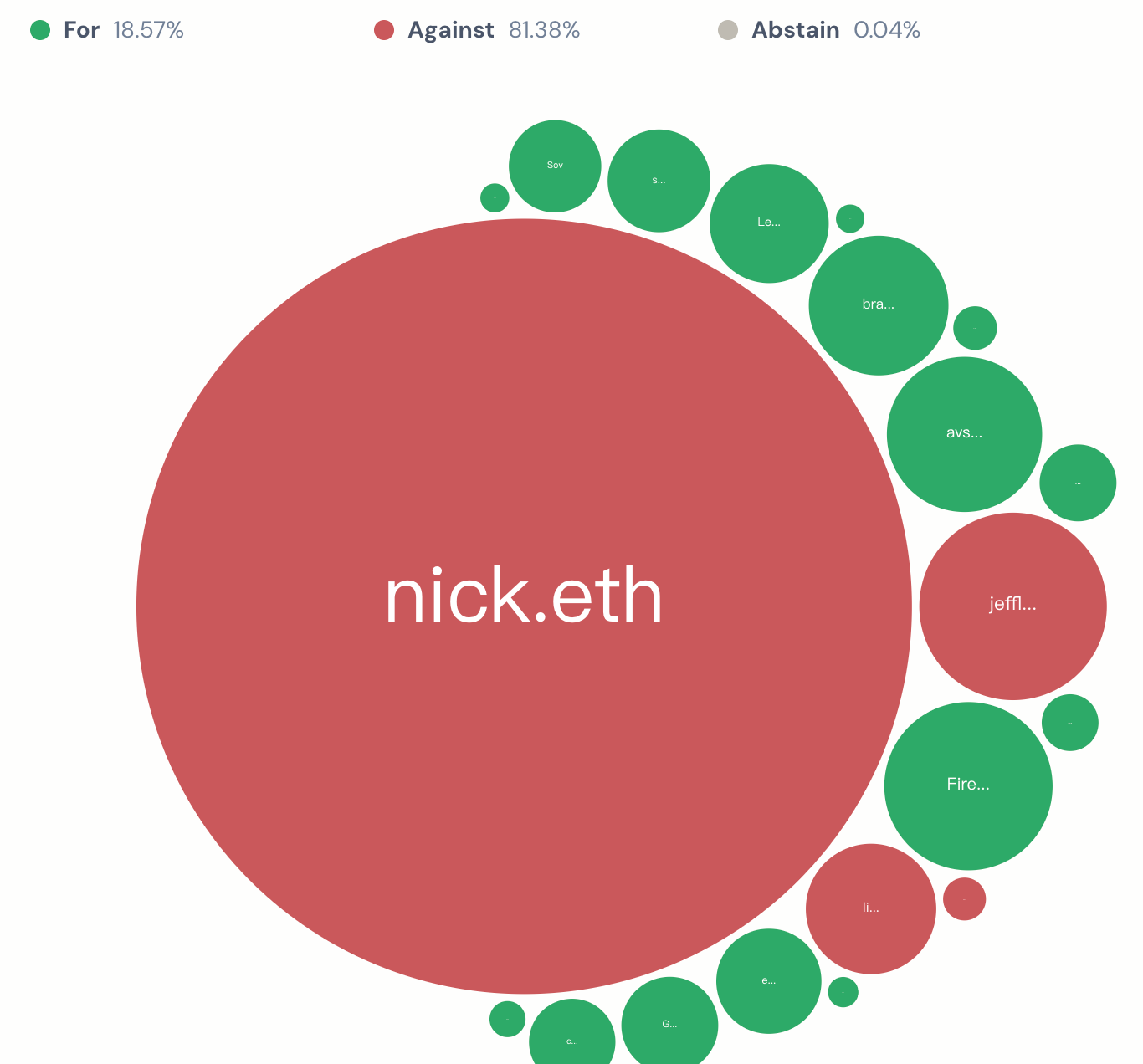


The ENS DAO Security Committee was established in July 2024. At that time, both active participants in ENS DAO proposals and the number of votes were relatively low. To prevent major holders from using this opportunity to launch malicious proposals that could jeopardize the ENS DAO treasury exceeding $350 million, the DAO chose to establish the Security Committee, granting it direct veto power over malicious proposals through a 4/8 multisig.


However, the committee's power is limited to vetoing malicious proposals. It cannot interfere with the process of normal proposals, nor can it initiate proposals. Its authority is retained for only two years at a time for easy adjustment.


Logically, renewing the authority of such an organization protecting the DAO treasury before its term ends should be quite normal. Why would the ENS founder personally step in to vote against a proposal designed to protect the DAO?


To understand this seemingly 'authoritarian' decision, we need to trace back to a discussion about ENS DAO governance in November last year.


I mentioned this incident in the article "Seeing ENS Struggling with Governance, I Think It's Time to Talk About DAO Problems" (https://foresightnews.pro/article/detail/93316): In November 2025, Nick Johnson wrote a meaningful post on the forum, roughly stating that the ENS DAO was now full of political infighting, capable people were gradually leaving, and the leadership of the DAO had fallen into the hands of inexperienced individuals, or even those whose interests were not aligned with the protocol.


Also in that month, ENS DAO Secretary Limes submitted a proposal suggesting that at the end of the sixth term, i.e., December 31, 2025, the operations of the three working groups—Metagovernance, Ecosystem, and Public Goods—be terminated. As for the reasons, firstly, because proposals had become a game of 'you support me, I support you,' with no one caring about what should actually be done; secondly, the lack of entry criteria led to the frequent phenomenon of 'bad money driving out good.' Limes believed that process improvements could not solve this structural deep-rooted problem, and shutting down was the only way out.


Although this proposal ultimately did not pass, Nick's desire for DAO reform was already clear.


On June 19, ENS COO Katherine Wu posted a new proposal on the ENS forum: "Next Era of ENS DAO: Empowering the ENS Foundation." The core contents of the proposal are twofold: first, to transfer daily operations, treasury management, and long-term capital strategy to a restructured ENS Foundation. The Foundation would be responsible for daily treasury operations, public goods grants, working group coordination, ecosystem strategy, trademark/brand assets, etc. Additionally, the Foundation would establish a 5-member board of directors to enhance professional execution and accountability.


Second, it commits that the DAO and token holders will retain core powers, including protocol-layer governance contract upgrades, registry control, fee structure, constitutional amendments, etc.


The biggest point of contention in this proposal is the DAO treasury. Critics believe this would allow the Foundation and, by extension, ENS Labs behind it, to effectively control the massive funds, weakening the direct influence of token holders. ENS original constitution author Brantly Millegan expressed strong opposition, arguing that it violates the DAO's original design where token holders should simultaneously control both the protocol and the treasury, essentially implying that ENS Labs wants direct control of the treasury.
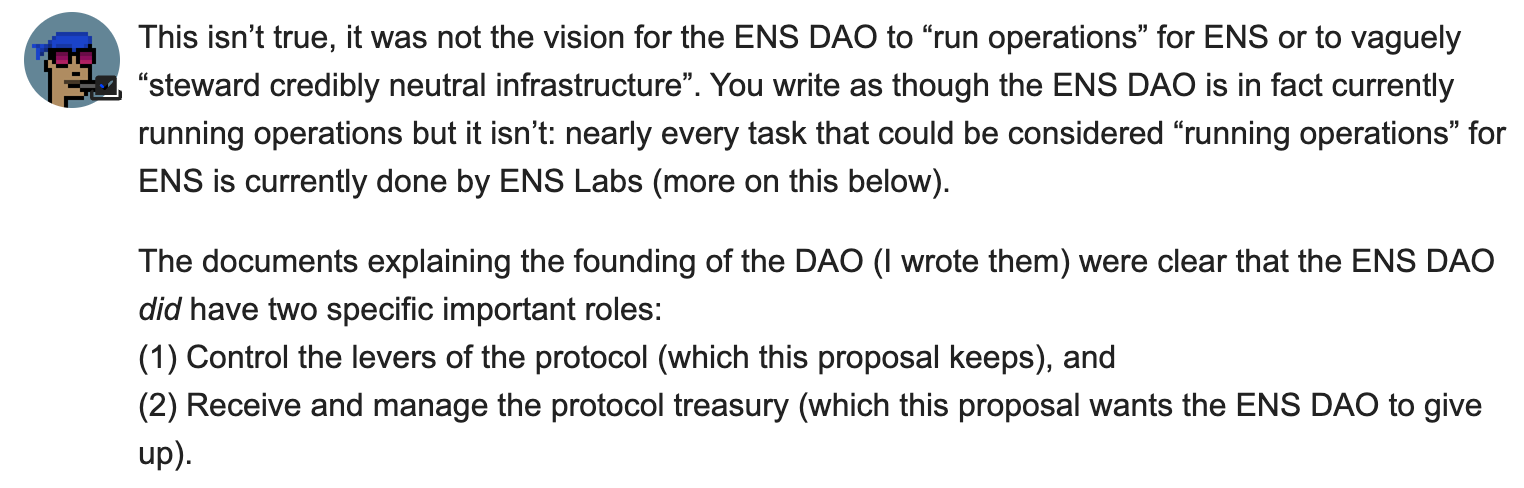


This is a conflict between decentralization fundamentalists and practical operators. One side does not believe inefficiency justifies the Foundation 'seizing power' from the DAO, while the other, after years of ups and downs, still believes that centralization, at least for now, is more beneficial for the project's development.


Nick's over 3 million opposing votes are seen as the first shot fired in the power war.


However, Nick himself also provided an explanation. His opposition stems from concerns that the current committee's power lacks sufficient checks and balances, and a two-year extension would solidify these issues. Additionally, he worries that some members might use the veto power for political purposes, blocking ordinary proposals they personally dislike, rather than limiting it to genuinely urgent situations.


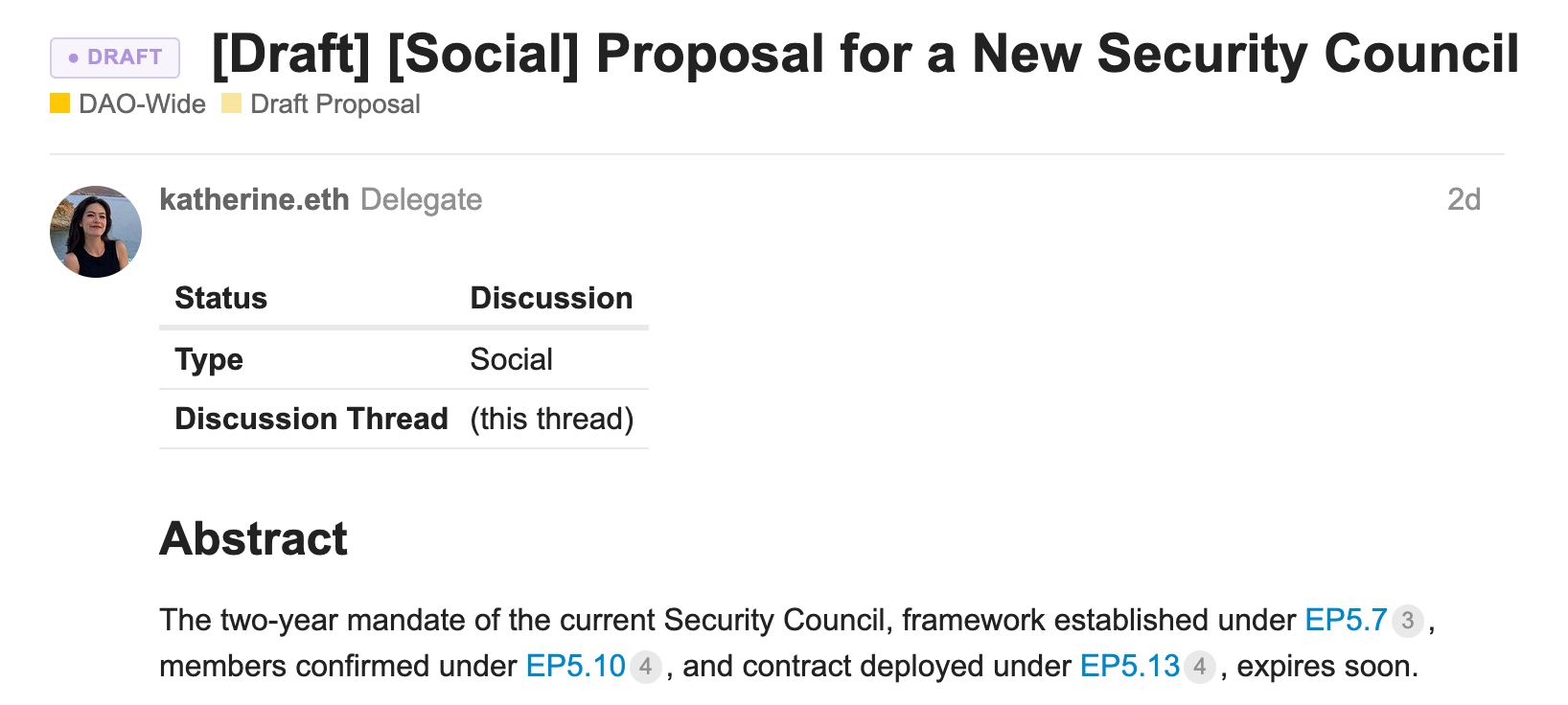
In response, Katherine released a new proposal that raised the threshold for veto execution (from 4/8 to 5/8), implemented stricter power limitations, and added member removal mechanisms, among other things, to prevent power concentration.


Data shows ENS's annual revenue exceeded $10 million in 2023, declined to $7 million in 2024, and had fallen to less than $2 million in 2025. When there is enough money, no one cares how it is spent; but when the industry is in a downturn and revenue is falling, even assets worth several hundred million dollars require careful planning.


Nick's substantial holdings of ENS are enough for him to implement these changes, but the forced implementation of change via the token-holding 'bug' leaves Nick with no retreat. The new Foundation must perform at least better than the DAO. 'How to do it' is the problem Nick must solve in the next phase. Hopefully, the ENS core team already has the answer.


Tiền kỹ thuật số thịnh hành

Câu hỏi Liên quan

QWhy did ENS founder Nick Johnson vote against renewing the security committee's veto power?

ANick Johnson voted against the renewal because he was concerned about a lack of sufficient checks and balances on the committee's power. He worried that a two-year renewal would solidify these issues and that some members might misuse the veto for political purposes to block ordinary proposals they personally disliked, rather than only for genuine emergencies.

QWhat are the two main proposed changes in Katherine Wu's 'Next Era of ENS DAO' proposal?

AThe two main proposals are: 1) Transferring daily operations, treasury management, and long-term capital strategy to a restructured ENS Foundation, which would handle daily treasury operations, public goods grants, working group coordination, ecosystem strategy, and brand assets. 2) Ensuring that the DAO and token holders retain core powers, including protocol-level governance, contract upgrades, registry control, fee structure changes, and constitutional amendments.

QWhat was the core controversy surrounding the proposed new ENS Foundation?

AThe core controversy centered on the DAO treasury. Critics, including ENS's original constitution author Brantly Millegan, argued that the proposal would allow the Foundation (and by extension, ENS Labs) to gain practical control over the massive treasury funds, thereby weakening the direct influence of token holders. This was seen as a move away from the original DAO design where token holders controlled both the protocol and the treasury.

QWhat problems did Nick Johnson and Limes identify with ENS DAO's governance in late 2025?

AThey identified significant political infighting within the DAO, where competent people were leaving and leadership was falling into the hands of individuals who lacked experience or had interests misaligned with the protocol's. Limes specifically noted that proposal-making had become a reciprocal 'you support me, I support you' game, with a lack of focus on necessary work, and that the absence of entry standards led to a 'bad money driving out good' phenomenon.

QHow did Katherine Wu attempt to address the concerns about the security committee's power after Nick's vote?

AIn response to the concerns raised by Nick Johnson's vote, Katherine Wu submitted a new proposal to reform the security committee. The key changes included raising the threshold for executing a veto (from 4/8 to 5/8 members), implementing stricter power limitations, and adding a mechanism for removing committee members, all aimed at preventing the concentration of power.

Nội dung Liên quan

DEXE tăng mạnh khi khối lượng giao dịch tăng vọt 200%—Liệu nó có thể vượt mốc 30$ tiếp theo không?

Vốn hóa thị trường altcoin đã tăng gần 7% từ đầu tháng. Trong khi các token hàng đầu lĩnh vực AI không có đà tăng mạnh ngắn hạn, thì DeXe (DEXE) lại nổi bật với mức tăng 17,5% trong 24 giờ qua. Khối lượng giao dịch hàng ngày bật tăng 201%, cho thấy sự ủng hộ mạnh mẽ từ thị trường. Cấu trúc swing trên biểu đồ ngày của DEXE vẫn rất tăng giá. Đợt tăng gần đây từ 9,81 USD lên 24,49 USD được củng cố bởi dòng tiền mạnh (CMF ở mức +0,24) và khối lượng giao dịch cao. Mặc dù các chỉ báo động lượng như MACD và Stochastic RSI đang ở vùng quá mua, điều này chưa chắc dẫn đến điều chỉnh ngay lập tức. Trên khung thời gian 2 giờ, xu hướng vẫn tích cực. Tuy nhiên, các nhà giao dịch được khuyên có thể chờ đợi một đợt điều chỉnh về vùng 24,65 USD để mua vào, đồng thời lưu ý rằng giá hoàn toàn có thể vượt ngưỡng 30 USD trước khi có đợt pullback đó. Diễn biến của Bitcoin (BTC) tiến gần vùng cung 64k USD cũng là yếu tố cần theo dõi vì có thể ảnh hưởng đến DEXE. Tóm lại, hành động giá của DEXE có cấu trúc tăng mạnh, được hỗ trợ bởi khối lượng, nhưng các chỉ báo kỹ thuật cho thấy khả năng điều chỉnh có thể xảy ra.

ambcrypto20 phút trước

DEXE tăng mạnh khi khối lượng giao dịch tăng vọt 200%—Liệu nó có thể vượt mốc 30$ tiếp theo không?

ambcrypto20 phút trước

Việc Chấm Dứt Điều Tra MetaMask Mang Lại Không Gian Thở Cho Các Nhà Phát Triển Ví Ethereum

Cơ quan SEC đã chấm dứt cuộc điều tra đối với các dịch vụ hoán đổi (swap) và staking của MetaMask, theo thông báo từ Consensys. Quyết định này được coi là tín hiệu giảm bớt áp lực pháp lý quan trọng cho các nhà phát triển ví Ethereum. Việc điều tra nhắm vào một trong những ví tiêu dùng quan trọng bậc nhất của Ethereum đã gây lo ngại về rủi ro tuân thủ cho toàn bộ cơ sở hạ tầng ví. MetaMask đóng vai trò là cửa ngõ chính để người dùng phổ thông tiếp cận DeFi, NFT và các giao dịch on-chain. Nếu SEC theo đuổi vụ việc, nó có thể buộc các nhà phát triển phải hạn chế tính năng trong giao diện ví tự quản (non-custodial). Mặc dù việc đóng cửa điều tra không giải đáp mọi câu hỏi pháp lý và các nhà phát triển ví vẫn phải đối mặt với sự không chắc chắn về chính sách, nhưng nó đã loại bỏ một mối đe dọa thực thi trực tiếp. Đối với Consensys, điều này củng cố lập luận rằng phần mềm ví không nên bị đối xử như một nhà môi giới truyền thống chỉ vì nó hỗ trợ người dùng tương tác với các giao thức. Sự phát triển của Ethereum phụ thuộc vào việc các ví trở nên đơn giản hơn nhưng vẫn hữu ích. Việc giảm bớt áp lực pháp lý ngay lập tức này tạo điều kiện cho hệ sinh thái tiếp tục cải thiện trải nghiệm người dùng và thu hút người dùng chính thống.

bitcoinist48 phút trước

Việc Chấm Dứt Điều Tra MetaMask Mang Lại Không Gian Thở Cho Các Nhà Phát Triển Ví Ethereum

bitcoinist48 phút trước

Một Vòng Thiên Thần Được Sinh Ra Từ Tìm Kiếm AI

AI Tìm Kiếm “Chào Đời” Một Vòng Thiên Thần (Angel Round) Ngày 7/7, công ty công nghệ marketing AI Trí Thôi Thời GenOptima (gọi tắt là Trí Thôi Thời) đã công bố hoàn thành vòng gọi vốn thiên thần (angel round) trị giá hàng chục triệu nhân dân tệ. Vòng này có sự tham gia của Quỹ Sở hữu Trí tuệ Thượng Hải, đầu tư Thiên Đồ, nhà đầu tư cá nhân nổi tiếng Ngụy Uy và cổ đông cũ 37 Interactive Entertainment tiếp tục theo vốn. Được thành lập vào tháng 5/2025, Trí Thôi Thời tập trung vào lĩnh vực Tối ưu hóa Câu trả lời Sinh thành (GEO - Generative Engine Optimization), giúp thương hiệu xuất hiện trong các câu trả lời do AI đưa ra. Sau một năm, công ty đã phục vụ gần 400 khách hàng lớn (KA), tổng doanh thu hàng năm định kỳ (ARR) tích lũy vượt mốc 100 triệu nhân dân tệ và mở rộng mạng lưới dịch vụ toàn cầu. Người sáng lập Trần Mưu Triết là một doanh nhân liên tiếp, từng tham gia đồng sáng lập Đậu Hà Tư Duy và nắm giữ vị trí phó chủ tịch marketing tại 37 Interactive Entertainment. Ông nhận thấy xu hướng người dùng chuyển sang hỏi AI để tìm kiếm thông tin và quyết định, từ đó nhận ra cơ hội cho GEO. Công nghệ cốt lõi của công ty là hệ thống GENO tự nghiên cứu, dựa trên kiến trúc tác nhân kép "ma trận tác nhân thông minh chuyên sâu + mô hình chuyên gia", với độ chính xác khớp ngữ nghĩa đạt 99.8%. Họ cũng hợp tác với Đại học Sư phạm Hoa Đông để thành lập phòng thí nghiệm chung về AI. Báo cáo của iResearch năm 2026 dự báo thị trường liên quan đến GEO/Tối ưu hóa câu trả lời AI tại Trung Quốc dự kiến sẽ vượt 50 tỷ nhân dân tệ vào năm 2030. Đây được xem là phiên bản kế nhiệm của SEO trong kỷ nguyên AI, nơi các thương hiệu cạnh tranh để có vị trí trong câu trả lời của AI. Các nhà đầu tư đánh giá cao tiềm năng nghìn tỷ của thị trường tìm kiếm AI và xem GEO là cơ sở hạ tầng then chốt kết nối thương hiệu với lưu lượng truy cập AI. Họ cũng tin tưởng vào năng lực sản phẩm hệ thống hóa, tầm nhìn thị trường toàn cầu và hiệu quả triển khai đã được kiểm chứng của đội ngũ Trí Thôi Thời. Tầm nhìn tiếp theo hướng đến kỷ nguyên tác nhân-đối-tác nhân (Agent-to-Agent), nơi giao dịch có thể được thực hiện trực tiếp thông qua tương tác giữa các AI. Hiện tại, việc đảm bảo AI "nhận biết" và giới thiệu chính xác thương hiệu đã trở thành cửa ngõ quan trọng mới trong hành trình người dùng.

marsbit56 phút trước

Một Vòng Thiên Thần Được Sinh Ra Từ Tìm Kiếm AI

marsbit56 phút trước

Giao dịch

Giao ngay

Bài viết Nổi bật

Làm thế nào để Mua DAO

Chào mừng bạn đến với HTX.com! Chúng tôi đã làm cho mua DAO Maker (DAO) trở nên đơn giản và thuận tiện. Làm theo hướng dẫn từng bước của chúng tôi để bắt đầu hành trình tiền kỹ thuật số của bạn.Bước 1: Tạo Tài khoản HTX của BạnSử dụng email hoặc số điện thoại của bạn để đăng ký tài khoản miễn phí trên HTX. Trải nghiệm hành trình đăng ký không rắc rối và mở khóa tất cả tính năng. Nhận Tài khoản của tôiBước 2: Truy cập Mua Crypto và Chọn Phương thức Thanh toán của BạnThẻ Tín dụng/Ghi nợ: Sử dụng Visa hoặc Mastercard của bạn để mua DAO Maker (DAO) ngay lập tức.Số dư: Sử dụng tiền từ số dư tài khoản HTX của bạn để giao dịch liền mạch.Bên thứ ba: Chúng tôi đã thêm những phương thức thanh toán phổ biến như Google Pay và Apple Pay để nâng cao sự tiện lợi.P2P: Giao dịch trực tiếp với người dùng khác trên HTX.Thị trường mua bán phi tập trung (OTC): Chúng tôi cung cấp những dịch vụ được thiết kế riêng và tỷ giá hối đoái cạnh tranh cho nhà giao dịch.Bước 3: Lưu trữ DAO Maker (DAO) của BạnSau khi mua DAO Maker (DAO), lưu trữ trong tài khoản HTX của bạn. Ngoài ra, bạn có thể gửi đi nơi khác qua chuyển khoản blockchain hoặc sử dụng để giao dịch những tiền kỹ thuật số khác.Bước 4: Giao dịch DAO Maker (DAO)Giao dịch DAO Maker (DAO) dễ dàng trên thị trường giao ngay của HTX. Chỉ cần truy cập vào tài khoản của bạn, chọn cặp giao dịch, thực hiện giao dịch và theo dõi trong thời gian thực. Chúng tôi cung cấp trải nghiệm thân thiện với người dùng cho cả người mới bắt đầu và người giao dịch dày dạn kinh nghiệm.

Tổng lượt xem 312Xuất bản vào 2024.12.11Cập nhật vào 2026.06.02

Làm thế nào để Mua DAO

Thảo luận

Chào mừng đến với Cộng đồng HTX. Tại đây, bạn có thể được thông báo về những phát triển nền tảng mới nhất và có quyền truy cập vào thông tin chuyên sâu về thị trường. Ý kiến ​​của người dùng về giá của DAO (DAO) được trình bày dưới đây.

活动图片