Bitcoin price recovers – But ONE hurdle keeps BTC bulls on edge

ambcryptoXuất bản vào 2026-07-10Cập nhật gần nhất vào 2026-07-10

Tóm tắt

Bitcoin is showing signs of demand recovery after weeks of selling pressure, with the 30-day cumulative demand rebounding sharply. However, the recovery is uneven: futures market demand has recovered to neutral levels, while spot market demand remains weak, indicating long-term investors are still hesitant. This divergence suggests traders are positioning for price increases before significant capital enters the spot market. Downside fears in the options market have eased compared to previous sell-offs, indicating expectations are shifting from a sharp capitulation to a slower bottoming process. Despite this calmer sentiment, the recovery faces headwinds from long-term holders distributing coins and taking profits. Data shows supply is rotating from experienced holders to newer participants, and until this selling pressure subsides and spot accumulation strengthens, Bitcoin's recovery is likely to remain gradual rather than accelerating into a sustained bullish trend.

Bitcoin [BTC] is beginning to regain demand. This comes after weeks of persistent selling pressure weakened participation across both spot and derivatives markets.

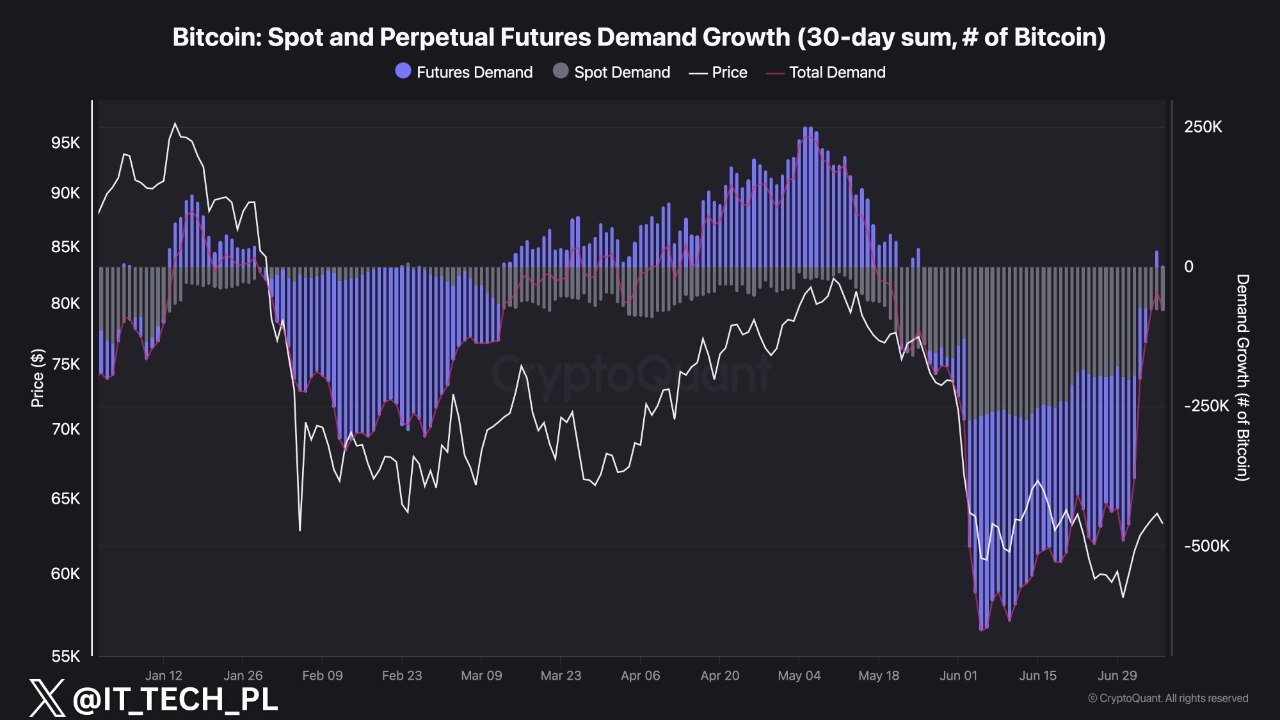
Over the past week, the 30-day cumulative demand rebounded sharply from nearly -500,000 BTC to around -75,000 BTC. This shift signaled that risk appetite is gradually returning.
Source: CryptoQuant

Notably, futures demand recovered from roughly -295,000 BTC to slightly above neutral. Despite that, spot demand remained weak near -78,000 BTC, showing long-term investors are still waiting for stronger confirmation. Moreover, that divergence suggests traders are positioning for higher prices before meaningful capital enters the spot market.

Although sentiment has clearly improved, Bitcoin’s recovery will remain vulnerable until spot accumulation strengthens, reinforcing derivatives-driven momentum with broader investor conviction.

Downside fears begin to ease

Bitcoin’s options market nuances cautious spot participation, although investors are no longer pricing downside risk as aggressively compared to the previous sell-offs.

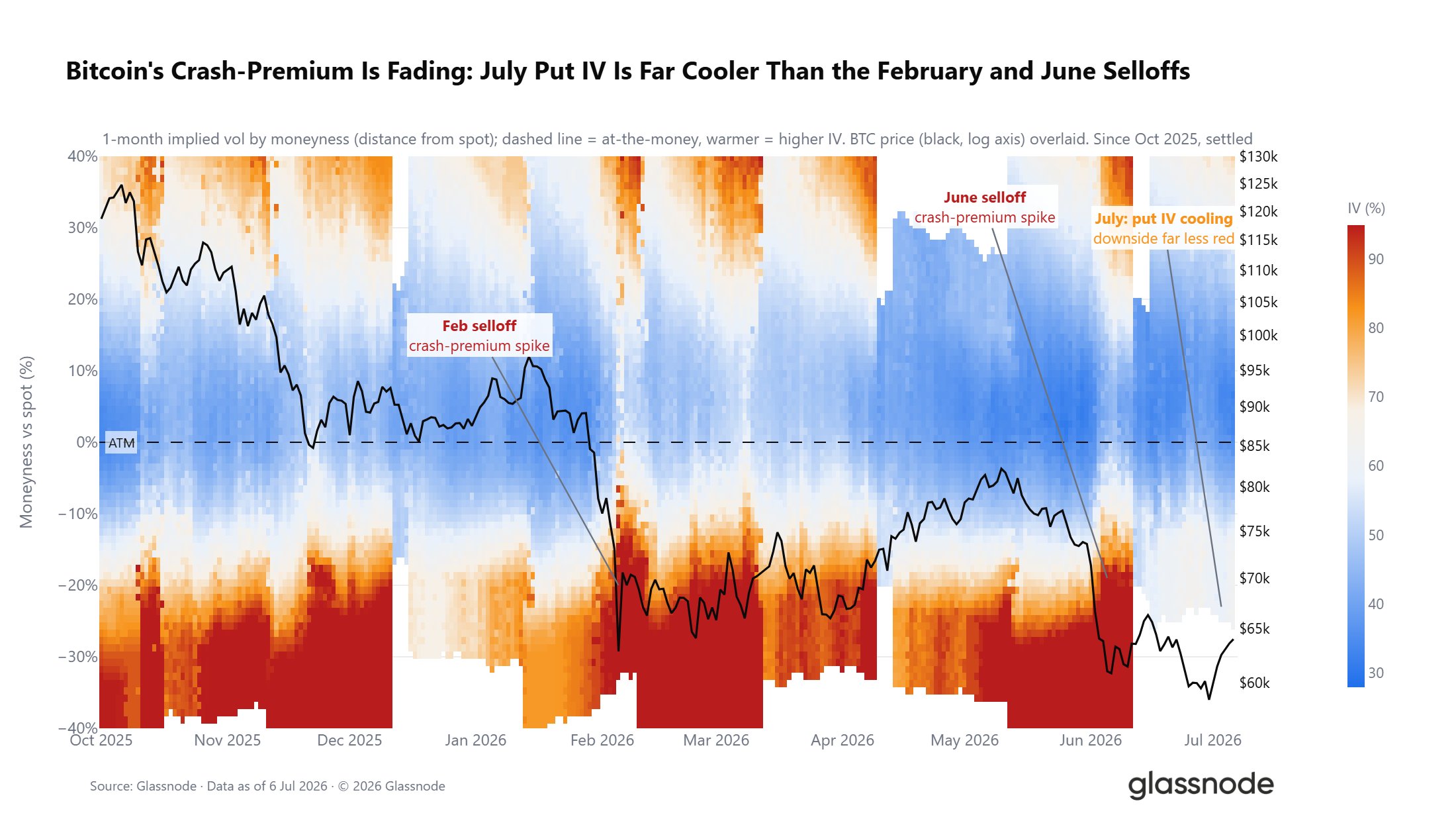
During the February and June selloffs, put implied volatility surged as traders rushed to hedge against deeper losses. July presents a different picture. In contrast, in July, as Bitcoin traded between $60,000 and $65,000, downside premiums have cooled noticeably.

Such a divergence indicates that expectations are shifting from another capitulation toward a slower bottoming process.
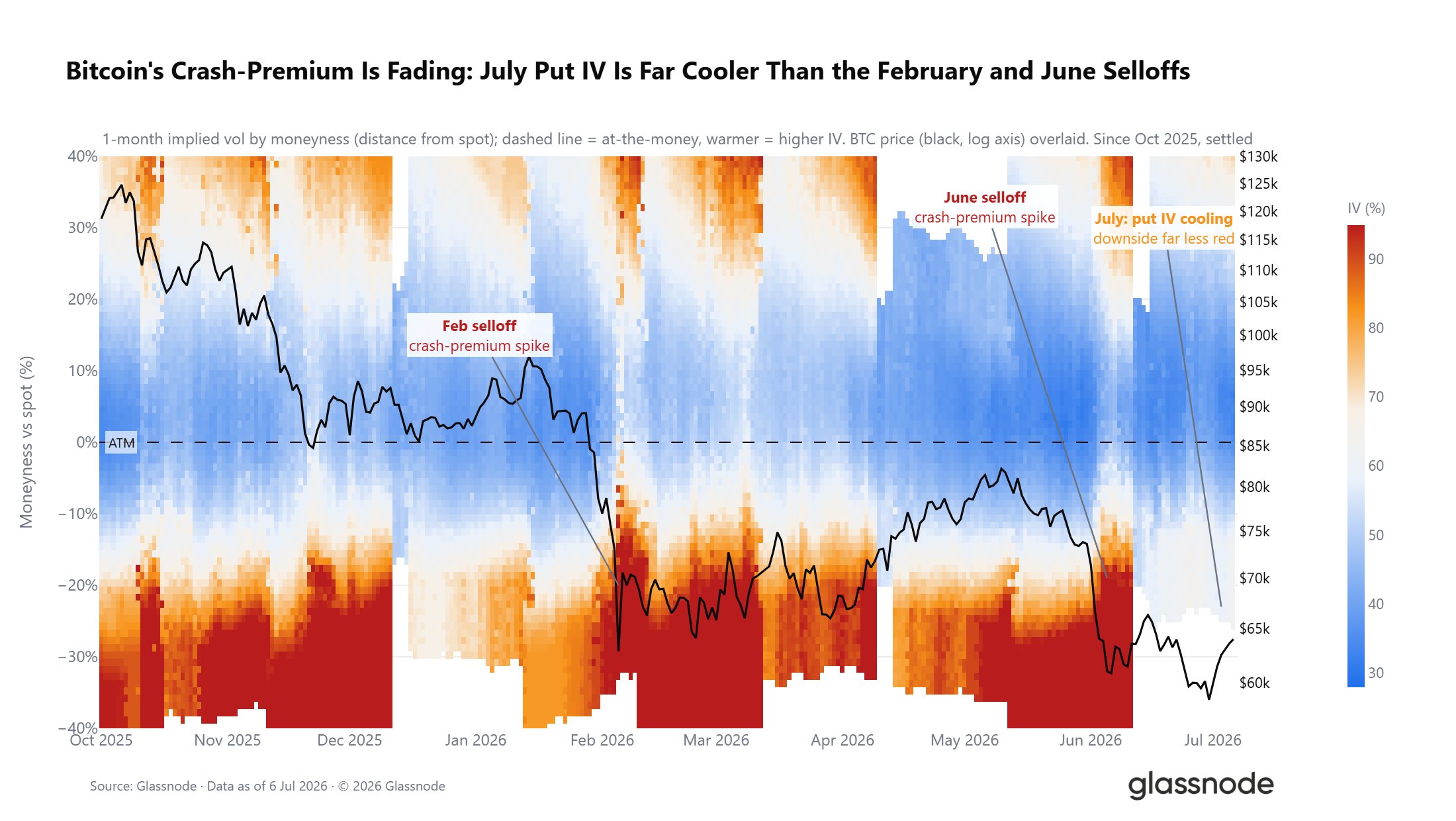
Source: Glassnode

This shift reflects a market that has already experienced significant declines over several months. As a result, reducing the urgency for costly downside protection. Even so, investors should be cautious since calmer options pricing does not necessarily translate to renewed conviction.

Additionally, ETF participation remains inconsistent while spot accumulation has fallen behind derivative demand. Therefore, until fresh capital flows back into spot markets, improved sentiment could face challenges in generating widespread buying needed for a durable recovery.

Distribution remains a market headwind

Even as downside fears continue easing, Bitcoin’s recovery is still meeting resistance from holders taking profits accumulated during the previous cycle. Long-term holder realized losses remain elevated on the 30-day Moving Average, although they have moderated from the extreme spikes recorded during the 2022 bear market.
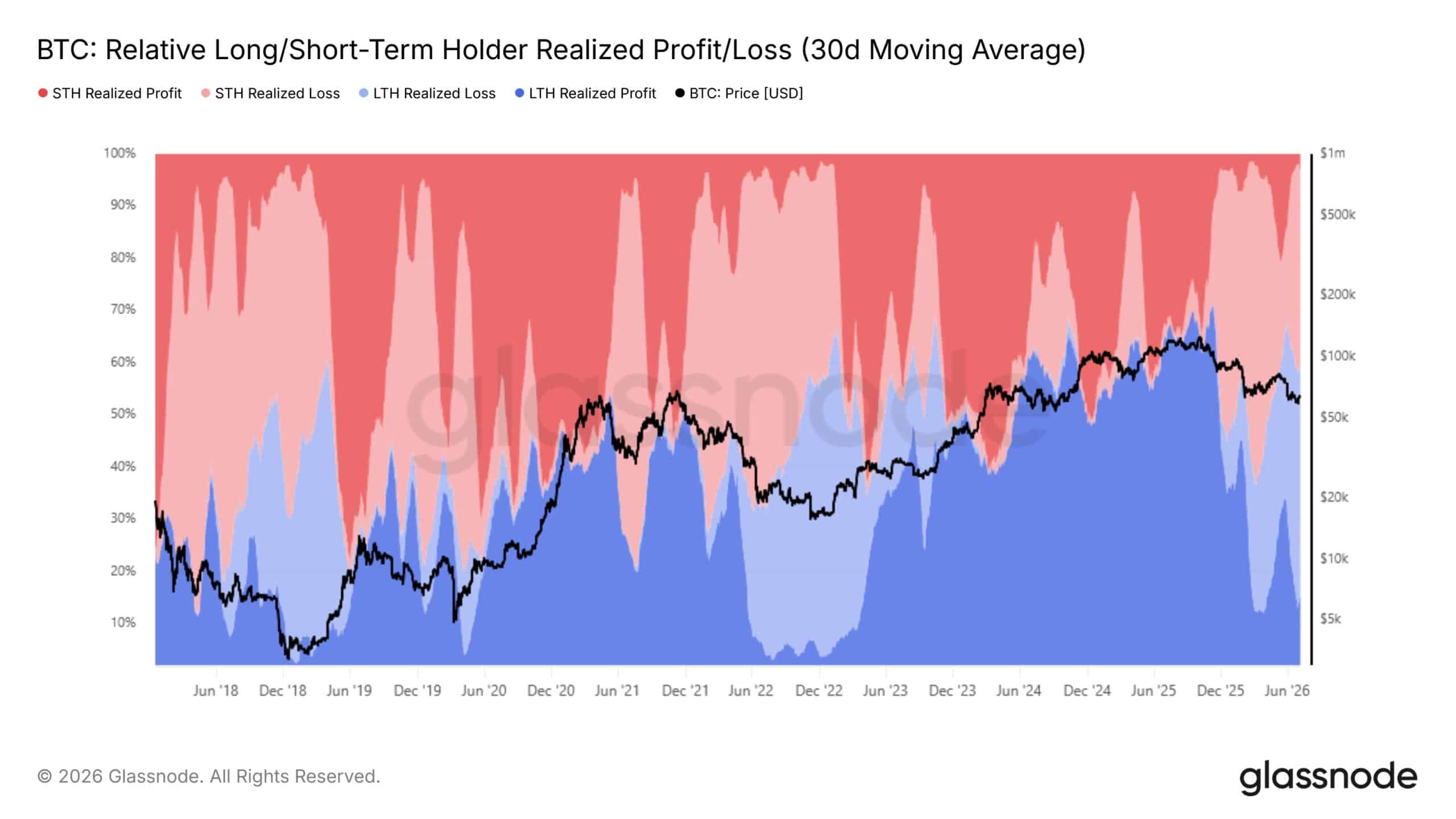
Source: Glassnode

Meanwhile, realized profit and loss data shows short-term holders continue accounting for a larger share of market activity, reflecting uncertainty among newer investors as prices stabilize.

That combination suggests supply is gradually rotating from experienced holders to fresh participants rather than disappearing altogether. Furthermore, an increase in demand for bitcoin is absorbing most of the distribution of supply.

However, until long-term holder selling slows further, Bitcoin’s recovery is likely to remain gradual instead of accelerating into a sustained bullish trend.


Final Summary

  • Bitcoin recovery remains incomplete as spot demand continues trailing derivatives activity.
  • BTC still faces long-term holder selling despite easing downside fears and improving market sentiment.


Tiền kỹ thuật số thịnh hành

Câu hỏi Liên quan

QAccording to the article, what is the key factor limiting the robustness of Bitcoin's price recovery?

AThe key limiting factor is the weakness in spot market demand and accumulation. While futures/derivatives demand has recovered, spot demand remains weak, indicating long-term investors are waiting for stronger confirmation. The recovery remains vulnerable until spot accumulation strengthens.

QWhat does the change in Bitcoin's options market in July indicate compared to the selloffs in February and June?

AThe change indicates that downside fears are easing. During the February and June selloffs, put implied volatility surged as traders aggressively hedged against losses. In July, with Bitcoin trading between $60k and $65k, downside premiums have cooled noticeably, suggesting expectations are shifting from another capitulation to a slower bottoming process.

QWhat source of supply is creating a headwind for Bitcoin's price recovery?

AThe headwind comes from long-term holders who are distributing (selling) coins, likely taking profits accumulated during the previous cycle. This selling pressure, along with ongoing uncertainty among newer short-term holders, prevents the recovery from accelerating into a sustained bullish trend.

QWhat specific metric showed a sharp rebound from nearly -500,000 BTC to around -75,000 BTC, signaling returning risk appetite?

AThe 30-day cumulative demand metric showed this sharp rebound. This shift signaled that risk appetite is gradually returning to the Bitcoin market.

QWhy might improved market sentiment alone be insufficient for a durable Bitcoin recovery, according to the article?

AImproved sentiment alone might be insufficient because ETF participation remains inconsistent and, crucially, spot accumulation (actual buying of Bitcoin) has fallen behind derivative demand. Without fresh capital flowing back into the spot markets, the improved sentiment may not generate the widespread buying needed for a durable recovery.

Nội dung Liên quan

Giá Bitcoin bị kẹp trong cuộc họp FOMC 'chia rẽ nhất' khi chiến tranh Iran đẩy giá dầu tăng 8%

Giá Bitcoin dao động mạnh quanh mức 64.000 USD vào thứ Tư, chịu áp lực từ căng thẳng địa chính trị và kinh tế vĩ mô ảnh hưởng đến thị trường chứng khoán Mỹ. Các điểm chính bao gồm: Bitcoin bị thu hẹp quanh 64.000 USD khi các nhà giao dịch đối mặt với nhiều yếu tố bất lợi vĩ mô; đà giảm từ cổ phiếu châu Á tiếp tục lan sang thị trường Mỹ; và Cục Dự trữ Liên bang Mỹ (Fed) chuẩn bị công bố quyết định lãi suất mới, một yếu tố có thể kích hoạt biến động cho tài sản rủi ro. Căng thẳng leo thang giữa Mỹ và Iran đã đẩy giá dầu tăng mạnh (WTI +7.6%, Brent +5.4%), làm dấy lên lo ngại về lạm phát và tác động đến kỳ vọng chính sách tiền tệ. Thị trường đang chờ đợi kết quả từ cuộc họp của Ủy ban Thị trường Mở Liên bang (FOMC), với dự báo chia rẽ cao về việc Fed sẽ giữ nguyên hoặc tăng lãi suất 0.25%. Về mặt kỹ thuật, giá Bitcoin hiện đang dao động trong một phạm vi giữa các đường trung bình động 50 ngày (SMA và EMA). Dữ liệu từ CoinGlass cho thấy các mức thanh khoản tiềm năng ở 63.500 USD và 64.900 USD. Tuy nhiên, khối lượng giao dịch spot vẫn ở mức thấp đáng chú ý, phản ánh sự quan tâm suy giảm của nhà đầu tư nhỏ lẻ kể từ mức cao kỷ lục của thị trường tiền mã hóa vào tháng 10/2025.

cointelegraph16 phút trước

Giá Bitcoin bị kẹp trong cuộc họp FOMC 'chia rẽ nhất' khi chiến tranh Iran đẩy giá dầu tăng 8%

cointelegraph16 phút trước

Lịch sử tóm tắt máy khắc quang: Một chùm sáng đã đi 69 năm thế nào

Lịch sử máy quang khắc: Cuộc hành trình 69 năm của một tia sáng Ngày 27/7/2026, tin tức về một công ty Trung Quốc ở Thượng Hải bắt đầu sản xuất máy quang khắc DUV ngâm nước đã khiến thị trường chứng khoán sụt giảm, xóa sổ khoảng 44 tỷ USD giá trị vốn hóa của ASML. Đây là phản ứng của thị trường với một giả định vỡ vụn: Trung Quốc sẽ không mãi phụ thuộc vào DUV của ASML. Con đường phát triển máy quang khắc kéo dài suốt 69 năm. Năm 1957, thuật ngữ "photolithography" được Jay Lathrop đặt tên tại một phòng thí nghiệm của Mỹ. Giai đoạn đầu, công nghệ tiếp xúc với độ phân giải thô đã được Trung Quốc tiếp cận vào năm 1966, chỉ sau Mỹ 5 năm. Sự thay đổi lớn diễn ra vào những năm 1970-1980 với máy chiếu (PerkinElmer) và máy bước (GCA). Tuy nhiên, các công ty Mỹ dần mất vị thế vào tay các hãng Nhật Bản như Nikon và Canon trong thập niên 1980, một phần vì chính các công ty chip Mỹ không ưu tiên mua thiết bị nội địa. ASML, thành lập năm 1984 tại Hà Lan, bước ngoặt đến vào năm 2001 với nền tảng TWINSCAN và việc mua lại SVG của Mỹ. Quyết định táo bạo theo đuổi công nghệ ngâm nước (do TSMC đề xuất) thay vì con đường 157nm vào năm 2002 đã giúp ASML vượt mặt Nikon và thống trị thị trường DUV. Để vượt qua giới hạn quang học, ngành công nghiệp đã đầu tư 21 năm cho công nghệ cực tím (EUV) với bước sóng 13.5nm. ASML chiến thắng nhờ sự hỗ trợ tài chính và cam kết dài hạn từ các khách hàng lớn là TSMC, Intel và Samsung. Bài học xuyên suốt lịch sử không nằm ở khả năng tạo ra nguyên mẫu, mà ở việc ai sẵn sàng "nuôi dưỡng" công nghệ mới này qua những phiên bản đầu tiên còn nhiều hạn chế, với chu kỳ lên đến 10 năm. Mỹ thiếu sự kiên nhẫn đó, Nhật Bản đặt cược sai hướng, trong khi ASML - với ba khách hàng trung thành - đã đi hết hành trình. Đó không chỉ là hành trình của một tia sáng, mà là của sự hợp tác và lòng tin trong chuỗi cung ứng toàn cầu.

marsbit1 giờ trước

Lịch sử tóm tắt máy khắc quang: Một chùm sáng đã đi 69 năm thế nào

marsbit1 giờ trước

Giao dịch

Giao ngay

Bài viết Nổi bật

Làm thế nào để Mua EDGE

Chào mừng bạn đến với HTX.com! Chúng tôi đã làm cho mua edgeX (EDGE) trở nên đơn giản và thuận tiện. Làm theo hướng dẫn từng bước của chúng tôi để bắt đầu hành trình tiền kỹ thuật số của bạn.Bước 1: Tạo Tài khoản HTX của BạnSử dụng email hoặc số điện thoại của bạn để đăng ký tài khoản miễn phí trên HTX. Trải nghiệm hành trình đăng ký không rắc rối và mở khóa tất cả tính năng. Nhận Tài khoản của tôiBước 2: Truy cập Mua Crypto và Chọn Phương thức Thanh toán của BạnThẻ Tín dụng/Ghi nợ: Sử dụng Visa hoặc Mastercard của bạn để mua edgeX (EDGE) ngay lập tức.Số dư: Sử dụng tiền từ số dư tài khoản HTX của bạn để giao dịch liền mạch.Bên thứ ba: Chúng tôi đã thêm những phương thức thanh toán phổ biến như Google Pay và Apple Pay để nâng cao sự tiện lợi.P2P: Giao dịch trực tiếp với người dùng khác trên HTX.Thị trường mua bán phi tập trung (OTC): Chúng tôi cung cấp những dịch vụ được thiết kế riêng và tỷ giá hối đoái cạnh tranh cho nhà giao dịch.Bước 3: Lưu trữ edgeX (EDGE) của BạnSau khi mua edgeX (EDGE), lưu trữ trong tài khoản HTX của bạn. Ngoài ra, bạn có thể gửi đi nơi khác qua chuyển khoản blockchain hoặc sử dụng để giao dịch những tiền kỹ thuật số khác.Bước 4: Giao dịch edgeX (EDGE)Giao dịch edgeX (EDGE) dễ dàng trên thị trường giao ngay của HTX. Chỉ cần truy cập vào tài khoản của bạn, chọn cặp giao dịch, thực hiện giao dịch và theo dõi trong thời gian thực. Chúng tôi cung cấp trải nghiệm thân thiện với người dùng cho cả người mới bắt đầu và người giao dịch dày dạn kinh nghiệm.

Tổng lượt xem 849Xuất bản vào 2026.03.31Cập nhật vào 2026.06.02

Làm thế nào để Mua EDGE

Thảo luận

Chào mừng đến với Cộng đồng HTX. Tại đây, bạn có thể được thông báo về những phát triển nền tảng mới nhất và có quyền truy cập vào thông tin chuyên sâu về thị trường. Ý kiến ​​của người dùng về giá của EDGE (EDGE) được trình bày dưới đây.

活动图片