x402 V2 Released: What Are the Core Highlights?

marsbitОпубликовано 2025-12-12Обновлено 2025-12-12

Введение

The x402 protocol, initially developed by Coinbase, has now released its V2 upgrade. The core idea remains leveraging the HTTP 402 status code to embed payment logic directly into web requests. Since its launch, x402 has processed over 100 million payments across various use cases, such as API calls and AI agents purchasing compute resources. V2 introduces several major improvements. It supports wallet-based identity (e.g., Sign-In-With-X via CAIP-122) and reusable sessions, allowing users and autonomous agents to avoid repeated on-chain payments after initial authentication, significantly reducing latency and cost for high-frequency interactions. A unified payment interface now supports multiple chains (including Base and Solana) by default and integrates traditional payment rails like ACH and credit cards through Facilitators. Dynamic payTo routing enables complex pricing models and multi-tenant setups. The architecture is now modular and plugin-based, making it easier for developers to extend support for new chains or payment methods without altering core SDK code. Configuration is simplified, with automatic optimization based on developer preferences. A new discovery mechanism allows services to publish structured metadata, which Facilitators can automatically index, ensuring pricing and endpoint information stays current without manual updates. For end-users, V2 enables seamless, near-invisible payments with a "micro-subscription" feel. Developers benefit from reduc...

When the x402 protocol, led by Coinbase, was launched in May of this year, its core concept was surprisingly simple: reactivate the long-dormant HTTP 402 status code, embedding payment logic directly within network requests.

Although the performance of x402-related tokens was short-lived, over the past 6 months, x402 has already processed over 100 million payments, covering diverse scenarios such as API paid calls and AI agents purchasing computing resources on demand.

While the V1 architecture was simple, it revealed some limitations in practical use. Particularly in areas like cross-chain support, scalability, identity authentication, and duplicate payments, the original design could not meet the increasingly complex payment demands.

Today, x402 has ushered in the V2 version upgrade. This update not only optimizes the protocol itself but also involves a deep-level restructuring around issues identified during actual use.

What Are the Core Highlights of x402?

Wallet Identity Integration and "Reusable Sessions": Say Goodbye to Duplicate Payments

This is the most significant change in V2 for enhancing user and agent experience. In V1, each API call might require a complete payment process, which resulted in high latency and costs in high-frequency scenarios (such as large language model LLM inference and multi-step agent tasks).

x402 V2 introduces support for wallet identities (such as Sign-In-With-X based on CAIP-122). Once the client verifies their identity via a wallet and completes the initial payment, the protocol allows the creation of reusable sessions. This means subsequent repeated access to the same resource can skip the full on-chain payment process.

This significantly reduces transaction latency, minimizes round-trips, and lowers on-chain costs, making x402 truly suitable for high-frequency workloads. It provides a subscription-like or session-based access model for human users and autonomous agents.

Unified Payment Interface: Integration of Cross-Chain and Traditional Finance

x402 V2 creates a one-stop payment format, regardless of which chain the asset is on, or even if it is on-chain.

· Default Multi-Chain Support: The protocol natively supports stablecoins and tokens on Base, Solana, and other L2s, eliminating the need for developers to customize logic.

· Compatible with Traditional Payments: Through Facilitators, V2 can be compatible with traditional payment rails like ACH, SEPA, or credit card networks.

· Dynamic payTo Routing: Allows request-level payment routing, such as directing payments to specific addresses, roles, or callback logic, adapting to complex marketplaces and multi-tenant APIs, and enabling dynamic pricing based on input content.

Plugin Architecture and Developer-Friendly Extensibility

x402 V2 modularizes the protocol, creating a clear separation between the protocol specification, SDK implementation, and Facilitators.

· Stable and Extensible: Adding a new chain or payment method does not require modifying the core specification or reference SDK.

· Plugin-Driven SDK: Developers can register new chains, assets, and payment schemes like installing plugins, rather than modifying the SDK's internal code.

· Simplified Configuration: V2 significantly simplifies the developer configuration process while natively supporting Multi-Facilitator. The SDK will automatically select the best matching option based on business preferences (e.g., "Prefer Solana," "Avoid Mainnet," use only "USDC").

Automatic Discovery Mechanism: Keeping Service Information Synchronized

x402 V2 introduces a "Discovery" extension, allowing x402-enabled services to expose structured metadata for Facilitators to crawl.

· Zero-Intervention Synchronization: Service pricing, routing, and metadata can be updated automatically. Facilitators can index available endpoints automatically, eliminating the need for manual updates or hardcoded directories.

· Enhanced Autonomy: Sellers only need to publish their API once, and the entire ecosystem remains synchronized, laying the foundation for a more autonomous internet economy.

Perspectives of Different Participants

The upgrade of x402 V2 transforms payment from a technical friction point into an economic layer, essentially making the flow of value on the internet smoother and smarter. For different participants, this means solving their respective most pressing problems.

For end-users, the core value of x402 V2 lies in seamless payment and efficiency improvement, making paid access to services more like logging in and using, significantly reducing the cost and latency of repeated access. The first access requires completing the payment, but subsequent repeated use of the service within the same session or time period (such as multiple AI calls or accessing paid content) does not require additional on-chain payments if resources have already been purchased, resulting in faster speed and lower cost. It feels like a "micro-subscription." Simultaneously, payment methods become more diverse and convenient.

Furthermore, since Facilitators can automatically obtain the latest pricing and service information, it ensures users see accurate and available prices and services, avoiding information lag issues. For users, it also becomes easier to find and use services.

For developers and service providers, V2 addresses the architectural and scalability pain points of V1, bringing higher flexibility and lower code maintenance burden. For example, payment logic changes from "hardcoded" to "configuration and plugins"; dynamic pricing can be implemented based on the input content of API requests (such as the amount of data processed, model size), easily enabling complex business models; since the payment wall logic is extracted into an independent, customizable modular package, developers can more easily integrate different payment backends and quickly build and iterate their paid services. Additionally, simply declaring business preferences allows the SDK to automatically select the optimal payment path and coordinator. This reduces a significant amount of "glue code," allowing developers to focus on business logic.

For AI agents, the improvements in V2 are revolutionary, transforming AI from a pure "executor" into an autonomous "economic agent." An AI agent can be assigned a wallet with a budget. When it needs to call an API to complete a task or rent more powerful computing resources to run a model, it can "decide for itself" and complete the payment, and can dynamically search the network for the most cost-effective resources.

Summary

The release of x402 V2 marks the evolution of x402 from a "pay-per-use" tool to a flexible, universal economic layer. For users, payments become almost invisible, enhancing the experience. For developers, the architecture is more flexible, enabling rapid building and iteration of complex business models. And AI agents can achieve low-latency, high-frequency autonomous consumption, unlocking more advanced autonomous systems.

By expanding compatibility, simplifying development processes, and enabling innovative identity and payment models, x402 is building the infrastructure for the future of internet payments. However, any technology that brings innovation will inevitably face challenges and inherent shortcomings. Although x402 V2 paints a promising blueprint, to realize it, many practical obstacles must be overcome, such as ecosystem adoption and maturity, risks of "modules," challenges of refunds and dispute resolution, regulatory uncertainty, and more.


Трендовые криптовалюты

Связанные с этим вопросы

QWhat is the core innovation of the x402 V2 protocol?

AThe core innovation of x402 V2 is its evolution into a flexible, universal economic layer for the internet. It reactivates the HTTP 402 status code to embed payment logic directly into web requests, and V2 specifically enhances this with features like identity-based reusable sessions, a unified multi-chain payment interface, and a plugin-based architecture.

QHow does the 'Reusable Sessions' feature in x402 V2 improve the user experience?

AThe 'Reusable Sessions' feature allows a client to verify their identity (e.g., via Sign-In-With-X) and complete an initial payment. Subsequent requests within the same session can then skip the full on-chain payment process, significantly reducing transaction latency, costs, and the number of round trips. This creates a subscription-like or session-based access model ideal for high-frequency workloads.

QWhat does the 'Unified Payment Interface' in V2 enable for developers?

AThe 'Unified Payment Interface' provides a one-stop payment format that supports multiple blockchains (like Base and Solana) by default and is compatible with traditional payment rails (like ACH, SEPA, or credit cards) through Facilitators. It also allows for dynamic 'payTo' routing, enabling complex pricing models and payments to specific addresses or roles based on the request.

QWhat is the 'Plugin-driven SDK' and how does it benefit developers?

AThe 'Plugin-driven SDK' is a module where developers can register new chains, assets, and payment methods as plugins without modifying the core SDK code. This plugin-based approach simplifies configuration, reduces maintenance burden, and allows the SDK to automatically select the best payment path based on developer-defined business preferences.

QHow does the 'Discovery' extension in V2 improve the ecosystem?

AThe 'Discovery' extension allows x402-enabled services to expose structured metadata for Facilitators to automatically scrape. This enables zero-intervention synchronization of service pricing, routing, and metadata. Facilitators can automatically index available endpoints without manual updates, making it easier for users to find services and for the entire ecosystem to stay current.

Похожее

Grayscale подает первую заявку на спотовый ETF Worldcoin в SEC под тикером GWLD

Компания Grayscale Investments подала заявку в Комиссию по ценным бумагам и биржам США (SEC) на запуск биржевого фонда (ETF), ориентированного на криптовалюту Worldcoin (WLD), под тикером GWLD. Заявка подана в момент, когда WLD торгуется на исторически низких уровнях, но новость вызвала рост его цены более чем на 8%. В документах подчеркиваются потенциальные риски для инвесторов, включая высокую концентрацию токенов (около 90% предложения в руках 100 крупнейших кошельков) и плановую разблокировку токенов командами проекта до 2028 года, что может оказывать давление на курс. Также отмечены регуляторные вопросы, связанные с биометрическим сбором данных через сканирование сетчатки глаза в проекте Worldcoin. Несмотря на то, что запуск ETF на бирже запланирован только на конец 2026 года, Grayscale активно расширяет линейку регулируемых криптовалютных продуктов, стремясь укрепить свои позиции на зарождающемся рынке ETF.

TheNewsCrypto10 мин. назад

Grayscale подает первую заявку на спотовый ETF Worldcoin в SEC под тикером GWLD

TheNewsCrypto10 мин. назад

Вечные фрагменты денег: У третьих сторон нет первоосновы в платежах

**Автор: Зоя Вебсан** В статье рассматривается текущее состояние и будущее индустрии платежей через призму возможного поглощения PayPal компанией Stripe. Автор отмечает, что Stripe, упустив окно для IPO во время бума на рынке, теперь стремится к росту за счет приобретений, пытаясь дополнить свои сильные стороны в работе с разработчиками (B2B) клиентской базой PayPal (C2C). Однако основная проблема PayPal видится не в отставании от новых трендов, а в структурной устарелости всей организации. В статье подчеркиваются две ключевые особенности, ограничивающие рост в платежной сфере: крайняя фрагментация рынка (можно выжить, обслуживая узкую нишу) и зависимость от традиционной банковской системы. Попытки Stripe выйти на рынок стейблкоинов (через покупки таких компаний, как Bridge, Privy, Tempo и OpenUSD) и занять нишу в зарождающейся «экономике агентов» (AI-агентов) пока не принесли прорыва. Стейблкоины еще не стали повседневным платежным средством, а агенты в основном используются для накрутки объемов и не интегрированы в основную бизнес-среду. Автор предполагает, что для Stripe поглощение PayPal — это способ расширить масштаб и нарратив перед возможным IPO. Компания представлена как своего рода опцион: ее максимальная оценка в $100 млрд возможна только в случае успеха ее стратегии со стейблкоинами и агентами. В противном случае она останется в рамках разумной оценки финтех-компании (~$50 млрд). В заключительной части прогнозируется возможное будущее для таких игроков, как Stripe и Circle. После этапа конкуренции через разделение доходов от стейблкоинов следующим логическим шагом и источником прибыли могут стать высокоэффективные клиринговые сети на базе их собственных блокчейнов (Tempo, Arc). Получив банковские лицензии, эти компании потенциально смогут частично обойти традиционную банковскую систему, оставляя прибыль от расчетов себе. Таким образом, война в сфере платежей превращается в позиционную «битву за Верден», где невозможно быстро уничтожить всех мелких игроков, а будущее за теми, кто сможет монетизировать инфраструктуру расчетов нового поколения.

marsbit19 мин. назад

Вечные фрагменты денег: У третьих сторон нет первоосновы в платежах

marsbit19 мин. назад

Путь криптозаконопроекта Clarity: дорога к двухпартийному компромиссу в США усеяна терниями

Конгресс США пытается продвинуть законопроект Clarity, направленный на регулирование структуры крипторынка. Его судьба зависит от достижения двухпартийного компромисса по спорным вопросам. В январе глава Coinbase Брайан Армстронг сорвал уже достигнутую сделку в комитете Сената. В мае, после компромисса по вопросам «дохода» (yield), законопроект был вынесен на голосование, но получил поддержку лишь двух сенаторов-демократов — Анжелы Олсобрукс и Рубена Галлего. Они заявили, что их дальнейшая поддержка зависит от включения в закон этических положений (этикета) для выборных должностных лиц. Из-за разногласий по этому пункту в сельскохозяйственном комитете Сената закон был принят голосами только республиканцев. Ключевыми остаются проблемы незаконных финансов и защиты потребителей. Сенаторы Синтия Ламмис (республиканка) и Марк Уорнер (демократ) подчеркивают важность баланса между регулированием и инновациями. В июле продолжились консультации, в том числе с Белым домом, по поиску приемлемой формулировки этических норм. Ожидается публикация согласованного текста, но его двухпартийная поддержка под вопросом. Галлего заявил, что без сильных этических положений демократы закон не поддержат. Несмотря на препятствия, работа над законом продолжается. Возможные цели включают символическое голосование до августовских каникул, окончательное принятие к 2026 году или выработку компромиссного框架 с этическими нормами и положениями о банках (BRCA). Процесс требует традиционной для Конгресса кропотливой работы по завоеванию голосов.

Foresight News48 мин. назад

Путь криптозаконопроекта Clarity: дорога к двухпартийному компромиссу в США усеяна терниями

Foresight News48 мин. назад

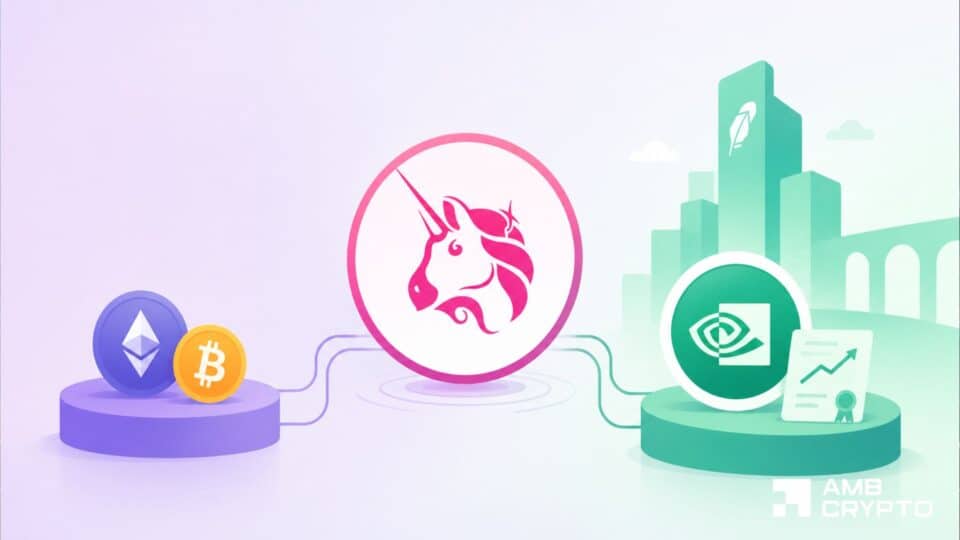
Достаточно ли роста TVL на 80 миллионов долларов в Uniswap для нового ралли UNI?

Децентрализованная биржа Uniswap (UNI) демонстрирует устойчивый рост на Robinhood Chain: ее общая заблокированная стоимость (TVL) стремительно выросла с менее чем $10 млн в конце июня до более чем $80 млн в июле. Этот рост сопровождается увеличением числа активных трейдеров до 1 млн в месяц, что указывает на формирование более сбалансированной и самоподдерживающейся экосистемы, а не на временный приток спекулятивного капитала. Ключевым драйвером роста становится ликвидность, направляемая в пулы токенизированных реальных активов (RWA), такие как крупнейший пул NVIDIA/USDG. Высокие объемы торгов и комиссий в этих пулах свидетельствуют об активном использовании капитала. Это может снизить зависимость Uniswap от спекулятивных криптоциклов и создать более диверсифицированную основу для долгосрочной ликвидности. Что касается цены токена UNI, после консолидации он преодолел уровень сопротивления и в настоящее время тестирует область около $3.72. Технические индикаторы, такие как RSI, указывают на сохраняющийся покупательский интерес без перекупленности. Удержание цены выше ключевого уровня поддержки $3.60 может заложить основу для дальнейшего роста.

ambcrypto49 мин. назад

Достаточно ли роста TVL на 80 миллионов долларов в Uniswap для нового ралли UNI?

ambcrypto49 мин. назад

Непримиримые враги? Основатели Kalshi и Polymarket втянуты в бизнес-войну, которая оказалась куда более ожесточенной, чем можно представить

В 2024 году ФБР провело обыск в доме основателя Polymarket Шейна Коплана в рамках расследования возможных нарушений закона об азартных играх. Коплан публично обвинил администрацию Байдена, однако в приватном порядке он и его команда подозревают, что к этому причастен их главный конкурент — основатель платформы предсказательных рынков Kalshi Тарек Мансур. Как выяснилось, юристы Kalshi ранее обращались в прокуратуру с жалобами на деятельность Polymarket. Конфликт между двумя стартапами и их лидерами давно вышел за рамки обычной деловой конкуренции и перерос в личную вражду. Kalshi позиционирует себя как образец соблюдения правил, получив лицензию CFTC в США, в то время как основная платформа Polymarket работает офшорно, что позволяет американским пользователям обходить запреты с помощью VPN. Мансур публично критикует подход конкурента как неэтичный и незаконный. Противоборство распространилось на лоббирование в Вашингтоне, борьбу за инвестиции, ключевых сотрудников и коммерческие партнёрства. Например, Kalshi пыталась помешать сделке Polymarket с Intercontinental Exchange. Несмотря на проблемы с регуляторами, Polymarket набрал популярность во время выборов 2024 года. После победы в суде Kalshi также легализовала свою деятельность в США. Соперничество обострилось, когда Kalshi заключила спонсорское соглашение с Madison Square Garden, известным как любимая арена Коплана. Хотя Kalshi в настоящее время лидирует по объёму торгов и оценке, обе компании сталкиваются с усилением регуляторного давления, особенно в свете инцидентов с инсайдерской торговлей на Polymarket. Их вражда продолжает определять динамику развивающейся индустрии предсказательных рынков.

Foresight News1 ч. назад

Непримиримые враги? Основатели Kalshi и Polymarket втянуты в бизнес-войну, которая оказалась куда более ожесточенной, чем можно представить

Foresight News1 ч. назад

Торговля

Спот

Популярные статьи

Как купить CORE

Добро пожаловать на HTX.com! Мы сделали приобретение CORE (CORE) простым и удобным. Следуйте нашему пошаговому руководству и отправляйтесь в свое крипто-путешествие.Шаг 1: Создайте аккаунт на HTXИспользуйте свой адрес электронной почты или номер телефона, чтобы зарегистрироваться и бесплатно создать аккаунт на HTX. Пройдите удобную регистрацию и откройте для себя весь функционал.Создать аккаунтШаг 2: Перейдите в Купить криптовалюту и выберите свой способ оплатыКредитная/Дебетовая Карта: Используйте свою карту Visa или Mastercard для мгновенной покупки CORE (CORE).Баланс: Используйте средства с баланса вашего аккаунта HTX для простой торговли.Третьи Лица: Мы добавили популярные способы оплаты, такие как Google Pay и Apple Pay, для повышения удобства.P2P: Торгуйте напрямую с другими пользователями на HTX.Внебиржевая Торговля (OTC): Мы предлагаем индивидуальные услуги и конкурентоспособные обменные курсы для трейдеров.Шаг 3: Хранение CORE (CORE)После приобретения вами CORE (CORE) храните их в своем аккаунте на HTX. В качестве альтернативы вы можете отправить их куда-либо с помощью перевода в блокчейне или использовать для торговли с другими криптовалютами.Шаг 4: Торговля CORE (CORE)С легкостью торгуйте CORE (CORE) на спотовом рынке HTX. Просто зайдите в свой аккаунт, выберите торговую пару, совершайте сделки и следите за ними в режиме реального времени. Мы предлагаем удобный интерфейс как для начинающих, так и для опытных трейдеров.

672 просмотров всегоОпубликовано 2024.03.29Обновлено 2026.06.02

Как купить CORE

Обсуждения

Добро пожаловать в Сообщество HTX. Здесь вы сможете быть в курсе последних новостей о развитии платформы и получить доступ к профессиональной аналитической информации о рынке. Мнения пользователей о цене на CORE (CORE) представлены ниже.

活动图片