Why analysts believe Bittensor’s ‘income desert’ could trigger TAO rerating

ambcryptoОпубликовано 2026-03-25Обновлено 2026-03-25

Введение

Pine Analytics warns that Bittensor's native token TAO, despite recent significant price appreciation, faces a fundamental risk due to its economic model. The analysis indicates that many of Bittensor's AI subnets, like the top subnet Chutes (SN64), are heavily subsidized by token emissions rather than genuine user demand. Without these subsidies, their services would be 1.6-3.5x more expensive than centralized competitors, completely inverting their cost advantage. The report projects that when emissions halve (estimated late 2026 or 2027), the network will face a critical challenge: either prices for AI services must double, miners will leave due to lower rewards, or the gap between subsidy and actual revenue will widen. This "income desert" scenario, with no verifiable demand data available, could trigger a major reassessment (rerating) of TAO's value as users seek cheaper alternatives and participants exit the network. Despite this bearish fundamental outlook, TAO's market sentiment had recovered to neutral at the time of writing following a substantial short-term price increase.

TAO, the native token to decentralized AI platform Bittensor, has more than doubled from its Q1 2026 low of $145 to over $320, at the time of writing. Some of the major bullish catalysts have been institutional interest via the Spot TAO ETF and the narrative of AI and crypto convergence.

However, the chain’s fundamentals may be staring at a crisis that may force a rerating of the altcoin. According to crypto research firm Pine Analytics, most subnets (AI marketplaces) are heavily subsidized by token emissions, rather than by operational efficiency.

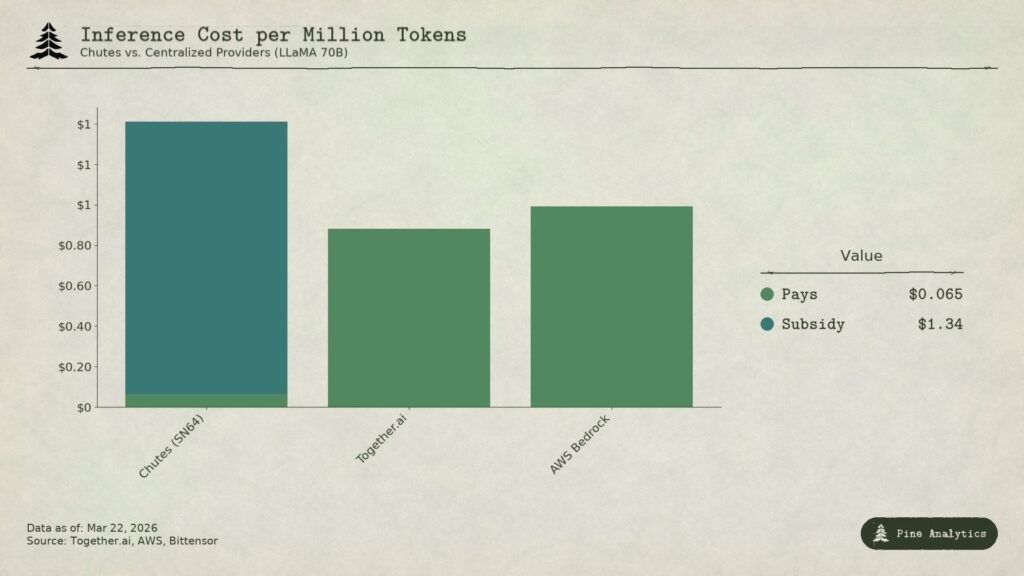
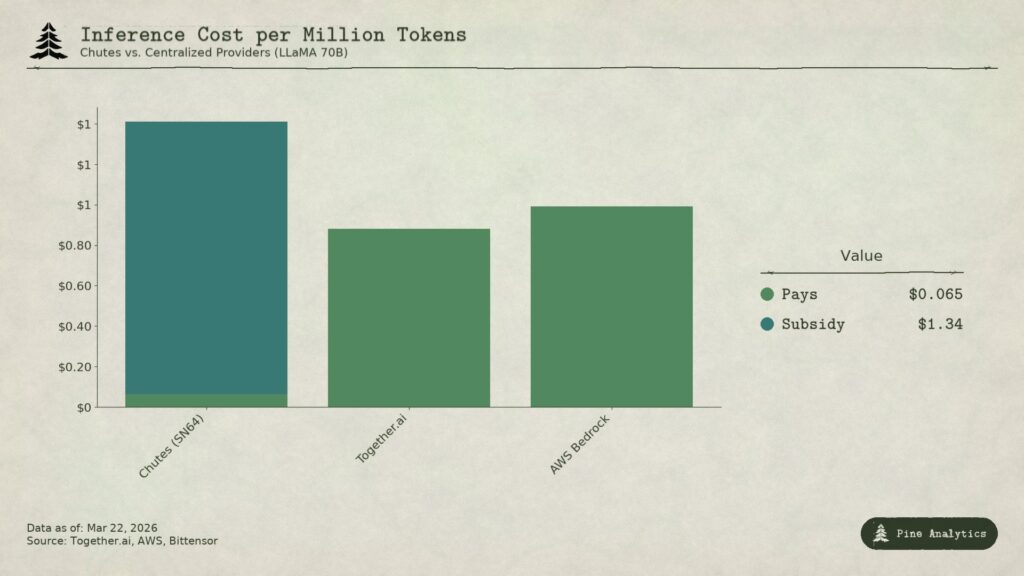
Without the subsidy, some of the top subnets, like Chutes (SN64), would be way more expensive than rival, centralized alternatives like Deepseek and Together AI. According to Pine Analytics,

An unsubsidized Chutes pricing would be 1.6-3.5x more expensive than centralized alternatives. The cost advantage does not narrow. It inverts entirely.

Source: Pine Analytics

Will Bittensor’s model hold?

For perspective, each subnet serves as a self-contained system for a specific AI service, such as image generation or price prediction.

At the core of this ecosystem are miners and validators. Miners act as producers, aiming to achieve the subnet’s set tasks by running AI models and other activities. The higher the quality of the work, the greater the chance of receiving more TAO rewards.

Likewise, validators are paid through TAO rewards for their quality control or auditing work. They supervise miners’ work and score them accordingly.

Now, back to Bittensor top subnet Chutes. It gets 14.4% of emissions, annualized at $52 million (or 518 TAO per day). This is shared among the subnet creator, miners, and validators. However, there is no publicly available data on demand for these subnets, Pine Analytics noted.

However, the research firm warned that the model could fall apart if the subsidy is cut.

When emissions halve again (projected late 2026 or 2027), either pricing roughly doubles, miners leave the subnet, or the gap between subsidy and revenue widens further.

In other words, most of the Bittensor subnets could become expensive, leading them to hike prices for AI services. This could likely force users to seek cheaper alternatives. Consequently, such a scenario would also trigger miner and validator exits.

With no current verifiable demand for Bittensor, Pine Analytics called this an “income desert” thesis that could force a TAO rerating.

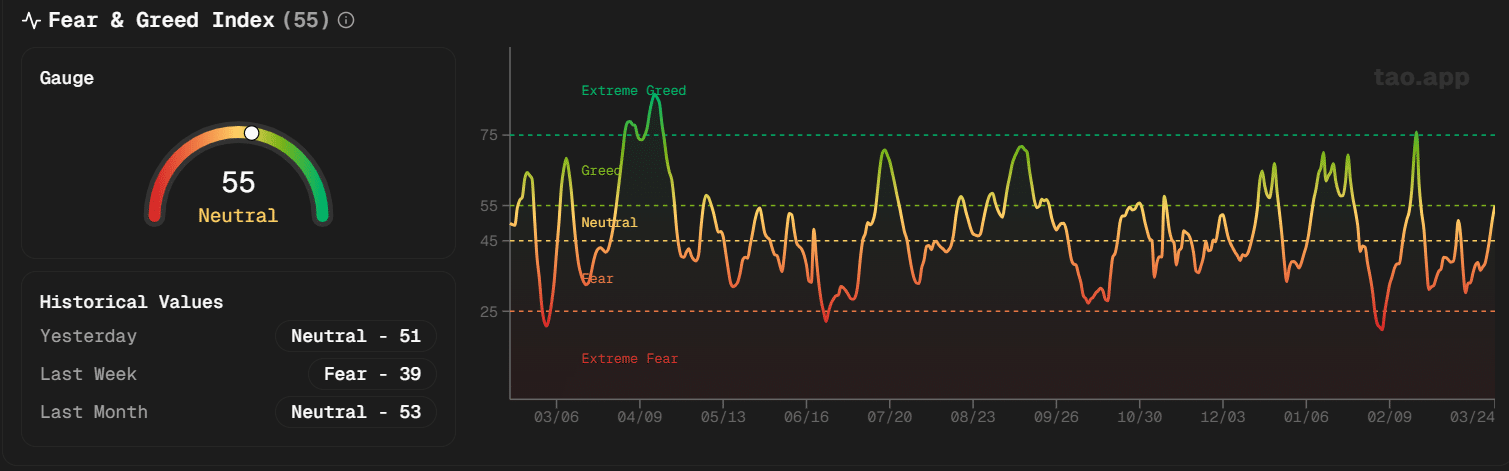
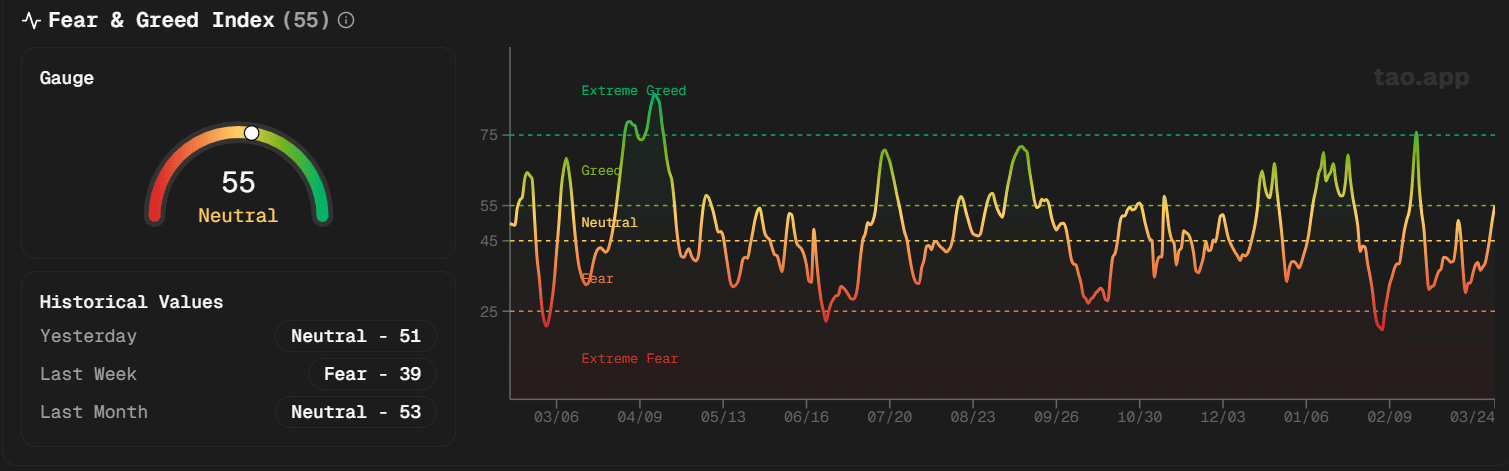
Despite the bearish call though, TAO’s market sentiment recovered to neutral at press time. Especially on the back of the altcoin climbing by 25% in just 24 hours. Overall, TAO was up nearly 130% from its February lows.

Source: Tao App

Final Summary

  • Pine Analytics projected that Bittensor AI services relied more on subsidies than on real demand.
  • Should the subsidies be cut in half later in 2026 or early 2027, the Bittensor model could face a massive reckoning.

Связанные с этим вопросы

QWhat is the main concern raised by Pine Analytics regarding Bittensor's subnets?

APine Analytics warns that most Bittensor subnets are heavily subsidized by token emissions rather than operational efficiency or real demand, and could become unsustainable if subsidies are reduced.

QHow much more expensive would an unsubsidized Chutes (SN64) subnet be compared to centralized alternatives?

AAn unsubsidized Chutes pricing would be 1.6 to 3.5 times more expensive than centralized alternatives like Deepseek and Together AI.

QWhat are the potential consequences when Bittensor's emissions halve in late 2026 or 2027?

AWhen emissions halve, either pricing for AI services would roughly double, miners would leave the subnet, or the gap between subsidy and revenue would widen further.

QWhat roles do miners and validators play in the Bittensor ecosystem?

AMiners act as producers running AI models to complete subnet tasks, earning TAO rewards based on work quality. Validators perform quality control by auditing and scoring miners' work, also paid in TAO rewards.

QDespite the bearish analysis, what was TAO's recent price performance mentioned in the article?

ATAO had climbed 25% in 24 hours and was up nearly 130% from its February lows, with market sentiment recovering to neutral at press time.

Похожее

Fei-Fei Li's Team Clarifies the Concept of 'World Models', Sora Merely a Renderer

"World Models" has become a widely used yet confusing term in AI. To address this, a team led by Fei-Fei Li and World Labs proposed a functional taxonomy based on the Partially Observable Markov Decision Process framework. This taxonomy categorizes systems called "world models" into three distinct projections: Renderers, Simulators, and Planners. Renderers, like OpenAI's Sora and other video generation models, focus on producing photorealistic visual outputs for human perception. They prioritize visual fidelity over physical accuracy. Simulators, such as NVIDIA Omniverse, aim to compute precise future environmental states for computational tasks like engineering analysis or digital twins. Planners, like Vision-Language-Action models, take in observations and goals to output executable actions for robots or agents. The article clarifies that most current "world models," including Sora, are primarily Renderers. They generate convincing visuals but lack the core ability to simulate state transitions based on actions, a key requirement for a true world model in classic reinforcement learning definitions. This conceptual confusion has practical implications, leading to potential misalignment in technology selection, investment, and public understanding of AI capabilities. Clear categorization is crucial. It helps enterprises avoid costly mistakes (e.g., using a renderer for robot training), allows investors to accurately assess markets, and enables researchers to build comparable benchmarks. While future systems may integrate these functions, recognizing current boundaries is essential for honest assessment and progress.

marsbit22 мин. назад

Fei-Fei Li's Team Clarifies the Concept of 'World Models', Sora Merely a Renderer

marsbit22 мин. назад

Bloomberg Uncovered: How Do China's Wealthy Circumvent the Annual $50,000 Limit to Transfer Assets?

**Summary: How Wealthy Chinese Circumvent $50,000 Annual Foreign Exchange Limits** Despite China's strict capital controls, including an annual $50,000 per person foreign exchange quota, an estimated $150 billion in funds still leaves the country annually via various gray and underground channels. This report outlines the evolution of China's "capital wall" and the methods used to bypass it. **The Evolving Capital Controls:** * **Foundation (1994):** The system of "current account convertibility with strict capital account controls" was established. * **Quota Set (2007):** The $50,000 individual annual forex purchase limit was formalized. * **Crackdown Begins (2015-2017):** Following market volatility, enforcement tightened. Banks were required to scrutinize transactions, and channels like using UnionPay cards for Hong Kong insurance premiums or buying overseas property were blocked. * **Digital & Legal Upgrades (2024-2026):** Enhanced algorithms now flag suspicious patterns (e.g., "smurfing"). The Common Reporting Standard (CRS) provides Chinese tax authorities with data on citizens' offshore accounts. Unlicensed cross-border brokers have been targeted. **Five Primary Methods for Moving Capital:** 1. **Underground Banking / "Hawala" (Duiqiao):** The largest-scale method. No money crosses borders. Clients pay RMB to a domestic account; an overseas associate deposits equivalent foreign currency into the client's offshore account. Risks include high fees, account freezes, and legal penalties. 2. **"Smurfing" or "Ant Moving":** Using multiple individuals' $50,000 quotas to pool funds for one offshore recipient. Increasingly detected by anti-money laundering algorithms. 3. **Trade Invoice Manipulation:** Businesses over-invoice imports or under-invoice exports via offshore shell companies, creating a pretext to transfer excess funds abroad under the guise of trade. 4. **Channel Migration:** After a crackdown on internet brokers, funds flow toward more compliant but costly channels like major banks' cross-border wealth management services or Qualified Domestic Institutional Investor (QDII) quotas. 5. **Structural Arrangements:** High-net-worth individuals use complex, high-cost legal structures involving offshore trusts, insurance, and investment migration programs to transfer asset ownership. **Regulatory Response: Focusing on People, Not Just Money** The current strategy extends oversight from enterprises to **individual residents**. Tools like CRS allow retroactive visibility into offshore assets. Cryptocurrencies, once seen as a potential loophole, are now actively monitored and prosecuted as an illegal channel. The underlying driver remains: with significant wealth concentrated among millions of affluent households seeking diversification amid domestic economic shifts, the incentive to move assets offshore persists despite regulatory barriers.

marsbit42 мин. назад

Bloomberg Uncovered: How Do China's Wealthy Circumvent the Annual $50,000 Limit to Transfer Assets?

marsbit42 мин. назад

Торговля

Спот
Фьючерсы

Популярные статьи

Как купить S

Добро пожаловать на HTX.com! Мы сделали приобретение Sonic (S) простым и удобным. Следуйте нашему пошаговому руководству и отправляйтесь в свое крипто-путешествие.Шаг 1: Создайте аккаунт на HTXИспользуйте свой адрес электронной почты или номер телефона, чтобы зарегистрироваться и бесплатно создать аккаунт на HTX. Пройдите удобную регистрацию и откройте для себя весь функционал.Создать аккаунтШаг 2: Перейдите в Купить криптовалюту и выберите свой способ оплатыКредитная/Дебетовая Карта: Используйте свою карту Visa или Mastercard для мгновенной покупки Sonic (S).Баланс: Используйте средства с баланса вашего аккаунта HTX для простой торговли.Третьи Лица: Мы добавили популярные способы оплаты, такие как Google Pay и Apple Pay, для повышения удобства.P2P: Торгуйте напрямую с другими пользователями на HTX.Внебиржевая Торговля (OTC): Мы предлагаем индивидуальные услуги и конкурентоспособные обменные курсы для трейдеров.Шаг 3: Хранение Sonic (S)После приобретения вами Sonic (S) храните их в своем аккаунте на HTX. В качестве альтернативы вы можете отправить их куда-либо с помощью перевода в блокчейне или использовать для торговли с другими криптовалютами.Шаг 4: Торговля Sonic (S)С легкостью торгуйте Sonic (S) на спотовом рынке HTX. Просто зайдите в свой аккаунт, выберите торговую пару, совершайте сделки и следите за ними в режиме реального времени. Мы предлагаем удобный интерфейс как для начинающих, так и для опытных трейдеров.

1.4k просмотров всегоОпубликовано 2025.01.15Обновлено 2026.06.02

Как купить S

Sonic: Обновления под руководством Андре Кронье – новая звезда Layer-1 на фоне спада рынка

Он решает проблемы масштабируемости, совместимости между блокчейнами и стимулов для разработчиков с помощью технологических инноваций.

2.3k просмотров всегоОпубликовано 2025.04.09Обновлено 2025.04.09

Sonic: Обновления под руководством Андре Кронье – новая звезда Layer-1 на фоне спада рынка

HTX Learn: Пройдите обучение по "Sonic" и разделите 1000 USDT

HTX Learn — ваш проводник в мир перспективных проектов, и мы запускаем специальное мероприятие "Учитесь и Зарабатывайте", посвящённое этим проектам. Наше новое направление .

1.8k просмотров всегоОпубликовано 2025.04.10Обновлено 2025.04.10

HTX Learn: Пройдите обучение по "Sonic" и разделите 1000 USDT

Обсуждения

Добро пожаловать в Сообщество HTX. Здесь вы сможете быть в курсе последних новостей о развитии платформы и получить доступ к профессиональной аналитической информации о рынке. Мнения пользователей о цене на S (S) представлены ниже.

活动图片