What The XRP Ledger Achieved In 2025 And What Must Improve In 2026

bitcoinistОпубликовано 2025-12-31Обновлено 2025-12-31

Введение

The XRP Ledger (XRPL) made significant progress in 2025, particularly in the development of smart contracts, which reached an alpha test net stage, allowing developers to actively deploy and experiment. Interoperability advanced with the integration of Wormhole and Axelar, enabling bridged yield-bearing assets. Tokenization also saw strength with the launch of RLUSD and other stablecoins. However, DeFi activity declined after a strong start with meme coins, though baseline DEX activity remained higher than previous levels. The app layer improved but lacked a breakout application. For 2026, key improvements are needed. Builders emphasize the urgency of implementing batch transactions and sponsored fees to reduce user friction and enable mass onboarding. Enhancing DEX and AMM liquidity is critical, as is attracting more quality assets, especially real-world assets (RWAs) like yield-bearing stablecoins and tokenized stocks. There is a strong call for a serious incentive and grant program from the XRPL Foundation to fund developers, improve tools, and support consumer apps that can scale beyond the core community and attract millions of users.

The XRP Ledger (XRPL) closed 2025 with real progress on smart contracts, interoperability, and tokenization, but builders say 2026 needs to focus on removing user friction, improving DEX liquidity, and funding apps that can scale beyond the core community.

What The XRP Ledger Achieved In 2025

XRPL dUNL validator Vet said 2025 was “great” across several areas, led by smart contracts reaching an environment developers can actively test. “Smart Contracts, lots of development to get the alpha test net out — you can deploy and play around with it today,” Vet wrote. “A lot more community awareness.” The implication is straightforward: the work is no longer purely theoretical, and the ecosystem can start converting curiosity into actual deployments.

DeFi, however, did not maintain its earlier pace. Vet wrote that XRP DeFi “came strong out of 2024 with meme coins,” but “activity dried out over the year.” Even so, he argued the floor is higher than before: “DEX baseline activity is higher than before,” he wrote, describing 2026 as an opportunity to “build it out” into something more durable.

On interoperability, Vet highlighted a year of shipping. “Interoperability wise we got Wormhole going live, Axelar live + bridged yield bearing issued assets to the XRPL,” he wrote. He also pointed to a possible technical direction for the next phase: “ZKP looks like an enabler for trust minimized bridging,” suggesting zero-knowledge proofs could reduce reliance on trust-heavy bridge designs.

XRPL’s app layer improved, but without a breakout winner. “The existing projects and wallets on the XRPL doubled down a lot,” Vet wrote. “More polished, new features and integrations. No new app that took over the community though.” That matters because UX improvements help retention, but major growth typically follows a flagship product that creates its own gravity.

Tokenization was another bright spot, with Vet calling it “very strong with RLUSD,” alongside “smaller launches of other stables and tokenized funds.” Still, he flagged distribution as a bottleneck: “Distribution channels of those assets is still something we have to work on,” he wrote, tying it directly to the health of DeFi and applications. Issuance alone is not enough; assets need liquidity, integrations, and pathways into end-user products.

What Must Improve In 2026

Anodos Finance co-founder and CEO Panos Mekras used a post to lay out what he wants to see next year, arguing that XRPL has to prioritize both infrastructure and incentives.

“Seeing Batch transactions and sponsored fees/reserves live as soon as possible, which are crucial for removing friction and mass consumer onboarding,” Panos wrote. “More quality assets coming to XRPL, especially RWAs: yield-bearing stablecoins, tokenized stocks, commodities. A serious incentive and grant program finally happening, @XRPLF stepping up with real resources for builders, better dev tools, funding killer consumer apps and use cases that can bring millions to XRPL.”

Vet responded: “i agree with all 3 wishes.” Panos also called out DEX/AMM liquidity as “a serious issue,” framing it as a practical constraint on growth rather than an abstract metric.

At press time, XRP traded at $1.86.
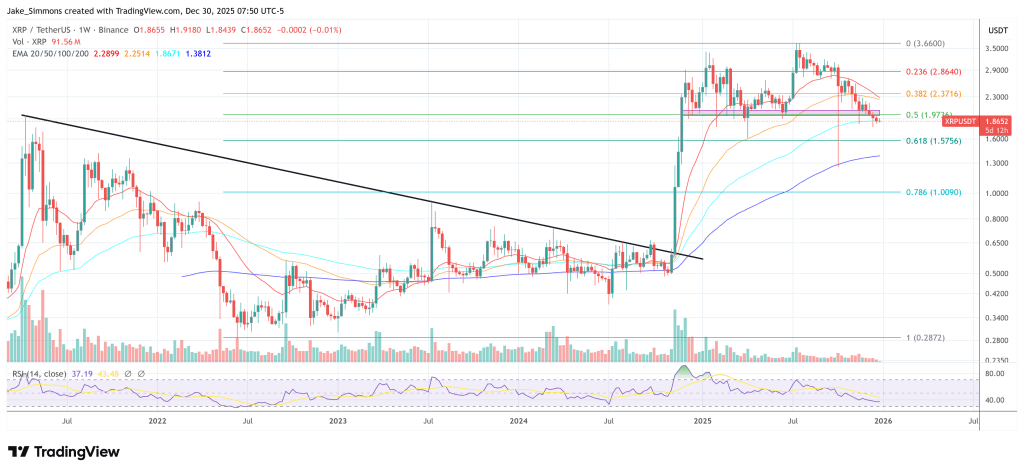
XRP remains below key support, 1-week chart | Source: XRPUSDT on TradingView.com

Связанные с этим вопросы

QWhat were the key areas of progress for the XRP Ledger in 2025 according to the article?

AThe key areas of progress for the XRP Ledger in 2025 were smart contracts reaching an active testing environment, interoperability with solutions like Wormhole and Axelar going live, and significant advancements in tokenization, particularly with RLUSD.

QWhat did Vet identify as a major technical direction for the next phase of interoperability?

AVet identified Zero-Knowledge Proofs (ZKP) as a potential enabler for trust-minimized bridging, suggesting it could reduce reliance on trust-heavy bridge designs.

QAccording to Panos Mekras, what are two specific technical features crucial for removing user friction and enabling mass consumer onboarding in 2026?

AAccording to Panos Mekras, Batch transactions and sponsored fees/reserves are two specific technical features crucial for removing user friction and enabling mass consumer onboarding.

QWhat was cited as a 'serious issue' that is a practical constraint on the growth of the XRPL ecosystem?

ADEX/AMM liquidity was cited as a 'serious issue' and a practical constraint on the growth of the XRPL ecosystem.

QDespite the progress in tokenization, what specific challenge or bottleneck was highlighted?

AThe specific challenge highlighted was the distribution channels for these new assets, which was identified as a bottleneck that needs to be improved to support the health of DeFi and applications.

Похожее

Stuck Polymarket: The Real Test After Riding the Traffic Boom Has Arrived

Polymarket, a leading prediction market platform, is facing significant technical challenges as its growth outpaces its current infrastructure on Polygon. Users are experiencing laggy transactions, unresponsive orders, and delayed confirmations, severely impacting the trading experience. In response, DeFi Engineering VP Josh Stevens outlined a comprehensive engineering overhaul. The plan includes reducing on-chain data delays, fixing order cancellation issues, rebuilding the central limit order book (CLOB), improving website performance, and developing a unified SDK and API. A major revelation was the ongoing "chain migration," indicating a potential move away from Polygon. The core issue is that Polymarket has evolved from a simple prediction market into a high-frequency trading platform, making Polygon's limitations—such as block space, gas fees, and block time—a ceiling for further growth. The migration is not just a simple chain switch but a fundamental rebuild of its trading system to support more complex products like perpetual contracts (Perps). This announcement has sparked competition among chains like Solana, Sui, and Algorand, all vying to host Polymarket. For Polygon, losing this key application, which contributes significantly to its gas fee revenue, would be a major setback. The real test for Polymarket is no longer attracting users but proving it can provide a stable, reliable trading environment that retains them.

Odaily星球日报23 мин. назад

Stuck Polymarket: The Real Test After Riding the Traffic Boom Has Arrived

Odaily星球日报23 мин. назад

Lowering Expectations for BTC's Next Bull Market

The author, Alex Xu, explains his decision to significantly reduce his Bitcoin holdings (from full to ~30% of his portfolio) during the current bull cycle, citing a lowered long-term outlook for BTC's price appreciation in the next cycle. He outlines six key reasons for this reduced expectation: 1. **Diminished Growth Drivers:** The narrative of exponential user adoption has largely played out with institutional ETF adoption. The next major growth phase—adoption by sovereign national reserves or central banks—seems unlikely in the near future. 2. **Personal Opportunity Cost:** More attractive investment opportunities have emerged in other assets, such as undervalued companies. 3. **Industry-Wide Contraction:** The broader crypto industry is struggling, with most Web3 business models (SocialFi, GameFi, DePIN) failing. This overall萧条 (depression) reduces the fundamental demand and consensus for Bitcoin. 4. **Strain on Major Buyer:** MicroStrategy, a major corporate buyer of BTC, faces rising financing expenses for its debt, which could slow its purchasing rate and create significant marginal pressure on the market. 5. **Increased Competition from Gold:** The emergence of "tokenized gold" has closed the functional gap (portability, divisibility) between physical gold and Bitcoin, offering a strong competitor in the non-sovereign store-of-value space. 6. **Security Budget Concerns:** The block reward halving continues to exacerbate the long-standing issue of funding Bitcoin's network security, with new fee source explorations like Ordinals and L2s largely failing. The author's decision to hold a significant (though reduced) position reflects a cautious, not bearish, outlook. He remains open to increasing his exposure if the fundamental reasons for his skepticism change or if new positive catalysts emerge.

marsbit1 ч. назад

Lowering Expectations for BTC's Next Bull Market

marsbit1 ч. назад

Can Iran 'Control' the Strait of Hormuz?

Iran has announced a comprehensive plan to assert control over the strategic Strait of Hormuz, a critical global oil shipping chokepoint. The proposed measures include requiring all vessels to obtain Iranian permission for passage, imposing fees for security, environmental protection, and navigation management—preferably paid in Iranian rials—and absolutely banning Israeli ships. Vessels from countries deemed hostile by Iran’s top security bodies may also be barred. Analysts suggest Iran’s motives are multifaceted: increasing pressure on the U.S. and Israel by leveraging control over oil transit to influence global prices and inflation; creating a new revenue stream, potentially exceeding $7.7 billion annually, to counter Western sanctions and support postwar reconstruction; and using transit permissions as bargaining chips in future negotiations, notably with the U.S. However, the plan faces significant practical and diplomatic challenges. Enforcing comprehensive interception and fee collection in the busy waterway, patrolled by international military forces, would be difficult. The U.S. has already countering with a blockade of Iranian ports and threats to intercept any ship paying fees, potentially strangling Iran’s oil exports and fee revenue. Broad international opposition, led by European and Gulf states, and legal controversies further complicate implementation. The proposal may ultimately serve more as a negotiating tactic than a feasible policy, with its execution remaining highly uncertain.

marsbit2 ч. назад

Can Iran 'Control' the Strait of Hormuz?

marsbit2 ч. назад

Торговля

Спот
Фьючерсы

Популярные статьи

Что такое XRP 2.0

XRP 2.0: Новая грань в мире криптовалют Введение в XRP 2.0 В постоянно развивающейся сфере криптовалют появляются новые проекты, стремящиеся к вниманию и внедрению. Один из таких многообещающих проектов - это XRP 2.0, новая криптовалюта, созданная для использования передовых технологий блокчейна и надежных методов шифрования. Хотя название вызывает ассоциации с XRP от Ripple, важно отметить, что XRP 2.0 функционирует независимо, сосредоточив внимание на повышении безопасности сделок, конфиденциальности и масштабируемости. Поскольку цифровая финансовая среда все больше принимает децентрализованные решения, XRP 2.0 намерена внести значимый вклад в web3 и общее расширение криптопроектов. Что такое XRP 2.0? XRP 2.0 в своей основе - это проект криптовалюты, цель которого - создать безопасную и децентрализованную экосистему цифровой валюты. Его базовая технология интегрирует сложные принципы блокчейна с современными методами шифрования. Основная цель XRP 2.0 - утвердиться как надежная и эффективная платформа, позволяющая быстро осуществлять транзакции с приоритетом на улучшенную защиту конфиденциальности для своих пользователей. Проект рекламируется как решение многих недостатков, с которыми сталкиваются существующие криптовалюты, предлагая систему, способную обрабатывать более высокий объем транзакций с улучшенной скоростью и конфиденциальностью. Эта универсальность позиционирует XRP 2.0 как значимого конкурента на рынке, переполненном различными цифровыми валютами. Кто создатель XRP 2.0? Идентичность создателя XRP 2.0 была обозначена как «Уилбур». Однако исчерпывающие данные о Уилбуре или связанном с ним проекте остаются неясными. Анонимность многих создателей криптовалют не является редким явлением в этой отрасли и часто применяется для сохранения определенной степени конфиденциальности и безопасности. Кто инвесторы XRP 2.0? <pна данный момент конкретная информация о инвестиционных фондах или организациях, поддерживающих xrp 2.0, не доступна публично. в секторе криптовалют поддержка репутабельными инвесторами может существенно повлиять на кредитоспособность и успех проекта, однако прозрачность в отношении финансовых спонсоров 2.0 еще была установлена. Как работает XRP 2.0? XRP 2.0 выделяется использованием сочетания технологий блокчейна и продвинутых алгоритмов шифрования, что обеспечивает безопасные и децентрализованные транзакции. Его инновационная структура включает уникальные функции, разработанные для повышения вовлеченности пользователей и расширения функциональности за пределами традиционных транзакций с криптовалютами. Среди этих функций XRP 2.0 интегрирует возможности с искусственным интеллектом, такие как текст в изображение и текст в речь. Эти дополнения разработаны для улучшения интерактивной работы пользователей, способствуя более широкому применению в различных секторах. Соединяя технологические достижения с дизайном, ориентированным на пользователя, XRP 2.0 стремится привлечь внимание разнообразных индивидуумов и предприятий, стремящихся интегрировать решения с криптовалютой в свои бизнес-процессы. Хронология XRP 2.0 Для понимания XRP 2.0 необходимо рассмотреть ключевые события, которые определили его путь до сих пор: 23 июля 2023 года: XRP 2.0 представлен как новый проект криптовалюты, стремящийся революционизировать возможности безопасных и децентрализованных транзакций в области блокчейна. 8 сентября 2023 года: Запуск другого проекта, XRP20, который представляет собой токен ERC-20 на блокчейне Ethereum и не имеет отношения к XRP 2.0. 13 ноября 2023 года: XRP Ledger подвергается значительному обновлению с выпуском программного обеспечения серверов rippled версии 2.0.0. Важно отметить, что это развитие не связано с проектом криптовалюты XRP 2.0. Ключевые моменты о XRP 2.0 Чтобы выделить суть XRP 2.0, возникают несколько критически важных факторов: Уникальные особенности: Включение таких функций, как основанные на ИИ текст в изображение и текст в речь, дополнительно разнообразит потенциальные приложения XRP 2.0. Технология блокчейна: Структура использует современные механизмы блокчейна и протоколы шифрования, обеспечивая безопасную и децентрализованную среду для транзакций. Масштабируемость и конфиденциальность: XRP 2.0 придает приоритет повышенным мерам защиты конфиденциальности в процессах транзакций и масштабируемости, необходимой для привлечения растущей базы пользователей. Нет связи с Ripple: Важно отметить, что, несмотря на свое название, XRP 2.0 не имеет никаких отношений или сотрудничества с XRP от Ripple, что отличает его операционные рамки и цели в экосистеме криптовалют. Заключение XRP 2.0 представляет собой амбициозное начинание в сфере криптовалют, стремясь предложить сочетание безопасности, конфиденциальности и эффективности в цифровых транзакциях. Интегрируя сложные технологии и удобные функции, проект стремится расширить горизонты того, что может достичь криптовалюта в современной цифровой экономике. Хотя анонимность его создателя и отсутствие раскрытых инвесторов могут вызвать вопросы у некоторых, акцент XRP 2.0 на передовых функциональных возможностях и децентрализации увеличивает его привлекательность на фоне все более переполненного крипто-рынка. Поскольку мир криптовалют продолжает развиваться, XRP 2.0 может еще стать ключевым игроком в расширении безопасных и масштабируемых блокчейн-решений.

198 просмотров всегоОпубликовано 2024.04.05Обновлено 2024.12.03

Что такое XRP 2.0

Неделя обучения по популярным токенам 13: запуск основной сети HIP-4 ожидается в середине 2026 года на фоне смещения фокуса рынка к масштабируемому внедрению ключевых криптоактивов, включая XRP

HIP-4 представит децентрализованные рынки прогнозов без разрешений, бинарные (исходные) контракты и опционы 0DTE.

713 просмотров всегоОпубликовано 2026.04.22Обновлено 2026.04.22

Неделя обучения по популярным токенам 13: запуск основной сети HIP-4 ожидается в середине 2026 года на фоне смещения фокуса рынка к масштабируемому внедрению ключевых криптоактивов, включая XRP

Обсуждения

Добро пожаловать в Сообщество HTX. Здесь вы сможете быть в курсе последних новостей о развитии платформы и получить доступ к профессиональной аналитической информации о рынке. Мнения пользователей о цене на XRP (XRP) представлены ниже.

活动图片