Author: Maosike
Original Title: "Wanke Cloud" Godfather Flees Overseas: The $200 Million Corruption Mystery of Chen Lei, Former CEO of Xunlei
January 15, 2026, Shenzhen.
A civil lawsuit was filed in court, seeking a staggering 200 million yuan. The name on the defendant's side was like a blast from the past—Chen Lei, the former CEO of Xunlei, the man who once made Xunlei's stock price soar fivefold in a month, now became the protagonist of "corruption and emptying the company."
Allegedly misappropriating tens of millions of company funds for cryptocurrency speculation, arranging for relatives to fabricate contracts to siphon off company funds... In Xunlei's account, Chen Lei was "guilty of numerous crimes."
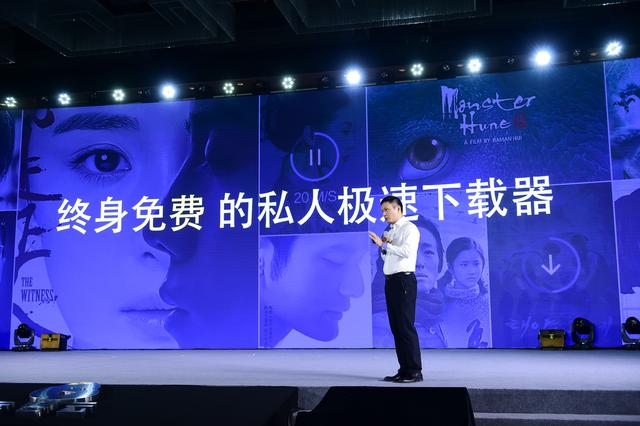
Rewind to October 31, 2017, also in Shenzhen, the launch event of Wangxin Technology was brilliantly lit. Chen Lei, wearing his signature white shirt, stood on stage and announced in his characteristic tech-guy tone: "Xunlei will go all in on blockchain." The audience erupted in applause.
From deification to destruction, it took only a few short years.
This is the story of a fallen prodigy.
The Arrival of a Genius
"I met Lei Jun in September 2014. He invited me to join Xunlei, and we talked until past 2 a.m." Chen Lei recalled years later, describing the night that changed his fate.
At that time, Chen Lei was a star executive at Tencent Cloud, a seasoned practitioner in the cloud computing field. Xunlei, on the other hand, was a download tool giant showing fatigue in the mobile internet era, urgently needing someone tech-savvy and bold to lead its transformation.
Lei Jun convinced him with two irresistible reasons: "You're doing quite well at Tencent, but is it you who's good or is it Tencent? Can you perform this well after leaving Tencent?" The second question: "Do you want to run a company where you can call the shots?"
"I was deeply moved by Lei Jun's proposal. I felt he could read my mind and speak my thoughts. At that time, I greatly admired Lei Jun."
Xunlei's founder, Zou Shenglong, offered extremely sincere terms: simultaneously serving as Xunlei's CTO and CEO of the newly established Wangxin Technology. The founding of Wangxin Technology was almost simultaneous with Chen Lei's joining, meaning he would have a relatively independent entrepreneurial platform.
Chen Lei's ambition far exceeded running an ordinary cloud computing company. As the sharing economy model rose in 2014, Chen Lei敏锐地意识到 (sharply realized) that重构 (restructuring) the overall architecture of cloud computing through sharing economy手段 (means) could innovate CDN technology, especially addressing the long-standing issues of "high cost, chaos, and poor quality" in the CDN industry.
"The core value of Wangxin Technology is to create a sharing economy IDC, reducing societal computing costs through sharing economy means," Chen Lei stated. Through the smart hardware "Zuanqian Bao" (Money Making Treasure), ordinary users could share their idle bandwidth for profit, and Wangxin Technology would integrate these resources into CDN services.
The speed at which the concept turned into reality was astonishing.
In June 2015, Wangxin Technology launched Xingyu CDN, priced directly at three-quarters lower than the mainstream market price, and quickly established partnerships with excellent companies like Xiaomi, iQiyi, and Zhanqi.
At the end of 2015, Chen Lei won the "Internet Industry Annual Niu'er Outstanding Person Award" for leading Wangxin Technology to launch innovative CDN technology.
By 2017, the shared computing model of Xingyu Cloud had over 1.5 million nodes online, with reserved bandwidth of about 30T and reserved storage of about 1500PB. This was an unprecedented distributed computing network. Chen Lei successfully connected millions of households into a cloud computing network.
Technological idealism and commercial success were perfectly combined. He seemed to have found the right way to change the world.
In July 2017, Chen Lei officially became the CEO of Xunlei.
But beneath the halo of success, a complex situation was forming. "Old Zou (Zou Shenglong) wanted to do an MBO (management buyout), but had disagreements with major shareholders. In the end, it couldn't be reconciled, so they pushed me out to be CEO. I was a bit scared at the time, feeling this position might not be good," Chen Lei recalled later.
But history would soon prove this was just the calm before the storm. A bigger opportunity, or perhaps temptation, was beckoning him.
The Temptation of Issuing Coins
In 2017, if you missed Bitcoin, you missed an era.
Across the ocean in Silicon Valley, USA, an ICO (Initial Coin Offering) frenzy for cryptocurrencies surged around March and April 2017. Bitcoin regained its upward price trend, rising from $968 at the beginning of the year to $3000—a 2x increase—and Ethereum rose from $8.3 to over $200—a more than 20x increase.
Various forms of ICOs emerged one after another. The火爆 (hot) virtual currency market gave Chen Lei inspiration from blockchain.
"Xunlei is essentially an internet company born from P2P technology, decentralized. Genetically speaking, Xunlei has a better chance of success than others in shared computing," Chen Lei once said. Unlike the B2C path of other companies, Xunlei hoped to use blockchain technology to carve out a different C2B path.
Driven by Chen Lei, the blockchain version of Xunlei's Money Making Treasure, "Wanke Cloud" (Player Cloud), was born.
Wanke Cloud borrowed from Bitcoin's POW algorithm, allowing "mining" to produce the digital asset Wanke Coin, with a total supply of 1.5 billion, halving产量 (output) every 365 days, with mining volume decreasing by half annually.
This design was "perfect." It had physical hardware as a carrier, bound to actual computing services. Wanke Coin is the native digital asset based on blockchain technology within the Wanke Cloud shared computing ecosystem. Its generation process is strongly correlated with the Wanke Cloud smart hardware and the economic application of shared CDN.
Chen Lei packaged this project as a "shared computing + blockchain" technological innovation, rather than a simple virtual currency issuance,既能 (able to)规避 (avoid) ICO policy risks又能 (and also) enjoy the market红利 (dividends) of the blockchain concept.
On October 31, 2017, Wanke Cloud was officially launched.
Chen Lei announced the opening of shared computing services to all ordinary individual users. Wanke Cloud officially launched "cloud disk mining" and the Wanke Rewards Plan. Wanke Coin could be used within Xunlei's entire ecosystem to exchange for more value-added services, such as expanded storage space, Xunlei membership, and over 200 other services.
The market's reaction exceeded everyone's expectations. At that time, the blockchain concept was炙手可热 (red-hot), and the price of Wanke Coin soared. On some trading platforms, Wanke Coin rose from the unofficial issue price of 0.1 yuan to 9 yuan, a 90-fold increase.
Wanke Cloud was seen as a mining machine, with its price per unit rising from 338 yuan to a high of 3240 yuan. Wanke Cloud also caused Xunlei's stock price to increase 5-fold within a month. In October 2017, Xunlei's stock price surged from $4.28 to $24.91, later reaching a high of $27.
"Wanke Cloud, 599 yuan per unit,抢到 (snag one) and净赚 (net profit) 1500."
One player mentioned that early participants in the Wanke Cloud Taobao crowdfunding,矿主 (mining pool owners) who initially hoarded large quantities through抢单软件 (order-snatching software) and hiring interns, made their first桶金 (bucket of gold) in 2017 from Wanke Cloud. Even individual users participating in the Wanke Rewards Plan could mine over a dozen Wanke Coins daily, "making back the cost in a few days."
"It was because of Xunlei's Wanke Cloud that I learned about Bitcoin and blockchain, opening the door to a new world," said Jack, a cryptocurrency practitioner based in Hong Kong, to Shenchao TechFlow.
This was the peak of Chen Lei's life and the most glorious period in Xunlei's history.
The technological idealist successfully transformed a traditional download tool company into a trendy blockchain concept stock, multiplying its market value several times over.
But beneath the glossy surface, a crisis was brewing beneath the currents.
The火爆 (frenzy) of Wanke Coin had deviated far from the track Chen Lei initially envisioned, evolving from technological innovation into pure speculative狂欢 (carnival).
The Crisis Arrives
Crises often start from within.
On November 28, 2017, Shenzhen Xunlei Big Data Information Service Co., Ltd. publicly pointed out that the Wanke Cloud activities launched by Xunlei CEO Chen Lei did not use any blockchain technology and were利用 (utilizing) illegal exchanges for变相 (disguised) ICO.
This seemingly strange "self-reporting" was essentially a direct conflict between the old and new forces within Xunlei.
"The internal strife that occurred in Xunlei in October 2017 was actually initiated by Yu Fei (former Senior Vice President of Xunlei), with the core demand being to drive me away," Chen Lei recalled later.
On November 3rd, the People's Bank of China, thinking Wanke Coin was a product of Xunlei's financial sector, summoned the responsible person Hu Jie for talks. After explanation, they learned it was Wangxin's business. Hu Jie subsequently submitted an email to Xunlei Group's senior management, pointing out that Wanke Coin was not based on real blockchain technology, had suspicions of disguised ICO,涉嫌 (was suspected of) inducing and supporting Wanke Coin trading, and had potential mass incident risks.
On December 9, 2017, Wanke Coin was renamed LinkToken (链克).
Before the internal conflict was resolved, the external regulatory hammer fell.
In January 2018, the National Internet Finance Association of China issued a risk warning, stating that virtual digital assets like LinkToken issued under the IMO model were essentially a form of financing and were变相 (disguised) ICOs.
The night being named by the互金协会 (Internet Finance Association), Xunlei Network's stock price opened down 27.38%, and the price of LinkToken plummeted accordingly.
On January 16 and 17, 2018, Xunlei连续 (continuously)发布公告 (issued announcements) on its official website, stating that LinkToken would彻底回归 (completely return) to its positioning as an积分 (points) function within the Xunlei system. It decided that from January 31st onwards, LinkToken would only be allowed for use within application services provided by Xunlei and its partners, thereby洗清 (clearing) ICO suspicions.
With Xunlei's announcement, LinkToken一度 (once)腰斩 (halved) from 4 yuan to 2.5 yuan.
Due to the regulatory点名 (naming), searching for Wanke Cloud on platforms like Xianyu displayed违规信息 (violation information) and was unsearchable, so sellers referred to the hardware cloud disk as "wky" or "母鸡" (hen).
On September 17, 2018, Xunlei announced it would package and sell its blockchain businesses, including LinkToken, the LinkToken Mall, and the LinkToken Pocket, to a科技集团 (technology group).
By the end of 2018, the official price of Wanke Cloud was 599 yuan, but on second-hand (二手) commodity platforms, large numbers of Wanke Clouds were being resold, with the lowest price at 40 yuan. The huge gap between official and二手 (second-hand) prices made the Wanke Cloud model难以再续 (difficult to continue).
Investors were骂声一片 (full of curses). "Wanke Cloud is truly the most垃圾 (garbage) thing I've bought in five years." Some players even publicly维权 (defended their rights) online. The once golden-egg-laying mining machine turned into a pile of废铁 (scrap iron) overnight.
The former star CEO became the target of public criticism. The media that once praised him began to question his motives and abilities.
The myth of deification was shattered, but the story of destruction was far from over.
The Moment of Destruction
After the Wanke Coin frenzy subsided, a company named "Xing Ronghe" (兴融合) quietly emerged. This company, founded in 2018, was表面上 (on the surface) a bandwidth supplier for Xunlei, but its actual controller was Chen Lei himself.
Chen Lei had his own explanation for this: "In February 2017, the Ministry of Industry and Information Technology issued regulations to clean up non-compliant market transactions,明文规定 (explicitly stating) that bandwidth could only be purchased from licensed enterprises. We shifted from buying bandwidth directly from household users to buying from矿主 (mining pool owners). To规避 (avoid) risks for Wangxin, we bought the shell company Xing Ronghe. It purchased hardware from Wangxin and then sold it to矿主 (mining pool owners). This method was used to隔离 (isolate) Wangxin's risks."
Chen Lei emphasized that Xing Ronghe's business flow and capital flow were closely tied to Xunlei, and everything was for the benefit of Xunlei.
But according to Xunlei's investigation results, the situation was not that simple. From January 2019 to early 2020, Wangxin累计 (accumulatively) paid Xing Ronghe approximately 170 million yuan in resource node procurement fees.
The most dramatic情节 (plot point) occurred between March 31 and April 1, 2020. Chen Lei,利用 (using) his final approval authority as then CEO of Xunlei and Wangxin, approved Wangxin to make several consecutive payments totaling over 20 million yuan to Xing Ronghe Company within just two days.
Some of these payments within these two days were made before their normal due date, exhibiting an extremely fast模式 (mode) of "application submitted, approved, and arrived on the same day," lacking验收结算流程 (acceptance and settlement processes).
Twenty-four hours later, on April 2nd, the Xunlei board of directors (董事会) officially issued a statement removing Chen Lei from his position as CEO.
Chen Lei had a clear memory of his dismissal process: "Around 10:00 on April 2nd, I had a fever and was at home, not at the company. But colleagues反馈 (fed back) to me that a bunch of白衣保镖 (white-shirted bodyguards) rushed into the office, ordering all colleagues to stop all work. All this happened before any communication with me. Before all this happened, I knew nothing."
Besides the fund transfers, Xunlei also accused Chen Lei of poaching personnel before his dismissal.
In March 2020, Chen Lei arranged for Dong Xia and Liu Chao to talk to 35 core employees, arranging for them to collectively resign and transfer to Xing Ronghe Company. This directly caused Wangxin to pay over 9 million yuan in economic compensation and option repurchase fees.
Even more bizarre was the control structure behind Xing Ronghe: The legal representative, Zhao Yuqin, was Liu Chao's mother; one of the shareholders of the控股股东 (controlling shareholder) "Hong'en Technology" was Tian Weihong, Dong Xia's mother; The法人 (legal person) Xu Yanling was a relative of Dong Xia and the mother of Chen Lei's driver, Yao Bingwen; Chen Lei and Dong Xia had a son together, forming a tight利益共同体 (community of interests).
In April 2020, soon after being dismissed, Chen Lei left China. On October 8th of the same year, Xunlei issued an announcement stating that the company's former CEO Chen Lei was suspected of duty encroachment and had been立案侦查 (filed for investigation) by the Shenzhen Public Security Bureau. The announcement called on Chen Lei to "return to China as soon as possible to cooperate with the investigation."
For 6 years, the various recovery and rights protection actions initiated by Xunlei faced serious evidence collection obstacles because Chen Lei was overseas. In the 5 cases surrounding Wangxin and Xing Ronghe, multiple announcements mentioned "the defendant's whereabouts are unknown, the court has adopted公告送达方式 (announcement service methods)".
At the end of 2022, due to客观局限 (objective limitations), the public security organ withdrew the case after filing it because it could not obtain sufficient evidence. Criminal prosecution temporarily came to an end, but the curtain on civil compensation was just rising.
On January 15, 2026, after more than five years, Xunlei Company and its subsidiary Wangxin Technology重新提起 (re-filed) a civil lawsuit, seeking a staggering 200 million yuan. The case has currently been accepted and filed by the relevant court in Shenzhen.
The defendant list is long: Chen Lei, Dong Xia, Liu Chao, Zhao Yuqin, as well as Xing Ronghe Company and its associated shareholders. The 200 million yuan claim includes: approximately 170 million yuan in funds paid to Xing Ronghe for procurement, plus about 28 million yuan in other differences.
Postscript
"I may have犯了很多职业经理人的大忌 (violated many taboos for professional managers), indeed offended some people,"
"太单纯 (Too naive)",
"You ask me if I regret coming from Tencent Cloud to Xunlei? How could I not regret it. I shouldn't have taken this CEO position in 2017; it made enemies of the old team."
This was Chen Lei's self-reflection in 2020.
But once power is obtained, it's hard to give up. When technological innovation intertwines with capital speculation and personal ambition, the result is often disastrous.
Chen Lei's story is a mirror, reflecting the complexity and multifaceted nature of China's internet industry development. Technological innovation coexists with speculative炒作 (hype), idealism clashes with realism, and regulatory lag collides with market狂热 (fervor).
In this rapidly changing era, everyone can be a beneficiary of the trend, but also a sacrifice of history. Chen Lei was once the lucky one chosen by the times, but was ultimately abandoned by the times.
In the game of technology and capital, maintaining one's初心 (original intention) is more difficult than achieving success, and maintaining that初心 may be the only way to穿越周期 (transcend cycles) and avoid destruction.
The cycle of deification and destruction will continue. Let's hope that next time, we can learn more.
Twitter:https://twitter.com/BitpushNewsCN
Bitpush TG Discussion Group:https://t.me/BitPushCommunity
Bitpush TG Subscription: https://t.me/bitpush