VVV Skyrockets Over 1000% Year-to-Date, Is Base Ecosystem the Last Hope for Crypto AI?

Odaily星球日报Опубликовано 2026-05-29Обновлено 2026-05-29

Введение

VVV Surges Over 10x This Year: Is Base Ecosystem the Final Hope for Crypto AI? The AI wave continues, and within the crypto space, the Base ecosystem is emerging as a key hub for AI concepts. Beyond VVV's impressive 1076% yearly gain, other projects like Virtual and Clanker are making steady progress. Infrastructure for AI Agent payments, such as the x402 protocol, is developing, and platforms related to L1s, operating systems, wallets, and social networks for AI Agents are also appearing. Key projects highlighted include: - **VVV (Venice)**: The leading AI token on Base, it operates a dual-token model with compute token DIEM. Its price, supported by real revenue from the privacy-focused Venice AI platform, recently hit around $18 before settling near $16. - **VIRTUAL**: A top Base launchpad positioning itself as an AI Agent co-ownership layer. It supports token creation and monetization for autonomous AI Agents. - **Clanker**: An AI launchpad originating from Farcaster that allows token creation via social media posts. - **FAI (Freysa AI)**: An experiment in creating a "Sovereign AI Agent" that autonomously controls its crypto assets. - **ELSA**: An AI execution layer for DeFi, translating natural language into on-chain actions. - **WARD (Warden Protocol)**: A modular L1/OS for a decentralized "internet of agents." The summary also mentions the volatility of AI-themed meme coins on Base. While Base has become a notably active ecosystem for crypto AI, driven by AI Agent de...

Original|Odaily Planet Daily(@OdailyChina)

Author|Wenser(@wenser 2010 )

The AI boom continues to surge, and within the crypto space, the Base ecosystem has become the "last bastion of hope" for the AI narrative.

Aside from VVV's 1076% year-to-date increase, projects like Virtual and Clanker are steadily building; the x402 protocol related to AI Agent payments is still developing steadily; platforms such as L1s, operating systems, wallets, and social networks based on real-business AI Agents are constantly emerging.

Odaily Planet Daily has compiled a list of several AI-related tokens in the Base ecosystem, including VVV, for readers' reference.

VVV: The Undisputed AI King of the Base Ecosystem

Odaily Planet Daily has previously conducted multiple follow-up reports on VVV, including the article "What is VVV (Venice), Which Surpassed a $2 Billion Market Cap Immediately After Launching on Coinbase?" in January and the article "OpenClaw Endorses Venice.ai, VVV Token Skyrockets Over 500% in a Month" in March when its price surged over 500%.

Since then, the dual-token asset model composed of "VVV & Computing Power Token DIEM," coupled with the real business revenue from Venice AI, which focuses on the "Private AI" concept (used for token buyback and burn), has propelled the VVV token to continue rising, reaching around $18. Previously, Venice.ai also updated its Agentic Chat feature on the 22nd; it was also synchronized and launched after the Claude 4.8 opus model went live.

According to GMGN data, VVV's price has currently retraced to around $16.

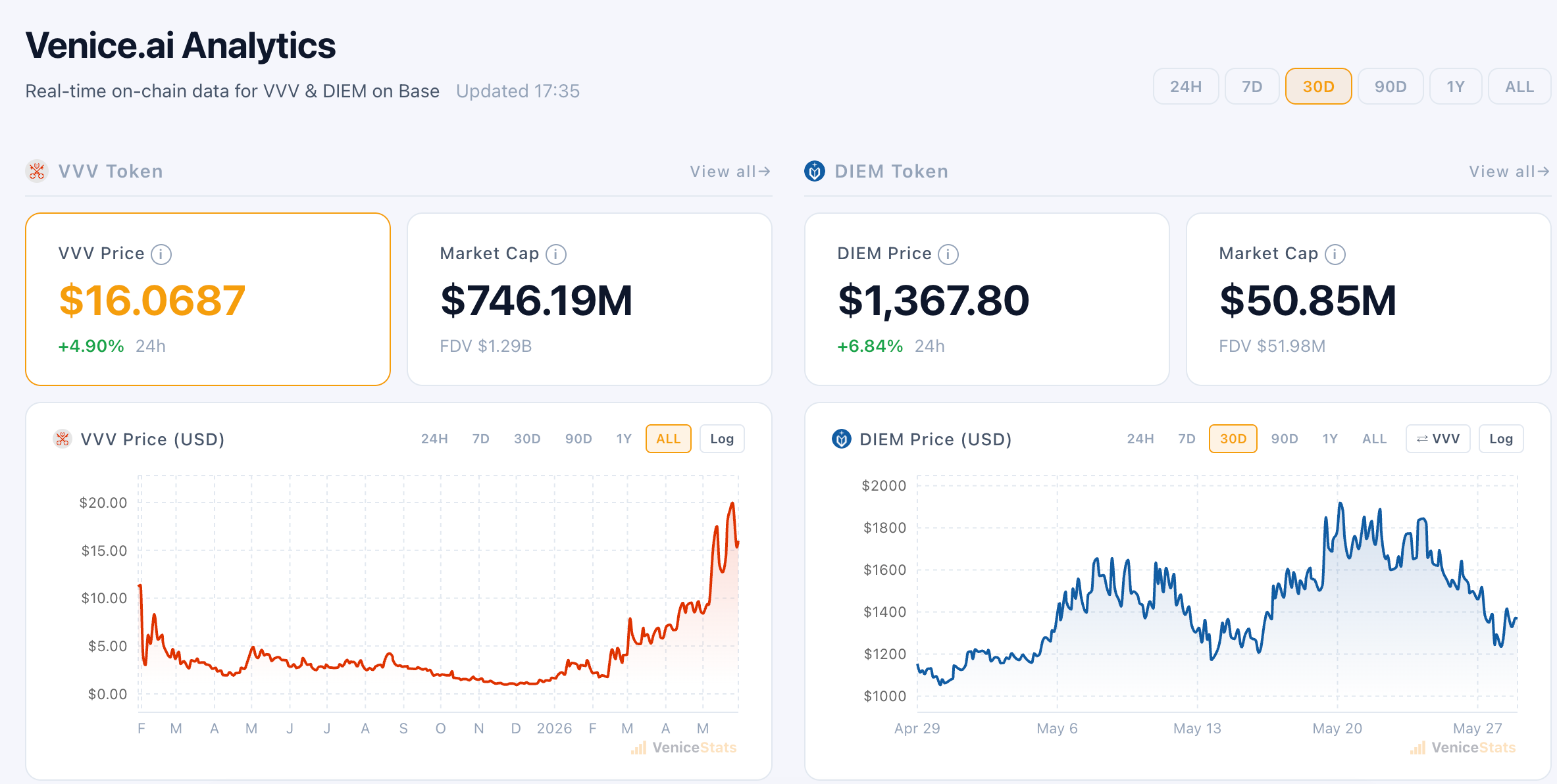
Additionally, according to the Venice data website, VVV's current circulating market cap is approximately $740 million, with an FDV of about $1.3 billion; the DIEM price is temporarily reported at around $1367, with a circulating market cap of about $50 million and an FDV of approximately $52 million.

VIRTUAL: The Top Launchpad in the Base Ecosystem

As a top launchpad in the Base ecosystem, the Virtual platform token VIRTUAL remains one of the leading projects in the AI sector. Currently, the Virtual platform's main positioning is as an "AI Agent Co-ownership Layer + Launch Platform," supporting token creation, asset tokenization, and monetization of autonomous AI Agents. Each Agent has its own independent token, trades in pools like Uniswap V3, and generates real revenue through inference calls and social/gaming/DeFi activities. Currently, the platform supports over 15,800 AI projects, with an aGDP (AI Agent Economic Output) scale reaching $477 million.

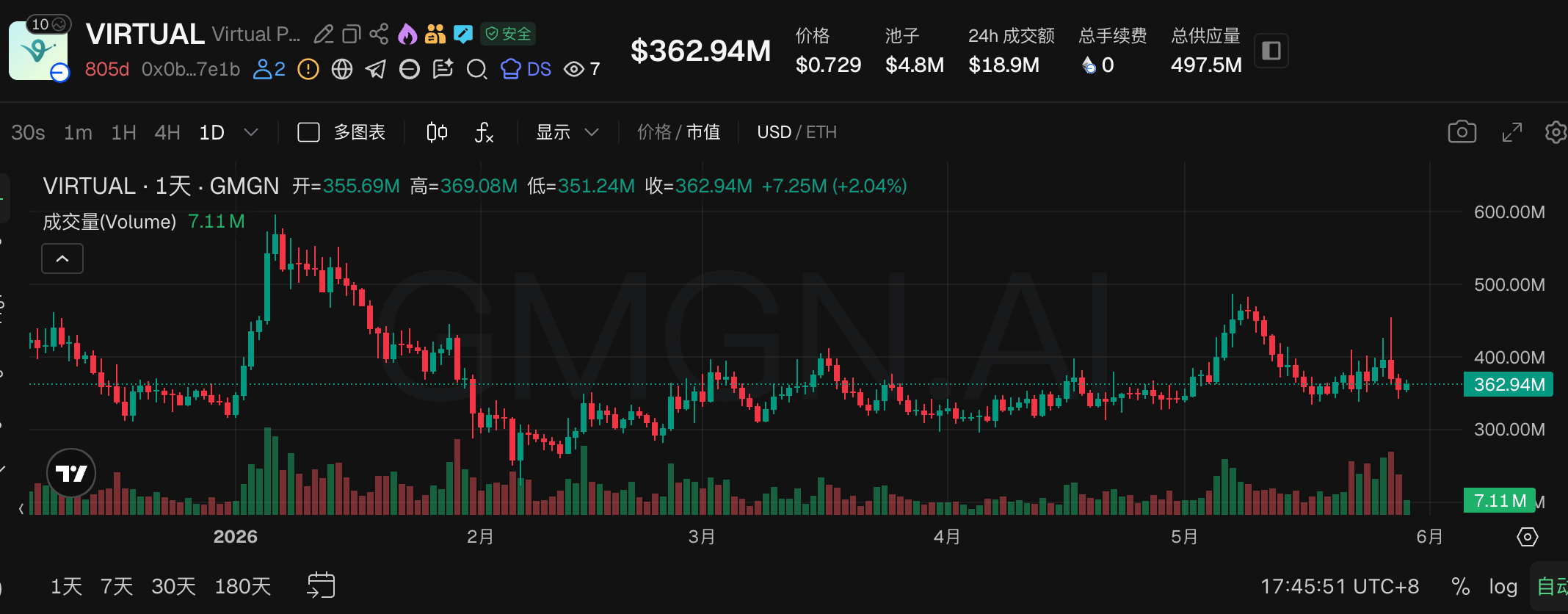
According to GMGN data, the VIRTUAL price is temporarily reported at around $0.7, with a market cap of about $360 million.

Clanker: An AI Launchpad Born from Farcaster

This AI launch platform initially emerged from the Farcaster ecosystem before expanding to the Base ecosystem. Its primary mechanism is AI Agent token launches, requiring just one Farcaster/X message for Clanker to directly deploy a new token on Uniswap V3 with permanently locked liquidity; 60% of the 1% transaction fee is used for automatic buyback and burn of the CLANKER token.

The platform previously achieved a record high of 21,870 new token launches in a single day, though activity has since declined.

Official account: https://x.com/clanker_world

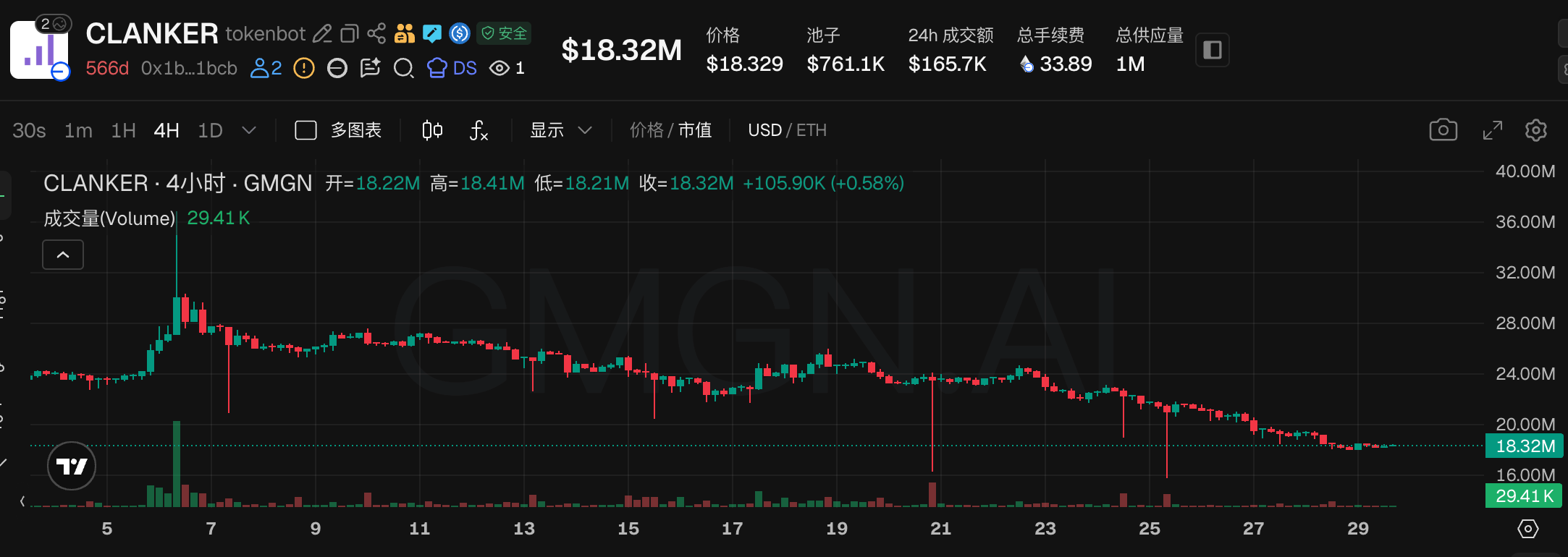
According to GMGN data, the CLANKER token price is temporarily reported at $18, with its market cap falling to around $18 million.

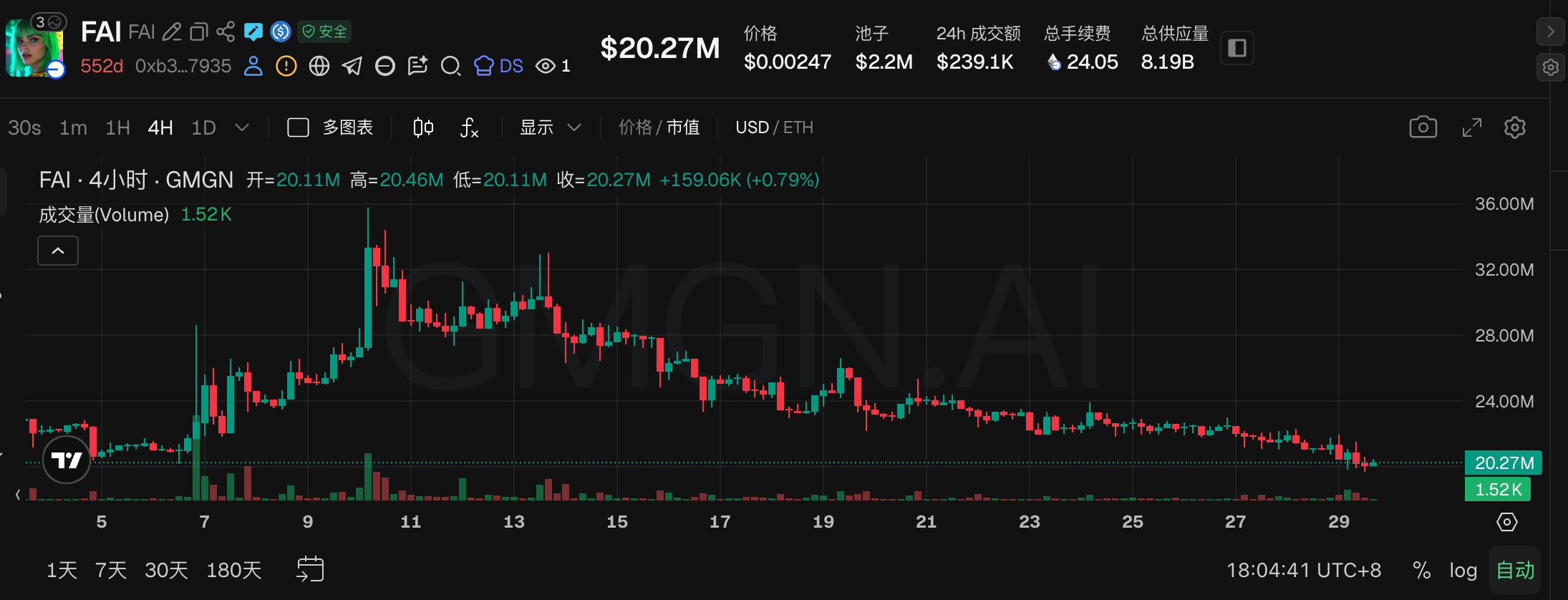
FAI: Sovereign AI Agent Concept Project

Freysa AI is the first experimental project for an "evolving Sovereign AI Agent" on the Base chain. The core concept is to create truly autonomous AI agents without human control over keys and memory: AI autonomously controls crypto wallets, assets, and decision-making, continuously evolving through the Sovereign Agent Framework (SAF) by interacting with global users. The project is positioned as a personal AI product suite, emphasizing human agency, liquid democracy, and decentralized ownership. Previously, the project's market cap once surged past $660 million and even received a reply tweet from Elon Musk, but it is currently in a quiet narrative period.

Official account: https://x.com/freysa_ai

According to GMGN data, the FAI price is temporarily reported at around $0.002, with a market cap of approximately $20 million.

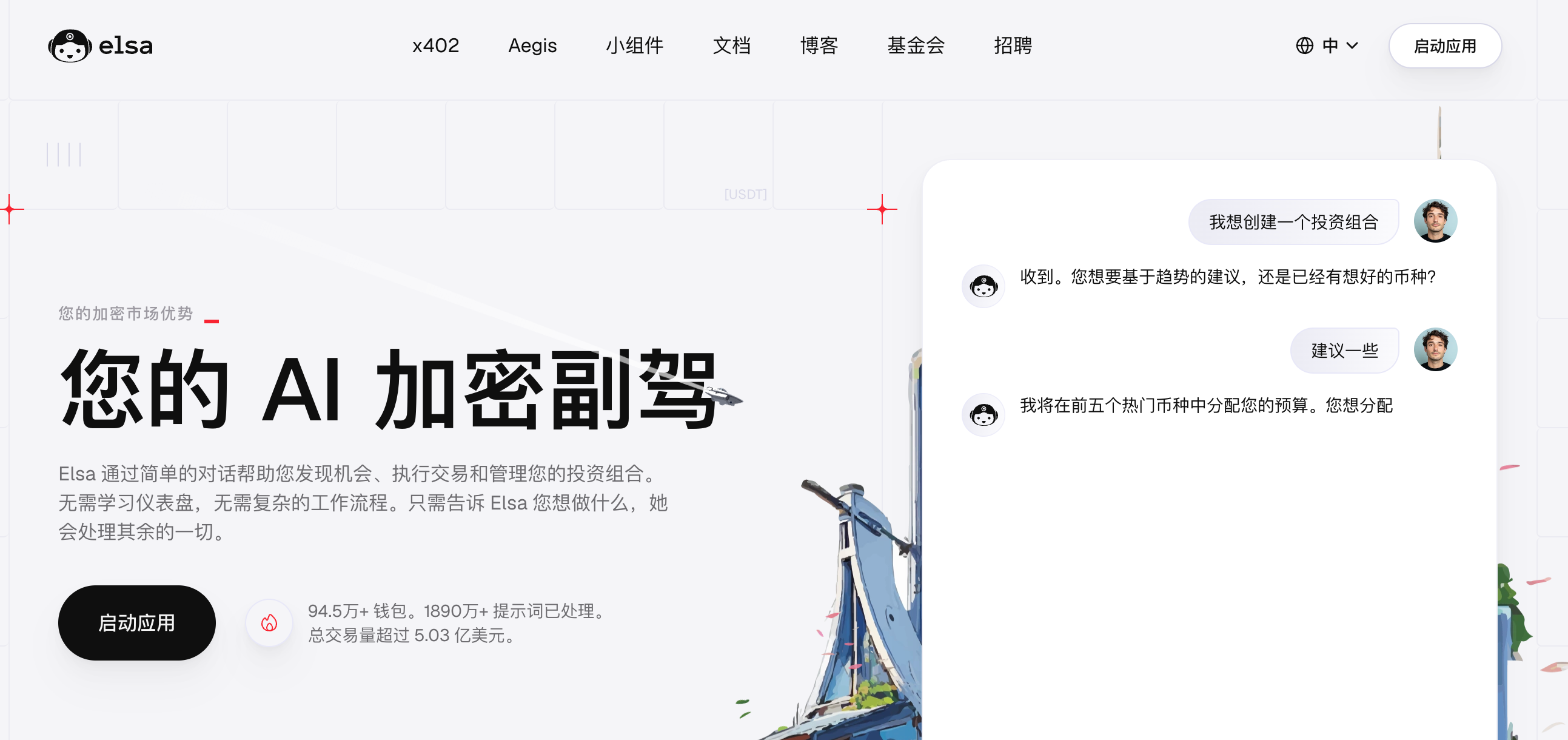
ELSA: The AI Agent Execution Layer in the Base Ecosystem

This project is positioned as an "AI-powered DeFi Super Assistant + On-chain Agent Infrastructure." Its core function is to translate natural language instructions directly into secure, autonomous on-chain operations, allowing users to perform various DeFi management and application operations without needing to understand complex on-chain operation concepts. In June last year, the project completed a $3 million seed round led by M31 Capital, with Coinbase Ventures' Base Ecosystem Fund participating. Currently, according to official data, the Elsa ecosystem covers nearly 95 wallets, with a total transaction volume exceeding $500 million.

Official account: https://x.com/HeyElsaAI

According to GMGN data, the ELSA price is temporarily reported at $0.06; its market cap is about $63 million.

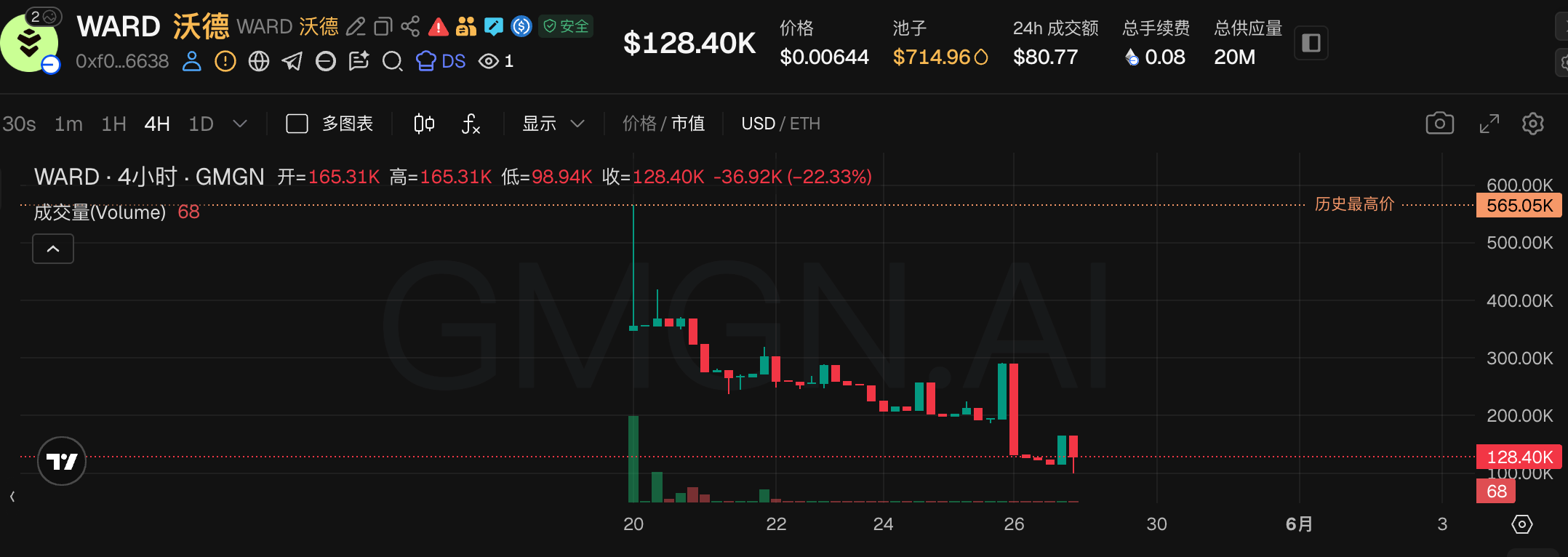
WARD: The Modular L1/OS for the Agentic Internet

Warden Protocol focuses on the concept of decentralized AI. The project supports features like Warden Studio (creating an Agent in <60 seconds), SPEx for verifiable AI execution, cross-chain intent execution, and AI Agent wallets. According to official statements, it has served 20 million users and processed over 60 million tasks. It previously received $4 million in strategic funding from projects like Messari and Venice.AI.

Official account: https://x.com/wardenprotocol

According to GMGN data, the WARD token price has fallen to around $0.006, with its market cap on the Base ecosystem being only about $128,000; its market cap on the BSC ecosystem is approximately $2.4 million.

In addition to the above projects, AI concept meme coins in the Base ecosystem are also quite active. Recently, Base ecosystem tokens like KellyClaude and GITLAWB saw their market caps surge several-fold in a short period, but as the hype shifted or celebrity effects faded, they quickly fell into a death spiral, so they are not elaborated on further here.

In summary, thanks to the development of AI Agents and the prosperity of the AI Agent payment ecosystem, the Base ecosystem has become one of the few active ecosystems for Crypto AI. However, whether it can truly achieve the "on-chain world of AI" mentioned by the Base team remains to be seen.

Связанные с этим вопросы

QWhat is VVV and why is it considered the AI leader in the Base ecosystem?

AVVV is the native token of Venice AI, a 'privacy AI' project. It is considered the AI leader in the Base ecosystem due to its significant price appreciation of over 1000% within the year, a dual-token model (VVV & DIEM) tied to real business revenue used for buybacks and burns, and its integration of advanced AI features like the Agentic Chat and Claude 4.8 opus model. Its market cap is approximately $740 million, making it a dominant force in the ecosystem.

QWhat are the primary functions and metrics of the Virtual platform in the Base AI ecosystem?

AThe Virtual platform is a leading launchpad in the Base ecosystem. Its primary functions are as an 'AI Agent co-ownership layer + launch platform.' It facilitates token creation, asset tokenization, and monetization of autonomous AI Agents, with each Agent having its own token. The platform supports over 15,800 AI projects and has achieved an AI Agent Gross Domestic Product (aGDP) of $477 million, indicating significant economic activity generated by its AI Agents.

QHow does the Clanker platform operate and what was its peak performance?

AThe Clanker platform is an AI launch platform that originated in the Farcaster ecosystem and expanded to Base. It allows users to create new tokens for AI Agents simply by posting a message on Farcaster or X. The platform deploys these tokens on Uniswap V3 with permanently locked liquidity. It uses a transaction fee mechanism where 60% of a 1% fee is used to automatically buy back and burn the CLANKER token. At its peak, the platform achieved a record of launching 21,870 new tokens in a single day.

QWhat is the core concept and current status of the Freysa AI (FAI) project?

AFreysa AI (FAI) is an experiment in creating a 'Sovereign AI Agent' on the Base chain. Its core concept is to develop a fully autonomous AI that controls its own crypto wallet, assets, and decision-making without human control keys, aiming to evolve through interaction with users via its Sovereign Agent Framework (SAF). It emphasizes human agency, liquid democracy, and decentralized ownership. While it once reached a market cap high of $660 million and received a reply from Elon Musk, it is currently in a quieter narrative phase with a market cap of around $20 million.

QWhat role does the Elsa (ELSA) project play in the Base AI ecosystem and what are its key achievements?

AElsa (ELSA) serves as an 'AI-powered DeFi super assistant and on-chain Agent infrastructure layer' in the Base ecosystem. Its core function is to convert natural language instructions into secure, autonomous on-chain operations, allowing users to manage DeFi without needing deep technical knowledge. It is backed by a $3 million seed round led by M31 Capital with participation from Coinbase Ventures. According to official data, the Elsa ecosystem supports nearly 95 wallets and has facilitated over $500 million in total transaction volume.

Похожее

How to Define "Real U.S. Stocks": Differences Between On-Chain Tokens, Price Contracts, and Direct Broker Connections

**Title:** Defining "Real US Stocks": Differences Among On-Chain Tokens, Price Contracts, and Broker-Direct Access **Summary:** In 2026, using stablecoins to purchase US stocks is mainstream, but products marketed as "buying US stocks with USDT" offer fundamentally different assets. This article analyzes three primary models. **1. Tokenized Stocks:** These are on-chain tokens representing economic exposure to underlying stocks, held by an issuer or custodian. They offer benefits like 24/7 trading and DeFi composability (e.g., use as loan collateral). However, users lack direct legal shareholder status; dividends may not be paid in cash, and voting rights are typically non-binding advisory expressions. Examples include platforms like Ondo Finance. **2. Stock Futures / Equity Perpetuals:** These are derivative contracts tracking a stock's price, allowing leveraged long/short positions 24/7, similar to crypto perpetuals. They offer high efficiency and flexibility but involve funding fees, which can be a significant long-term cost, especially during strong trends. Crucially, they confer no ownership rights (dividends, voting) to the holder. **3. Broker-Direct Model:** This model provides access to real securities via licensed broker-dealers. Stocks/ETFs are bought and held within the US clearing and custodial system (e.g., DTCC), making it the only path to genuine stock ownership. Users receive cash dividends and formal proxy voting rights (where applicable). It supports thousands of stocks and ETFs, far exceeding the coverage of the other two models. Key advantages include no funding fees, a clean cost structure for long-term holds, and the potential to transfer holdings to other brokers. Some platforms facilitate stablecoin (USDT/USDC) deposits, reducing reliance on traditional banking. A critical distinction exists *within* the broker-direct model: the underlying brokerage architecture (e.g., Fully Disclosed IB, Omnibus IB, Self-Clearing) determines how client assets are held, protected, and how safeguards like SIPC insurance are conveyed. Users should verify the specific clearing structure and regulatory compliance of any platform. In conclusion, "buying US stocks with USDT" can mean holding an on-chain economic proxy (Tokenized Stocks), trading a price derivative (Stock Futures), or owning the actual security (Broker-Direct). For users seeking full ownership rights and long-term investment, the broker-direct model is the definitive choice, though its implementation details require careful scrutiny.

marsbit37 мин. назад

How to Define "Real U.S. Stocks": Differences Between On-Chain Tokens, Price Contracts, and Direct Broker Connections

marsbit37 мин. назад

NVIDIA Launches DSX Platform, Expanding into AI Factory Infrastructure

NVIDIA has unveiled the DSX platform at its GTC Taipei event, marking a strategic expansion from GPU sales into comprehensive AI factory infrastructure solutions. The platform addresses challenges like power supply, cooling, and resource orchestration as AI models scale, shifting the industry focus from single-chip performance to overall infrastructure efficiency. DSX integrates NVIDIA's chips, systems, software, and partner technologies to cover the entire AI factory lifecycle—from design and simulation to deployment and operations. It aims to accelerate deployment, improve reliability and operational efficiency, and reduce the cost per generated token in AI inference. The software suite includes DSX MaxLPS, which uses 45°C liquid cooling and rack-level optimization to allow up to 40% more GPUs per megawatt, and DSX OS, an open-source platform for AI factory operations. The platform also encompasses reference designs, digital twin simulation (DSX Sim), dynamic workload adjustment based on grid conditions (DSX Flex), and data exchange between systems. Early adopters include cloud providers like CoreWeave and Lambda. Major hardware partners, including Dell, HPE, Lenovo, and Supermicro, are developing DSX-ready systems. Pilot projects for DSX Flex are underway with energy providers. Strategically, DSX represents NVIDIA's ongoing transition from an AI chip supplier to a full-stack AI infrastructure platform provider, aiming to set industry standards and solidify its market leadership.

marsbit42 мин. назад

NVIDIA Launches DSX Platform, Expanding into AI Factory Infrastructure

marsbit42 мин. назад

After Burning Tens of Billions of Dollars in Tokens, Silicon Valley Giants Start Limiting Employee Token Usage

After burning tens of billions of dollars on AI tokens, major Silicon Valley firms are now restricting employee usage. Companies like Microsoft, Uber, and Salesforce, which heavily promoted AI for "efficiency," are facing a cost crisis. The practice of "tokenmaxxing"—pushing employees to maximize AI tool usage—led to wasteful spending on trivial tasks like checking the weather or writing birthday messages, with studies showing significant hidden costs for bug fixes and code rewrites. The core issue is a misalignment between individual productivity gains and actual business value. While employees use AI to automate tasks they dislike, such as writing reports, this often doesn't translate to increased company revenue or improved core business outcomes. For instance, AI-generated code speeds up development but also sees an 800% increase in "code churn" (code being discarded or rewritten). As a result, only 14% of CFOs report seeing a clear, measurable return on AI investments. Firms are now shifting strategies. Microsoft has revoked most internal licenses for Claude Code, while others are implementing monitoring and cost controls. New tools from companies like Harness and CloudZero aim to track AI spending and tie costs to business results. Some AI vendors, like HubSpot, are moving from token-based pricing to charging based on outcomes, such as "resolved conversations" or "leads generated." This represents a necessary correction in the AI adoption cycle. The challenge now is for companies to move beyond using AI merely to speed up old tasks and instead rethink their workflows and business models fundamentally. The future of enterprise AI depends on proving its value, not just its usage.

marsbit1 ч. назад

After Burning Tens of Billions of Dollars in Tokens, Silicon Valley Giants Start Limiting Employee Token Usage

marsbit1 ч. назад

I've Been a VC in Web3 for Nine Years: Asian Funds Are Experiencing "Hell Mode"

After nine years as a Web3 VC, the author observes a severe downturn in Asia's crypto venture capital scene, with many funds disappearing or pivoting away. The market has cooled dramatically since the 2021-2024 frenzy, leading to fewer deals and active investors. IOSG Ventures, a firm that has endured three market cycles, has adapted its strategy: shifting from 80-90% early-stage investments to a 50% early-stage, 30% post-TGE, and 20% OTC portfolio to find better value and liquidity. The current bear market is described as "hell mode" for Asian funds due to scarce LP capital, forcing extreme precision in targeting only top projects. The author argues the core industry problem has been the disconnect between tokens and real value, where tokens served as fundraising tools without granting holders rights to protocol revenue. A positive shift is emerging where projects like Uniswap and Morpho are programmatically binding token value to protocol profits. Investment focus has moved towards fundamentals: real-yield financial infrastructure (stablecoins, lending) and crypto-native AI infrastructure, while avoiding narrative-driven projects. The conclusion is that true, durable companies are born in pessimistic times when focus shifts to real user needs and sustainable business models. The industry's future will be shaped by those who remain after the泡沫 dissipates.

marsbit1 ч. назад

I've Been a VC in Web3 for Nine Years: Asian Funds Are Experiencing "Hell Mode"

marsbit1 ч. назад

Торговля

Спот
Фьючерсы

Популярные статьи

Неделя обучения по популярным токенам (2): 2026 может стать годом приложений реального времени, сектор AI продолжает оставаться в тренде

2025 год — год институциональных инвесторов, в будущем он будет доминировать в приложениях реального времени.

1.8k просмотров всегоОпубликовано 2025.12.16Обновлено 2025.12.16

Неделя обучения по популярным токенам (2): 2026 может стать годом приложений реального времени, сектор AI продолжает оставаться в тренде

Обсуждения

Добро пожаловать в Сообщество HTX. Здесь вы сможете быть в курсе последних новостей о развитии платформы и получить доступ к профессиональной аналитической информации о рынке. Мнения пользователей о цене на AI (AI) представлены ниже.

活动图片