Vitalik Updates Ethereum Roadmap: From Merge to 'Lean Refactoring', with STARK, AI, and Privacy Reshaping the Technical Foundation

marsbitОпубликовано 2026-08-11Обновлено 2026-08-11

Введение

Vitalik Buterin has updated Ethereum's long-term roadmap, outlining a major shift from the post-Merge evolution toward a "Lean Ethereum" vision. The update builds on the 2023 framework but reorders priorities and introduces new concepts. Key continuations include improving consensus (single-slot finality), scaling data availability (larger blobs), simplifying light client verification with SNARKs/STARKs, and protocol simplification. Major adjustments involve significantly prioritizing quantum resistance due to heightened perceived threats, while deprioritizing items like VDFs and some EVM improvements. Technical replacements are planned, such as moving from Verkle trees to a unified Binary Tree and eventually PBTs, and rethinking state management with "New State Types." Notable new additions are: 1. Making **privacy a top-tier priority**, aiming to build it natively into the protocol. 2. **Radical scaling under post-quantum conditions**, using techniques like leanSPHINCS signatures and zkzk frames. 3. **Protocol "Lean-ification" and formal verification**, leveraging modern AI tools to make full formal verification feasible. 4. Exploring **Blob and Gas futures** for future capacity. 5. Developing **Native Rollups**, deeply integrating rollup capabilities into the protocol. 6. **Reimagining the EVM's future**, potentially exposing a simpler, modern instruction set (e.g., leanISA or RISC-V), with EVM becoming a compatibility layer. The core philosophy shifts toward specializ...

Author: Blue Fox Notes

This long post by Vitalik can be considered an updated version of the future Ethereum roadmap. It builds upon the classic 2023 roadmap (Merge → Surge → Scourge → Verge → Purge → Splurge), overlaying it with the current Strawmap (the 'strawman roadmap' maintained by the Ethereum Foundation).

The new roadmap shows us the vast and immense panorama of Ethereum's future engineering.

Simply put, the overall direction remains largely the same, but with today's development, the priorities and implementation paths have changed significantly. Furthermore, several new elements that didn't exist in 2023 have emerged.

Parts that are still continuing:

• Continued improvement of the consensus layer (single-slot finality, support for more validators, etc.)

• Data availability scaling (continuing to increase blob size)

• Light client verification becoming easier (using SNARK/STARK proofs)

• Protocol simplification, cleaning up historical technical debt

These things will still be worked on, but they have been re-prioritized, and some have found new implementation methods.

Main adjustments:

Most importantly, quantum security has been significantly moved forward. Previously a low priority, it is now a high priority.

The reason is that the perceived real-world threat from quantum computers has become much stronger than in 2023.

Downgraded technical parts:

• VDFs (Verifiable Delay Functions) are essentially marginalized

• Many pure EVM improvements have also been downgraded

Replaced technical parts:

• Verkle Trees → Unified Binary Trees → Ultimately moving towards PBT (a more optimal structure)

• State Expiry → New State Types, a completely different state management paradigm to better support scaling.

Finally, the new parts (not present in the previous roadmap)

This is also the part Vitalik finds most noteworthy:

First, privacy becomes one of the highest priorities.

It is to be directly written into the core design. This includes keyed nonces, mechanisms related to FOCIL, lean privacy pools, wormholes, etc. The ultimate goal is to make privacy a native protocol capability, upon which the application layer can build and optimize.

Second, aggressive scaling (under post-quantum assumptions)

Using leanSPHINCS signatures + aggregation, and zkzk frames (zero-knowledge framework within zero-knowledge framework). The idea is to ensure scalability does not degrade even after a full transition to post-quantum cryptography.

Third, specification 'Leanification' + Formal Verification

Writing the protocol cleaner and simpler, facilitating complete formal verification. Vitalik explicitly stated: Comprehensive formal verification has now become feasible primarily because of modern AI tools.

This is an important underlying change; protocol complexity is now being actively kept low and cannot be allowed to grow increasingly complex.

Fourth, Blob and Gas Futures

Pre-committing to/marketing future capacity.

Fifth, Native Rollups

SNARK technology has now matured to the point where deep integration of Rollup capabilities into the protocol itself is no longer just an idea.

(This is very important for L1/L2 integration)

Sixth, The Future of the EVM is Reopened

The protocol may in the future expose a simpler, more modern instruction set (current candidates are leanISA or RISC-V).

The EVM could become an intermediate representation (IR) running on top of these new instruction sets, not forever hardcoded into the protocol core. This means future developers might directly use more efficient instruction sets, with the EVM becoming a compatibility layer.

Two core ideas behind the above technical roadmap:

First, no longer attempting to infinitely scale 'all Ethereum activities'.

It will design specialized mechanisms with certain restricted properties but more suitable for scaling, specifically handling today's heaviest loads (transfers, swaps) and tomorrow's heaviest loads (privacy protocols).

Trading specialization for higher scalability.

Second, treating recursive STARK and AI-assisted formal verification as truly first-class infrastructure.

A primitive called 'aggregate to union verified dependencies' is expected to be used simultaneously in three places: the execution layer (EL), consensus layer (CL), and data layer (DL).

This kind of cross-layer reuse necessitates formal verification for safety, which in turn relies on modern AI. This is a deep 'bet'.

In summary,

Ethereum is moving from the 'second generation after Merge' towards a third-generation overhaul (Lean Ethereum).

Almost every major component will be replaced or rewritten:

For example, verification becomes recursive STARK, cryptography becomes fully post-quantum, privacy becomes a native goal, the protocol itself is proactively simplified to support formal verification, while scalability is greatly enhanced through specialized mechanisms and Native Rollups.

The ultimate goals to achieve are:

Quantum security + Privacy first + Security + Decentralization + Highly scalable under the conditions of all the above + Maintaining leanness.

In short, it's not minor fixes, but rather a systematic refactoring, arguably the largest engineering push in the entire crypto space.

Трендовые криптовалюты

Связанные с этим вопросы

QWhat are the two core ideas guiding Ethereum's new technical roadmap according to the article?

A1) No longer trying to scale 'all Ethereum activities' infinitely, but designing specialized mechanisms with limited properties that are more suitable for scaling to handle today's heaviest loads and tomorrow's loads like privacy protocols, using specialization to achieve higher scalability. 2) Treating recursive STARKs and AI-assisted formal verification as true first-class infrastructure, enabling cross-layer reuse of components through formal verification, which itself relies on modern AI tools.

QWhat new area has become one of the highest priorities in the updated Ethereum roadmap?

APrivacy has become one of the highest priorities. The goal is to build privacy directly into the core design, including mechanisms like keyed nonces, FOCIL, lean privacy pools, and wormholes, aiming to make privacy a protocol-native capability upon which application layers can build and optimize.

QHow has the approach to the Ethereum Virtual Machine (EVM) changed in the new roadmap?

AThe future of the EVM has been reopened. The protocol may expose a simpler, more modern instruction set in the future. The EVM could become an intermediate representation (IR) running on top of these new instruction sets, acting as a compatibility layer, rather than being permanently hard-coded into the protocol core.

QWhy has quantum safety been significantly prioritized in the updated roadmap compared to 2023?

ABecause the perceived real-world threat from quantum computers has become much stronger in recent years compared to 2023, prompting a need to advance quantum-resistant cryptography to a high-priority status.

QWhat is the significance of 'Native Rollups' in the new technical direction?

ANative Rollups signify the deep integration of Rollup capabilities into the protocol itself, made feasible by the maturity of SNARK technology. This is very important for L1/L2 integration, moving beyond separate Layer 2 solutions towards a more unified, protocol-native scaling architecture.

Похожее

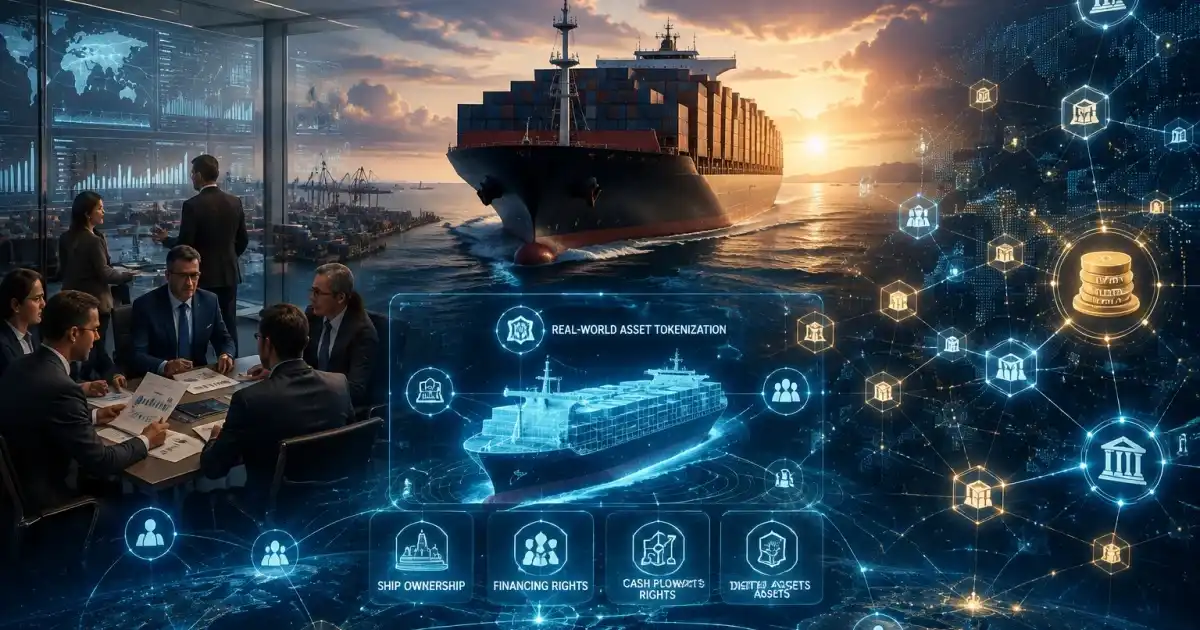
6800 миллиардов долларов судоходного финансирования на блокчейне: может ли RWA открыть новый доступ к судоходному финансированию?

В мире судоходства происходит тихая финансовая трансформация. При общей стоимости мирового коммерческого флота около 2 трлн долларов рынок судового финансирования, объем которого оценивается в 680 млрд долларов, остается традиционным и малодоступным для многих инвесторов. Высокая стоимость и низкая ликвидность судов, сложные юридические процедуры создают высокие барьеры для входа. На этом фоне компании ADI Chain и Shipfinex объявили о партнерстве, чтобы с помощью технологии блокчейн оцифровать активы, связанные с судовым финансированием, по аналогии с секьюритизацией. Их цель — создать более открытый рынок, позволяющий институциональным инвесторам получить доступ к этому классу активов в рамках тренда RWA (Real World Assets). Судоходство привлекательно для цифровизации из-за высокой стоимости активов, относительно предсказуемых денежных потоков от фрахта и потребности в оптимизации традиционного финансирования. Теоретически токенизация может расширить круг инвесторов и источники финансирования для судоходных компаний. Хотя RWA-проекты набирают обороты, превращая концепции в реальные инструменты, токенизация судового финансирования находится на ранней стадии. Ключевыми вызовами являются регулирование в разных юрисдикциях, сложная структура активов (права, залоги, страховка) и необходимость адаптации традиционной отрасли. Успех будет зависеть не от технологий, а от правового признания, зрелости бизнес-моделей и реальных потребностей отрасли. Если эксперимент окажется успешным, он может стать важным прецедентом для интеграции блокчейна в традиционные финансы, открыв путь для цифровизации других классов активов, таких как недвижимость или инфраструктура.

marsbit1 мин. назад

6800 миллиардов долларов судоходного финансирования на блокчейне: может ли RWA открыть новый доступ к судоходному финансированию?

marsbit1 мин. назад

В этом цикле больше не платите за истории

Недавний разговор с опытными инвестор-ами в криптосфере подтвердил общее мнение: текущий рыночный цикл сместился с покупки «на основе нарративов и ожиданий» к фокусу на «денежных потоках и проверенной реализации». Вот ключевые выводы: 1) **Приоритет — активы, способные фиксировать реальную стоимость.** В медвежьем рынке выживают только проекты с устойчивыми доходами, которые напрямую возвращают стоимость держателям токенов через выкуп, сжигание или дивиденды (например, $UNI, $HYPE). 2) **Выбирайте проекты с проверенным продуктом и замкнутым циклом.** Рынок будет оценивать реальных пользователей, транзакции и доходы, а не технологические обещания. Активы, связанные с токенизацией реальных активов (RWA) и автономной экономикой (Agentic Economy), такие как $ONDO, должны подтверждать свои показатели. 3) **Ищите активы с сильным, органическим консенсусом.** Ценность имеют сообщества, пережившие несколько циклов, а не созданные искусственно хайпом. Примеры: устоявшиеся мем-токены ($DOGE, $PEPE) или лидеры ниш ($ZEC, $TAO). 4) **Избегайте токенов венчурных фондов (VC).** Модель с высокой рыночной капитализацией при низкой ликвидности и постоянными разблокировками приводит к падению курса после листинга, что делает их рискованными для розничных инвесторов. Итог: в этом цикле критически важны проверенная полезность, реальные денежные потоки и органическая поддержка сообщества.

marsbit3 мин. назад

В этом цикле больше не платите за истории

marsbit3 мин. назад

Суровая правда о криптоинфраструктуре и сделках по слияниям и поглощениям;

Криптовалютный рынок переживает период консолидации. Избыток венчурного капитала привёл к тому, что стартапы субсидируют платные пилотные проекты для корпораций Web2, но 95% таких инициатив не доходят до серийного внедрения. Это — тупиковый путь, так как крупные игроки не арендуют, а покупают инфраструктуру, что подтверждается сделками поглощений (например, Stripe/Bridge, Robinhood/Bitstamp). Текущие закрытия стартапов и протоколов — это "рыночная гигиена", очищающая поле для нового потребительского цикла. В нём 80% рынка и ликвидности захватят несколько регулируемых гигантов (Visa, Stripe и др.), обеспечивающих массовый доступ. Остальные 20% останутся "песочницей" DeFi для инноваций. Новая формула успеха для Web3-стартапов: доказать соответствие продукта рынку (PMF) в нише DeFi, а затем масштабироваться через интеграцию или поглощение одним из крупных регулируемых шлюзов, контролирующих дистрибуцию. Будущее за создателями фундаментальной инфраструктуры, готовой к подключению к этим каналам.

cryptonews.ru6 мин. назад

Суровая правда о криптоинфраструктуре и сделках по слияниям и поглощениям;

cryptonews.ru6 мин. назад

ZachXBT назвал имя причастной к краже $5 млн криптомошенницы

Известный ончейн-детектив ZachXBT раскрыл личность Тиффани Миланович, причастной к серии фишинговых атак и кражам криптовалюты на общую сумму не менее $5 млн. Мошенница, действуя из США, звонила жертвам, выдавая себя за сотрудника службы поддержки криптобирж (например, Coinbase) или сервисов аппаратных кошельков (Trezor). Её сообщник создавал поддельные сайты для сбора данных. В июне 2024 года одна из жертв потеряла $1.2 млн в BTC и ETH. После краж Миланович публично издевалась над пострадавшими в своем Telegram-канале, хвастаясь роскошными покупками и ставками в казино. ZachXBT также установил связь Миланович с Джоном Дагитой, ранее обвиненным в краже более $46 млн. Именно после их ссоры и публикации личных данных в Telegram детектив вышел на след мошенницы. В заключение ZachXBT предупредил об опасностях, связанных с частыми обновлениями аппаратных кошельков Ledger, которые, по его мнению, могут нарушать базовые функции устройств.

cryptonews.ru6 мин. назад

ZachXBT назвал имя причастной к краже $5 млн криптомошенницы

cryptonews.ru6 мин. назад

Торговля

Спот

Популярные статьи

Неделя обучения по популярным токенам (2): 2026 может стать годом приложений реального времени, сектор AI продолжает оставаться в тренде

2025 год — год институциональных инвесторов, в будущем он будет доминировать в приложениях реального времени.

2.0k просмотров всегоОпубликовано 2025.12.16Обновлено 2025.12.16

Неделя обучения по популярным токенам (2): 2026 может стать годом приложений реального времени, сектор AI продолжает оставаться в тренде

Обсуждения

Добро пожаловать в Сообщество HTX. Здесь вы сможете быть в курсе последних новостей о развитии платформы и получить доступ к профессиональной аналитической информации о рынке. Мнения пользователей о цене на AI (AI) представлены ниже.

活动图片