Автор: Клод, Shenchao TechFlow
Введение от Shenchao: Новый раскрытый Трампом документ OGE 278-T показывает, что в первом квартале 2026 года он выполнил 3642 сделки с акциями, в среднем около 60 сделок в день, нарушив сложившуюся со времен Линдона Джонсона практику, когда президенты использовали «слепые трасты».
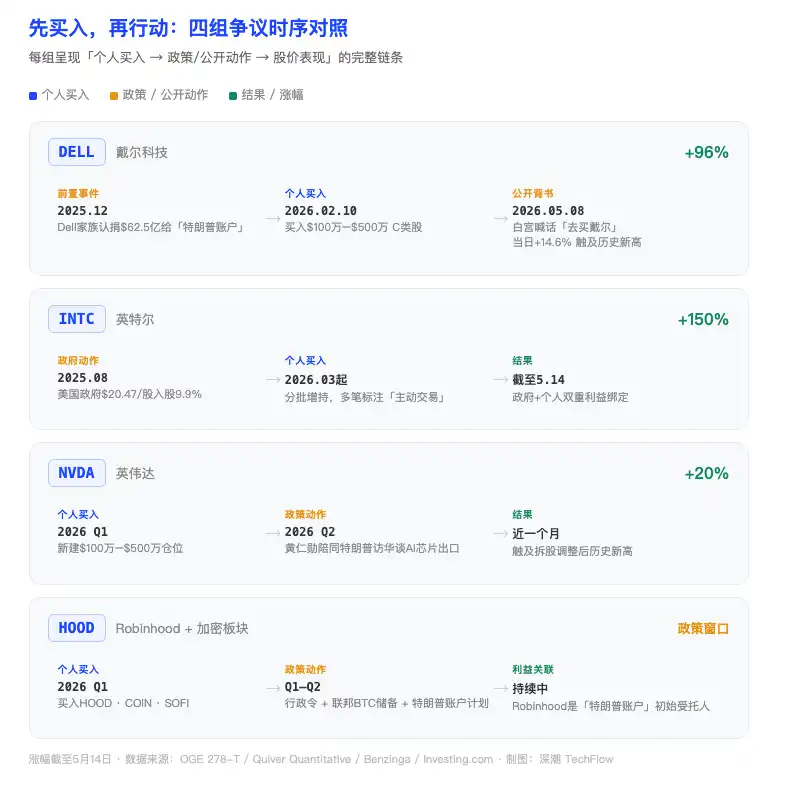
Раскрытый документ показывает, что после покупки 10 февраля акций Dell на сумму от 1 до 5 миллионов долларов, 8 мая Трамп публично заявил в Белом доме: «Покупайте Dell». После этого акции компании выросли на 96%. Сделки с акциями Nvidia, Intel и других компаний также произошли до соответствующих политических шагов, что быстро вызвало споры о конфликте интересов.
Отчет о личных сделках Трампа с акциями становится одним из самых спорных документов в Вашингтоне.
Как сообщает Benzinga, документ, опубликованный на этой неделе Управлением по правительственной этике США (OGE), показывает, что Трамп выполнил 3642 сделки с ценными бумагами в первом квартале 2026 года, в среднем около 58 сделок в день. Этот 113-страничный документ OGE 278-T был подписан и заверен Трампом 8 мая, доставлен в OGE 12 мая, а на титульной странице от руки указано: «Заявитель уплатил штраф за просрочку», что указывает на превышение установленного федеральными нормами срока подачи в 30-45 дней.
Такая частота сделок нарушает сложившуюся почти непрерывную со времен Линдона Джонсона практику использования слепых трастов. Ранее большинство президентов США размещали свои личные активы в квалифицированных слепых трастах, чтобы ограничить конфликт интересов. Картер даже продал свою арахисовую ферму, Обама держал казначейские облигации и индексные фонды, а Байден также использовал слепые трасты во время своего президентского срока.
Массовая распродажа технологических гигантов, крупные ставки на цепочку поставок AI-чипов
Раскрытые документы показывают, что в первом квартале Трамп значительно сократил свои позиции в Amazon, Meta и Microsoft, каждая из которых была оценена в максимальном диапазоне от 5 до 25 миллионов долларов. Однако, активно распродавая, Трамп сохранил некоторую долю в этих трех компаниях, совершая покупки меньшего размера.
Более примечательными являются новые открытые позиции. Трамп открыл позиции в диапазоне от 1 до 5 миллионов долларов в компаниях Nvidia (NVDA), Broadcom (AVGO), Synopsys (SNPS), Cadence Design Systems (CDNS) и Texas Instruments (TXN), практически охватив ключевые звенья американской цепочки поставок AI-чипов. В том же диапазоне были совершены крупные покупки акций Apple, Oracle, ServiceNow, Adobe и Workday.
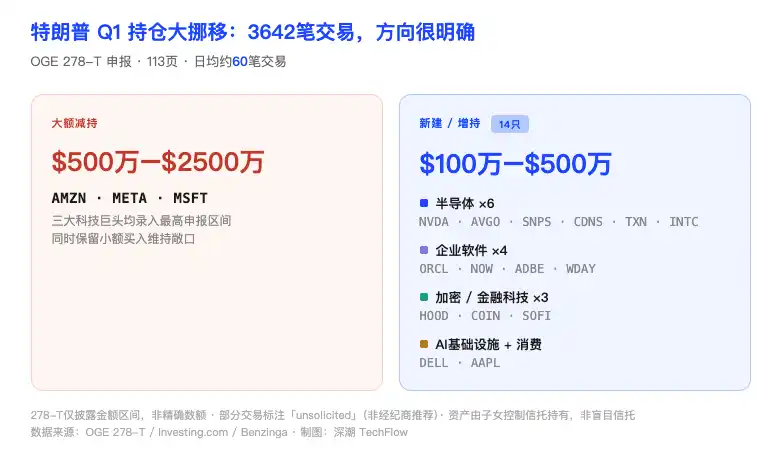
Портфель полупроводниковых компаний в значительной степени совпадает с политическим курсом Белого дома по развитию внутренних производственных мощностей по выпуску чипов. По данным анализа Quiver Quantitative, покупка акций Nvidia произошла до визита генерального директора Nvidia Дженсена Хуана в Китай в сопровождении Трампа, в ходе которого ожидалось обсуждение вопросов экспорта AI-чипов и политики в области полупроводников.
Покупка Dell, а затем пиар в Белом доме спустя три месяца — акции выросли на 96%
Фокус спора о конфликте интересов сосредоточен на Dell.
Документы показывают, что 10 февраля 2026 года Трамп купил акции Dell Technologies класса C на сумму от 1 до 5 миллионов долларов. Спустя три месяца, 8 мая, во время мероприятия в честь Дня матери, Трамп поблагодарил в Белом доме Майкла Делла и его жену Сьюзан и произнес фразу, вызвавшую большой резонанс, обращаясь к присутствующим — призвал американцев «покупать Dell».
В тот день акции Dell взлетели на 14.6%, достигнув исторического максимума в 263.99 доллара. С момента покупки Трампом акций Dell выросли на 96%.
Еще одна деталь временной линии усиливает противоречия. 2 декабря 2025 года Майкл Делл и Сьюзан Делл внесли взнос в размере 6.25 миллиарда долларов в «Счета Трампа» (Trump Accounts), что является одним из крупнейших частных пожертвований на флагманские проекты действующего президента за последние годы. Белый дом не прокомментировал вопрос о том, была ли какая-либо координация между публичной поддержкой президентом Dell и пожертвованием семьи Делл.
Покупка Intel, затем рост акций на 150%, государству принадлежит 9.9%
Сделки с Intel также заслуживают внимания.
Трамп начал увеличивать свою долю в Intel с начала марта 2026 года несколькими траншами, причем многие сделки были помечены как «незапрошенные» (unsolicited), то есть не по рекомендации брокера. С момента покупки 2 марта акции Intel выросли на 150%.
До этого правительство США в августе 2025 года приобрело 433.3 миллиона акций Intel по цене 20.47 доллара за акцию, получив долю в 9.9%. Другими словами, Трамп, с одной стороны, как президент, способствовал покупке доли в Intel правительством, а с другой стороны, как частное лицо, покупал акции Intel на открытом рынке.
Кроме того, покупка акций Coinbase, Robinhood и SoFi произошла в период активного продвижения правительством политики, благоприятной для криптовалют, включая исполнительные указы, федеральный резерв биткоинов и пенсионный план «Счетов Трампа». Robinhood был первоначальным доверенным лицом этого плана.
Отсутствие слепого траста вызывает конституционный спор, Белый дом заявляет о соблюдении правил
Критики рассматривают совпадение указанных временных линий сделок как риск конфликта интересов. Со стороны Белого дома заявляют, что раскрытие информации полностью соответствует требованиям закона STOCK Act.
Активы Трампа находятся в трасте, контролируемом его детьми, однако новые документы показывают, что многие сделки были выполнены брокерами в качестве агентов. В документах не указано, на каких именно счетах находились позиции по сделкам, и кто отдавал распоряжения на их проведение.
Пресс-секретарь OGE отказалась комментировать, отражают ли сделки непосредственную торговую активность Трампа или операции через управляемые счета, заявив лишь, что «OGE стремится к прозрачности и надзору граждан за правительством».
Согласно анализу Quiver Quantitative, насколько им известно, это первый случай, когда Трамп активно торговал отдельными акциями во время пребывания в должности. Предыдущие отчеты 278-T, в которых преобладали консервативные инвестиции в облигации, были полностью изменены.







