Tether's "Favorite Son" STABLE Crashes? Plunges 60% on First Day, Whale Jumping the Queue + No CEX Listing Sparks Trust Panic

marsbitОпубликовано 2025-12-09Обновлено 2025-12-09

Введение

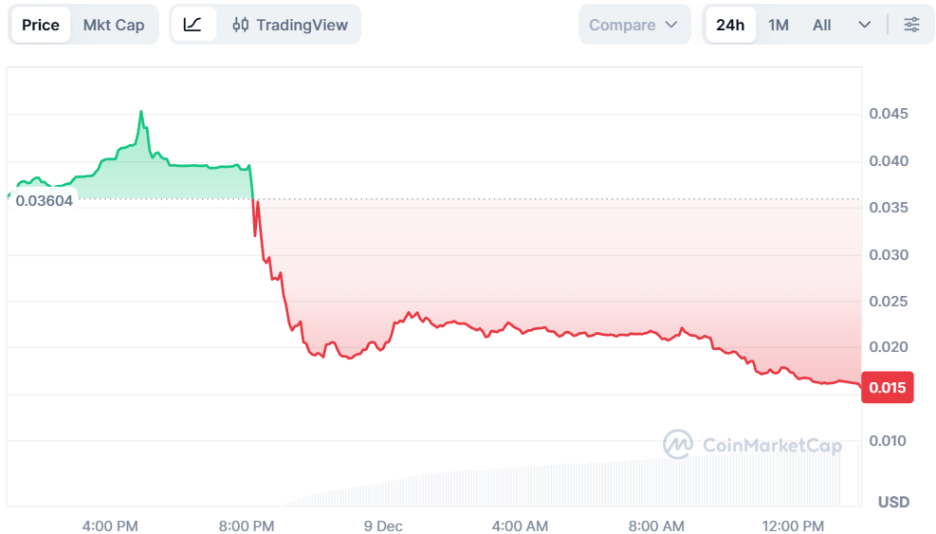
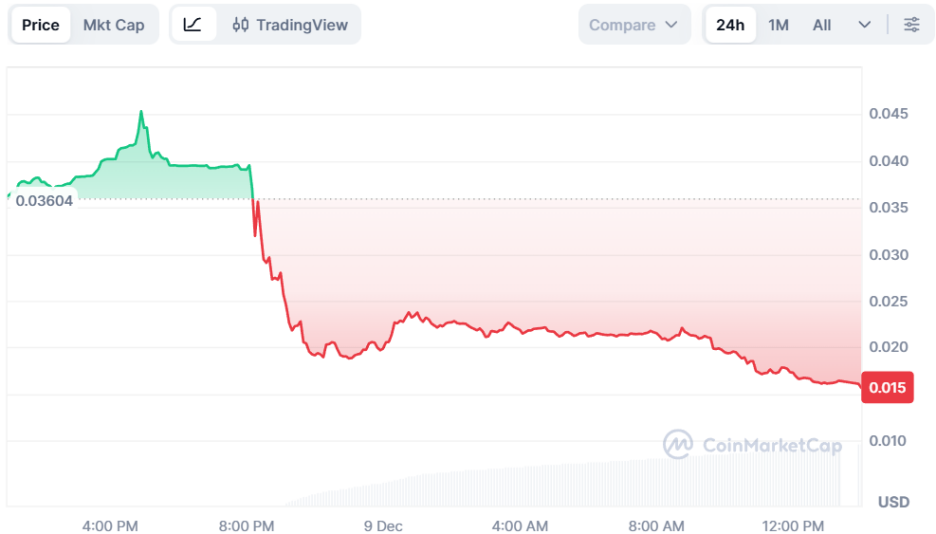
Stable, a new Layer 1 blockchain heavily backed by Tether and Bitfinex, launched its mainnet and STABLE token on December 8. Despite significant pre-launch deposits totalling over $1.3 billion and strong market interest, the token’s first-day performance was highly disappointing. It opened around $0.036, briefly rose to nearly $0.046, then plummeted over 60% to a low of $0.015. Its fully diluted valuation (FDV) fell to $1.7 billion amid thin liquidity. The token’s not yet listed on major centralized exchanges like Binance or Coinbase, limiting its accessibility. The launch wass marred by controversy after a whale deposited hundreds of millions of USDT before the official start time, raising concerns about fairness and possible insider trading. This damaged trust in a project whose core narrative is transparency and reliability. Stable is designed as a stablecoin-focused chain with USDT as the native gas fee, aiming for a near gas-less user experience. It uses a custom DPoS consensus mechanism and is EVM-compatible. However, its tokenomics have raised concerns: STABLE tokens are used only for governance and staking, not fee payment, and 50% of the total 100 billion supply is allocated to the team, investors, and advisors with a one-year cliff. The project faces intense competition from established chains like Polygon, Tron, and Solana, as well as emerging stablecoin-specific L1s like Circle’s Arc and Paradigm-backed Tempo. Its success hinges on rapid execution, ecosystem de...

Another stablecoin wearing the crown of "Tether's Favorite Son" has officially launched, but the market doesn't seem to be buying it.

On the evening of December 8th, the highly anticipated stablecoin-dedicated public chain Stable officially launched its mainnet and STABLE token. As a Layer 1 deeply incubated by the core teams of Bitfinex and Tether, the "Tether's Favorite Son" narrative attracted widespread market attention for Stable from the moment it was announced.

However, against a backdrop of tightening market liquidity, Stable did not have a strong opening like its competitor Plasma, suffering from both low prices and a trust crisis involving insider trading. Is Stable's script aiming for a low start before a high finish, or is it set for a continuous decline?

STABLE Plunges 60% from Highs After Launch, Mired in Insider Trading Trust Crisis

Before Stable's launch, market sentiment was quite optimistic. The project's two-phase pre-deposit program totaled over $1.3 billion, with approximately 25,000 participating addresses and an average deposit size of about $52,000 per address, showing strong user interest. This was particularly valuable during a period of low market sentiment and indicated strong recognition of the "Tether-affiliated" endorsement, with expectations that STABLE's debut would replay Plasma's wealth-creating story.

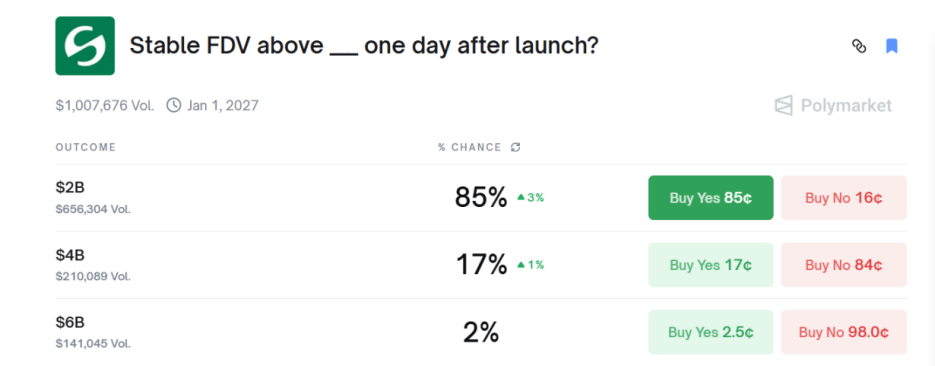
Data from the prediction market Polymarket showed that the market once estimated an 85% probability that STABLE token's FDV (Fully Diluted Valuation) would exceed $2 billion.
However, the law of "Great heat foreshadows death" (a Chinese idiom meaning extreme popularity can lead to a downfall) struck again.

STABLE token's performance on its TGE (Token Generation Event) debut day was disappointing. The STABLE token opened at around $0.036, reached a high near $0.046 after listing, and then continued to fall over 60%, hitting a low of $0.015. As of 21:00 on December 9th, STABLE token's FDV had shrunk to $1.7 billion. In a state of thin liquidity, no one in the market was willing to buy.
Notably, spot markets on top CEXs (Centralized Exchanges) like Binance, Coinbase, and Upbit have still not listed the STABLE token. Their absence limits the STABLE token's reach to a larger retail investor base, further contributing to its limited liquidity.

STABLE token's暴跌 (plunge) performance has also sparked heated discussion within the community.

DeFi researcher @cmdefi stated: Expectations for Stable were relatively low; various amateurish operations occurred during the early project launch, raising concerns about their seriousness.

Crypto KOL @cryptocishanjia pointed out: The crowd is more willing to pay for new narratives. When the market already has a clear leader (Plasma), the consensus for the second player (Stable) will be significantly weaker, leading to reduced profit margins.

Former VC professional @Michael_Liu93 said bluntly: Stable's pre-listing valuation of 3 billion plus an inflated FDV makes it a good target for long-term shorting. Tight control of holdings (no airdrop, no pre-sale, no KOL round) does not equal price pumping, but precisely because it's not listed on top CEXs, it might see a reversal.

Additionally, many users mentioned the pre-deposit controversy before the Stable mainnet launch. During the first round of pre-deposit activities, a whale wallet deposited hundreds of millions of USDT *before* the official start time, sparking strong community质疑 (doubts) about the project's fairness and potential insider trading. The project team did not directly respond and simply opened the second round of pre-deposits.

This event creates a paradox for Stable's narrative, whose value proposition is to provide transparent, reliable, and compliant infrastructure. The project疑似 (suspected) insider trading right from the start creates a trust deficit that will hinder active community participation and negatively impact its long-term narrative.

USDT as Gas Fee Optimizes Payment Experience, Token Economic Model Hides Concerns

Stable's architecture is designed to achieve maximum transaction efficiency and user-friendliness.

Stable is the first L1 to use USDT as the native Gas fee, providing a near Gas-less user experience. The importance of this design lies in minimizing user friction. Users can pay transaction fees using the medium of exchange itself (USDT), without needing to manage and hold a highly volatile governance token. This feature enables sub-second settlement and minimal fees, making it particularly suitable for daily transactions and institutional payment scenarios that require strict price stability and predictability.

Stable uses the StableBFT consensus mechanism, a DPoS (Delegated Proof-of-Stake) model customized based on CometBFT (formerly Tendermint) and fully compatible with the EVM (Ethereum Virtual Machine). StableBFT ensures transaction finality through a Byzantine Fault Tolerant mechanism, meaning transactions are irreversible once confirmed, which is crucial for payment and settlement scenarios. Additionally, StableBFT supports parallel processing of proposals by nodes, ensuring the network can achieve both high throughput and low latency performance to meet the stringent requirements of payment networks.

Stable received strong capital backing from the start. The project raised $28 million in a seed round led by Bitfinex and Hack VC. Tether/Bitfinex CEO Paolo Ardoino serves as an advisor, leading the market to speculate on a close strategic synergy between Stable and the leading stablecoin issuer Tether.

Stable CEO Brian Mehler previously served as VP of Venture Capital at Block.one (EOS development company), managing a $1 billion crypto fund and investing in industry giants like Galaxy Digital and Securitize.

The CTO is Sam Kazemian, founder of the hybrid algorithmic stablecoin project Frax, who has deep experience in the DeFi field and has provided advice on US stablecoin legislation.

However, Stable's initial CEO was former Block.one investment lead Joshua Harding. The project changed leadership just before launch without any announcement or explanation, casting another shadow over Stable's transparency.

Stable's token economic model employs a strategy of separating network utility and governance value. The sole purpose of the STABLE token is governance and staking. It is not used to pay for any network fees; all transactions are settled in USDT.

Token holders can stake STABLE to become validators and help secure the network. They can also participate in key decisions like network upgrades, fee adjustments, or introducing new stablecoins through community voting. Since it does not share in the network's revenue, this weakens the token's potential value (imagination). Before the ecosystem matures, its token lacks utility (empowerment).

Notably, 50% of the total token supply (100 billion tokens) will be allocated to the team, investors, and advisors. Although these tokens are subject to a one-year lock-up period (cliff), followed by linear vesting, the明显侧重 (clearly skewed) allocation ratio will create long-term potential selling pressure on the token price.
Fierce Competition in the Stablecoin Public Chain Arena, Execution Will Be Key to Victory

Stable faces extremely fierce market competition. In the current multi-chain landscape, Polygon and Tron have a large retail user base for low-cost remittances in Southeast Asia, South America, the Middle East, and Africa. Solana also holds a place in the payments field凭借 (relying on) its high-throughput performance advantages.

More importantly, Stable also faces competition from emerging vertical L1s同样致力于 (also dedicated to) stablecoin payments. For example, Circle's Arc focuses on becoming infrastructure for institutional-grade on-chain treasuries, global settlement, and tokenized assets. Additionally, Tempo, backed by Stripe and Paradigm, is also positioned as a payment-oriented public chain, a strong competitor瞄准 (aiming at) the same vertical field.

In the field of payments and settlement, network effects will be the core winning factor. Whether Stable succeeds will depend on its ability to quickly leverage the USDT ecosystem, attract developers and institutional users, and establish a first-mover advantage in large-scale settlement. If execution strength and market penetration are insufficient, it could be overtaken by同类 (similar) L1s with stronger integration capabilities or deeper compliance backgrounds.
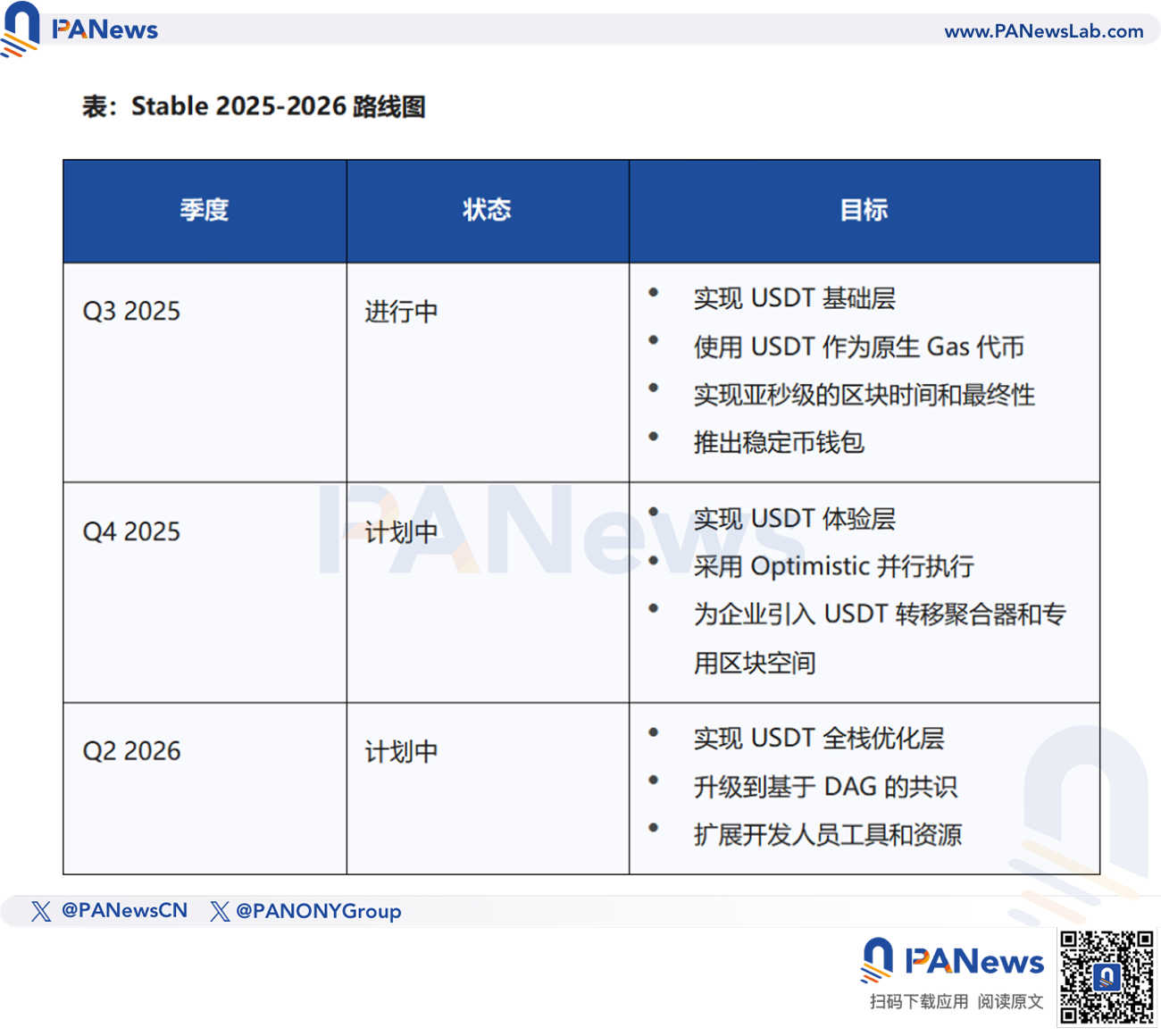
According to its roadmap, the most important timeline is enterprise integration and developer ecosystem building in 2025 Q4 - 2026 Q2. Achieving these goals will be key to validating Stable's value proposition and the feasibility of a vertical L1. But from mainnet launch to pilot implementation, with only about six months, Stable must quickly overcome multiple challenges including technical optimization, institutional integration, and ecosystem cultivation. Any misstep in execution could further erode market confidence in its long-term potential.

The launch of Stable's mainnet marks the entry of the stablecoin赛道 (race track) competition into a new infrastructure-focused stage. Whether it can achieve its goal of reshaping payment networks will ultimately depend on execution, not narrative.


Трендовые криптовалюты

Связанные с этим вопросы

QWhat was the market performance of the STABLE token on its first day of trading, and why did it considered a failure?

AThe STABLE token opened at approximately $0.036, reached a high near $0.046, and then plummeted over 60% to a low of $0.015. This was considered a failure due to the massive price drop, lack of liquidity, and absence of listings on major centralized exchanges (CEXs) like Binance, Coinbase, and Upbit.

QWhat major controversy surrounded the pre-deposit phase of the STABLE project, damaging community trust?

AA major controversy occurred when a 'whale' wallet deposited hundreds of millions of USDT *before* the official start time of the first pre-deposit round. This sparked strong community accusations of unfairness and insider trading, which the project team did not directly address, leading to a significant trust deficit.

QWhat is the key technological innovation of the Stable chain regarding transaction fees?

AThe key innovation is that Stable is the first Layer 1 blockchain to use USDT as its native gas fee. This allows users to pay transaction costs with the stablecoin itself, providing a near gas-less user experience and eliminating the need to manage a volatile native token for fees.

QAccording to the article, what is a major weakness in the STABLE token's economic model?

AA major weakness is that the STABLE token's only utility is for governance and staking; it is not used to pay for network fees (which are paid in USDT) and does not share in the network's revenue. Furthermore, 50% of the total token supply is allocated to the team, investors, and advisors, creating long-term selling pressure.

QWho are some of the main competitors to Stable in the stablecoin-focused blockchain sector?

AMain competitors include other established chains with strong payment use cases like Polygon, Tron, and Solana, as well as new vertical L1s like Circle's Arc (focused on institutional on-chain treasury and settlement) and Tempo (backed by Stripe and Paradigm and also targeting payments).

Похожее

Падение STRC Strategy демонстрирует риски, скрывающиеся за кредитными продуктами, связанными с Bitcoin

Стратегия STRC демонстрирует риски кредитных продуктов, связанных с биткоином. Привилегированные акции Strategy (STRC) упали значительно ниже номинала в $100, достигнув минимума в $82.53, что высветило уязвимость таких инструментов. Гендиректор Strive Мэтт Коул объяснил это сбросом левериджа, а не дефолтом эмитента, подчеркнув роль вынужденной продажи при маржинальном давлении. Этот эпизод показывает, как кредитные продукты, привязанные к биткоин-казначейским стратегиям, могут подвергаться резким распродажам из-за рычагов, даже если базовая компания устойчива. История предупреждает об усложнении финансовых инструментов вокруг биткоина и их чувствительности к ликвидности и волатильности. Ключевой вывод: спад STRC — это урок о рисках левериджа, а не о кредитоспособности Strategy.

bitcoinist5 ч. назад

Падение STRC Strategy демонстрирует риски, скрывающиеся за кредитными продуктами, связанными с Bitcoin

bitcoinist5 ч. назад

Высокий суд Австралии одержал крупную победу для ASIC в деле о криптодоходности Block Earner

Высший суд Австралии единогласно поддержал позицию Комиссии по ценным бумагам и инвестициям (ASIC) в деле против компании Block Earner. Суд постановил, что её продукт "Earner" с фиксированной доходностью, предлагавшийся в 2022 году, является финансовым продуктом и деривативом по существующему законодательству. Это означает, что для его предложения требовалась лицензия на предоставление финансовых услуг (AFSL). Дело возвращено в Федеральный суд для определения штрафных санкций. Данное решение создаёт важный прецедент, проясняя применение традиционного финансового регулирования к криптовалютным продуктам, предлагающим структурированную доходность. Оно подтверждает, что экономическая сущность продукта важнее его названия. Регуляторы теперь имеют чёткие правовые основания рассматривать подобные продукты как инвестиционные инструменты, требующие лицензирования. Хотя оспариваемый продукт более не предлагается, это решение затрагивает многие существующие и планируемые криптопродукты в Австралии и отражает глобальный тренд на подчинение крипто-доходных продуктов установленным регуляторным режимам. Для индустрии это означает необходимость переоценки соответствия продуктов законодательству, а для потребителей — напоминание о рисках, связанных с нелицензированными доходными продуктами.

bitcoinist8 ч. назад

Высокий суд Австралии одержал крупную победу для ASIC в деле о криптодоходности Block Earner

bitcoinist8 ч. назад

Blockchain.com расширяет доступ к токенизированным акциям через Ondo Finance

Блокчейн-кошелек Blockchain.com расширяет доступ к токенизированным акциям и ETF США через интеграцию с Ondo Finance. Партнерство позволяет соответствующим критериям пользователям, особенно за пределами США, получать доступ к традиционным финансовым активам напрямую через привычный криптокошелек, минуя традиционные брокерские платформы. Ondo Finance, известный игрок на рынке токенизированных реальных активов (RWA), обеспечивает технологическую и регуляторную основу для этих активов. Эта интеграция является частью общей тенденции, когда криптоплатформы стремятся сделать токенизированные традиционные активы такими же простыми в использовании, как и обычные криптотокены. Однако широкому внедрению все еще могут препятствовать вопросы регулирования, хранения активов и их выкупа.

bitcoinist10 ч. назад

Blockchain.com расширяет доступ к токенизированным акциям через Ondo Finance

bitcoinist10 ч. назад

CPU возвращается за игровой стол: начинается «игра на повышение» стоимостью 170 миллиардов долларов

6 июня 2026 года на выставке Computex NVIDIA анонсировала свой первый процессор Vera CPU, что знаменует серьезный вход компании на рынок серверных процессоров. Это событие подчеркивает растущую ключевую роль CPU в эпоху ИИ-агентов, когда задачи, связанные с выводом (инференсом) и управлением, требуют все большей вычислительной мощности и эффективности процессоров. Рынок серверных процессоров переживает бум. Прогнозы, такие как отчет UBS, предполагают, что его объем может вырасти с примерно 300 млрд долларов в 2025 году до 1700 млрд долларов к 2030 году. Основной драйвер роста — ИИ-агенты, которые выполняют сложные многошаговые задачи, требующие интенсивной работы CPU для управления потоками данных, вызова инструментов и обработки контекста. В таких сценариях нагрузка на CPU может достигать 70-90%, а соотношение CPU к GPU в системах стремится к 1:1, в отличие от 1:8 в эпоху обучения моделей. Это привело к изменению спроса и даже к росту цен на серверные CPU впервые за более чем десятилетие. AMD и Intel столкнулись с дефицитом мощностей. Спрос разделился на высокопроизводительные CPU для работы внутри стоек с GPU и более умеренные, но массовые CPU для развертывания независимых узлов агентов. Новая конкурентная динамика привлекла новых игроков, таких как NVIDIA с ее ARM-архитектурой, и открыла возможности для китайских производителей CPU, таких как Hygon (HaiGuang). Их рост поддерживается как общим рыночным бумом, так и политикой импортозамещения (программа «синьчуан»), требующей замены иностранного оборудования в государственном секторе к 2027 году. Таким образом, в центре следующего этапа развития ИИ находится не только GPU, но и эффективное взаимодействие CPU и GPU, что переопределяет ландшафт полупроводниковой индустрии.

marsbit10 ч. назад

CPU возвращается за игровой стол: начинается «игра на повышение» стоимостью 170 миллиардов долларов

marsbit10 ч. назад

Технологический поток Разведуправления: Директор по ИИ AMD публично раскритиковал Claude Code, заявив, что он «стал глупее и ленивее», Трамп заявил о полном прекращении огня в Ормузском проливе, но в проливе осталось около 80 морских мин

Эксклюзив Wired: SK Telecom, стратегический партнер Anthropic, находится под проверкой экспортного контроля США из-за возможного трансфера технологий модели Mythos. GLM-5.2 от китайской Z.AI: модель, по заявлениям, близкая по производительности к Claude Opus, полностью обходится без чипов Nvidia. В сфере чипов: MIT создает собственную ОС для изучения работы процессоров; ASML опровергает заявления США о поставках передовых EUV-установок в Китай; Amazon планирует продавать свои AI-чипы Trainium/Inferentia сторонним компаниям. Безопасность: обнаружено 10 тыс. репозиториев на GitHub, распространяющих вредоносное ПО; Apple исправила критическую уязвимость прослушки в Beats Studio Buds. На рынке: акции полупроводниковых компаний резко выросли (Intel +10.6%, Micron +8.7%); SpaceX упала на 3.56%. Геополитика и экономика: Несмотря на заявление Трампа о перемирии, в главном фарватере Ормузского пролива остается около 80 необезвреженных мин, что удерживает 80 супертанкеров с 80 млн баррелей нефти. Иран отменил дипломатическую поездку в Швейцарию. Основной контекст: Временная "разрядка" в геополитике контрастирует с глубокой и долгосрочной реструктуризацией глобальных технологических и полупроводниковых цепочек, где независимость от доминирующих игроков становится ключевым трендом.

marsbit10 ч. назад

Технологический поток Разведуправления: Директор по ИИ AMD публично раскритиковал Claude Code, заявив, что он «стал глупее и ленивее», Трамп заявил о полном прекращении огня в Ормузском проливе, но в проливе осталось около 80 морских мин

marsbit10 ч. назад

Торговля

Спот
Фьючерсы

Популярные статьи

Как купить S

Добро пожаловать на HTX.com! Мы сделали приобретение Sonic (S) простым и удобным. Следуйте нашему пошаговому руководству и отправляйтесь в свое крипто-путешествие.Шаг 1: Создайте аккаунт на HTXИспользуйте свой адрес электронной почты или номер телефона, чтобы зарегистрироваться и бесплатно создать аккаунт на HTX. Пройдите удобную регистрацию и откройте для себя весь функционал.Создать аккаунтШаг 2: Перейдите в Купить криптовалюту и выберите свой способ оплатыКредитная/Дебетовая Карта: Используйте свою карту Visa или Mastercard для мгновенной покупки Sonic (S).Баланс: Используйте средства с баланса вашего аккаунта HTX для простой торговли.Третьи Лица: Мы добавили популярные способы оплаты, такие как Google Pay и Apple Pay, для повышения удобства.P2P: Торгуйте напрямую с другими пользователями на HTX.Внебиржевая Торговля (OTC): Мы предлагаем индивидуальные услуги и конкурентоспособные обменные курсы для трейдеров.Шаг 3: Хранение Sonic (S)После приобретения вами Sonic (S) храните их в своем аккаунте на HTX. В качестве альтернативы вы можете отправить их куда-либо с помощью перевода в блокчейне или использовать для торговли с другими криптовалютами.Шаг 4: Торговля Sonic (S)С легкостью торгуйте Sonic (S) на спотовом рынке HTX. Просто зайдите в свой аккаунт, выберите торговую пару, совершайте сделки и следите за ними в режиме реального времени. Мы предлагаем удобный интерфейс как для начинающих, так и для опытных трейдеров.

1.5k просмотров всегоОпубликовано 2025.01.15Обновлено 2026.06.02

Как купить S

Sonic: Обновления под руководством Андре Кронье – новая звезда Layer-1 на фоне спада рынка

Он решает проблемы масштабируемости, совместимости между блокчейнами и стимулов для разработчиков с помощью технологических инноваций.

2.3k просмотров всегоОпубликовано 2025.04.09Обновлено 2025.04.09

Sonic: Обновления под руководством Андре Кронье – новая звезда Layer-1 на фоне спада рынка

HTX Learn: Пройдите обучение по "Sonic" и разделите 1000 USDT

HTX Learn — ваш проводник в мир перспективных проектов, и мы запускаем специальное мероприятие "Учитесь и Зарабатывайте", посвящённое этим проектам. Наше новое направление .

1.8k просмотров всегоОпубликовано 2025.04.10Обновлено 2025.04.10

HTX Learn: Пройдите обучение по "Sonic" и разделите 1000 USDT

Обсуждения

Добро пожаловать в Сообщество HTX. Здесь вы сможете быть в курсе последних новостей о развитии платформы и получить доступ к профессиональной аналитической информации о рынке. Мнения пользователей о цене на S (S) представлены ниже.

活动图片